
BPH Patient Education Seminar Learn about Enlarged Prostate

BPH Patient Education Seminar Learn about Enlarged Prostate Solutions Presented by {Physician Name}
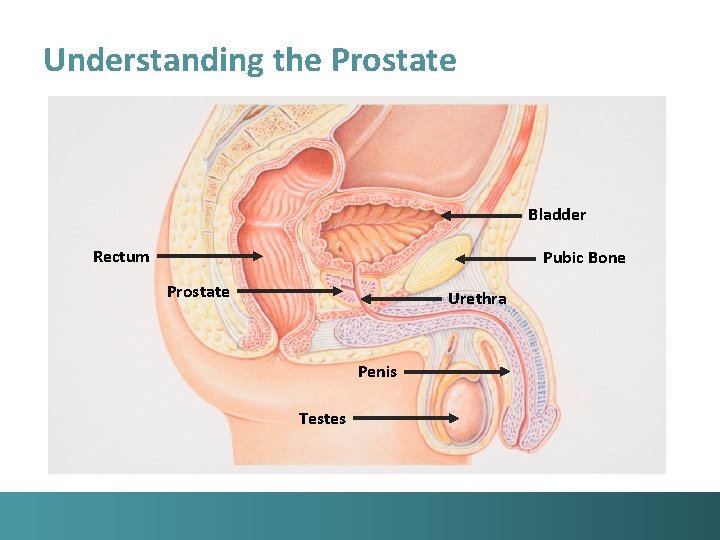
Understanding the Prostate Bladder Rectum Pubic Bone Prostate Urethra Penis Testes
Common Symptoms of Prostate Disorders • Increased frequency of urination especially at night • Sudden or urgent need to urinate • Painful or difficult urination • Slow flow of urine and difficulty in stopping • Terminal dribbling or leaking • Incomplete emptying of the bladder
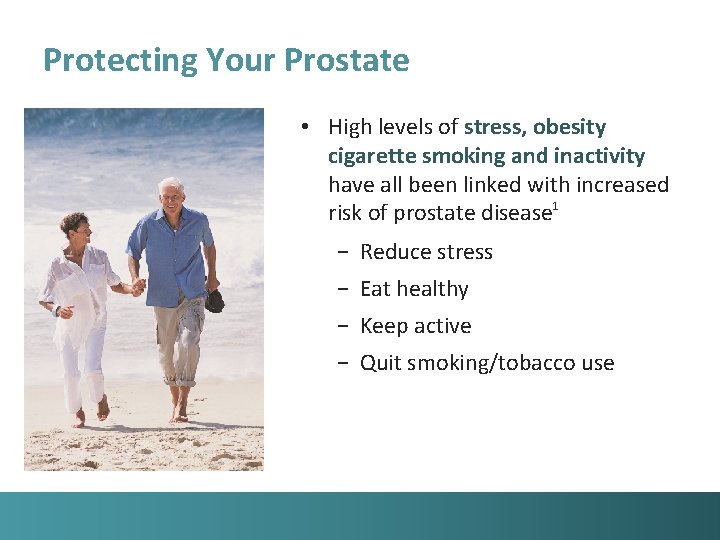
Protecting Your Prostate • High levels of stress, obesity cigarette smoking and inactivity have all been linked with increased risk of prostate disease 1 − Reduce stress − Eat healthy − Keep active − Quit smoking/tobacco use
Assessing Your Prostate Health • Begin regular prostate exams at age 50 (or sooner if you are experiencing symptoms or have high-risk factors) • Know your Urology numbers − AUASS is the American Urological Association Symptom Score demonstrates symptom severity of BPH − Prostate Specific Antigen (PSA) indicates issues with the prostate including cancer − Testosterone Level is central to a man’s sex drive, energy level, muscle strength and bone density
Common Disorders • Prostatitis - Swelling or infection of the prostate gland • Low Testosterone - decreased functional activity of the testes • Erectile Dysfunction – Inability to maintain an erection sufficient for satisfying sexual activity • Benign Prostatic Hyperplasia – Enlargement of the prostate gland • Prostate Cancer - Malignant (cancerous) cells form in the prostate tissue
Enlarged Prostate: Most Common Condition • BPH is in the top 10 of the most commonly diagnosed diseases in men over the age of 502 • 50%+ of men in their 50 s experience BPH symptoms 3 • 90% of men in their 70 s and 80 s experience BPH symptoms 3
What is Benign Prostatic Hyperplasia(BPH)? • Prostate cells begin to increase in number • Compresses the urethra making it difficult to urinate • Not cancerous or life threatening • Can be very bothersome and impact quality of life • Can progress to more serious conditions • Very common in men over 50 and advances with age
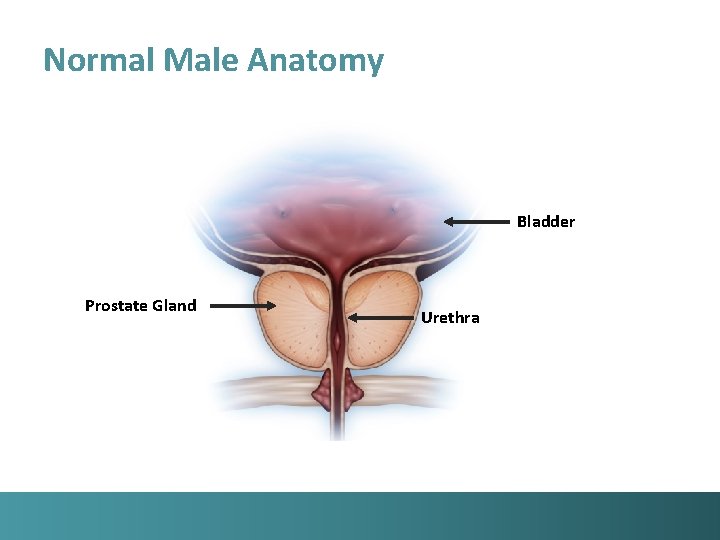
Normal Male Anatomy Bladder Prostate Gland Urethra
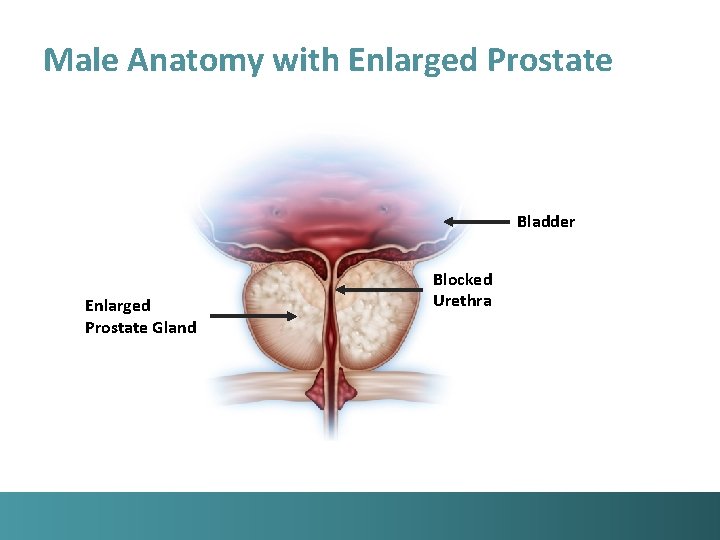
Male Anatomy with Enlarged Prostate Bladder Enlarged Prostate Gland Blocked Urethra
BPH Signs and Symptoms • Waking at night to urinate • Frequent urination • Sudden, uncontrollable urges to urinate • Straining to start urinate • Weak urine flow • Dribbling after urination • Feeling bladder is not completely empty • Pain during urination
Potential Medical Consequences of BPH • Urinary retention • Urinary tract infections • Bladder stones • Blood in the urine • Incontinence • Decreased kidney function Derived from Benign enlargement of prostate. ADAM Health Illustrated Encyclopedia. www. healthline. com/adamcontent/enlarged-prostate. Accessed Oct. 21, 2010
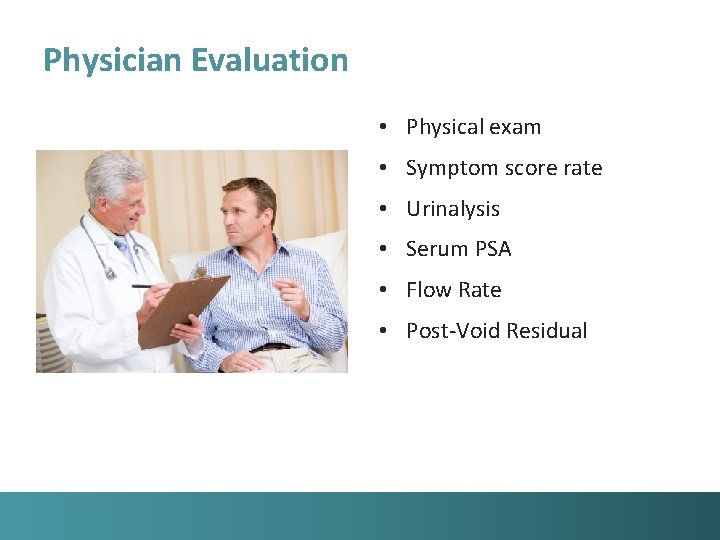
Physician Evaluation • Physical exam • Symptom score rate • Urinalysis • Serum PSA • Flow Rate • Post-Void Residual
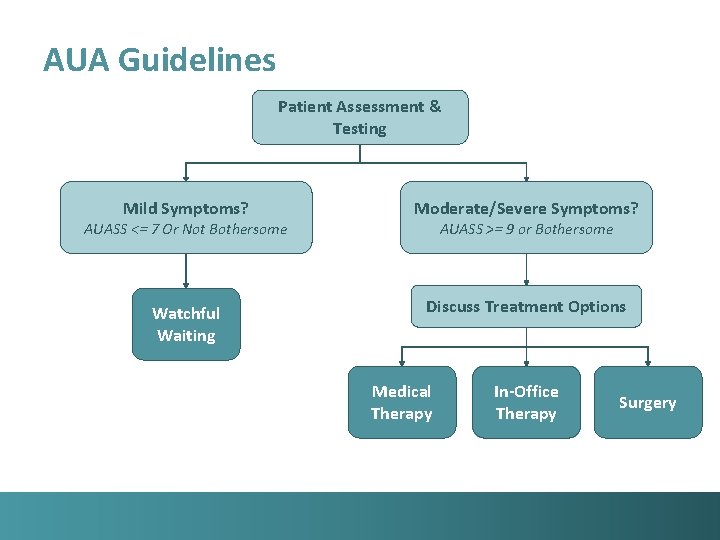
AUA Guidelines Patient Assessment & Testing Mild Symptoms? Moderate/Severe Symptoms? Watchful Waiting Discuss Treatment Options AUASS <= 7 Or Not Bothersome AUASS >= 9 or Bothersome Medical Therapy In-Office Therapy Surgery
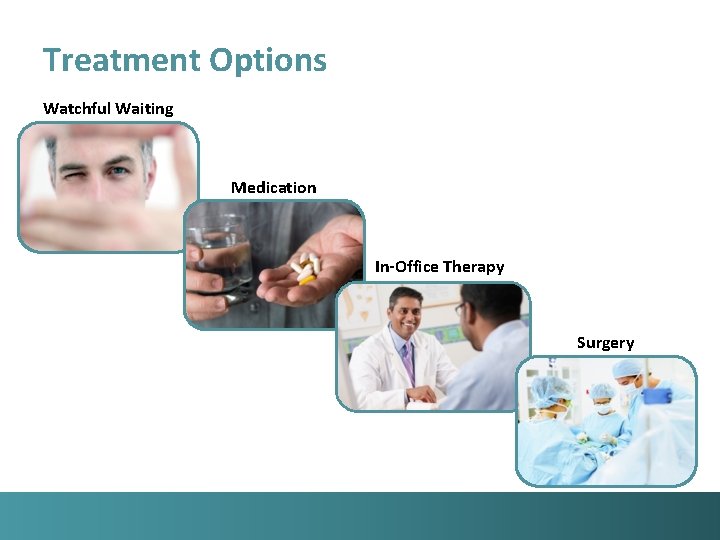
Treatment Options Watchful Waiting Medication In-Office Therapy Surgery
Watchful Waiting • Symptoms are fairly mild or not bothersome • Ongoing assessments once or twice a year − Monitor symptom progression − Check disease progression − Check for infection and kidney/bladder stones
Herbal Supplements • Not recommended by the American Urological Association 4 − No evidence of efficacy 4 − May increase your risk of bleeding or interfere with other medications you're taking 4 • Most popular supplements − Saw palmetto extract − Beta-sitosterol extracts − Pygeum − Ryegrass extract − Stinging nettle extract
Drug Therapy • Common Options − Alpha-blockers (Cardura, Flomax) − 5 -ARIs (Avodart, Proscar) − Combination Therapy (Jalyn) • Drugs: Most Common Treatment Option − 94% of patients are treated with prescription medications, but 48% of patients do not show clinically significant symptom improvement 5
Medication – Possible Side Effects Alpha-Blockers • • Reduced blood pressure 5 ARIs • Erectile dysfunction Headache • Lowered sexual drive (libido) Nasal congestion • Decrease in semen released during ejaculation Pounding heartbeat Nausea • Decrease PSA levels Weakness Weight gain Floppy iris syndrome (IFIS) Note: This list represents the most commonly reported side effects. Please discuss any questions you may have with your physician. Your physician can also provide you with a comprehensive list of all potential side effects.
Drug Therapy Advantages ü Simple to use ü Fast symptom relief (Alpha-blockers) ü Does not require surgery, anesthesia or a hospital stay (or associated side effects) ü Low rate of side effects ü Covered by Medicare and many private insurance companies
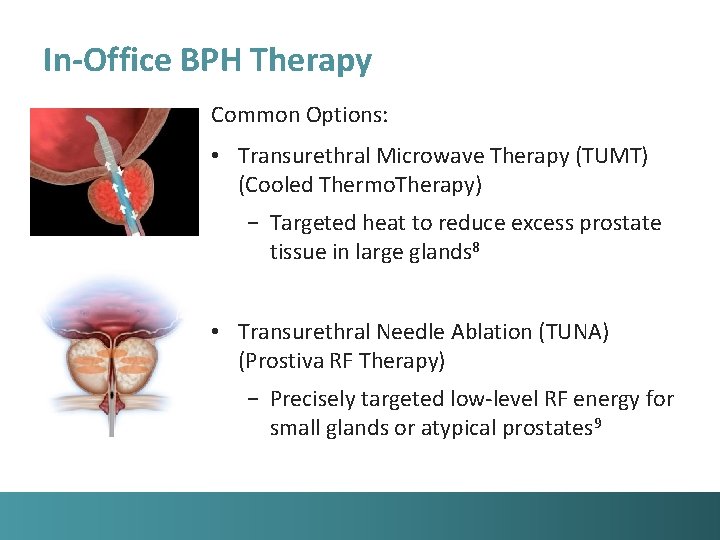
In-Office BPH Therapy Common Options: • Transurethral Microwave Therapy (TUMT) (Cooled Thermo. Therapy) − Targeted heat to reduce excess prostate tissue in large glands 8 • Transurethral Needle Ablation (TUNA) (Prostiva RF Therapy) − Precisely targeted low-level RF energy for small glands or atypical prostates 9
During the Treatment • Pre-procedure preparation 15 -20 minutes • Medications given for relaxation and comfort − Comfort levels are generally tolerable and reported between a 2 -3 on a 10 point pain scale 6 − New prostatic blocks being performed that may eliminate discomfort completely • Procedure time usually less than 30 minutes • Recovery time generally 15 -20 minutes and will include post treatment instructions
After Treatment • Go home shortly after treatment • Urinary catheter or temporary stent may be required for a few days 7, 8 • Return to normal activities within 24 -48 hours 8, 9 • Symptom improvement generally seen within 8 to 10 weeks of the treatment 8, 9 • Lasting and significant relief from your symptoms 6, 7
In-Office Therapy Advantages ü Very effective at relieving symptoms 6, 7 ü Proven long-lasting results 6, 7 ü Can eliminate need for chronic medication ü Lower risk than invasive surgical procedures ü Completed in urologist office in less than an hour - no hospitalization, general anesthesia or long recovery time ü Quick return to normal activities ü Low rate of side effects 8, 9 ü Covered by Medicare and many private insurance companies
In-Office Therapy – Possible Side Effects TUMT • • • Hematuria TUNA • Obstruction (blockage) Dysuria • Bleeding Blood in urine • Blood in Urine Clots in urine • Pain/Discomfort Painful or difficult urination • Urgency to Urinate Rectal irritation • Increase Urinary Frequency Temporary inability to control urination • Urinary Tract Infection Inability to discharge semen in orgasm Brief inability to achieve or maintain an erection Note: This list represents the most commonly reported side effects. Most of these side effects were temporary or mild and required minimal or no medical intervention. Please discuss any questions you may have with your physician. Your physician can also provide you with a comprehensive list of all potential side effects.
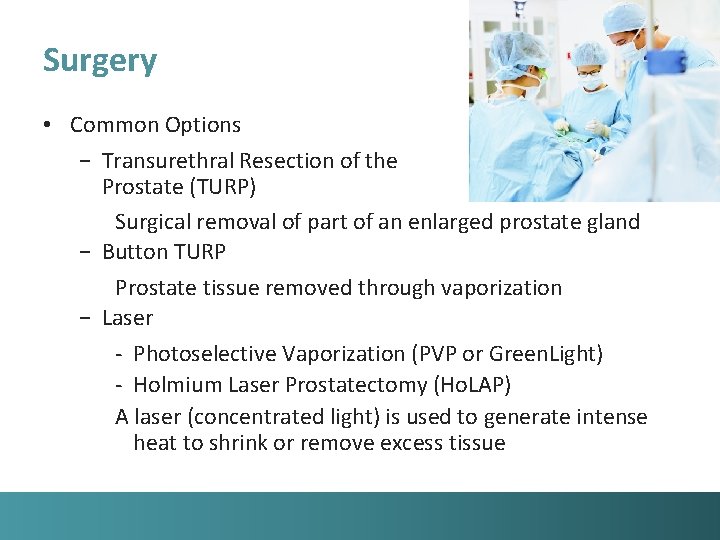
Surgery • Common Options − Transurethral Resection of the Prostate (TURP) Surgical removal of part of an enlarged prostate gland − Button TURP Prostate tissue removed through vaporization − Laser - Photoselective Vaporization (PVP or Green. Light) - Holmium Laser Prostatectomy (Ho. LAP) A laser (concentrated light) is used to generate intense heat to shrink or remove excess tissue
Surgery Advantages ü Immediate symptom relief 10, 11 ü Long history of success (TURP) ü Can eliminate need for chronic medication ü Covered by Medicare and many private insurance companies
Surgery Possible Risks/Side Effects TURP 10 • • • Anesthesia issues LASER 11 • Temporary difficulty urinating Intracapsular perforation • Urinary tract infection TUR Syndrome • Narrowing of the urethra Transfusions • Retrograde Ejaculation Post-op pain/discomfort • Erectile Dysfunction Infection Retrograde ejaculation Erection problems Painful Urination Please discuss any questions you may have with your physician. Your physician can also provide you with a comprehensive list of all potential side effects.

A Winning Solution • Urinary symptoms are a normal part of aging • There are treatment options that can help you restore your quality of life • If you are dissatisfied with your current therapy, please speak with your physician about what otherapies might be suited for you
Common Questions • How comfortable will I be during the procedure? • Are the results long-lasting? • Are the procedures covered by my insurance?
REMINDER: Complete and turn in the response cards! For the Physician’s Office For Urologix

Thank you!
References 1. http: //www. umm. edu/patiented/articles/what_causes_cell_growth_leading_benign_prostatic_hyperplasia_000071_3. ht m#ixzz 2 R 79 HHR 4 H 2. Fenter TC, Naslund MJ, Shah MB, et al. The cost of treating the 10 most prevalent diseases in men 50 years of age or older. Am J Manag Care. 2006; 12(4 suppl): S 90 -S 98. 3. National Institute of Diabetes and Digestive and Kidney Diseases. Prostate enlargement: benign prostatic hyperplasia. NIH Publication No. 07 -3012. June 2006. 4. http: //www. mayoclinic. com/health/prostate-gland-enlargement/DS 00027/DSECTION=alternative-medicine 5. Wei, et al. High Rates for Continued BPH Medical Therapy among Non responders, AUA 2010 Abstract 498 6. Mynderse, L. , et al. 5 year Results of a Multi-Center Trial of a New Generation Cooled TUMT for BPH, J Urol. 2011; 185(5): 1804 -1810 7. Hill, B. , et al. Transurethral Needle Ablation vs TURP for the Treatment of Symptomatic BPH: 5 Year Results of a Prospective, Randomized, Multicenter Clinical Trial, J Urol. 2004; 171(6 Pt 1): 2336 -2340 8. Data derived from the CTC Advance® Instructions for Use, 250348 Rev D 08/10 9. Data derived from the Prostiva® RF Therapy System User Guide 8930 CRMRef_R 06 10. American Urological Association Guideline: Management of Benign Prostatic Hyperplasia (BPH), Mc. Vary et al. Revised 2010 11. American Medical System Inc. website: http: //www. greenlightforbph. com/ MC 1654 Rev D 08/14
- Slides: 33