
Bowel Infarction HIGH MORTALITY RATE What is it
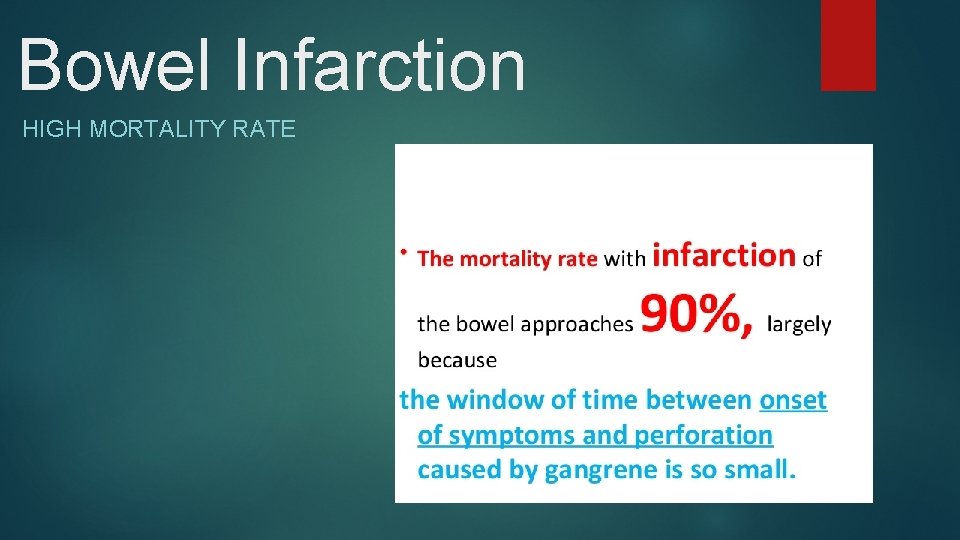
Bowel Infarction HIGH MORTALITY RATE

What is it Decreased blood flow to the major mesenteric vessels Leads to vasoconstriction and vasospasm of the bowel and contracted bowel with mucosal ulcerations
What causes it Thrombus after an MI Cholesterol plaques in the aorta that become dislodged Emboli in patients with endocarditis or atrial fibrillation Arteriosclerosis Cirrhosis of the liver Hypercoagulation as seen in polycythemia or after splenectomy Reduced perfusion from heart failure or shock
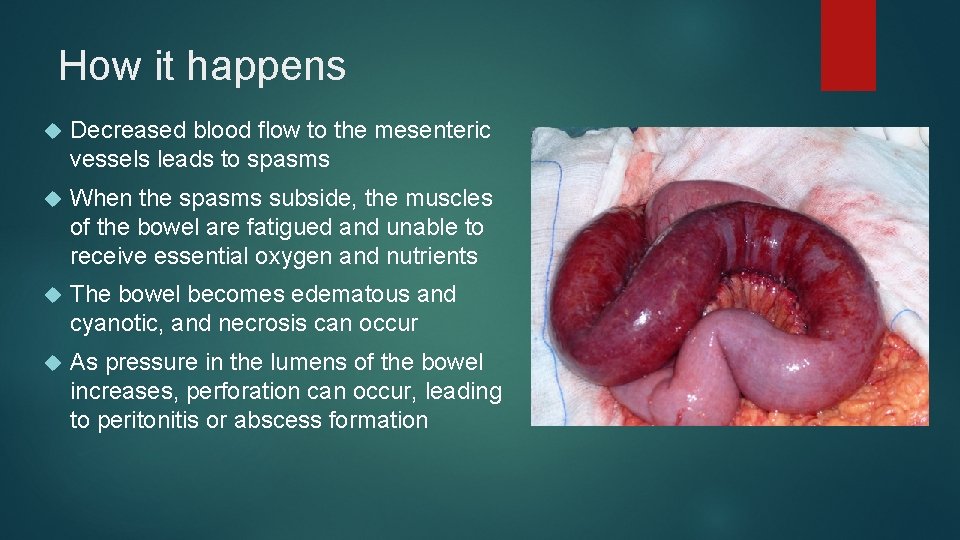
How it happens Decreased blood flow to the mesenteric vessels leads to spasms When the spasms subside, the muscles of the bowel are fatigued and unable to receive essential oxygen and nutrients The bowel becomes edematous and cyanotic, and necrosis can occur As pressure in the lumens of the bowel increases, perforation can occur, leading to peritonitis or abscess formation
Signs and Symptoms Acute abdominal pain Vomiting Bloody diarrhea Weight loss Abdominal distention with tenderness and guarding Absent or hypoactive bowel sounds Signs and symptoms of shock Fever

Diagnostics Abdominal X-rays reveal dilated loops of bowel Barium studies show the infarction location Angiography reveals the infarction location Fecal occult blood test is positive for blood CT scan may reveal the area of infarction Serum phosphate, HCT, WBC, and serum osmolality levels are elevated Sigmoidoscopy reveals an ischemic bowel
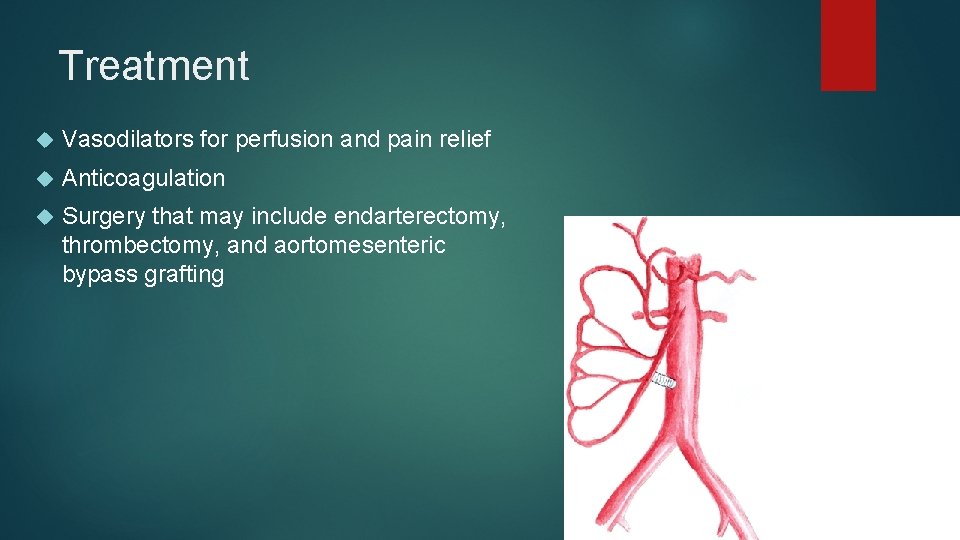
Treatment Vasodilators for perfusion and pain relief Anticoagulation Surgery that may include endarterectomy, thrombectomy, and aortomesenteric bypass grafting
Nursing Actions Monitor vital signs, oxygen saturation, cardiac rhythm, and cardiopulmonary status Assess the abdomen for bowel sounds at least every 2 -4 hours Monitor abdominal girth and weight daily Monitor skin temperature and cap refill Administer fluid replacement Administer vasoactive agents such as dopamine, as ordered Prepare the patient for surgical repair, as indicated Monitor intake and output Administer analgesics and antibiotics as ordered Observe electrolyte and glucose levels Provide nutritional support as ordered
- Slides: 8