
Bottomup Nano Biotechnology from Membrane proteins to Bio
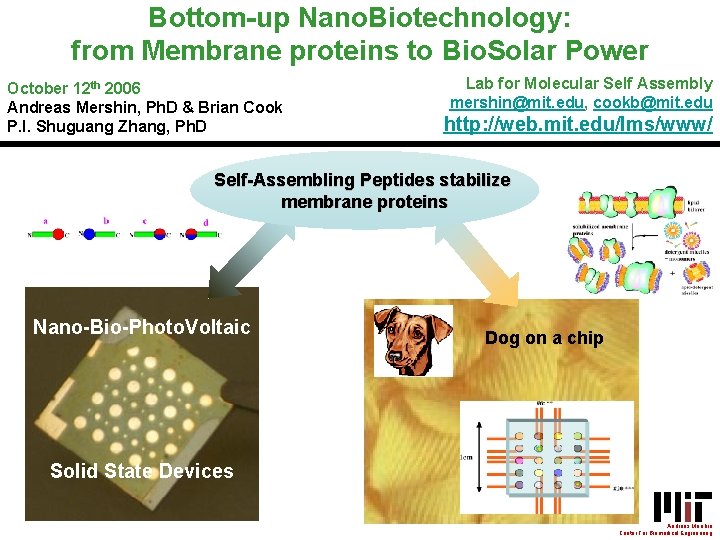
Bottom-up Nano. Biotechnology: from Membrane proteins to Bio. Solar Power October 12 th 2006 Andreas Mershin, Ph. D & Brian Cook P. I. Shuguang Zhang, Ph. D Lab for Molecular Self Assembly mershin@mit. edu, cookb@mit. edu http: //web. mit. edu/lms/www/ Self-Assembling Peptides stabilize membrane proteins Nano-Bio-Photo. Voltaic Dog on a chip Solid State Devices Andreas Mershin Center For Biomedical Engineering
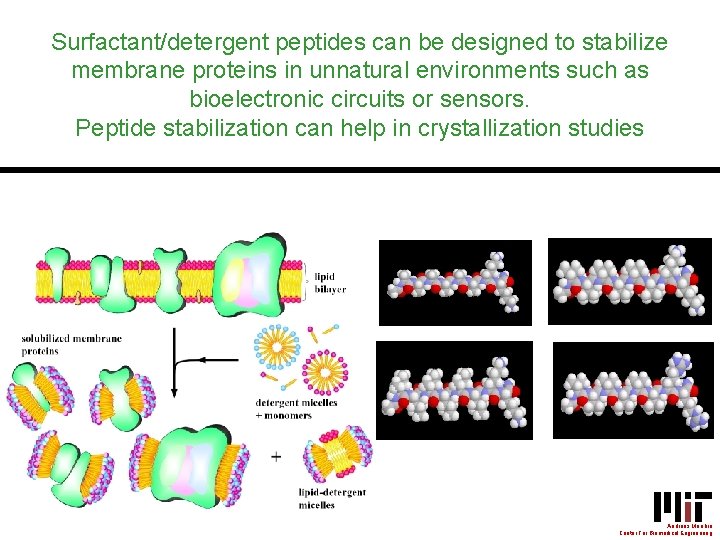
Surfactant/detergent peptides can be designed to stabilize membrane proteins in unnatural environments such as bioelectronic circuits or sensors. Peptide stabilization can help in crystallization studies Andreas Mershin Center For Biomedical Engineering
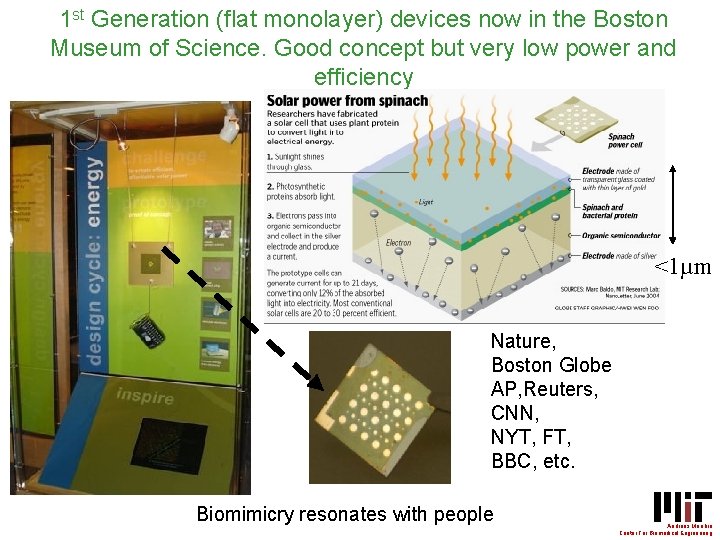
1 st Generation (flat monolayer) devices now in the Boston Museum of Science. Good concept but very low power and efficiency <1µm Nature, Boston Globe AP, Reuters, CNN, NYT, FT, BBC, etc. Biomimicry resonates with people Andreas Mershin Center For Biomedical Engineering
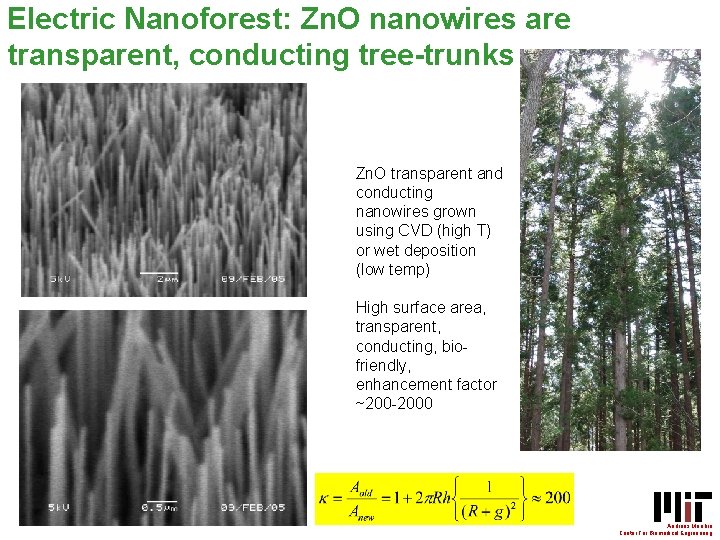
Electric Nanoforest: Zn. O nanowires are transparent, conducting tree-trunks Zn. O transparent and conducting nanowires grown using CVD (high T) or wet deposition (low temp) High surface area, transparent, conducting, biofriendly, enhancement factor ~200 -2000 Andreas Mershin Center For Biomedical Engineering
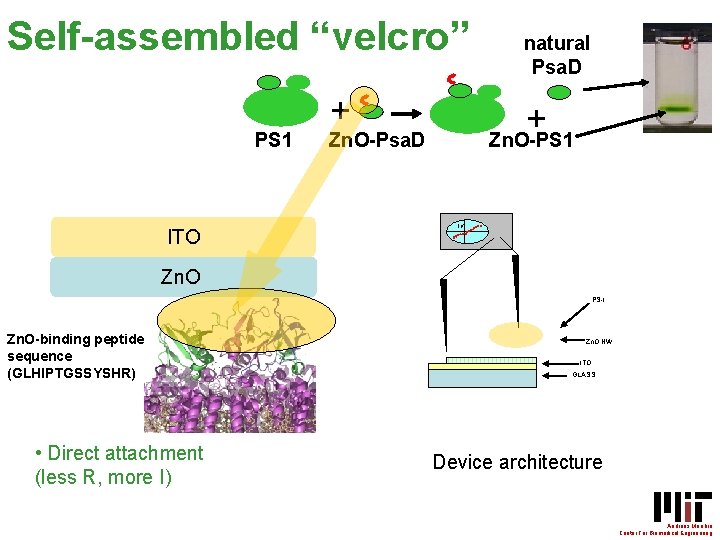
Self-assembled “velcro” PS 1 ITO + natural Psa. D + Zn. O-PS 1 Zn. O-Psa. D IV Zn. O PS-I Zn. O-binding peptide sequence (GLHIPTGSSYSHR) • Direct attachment (less R, more I) Zn. O NW ITO GLASS Device architecture Andreas Mershin Center For Biomedical Engineering
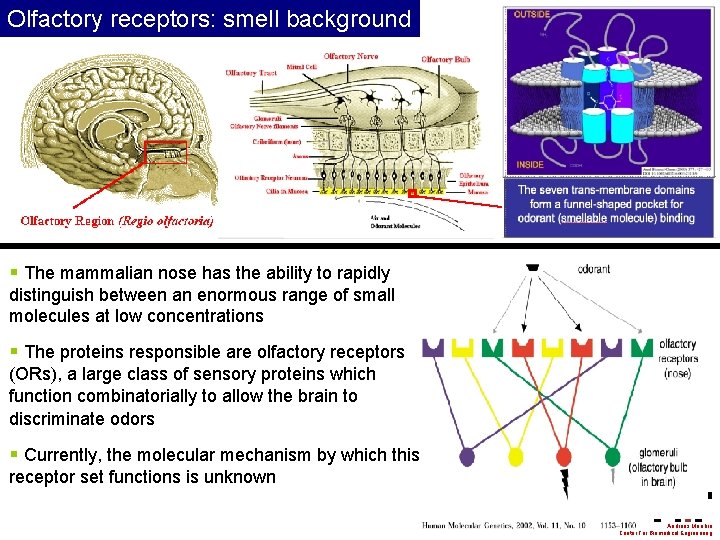
Olfactory receptors: smell background § The mammalian nose has the ability to rapidly distinguish between an enormous range of small molecules at low concentrations § The proteins responsible are olfactory receptors (ORs), a large class of sensory proteins which function combinatorially to allow the brain to discriminate odors § Currently, the molecular mechanism by which this receptor set functions is unknown Andreas Mershin Center For Biomedical Engineering
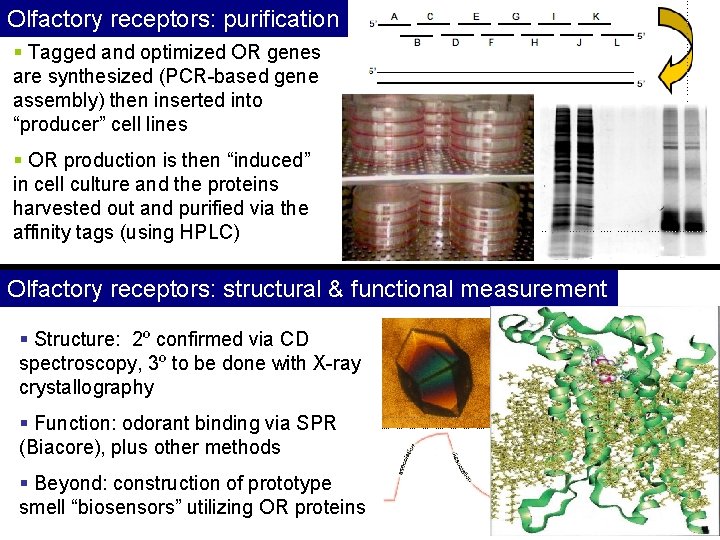
Olfactory receptors: purification § Tagged and optimized OR genes are synthesized (PCR-based gene assembly) then inserted into “producer” cell lines § OR production is then “induced” in cell culture and the proteins harvested out and purified via the affinity tags (using HPLC) Olfactory receptors: structural & functional measurement § Structure: 2º confirmed via CD spectroscopy, 3º to be done with X-ray crystallography § Function: odorant binding via SPR (Biacore), plus other methods § Beyond: construction of prototype smell “biosensors” utilizing OR proteins Andreas Mershin Center For Biomedical Engineering
- Slides: 7