
BOTTLE ROCKETS AND PARAMETRIC DESIGN IN A CONVERGINGDIVERGING
BOTTLE ROCKETS AND PARAMETRIC DESIGN IN A CONVERGING-DIVERGING DESIGN STRATEGY Paris R. von Lockette, Mechanical Eng. Dominic Acciani, Civil and Environmental Eng. Jennifer Courtney, Writing Arts Kevin Dahm, Chemical Eng. Chenguang Diao, Mechanical Eng. Roberta Harvey, Writing Arts Bernard Pietrucha, Electrical and Computer Eng. Will Riddell, Civil and Environmental Eng.
What is Design and what is Designing? Generating solutions to problems ¡ Making decisions and assessing the outcomes ¡ Creating products, devices, processes, or systems ¡ ¡ To formalize our approach, we develop a framework.
Dym’s Dichotomous Learning Models ¡ Engineering Science vs. Design l Engineering science places emphasis on the ability to apply mathematics and physical laws to the analysis and solution of problems. l Engineering design emphasizes the ability to generate ideas that satisfy requirements and conform to constraints.
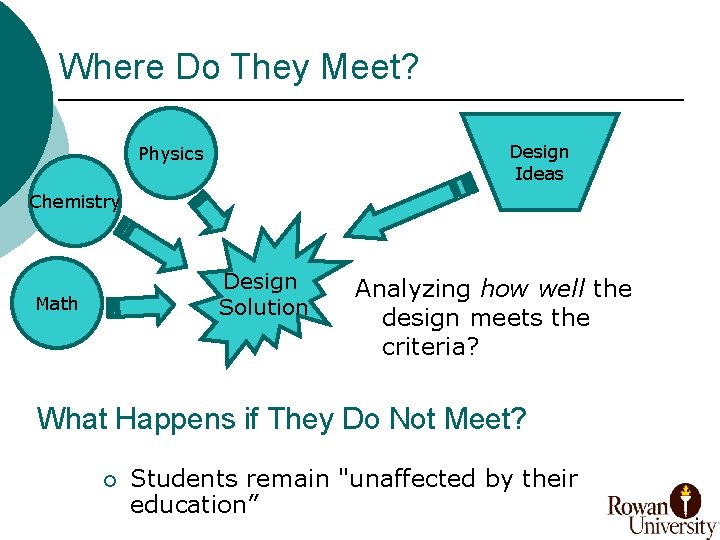
Where Do They Meet? Design Ideas Physics Chemistry Design Solution Math Analyzing how well the design meets the criteria? What Happens if They Do Not Meet? ¡ Students remain "unaffected by their education”
A Framework for Decision Making ¡ Converging-Diverging Thought Framework l Converging: decisions that move toward a solution within the design space l Diverging: decisions that broaden our design space
Convergent vs. Divergent Thinking ¡ ¡ Convergent thinking l (a) the generation of constructive design ideas l (b) analysis and problem solving that assesses a particular design’s efficacy. Divergent thinking l ideas that do not have to lead directly to the best solution or fall within the constraints.
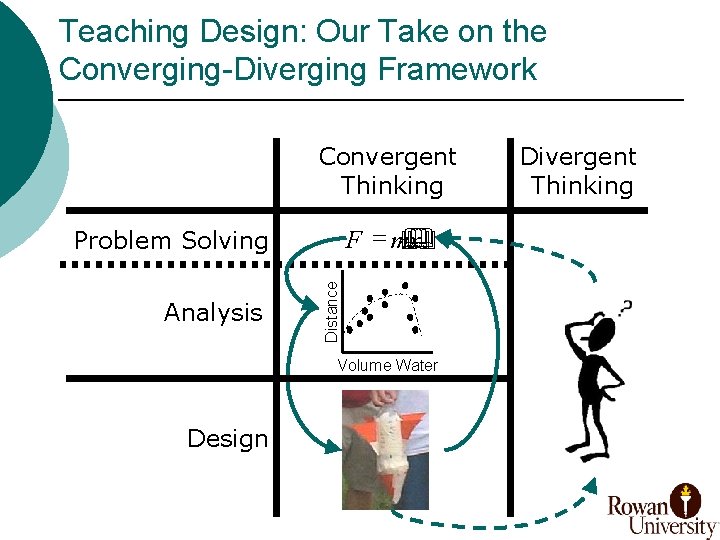
Teaching Design: Our Take on the Converging-Diverging Framework Convergent Thinking F = m& x & Analysis Distance Problem Solving Volume Water Design Divergent Thinking
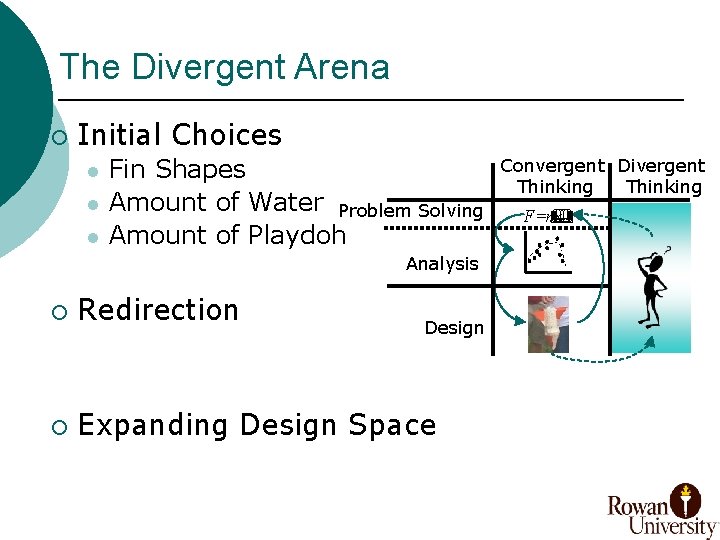
The Divergent Arena ¡ Initial Choices l l l Fin Shapes Amount of Water Problem Solving Amount of Playdoh Analysis ¡ Redirection ¡ Expanding Design Space Design Convergent Divergent Thinking F =m x & &
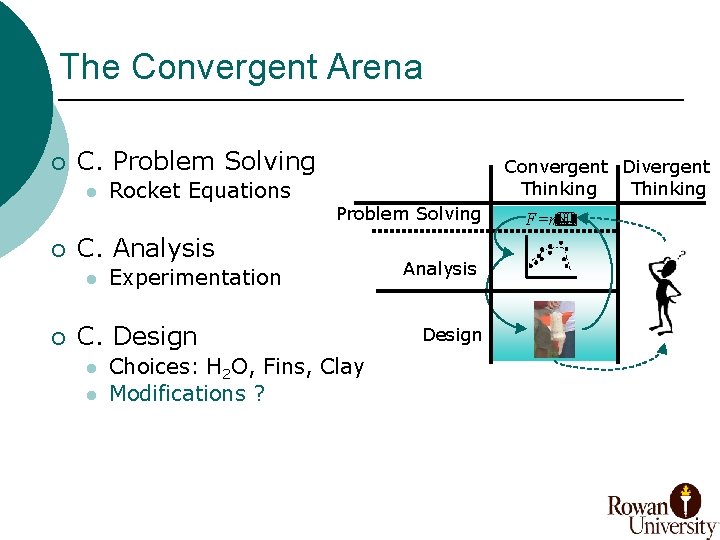
The Convergent Arena ¡ C. Problem Solving l ¡ Problem Solving C. Analysis l ¡ Rocket Equations Convergent Divergent Thinking Experimentation C. Design l l Choices: H 2 O, Fins, Clay Modifications ? Analysis Design F =m& x &
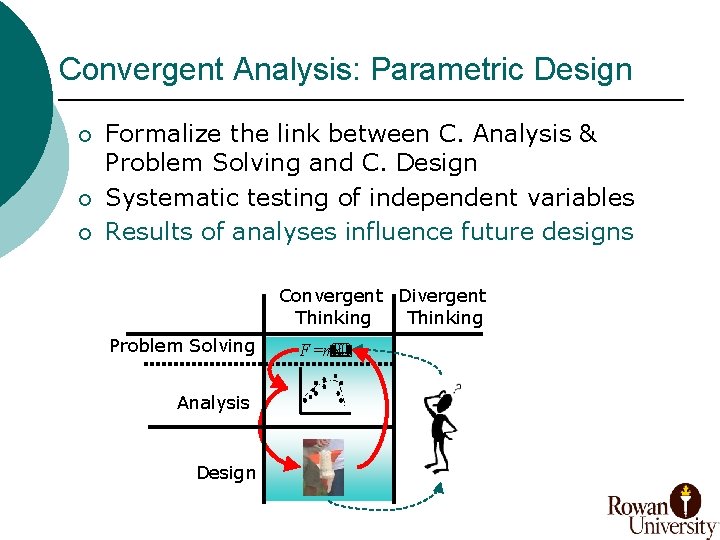
Convergent Analysis: Parametric Design ¡ ¡ ¡ Formalize the link between C. Analysis & Problem Solving and C. Design Systematic testing of independent variables Results of analyses influence future designs Convergent Divergent Thinking Problem Solving Analysis Design F =m& x &
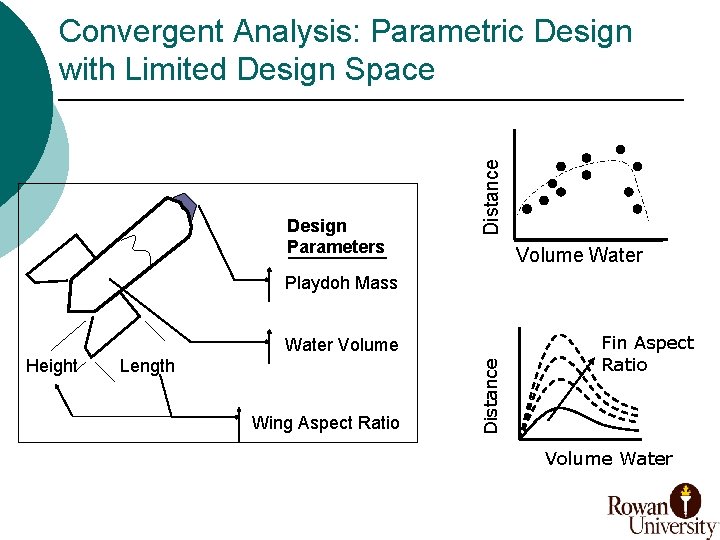
Design Parameters Distance Convergent Analysis: Parametric Design with Limited Design Space Volume Water Playdoh Mass Height Length Wing Aspect Ratio Distance Water Volume Fin Aspect Ratio Volume Water
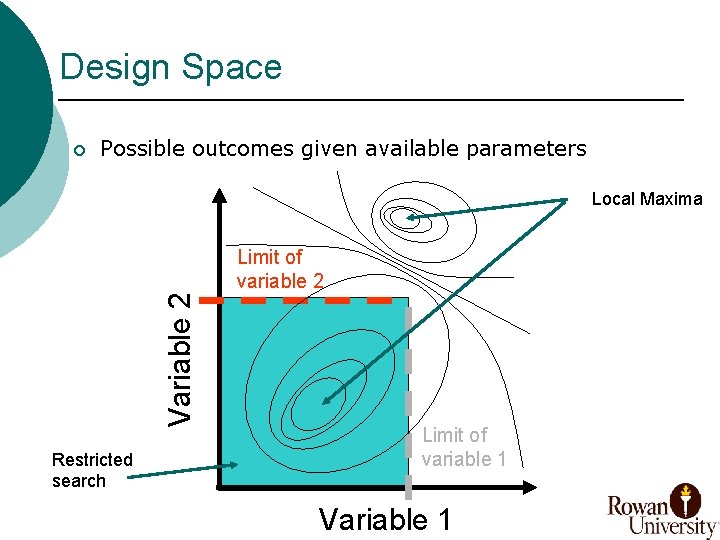
Design Space ¡ Possible outcomes given available parameters Variable 2 Local Maxima Restricted search Limit of variable 2 Limit of variable 1 Variable 1
Food for Thought ¡ 1. Identify what aspects of the project require/use convergent thinking. Make further delineations between which are convergent problem solving and which are convergent design? Identify and categorize as many as you can. l ¡ Hint: Generate a list of the decisions that you made and the thought processes that led to those decisions then work from that list. 2. Using the aspects of the project you have already identified above, discuss why you would consider the first day convergent or divergent thinking?
Food for Thought ¡ 3. Does the statement below describe a convergent experiment? Why or why not? l ¡ “While keeping the fins and the clay the same, vary the amount of water in the rocket, then re-test. Continue until you have several data points. ” 4. Assign at least one team member to take notes on the behavior of all the rockets during the launch off paying specific attention to the key parameters discussed above. Do you notice any trends or similarities in rockets that are successful (or unsuccessful)? If so what are they? If not, why do you think you do not see any trends?
- Slides: 14