
BOTSWANA POVERTY ENVIRONMENT INITIATIVE BRIEFING UNDPUNEP POVERTY ENVIRONMENT
BOTSWANA POVERTY & ENVIRONMENT INITIATIVE BRIEFING
UNDP-UNEP POVERTY & ENVIRONMENT INITIATIVE (PEI): HISTORY n UNDP POVERTY & ENVIRONMENT INITIATIVE n n n UNEP POVERTY & ENVIRONMENT PROJECT: n n Supported by DFID & EC Grew out of WSSD, PEP formed Supported by Norway & Belgium FORMED UNDP-UNEP PEI 2005 n Redesign of UNEP P & E activities n Joint programming, budgeting & staff recruitment n Leading example of interagency co-operation
UNDP-UNEP POVERTY & ENVIRONMENT INITIATIVE (PEI): WHAT WE DO Supporting governments to: n Integrate Environmental Sustainability into National Development Processes (e. g. PRSPs & NDPs) so that development is not undermined by unsustainable use of natural resources n Build National Capacity to: n Identify links between poverty & environment n Integrate environmental sustainability into national development processes
UNDP-UNEP POVERTY & ENVIRONMENT INITIATIVE (PEI): WHY WE DO IT n n n Unsustainable use of the environment reduces the social & economic benefits produced E. G. People get sick & die, farmers grow less & earn less Development is hindered by environmental damage The contribution of environment to social & economic development is often poorly understood Environmental sustainability not operationally integrated into national development processes (e. g. PRSPs): Words but not action.
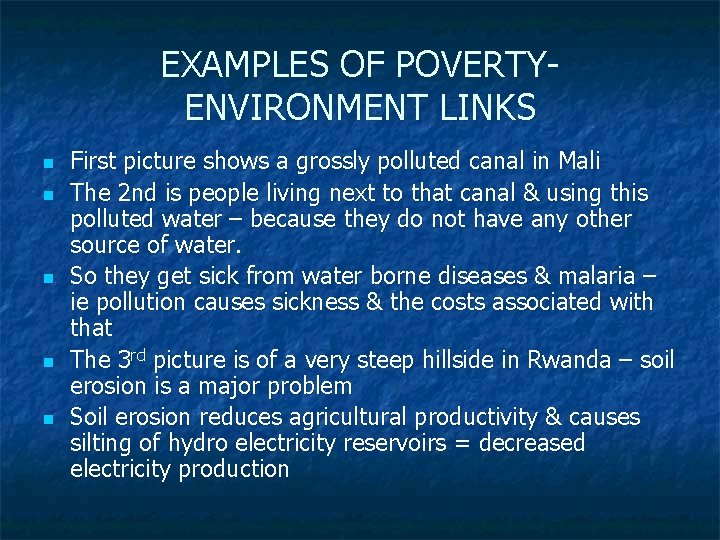
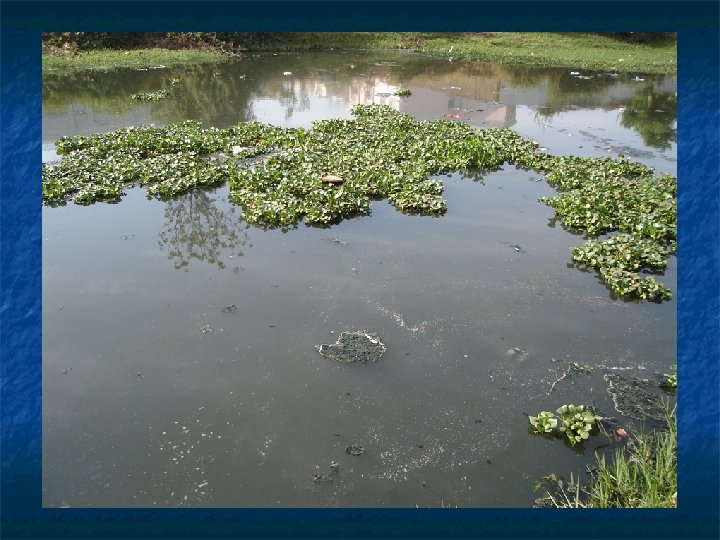
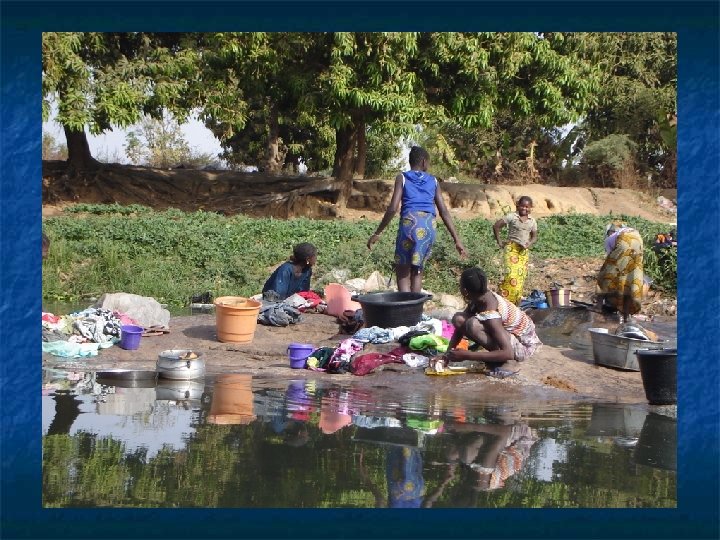
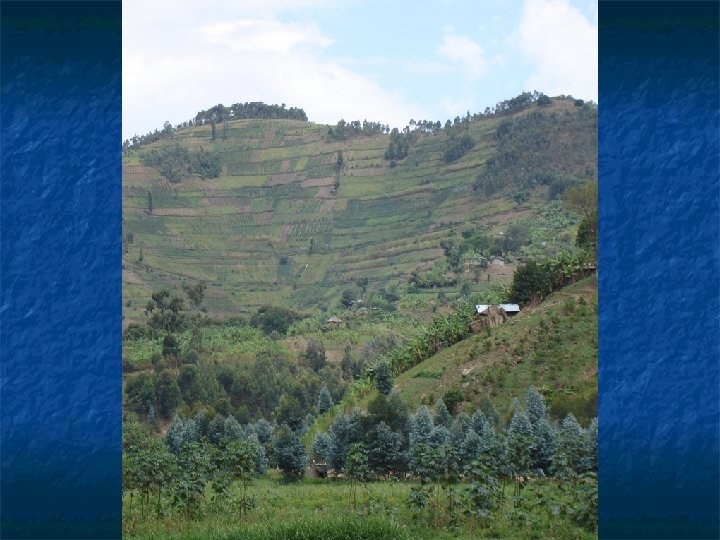
EXAMPLES OF POVERTYENVIRONMENT LINKS n n n First picture shows a grossly polluted canal in Mali The 2 nd is people living next to that canal & using this polluted water – because they do not have any other source of water. So they get sick from water borne diseases & malaria – ie pollution causes sickness & the costs associated with that The 3 rd picture is of a very steep hillside in Rwanda – soil erosion is a major problem Soil erosion reduces agricultural productivity & causes silting of hydro electricity reservoirs = decreased electricity production
UNDP-UNEP PEI: COUNTRY PROGRAMMES n n n Kenya, Uganda, Rwanda, Tanzania, Mozambique, Mali & Mauritania Experience in country PEI programmes = key lessons learnt & model for mainstreaming environment into development processes Proposal to scale-up to additional countries developed & accepted by key donors (EC, UK, Ireland, Denmark, Norway, Sweden, Belgium, Netherlands)
Implementation Approach n n n Country programme preparation (6 - 9 months) Country programme implementation -Phase I (18 -24 months) n Identifying links between environment & development n Operational integration of environment sustainability into national development plans Country programme implementation - Phase II (2 years +) n Strengthening country capacity to integrate environment into development processes at national & sectoral levels n Strengthened domestic revenue base for environmental investments (reducing dependence on donors)
Lessons n n n Need for comprehensive, programmatic approach to mainstreaming - a project approach will not work. Deep engagement necessary Focus on results not agency Very detailed mapping of government macro & sectoral policy, planning & decision-making processes (“machinery of government”), institutions & individuals relevant to the national development process is required. ‘Development Intelligence. ’ The Planning/Finance ministry must be an equal or the prime focal ministry in the process from the very beginning.
Lessons n n n A realistic assessment of country commitment at different levels & in both environment & planning ministries is necessary. Supporting a country-led environmental mainstreaming process has high transaction costs, because it is new, seeking to change government priorities & involves a number of ministries. ‘Stubborn persistence & attention to detail’ Detailed country-specific evidence on the links between environment, poverty reduction & pro-poor growth is needed to convince policy makers, economists & planners that investment in environment sustainability is worthwhile.
Lessons n n The application of integrated economic & environment project, programme & policy appraisals needs to become a standard operating procedures for planning/finance & sectoral ministries. Developing a full partnership approach with key incountry donors is vital for long term success on several fronts n n (Capacity building, sector mainstreaming, sustainable domestic financing for environmental sector) Timely support from UNDP Country Office critical.
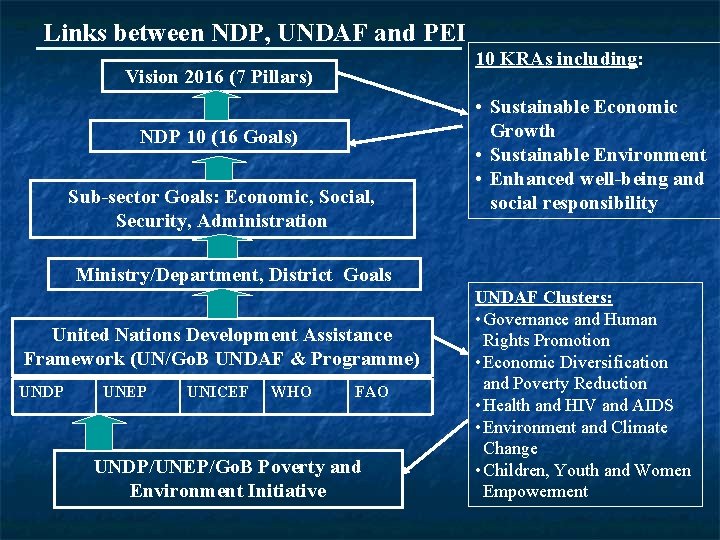
Links between NDP, UNDAF and PEI 10 KRAs including: Vision 2016 (7 Pillars) NDP 10 (16 Goals) Sub-sector Goals: Economic, Social, Security, Administration • Sustainable Economic Growth • Sustainable Environment • Enhanced well-being and social responsibility Ministry/Department, District Goals United Nations Development Assistance Framework (UN/Go. B UNDAF & Programme) UNDP UNEP UNICEF WHO FAO UNDP/UNEP/Go. B Poverty and Environment Initiative UNDAF Clusters: • Governance and Human Rights Promotion • Economic Diversification and Poverty Reduction • Health and HIV and AIDS • Environment and Climate Change • Children, Youth and Women Empowerment
Go. B/UNDP/UNEP Poverty and Environment Initiative (PEI) Stage 1: November 2008 – April 2009 To design a Go. B/UNDP/UNEP PEI programme that contribute to the achievement UNDAF and NDP 10 Outcomes. Key Activities: • Identification of key environment, growth and poverty reduction issues in Botswana • Institutional analysis and mapping of policy processes and initiatives, roles and responsibilities of Go. B and development partners related to environmental issues within the context of NDP 10 • Review NDP-10 and other relevant planning documents to identify entry points for mainstreaming environment into national sectoral and local level planning processes • Identify potential ‘champions’ in government, civil society, private sector, media and donors; focal points within government; and relevant donor and government-donor coordination mechanisms
Go. B/UNDP/UNEP Poverty and Environment Initiative (PEI) Stage 1: November – April 2009 Key Activities (continued) • Recommend effective implementation arrangements, e. g. establishment of an inter-departmental task team/steering committee/working groups that includes environment, planning/finance and key sectoral ministries. Results: • Enhanced awareness of the links between poverty and environment and economic growth and their contribution to national development priorities • Joint UN Programme to support the UNDAF and NDP outcomes that leads to improved integration of environmentally sustainable natural resource management in NDP-10, poverty and related sector strategies as well as increased resources for sustainable environment and natural resource management
Go. B/UNDP/UNEP Poverty and Environment Initiative (PEI) Stage 2; June/July 2009 – 2016 Implementation of Go. B/UNDP/UNEP PEI Programme that contributes to the following UNDAF Outputs Governance and Human Rights Promotion: • Effective coordination of collection, analysis and use of quality disaggregated data (statistics) in decision making • Strategy for the national statistical system developed Economic Diversification and Poverty Reduction: • National and District Frameworks developed for local economic and social development in all districts • Regulatory instruments to improve poor people’s access to financial services and productive assets/resources strengthened
Go. B/UNDP/UNEP Poverty and Environment Initiative (PEI) Economic Diversification and Poverty Reduction (contd. ): • Enhanced technical and oversight capacity of the Multi-Sectoral Committee on Poverty Reduction and the Socio-Economic Policy Sub-division of the Ministry of Finance and Development Planning to manage the implementation of the National Strategy for Poverty Reduction • Poverty reduction is mainstreamed into national and district development plans • Effective social protection mechanisms established based on vulnerability assessments, research and analysis. Environment and Climate Change: • Environment and conservation mainstreamed into national development and poverty reduction framework
Go. B/UNDP/UNEP Poverty and Environment Initiative (PEI) Next Steps: n Identification of National and International expertise to facilitate the consultative process for development of draft Joint Programme n Agreement with Government of Botswana on the PEI framework including resources and staffing n Implementation, monitoring and evaluation within the UNDAF implementation framework
Summary n n n Contribution of sustainable management of environmental natural resources to development priorities insufficiently recognised or integrated into national & sectoral development processes. Consequently, development priorities, including poverty reduction, will be more difficult to achieve. Environmental degradation is a serious issue in many countries in Africa and elsewhere UNDP-UNEP PEI supports mainstreaming of environment into national & sectoral development processes to reduce environmental degradation to help achieve development priorities in a sustainable manner. NDP & UNDAF key opportunity for a successful PEI in Botswana
- Slides: 20