
BoseEinstein Condensation Lesson This is the last lecture
Bose-Einstein Condensation Lesson • This is the last lecture from PHYS 1010 at CU Boulder and covers Bose-Einstein Condensation, as researched by Professor Carl Wieman. Multiple applets are used, including Temperature, Optical Molasses, Laser Cooling, and Evaporative Cooling, and there are two concept questions. • The lesson covers the physics (known as of 2003) of Bose. Einstein Condensation, its uses, and what is to be researched in the future.
Bose-Einstein condensation, Quantum weirdness at the lowest temperature in the universe JILA BEC Effort: Eric Cornell, Carl Wieman 1990 – Anderson, Ensher, Jin, Hall, Matthews, Myatt, Monroe, Claussen, Roberts, Cornish, Haljan, Donley, Thompson, Papp, Zirbel, Lewandowski, Harber, Coddington, Engels, Mc. Guirk, Hodby, . . . $$ (NSF, ONR, NIST) Part I. (1924 -95) Making Bose-Einstein Condensation in a gas BEC – a new form of matter predicted by Einstein in 1924 and first created in 1995 by our group. Part II. A bit of recent research with BEC
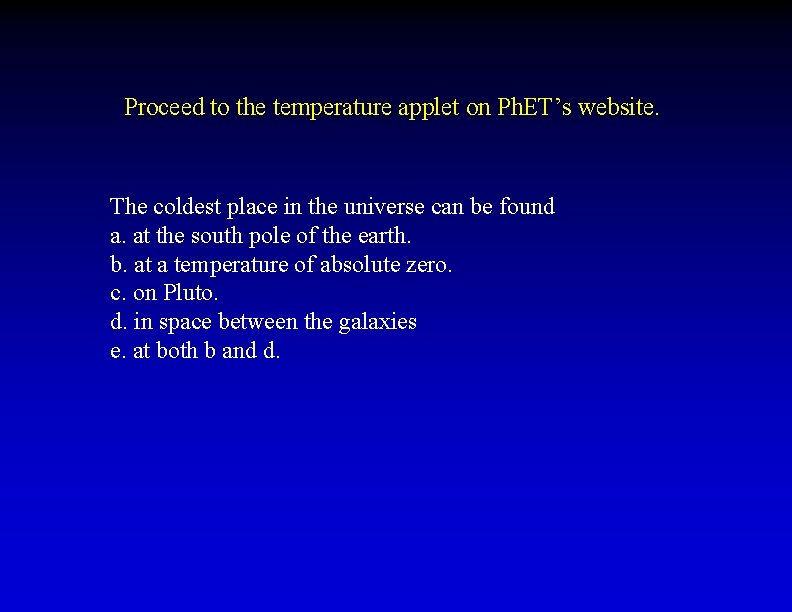
Proceed to the temperature applet on Ph. ET’s website. The coldest place in the universe can be found a. at the south pole of the earth. b. at a temperature of absolute zero. c. on Pluto. d. in space between the galaxies e. at both b and d.
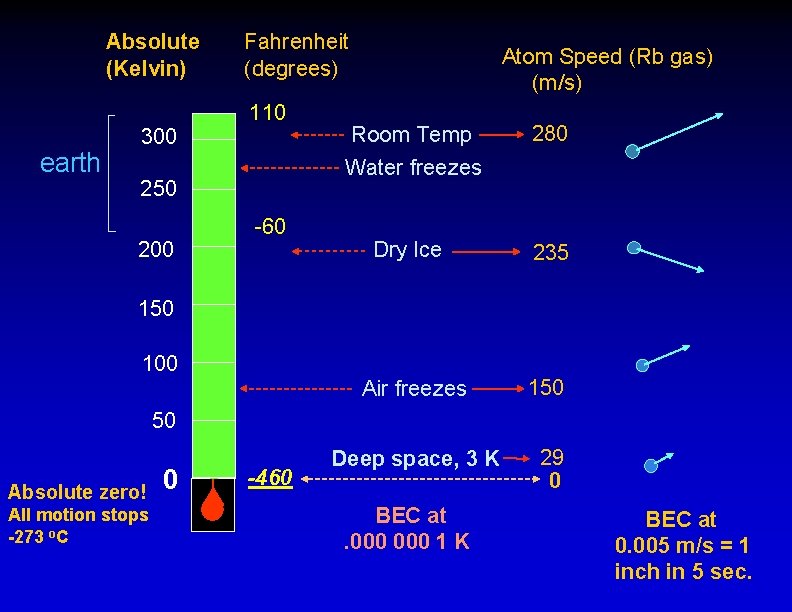
Absolute (Kelvin) earth 300 Fahrenheit (degrees) 110 Room Temp 280 Water freezes 250 200 Atom Speed (Rb gas) (m/s) -60 Dry Ice 235 150 100 Air freezes 150 Deep space, 3 K 29 0 50 Absolute zero! All motion stops -273 o. C 0 -460 BEC at. 000 1 K BEC at 0. 005 m/s = 1 inch in 5 sec.
CSIU
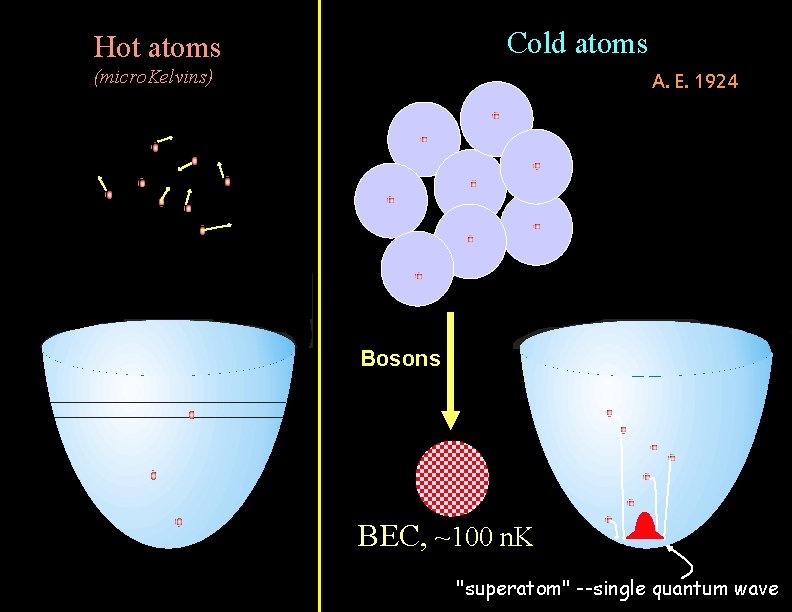
Cold atoms Hot atoms (micro. Kelvins) A. E. 1924 Bosons BEC, ~100 n. K "superatom" --single quantum wave
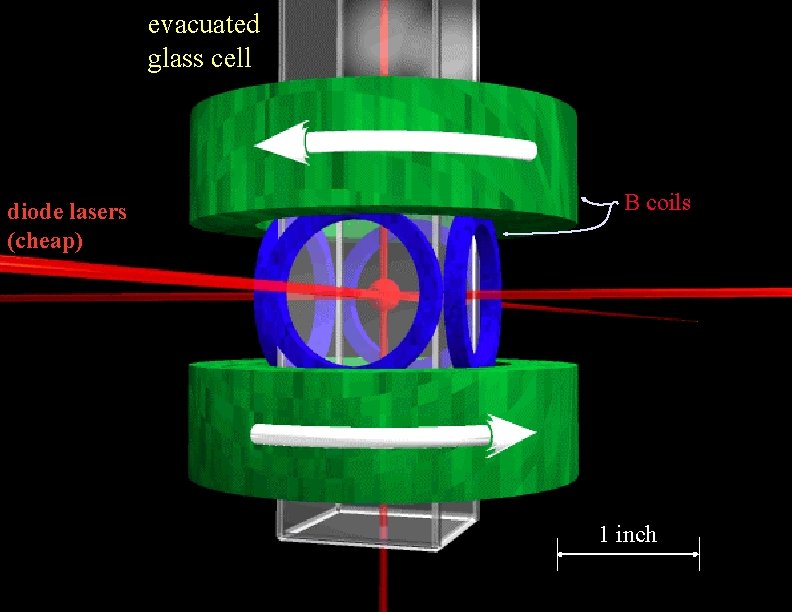
evacuated glass cell diode lasers (cheap) B coils 1 inch
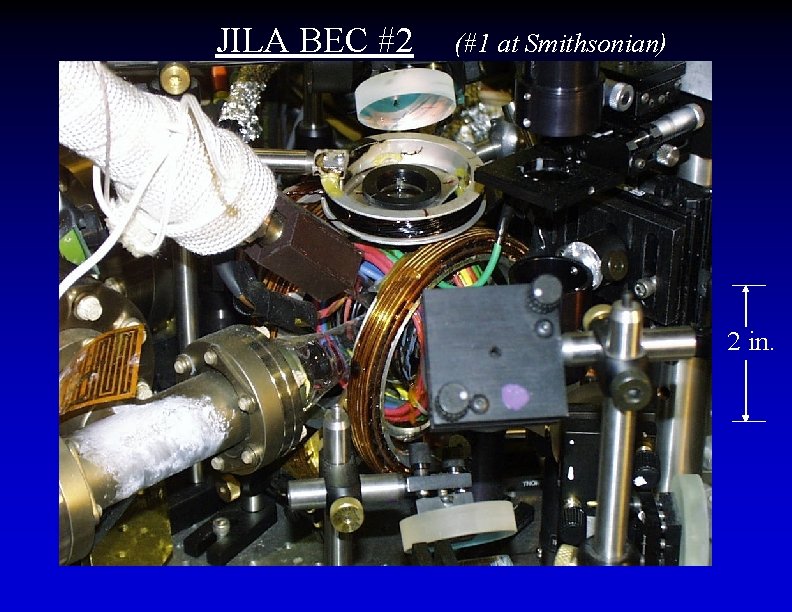
JILA BEC #2 (#1 at Smithsonian) 2 in.
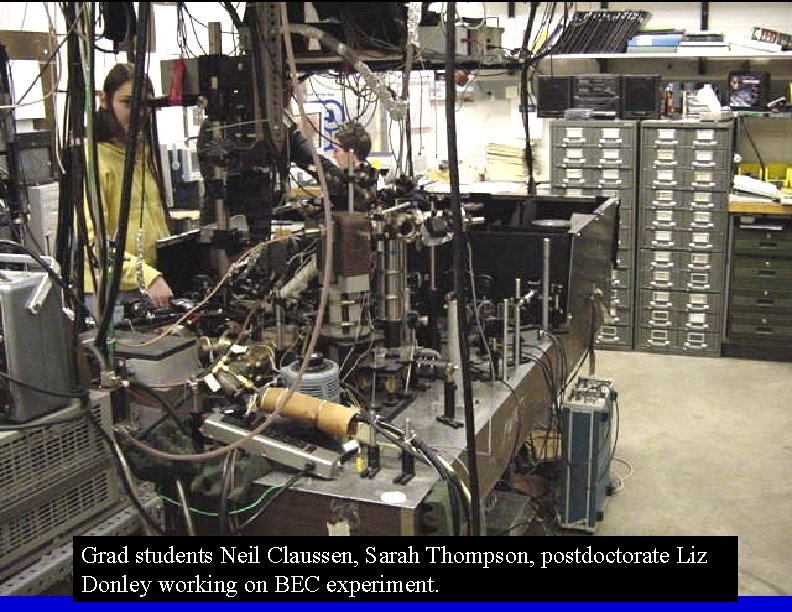
Grad students Neil Claussen, Sarah Thompson, postdoctorate Liz Donley working on BEC experiment.
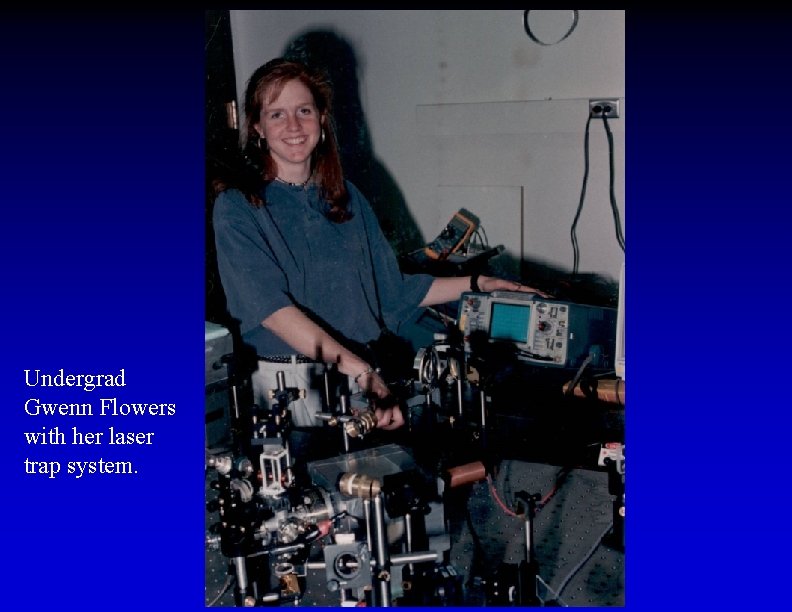
Undergrad Gwenn Flowers with her laser trap system.
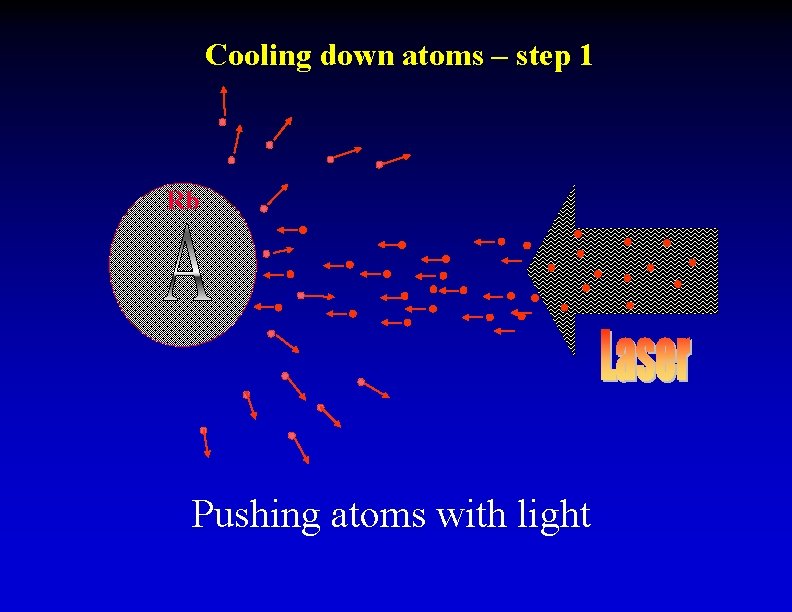
Cooling down atoms – step 1 Rb Pushing atoms with light
Gas atoms can absorb and radiate light a. of any color that shines on them. b. at any lower frequency than the light hitting them. c. only at particular precise frequencies or colors. d. in the visible part of the electromagnetic spectrum. Go to the laser cooling applet
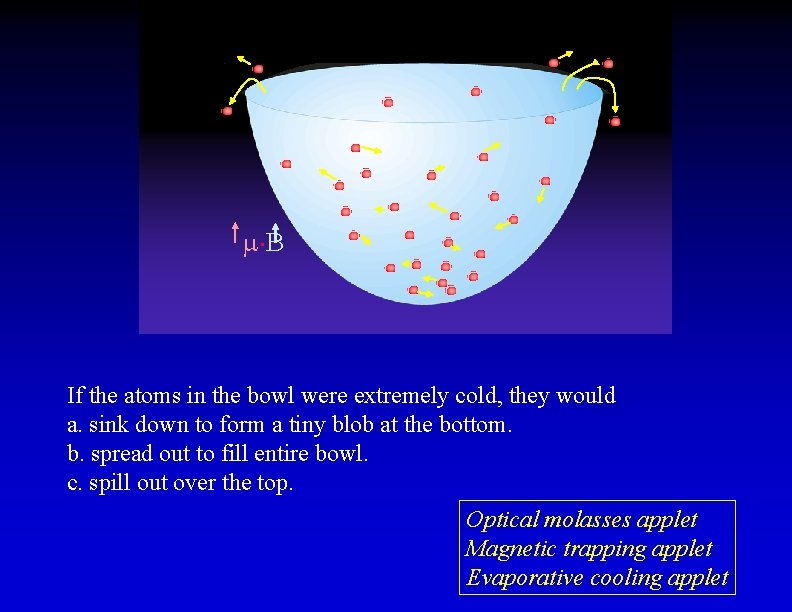
B If the atoms in the bowl were extremely cold, they would a. sink down to form a tiny blob at the bottom. b. spread out to fill entire bowl. c. spill out over the top. Optical molasses applet Magnetic trapping applet Evaporative cooling applet
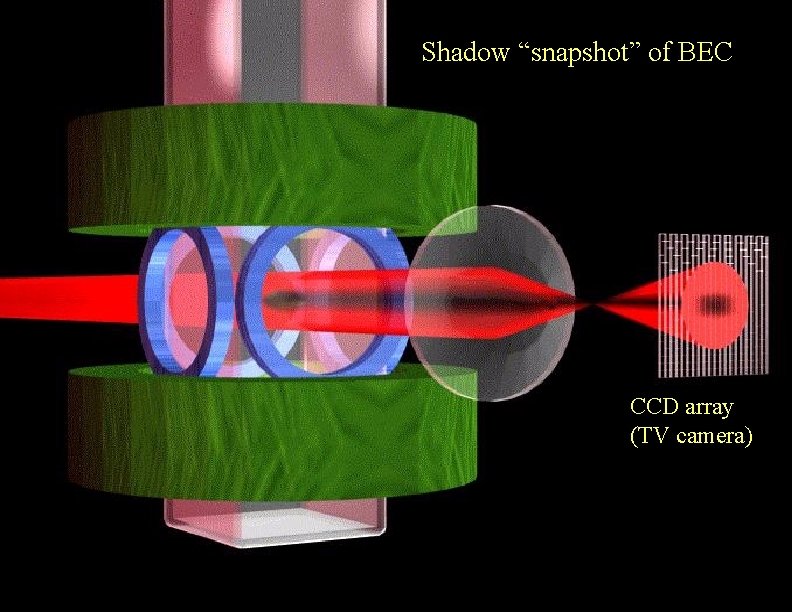
Shadow “snapshot” of BEC CCD array (TV camera)
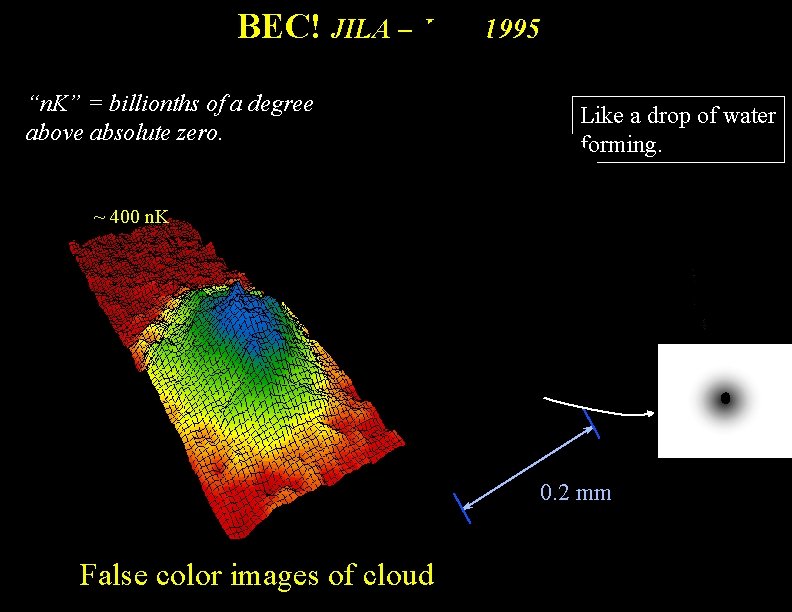
BEC! JILA – June 1995 “n. K” = billionths of a degree above absolute zero. ~ 50 n. K Like a drop of water forming. ~ 200 n. K ~ 400 n. K 0. 2 mm False color images of cloud
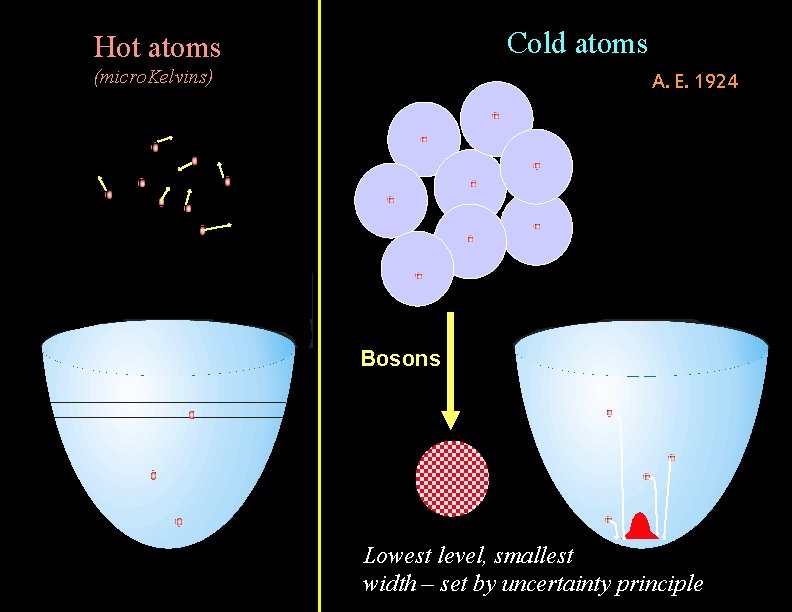
Cold atoms Hot atoms (micro. Kelvins) A. E. 1924 Bosons Lowest level, smallest width – set by uncertainty principle
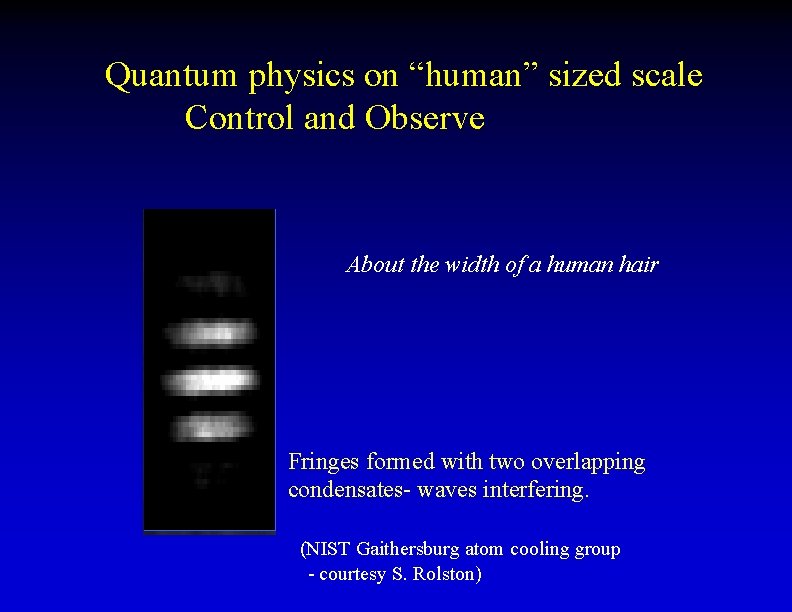
Quantum physics on “human” sized scale Control and Observe About the width of a human hair Fringes formed with two overlapping condensates- waves interfering. (NIST Gaithersburg atom cooling group - courtesy S. Rolston)
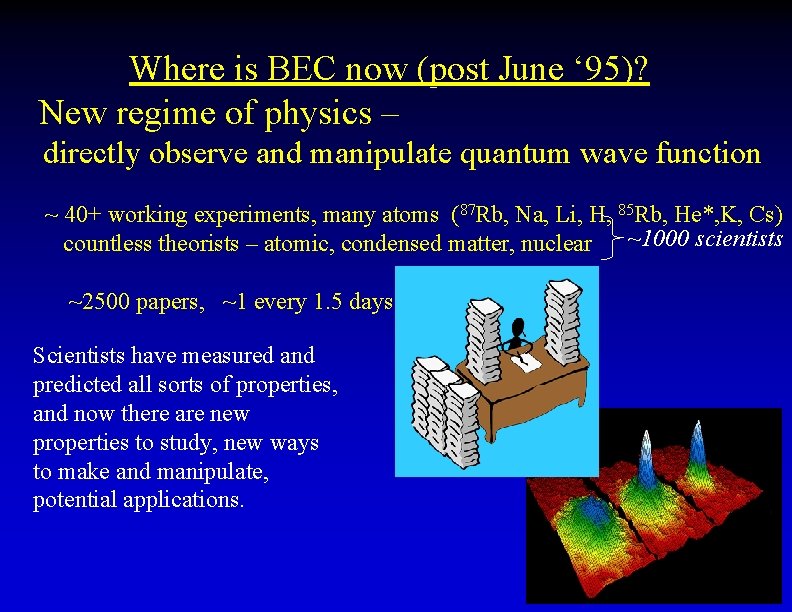
Where is BEC now (post June ‘ 95)? New regime of physics – directly observe and manipulate quantum wave function ~ 40+ working experiments, many atoms (87 Rb, Na, Li, H, 85 Rb, He*, K, Cs) ~1000 scientists countless theorists – atomic, condensed matter, nuclear ~2500 papers, ~1 every 1. 5 days Scientists have measured and predicted all sorts of properties, and now there are new properties to study, new ways to make and manipulate, potential applications.
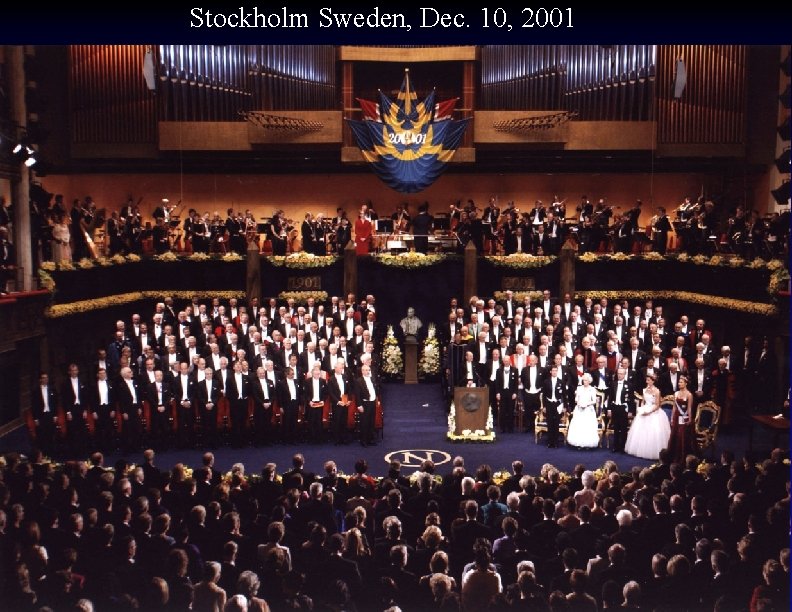
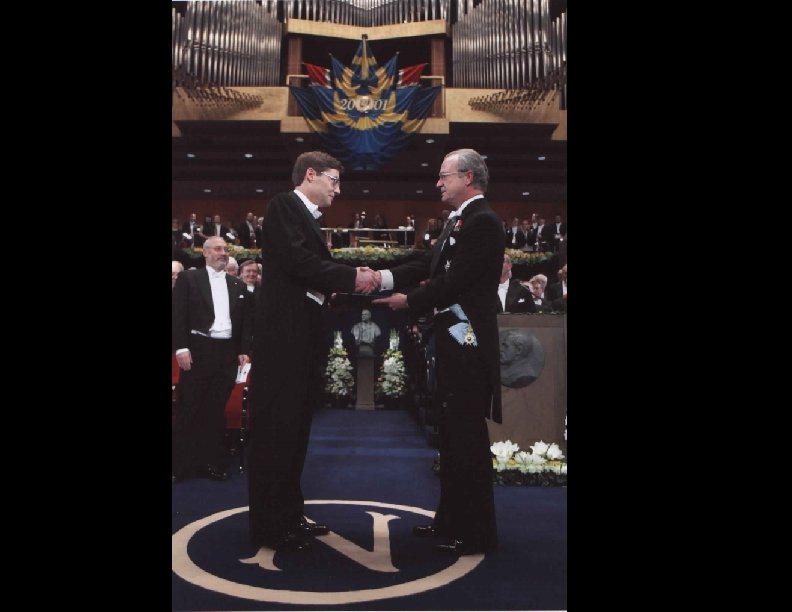
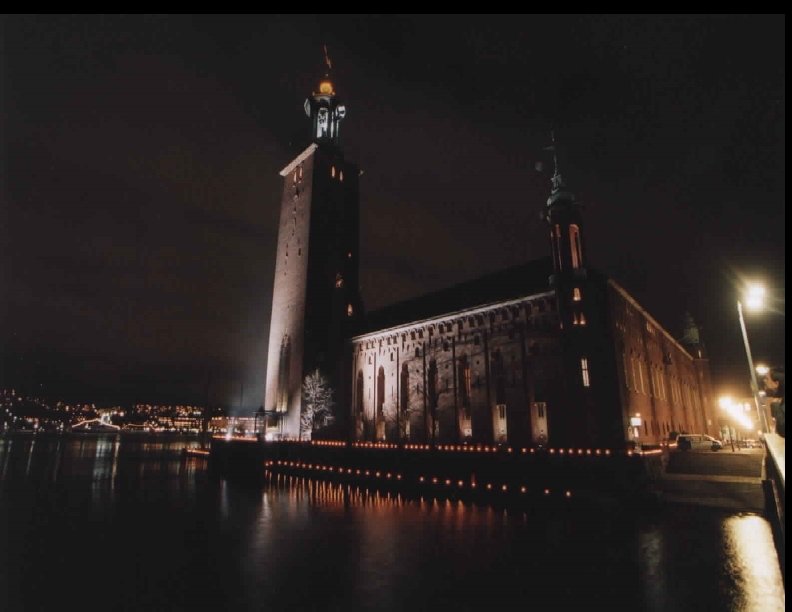
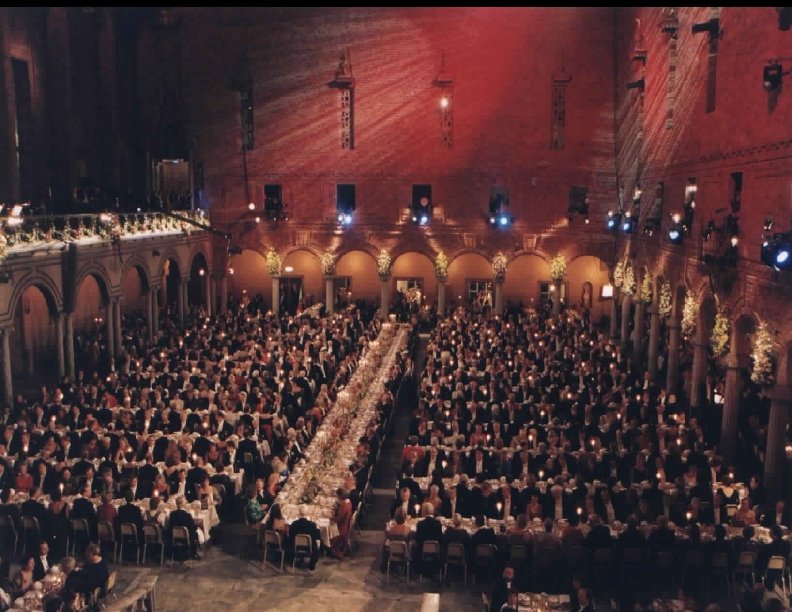
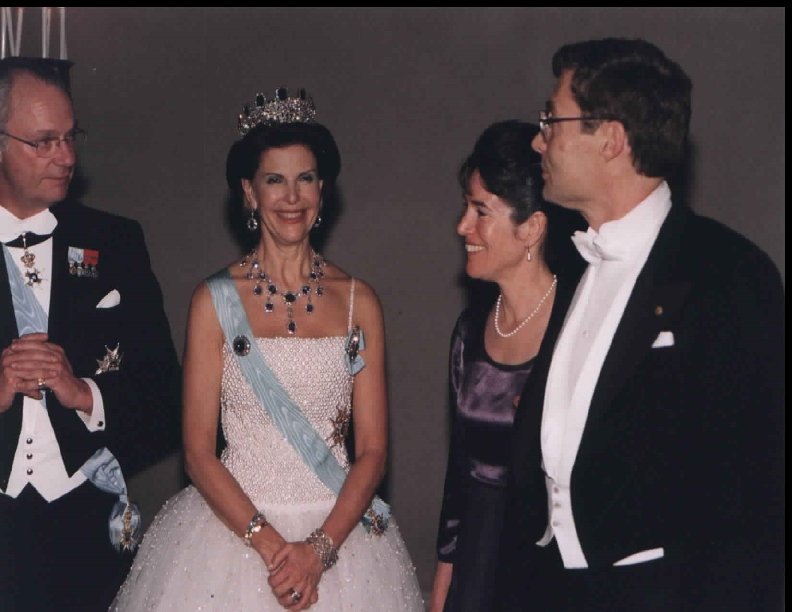
Stockholm Sweden, Dec. 10, 2001
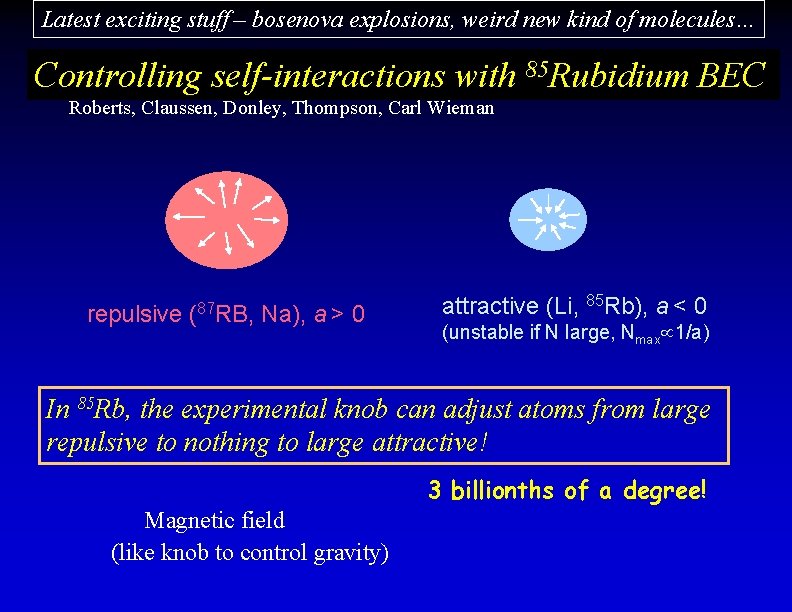
Latest exciting stuff – bosenova explosions, weird new kind of molecules… Controlling self-interactions with 85 Rubidium BEC Roberts, Claussen, Donley, Thompson, Carl Wieman repulsive (87 RB, Na), a > 0 attractive (Li, 85 Rb), a < 0 (unstable if N large, Nmax 1/a) In 85 Rb, the experimental knob can adjust atoms from large repulsive to nothing to large attractive! 3 billionths of a degree! Magnetic field (like knob to control gravity)
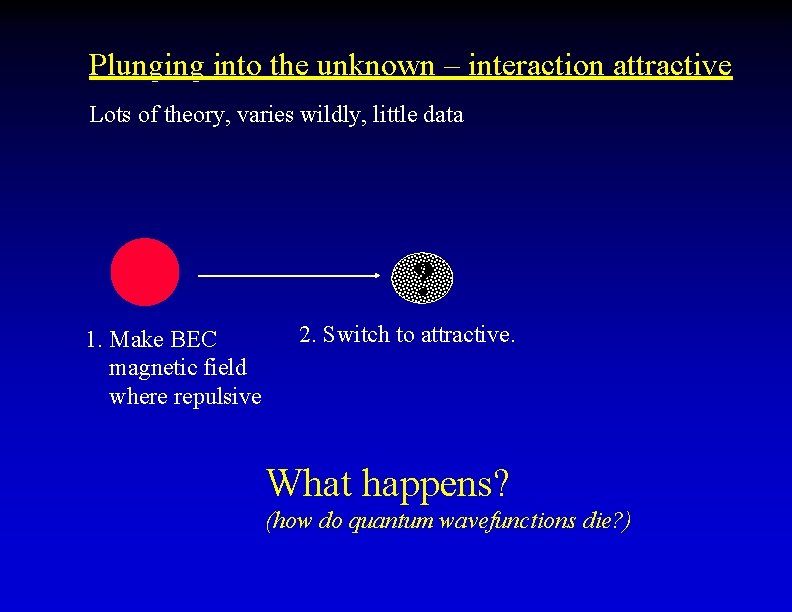
Plunging into the unknown – interaction attractive Lots of theory, varies wildly, little data ? 1. Make BEC magnetic field where repulsive 2. Switch to attractive. What happens? (how do quantum wavefunctions die? )
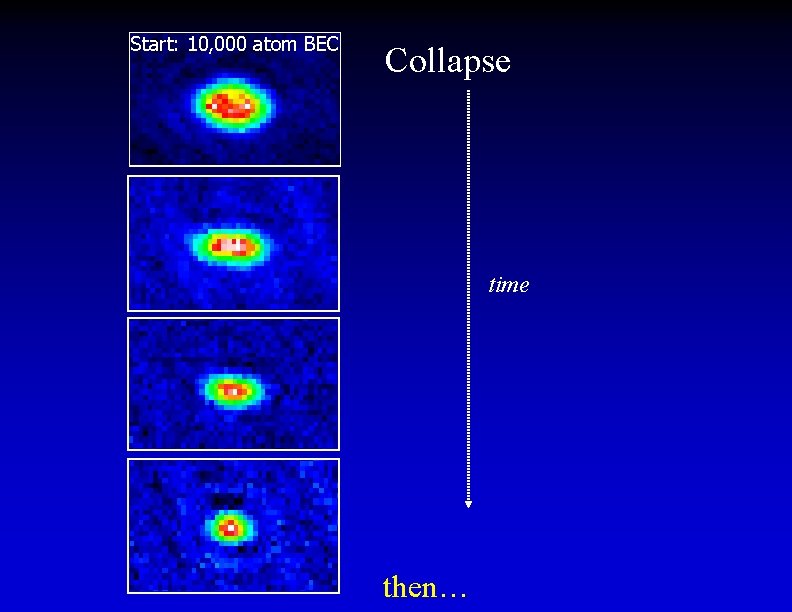
Start: 10, 000 atom BEC Collapse time then…
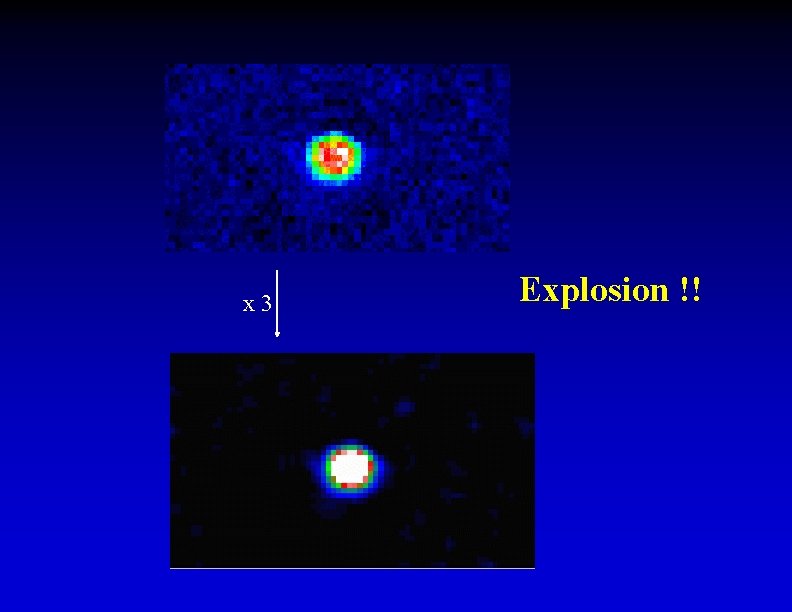
x 3 Explosion !!
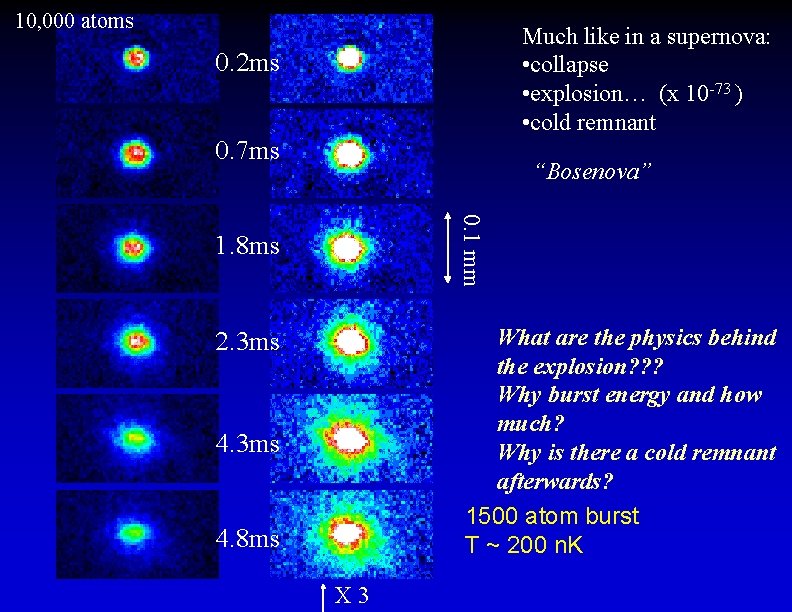
10, 000 atoms Much like in a supernova: • collapse • explosion… (x 10 -73 ) • cold remnant 0. 2 ms 0. 7 ms “Bosenova” 0. 1 mm 1. 8 ms What are the physics behind the explosion? ? ? Why burst energy and how much? Why is there a cold remnant afterwards? 1500 atom burst T ~ 200 n. K 2. 3 ms 4. 8 ms X 3
(What is it good for? ) I. Measure and understand properties a. New area of quantum world to explore – many surprises, Bosenova & weird giant molecules converted from BEC b. Physics relevant to behavior of smaller wires and computer chips. II. Uses (? ? )…in about 5 -20 years (“laser-like atoms”) a. Ultrasensitive detectors (time, gravity, rotation) see changes in phase of quantum wave b. Place very many atoms exactly where want them subnanofabrication (tiny stuff) The applets shown and many more can be found at www. colorado. edu/physics/2000/ For the BEC section, visit http: //www. colorado. edu/physics/2000/bec/index. html
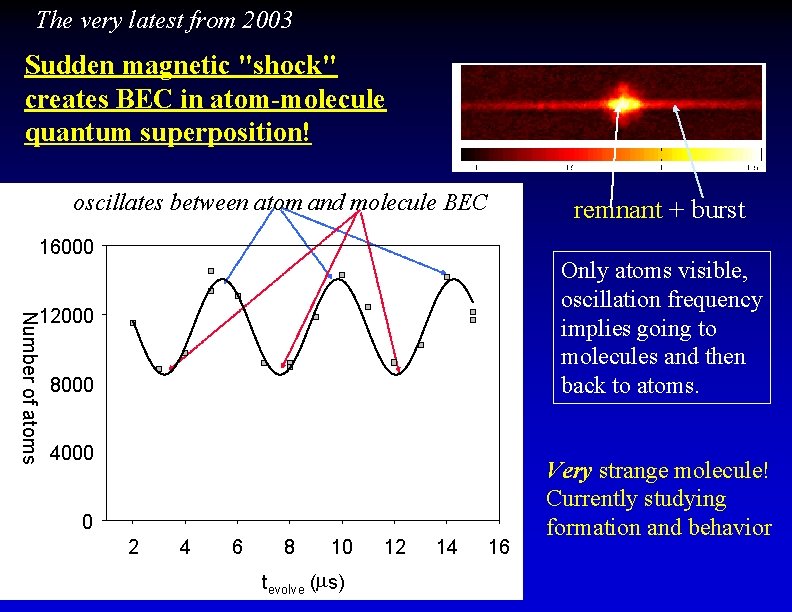
The very latest from 2003 Sudden magnetic "shock" creates BEC in atom-molecule quantum superposition! oscillates between atom and molecule BEC remnant + burst 16000 Only atoms visible, oscillation frequency implies going to molecules and then back to atoms. Number of atoms 12000 8000 4000 0 2 4 6 8 10 tevolve ( s) 12 14 16 Very strange molecule! Currently studying formation and behavior
- Slides: 32