
Boosting Reading Potential Reading is a message getting
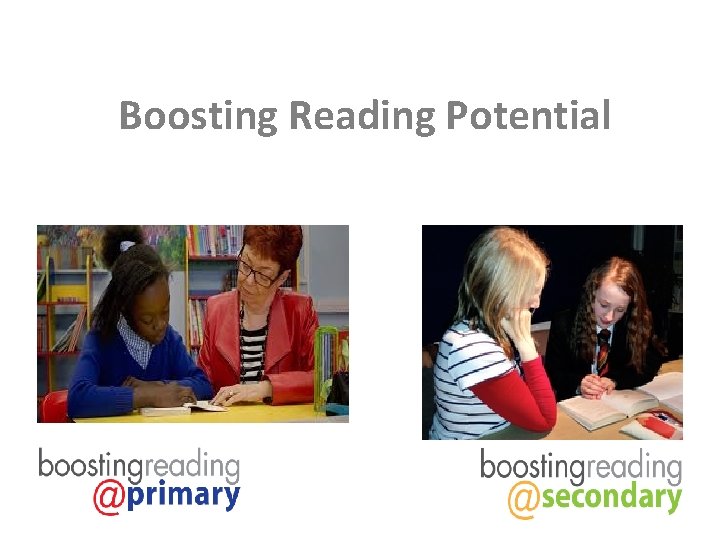
Boosting Reading Potential
‘Reading is a message getting, problem solving activity, which increases in power and flexibility the more it is practised’ Marie M. Clay (1991)
Introduction and background • Originally designed and piloted by members of the Bradford Literacy and Language team in 1995 in response to low levels of reading following an audit across the authority • BRP is nationally recognised as a literacy intervention for pupil who are falling behind the average of their class • The programme has proved effective in helping to improve standards in reading and quality training for support staff and volunteers • supports the tradition of involving the whole school community in helping children to become better readers • Recently redeveloped as BR@P and BR@S
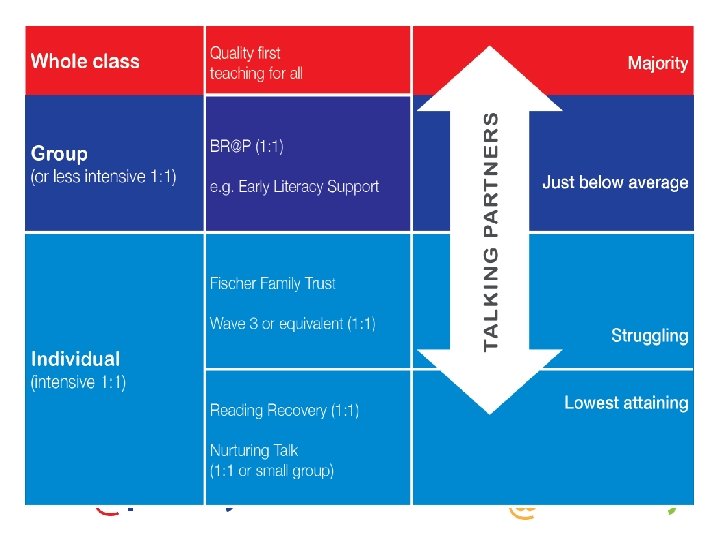
What is it? • One to one additional support for reading • Ten week programme- 15 minutes three times a week, following a common lesson structure • Focused on development of independent reading strategies and developing understanding of text • Modular training course for staff and volunteers
Who is it for? Pupils from year 1 to year 9: • KS 1 pupils just below the average of their class who lack the confidence to ‘have a try’ • KS 2 and KS 3 pupils whose reading age is two to three years below their chronological age • EAL pupils to support language, reading development and comprehension • Pupils who need to develop their understanding at an inferential level
Who is the training for? • School staff including: - support assistants - teaching assistants - learning mentors • Parent volunteers • Business volunteers • Sixth formers
Research evidence underpins BR (1) Education Endowment Foundation Toolkit: • Feedback and the development of meta-cognition and self-regulation are high impact factors in developing independent learning (+8 months progress) • Approaches that focus on reading comprehension have moderate impact and are particularly effective for older (8 and over) struggling readers (+5 months progress) • Approaches that focus on phonics have moderate impact and are beneficial for younger learners (4 -7) when embedded in a rich literacy environment (+4 months progress)
Research evidence underpins BR (2) • One to one tuition 3 -5 times per week over a set time leads to optimal impact when linked with teaching and with progress monitored by teachers (+5 months progress) • When TAs deliver structured programmes with high -quality support and training, they can have a positive impact on pupil learning
Boosting reading: Evidence of effectiveness • Data collected from 1995 onwards shows that Boosting Reading consistently raises attainment for pupils who have been struggling with a wide range of reading difficulties • Results from 2013 -4 indicate pupils made on average 1 year 2 months progress during the 10 week programme ( Results from 673 pupils from 12 different LA)
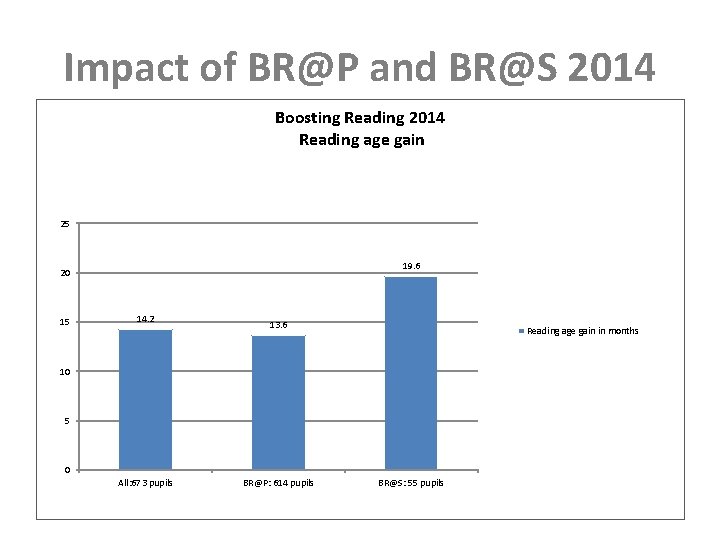
Impact of BR@P and BR@S 2014 Boosting Reading 2014 Reading age gain 25 19. 6 20 15 14. 2 13. 6 Reading age gain in months 10 5 0 All: 673 pupils BR@P: 614 pupils BR@S: 55 pupils
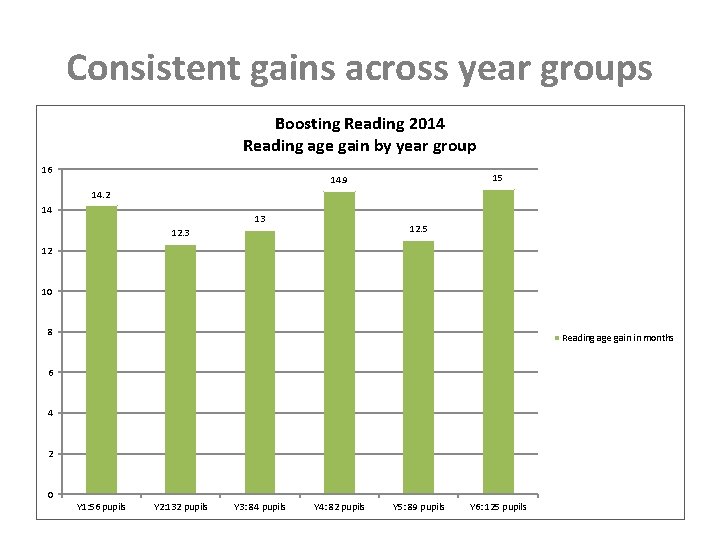
Consistent gains across year groups Boosting Reading 2014 Reading age gain by year group 16 15 14. 9 14. 2 14 13 12. 5 12. 3 12 10 8 Reading age gain in months 6 4 2 0 Y 1: 56 pupils Y 2: 132 pupils Y 3: 84 pupils Y 4: 82 pupils Y 5: 89 pupils Y 6: 125 pupils
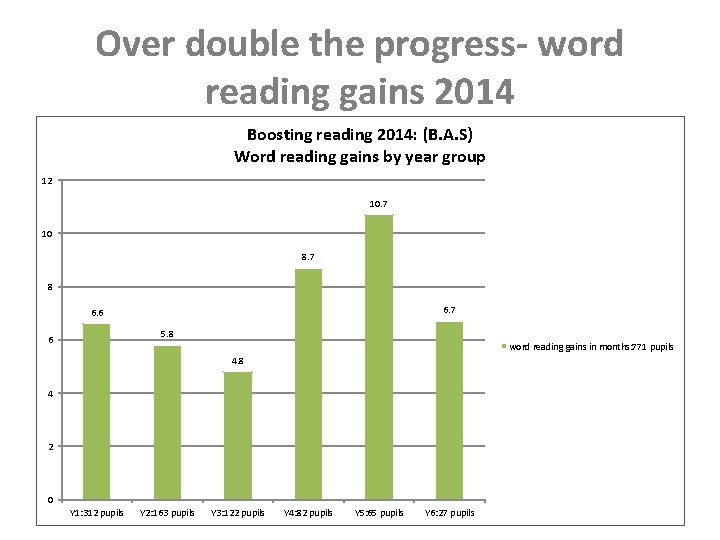
Over double the progress- word reading gains 2014 Boosting reading 2014: (B. A. S) Word reading gains by year group 12 10. 7 10 8. 7 8 6. 7 6. 6 5. 8 6 word reading gains in months: 771 pupils 4. 8 4 2 0 Y 1: 312 pupils Y 2: 163 pupils Y 3: 122 pupils Y 4: 82 pupils Y 5: 65 pupils Y 6: 27 pupils
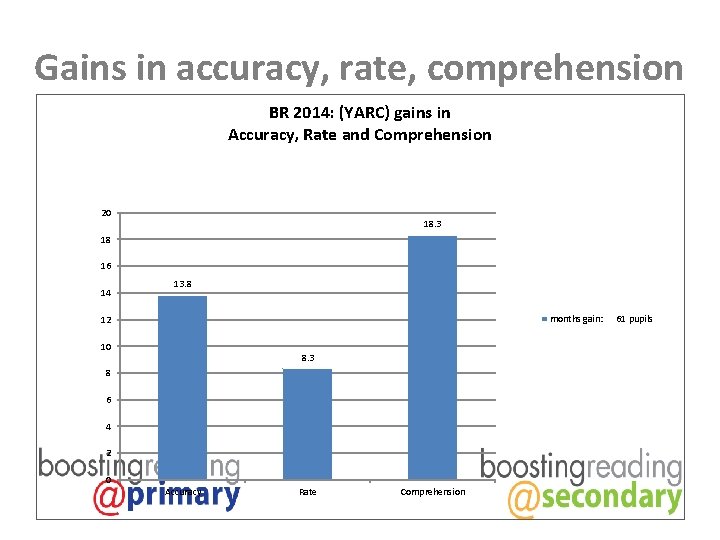
Gains in accuracy, rate, comprehension BR 2014: (YARC) gains in Accuracy, Rate and Comprehension 20 18. 3 18 16 14 13. 8 months gain: 12 10 8. 3 8 6 4 2 0 Accuracy Rate Comprehension 61 pupils
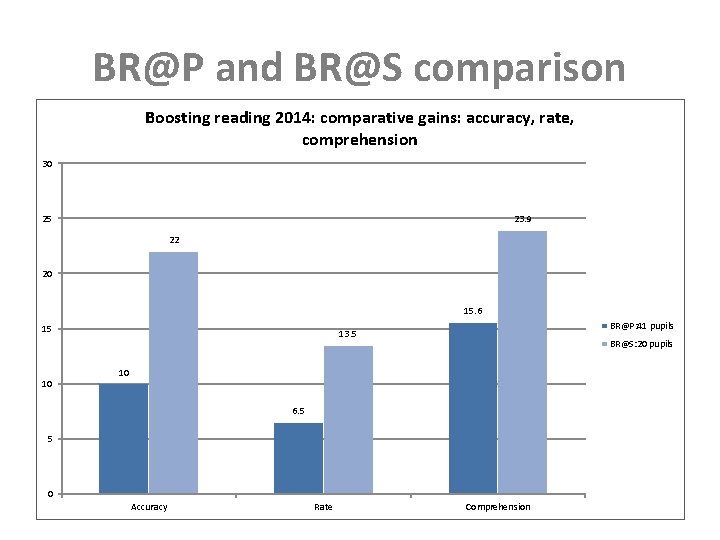
BR@P and BR@S comparison Boosting reading 2014: comparative gains: accuracy, rate, comprehension 30 25 23. 9 22 20 15. 6 15 10 BR@P: 41 pupils 13. 5 BR@S: 20 pupils 10 6. 5 5 0 Accuracy Rate Comprehension
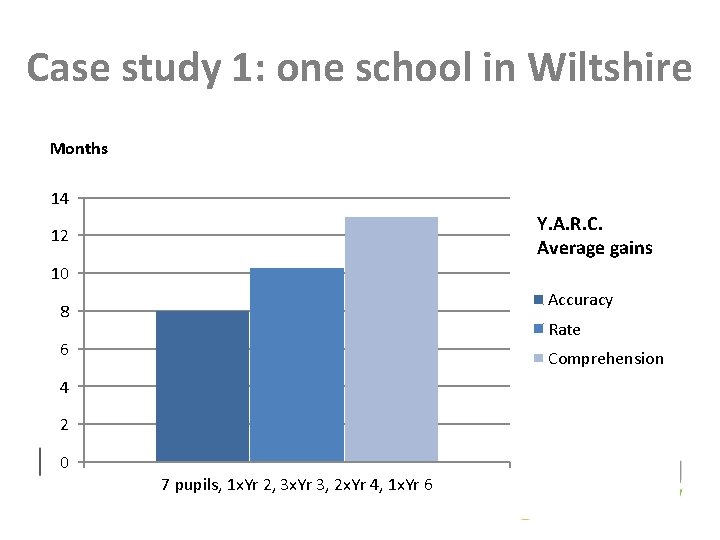
Case study 1: one school in Wiltshire Months 14 Y. A. R. C. Average gains 12 10 Accuracy 8 Rate 6 Comprehension 4 2 0 7 pupils, 1 x. Yr 2, 3 x. Yr 3, 2 x. Yr 4, 1 x. Yr 6
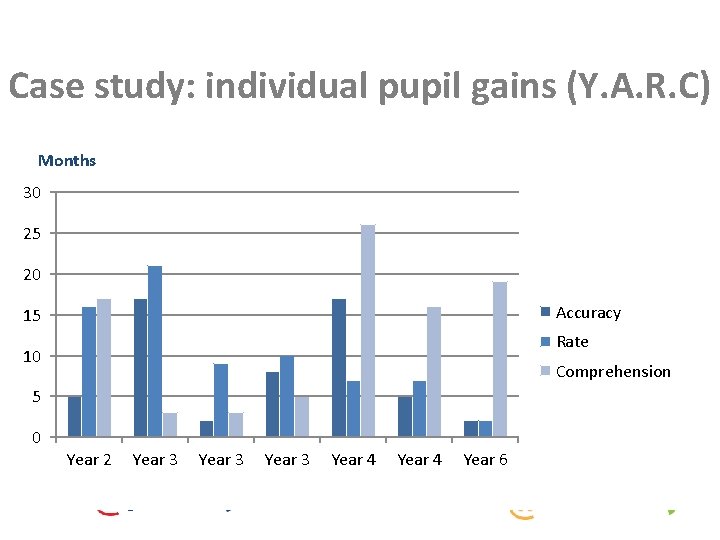
Case study: individual pupil gains (Y. A. R. C) Months 30 25 20 Accuracy 15 Rate 10 Comprehension 5 0 Year 2 Year 3 Year 4 Year 6
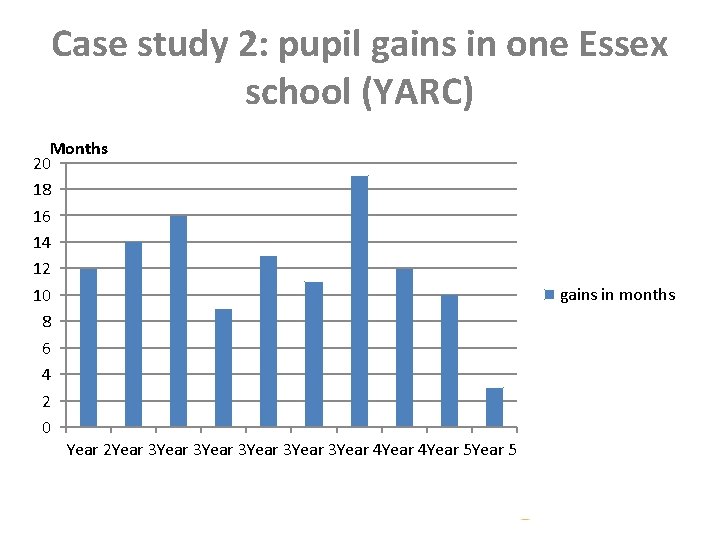
Case study 2: pupil gains in one Essex school (YARC) Months 20 18 16 14 12 10 8 6 4 2 0 Year 2 Year 3 Year 3 Year 4 Year 5 gains in months
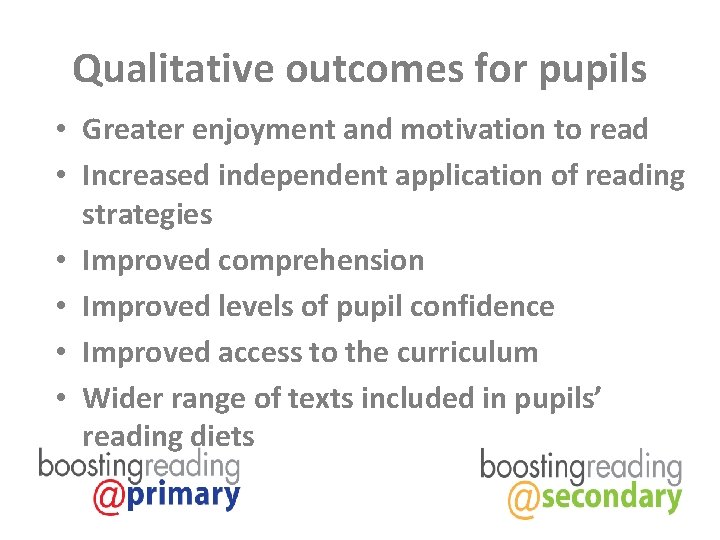
Qualitative outcomes for pupils • Greater enjoyment and motivation to read • Increased independent application of reading strategies • Improved comprehension • Improved levels of pupil confidence • Improved access to the curriculum • Wider range of texts included in pupils’ reading diets
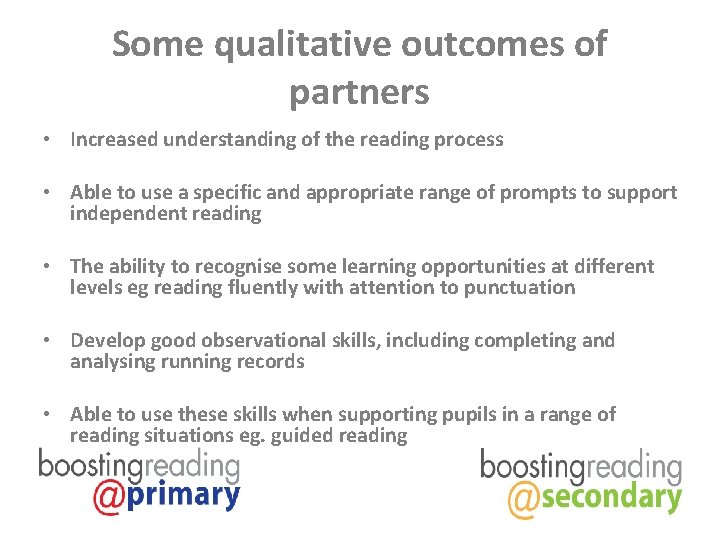
Some qualitative outcomes of partners • Increased understanding of the reading process • Able to use a specific and appropriate range of prompts to support independent reading • The ability to recognise some learning opportunities at different levels eg reading fluently with attention to punctuation • Develop good observational skills, including completing and analysing running records • Able to use these skills when supporting pupils in a range of reading situations eg. guided reading
The training course Based on practice, discussion and reflection, it includes: • Direct observations of BR@P and BR@S lessons • The reading process • Developing a broad and inclusive range of teaching strategies • Asking questions to assist pupils make meaning from • text • Record keeping and running records assessment • procedures • Choosing appropriate texts •
The role of the coordinator • Support Partners - regular meetings, additional training • Assess and select pupils for programme • Monitor and evaluate - Reading Partners, programme operation, pupil progress • Set targets for reading • Inform and communicate with parents and liaise with staff • Identify and level resources • Timetable pupils and find space to operate • Raise the profile of BR@P/ BR@S in school • Celebrate success!
Quotes from coordinators • Four Y 6 pupils targeted to boost confidence for SATs and it worked! • His confidence has greatly improved and she recently read a poem she had written in Y 8 assembly • A definite gain in confidence that has impacted on all his work (Y 2 pupil) • Improved spelling (Y 2 pupil) • Developed confidence in writing (Y 3 pupil) • Reading is more fun now for these children!
- Slides: 23