
Boom Construction Overview Objectives Background Materials Procedure Rules
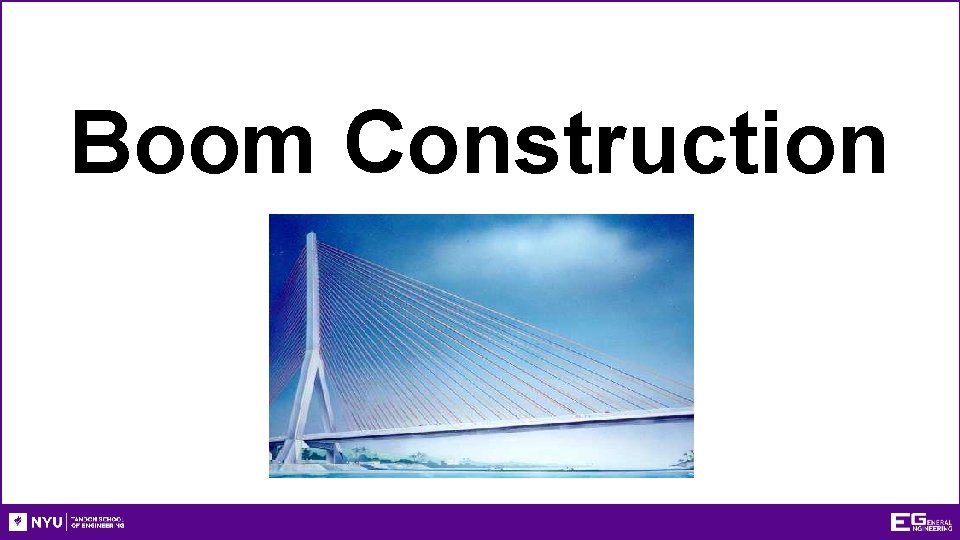
Boom Construction
Overview • Objectives • Background • Materials • Procedure • Rules of the Competition • Report/Presentation • Closing
Objectives • What is a boom? • How and why do materials fail? • Stress and strain • Design light-weight boom to hold significant load • Understand factors engineers consider when designing a boom • Construct and test boom
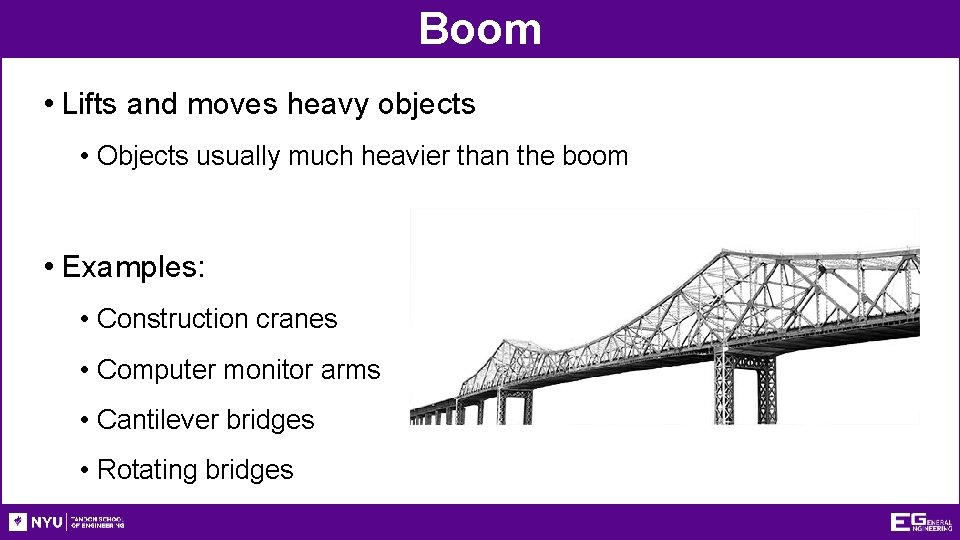
Boom • Lifts and moves heavy objects • Objects usually much heavier than the boom • Examples: • Construction cranes • Computer monitor arms • Cantilever bridges • Rotating bridges
Common Structural Modes of Failure • Corrosion • Thermal cycling • Thermal shock • Breakage under load • Instant fracture • Delayed response (fatigue)
Corrosion • Exposure to caustic chemical for extended periods • Acids • Salt • Water (rust) • Air (oxidation) • Substances and material react • Material weakened by being “eaten away” • Examples: • Iron rusting (exposing iron to water) • Wind blowing sand on rocks, bridges, etc.
Thermal Cycling • Material’s temperature changes continuously over time • Material cracks or shatters due to stresses created by expansion/contraction • Example: • Elastic in clothes cracks once removed from clothes dryer
Thermal Shock • Material undergoes extreme temperature changes in a short time period • Mixed temperatures throughout material cause compression and expansion, resulting in cracks • Example: • Hot glass bottle placed into ice cold water, bottle would explode and shatter
Breakage Under Load • Maximum load supported by material is exceeded • Material cracks/crumbles (i. e. thermal shock) • Over usage • Too many load cycles
Stress and Strain • Stress: measure of internal force that keeps material together • Resists from change of body • Strain: measure of deformation (elongation/compression) of material • Change from original dimension • Examples: • Stretching of rope while pulling • Car tire under load
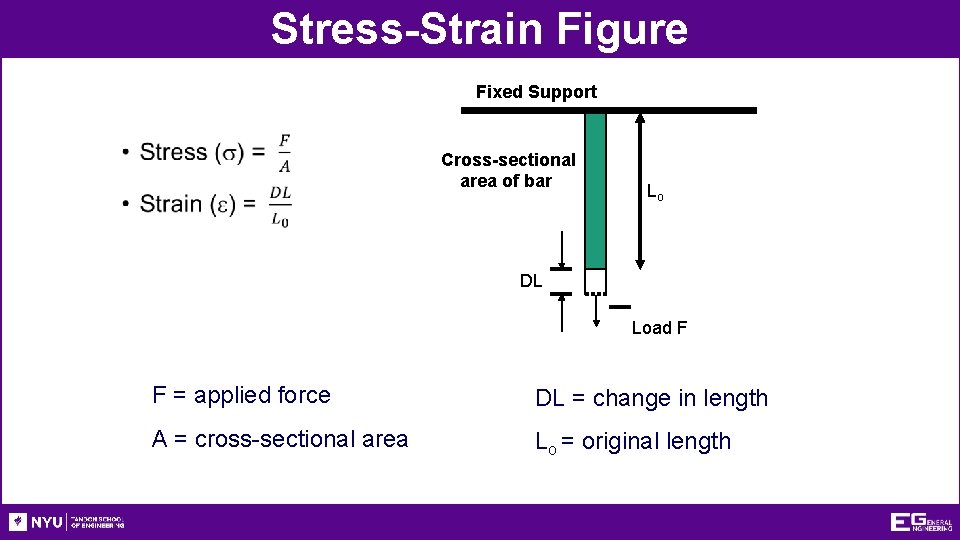
Stress-Strain Figure Fixed Support • Cross-sectional area of bar Lo DL Load F F = applied force DL = change in length A = cross-sectional area Lo = original length
![Stress-Strain Graph UTS • Key points/regions {P} Stress (s) [Pa] • UTS (Ultimate Tensile](http://slidetodoc.com/presentation_image_h2/44074d01792f126c71d207f253566d13/image-12.jpg "Stress-Strain Graph UTS • Key points/regions {P} Stress (s) [Pa] • UTS (Ultimate Tensile")
Stress-Strain Graph UTS • Key points/regions {P} Stress (s) [Pa] • UTS (Ultimate Tensile Strength) • Fracture Stress {E} • Elastic Region {E} Fracture Stress Strain (e) [mm/mm] • Plastic Region {P}
![Stress-Strain Graph UTS {P} Stress (s) [Pa] {E} Fracture Stress Strain (e) [mm/mm]](http://slidetodoc.com/presentation_image_h2/44074d01792f126c71d207f253566d13/image-13.jpg "Stress-Strain Graph UTS {P} Stress (s) [Pa] {E} Fracture Stress Strain (e) [mm/mm]")
Stress-Strain Graph UTS {P} Stress (s) [Pa] {E} Fracture Stress Strain (e) [mm/mm]
![Stress-Strain Graph UTS {P} Stress (s) [Pa] {E} Fracture Stress Strain (e) [mm/mm]](http://slidetodoc.com/presentation_image_h2/44074d01792f126c71d207f253566d13/image-14.jpg "Stress-Strain Graph UTS {P} Stress (s) [Pa] {E} Fracture Stress Strain (e) [mm/mm]")
Stress-Strain Graph UTS {P} Stress (s) [Pa] {E} Fracture Stress Strain (e) [mm/mm]
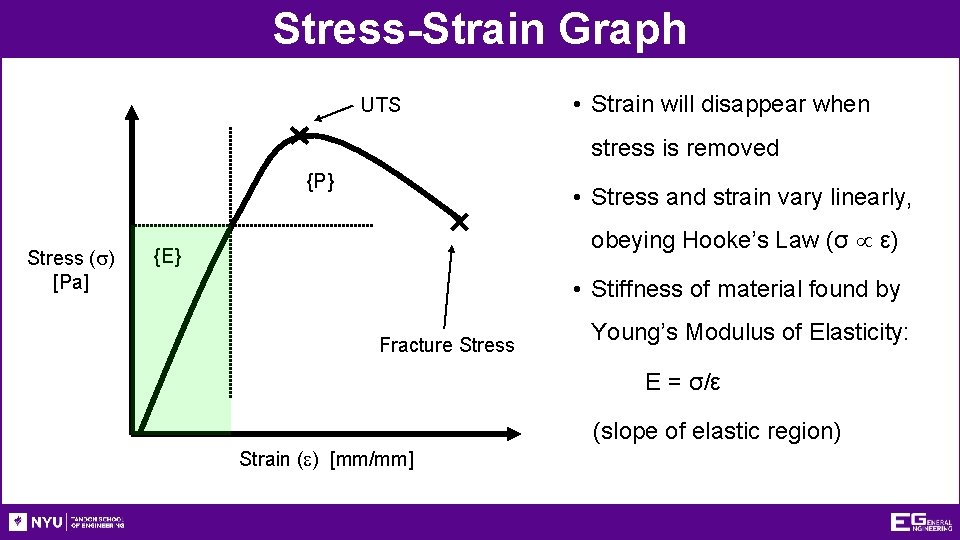
Stress-Strain Graph UTS • Strain will disappear when stress is removed {P} Stress (s) [Pa] • Stress and strain vary linearly, obeying Hooke’s Law (σ ε) {E} • Stiffness of material found by Fracture Stress Young’s Modulus of Elasticity: E = σ/ε (slope of elastic region) Strain (e) [mm/mm]
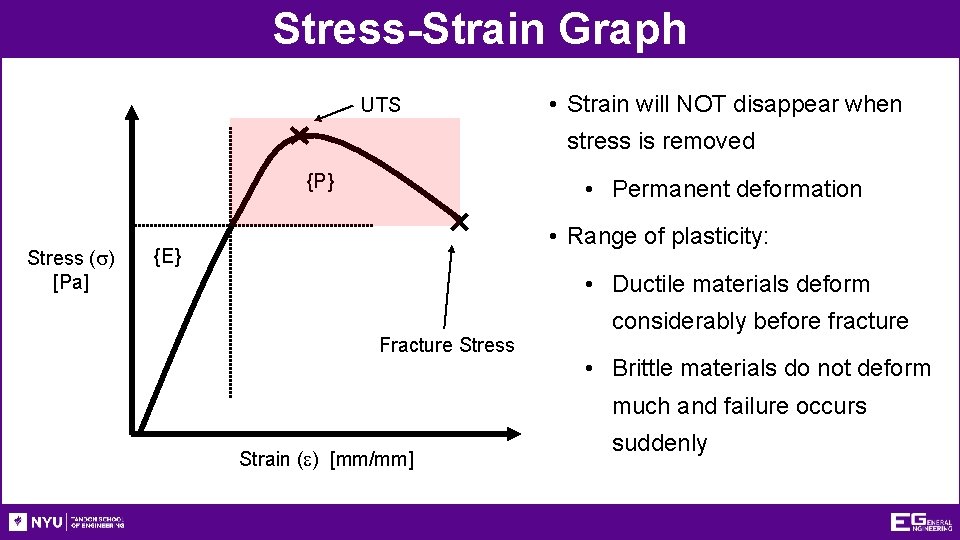
Stress-Strain Graph UTS • Strain will NOT disappear when stress is removed {P} Stress (s) [Pa] • Permanent deformation • Range of plasticity: {E} • Ductile materials deform Fracture Stress considerably before fracture • Brittle materials do not deform much and failure occurs Strain (e) [mm/mm] suddenly
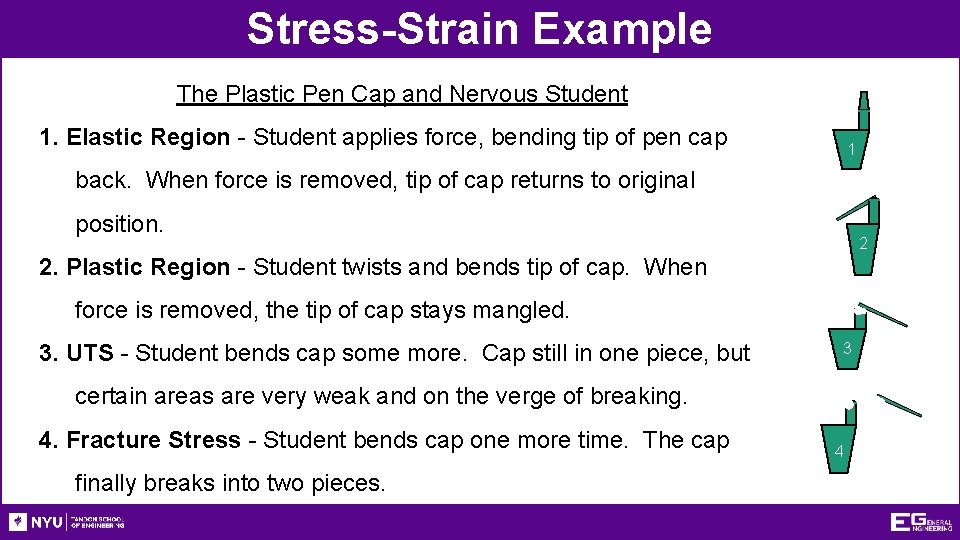
Stress-Strain Example The Plastic Pen Cap and Nervous Student 1. Elastic Region - Student applies force, bending tip of pen cap 1 back. When force is removed, tip of cap returns to original position. 2 2. Plastic Region - Student twists and bends tip of cap. When force is removed, the tip of cap stays mangled. 3. UTS - Student bends cap some more. Cap still in one piece, but 3 certain areas are very weak and on the verge of breaking. 4. Fracture Stress - Student bends cap one more time. The cap finally breaks into two pieces. 4
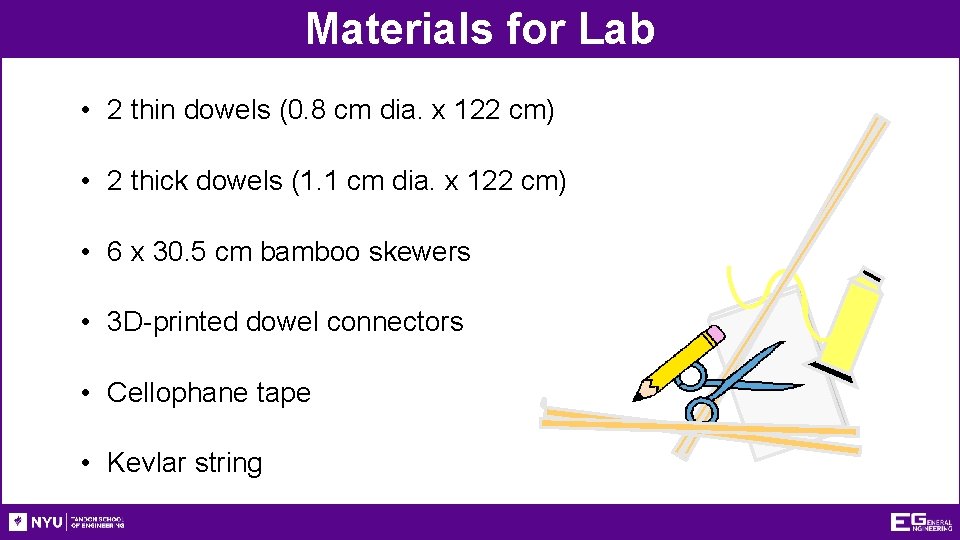
Materials for Lab • 2 thin dowels (0. 8 cm dia. x 122 cm) • 2 thick dowels (1. 1 cm dia. x 122 cm) • 6 x 30. 5 cm bamboo skewers • 3 D-printed dowel connectors • Cellophane tape • Kevlar string
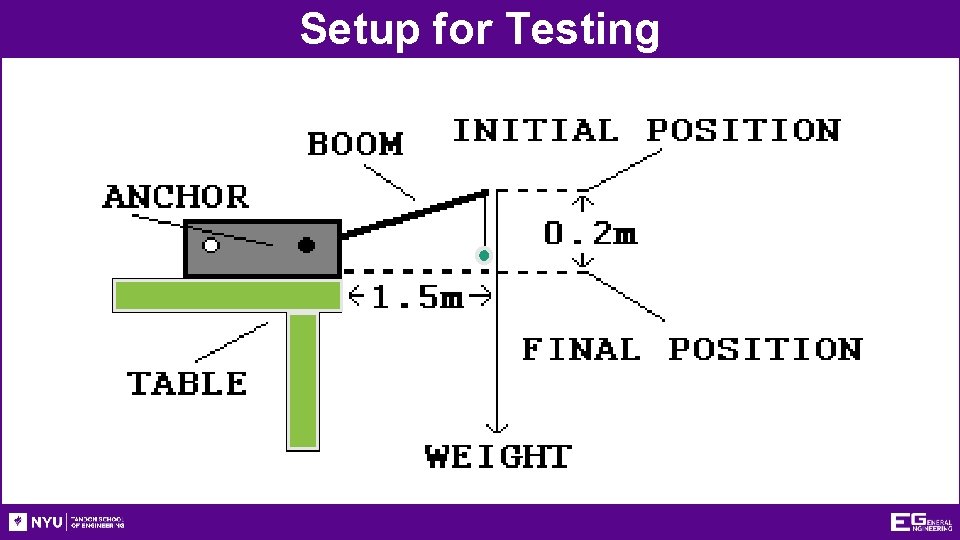
Setup for Testing
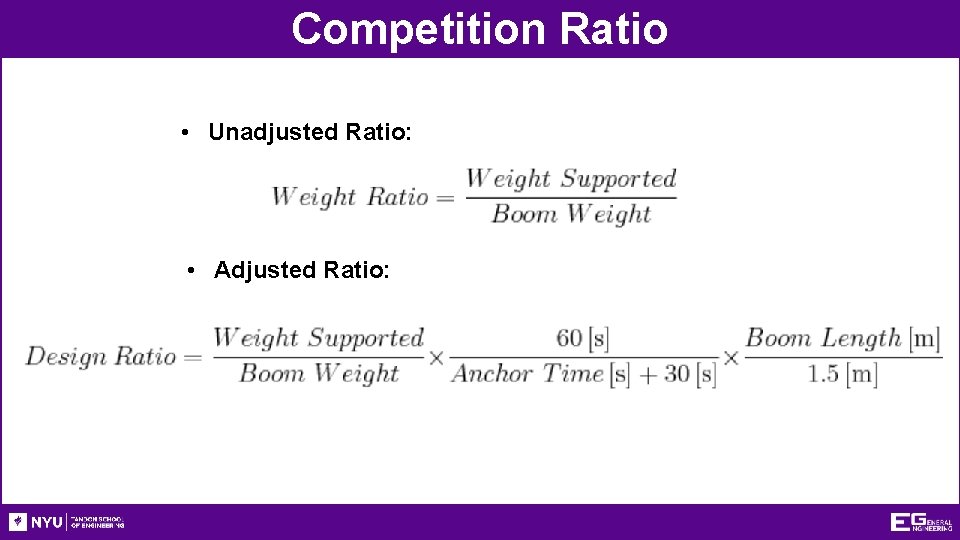
Competition Ratio • Unadjusted Ratio: • Adjusted Ratio:
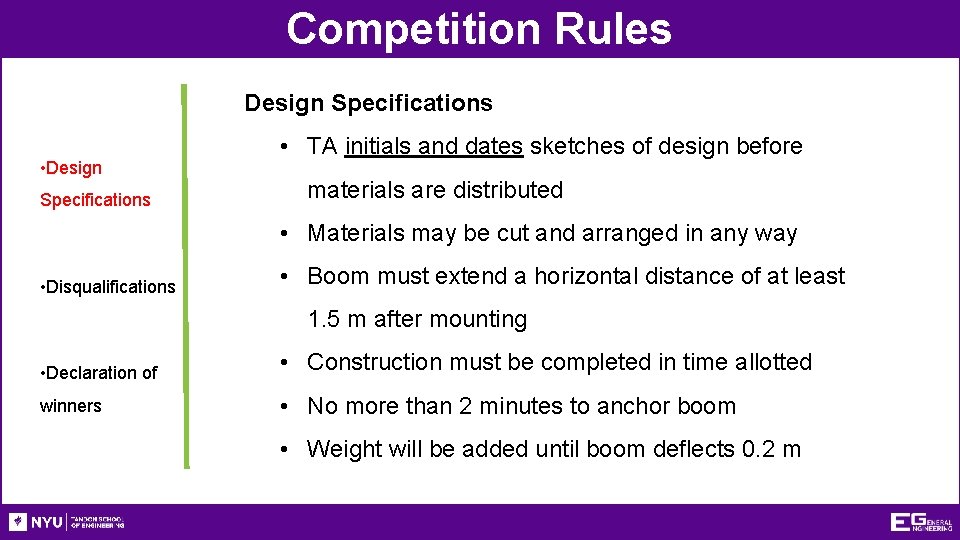
Competition Rules Design Specifications • Design Specifications • TA initials and dates sketches of design before materials are distributed • Materials may be cut and arranged in any way • Disqualifications • Boom must extend a horizontal distance of at least 1. 5 m after mounting • Declaration of • Construction must be completed in time allotted winners • No more than 2 minutes to anchor boom • Weight will be added until boom deflects 0. 2 m
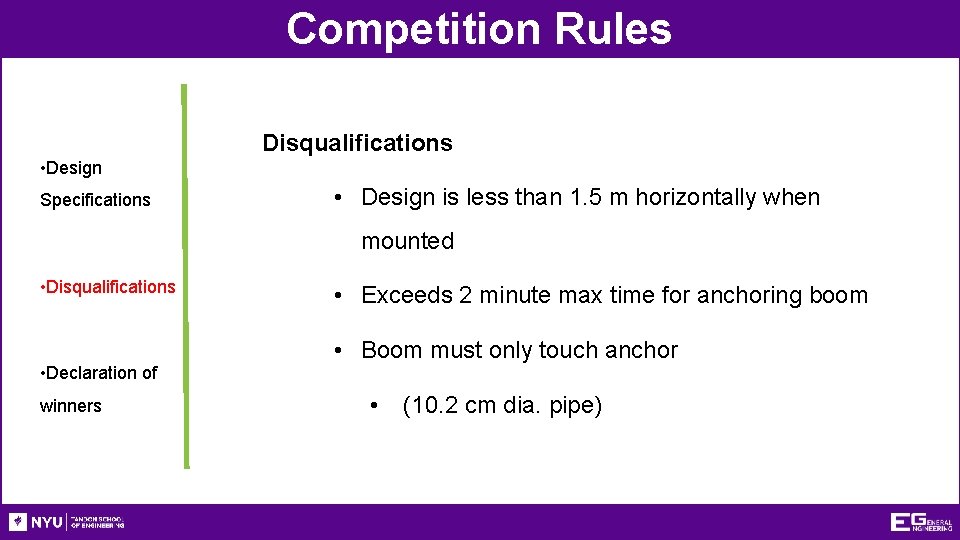
Competition Rules Disqualifications • Design Specifications • Design is less than 1. 5 m horizontally when mounted • Disqualifications • Declaration of winners • Exceeds 2 minute max time for anchoring boom • Boom must only touch anchor • (10. 2 cm dia. pipe)
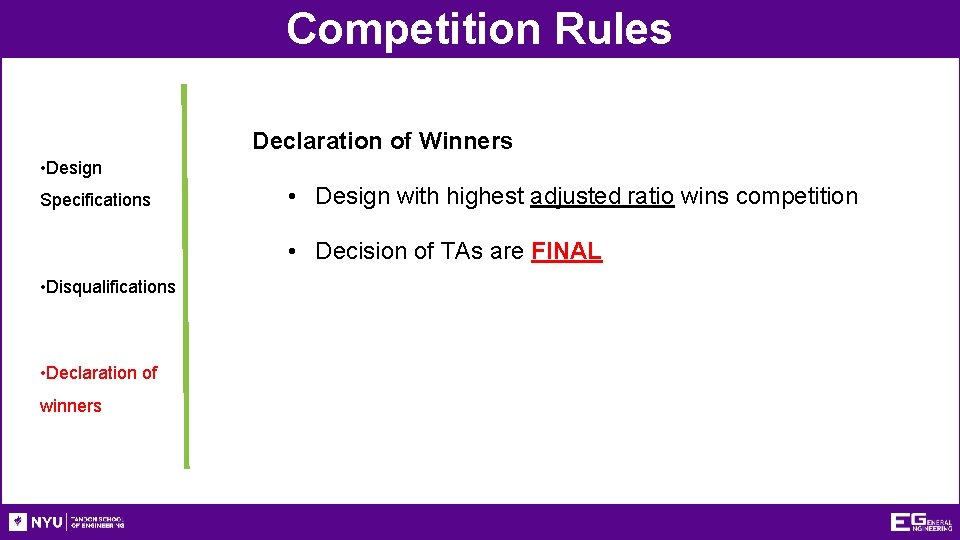
Competition Rules Declaration of Winners • Design Specifications • Design with highest adjusted ratio wins competition • Decision of TAs are FINAL • Disqualifications • Declaration of winners
Competition Boom Design • Boom Design • Observe provided materials • Brainstorm design strategy with team members • Test • Post-Test • Note design decisions and necessary design changes • Sketch proposed design • Have TA initial sketch and notes • Build boom according to sketch
Competition Test • TA will create a spreadsheet to record competition results • Boom Design • Weigh boom and announce value to TA • Test • When instructed, fasten boom to anchor • Announce when “DONE!”, to record time • Post-Test • TA measures length from tip of anchor to weight mounting point on boom • Must meet 1. 5 m requirement • Add weights until boom deflects 0. 2 m vertically, or fails
Competition Post-Test • Boom Design • TA announces winner of competition • Team with largest adjusted ratio wins • Test • Copies of spreadsheet available to all teams on • Post-Test eg. poly. edu • TA initials and scans original data
Assignment: Report • Individual lab report • Title page • Discussion topics in the manual • Include class results and photo of boom
Assignment: Presentation • Team presentation • State rules of competition • Describe your design and its concepts • Include table of class results, sketches, photo of boom • How could your current design be improved?
Closing • Think safety! Be careful not to poke classmates with the dowels • Have all original data signed by TA • Submit all work electronically • Clean up workstations • Return all unused materials to TA
Boom Construction Competition QUESTIONS?
- Slides: 30