
Boom and Bust Population Change in Russias Arctic
Boom and Bust: Population Change in Russia’s Arctic Cities ARCSUS Final Conference Kirkenes, Norway September 24 -26, 2015 Timothy Heleniak Department of Geography Nordregio George Washington University Nordic Centre for Spatial Development heleniak@gwu. edu timothy. heleniak@nordregio. se
Sustainability • Classic definition about impact on future generations • Sustainability and the Russian North • At various geographic scales – economic, environmental, regional, city or settlement, societal or cultural • Population size and composition is one input, including into social sustainability
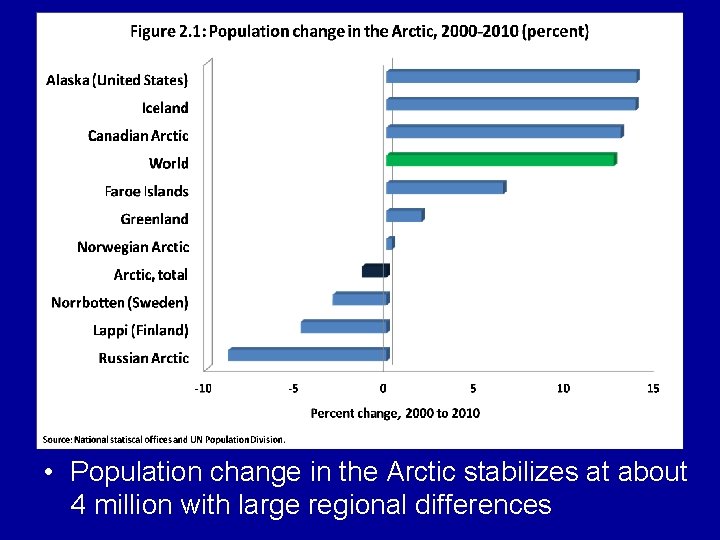
• Population change in the Arctic stabilizes at about 4 million with large regional differences
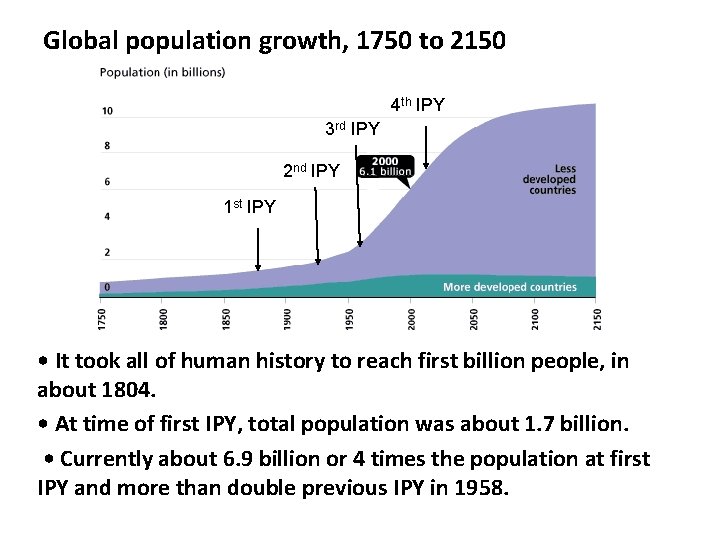
Global population growth, 1750 to 2150 4 th IPY 3 rd IPY 2 nd IPY 1 st IPY • It took all of human history to reach first billion people, in about 1804. • At time of first IPY, total population was about 1. 7 billion. • Currently about 6. 9 billion or 4 times the population at first IPY and more than double previous IPY in 1958.
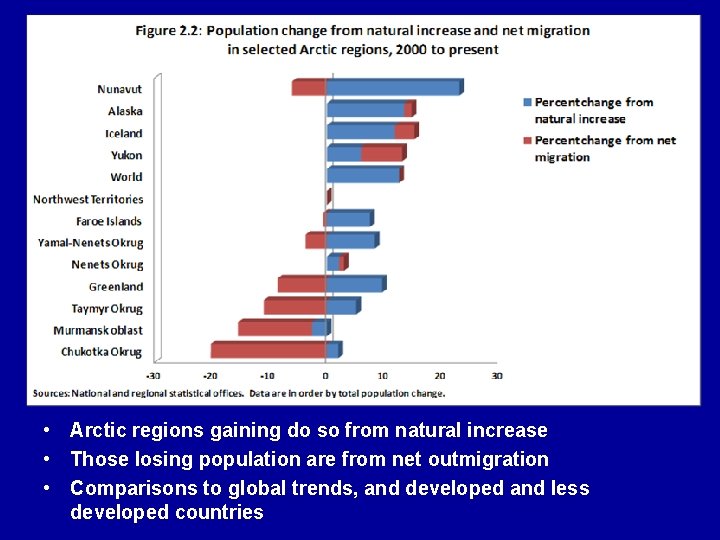
• Arctic regions gaining do so from natural increase • Those losing population are from net outmigration • Comparisons to global trends, and developed and less developed countries
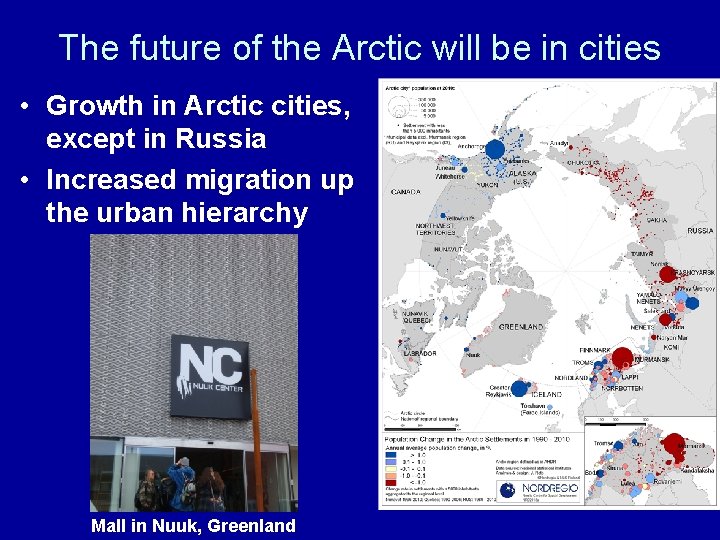
The future of the Arctic will be in cities • Growth in Arctic cities, except in Russia • Increased migration up the urban hierarchy Mall in Nuuk, Greenland
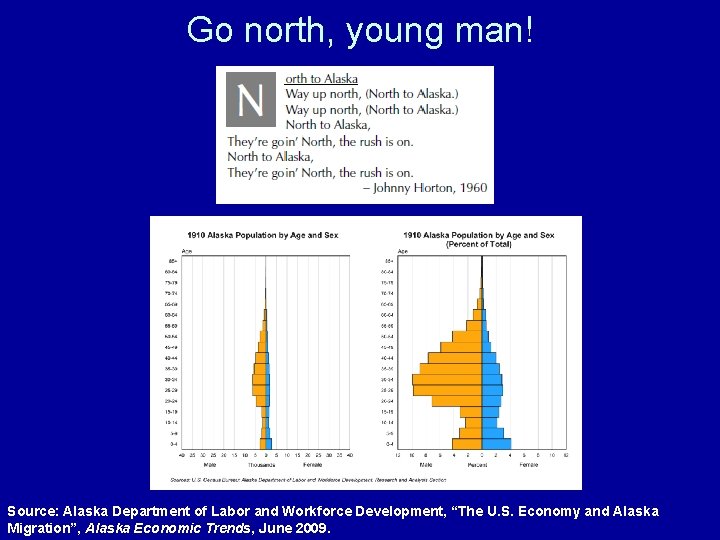
Go north, young man! Source: Alaska Department of Labor and Workforce Development, “The U. S. Economy and Alaska Migration”, Alaska Economic Trends, June 2009.
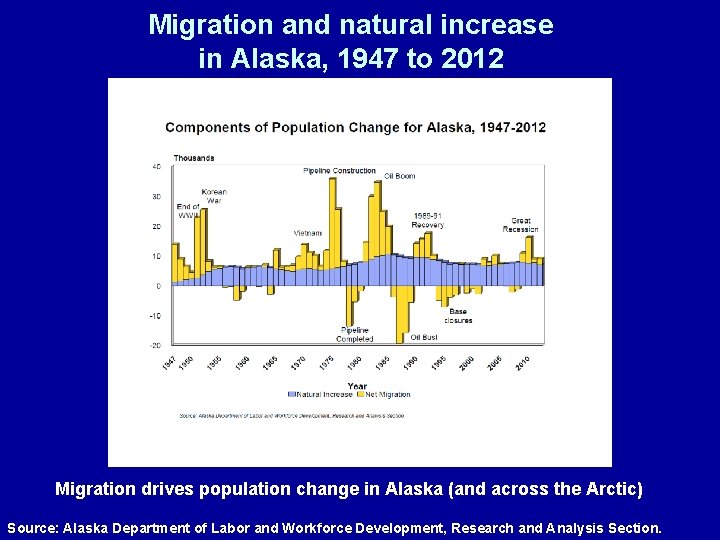
Migration and natural increase in Alaska, 1947 to 2012 Migration drives population change in Alaska (and across the Arctic) Source: Alaska Department of Labor and Workforce Development, Research and Analysis Section.
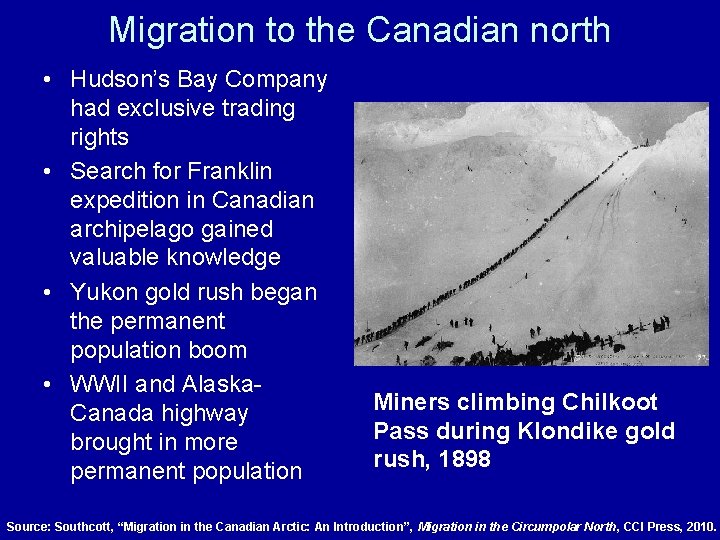
Migration to the Canadian north • Hudson’s Bay Company had exclusive trading rights • Search for Franklin expedition in Canadian archipelago gained valuable knowledge • Yukon gold rush began the permanent population boom • WWII and Alaska. Canada highway brought in more permanent population Miners climbing Chilkoot Pass during Klondike gold rush, 1898 Source: Southcott, “Migration in the Canadian Arctic: An Introduction”, Migration in the Circumpolar North, CCI Press, 2010.
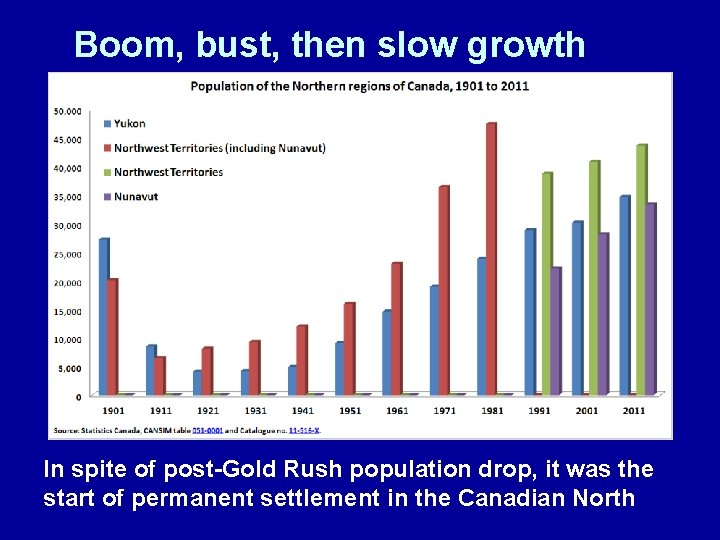
Boom, bust, then slow growth In spite of post-Gold Rush population drop, it was the start of permanent settlement in the Canadian North
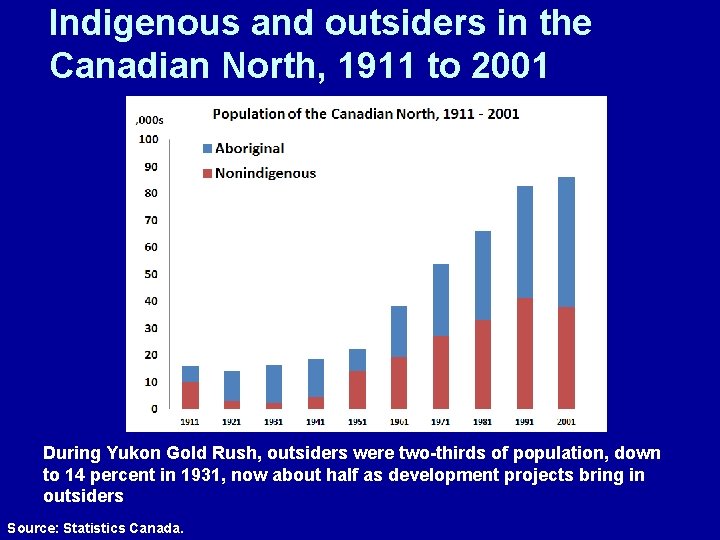
Indigenous and outsiders in the Canadian North, 1911 to 2001 During Yukon Gold Rush, outsiders were two-thirds of population, down to 14 percent in 1931, now about half as development projects bring in outsiders Source: Statistics Canada.
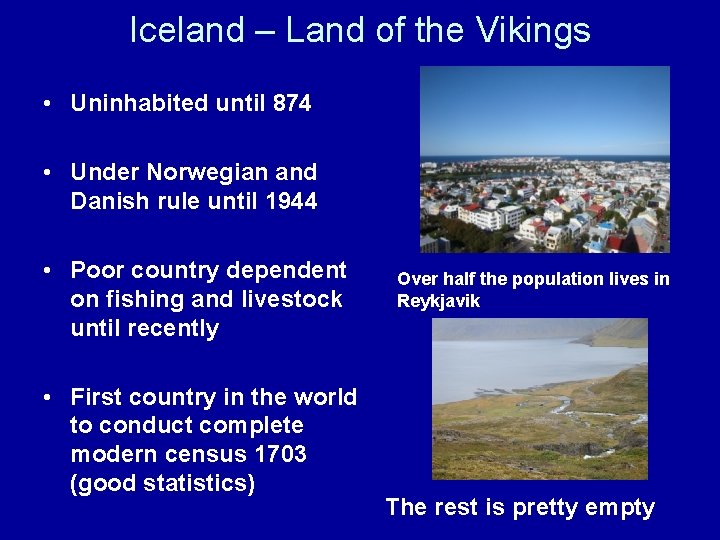
Iceland – Land of the Vikings • Uninhabited until 874 • Under Norwegian and Danish rule until 1944 • Poor country dependent on fishing and livestock until recently • First country in the world to conduct complete modern census 1703 (good statistics) Over half the population lives in Reykjavik The rest is pretty empty
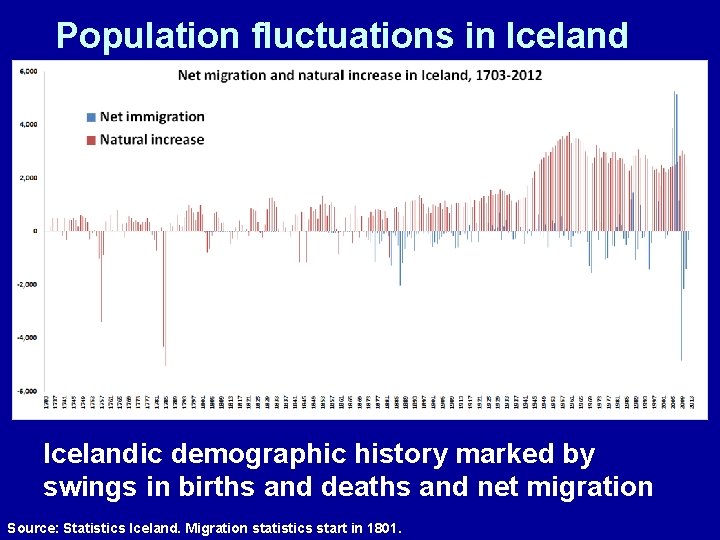
Population fluctuations in Icelandic demographic history marked by swings in births and deaths and net migration Source: Statistics Iceland. Migration statistics start in 1801. Source:
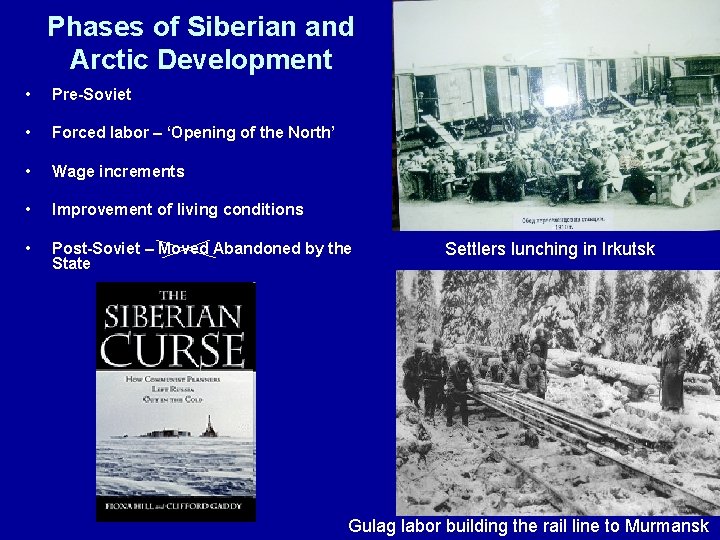
Phases of Siberian and Arctic Development • • Pre-Soviet • Wage increments • Improvement of living conditions • Post-Soviet – Moved Abandoned by the State Forced labor – ‘Opening of the North’ Settlers lunching in Irkutsk Gulag labor building the rail line to Murmansk
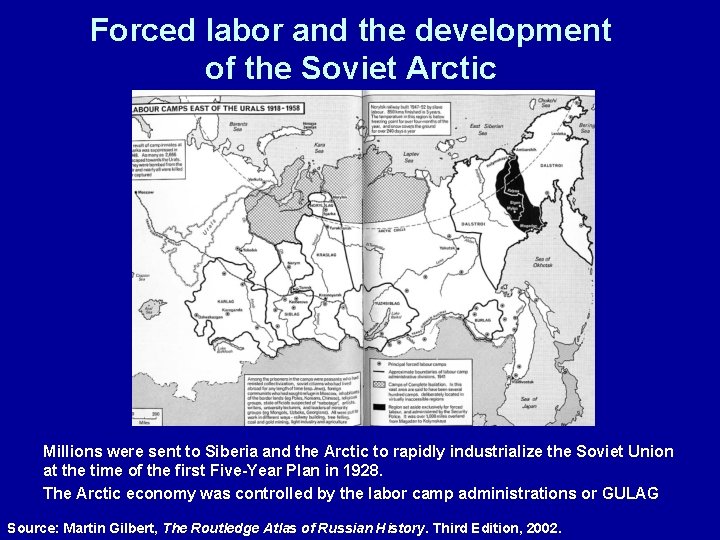
Forced labor and the development of the Soviet Arctic Millions were sent to Siberia and the Arctic to rapidly industrialize the Soviet Union at the time of the first Five-Year Plan in 1928. The Arctic economy was controlled by the labor camp administrations or GULAG Source: Martin Gilbert, The Routledge Atlas of Russian History. Third Edition, 2002.
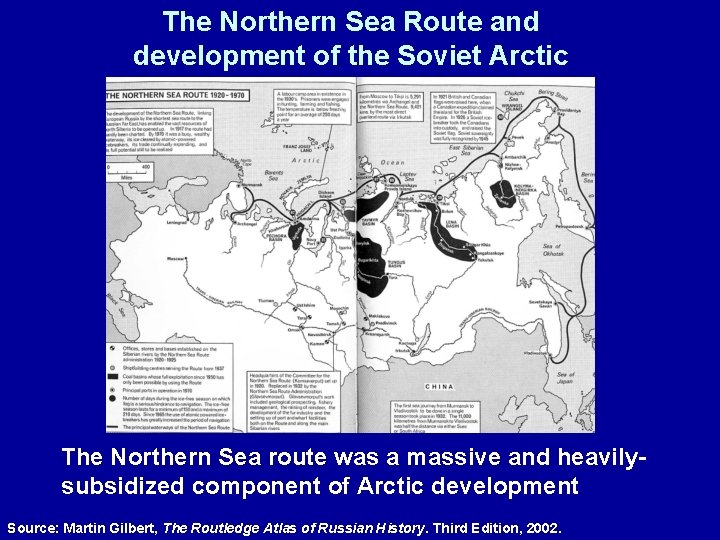
The Northern Sea Route and development of the Soviet Arctic The Northern Sea route was a massive and heavilysubsidized component of Arctic development Source: Martin Gilbert, The Routledge Atlas of Russian History. Third Edition, 2002.
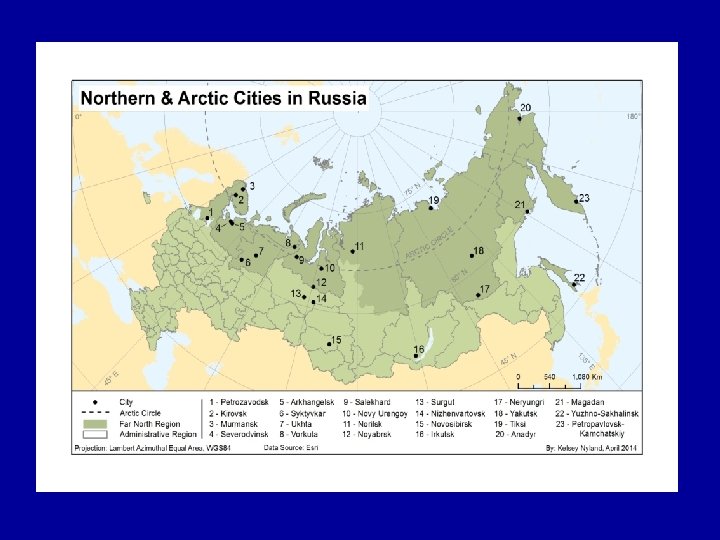
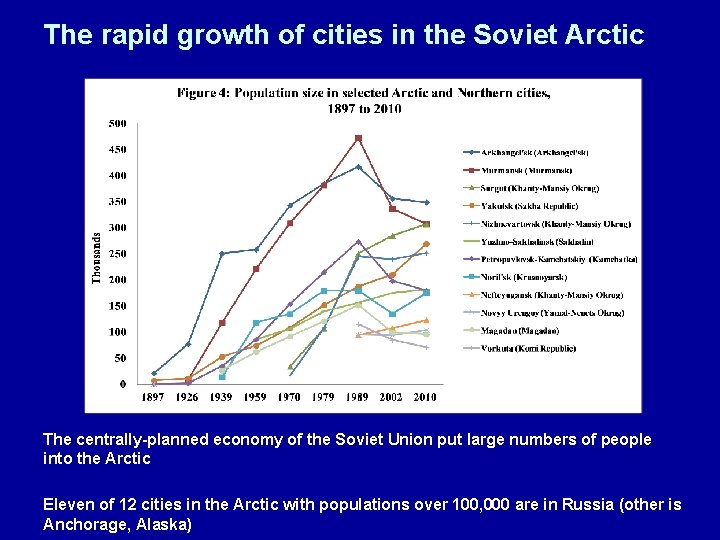
The rapid growth of cities in the Soviet Arctic The centrally-planned economy of the Soviet Union put large numbers of people into the Arctic Eleven of 12 cities in the Arctic with populations over 100, 000 are in Russia (other is Anchorage, Alaska)
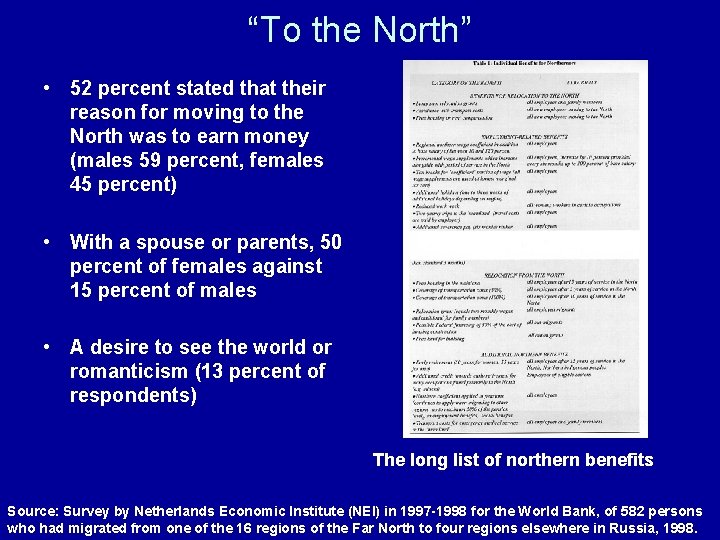
“To the North” • 52 percent stated that their reason for moving to the North was to earn money (males 59 percent, females 45 percent) • With a spouse or parents, 50 percent of females against 15 percent of males • A desire to see the world or romanticism (13 percent of respondents) The long list of northern benefits Source: Survey by Netherlands Economic Institute (NEI) in 1997 -1998 for the World Bank, of 582 persons who had migrated from one of the 16 regions of the Far North to four regions elsewhere in Russia, 1998.
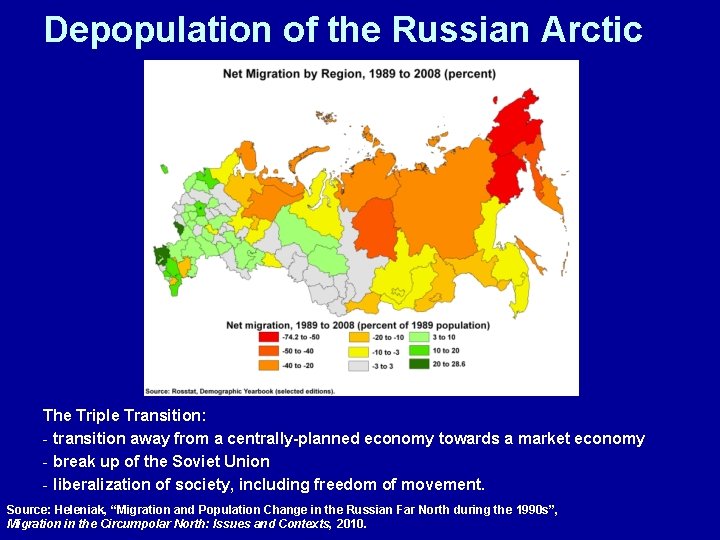
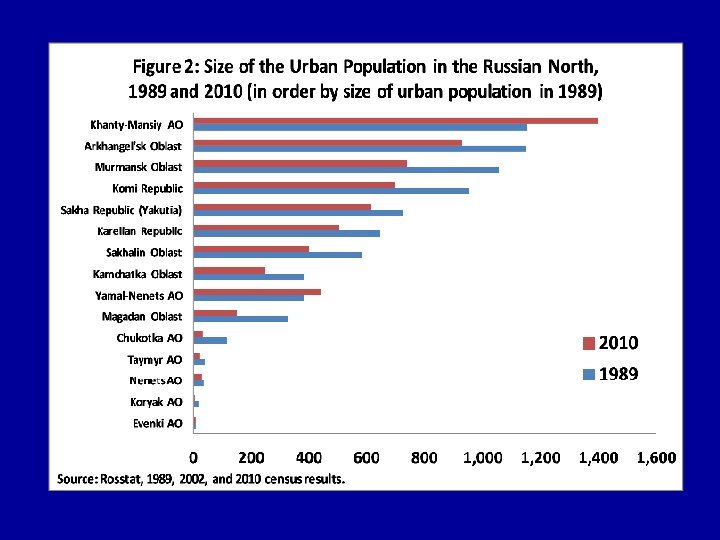
Depopulation of the Russian Arctic The Triple Transition: - transition away from a centrally-planned economy towards a market economy - break up of the Soviet Union - liberalization of society, including freedom of movement. Source: Heleniak, “Migration and Population Change in the Russian Far North during the 1990 s”, Migration in the Circumpolar North: Issues and Contexts, 2010.
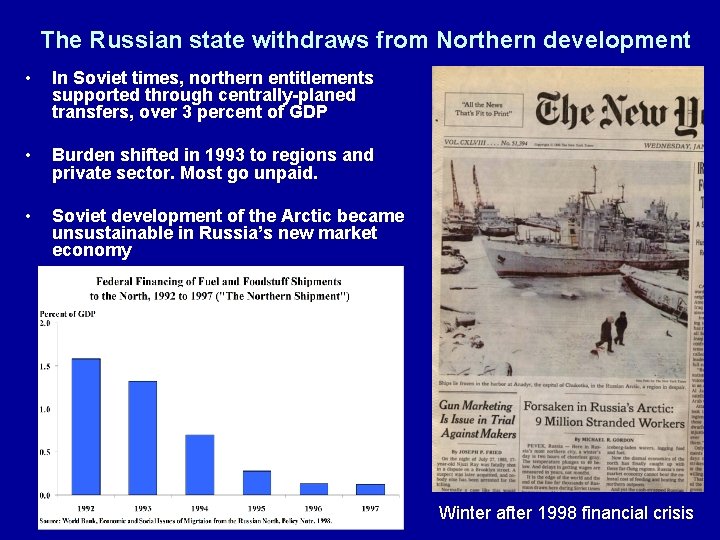
The Russian state withdraws from Northern development • In Soviet times, northern entitlements supported through centrally-planed transfers, over 3 percent of GDP • Burden shifted in 1993 to regions and private sector. Most go unpaid. • Soviet development of the Arctic became unsustainable in Russia’s new market economy Winter after 1998 financial crisis
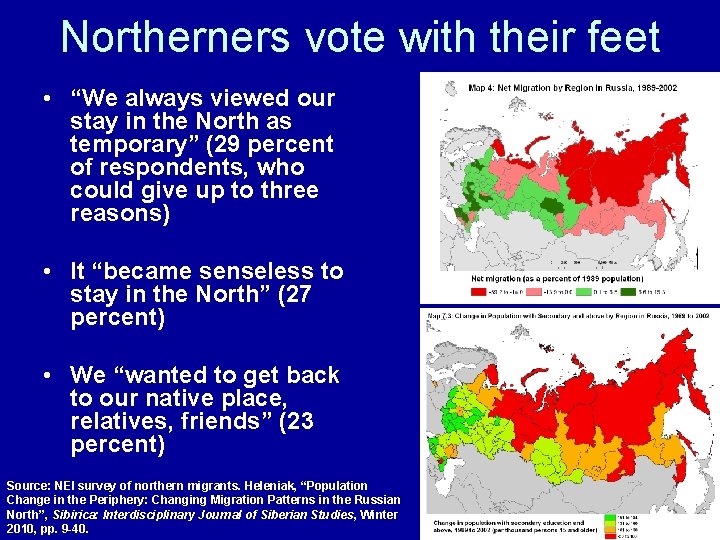
Northerners vote with their feet • “We always viewed our stay in the North as temporary” (29 percent of respondents, who could give up to three reasons) • It “became senseless to stay in the North” (27 percent) • We “wanted to get back to our native place, relatives, friends” (23 percent) Source: NEI survey of northern migrants. Heleniak, “Population Change in the Periphery: Changing Migration Patterns in the Russian North”, Sibirica: Interdisciplinary Journal of Siberian Studies, Winter 2010, pp. 9 -40.
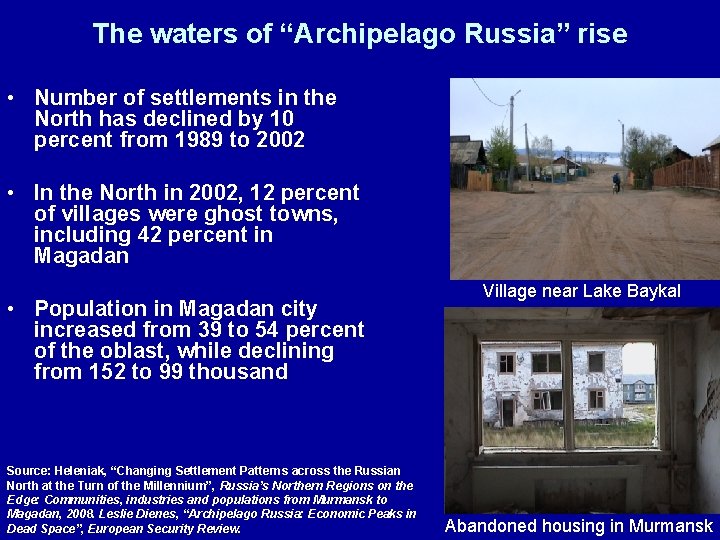
The waters of “Archipelago Russia” rise • Number of settlements in the North has declined by 10 percent from 1989 to 2002 • In the North in 2002, 12 percent of villages were ghost towns, including 42 percent in Magadan • Population in Magadan city increased from 39 to 54 percent of the oblast, while declining from 152 to 99 thousand Source: Heleniak, “Changing Settlement Patterns across the Russian North at the Turn of the Millennium”, Russia’s Northern Regions on the Edge: Communities, industries and populations from Murmansk to Magadan, 2008. Leslie Dienes, “Archipelago Russia: Economic Peaks in Dead Space”, European Security Review. Village near Lake Baykal Abandoned housing in Murmansk
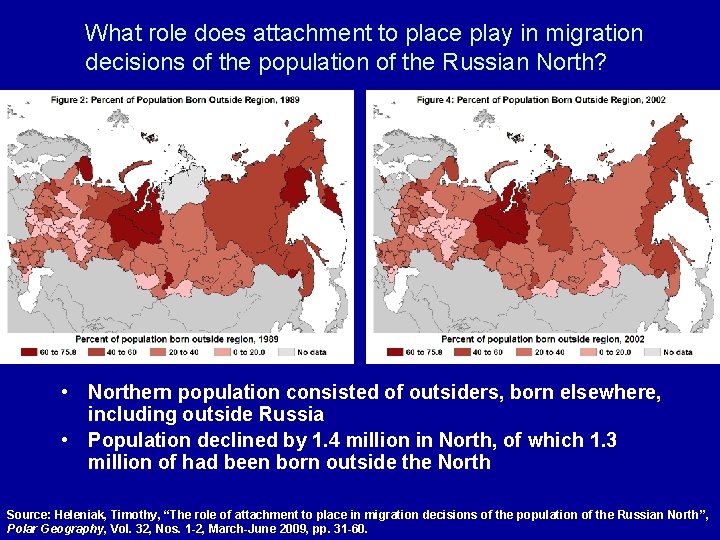
What role does attachment to place play in migration decisions of the population of the Russian North? • Northern population consisted of outsiders, born elsewhere, including outside Russia • Population declined by 1. 4 million in North, of which 1. 3 million of had been born outside the North Source: Heleniak, Timothy, “The role of attachment to place in migration decisions of the population of the Russian North”, Polar Geography, Vol. 32, Nos. 1 -2, March-June 2009, pp. 31 -60.
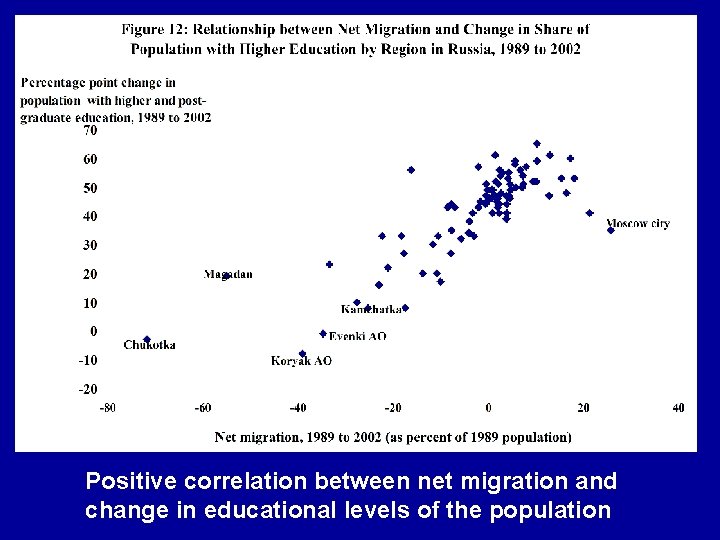
Positive correlation between net migration and change in educational levels of the population
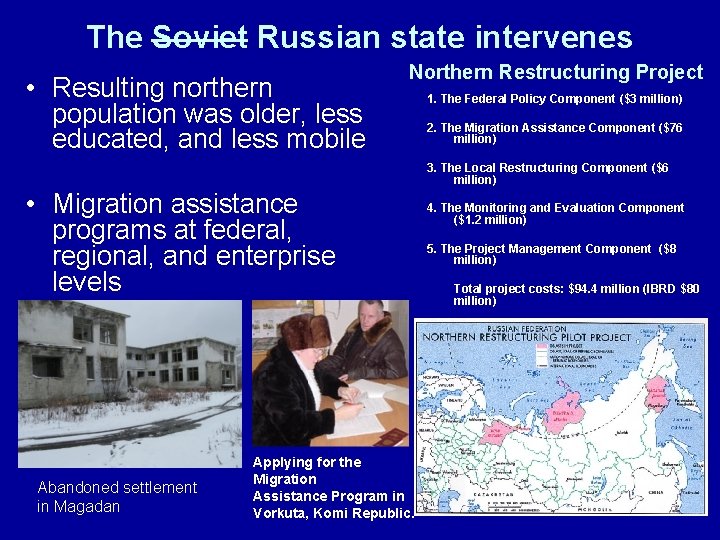
The Soviet Russian state intervenes • Resulting northern population was older, less educated, and less mobile Northern Restructuring Project 1. The Federal Policy Component ($3 million) 2. The Migration Assistance Component ($76 million) 3. The Local Restructuring Component ($6 million) • Migration assistance programs at federal, regional, and enterprise levels Abandoned settlement in Magadan Applying for the Migration Assistance Program in Vorkuta, Komi Republic. 4. The Monitoring and Evaluation Component ($1. 2 million) 5. The Project Management Component ($8 million) Total project costs: $94. 4 million (IBRD $80 million)
Conclusions • Level of economic activity and size of population in these regions during Soviet period are not sustainable during post. Soviet period • With downsizing of population and infrastructure, are remaining settlements sustainable, those growing or declining? • What about remaining infrastructure?
Thank you. Questions? heleniak@gwu. edu
- Slides: 29