
Bony Landmarks Bones Have Landmarks These are also

Bony Landmarks
Bones Have Landmarks � These are also called markings � 3 classifications: ◦ Processes ◦ Depressions ◦ Openings
Processes � Process: Any prominent bony projection � 2 subcategories ◦ Processes that help form joints ◦ Processes that are sites of attachment for tendons and ligaments
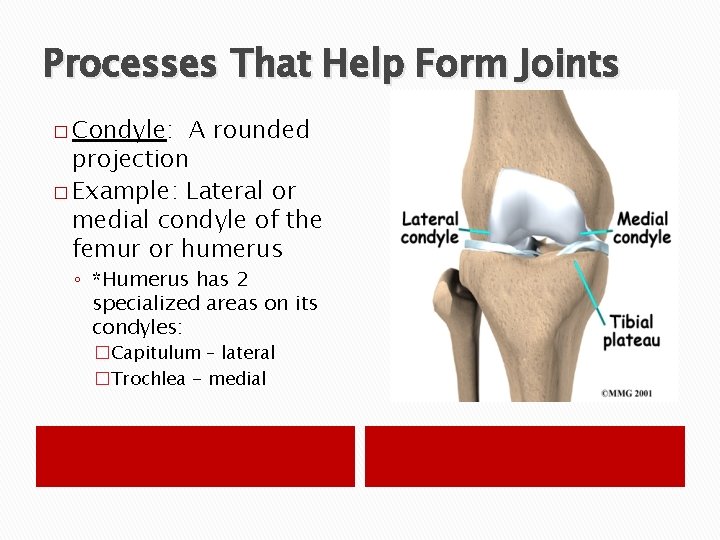
Processes That Help Form Joints � Condyle: A rounded projection � Example: Lateral or medial condyle of the femur or humerus ◦ *Humerus has 2 specialized areas on its condyles: �Capitulum – lateral �Trochlea - medial
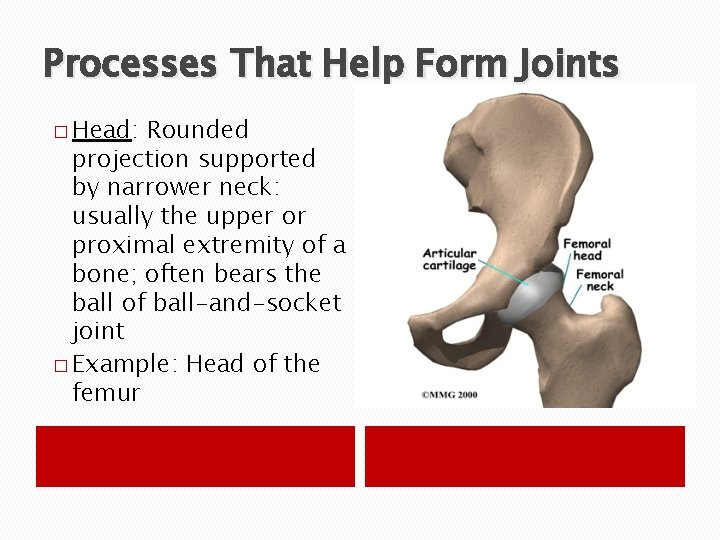
Processes That Help Form Joints � Head: Rounded projection supported by narrower neck: usually the upper or proximal extremity of a bone; often bears the ball of ball-and-socket joint � Example: Head of the femur
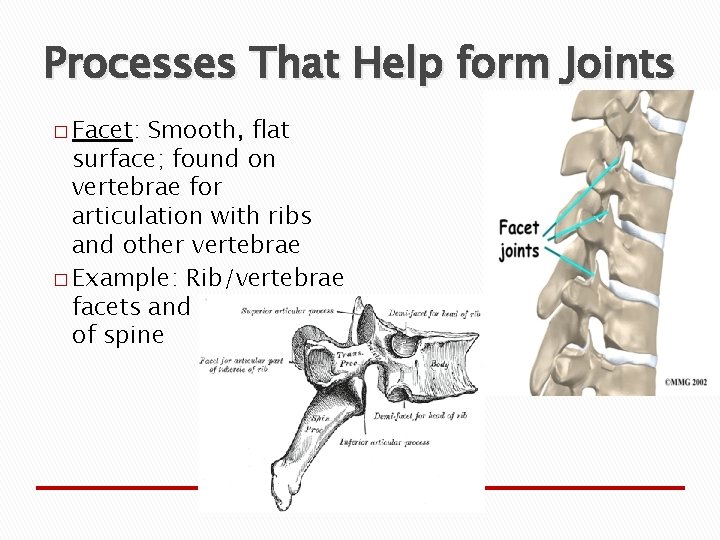
Processes That Help form Joints � Facet: Smooth, flat surface; found on vertebrae for articulation with ribs and other vertebrae � Example: Rib/vertebrae facets and facet joints of spine
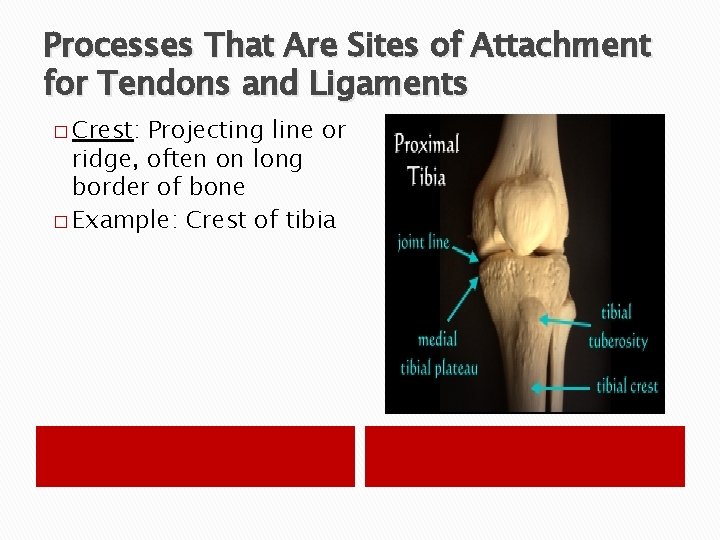
Processes That Are Sites of Attachment for Tendons and Ligaments � Crest: Projecting line or ridge, often on long border of bone � Example: Crest of tibia
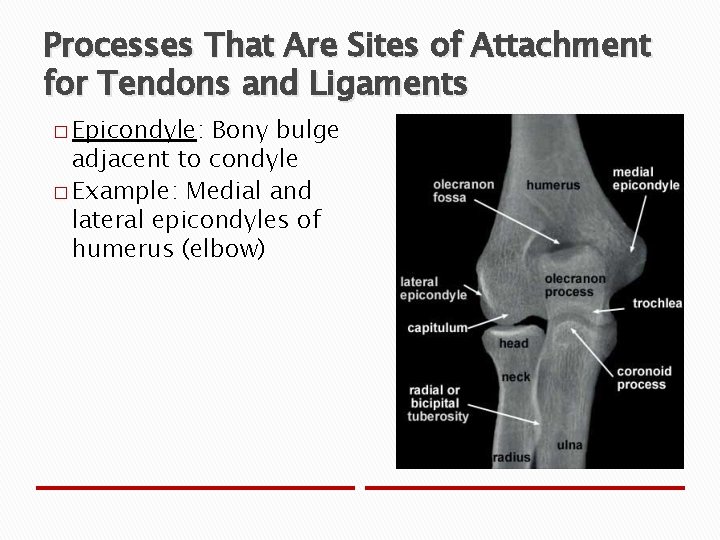
Processes That Are Sites of Attachment for Tendons and Ligaments � Epicondyle: Bony bulge adjacent to condyle � Example: Medial and lateral epicondyles of humerus (elbow)
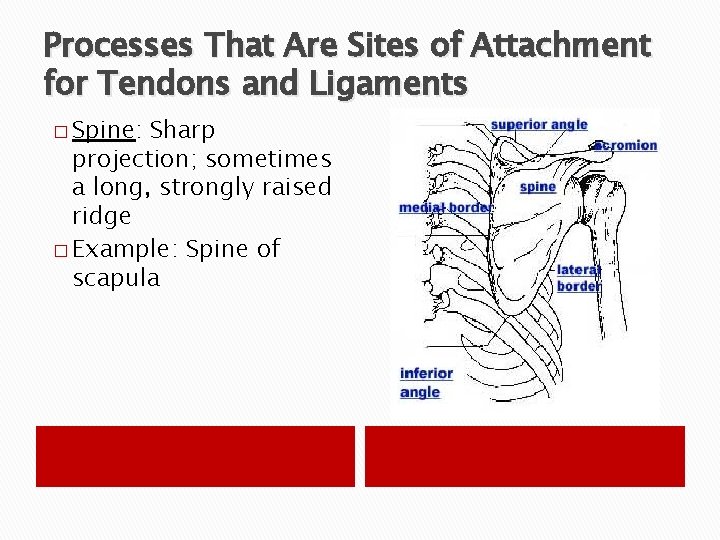
Processes That Are Sites of Attachment for Tendons and Ligaments � Spine: Sharp projection; sometimes a long, strongly raised ridge � Example: Spine of scapula
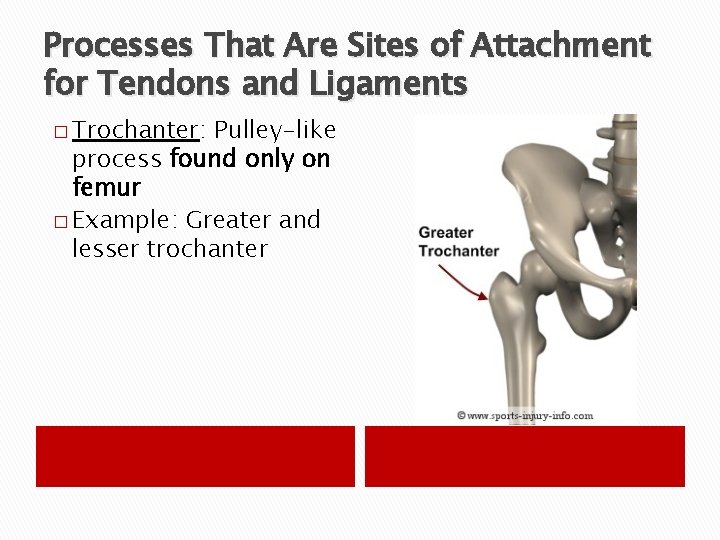
Processes That Are Sites of Attachment for Tendons and Ligaments � Trochanter: Pulley-like process found only on femur � Example: Greater and lesser trochanter
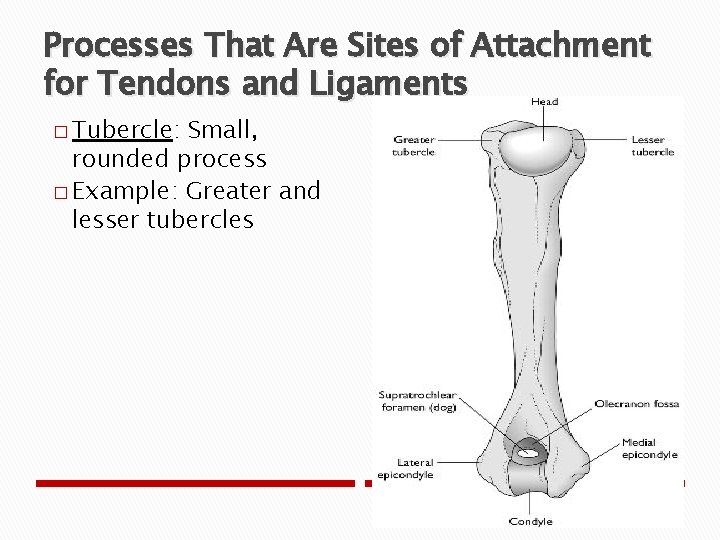
Processes That Are Sites of Attachment for Tendons and Ligaments � Tubercle: Small, rounded process � Example: Greater and lesser tubercles
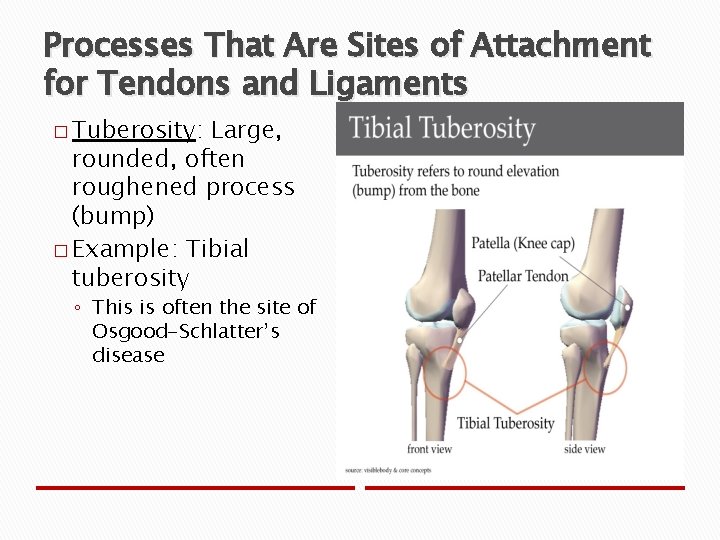
Processes That Are Sites of Attachment for Tendons and Ligaments � Tuberosity: Large, rounded, often roughened process (bump) � Example: Tibial tuberosity ◦ This is often the site of Osgood-Schlatter’s disease
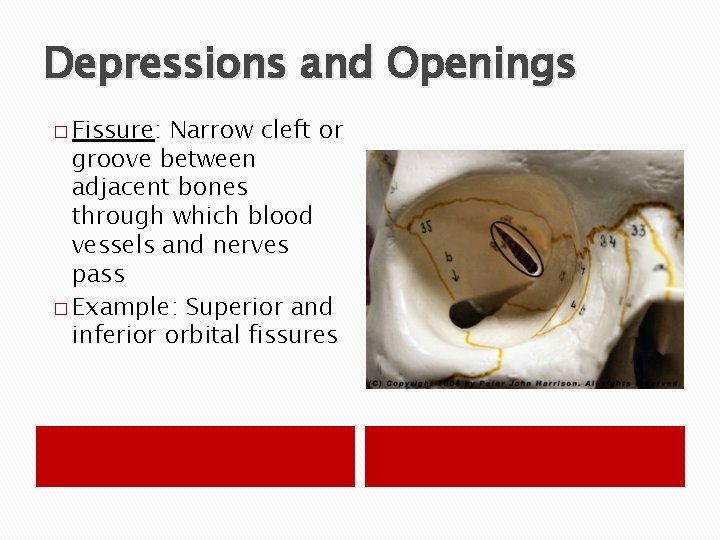
Depressions and Openings � Fissure: Narrow cleft or groove between adjacent bones through which blood vessels and nerves pass � Example: Superior and inferior orbital fissures
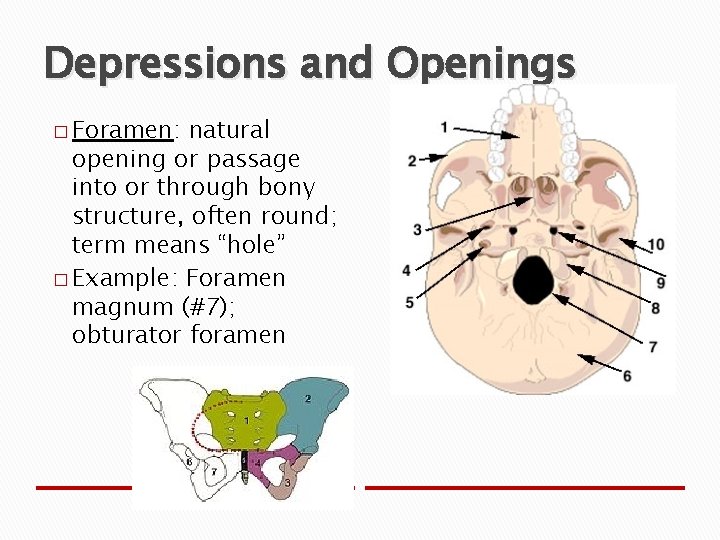
Depressions and Openings � Foramen: natural opening or passage into or through bony structure, often round; term means “hole” � Example: Foramen magnum (#7); obturator foramen
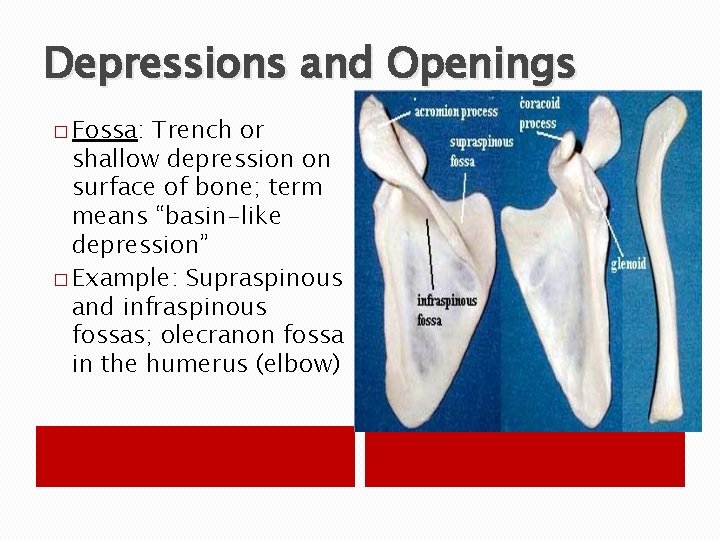
Depressions and Openings � Fossa: Trench or shallow depression on surface of bone; term means “basin-like depression” � Example: Supraspinous and infraspinous fossas; olecranon fossa in the humerus (elbow)
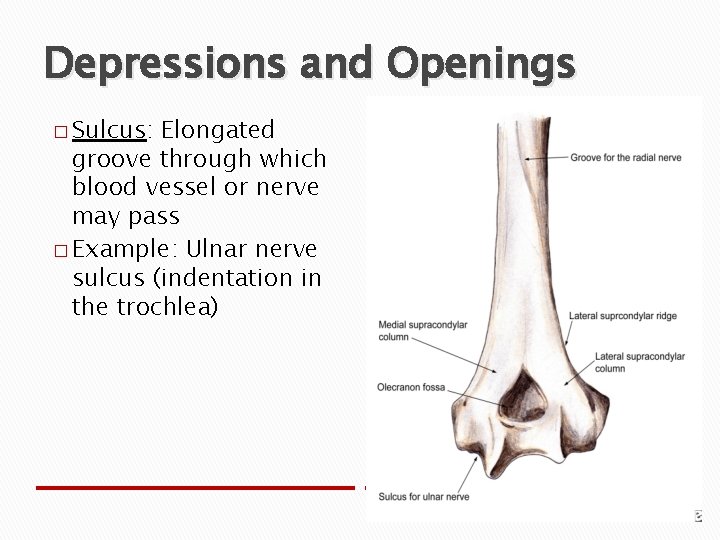
Depressions and Openings � Sulcus: Elongated groove through which blood vessel or nerve may pass � Example: Ulnar nerve sulcus (indentation in the trochlea)
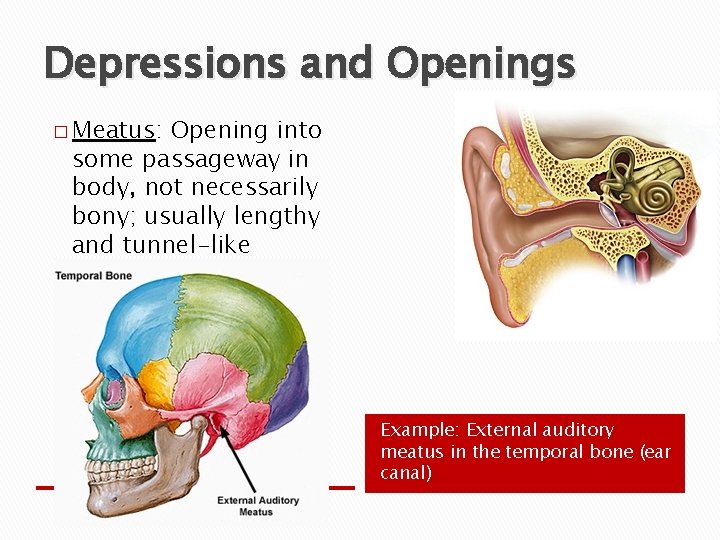
Depressions and Openings � Meatus: Opening into some passageway in body, not necessarily bony; usually lengthy and tunnel-like Example: External auditory meatus in the temporal bone (ear canal)
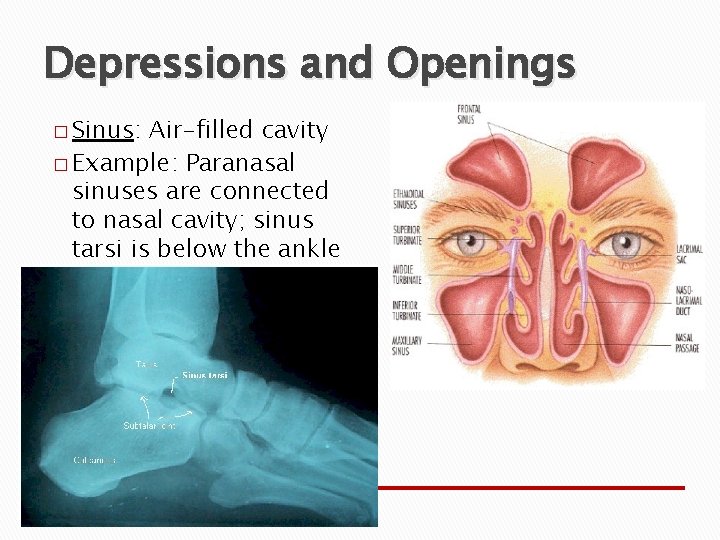
Depressions and Openings � Sinus: Air-filled cavity � Example: Paranasal sinuses are connected to nasal cavity; sinus tarsi is below the ankle
- Slides: 18