
Bones of the Pelvic Girdle Formed by two
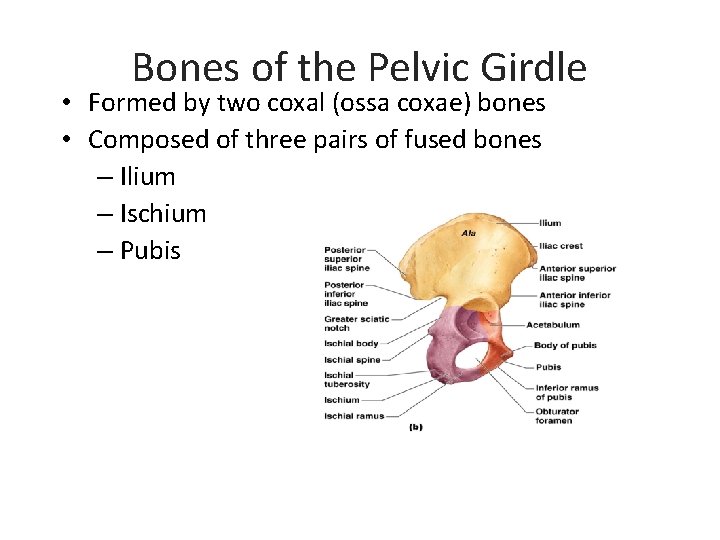
Bones of the Pelvic Girdle • Formed by two coxal (ossa coxae) bones • Composed of three pairs of fused bones – Ilium – Ischium – Pubis
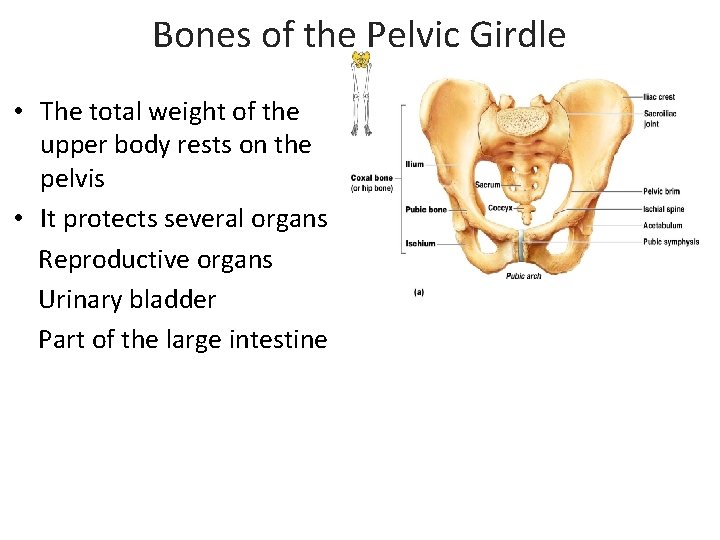
Bones of the Pelvic Girdle • The total weight of the upper body rests on the pelvis • It protects several organs Reproductive organs Urinary bladder Part of the large intestine
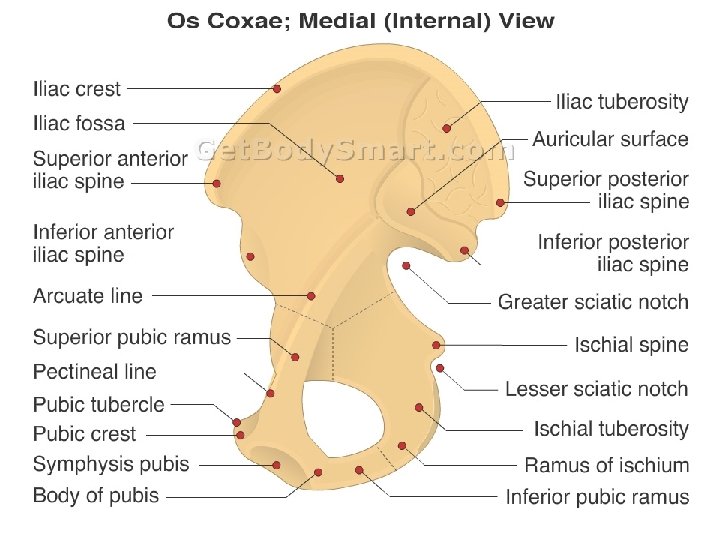
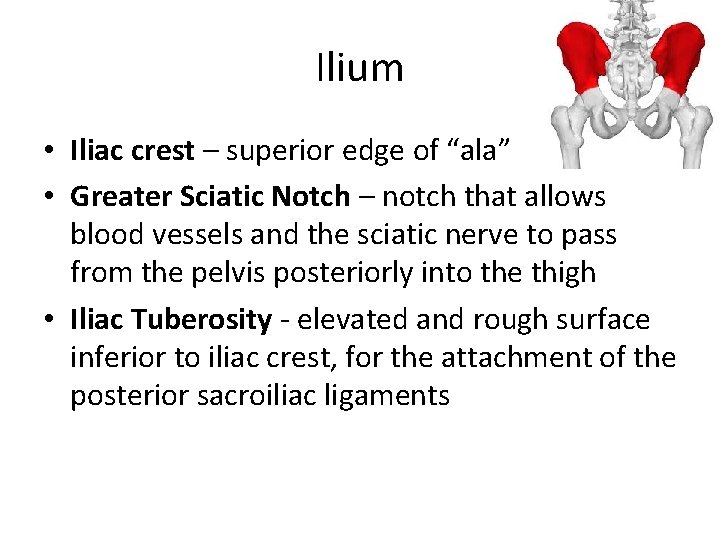
Ilium • Iliac crest – superior edge of “ala” • Greater Sciatic Notch – notch that allows blood vessels and the sciatic nerve to pass from the pelvis posteriorly into the thigh • Iliac Tuberosity - elevated and rough surface inferior to iliac crest, for the attachment of the posterior sacroiliac ligaments

Ilium • Iliac Fossa - large, smooth, concave surface on the internal surface of the • Acetabulum – Site where ilium, ischium, and pubis bones fuse. Deep socket that receives the head of the femur.

Ischium • Ischial Spine – superior to ischial tuberosity; projection that narrows pelvic outlet • Lesser Sciatic Notch – notch below ischial spine • Ischial Tuberosity – roughened area that receives body weight when sitting • Ischial Ramus – inferior portion of ischium that connects with pubis • Obturator Foramen – opening that allows blood vessels and nerves to pass into the anterior thigh

Pubis • Inferior Ramus – inferior portion that connects with ischium • Pubic tubercle - prominent forward-projecting structure on the upper border
Gender Differences of the Pelvis (check the book for a comparison photo) • The female inlet is larger and more circular • The female pelvis as a whole is shallower, and the bones are lighter and thinner • The female ilia flare more laterally • The female sacrum is shorter and less curved • The female ischial spines are shorter and farther apart; thus the outlet is larger • The female pubic arch is more rounded because the angle of the pubic arch is greater
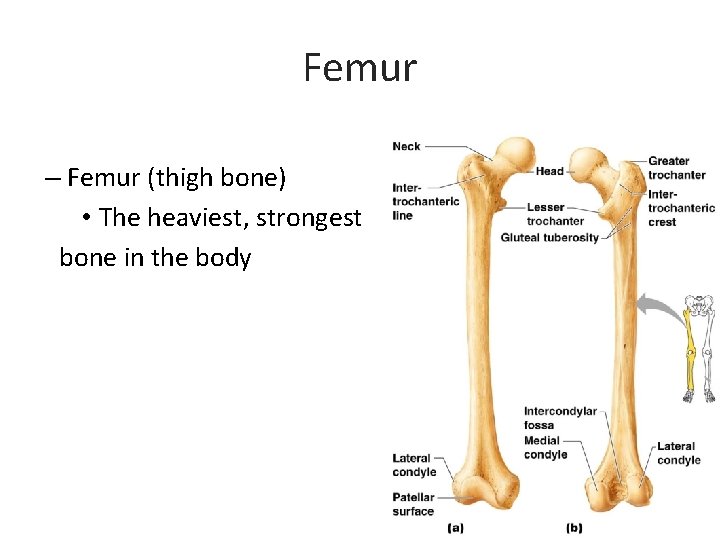
Femur – Femur (thigh bone) • The heaviest, strongest bone in the body

Femur • Greater Trochanter – adjacent to head, most superior portion; site for muscle attachment • Lesser Trochanter – inferior to greater trochanter; site for muscle attachment • Head – round; articulates with acetabulum • Lateral Condyle – distal, lateral end of femur; articulates with tibia • Medial Condyle - distal, medial end of femur; articulates with tibia

Femur • Intercondylar fossa – separates lateral and medial condyles on posterior side of femur • Popliteal surface - triangular area (“back of knee”) between medial and lateral condyles. Patella = knee cap
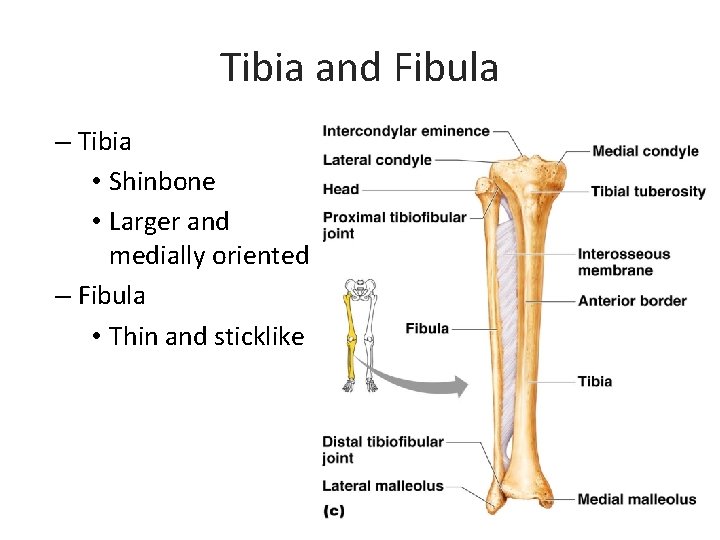
Tibia and Fibula – Tibia • Shinbone • Larger and medially oriented – Fibula • Thin and sticklike
Tibia • Lateral condyle - at proximal end; articulates with lateral condyle of femur to create knee joint • Medial condyle – at proximal end; articulates with medial condyle of femur to create knee joint • Tibial tuberosity – roughened area on anterior surface where patellar tendon attaches • Medial malleolus – distal end, process that creates inner bulge of ankle
Fibula • Head – proximal end; articulates with inferior portion of lateral condyle of tibia (not part of knee joint) • Lateral malleolus – distal end; forms outer part of the ankle
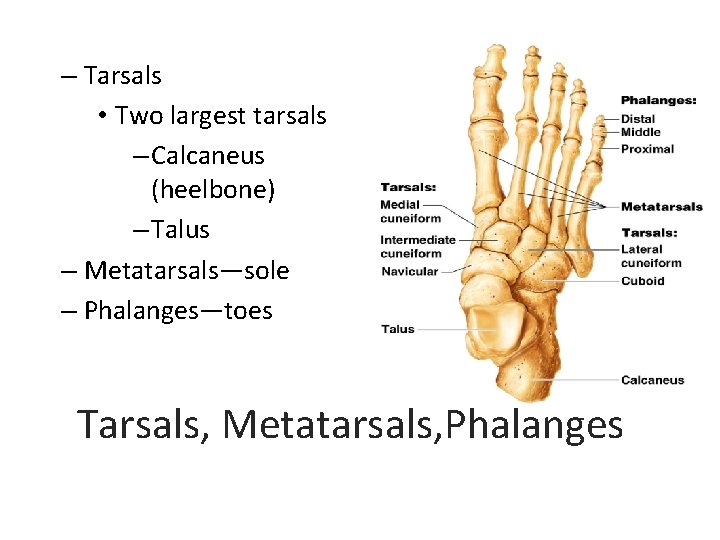
– Tarsals • Two largest tarsals – Calcaneus (heelbone) – Talus – Metatarsals—sole – Phalanges—toes Tarsals, Metatarsals, Phalanges
- Slides: 15