
Bones Muscles Skin Functions of the Skeletal System
Bones, Muscles & Skin
Functions of the Skeletal System • • • Shape & support Movement Protects organs Produces blood cells Stores minerals
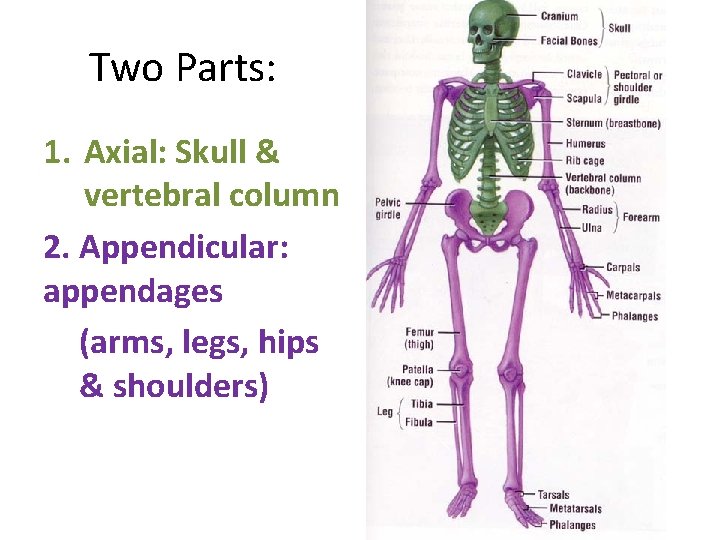
Two Parts: 1. Axial: Skull & vertebral column 2. Appendicular: appendages (arms, legs, hips & shoulders)

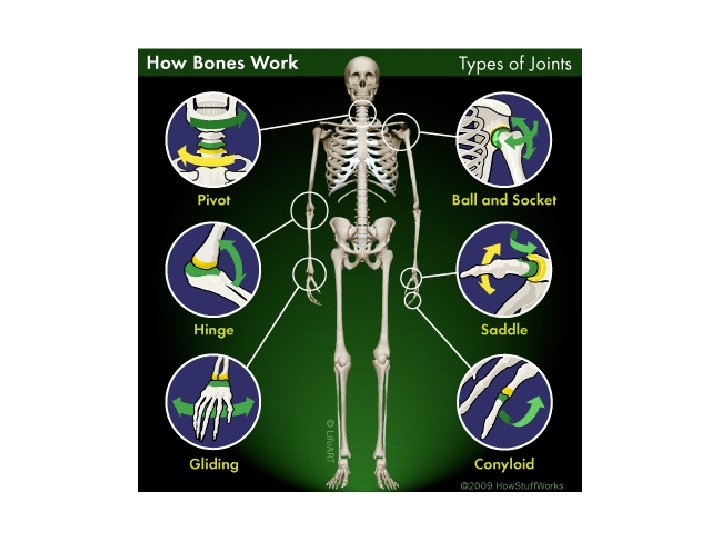
Joints: Any place where two or more bones come together. 4 types: • 1. hinge- forward & backward (knee) • 2. Ball & Socket- greatest range of motion- hip & shoulder • 3. Pivot: one bone rotates around anotherneck • 4. Gliding: one bone slides over another- wrist & ankle
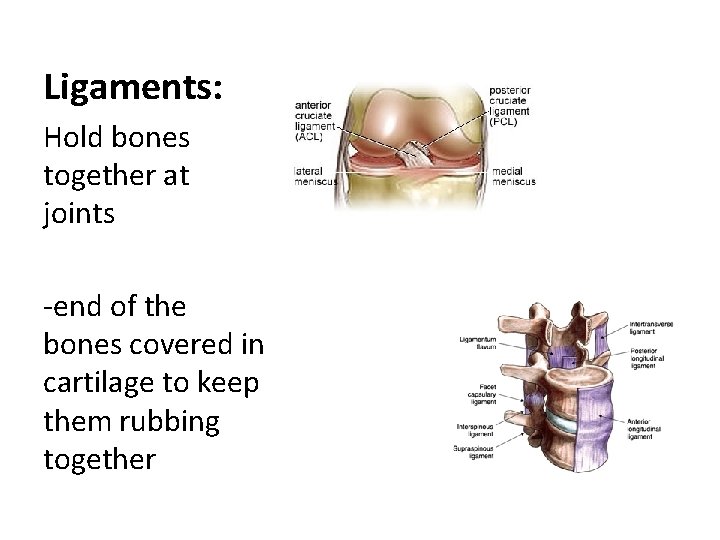
Ligaments: Hold bones together at joints -end of the bones covered in cartilage to keep them rubbing together

Human Skeleton
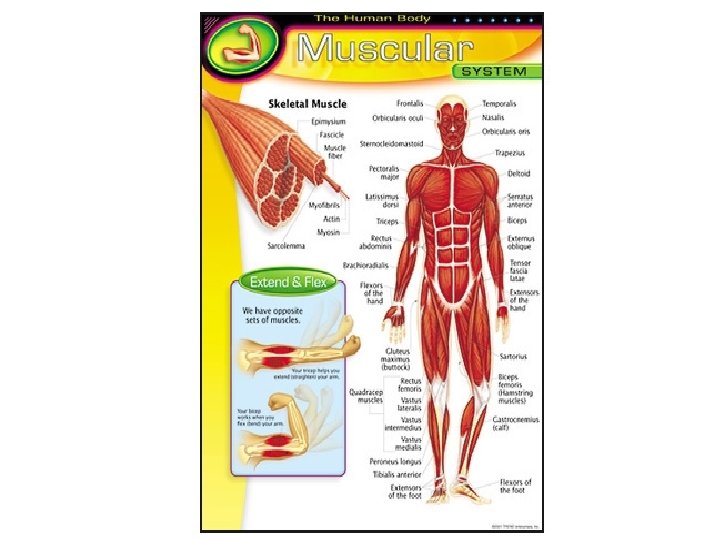
Muscular System • About 600 muscles in the human body • Two Main types: – Involuntary: you can not control them – Voluntary: you can control them
Three types of muscle tissue: 1. Cardiac: only in the heart, involuntary, striated, always working 2. Skeletal: attached to bones by tendons, voluntary, striated, tires easily 3. Smooth: involuntary, not striated, usually lines the insides of your organs
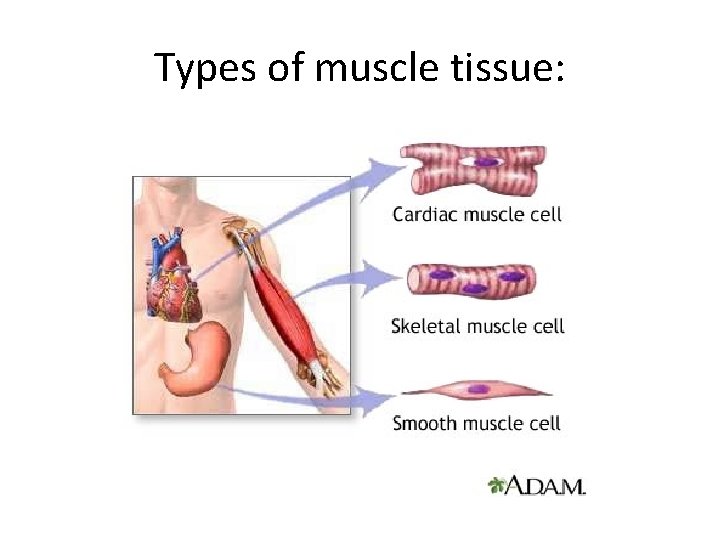
Types of muscle tissue:
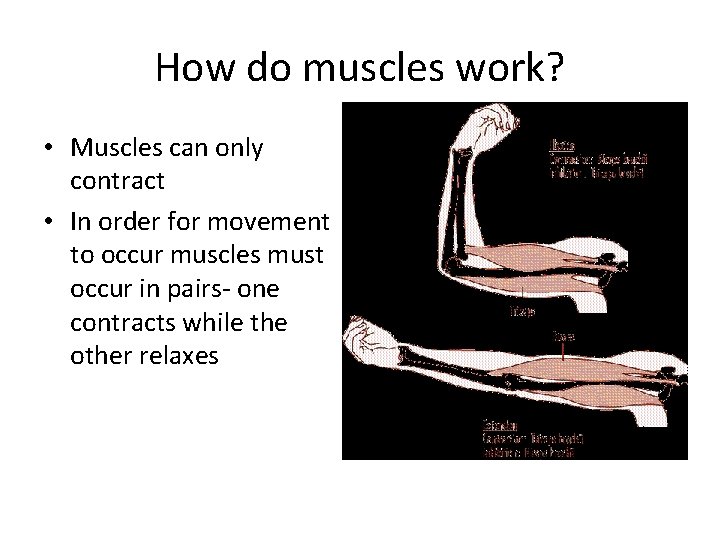
How do muscles work? • Muscles can only contract • In order for movement to occur muscles must occur in pairs- one contracts while the other relaxes
Skin • Largest organ in the human body- spread outcovers 1. 5 meters square • Functions: 1. 2. 3. 4. 5. Protection Maintain temperature Eliminate wastes Gather information Produce vitamin D
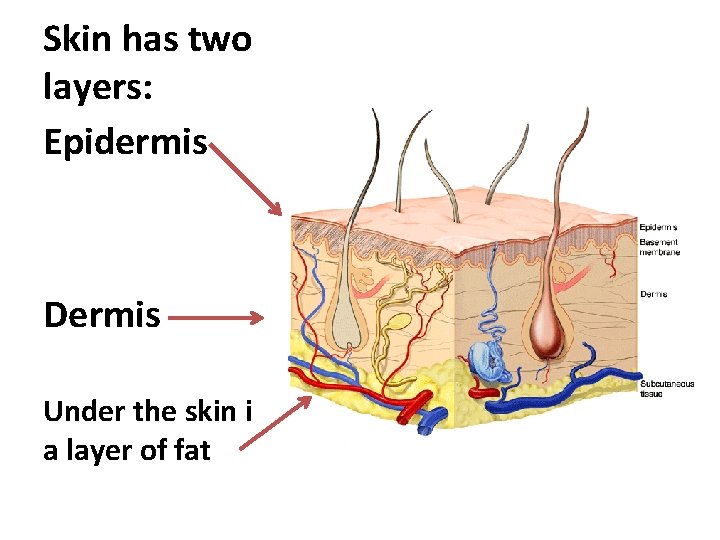
Skin has two layers: Epidermis Dermis Under the skin is a layer of fat
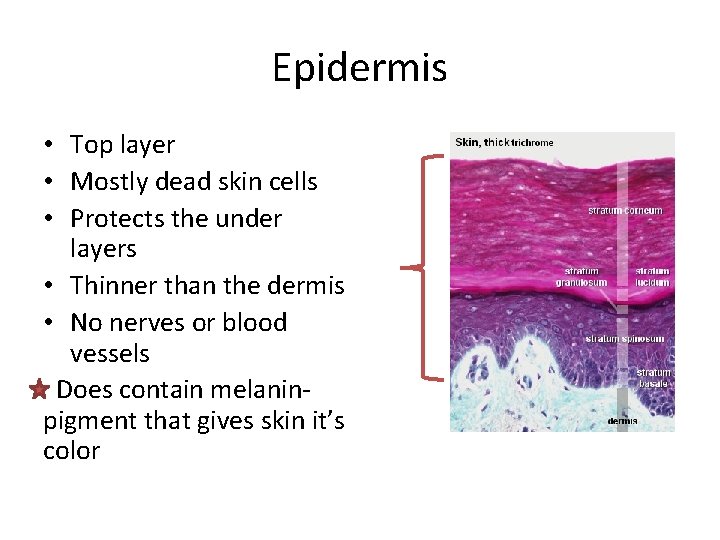
Epidermis • Top layer • Mostly dead skin cells • Protects the under layers • Thinner than the dermis • No nerves or blood vessels Does contain melaninpigment that gives skin it’s color
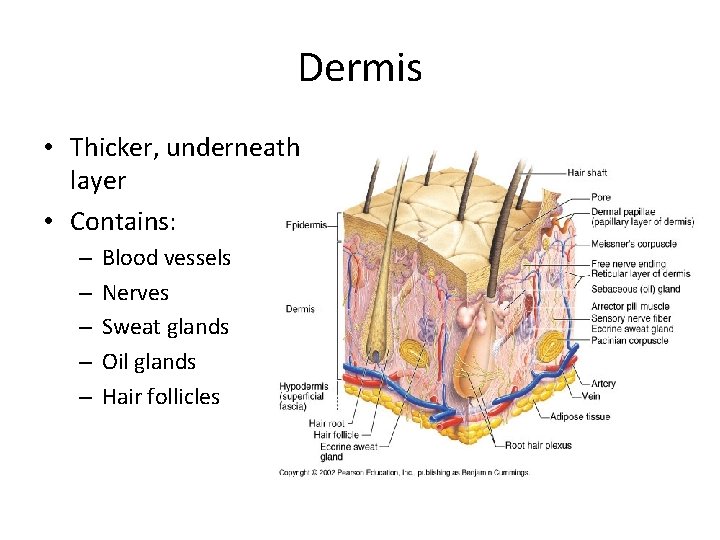
Dermis • Thicker, underneath layer • Contains: – – – Blood vessels Nerves Sweat glands Oil glands Hair follicles
Caring for Your Skin • Eat a healthful diet & drink plenty of water • Keep your skin clean using mild soap • Limit sun exposure
- Slides: 18