
Bones Muscles and Skin The Skeletal System Bellringer
Bones, Muscles, and Skin - The Skeletal System Bellringer: What is homeostasis? What is its importance in the human body?
Bones, Muscles, and Skin - The Skeletal System Question Answer What does the skeleton do? The skeleton provides shape and support, helps you to move, protects organs, produces blood cells, and stores minerals and other materials. How do joints move? Joints can move forward or backward, in a circle, in a rotating motion, and in a gliding motion. How strong are bones? Bones can absorb more force without breaking than granite or concrete.
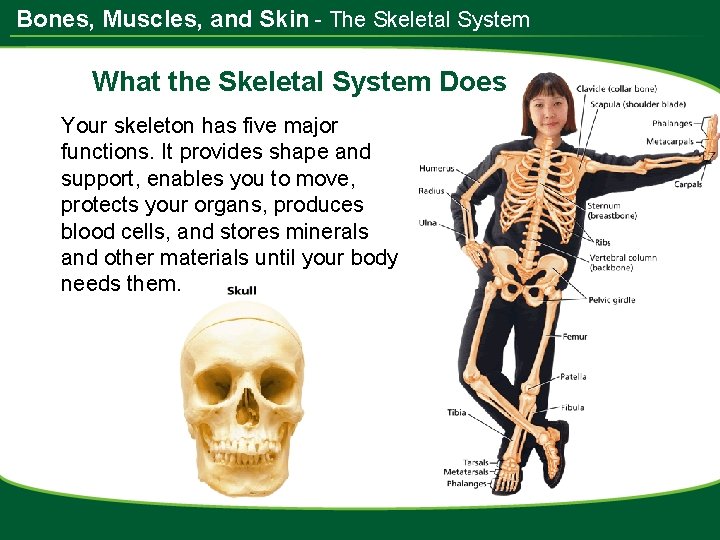
Bones, Muscles, and Skin - The Skeletal System What the Skeletal System Does Your skeleton has five major functions. It provides shape and support, enables you to move, protects your organs, produces blood cells, and stores minerals and other materials until your body needs them.

Bones, Muscles, and Skin - The Skeletal System Shape and Support The center of the skeleton is called the vertebral column or backbone. Cervical Thoracic The 26 small bones that make up the backbone are the vertebrae. There are five sections of vertebrae. Lumbar Sacrum Coccygeal
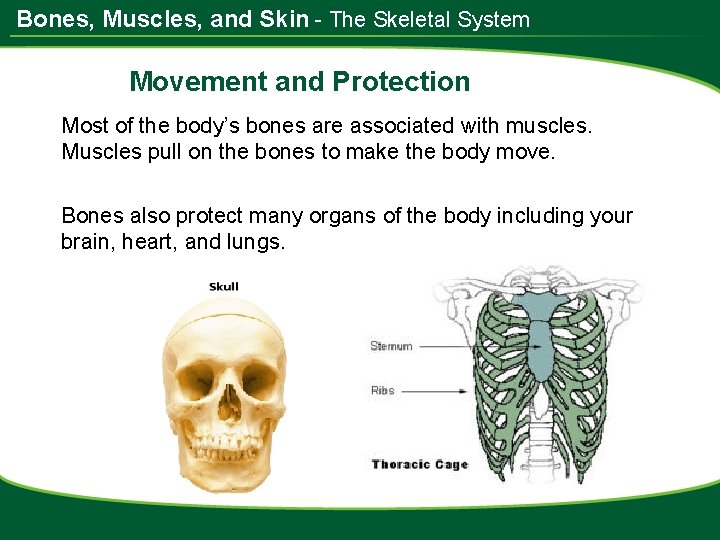
Bones, Muscles, and Skin - The Skeletal System Movement and Protection Most of the body’s bones are associated with muscles. Muscles pull on the bones to make the body move. Bones also protect many organs of the body including your brain, heart, and lungs.
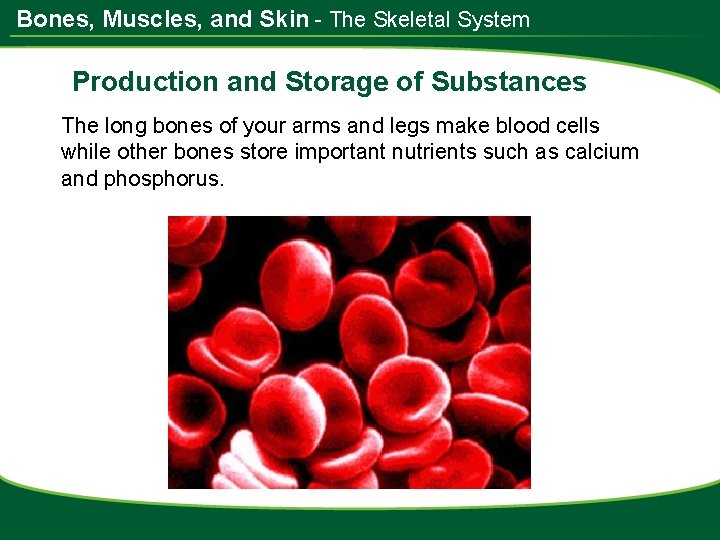
Bones, Muscles, and Skin - The Skeletal System Production and Storage of Substances The long bones of your arms and legs make blood cells while other bones store important nutrients such as calcium and phosphorus.
Bones, Muscles, and Skin - The Skeletal System Bellringer: List the five major functions of the skeleton.
Bones, Muscles, and Skin - The Skeletal System Joints of the Skeleton A joint is a place in the body where two bones come together. Joints allow bones to move in different ways. Two kinds of joints are in the human body: immovable joints… connecting bones in a way that allows little or no movement movable joints… allow the body to make a wide range of movements
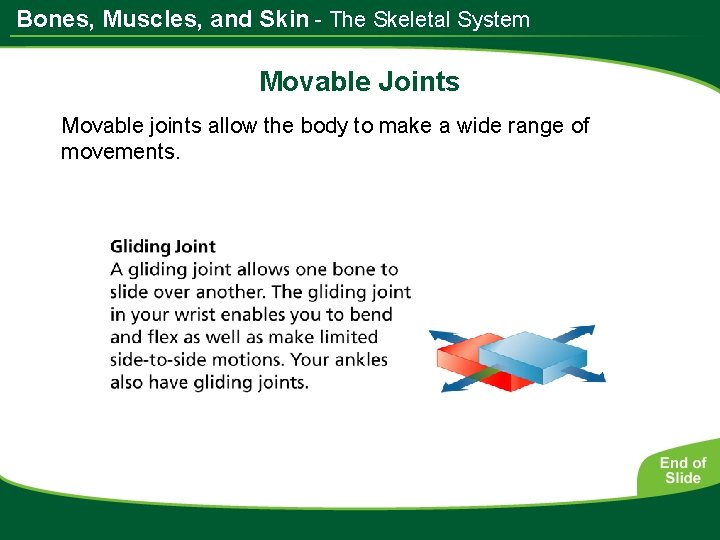
Bones, Muscles, and Skin - The Skeletal System Movable Joints Movable joints allow the body to make a wide range of movements.
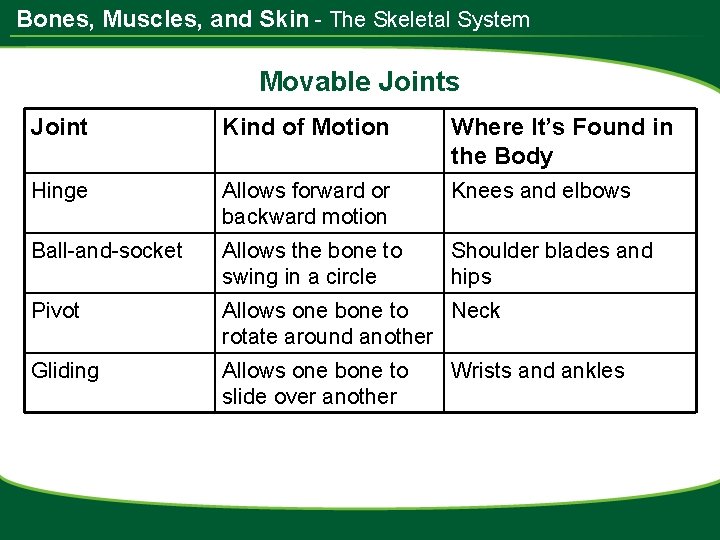
Bones, Muscles, and Skin - The Skeletal System Movable Joints Joint Kind of Motion Where It’s Found in the Body Hinge Allows forward or backward motion Knees and elbows Ball-and-socket Allows the bone to swing in a circle Shoulder blades and hips Pivot Allows one bone to Neck rotate around another Gliding Allows one bone to slide over another Wrists and ankles
Bones, Muscles, and Skin - The Skeletal System Joints of the Skeleton The bones in movable joints are held together by strong connective tissues called ligaments. Most joints have a second type of connective tissue, called cartilage, which is more flexible than bone. Cartilage covers the ends of the bones and keeps them from rubbing against each other.
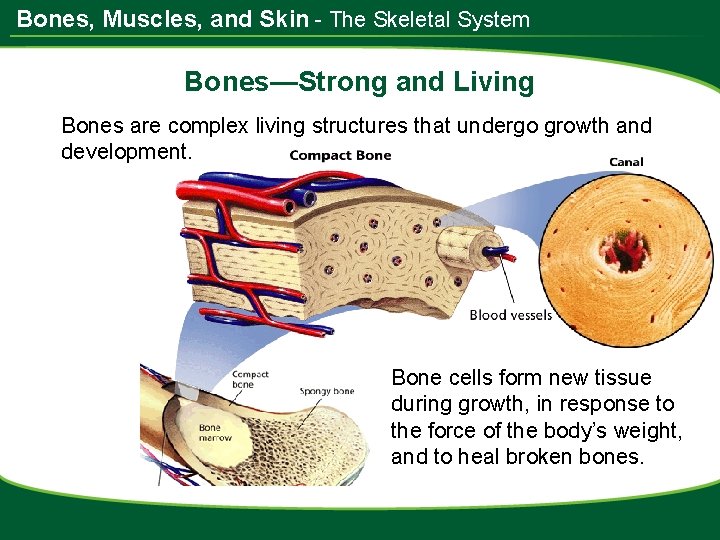
Bones, Muscles, and Skin - The Skeletal System Bones—Strong and Living Bones are complex living structures that undergo growth and development. Bone cells form new tissue during growth, in response to the force of the body’s weight, and to heal broken bones.
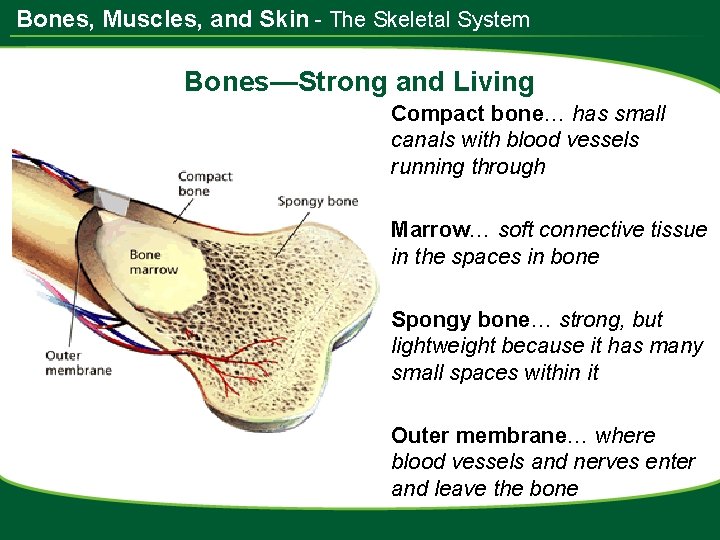
Bones, Muscles, and Skin - The Skeletal System Bones—Strong and Living Compact bone… has small canals with blood vessels running through Marrow… soft connective tissue in the spaces in bone Spongy bone… strong, but lightweight because it has many small spaces within it Outer membrane… where blood vessels and nerves enter and leave the bone
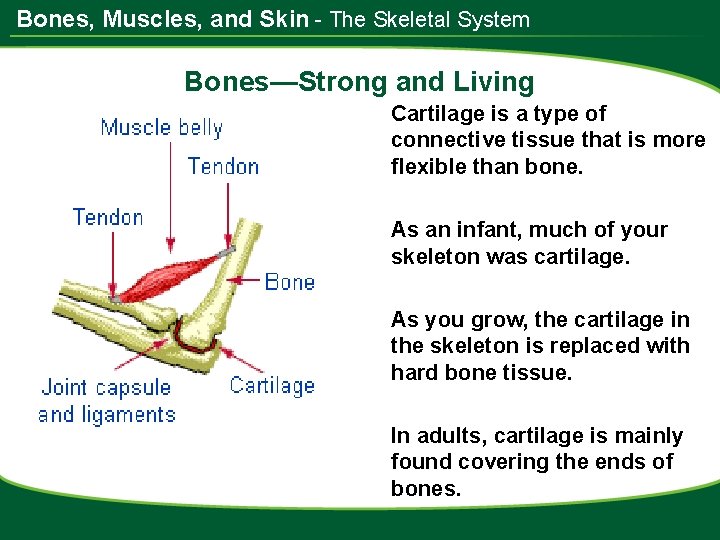
Bones, Muscles, and Skin - The Skeletal System Bones—Strong and Living Cartilage is a type of connective tissue that is more flexible than bone. As an infant, much of your skeleton was cartilage. As you grow, the cartilage in the skeleton is replaced with hard bone tissue. In adults, cartilage is mainly found covering the ends of bones.
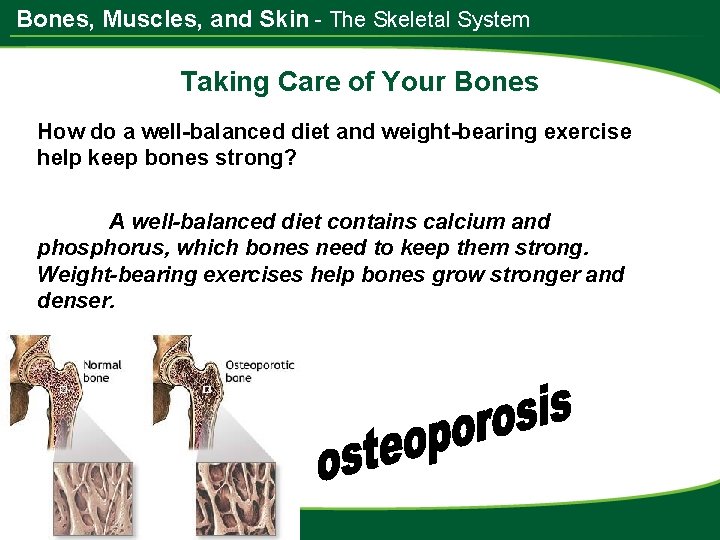
Bones, Muscles, and Skin - The Skeletal System Taking Care of Your Bones How do a well-balanced diet and weight-bearing exercise help keep bones strong? A well-balanced diet contains calcium and phosphorus, which bones need to keep them strong. Weight-bearing exercises help bones grow stronger and denser.
- Slides: 15