
Bones Muscles and Joints The Skeleton Learning objectives
Bones, Muscles and Joints The Skeleton
Learning objectives 1. Describe the five functions of the skeletal system. 2. Identify where the main bones in the body are located and which type of bone they are.
Starter Imagine a body without a skeleton! Task: Complete the starter sheet. 1) Describe our body without a skeleton 2) Name as many bones as you can!

What are its functions? Function = purpose L L E C N D O TIO O L B UC D PRO

The functions of the skeleton Shape – The skeleton gives us our shape & determines our size. Support – The skeleton supports muscles and organs. Protection – The skeleton protects delicate parts of the body like the brain and lungs. Movement – The skeleton allows us to move. Muscles are attached to the bones and move them as levers. Blood cell production – blood cells are made in the bone marrow.
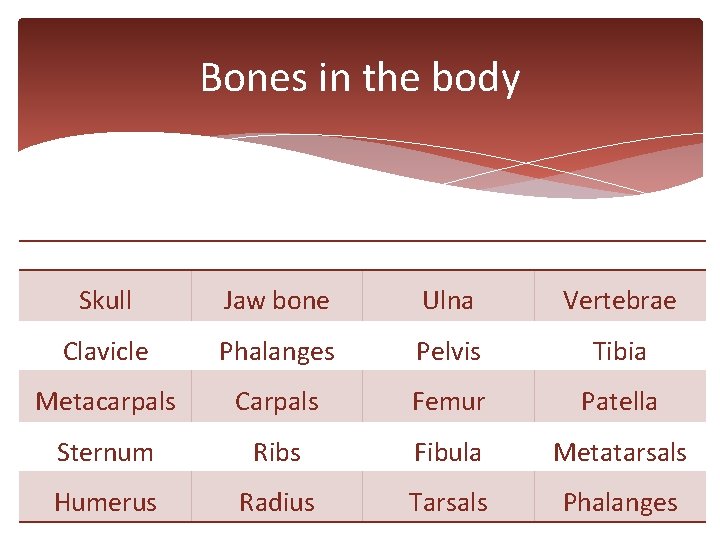
Bones in the body Skull Jaw bone Ulna Vertebrae Clavicle Phalanges Pelvis Tibia Metacarpals Carpals Femur Patella Sternum Ribs Fibula Metatarsals Humerus Radius Tarsals Phalanges
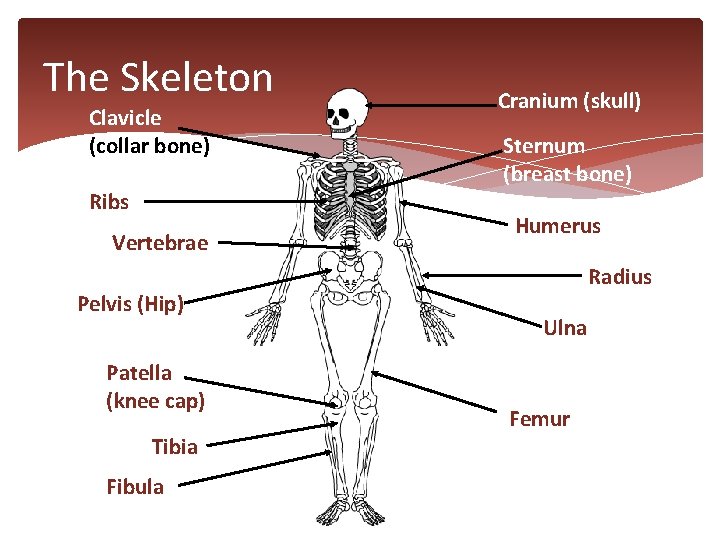
The Skeleton Clavicle (collar bone) Ribs Vertebrae Pelvis (Hip) Patella (knee cap) Tibia Fibula Cranium (skull) Sternum (breast bone) Humerus Radius Ulna Femur
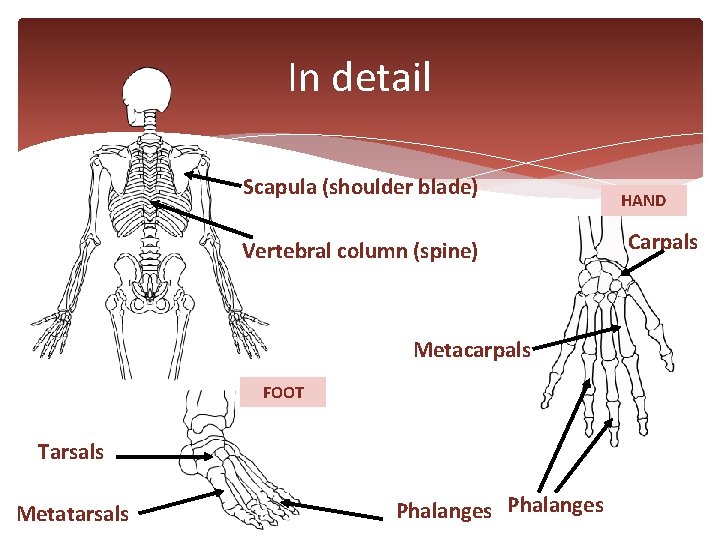
In detail Scapula (shoulder blade) Vertebral column (spine) Metacarpals FOOT Tarsals Metatarsals Phalanges HAND Carpals
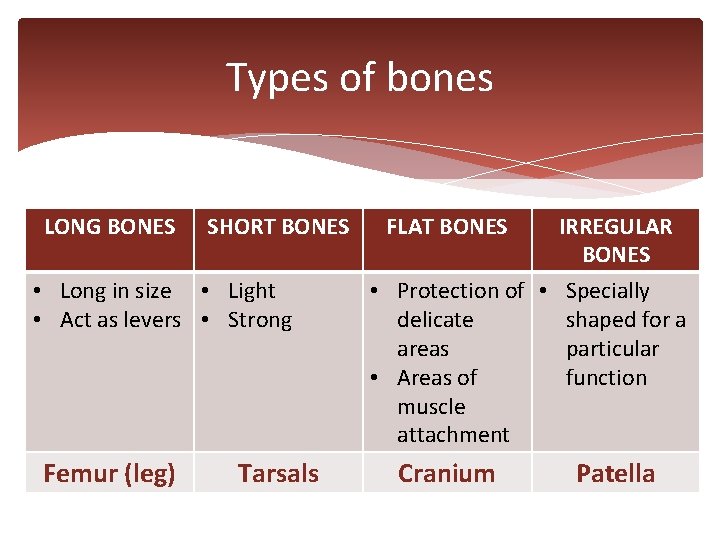
Types of bones LONG BONES SHORT BONES • Long in size • Light • Act as levers • Strong Femur (leg) Tarsals FLAT BONES IRREGULAR BONES • Protection of • Specially delicate shaped for a areas particular • Areas of function muscle attachment Cranium Patella
Plenary Imagine a body without a skeleton! Task: Complete the plenary side of the sheet. What knowledge have you gained… 1) Describe our body without a skeleton 2) Name as many bones as you can!
Homework 1. Find a picture of a sports person of your choice. Label all of the main bones and the type of bone. 2. Revise all bones and locations for a short test next lesson.
- Slides: 11