
Bones Joints Muscles The human skeleton is an
� Bones � Joints � Muscles
� The human skeleton is an active, living tissue � The body has a total of 206 bones � Most of the adult skeleton is replaced every 10 years � The skeleton has two parts – The Axial Skeleton and the Appendicular Skeleton
� Cartilage �Resilient, semi-rigid form of connective tissue that reduces the friction and absorbs some shock in synovial joints. � Periosteum �A dense layer of vascular connective tissue enveloping the bones except at the surfaces of the joints � Bone �Any of the pieces of hard, whitish tissue making up the skeleton in humans and other vertebrates.
� Support � Protection � Vitamin and Mineral Storage � Hematopoiesis � Movement
� Bones hold the body together by providing a structure for tissues and organs to form around � Gives a rigid structure � Without bones, tissues and organs would collapse onto each other � Bones hold the body upright
� The close proximity of the bones to vital organs (kidney, brain etc. ) allows for solid protection of the organs. � The skull protects the brain vertebrae form a canal around the spinal cord
� Calcium � Phosphorous � Potassium � Bones are constantly being broken down to release minerals and other substances into the blood
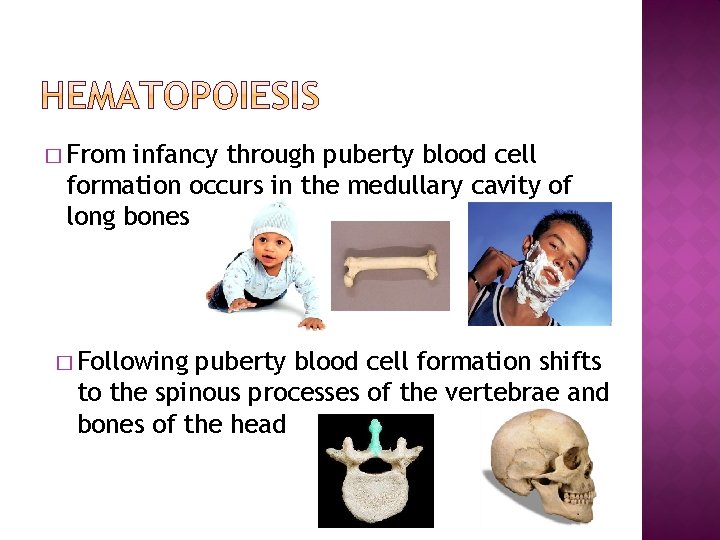
� From infancy through puberty blood cell formation occurs in the medullary cavity of long bones � Following puberty blood cell formation shifts to the spinous processes of the vertebrae and bones of the head
� Bones are attached to muscles, tendons and ligaments � Tendons attach bones to muscle � Ligaments attach bones to bones � The skeletal system moves when muscles are contracted � 177 bones are involved in voluntary movement
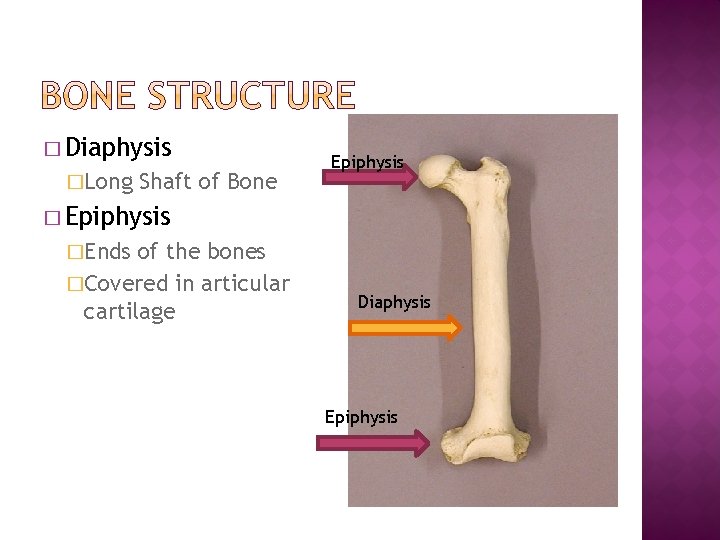
� Diaphysis �Long Shaft of Bone Epiphysis �Ends of the bones �Covered in articular cartilage Diaphysis Epiphysis
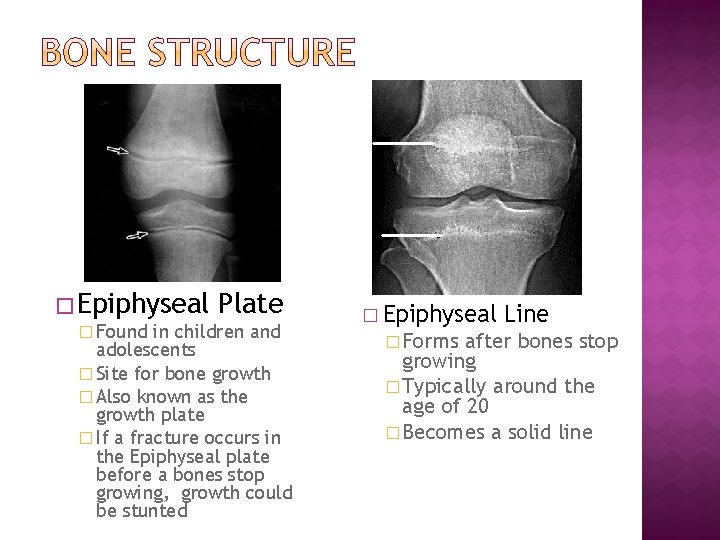
� Epiphyseal � Found Plate in children and adolescents � Site for bone growth � Also known as the growth plate � If a fracture occurs in the Epiphyseal plate before a bones stop growing, growth could be stunted � Epiphyseal Line � Forms after bones stop growing � Typically around the age of 20 � Becomes a solid line
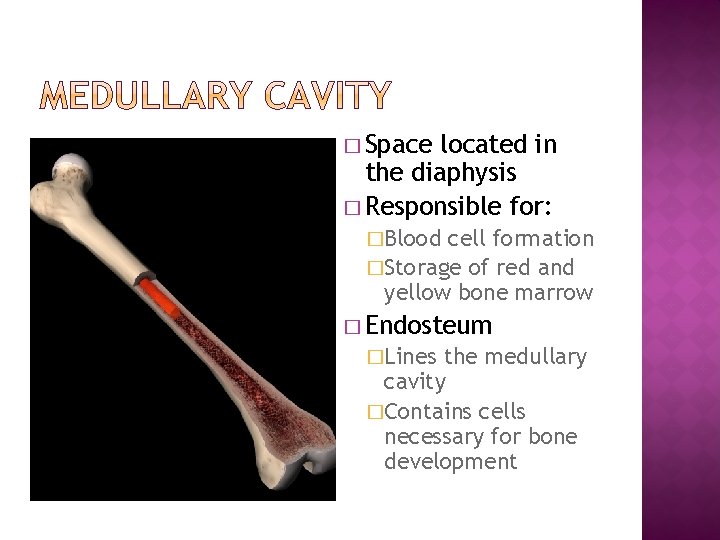
� Space located in the diaphysis � Responsible for: �Blood cell formation �Storage of red and yellow bone marrow � Endosteum �Lines the medullary cavity �Contains cells necessary for bone development
� Important for controlling the amount of bone tissue � Osteoblasts �Cells responsible for bone formation � Osteoclasts �Cells responsible for bone reabsorption � Bone Reabsorption �Process where osteoclasts break down bone and release minerals transfers calcium from bone to the blood � During childhood bone formation exceed reabsorption, as we age reabsorption exceeds formation leads to osteoporosis
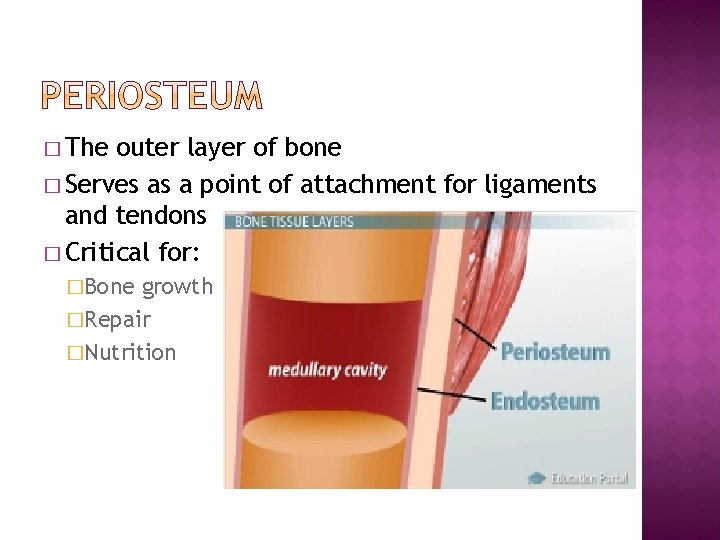
� The outer layer of bone � Serves as a point of attachment for ligaments and tendons � Critical for: �Bone growth �Repair �Nutrition
� There 1. 2. 3. 4. 5. are five types of bones in the body Long Short Flat Irregular Sesamoid
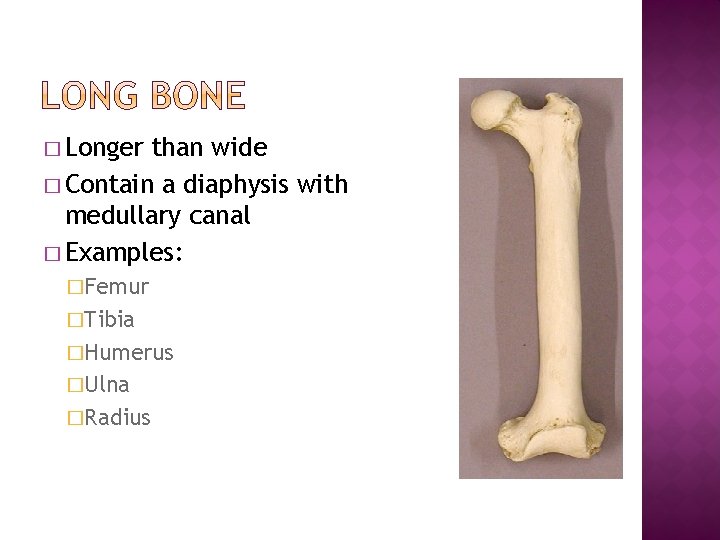
� Longer than wide � Contain a diaphysis with medullary canal � Examples: �Femur �Tibia �Humerus �Ulna �Radius
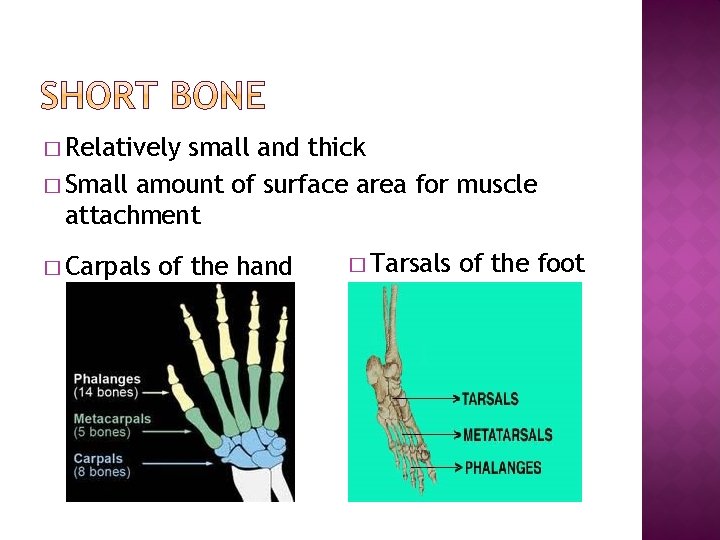
� Relatively small and thick � Small amount of surface area for muscle attachment � Carpals of the hand � Tarsals of the foot
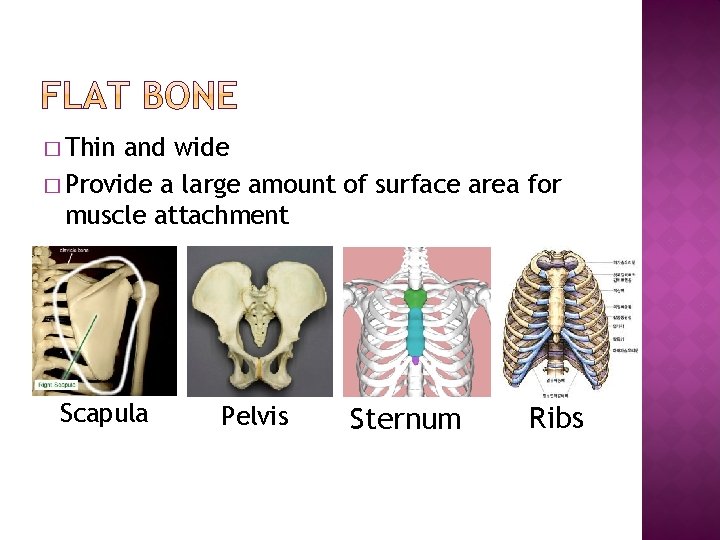
� Thin and wide � Provide a large amount of surface area for muscle attachment Scapula Pelvis Sternum Ribs
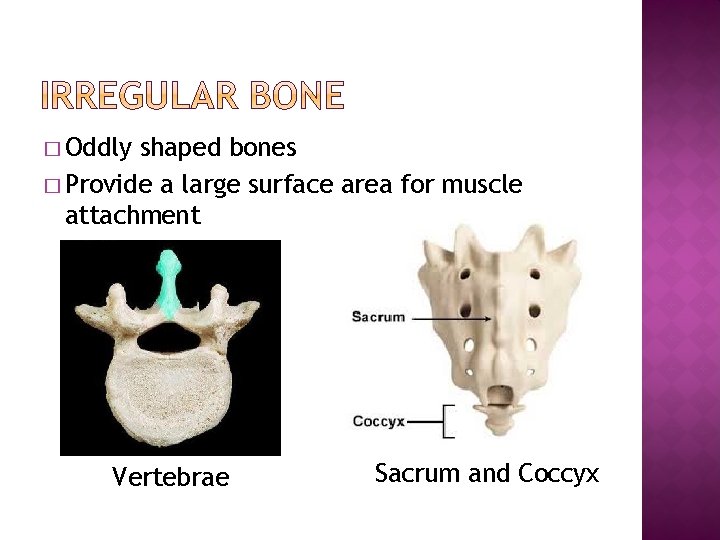
� Oddly shaped bones � Provide a large surface area for muscle attachment Vertebrae Sacrum and Coccyx
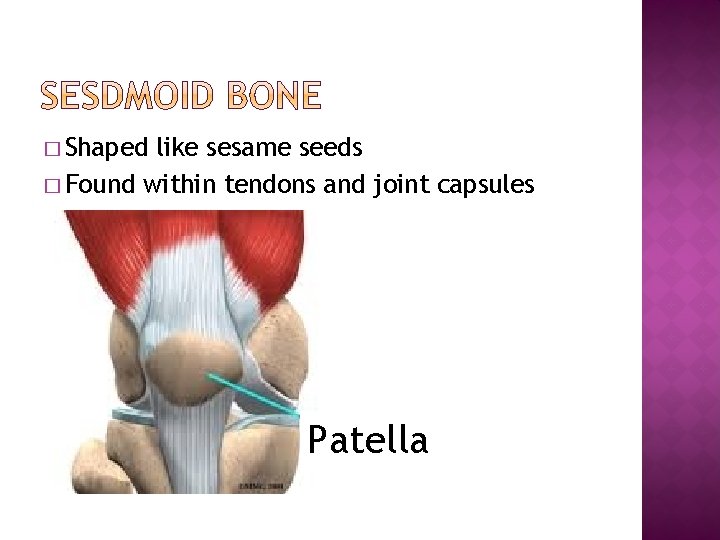
� Shaped like sesame seeds � Found within tendons and joint capsules Patella
� The size and shape of the skeleton is genetically determined � However, the skeleton can be greatly affected by the impact of regular physical activity �A bone’s size and shape fits best with its function – the more active you are the stronger your bones will be
� 74 bones make up the axial skeleton �May sometimes see 80 bones because 6 bones of the inner ear are sometimes classified with the axial skeleton
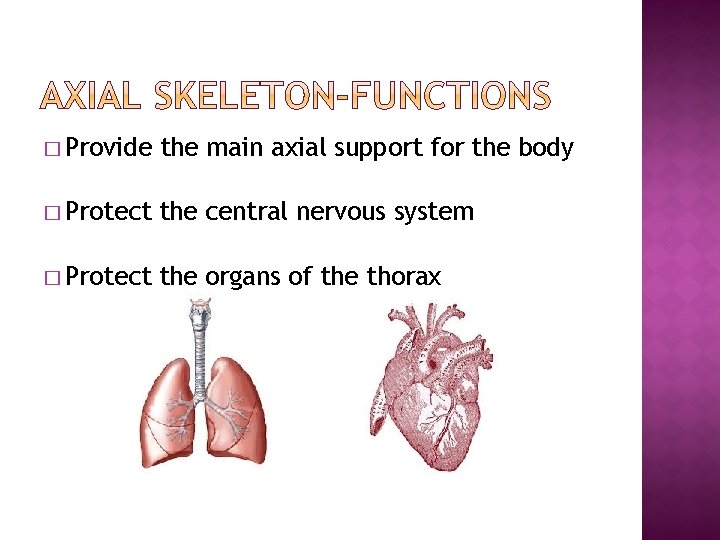
� Provide the main axial support for the body � Protect the central nervous system � Protect the organs of the thorax
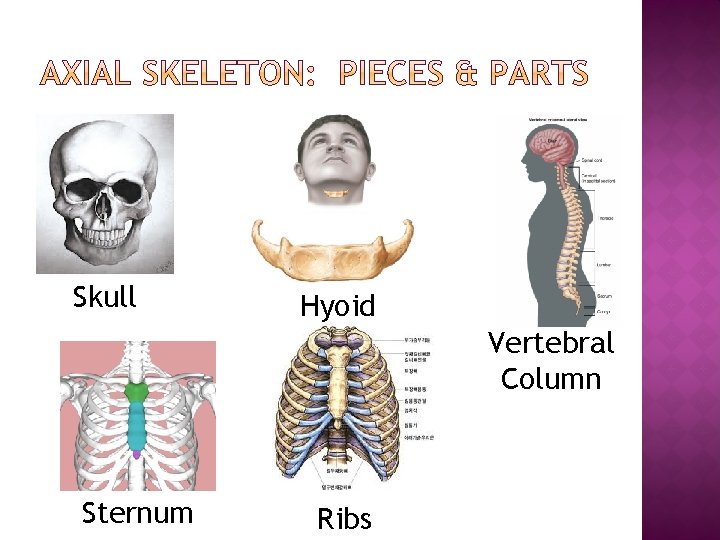
Skull Hyoid Vertebral Column Sternum Ribs
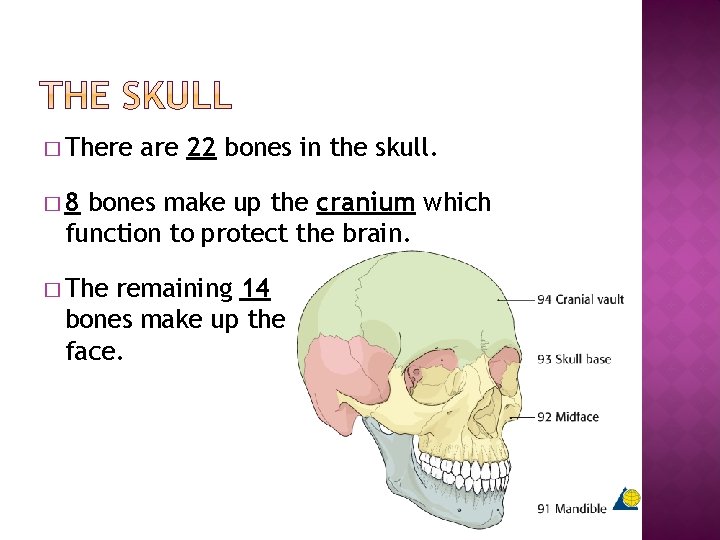
� There are 22 bones in the skull. � 8 bones make up the cranium which function to protect the brain. � The remaining 14 bones make up the face.
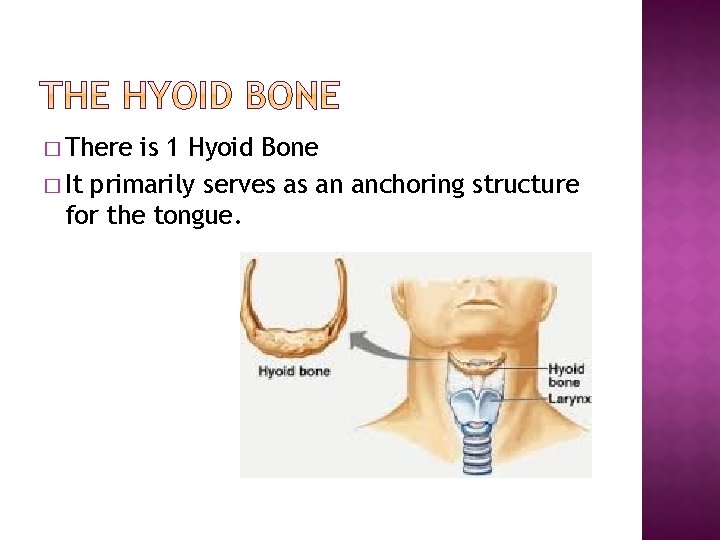
� There is 1 Hyoid Bone � It primarily serves as an anchoring structure for the tongue.
� Vertebral column consists of 33 vertebrae � Categorized by regions �Cervical (Neck)- 7 cervical vertebrae (C 1 -C 7)smallest most delicate �Thoracic- 12 thoracic vertebrae (T 1 -T 12) – each attached to a rib �Lumbar- 5 lumbar vertebrae(L 1 -L 5)- largest and heaviest �Sacrum -5 fused vertebrae �Coccyx- 4 fused vertebrae
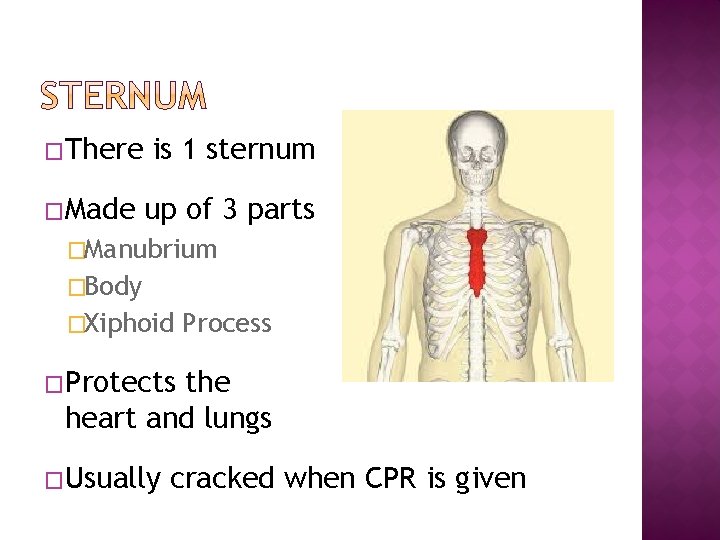
�There is 1 sternum �Made up of 3 parts �Manubrium �Body �Xiphoid Process �Protects the heart and lungs �Usually cracked when CPR is given
� There are 24 ribs � All ribs are attached in back to the thoracic vertebrae T 1 -T 12. � Ribs 1 through 7 are each attached in front to the sternum by a costal cartilage, and therefore called "true" ribs. � Ribs 8 through 10, the "false" ribs are not attached to the sternum but to the costal cartilage of the 7 th rib above. � Ribs 11 and 12 are called "floating" ribs, they are only attached to the vertebrae.
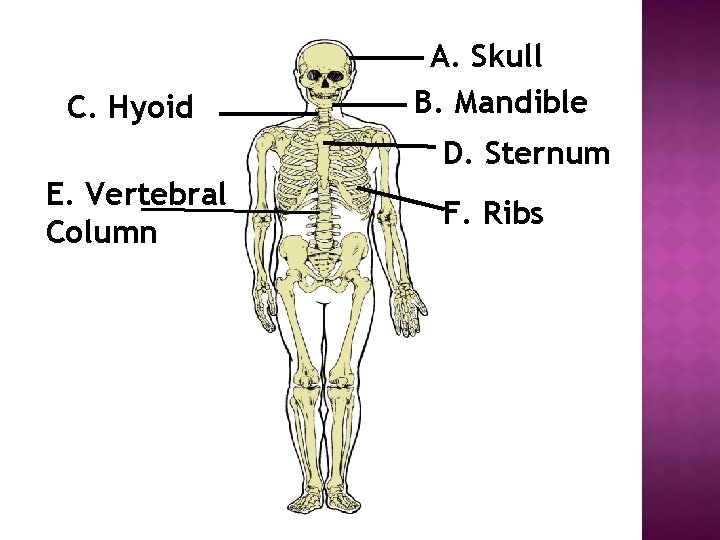
C. Hyoid A. Skull B. Mandible D. Sternum E. Vertebral Column F. Ribs
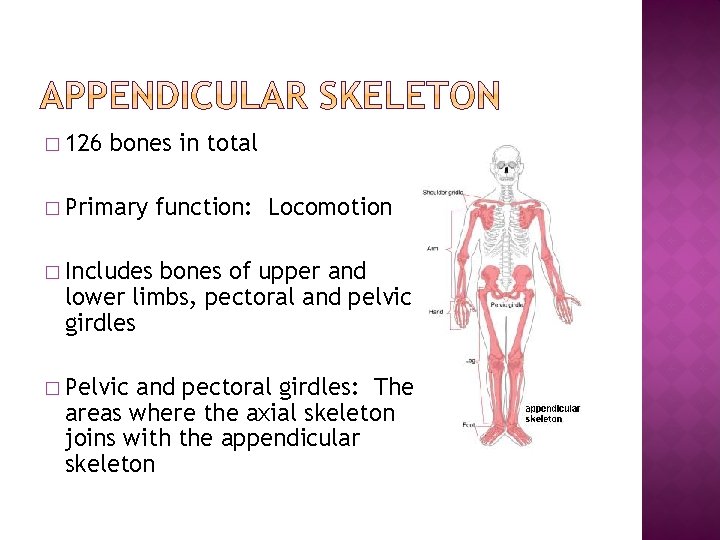
� 126 bones in total � Primary function: Locomotion � Includes bones of upper and lower limbs, pectoral and pelvic girdles � Pelvic and pectoral girdles: The areas where the axial skeleton joins with the appendicular skeleton
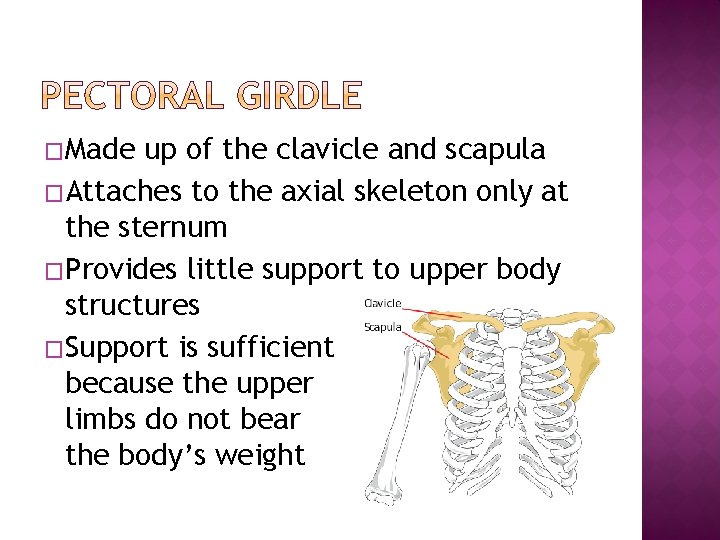
�Made up of the clavicle and scapula �Attaches to the axial skeleton only at the sternum �Provides little support to upper body structures �Support is sufficient because the upper limbs do not bear the body’s weight
�Pectoral � Clavicle �Upper Girdle and scapula Extremities � Phalanges � Metacarpals � Carpals � Radius � Ulna � Humerus
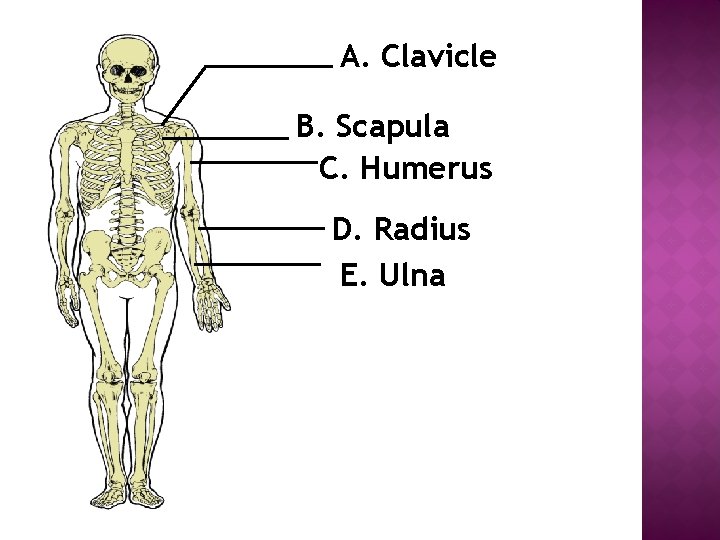
A. Clavicle B. Scapula C. Humerus D. Radius E. Ulna
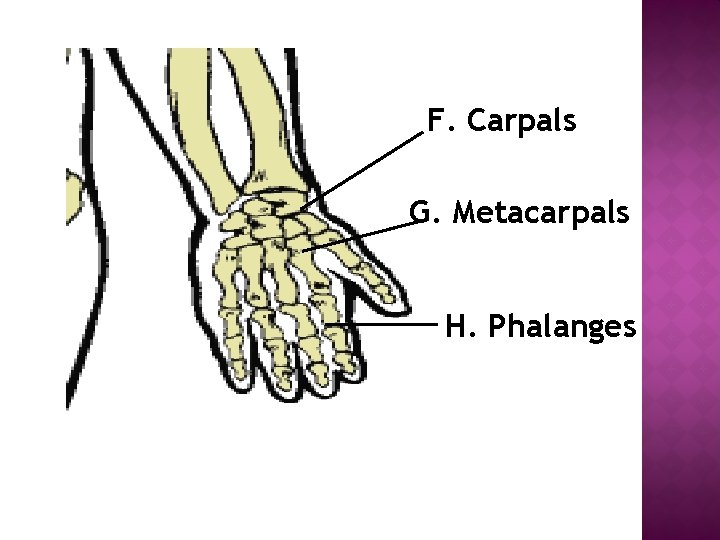
F. Carpals G. Metacarpals H. Phalanges
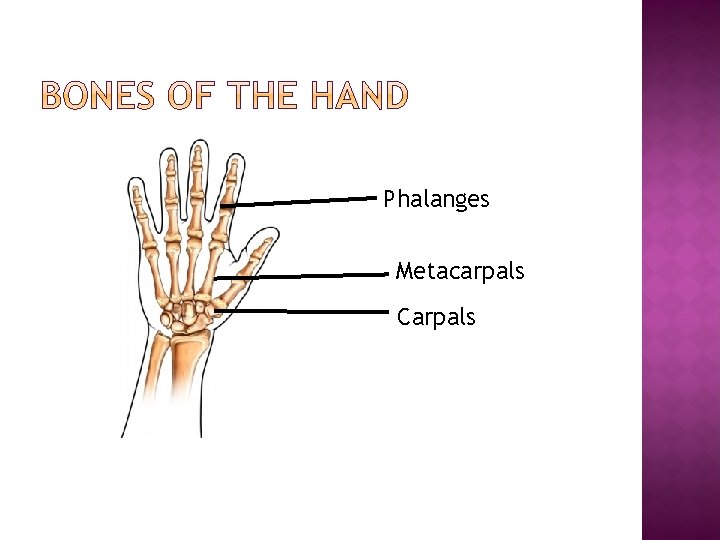
Phalanges Metacarpals Carpals
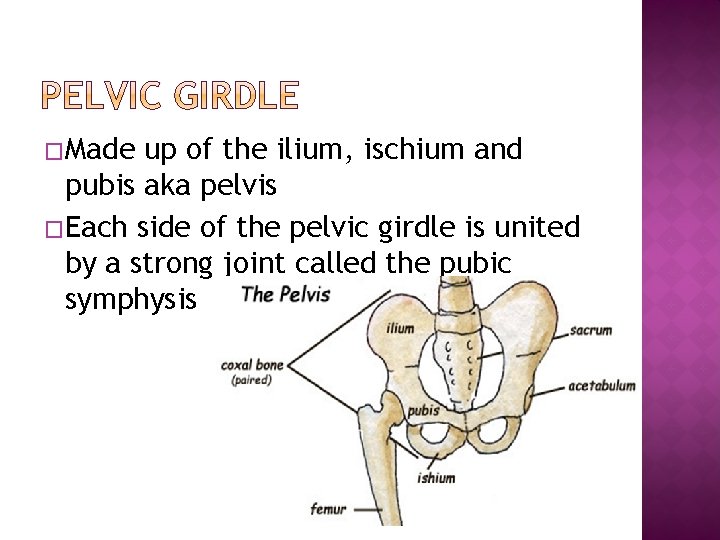
�Made up of the ilium, ischium and pubis aka pelvis �Each side of the pelvic girdle is united by a strong joint called the pubic symphysis
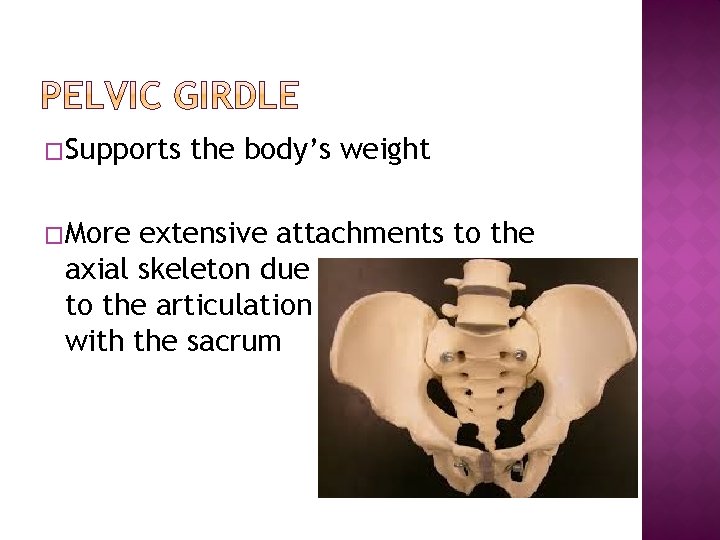
�Supports �More the body’s weight extensive attachments to the axial skeleton due to the articulation with the sacrum
� Pelvic Girdle (aka Pelvis) � Ilium, � Lower Ischium and pubis Extremities � Phalanges � Metatarsals � Tarsals � Patella � Tibia � Fibula � Femur
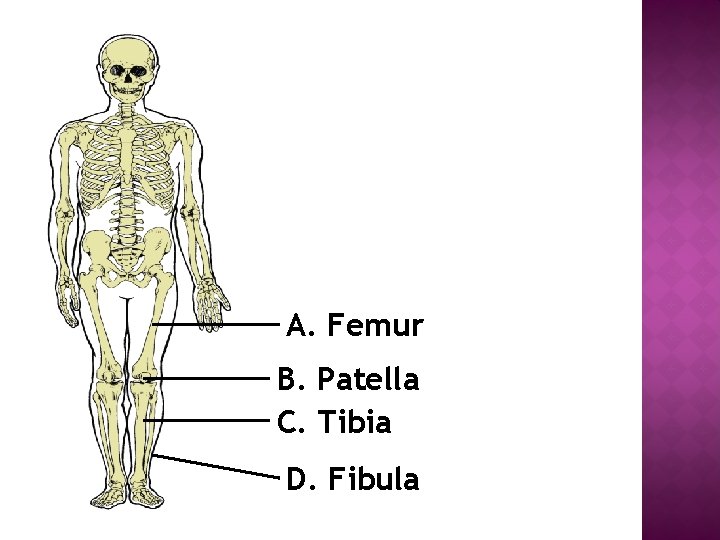
A. Femur B. Patella C. Tibia D. Fibula
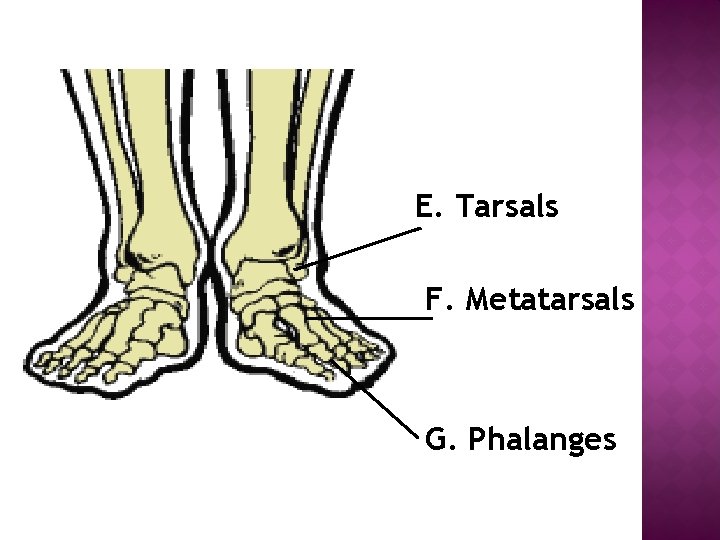
E. Tarsals F. Metatarsals G. Phalanges
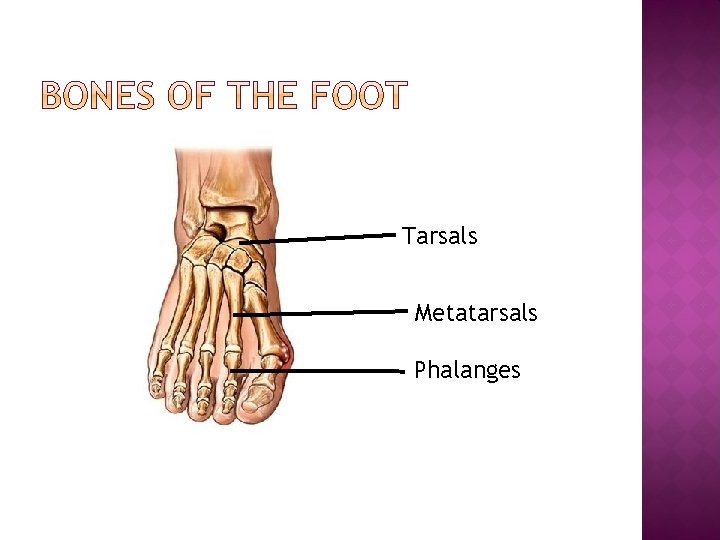
Tarsals Metatarsals Phalanges
- Slides: 46