
Bones Dr Sama ul Haque Objectives Define Skeleton
Bones Dr. Sama ul Haque
Objectives Define Skeleton. Differentiate between Axial and Appendicular skeleton. Define bones with their constituents. Enumerate their functions. Define Cartilage. Discuss different types of cartilage with examples. Classify the bones on the following basis. 1. Histological or Microscopically 2. Gross Appearance or Macroscopically
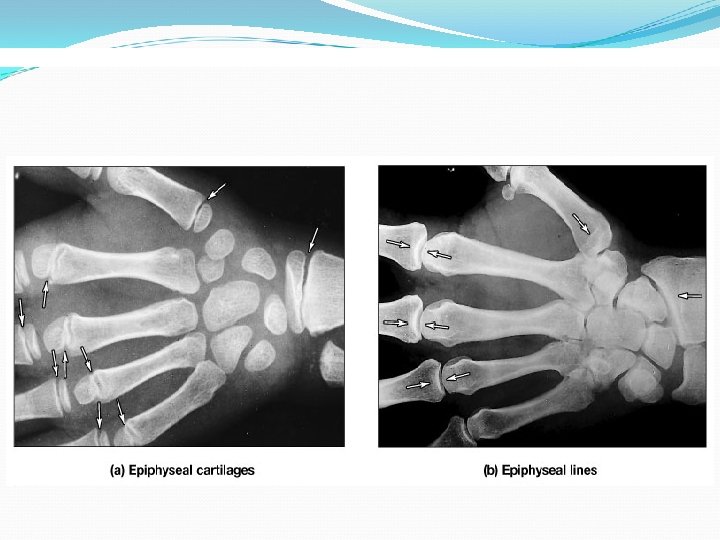
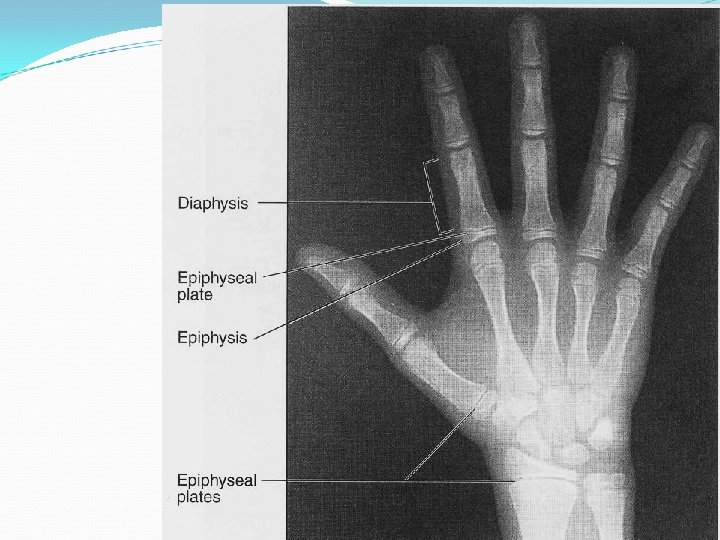
Objectives Define Ossification and its types. Describe developing parts of a typical long bone. Give the arterial supply of a Mature long Bone. What are different types of bone break. Define terms used for describing Bony features.
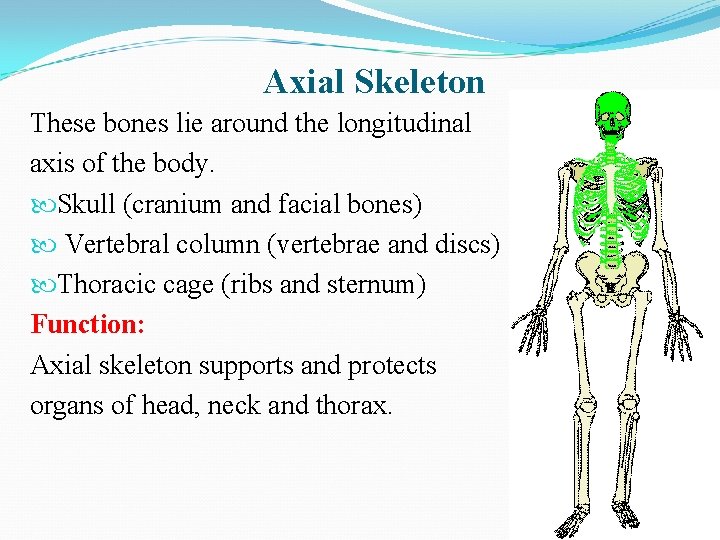
Axial Skeleton These bones lie around the longitudinal axis of the body. Skull (cranium and facial bones) Vertebral column (vertebrae and discs) Thoracic cage (ribs and sternum) Function: Axial skeleton supports and protects organs of head, neck and thorax.
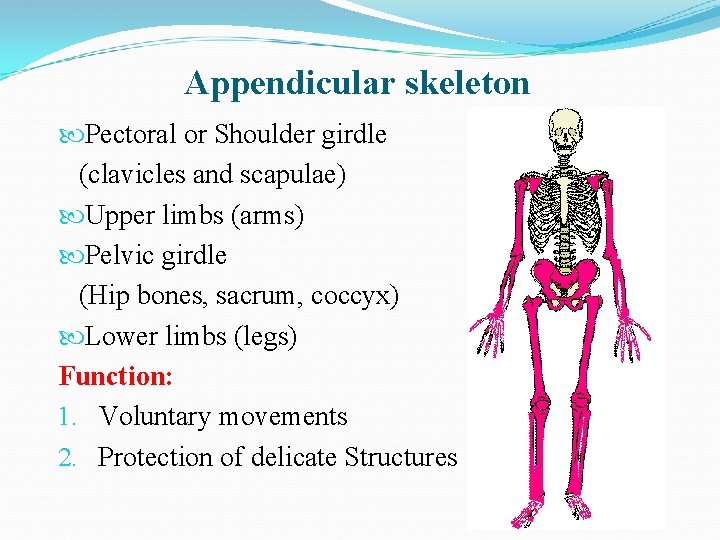
Appendicular skeleton Pectoral or Shoulder girdle (clavicles and scapulae) Upper limbs (arms) Pelvic girdle (Hip bones, sacrum, coccyx) Lower limbs (legs) Function: 1. Voluntary movements 2. Protection of delicate Structures
Composition of Bones Collagen: chief organic constituent (protein) Inorganic Calcium Salts: Vitamin D essential for absorption
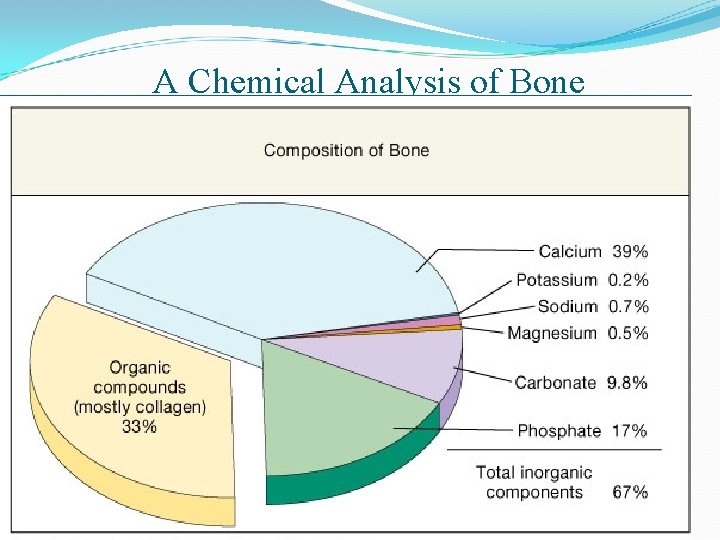
A Chemical Analysis of Bone
Cells Osteoblasts: bone building, bone repairing cells in the periosteum and synthesize new matrix (Osteogenesis) Osteocytes: osteoblast embedded within the bone matrix (mature bone cells) Osteoclasts: cells that cause absorption of bone or dissolve bone matrix (Osteolysis)
Periosteum Dense, fibrous membrane covering bone Contains blood vessels Essential for bone cell survival and bone formation Endosteum
Functions of Bones Shape Support Protection => Skull => Thoracic cage => Vertebral Column
Functions of Bones Movement => Muscles => Tendons => Ligaments Locomotion: To provide a lever system against which muscles can pull. Weight Transmission

Functions of Bones Mineral Storage => Calcium => Phosphate => Results in maintaining Electrolyte balance Helps in Respiration
Functions of Bones Blood cell formation Ø Red Bone Marrow Red gelatinous mass consisting of Haemopoietic tissue > Ends of long bones > Bodies of vertebrae > Sternum > Flat bones of skull
Cartilage Type of Dense connective tissue ( Cells and fibers) Perichondrium ( Fibro-vasculo-cellular membrane) Cells = Characterized by Rigid with flexibility and Resilience. Avascular Nerves and lymphatics are absent Cells (Chondroblasts and chondrocytes) Matrix => Connective tissue fibers (Collagen, Elastin)
Types of cartilage: 3 1. Hyaline cartilage: cartilage flexible and resilient 2. Elastic cartilage: cartilage highly bendable 3. Fibrocartilage: Fibrocartilage resists compression and tension
Hyaline Cartilage Hyaline (Glass) Commonest form Bluish white, translucent and homogenous in appearance with collagen fibers => Articular cartilage => Costal cartilage => Tracheal cartilage Ossifies to form bone in young age
Elastic Cartilage Yellow; Elastin fibers More elastic than hyaline Sites => Pinna of the ear => Epiglottis Never ossifies
Fibro-cartilage White, Opaque with collagen fibers Sites => Intervertebral disc => Intra articular disc => Menisci Ossifies in old age
Classification of bones Histological or Microscopically Gross Appearance or Macroscopically
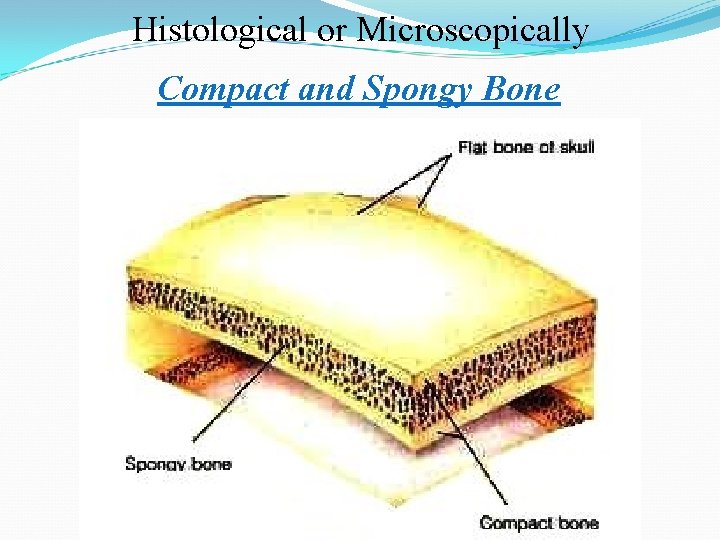
Histological or Microscopically Compact and Spongy Bone
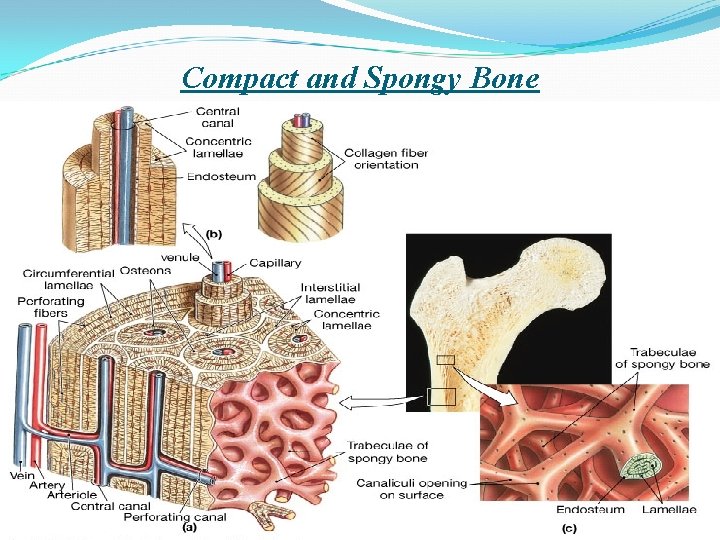
Compact and Spongy Bone
Classification of Bones According to Shape Long Bones Short Bones Flat Bones Irregular Bones Sesamoid Bones
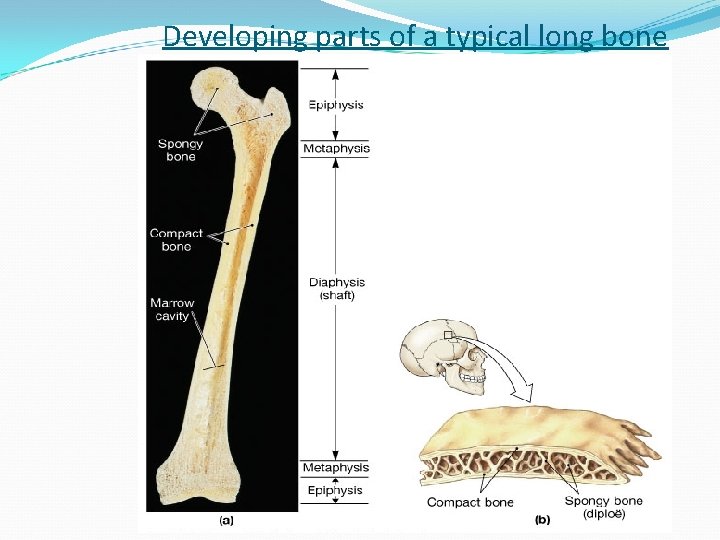
Developing parts of a typical long bone
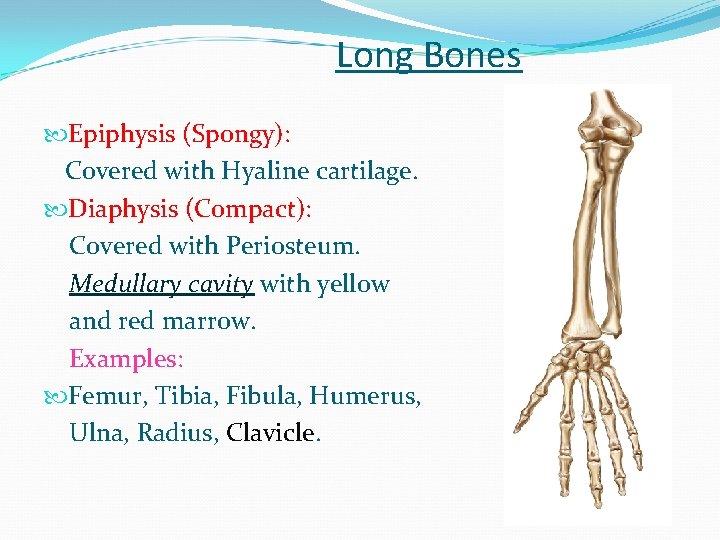
Long Bones Epiphysis (Spongy): Covered with Hyaline cartilage. Diaphysis (Compact): Covered with Periosteum. Medullary cavity with yellow and red marrow. Examples: Femur, Tibia, Fibula, Humerus, Ulna, Radius, Clavicle.
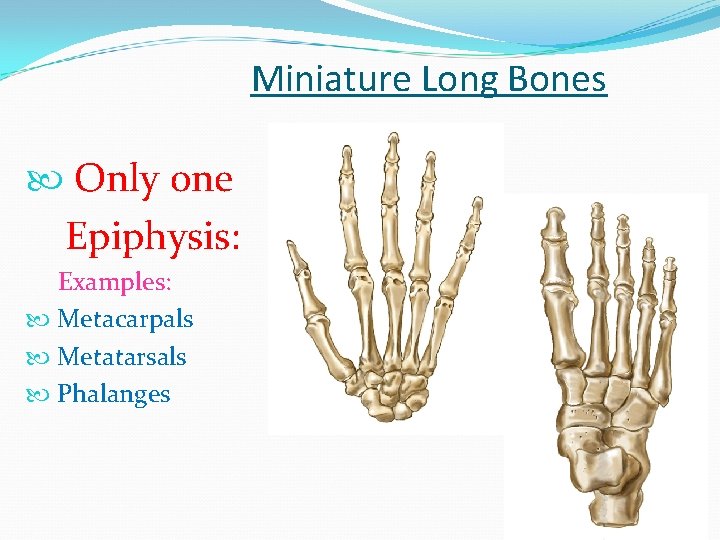
Miniature Long Bones Only one Epiphysis: Examples: Metacarpals Metatarsals Phalanges
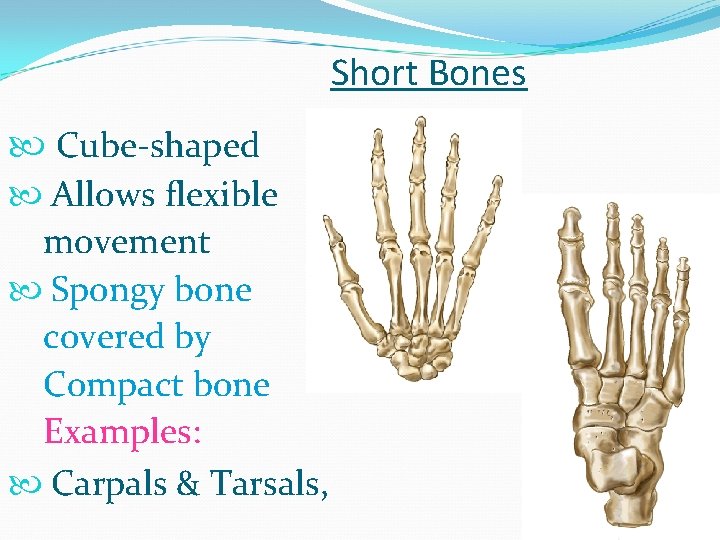
Short Bones Cube-shaped Allows flexible movement Spongy bone covered by Compact bone Examples: Carpals & Tarsals,
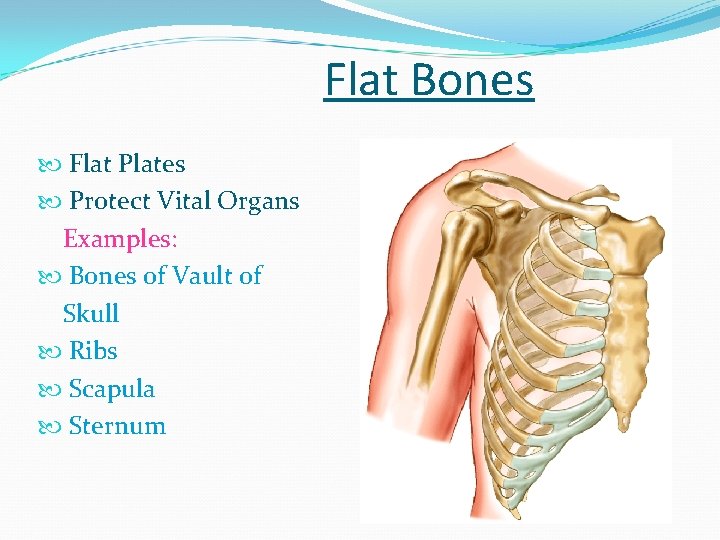
Flat Bones Flat Plates Protect Vital Organs Examples: Bones of Vault of Skull Ribs Scapula Sternum
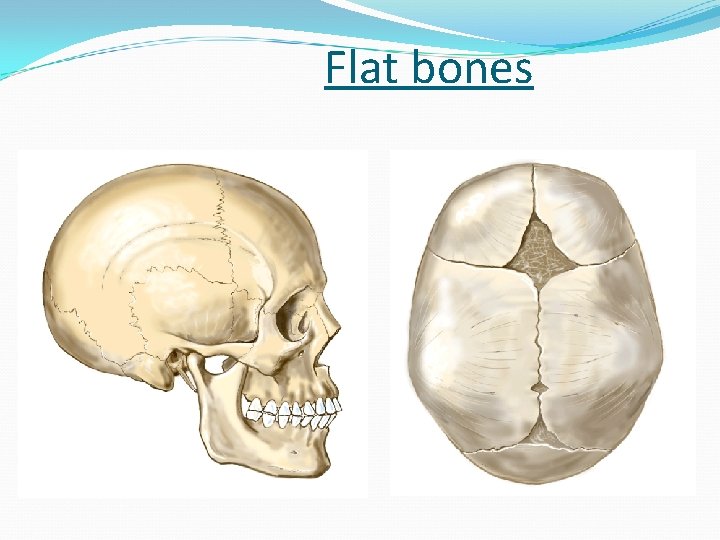
Flat bones
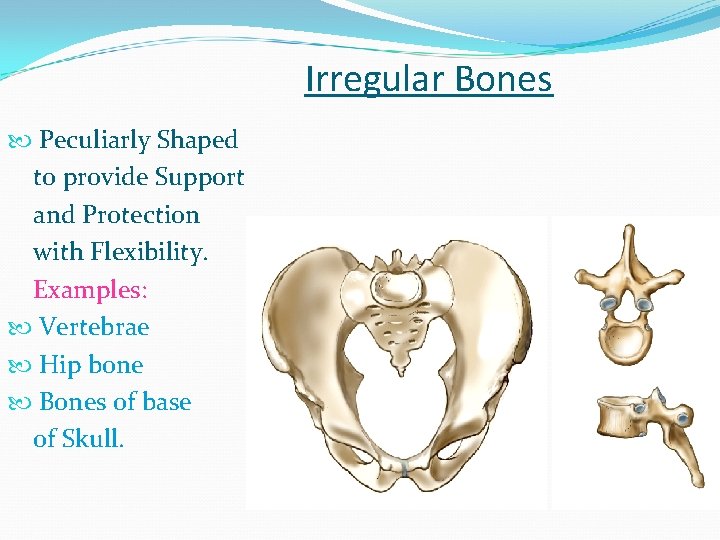
Irregular Bones Peculiarly Shaped to provide Support and Protection with Flexibility. Examples: Vertebrae Hip bone Bones of base of Skull.
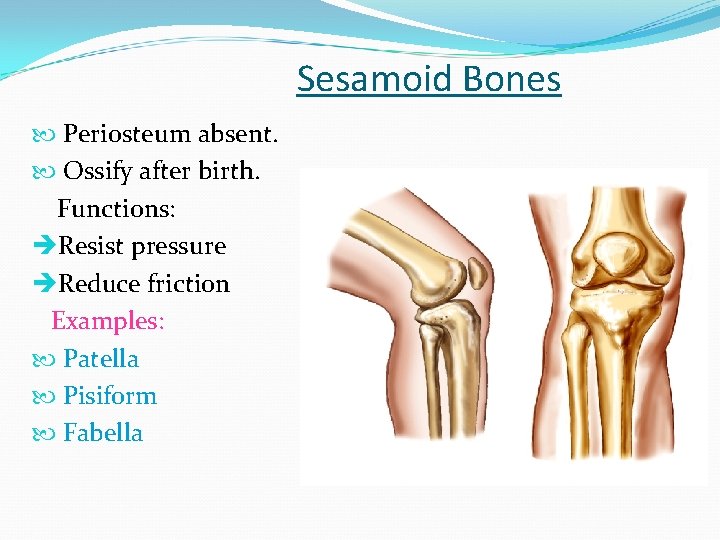
Sesamoid Bones Periosteum absent. Ossify after birth. Functions: Resist pressure Reduce friction Examples: Patella Pisiform Fabella
Ossification OR Osteogenesis
CLASSIFICATION of BONES According to development: 1. Membranous = starts as fibrous membrane, calcium gradually deposited until structure becomes ossified intramembranous ossification e. g. : bones of the skull, mandible 2. Cartilagenous = starts as cartilage, gradually ossified enchondral or intracartilagenous ossification. e. g. : long bones
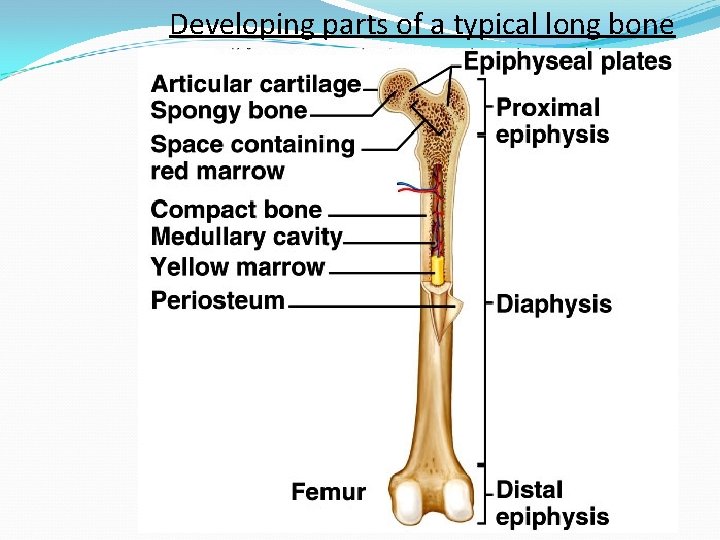
Developing parts of a typical long bone
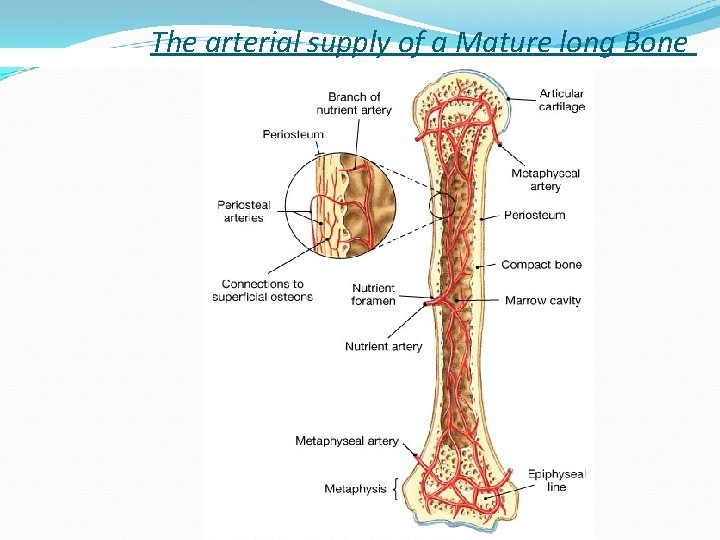
The arterial supply of a Mature long Bone
Types of bone breaks Simple: Skin is not pierced. Compound: Skin is pierced. Complete: Bone is broken in half Greenstick: Incomplete break on outer arc. Comminuted: Broken into several pieces

Thank you
- Slides: 39