
Bones 206 Skeletal System bones in your body
Bones

● 206 Skeletal System bones in your body compose your Skeleton ● The bones of your skull, ribs, spine, and sternum form the Axial Skeleton ● Appendicular Skeleton is the bones of your arms, legs, scapula, clavicle and pelvis
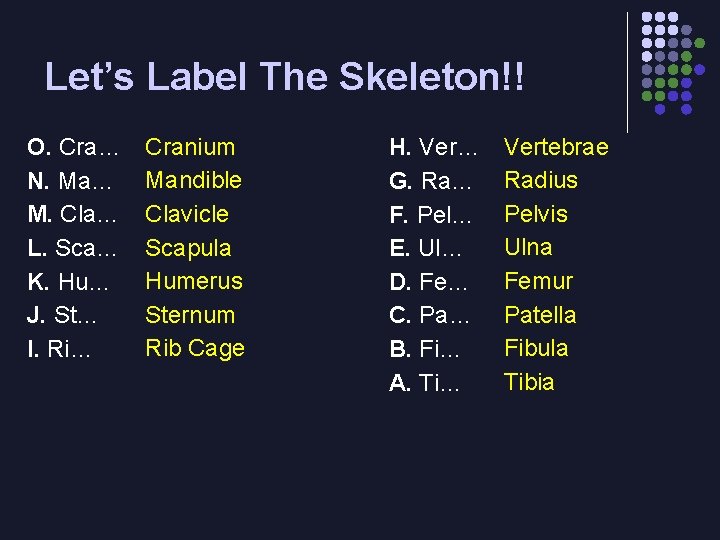
Let’s Label The Skeleton!! O. Cra… N. Ma… M. Cla… L. Sca… K. Hu… J. St… I. Ri… Cranium Mandible Clavicle Scapula Humerus Sternum Rib Cage H. Ver… G. Ra… F. Pel… E. Ul… D. Fe… C. Pa… B. Fi… A. Ti… Vertebrae Radius Pelvis Ulna Femur Patella Fibula Tibia
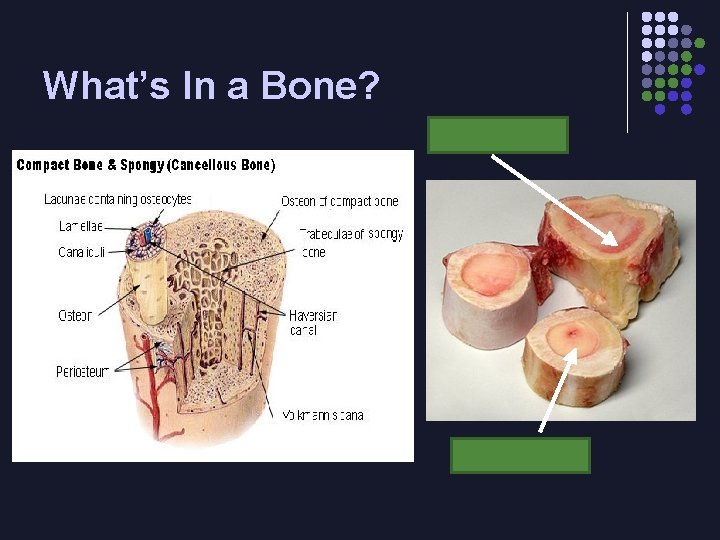
What’s In a Bone? Red Marrow Yellow Marrow
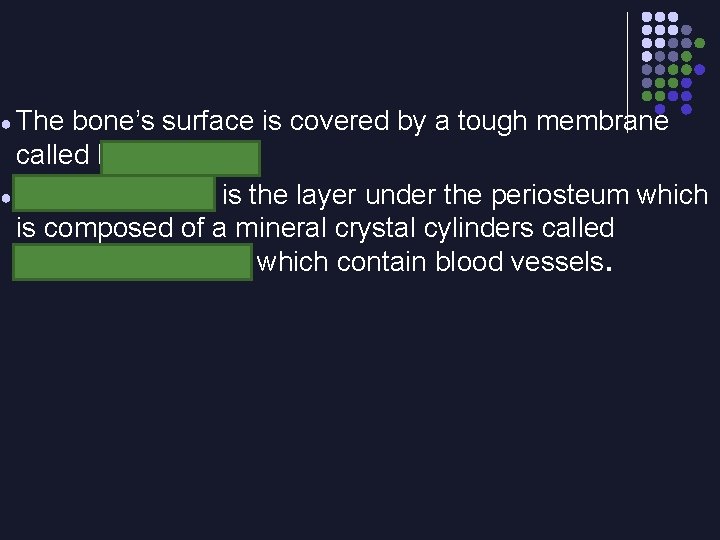
● The bone’s surface is covered by a tough membrane called Periosteum ● Compact Bone is the layer under the periosteum which is composed of a mineral crystal cylinders called Haversian Canals which contain blood vessels.
- In between haversian canals are Osteocytes which are the living bone -A network of connective tissue inside the compact bone is called Spongy Bone. (Hard for support) -Bone Marrow is a soft tissue in the spongy bone that produces red and white blood cells and also stores fat for energy reserve
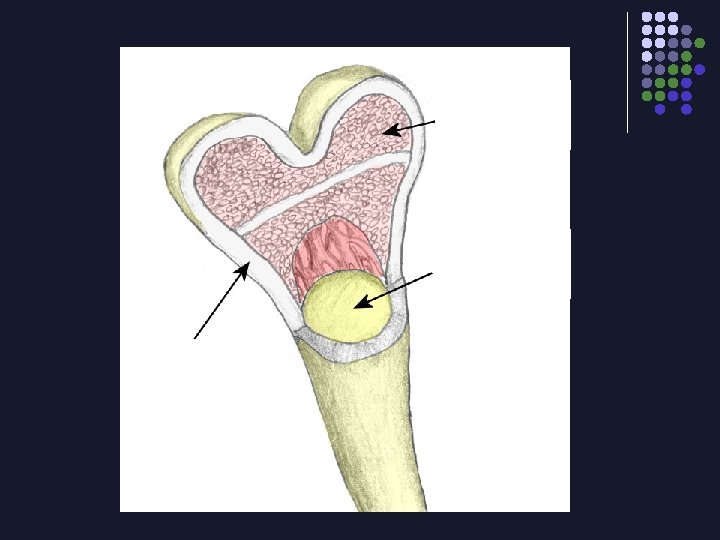
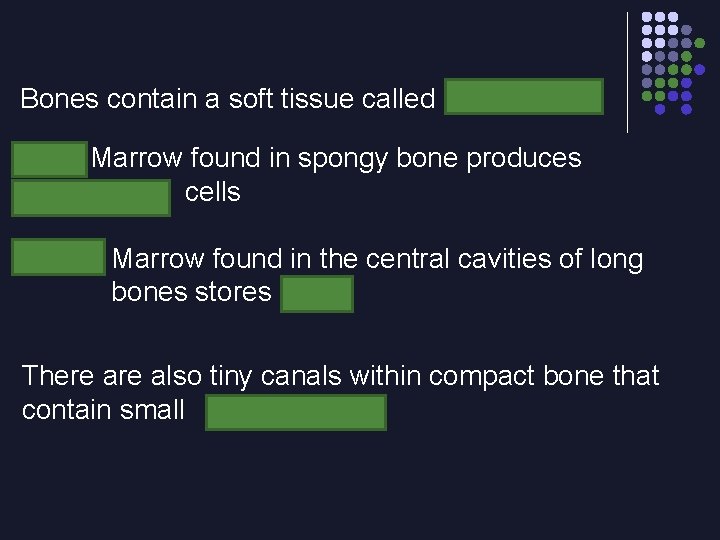
Bones contain a soft tissue called Marrow Red Marrow found in spongy bone produces Red blood cells Yellow Marrow found in the central cavities of long bones stores Fat There also tiny canals within compact bone that contain small Blood vessels
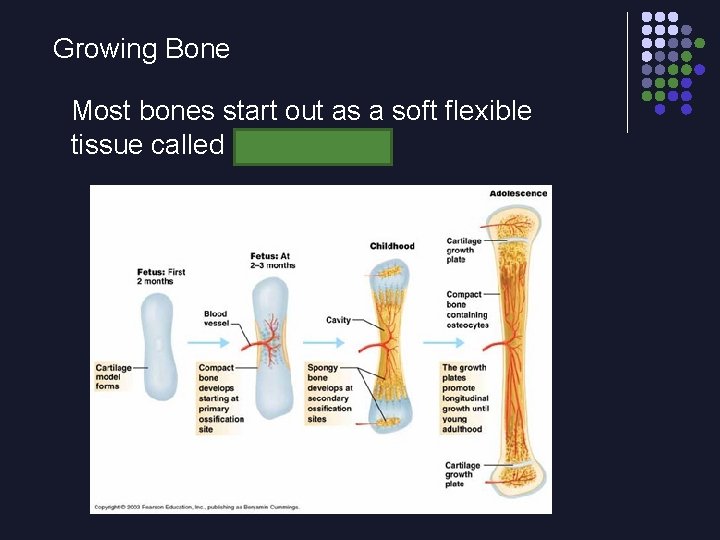
Growing Bone Most bones start out as a soft flexible tissue called cartilage
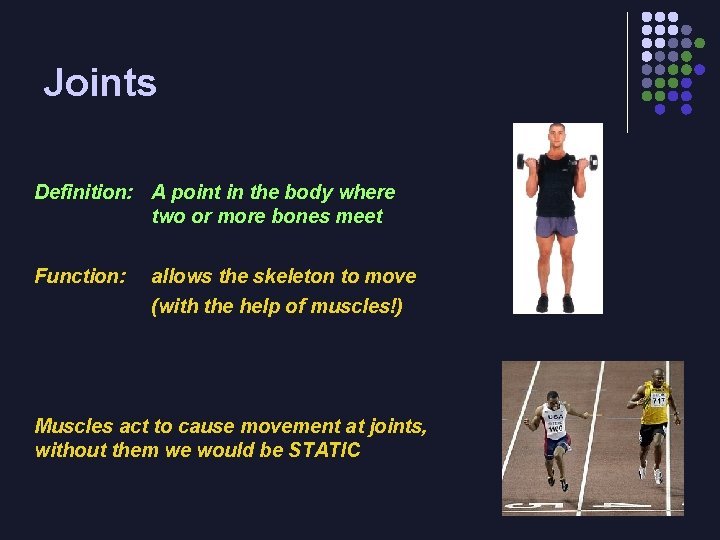
Joints Definition: A point in the body where two or more bones meet Function: allows the skeleton to move (with the help of muscles!) Muscles act to cause movement at joints, without them we would be STATIC
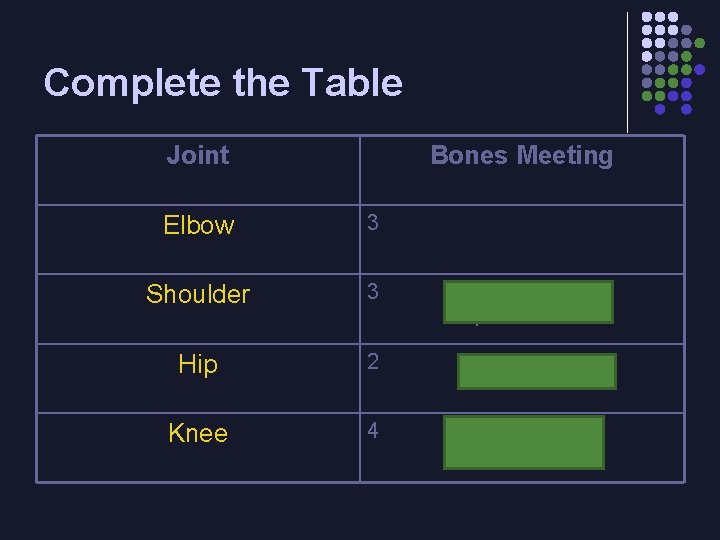
Complete the Table Joint Bones Meeting Elbow 3 Shoulder 3 Hip 2 Knee 4 Radius, Ulna, Humerus, Clavicle, and Scapula Femur and Pelvis Femur, Fibula, Patella and Tibia
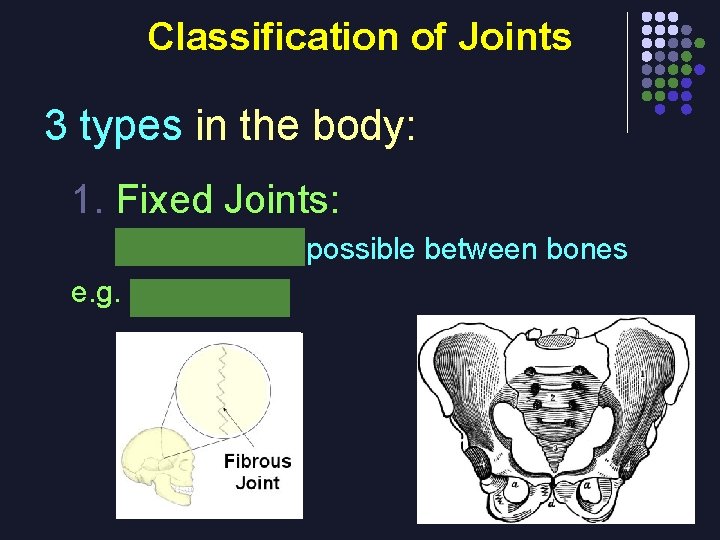
Classification of Joints 3 types in the body: 1. Fixed Joints: no movement possible between bones e. g. Skull, Pelvis
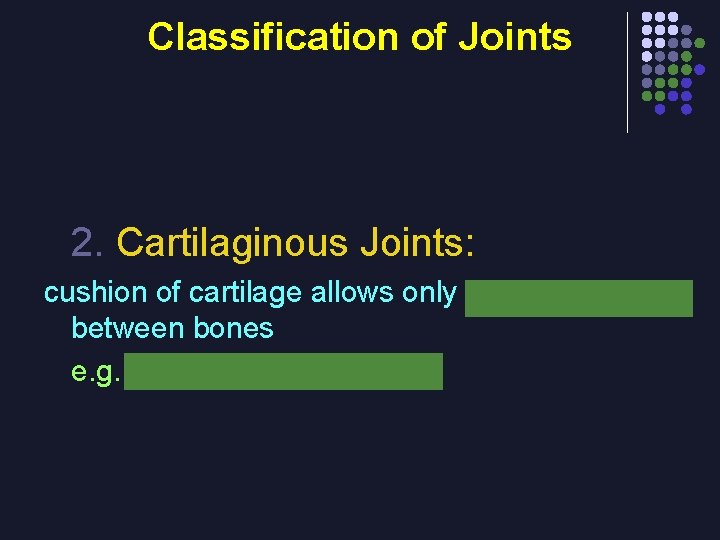
Classification of Joints 2. Cartilaginous Joints: cushion of cartilage allows only slight movement between bones e. g. Ribs, Vertebral Column
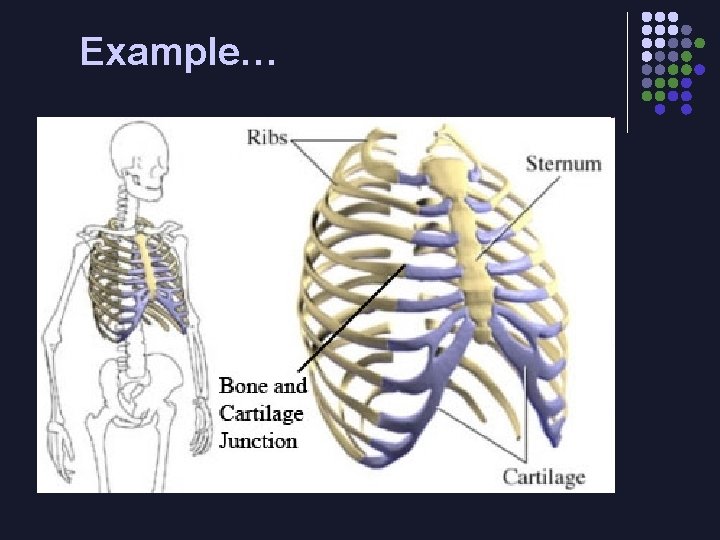
Example…
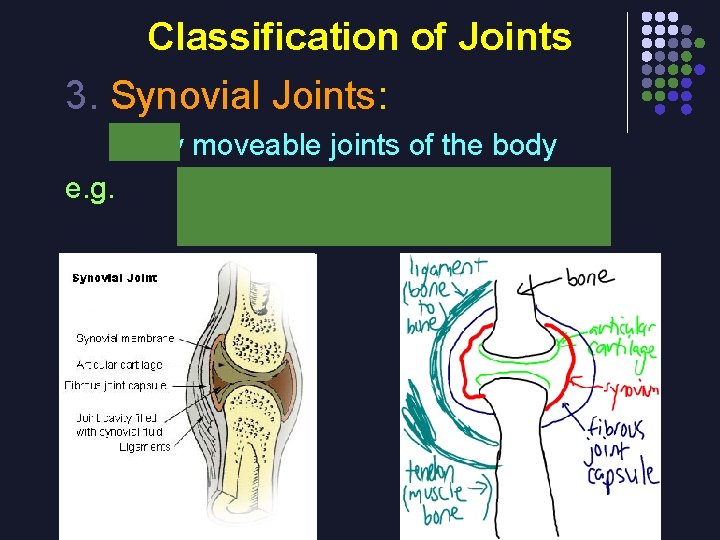
Classification of Joints 3. Synovial Joints: freely moveable joints of the body e. g. Hip, Knee, Ankle Shoulder, Elbow, Wrist, Thumb
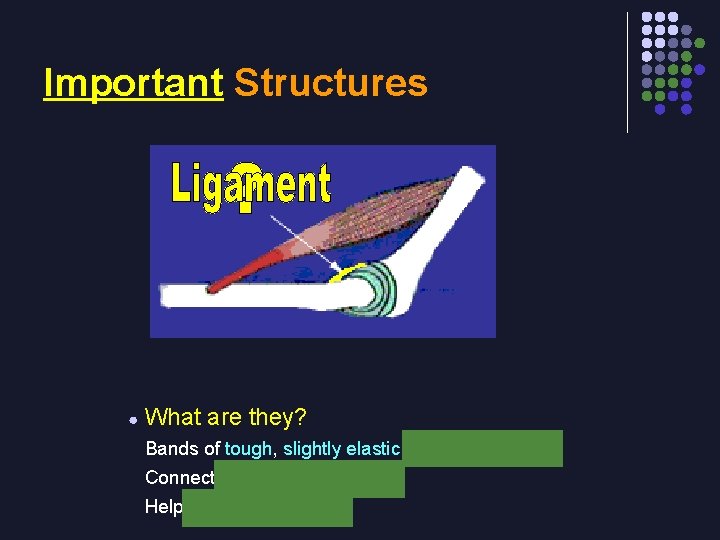
Important Structures ● What are they? Bands of tough, slightly elastic connective tissue Connect one bone to another Help prevent dislocation

Important Structures ● What are they? Very strong connective tissue Connect muscle to bone A way to remember them is that we eat them!
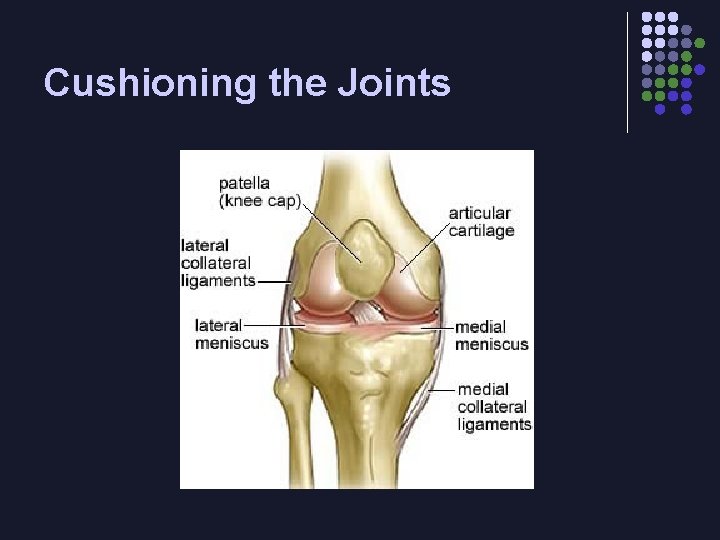
Cushioning the Joints
- Slides: 18