
Bone Structure Bones are organs Thus theyre composed
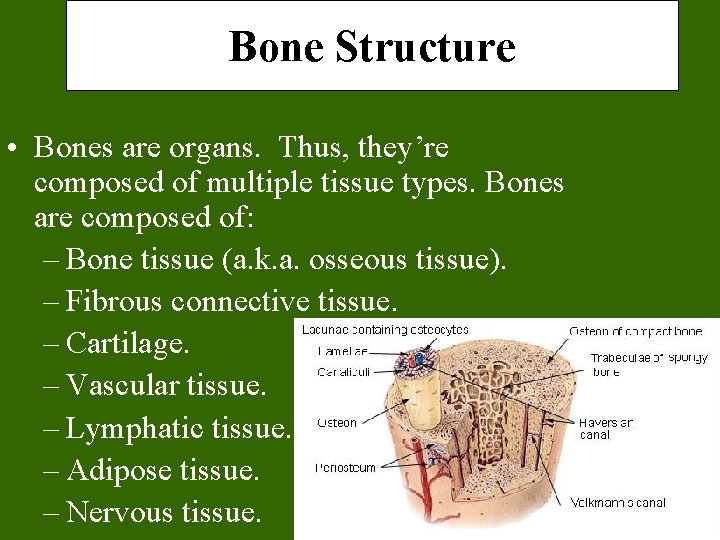
Bone Structure • Bones are organs. Thus, they’re composed of multiple tissue types. Bones are composed of: – Bone tissue (a. k. a. osseous tissue). – Fibrous connective tissue. – Cartilage. – Vascular tissue. – Lymphatic tissue. – Adipose tissue. – Nervous tissue.
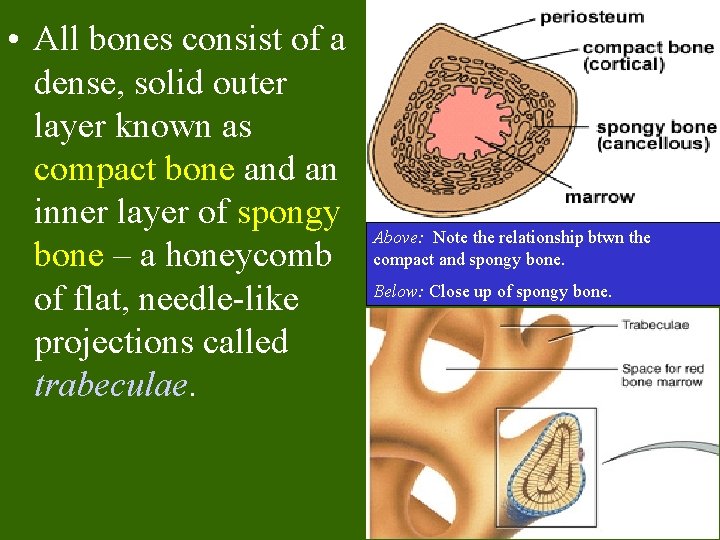
• All bones consist of a dense, solid outer layer known as compact bone and an inner layer of spongy bone – a honeycomb of flat, needle-like projections called trabeculae. Above: Note the relationship btwn the compact and spongy bone. Below: Close up of spongy bone.
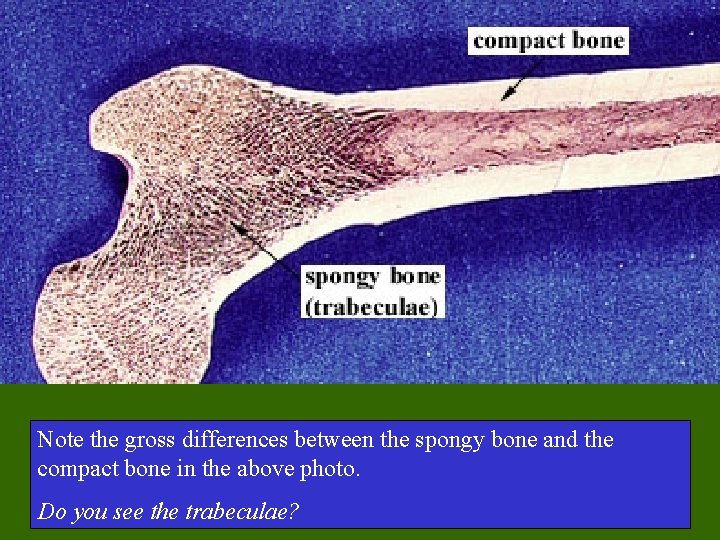
Note the gross differences between the spongy bone and the compact bone in the above photo. Do you see the trabeculae?
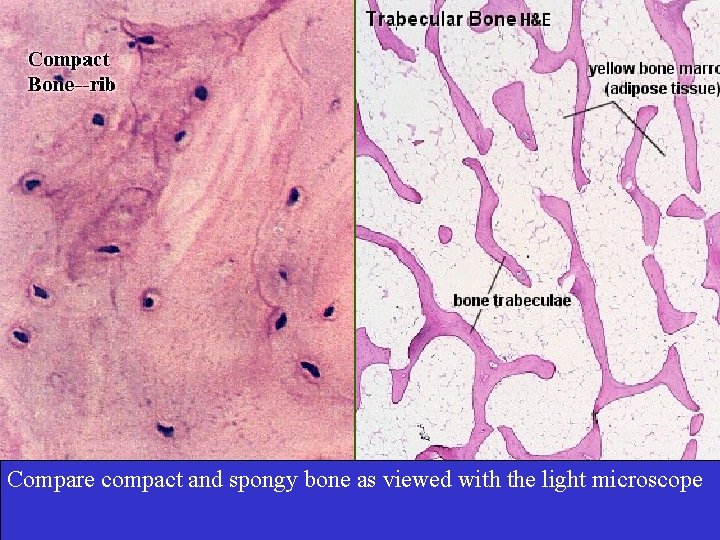
Compare compact and spongy bone as viewed with the light microscope
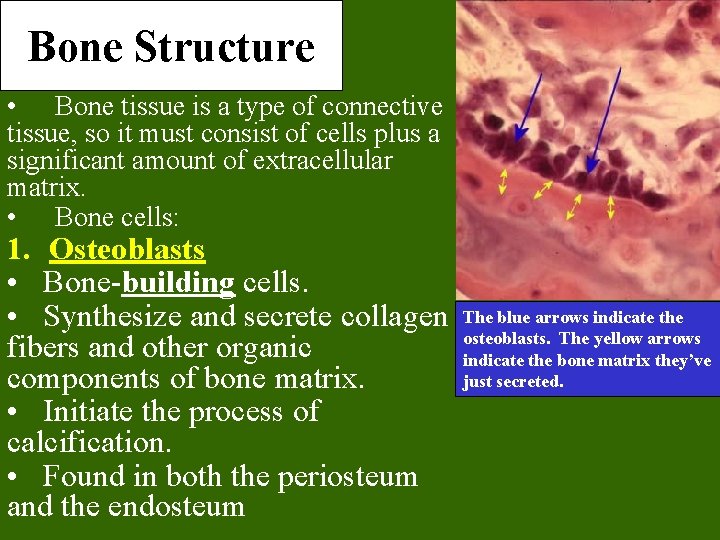
Bone Structure • Bone tissue is a type of connective tissue, so it must consist of cells plus a significant amount of extracellular matrix. • Bone cells: 1. Osteoblasts • Bone-building cells. • Synthesize and secrete collagen fibers and other organic components of bone matrix. • Initiate the process of calcification. • Found in both the periosteum and the endosteum The blue arrows indicate the osteoblasts. The yellow arrows indicate the bone matrix they’ve just secreted.
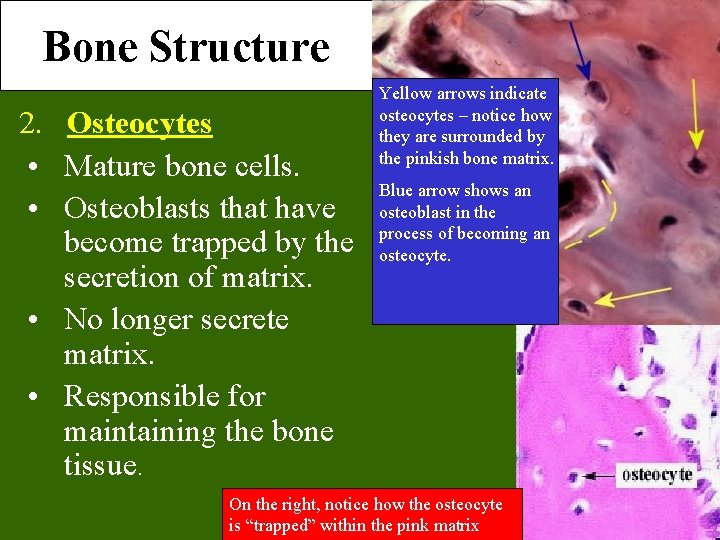
Bone Structure 2. Osteocytes • Mature bone cells. • Osteoblasts that have become trapped by the secretion of matrix. • No longer secrete matrix. • Responsible for maintaining the bone tissue. Yellow arrows indicate osteocytes – notice how they are surrounded by the pinkish bone matrix. Blue arrow shows an osteoblast in the process of becoming an osteocyte. On the right, notice how the osteocyte is “trapped” within the pink matrix
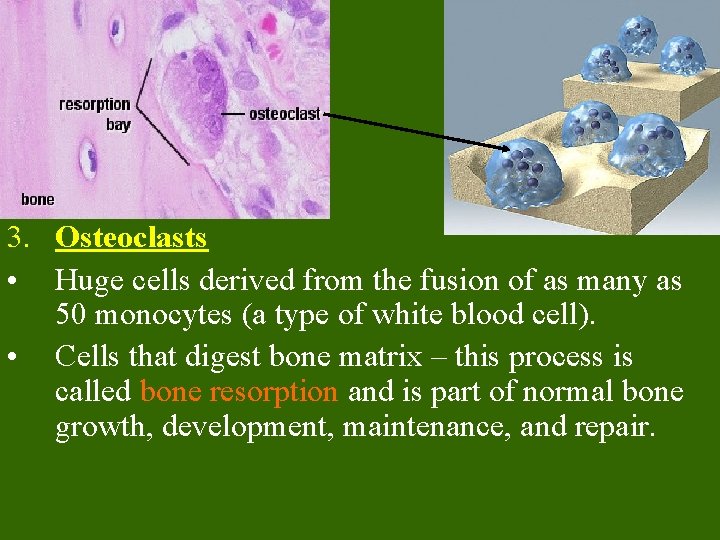
3. Osteoclasts • Huge cells derived from the fusion of as many as 50 monocytes (a type of white blood cell). • Cells that digest bone matrix – this process is called bone resorption and is part of normal bone growth, development, maintenance, and repair.
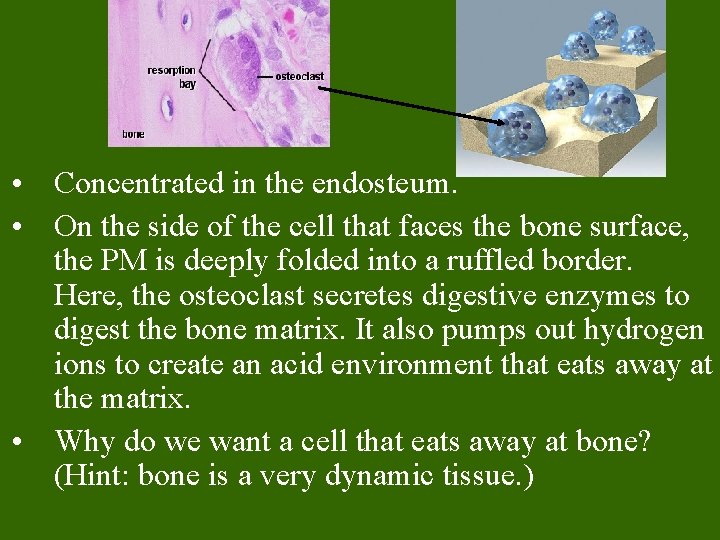
• Concentrated in the endosteum. • On the side of the cell that faces the bone surface, the PM is deeply folded into a ruffled border. Here, the osteoclast secretes digestive enzymes to digest the bone matrix. It also pumps out hydrogen ions to create an acid environment that eats away at the matrix. • Why do we want a cell that eats away at bone? (Hint: bone is a very dynamic tissue. )
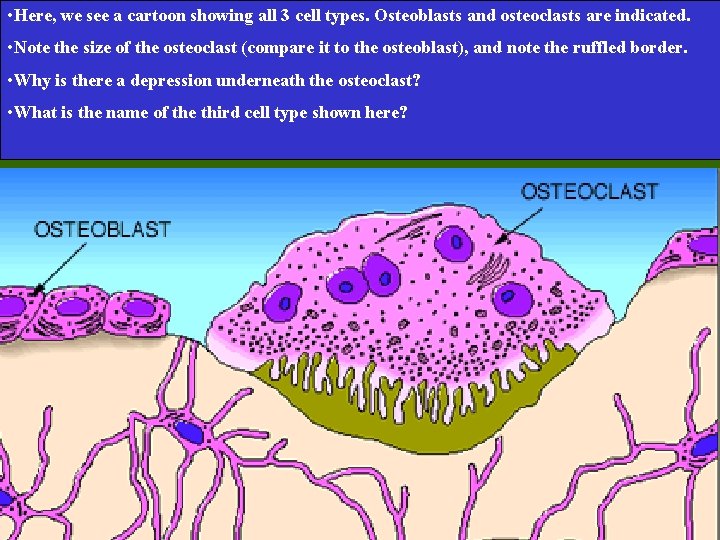
• Here, we see a cartoon showing all 3 cell types. Osteoblasts and osteoclasts are indicated. • Note the size of the osteoclast (compare it to the osteoblast), and note the ruffled border. • Why is there a depression underneath the osteoclast? • What is the name of the third cell type shown here?
Bone Structure • Bone Matrix: • Consists of organic and inorganic components. • 1/3 organic and 2/3 inorganic by weight. • Organic component consists of several materials that are secreted by the osteoblasts: – Collagen fibers and other organic materials – These (particularly the collagen) provide the bone with resilience and the ability to resist stretching and twisting.
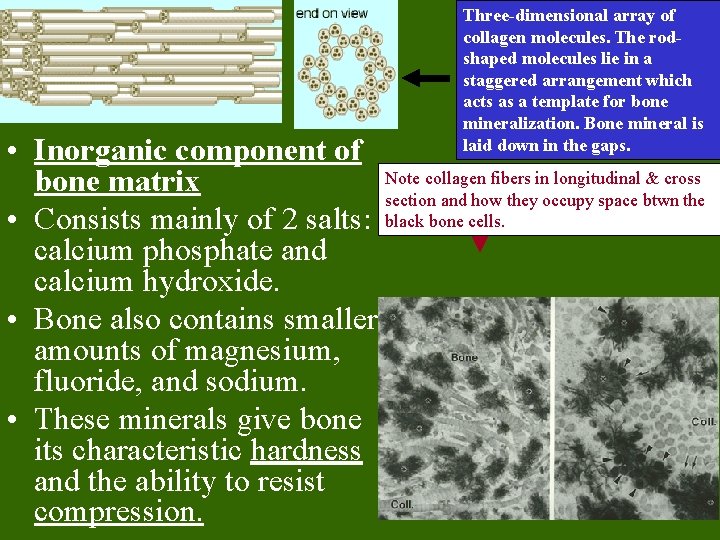
Three-dimensional array of collagen molecules. The rodshaped molecules lie in a staggered arrangement which acts as a template for bone mineralization. Bone mineral is laid down in the gaps. • Inorganic component of Note collagen fibers in longitudinal & cross bone matrix section and how they occupy space btwn the • Consists mainly of 2 salts: black bone cells. calcium phosphate and calcium hydroxide. • Bone also contains smaller amounts of magnesium, fluoride, and sodium. • These minerals give bone its characteristic hardness and the ability to resist compression.
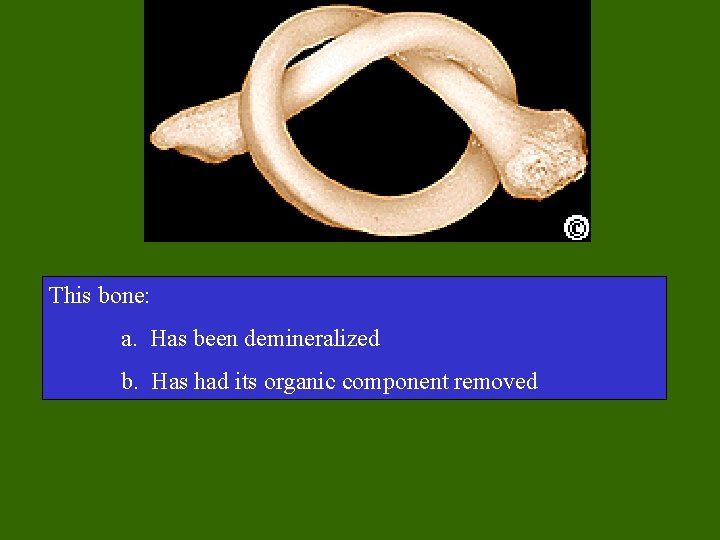
This bone: a. Has been demineralized b. Has had its organic component removed
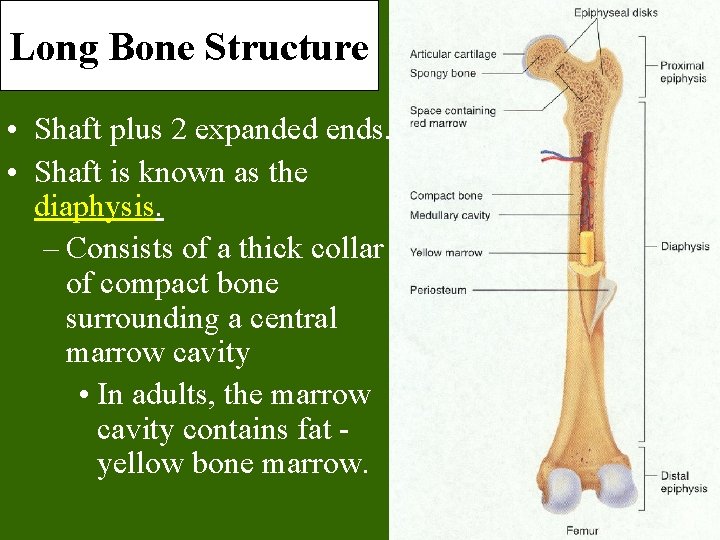
Long Bone Structure • Shaft plus 2 expanded ends. • Shaft is known as the diaphysis. – Consists of a thick collar of compact bone surrounding a central marrow cavity • In adults, the marrow cavity contains fat yellow bone marrow.
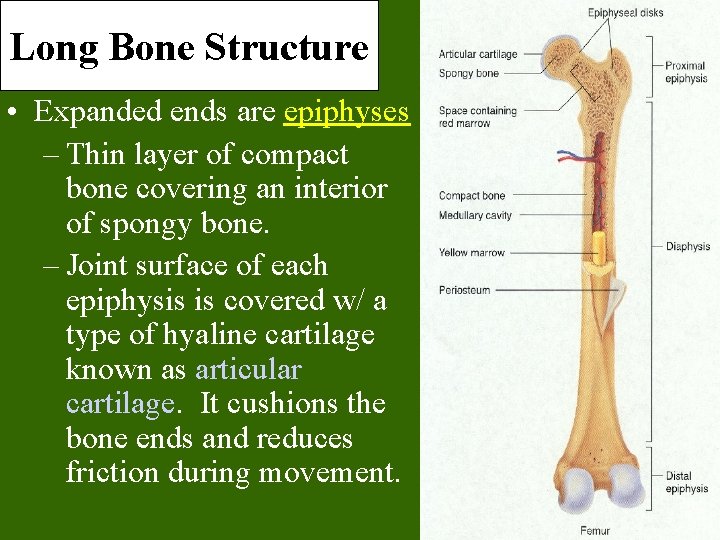
Long Bone Structure • Expanded ends are epiphyses – Thin layer of compact bone covering an interior of spongy bone. – Joint surface of each epiphysis is covered w/ a type of hyaline cartilage known as articular cartilage. It cushions the bone ends and reduces friction during movement.
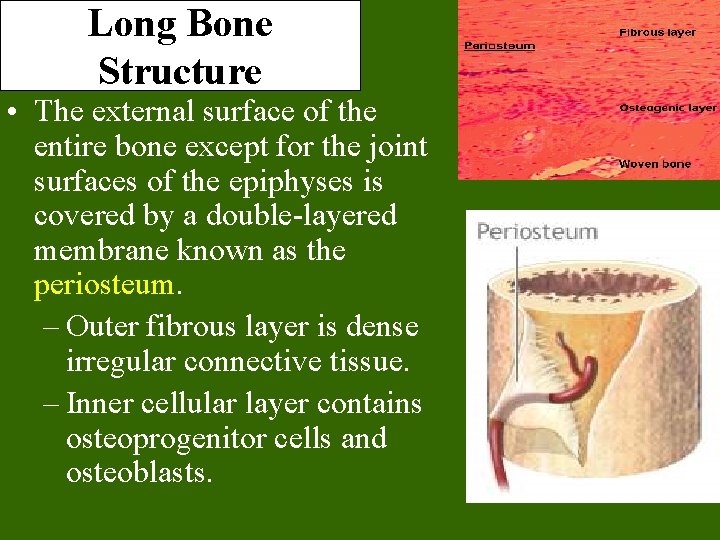
Long Bone Structure • The external surface of the entire bone except for the joint surfaces of the epiphyses is covered by a double-layered membrane known as the periosteum. – Outer fibrous layer is dense irregular connective tissue. – Inner cellular layer contains osteoprogenitor cells and osteoblasts.
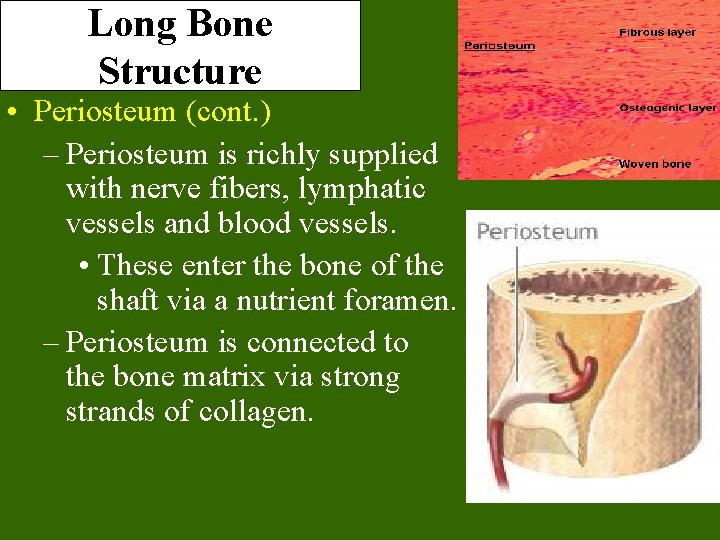
Long Bone Structure • Periosteum (cont. ) – Periosteum is richly supplied with nerve fibers, lymphatic vessels and blood vessels. • These enter the bone of the shaft via a nutrient foramen. – Periosteum is connected to the bone matrix via strong strands of collagen.
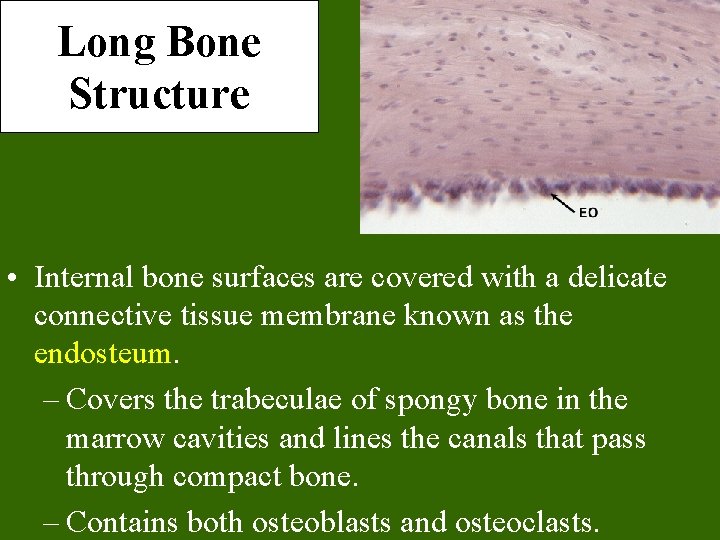
Long Bone Structure • Internal bone surfaces are covered with a delicate connective tissue membrane known as the endosteum. – Covers the trabeculae of spongy bone in the marrow cavities and lines the canals that pass through compact bone. – Contains both osteoblasts and osteoclasts.
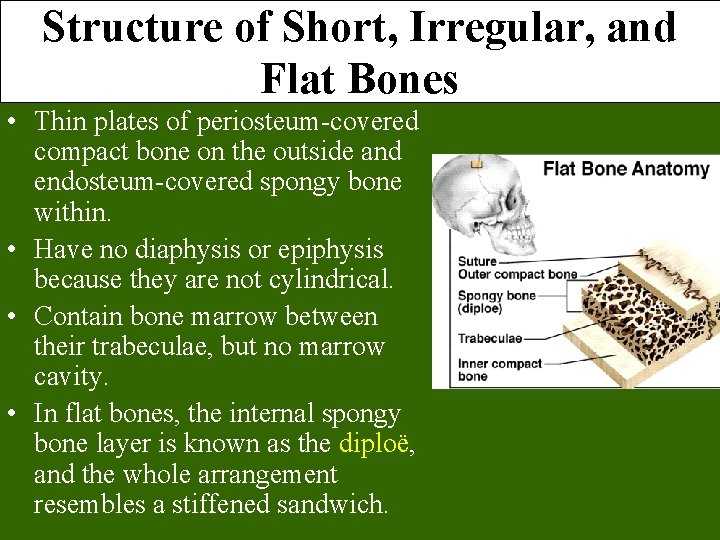
Structure of Short, Irregular, and Flat Bones • Thin plates of periosteum-covered compact bone on the outside and endosteum-covered spongy bone within. • Have no diaphysis or epiphysis because they are not cylindrical. • Contain bone marrow between their trabeculae, but no marrow cavity. • In flat bones, the internal spongy bone layer is known as the diploë, and the whole arrangement resembles a stiffened sandwich.
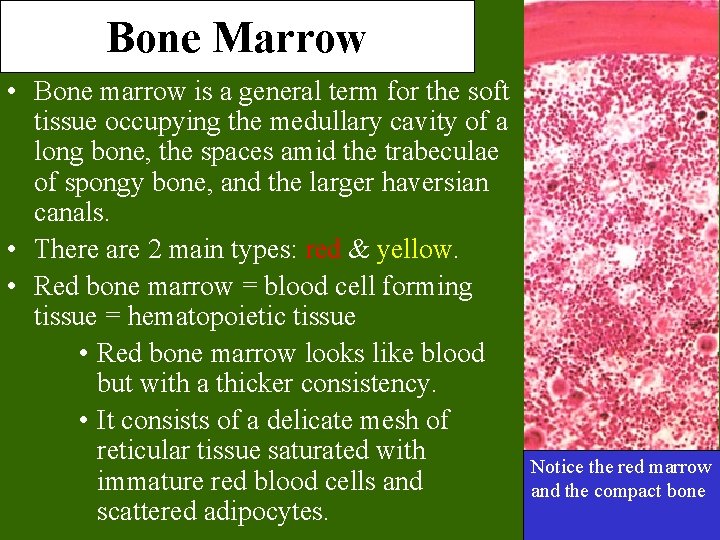
Bone Marrow • Bone marrow is a general term for the soft tissue occupying the medullary cavity of a long bone, the spaces amid the trabeculae of spongy bone, and the larger haversian canals. • There are 2 main types: red & yellow. • Red bone marrow = blood cell forming tissue = hematopoietic tissue • Red bone marrow looks like blood but with a thicker consistency. • It consists of a delicate mesh of reticular tissue saturated with immature red blood cells and scattered adipocytes. Notice the red marrow and the compact bone
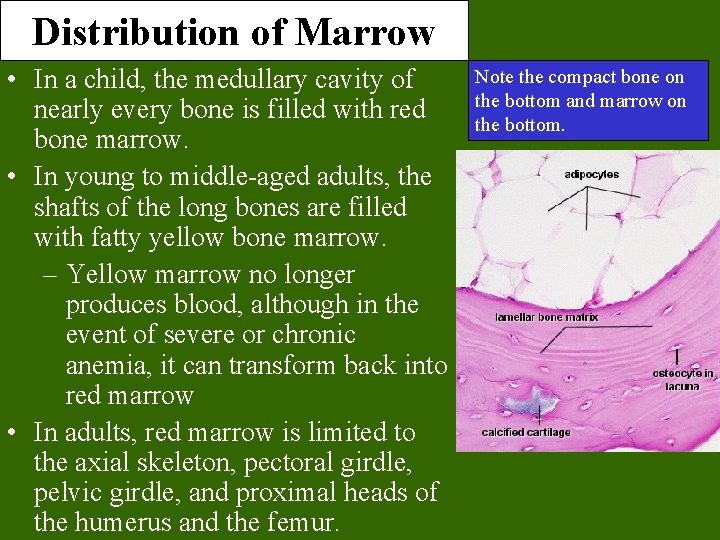
Distribution of Marrow • In a child, the medullary cavity of nearly every bone is filled with red bone marrow. • In young to middle-aged adults, the shafts of the long bones are filled with fatty yellow bone marrow. – Yellow marrow no longer produces blood, although in the event of severe or chronic anemia, it can transform back into red marrow • In adults, red marrow is limited to the axial skeleton, pectoral girdle, pelvic girdle, and proximal heads of the humerus and the femur. Note the compact bone on the bottom and marrow on the bottom.
- Slides: 20