
Bone Fractures and Bone Disorders Aws Khanfar MBBS
Bone Fractures and Bone Disorders Aws Khanfar, MBBS, MRCSI, MFSEM, CHSOrth, FEBOT
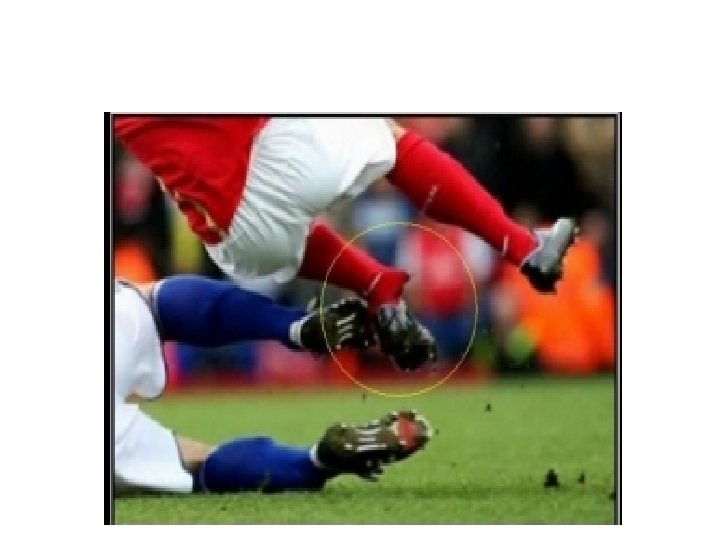
What is fracture? • Soft tissue injury with discontinuity of bone
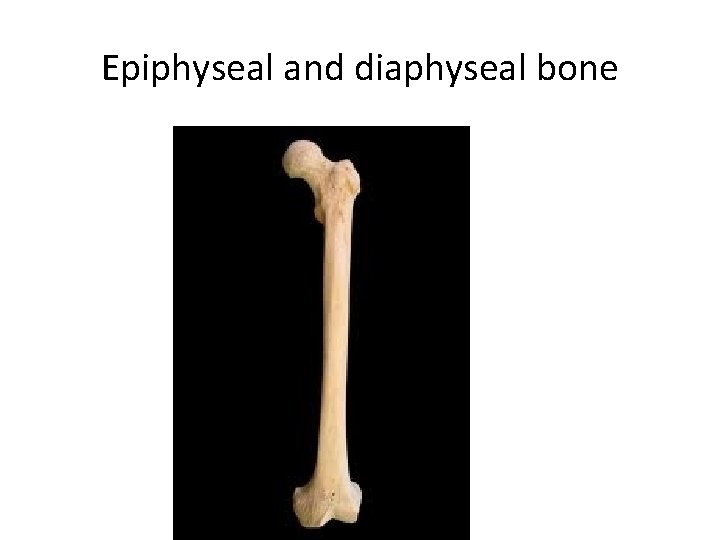
Epiphyseal and diaphyseal bone
Fractures • Simple ; spiral, oblique and transverse • Complex – Complete separation of bone; major blow, intraarticular , comminution and segmental • Open vs close
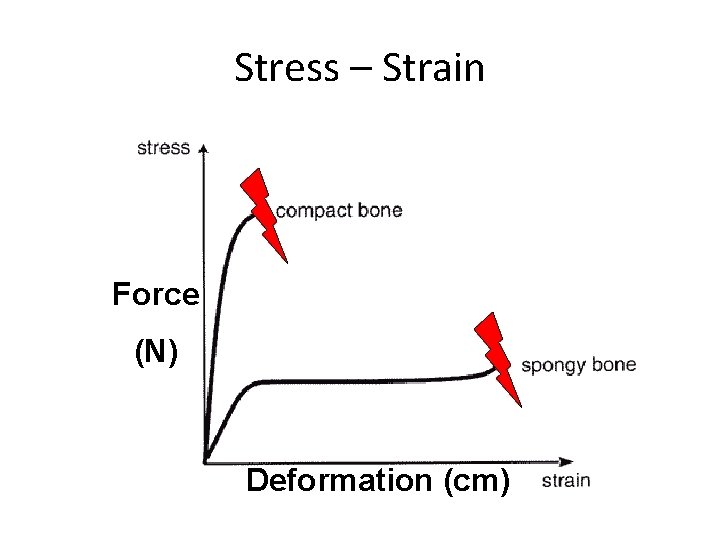
Stress – Strain Force (N) Deformation (cm)
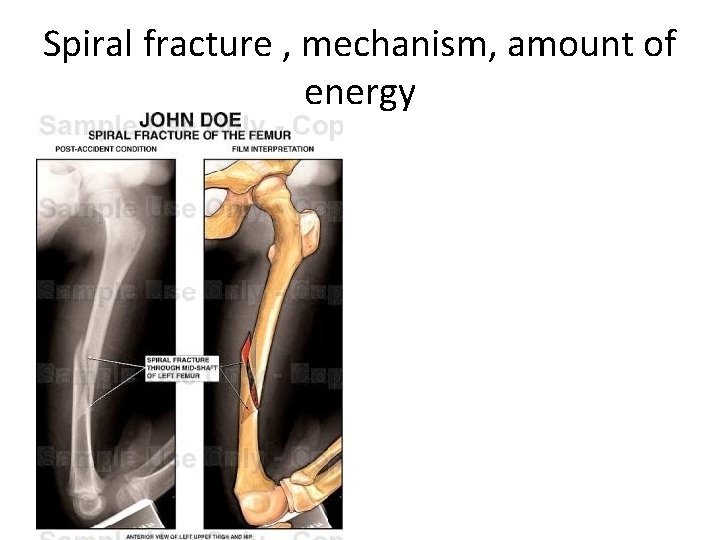
Spiral fracture , mechanism, amount of energy

Oblique
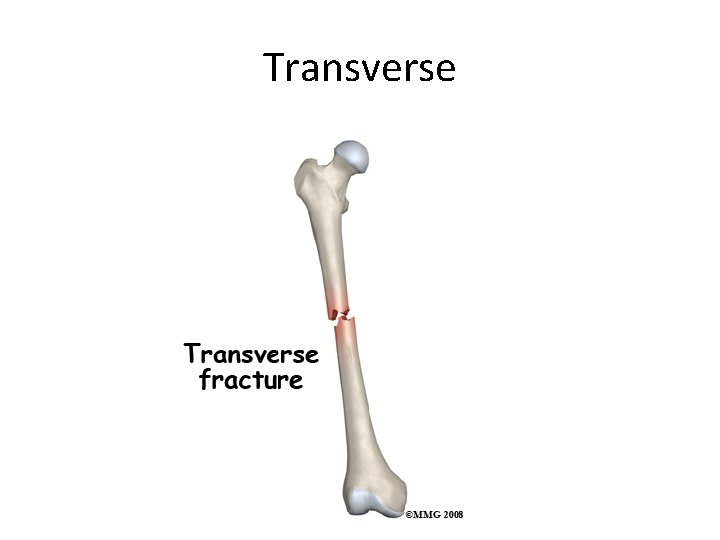
Transverse

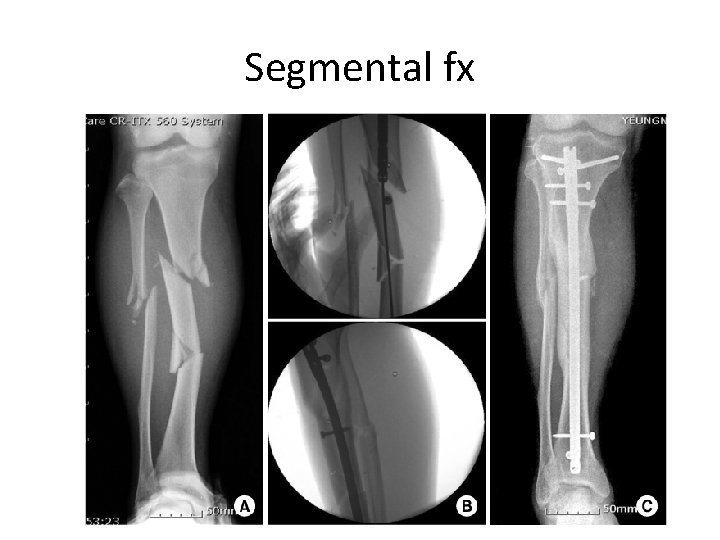
Segmental fx
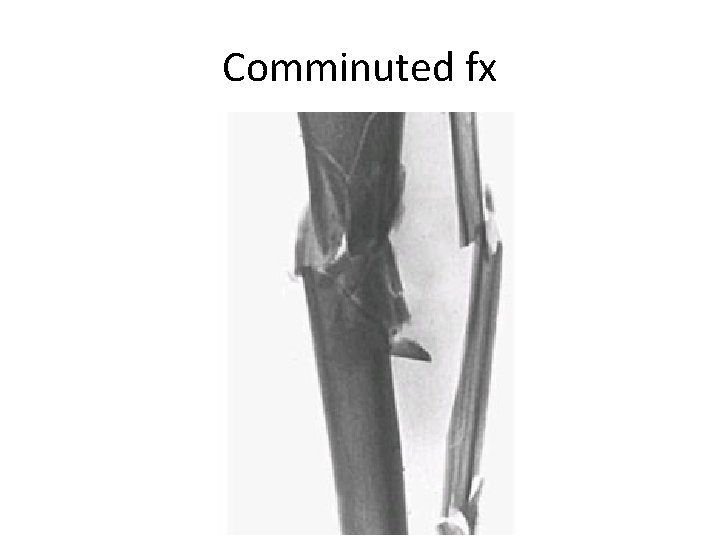
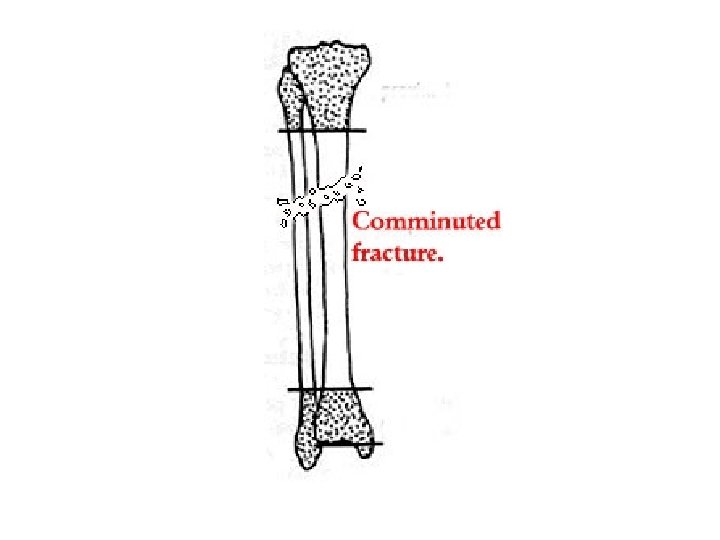
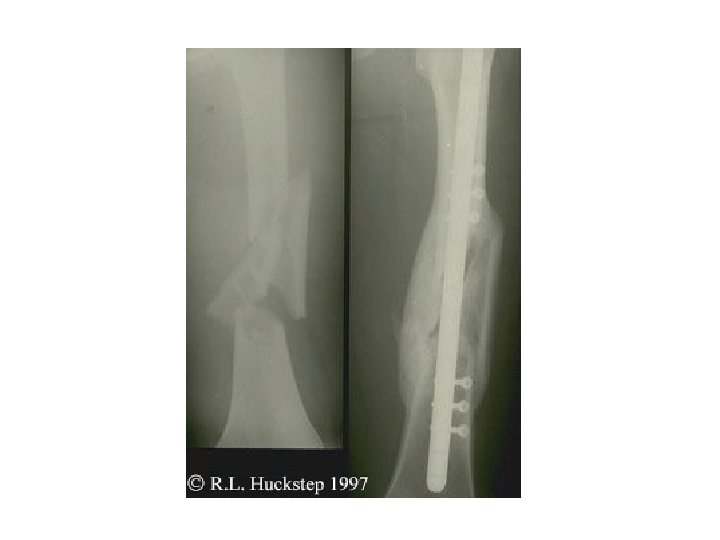
Comminuted fx
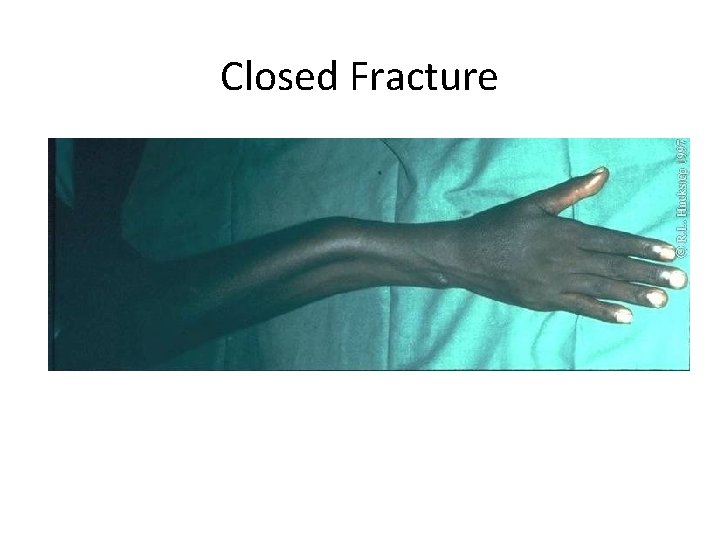
Closed Fracture

Open Fractures
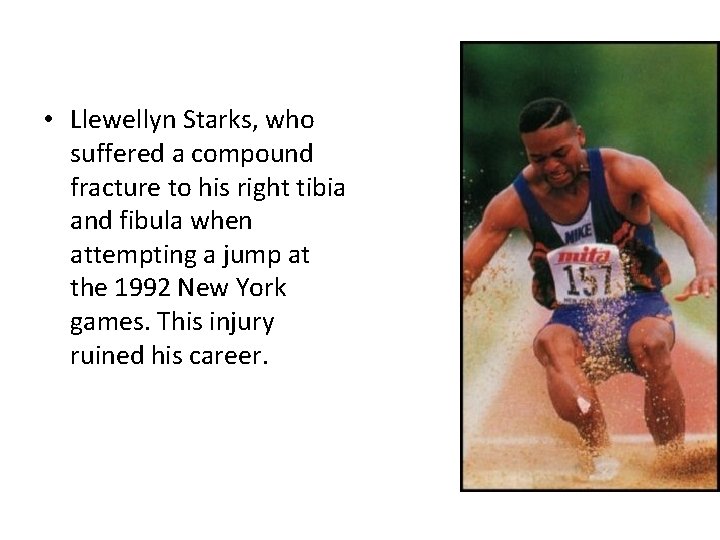
• Llewellyn Starks, who suffered a compound fracture to his right tibia and fibula when attempting a jump at the 1992 New York games. This injury ruined his career.

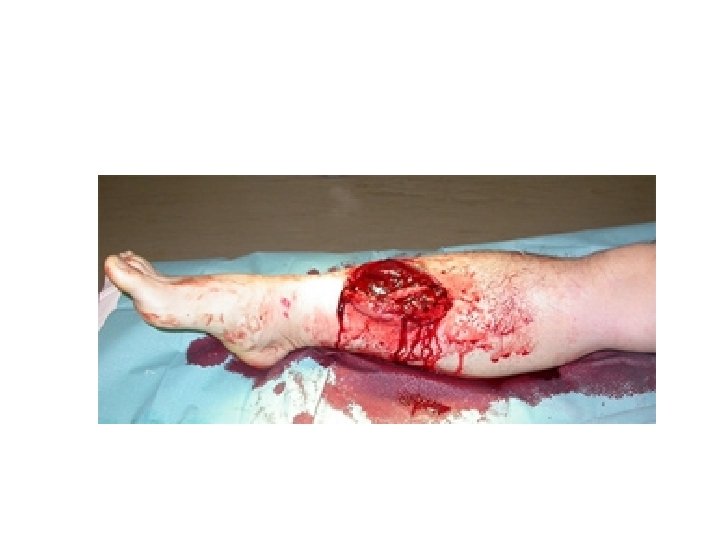

Spiral Fracture

Comminuted Fracture

Avulsion Fracture • When a fragment of bone tears away from the main mass • Force of muscle contraction pulls tendon and bone from periosteum • Athletes

Avulsion Fracture

Stress Fractures • Type of hairline fracture that occurs after repetative stress • Muscles become too fatigued to absorb the shock • Common in runners. Which bones? _____ • Training too hard too soon

Management • Principles of management of acute fractures
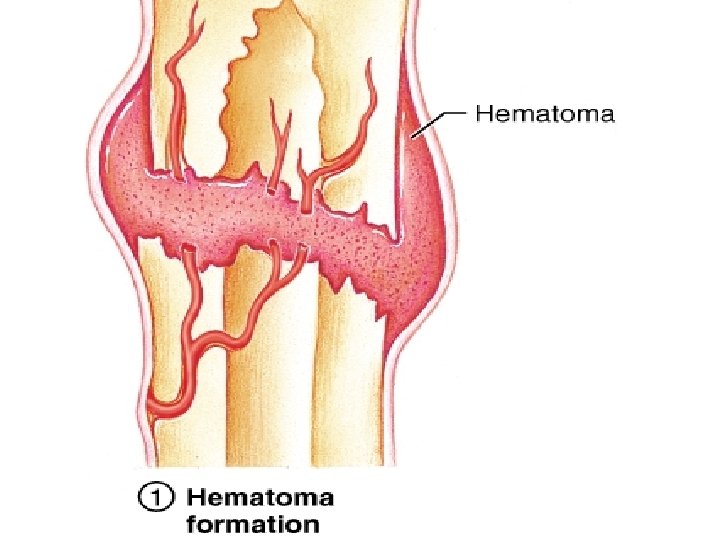
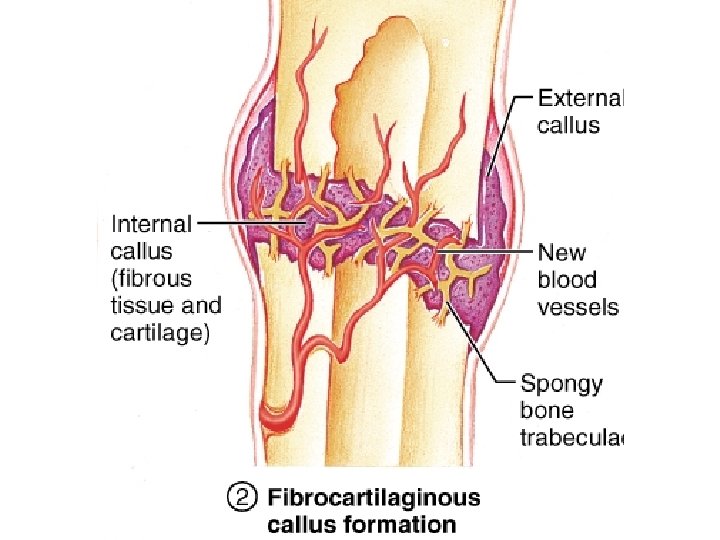
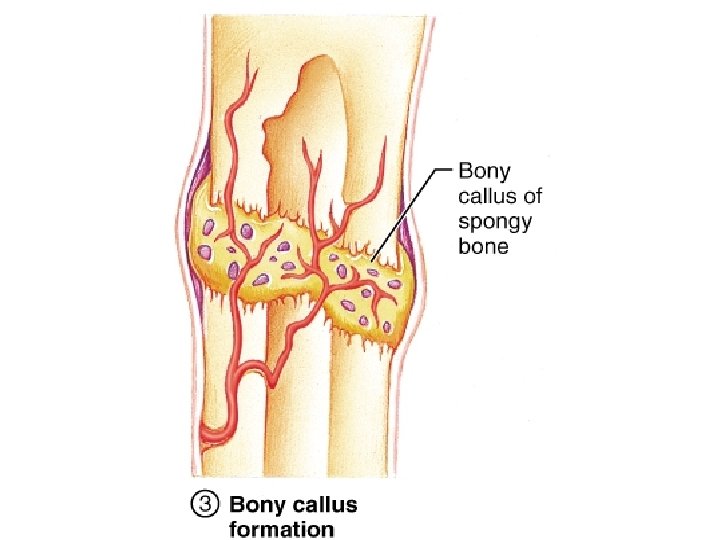
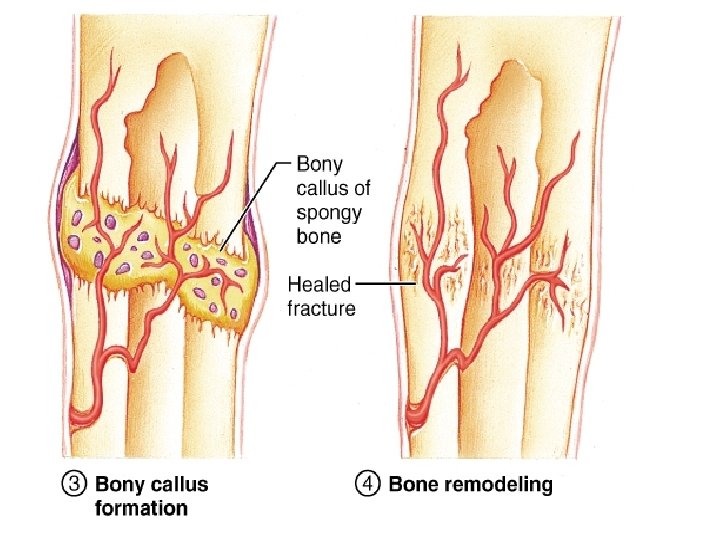
The Healing of Broken Bones

Rickets • Rickets is a disorder caused by a lack of vitamin D, calcium, or phosphate. • It leads to softening and weakening of the bones. • Symptoms: Bone pain or tenderness Arms; Legs; Pelvis; Spine. Dental deformities
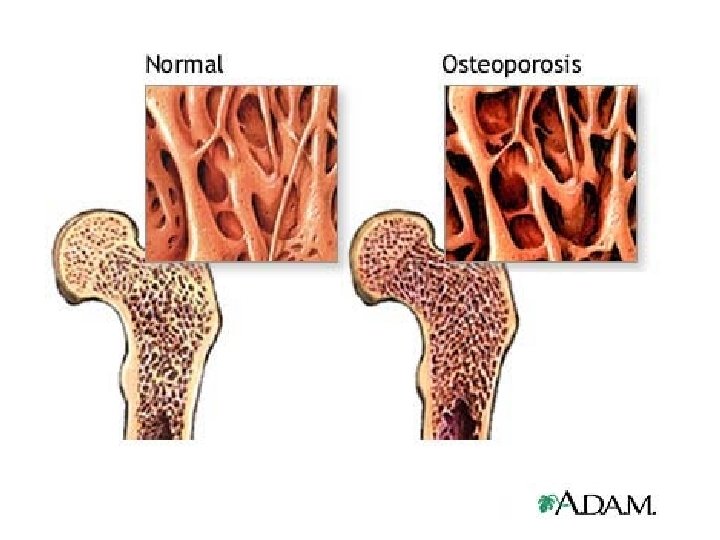
Osteoporosis • “porous bone” • Leads to fragile bone and increases risk of breaks – hip wrist and spine. Why these bones? • Called silent disease • Post-menopausal women more at risk • Young women with “female triad” also at risk (excessive exercise, poor diet, and weight loss)

Osteoporosis

Screening

• Treatment

• THANK YOU
- Slides: 37