
BONE FORMATION REMODELLING OssificationBone Formation The process by
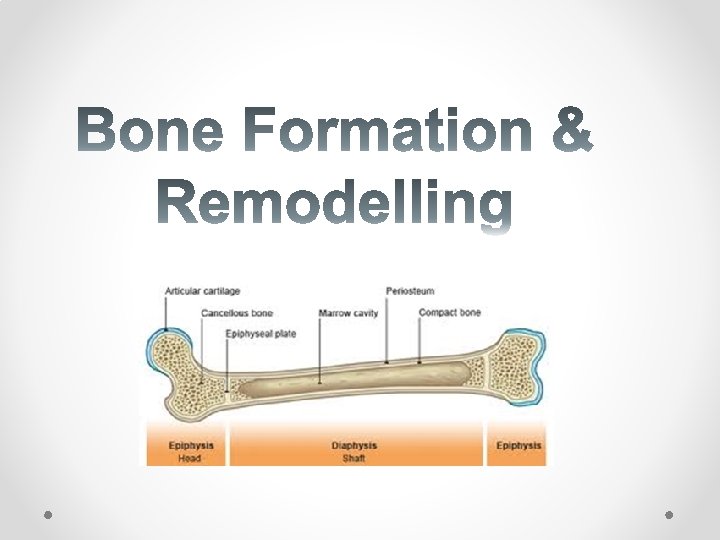

BONE FORMATION & REMODELLING Ossification/Bone Formation The process by which new bone is produced There are 2 forms of ossification: 1 - Compact Bone : • • • Compact bone begins as cartilage Osteoblasts (bone forming cells)within cartilage discharge an osteoid (gelatin-like) Osteoids contain minerals that form the hardened bone *Short bones – one ossification center in the middle *Long bones – three ossification centers (center and both ends)
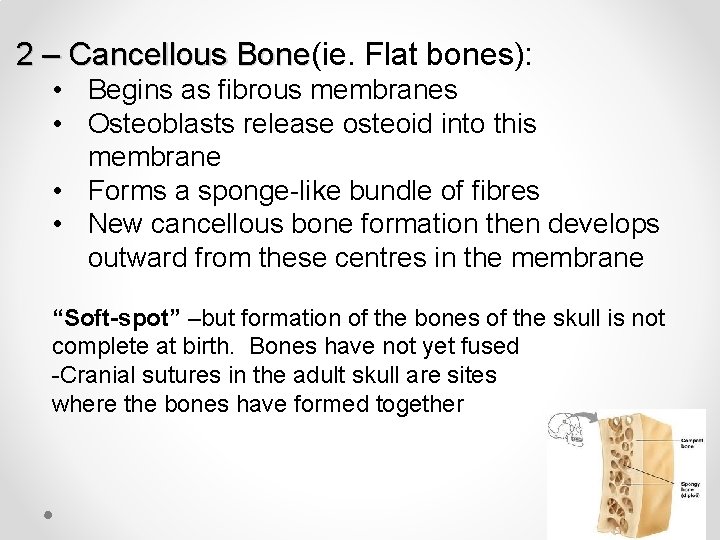
2 – Cancellous Bone(ie. Flat bones): Bone • Begins as fibrous membranes • Osteoblasts release osteoid into this membrane • Forms a sponge-like bundle of fibres • New cancellous bone formation then develops outward from these centres in the membrane “Soft-spot” –but formation of the bones of the skull is not complete at birth. Bones have not yet fused -Cranial sutures in the adult skull are sites where the bones have formed together
Bone Remodelling Bones cannot grow by cell division, but they can “remodel” 2 main phases… 1) Osteoclasts remove old bone by release of acid and enzymes. 2) Osteoblasts secretes protein which deposits to form new tissue
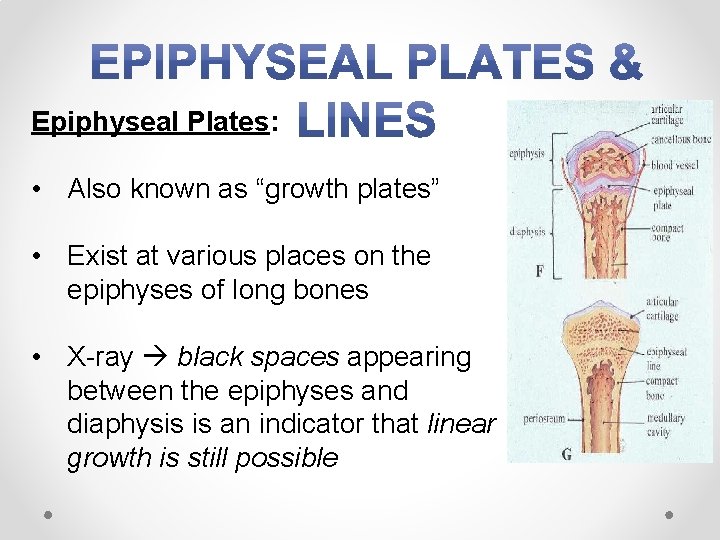
Epiphyseal Plates: • Also known as “growth plates” • Exist at various places on the epiphyses of long bones • X-ray black spaces appearing between the epiphyses and diaphysis is an indicator that linear growth is still possible
Epiphyseal Lines • Epiphyseal plates that have fused together • Indicates that linear growth is no longer possible • X-ray no black space is seen, instead a solid epiphysis is evident
- Slides: 6