
Bone Development Osteogenesis or Ossification Bone Development Osteogenesis
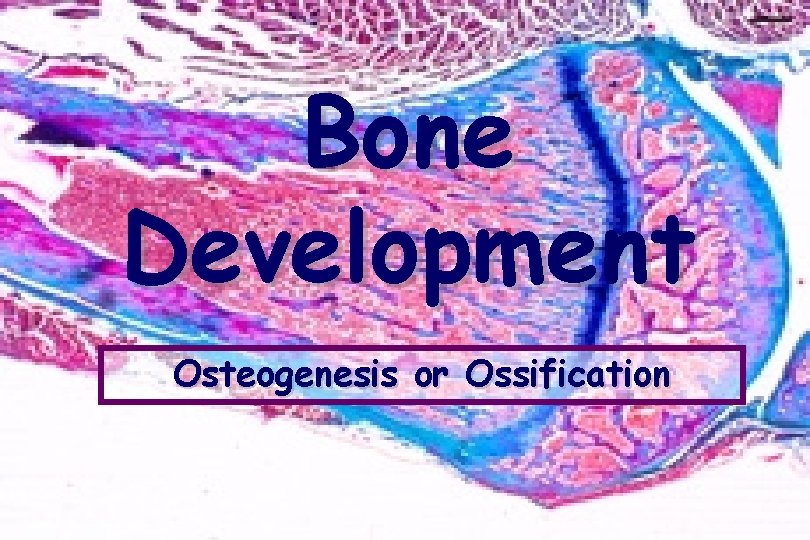
Bone Development Osteogenesis or Ossification
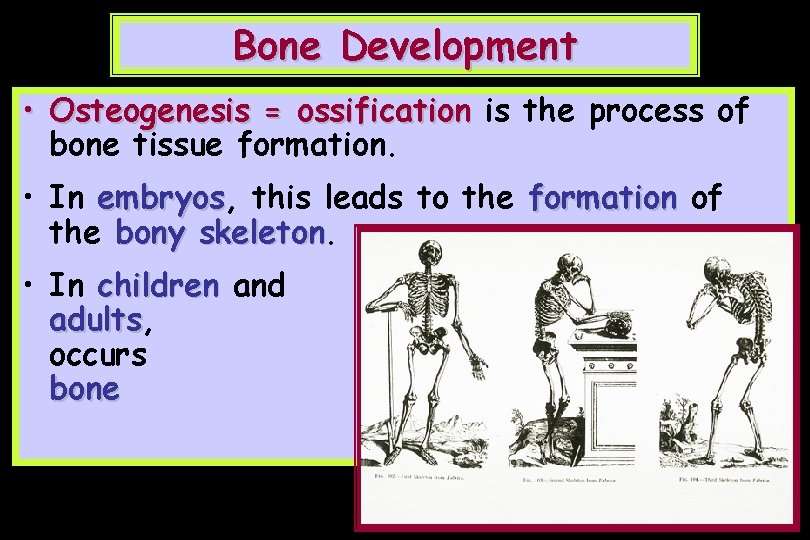
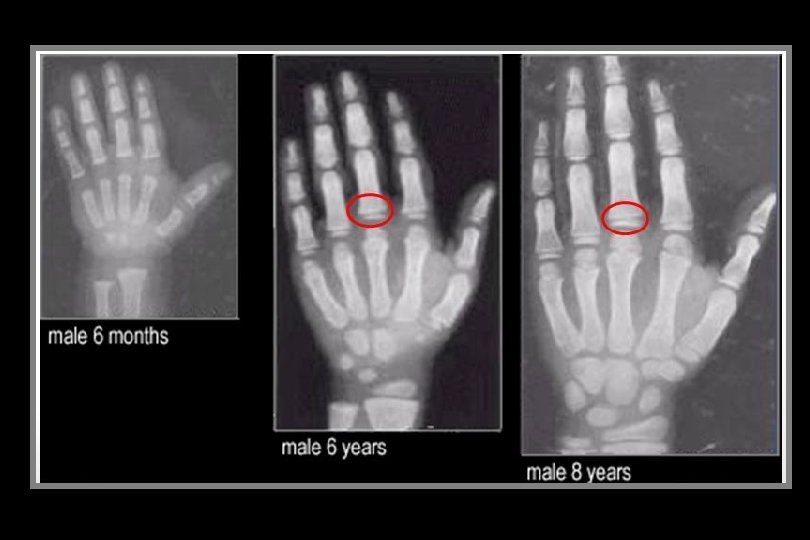
Bone Development • Osteogenesis = ossification is the process of bone tissue formation. • In embryos, embryos this leads to the formation of the bony skeleton • In children and adults, adults occurs bone young ossification as part of growth
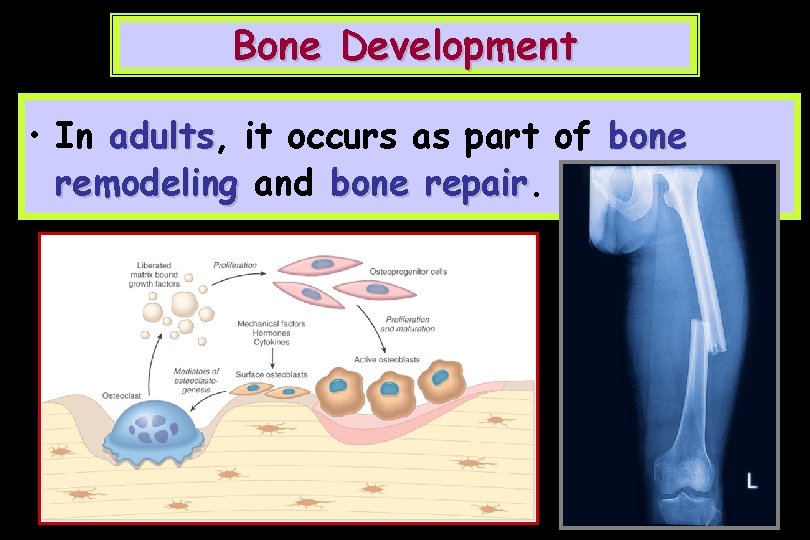
Bone Development • In adults, adults it occurs as part of bone remodeling and bone repair
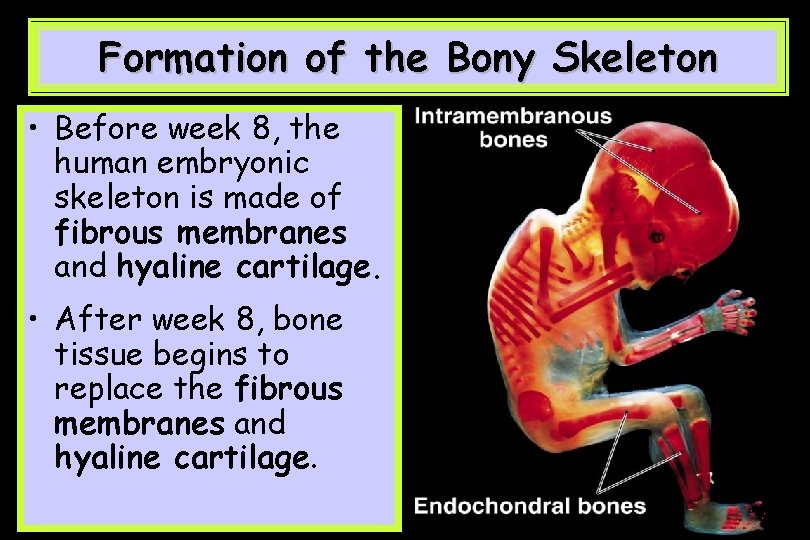
Formation of the Bony Skeleton • Before week 8, the human embryonic skeleton is made of fibrous membranes and hyaline cartilage. • After week 8, bone tissue begins to replace the fibrous membranes and hyaline cartilage.
Types of Ossificaiton 1. Intramembraneous Ossification development of bone from a fibrous membrane cranial bones and clavicles 2. Endochondral Ossification replacement of hyaline cartilage with bone rest of skeleton
Intramembraneous Ossification
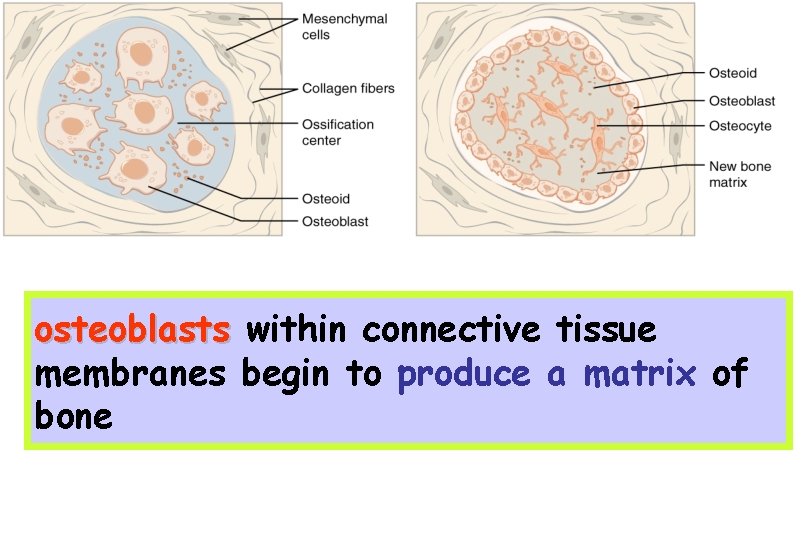
osteoblasts within connective tissue membranes begin to produce a matrix of bone
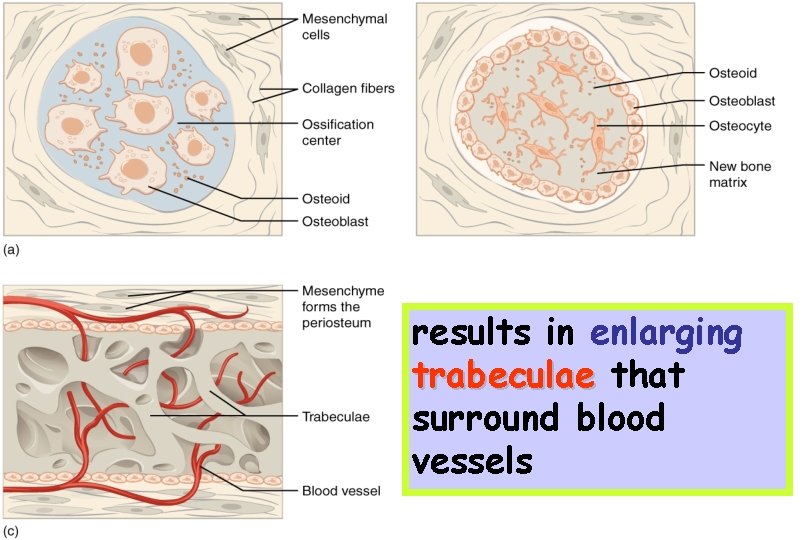
results in enlarging trabeculae that surround blood vessels
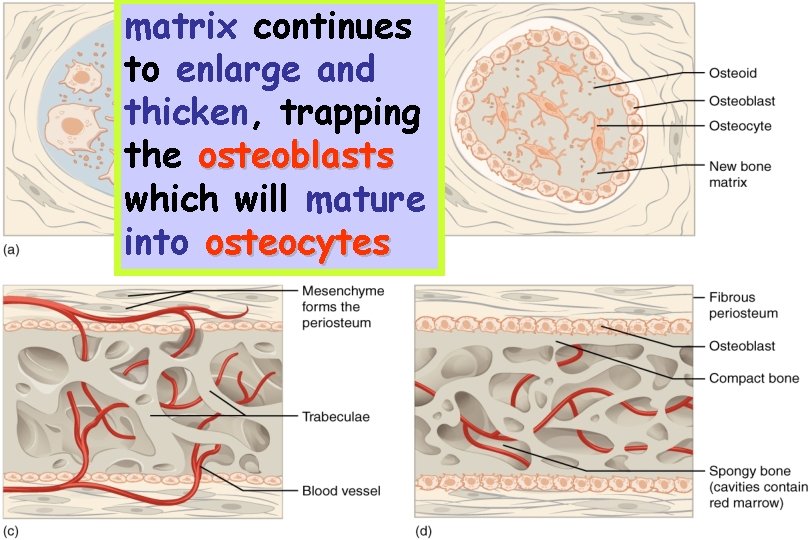
matrix continues to enlarge and thicken, trapping the osteoblasts which will mature into osteocytes
Intramembraneous Ossification • osteoblasts within connective tissue membranes begin to produce a matrix of bone • results in enlarging trabeculae that surround blood vessels • matrix continues to enlarge and thicken, trapping the osteoblasts which will mature into osteocytes
Endochondral Ossification
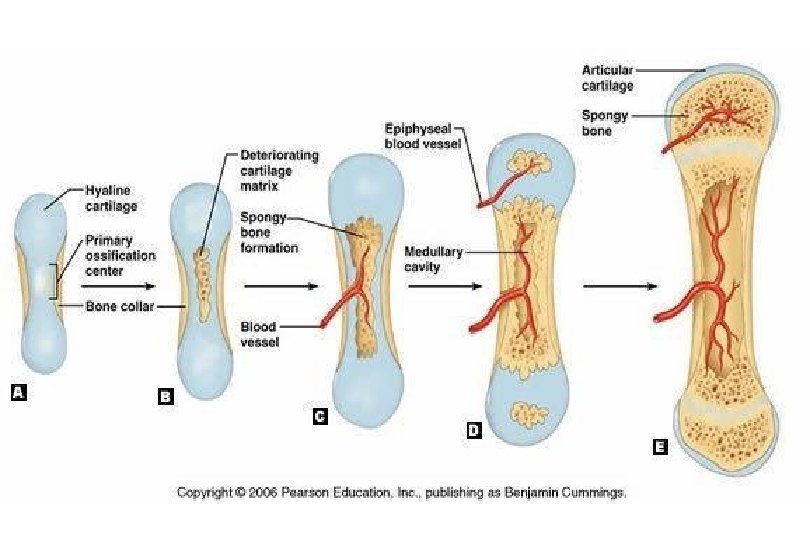
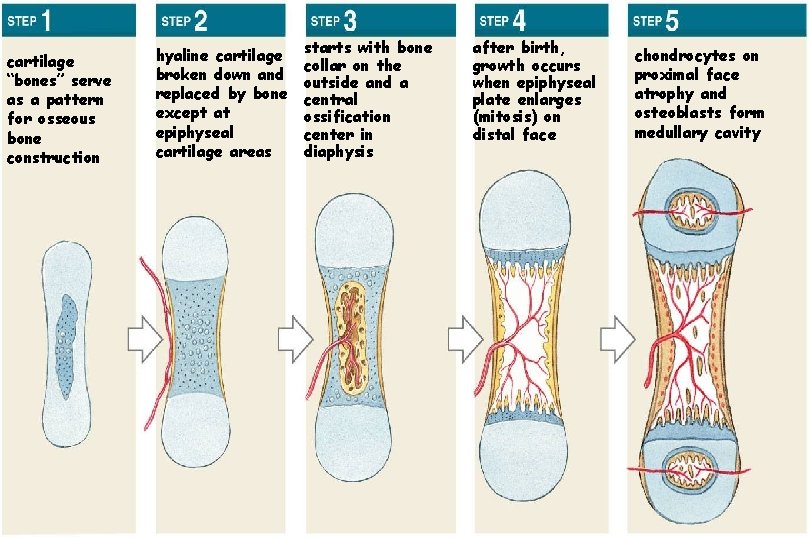
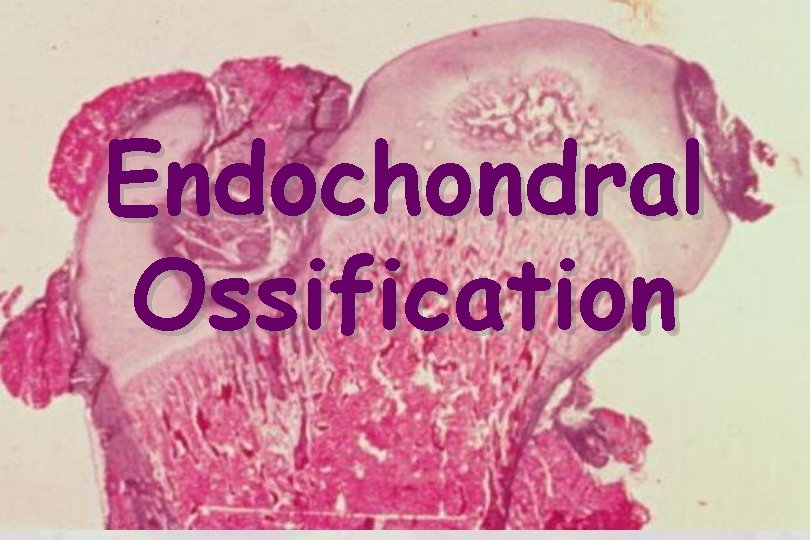
cartilage “bones” serve as a pattern for osseous bone construction hyaline cartilage broken down and replaced by bone except at epiphyseal cartilage areas starts with bone collar on the outside and a central ossification center in diaphysis after birth, growth occurs when epiphyseal plate enlarges (mitosis) on distal face chondrocytes on proximal face atrophy and osteoblasts form medullary cavity
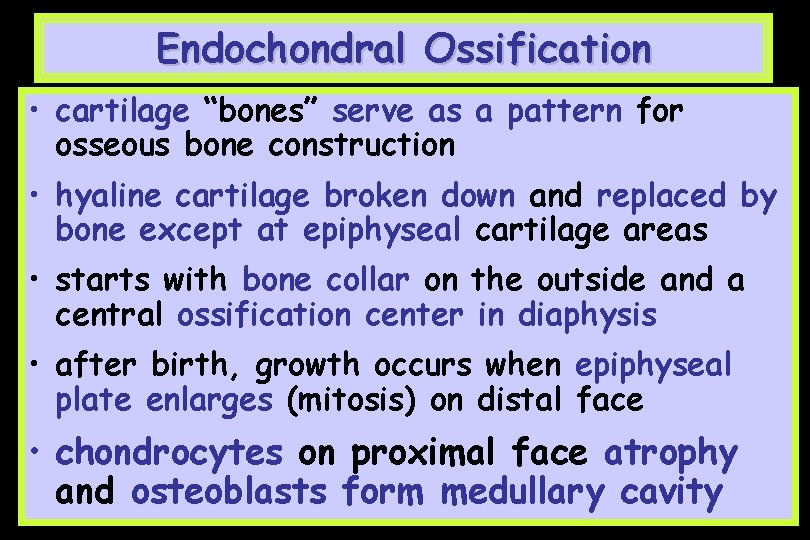
Endochondral Ossification • cartilage “bones” serve as a pattern for osseous bone construction • hyaline cartilage broken down and replaced by bone except at epiphyseal cartilage areas • starts with bone collar on the outside and a central ossification center in diaphysis • after birth, growth occurs when epiphyseal plate enlarges (mitosis) on distal face • chondrocytes on proximal face atrophy and osteoblasts form medullary cavity
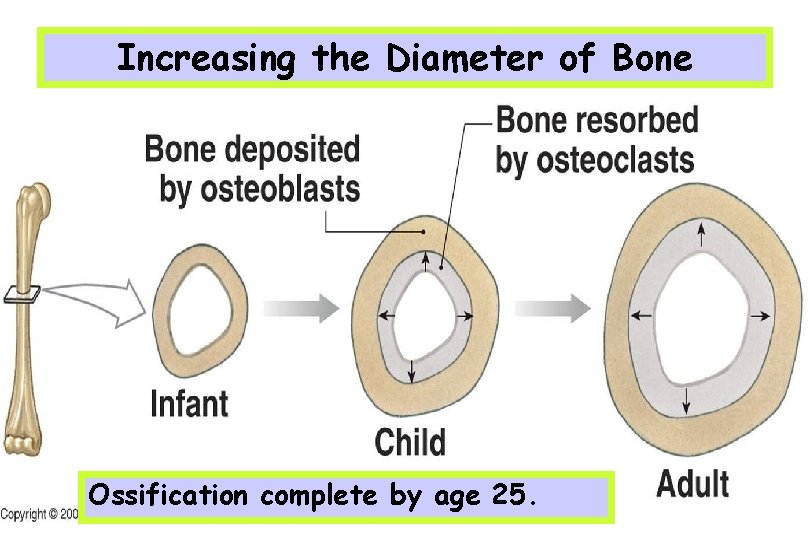
Increasing the Diameter of Bone Ossification complete by age 25.
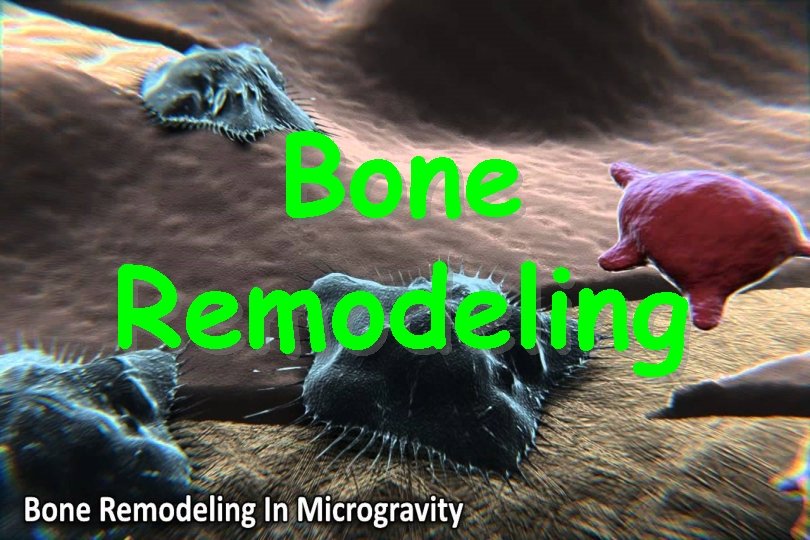
Bone Remodeling
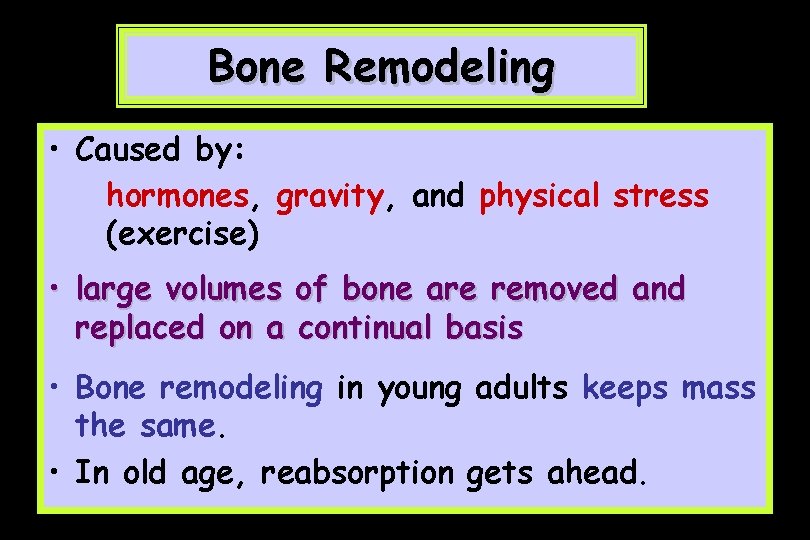
Bone Remodeling • Caused by: hormones, gravity, and physical stress (exercise) • large volumes of bone are removed and replaced on a continual basis • Bone remodeling in young adults keeps mass the same. • In old age, reabsorption gets ahead.
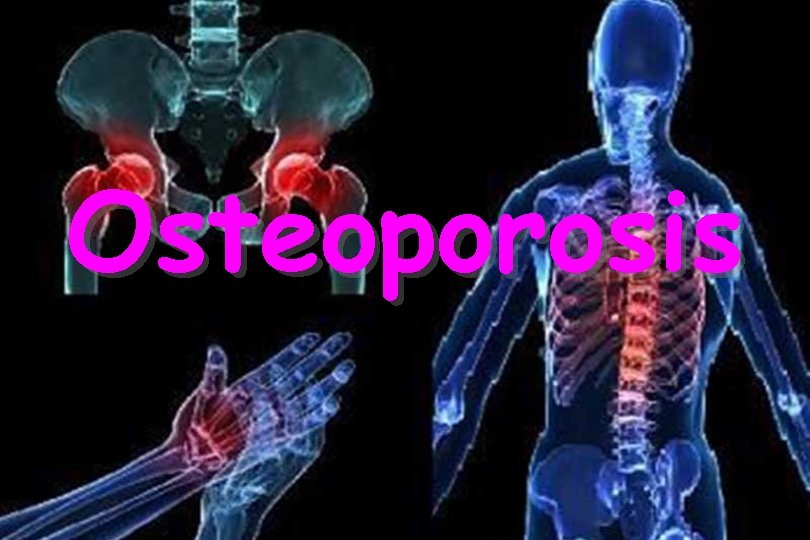
Osteoporosis
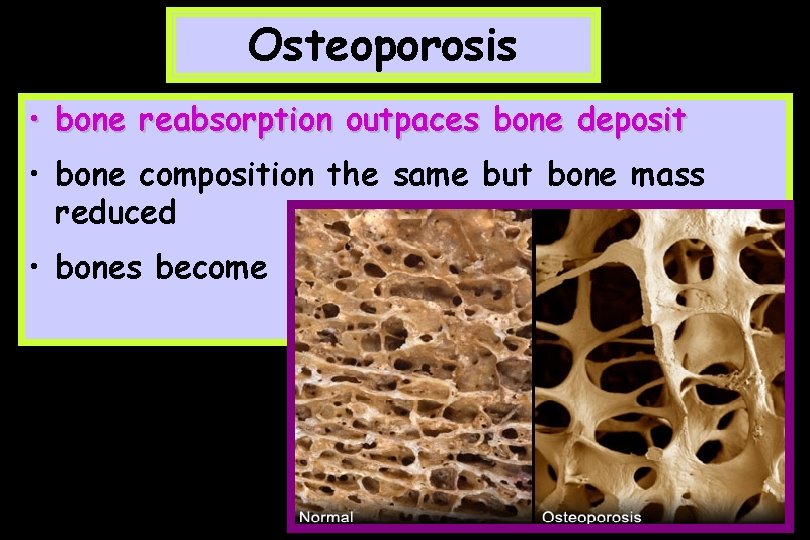
Osteoporosis • bone reabsorption outpaces bone deposit • bone composition the same but bone mass reduced • bones become porous
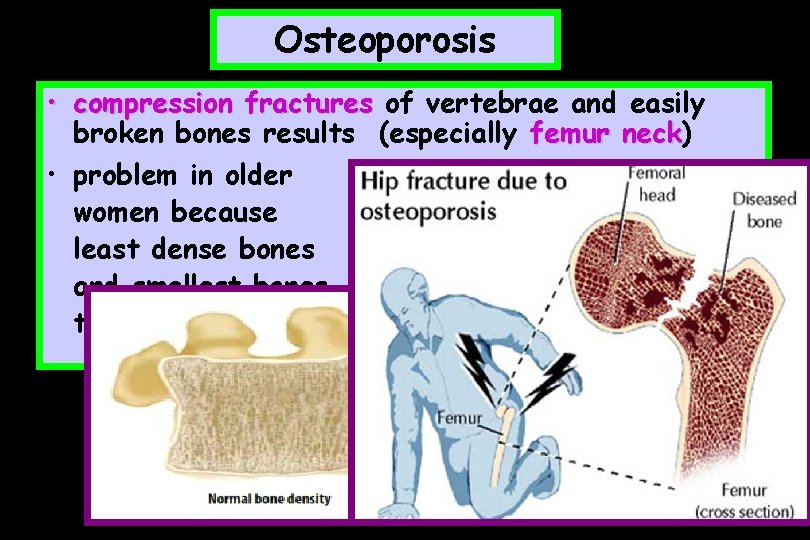
Osteoporosis • compression fractures of vertebrae and easily broken bones results (especially femur neck) neck • problem in older women because least dense bones and smallest bones to begin with
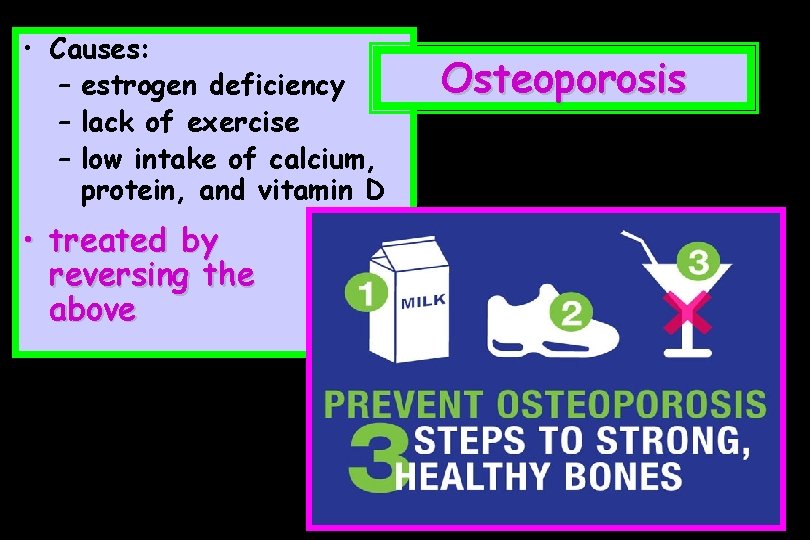
• Causes: – estrogen deficiency – lack of exercise – low intake of calcium, protein, and vitamin D • treated by reversing the above Osteoporosis
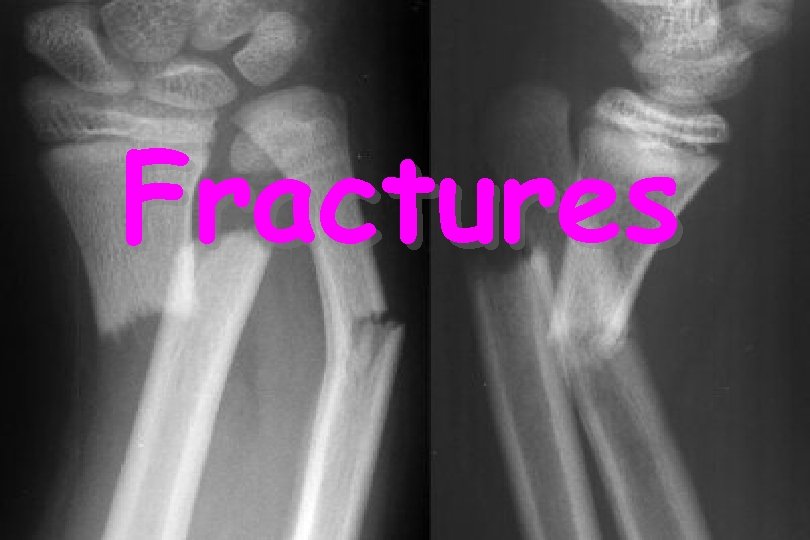
Fractures
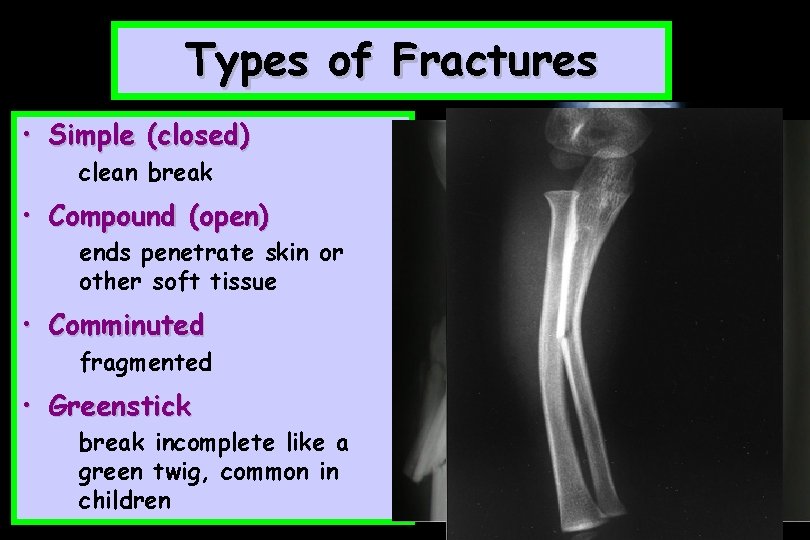
Types of Fractures • Simple (closed) clean break • Compound (open) ends penetrate skin or other soft tissue • Comminuted fragmented • Greenstick break incomplete like a green twig, common in children
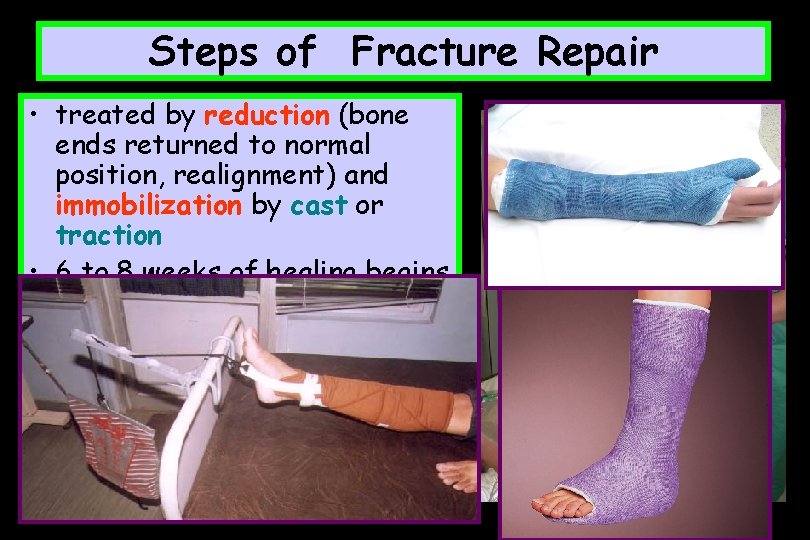
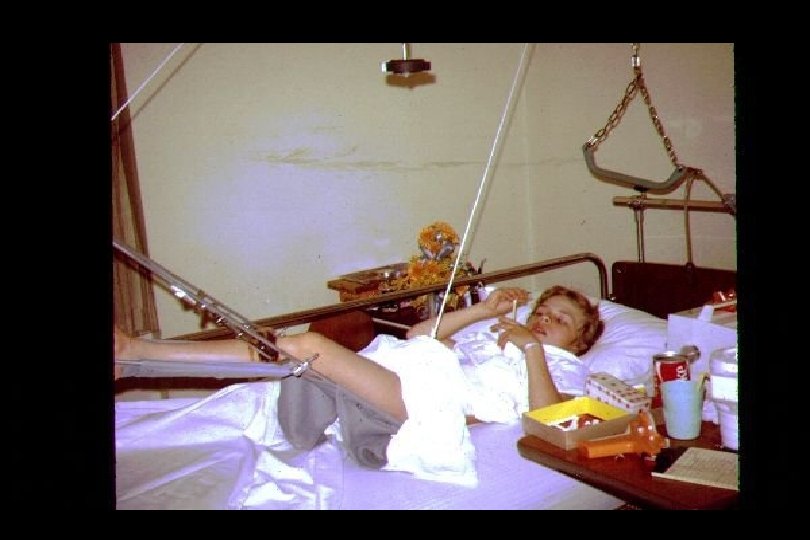
Steps of Fracture Repair • treated by reduction (bone ends returned to normal position, realignment) and immobilization by cast or traction • 6 to 8 weeks of healing begins (longer in elderly)
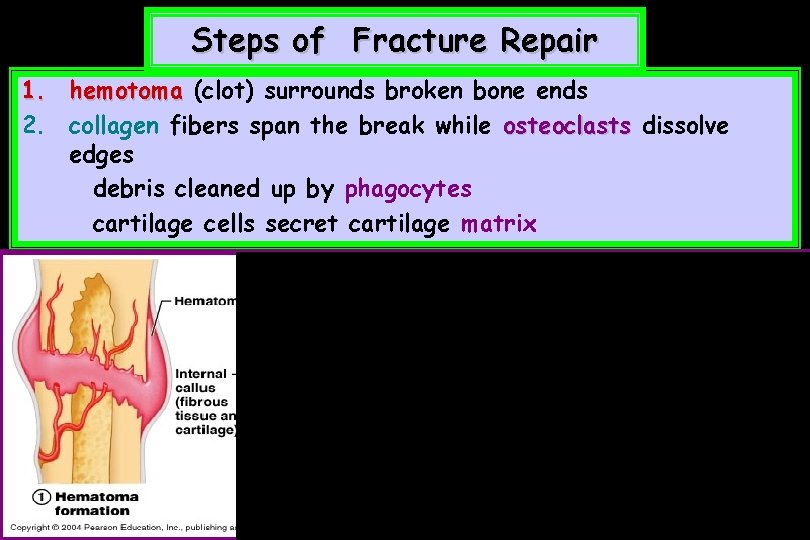
Steps of Fracture Repair 1. hemotoma (clot) surrounds broken bone ends 2. collagen fibers span the break while osteoclasts dissolve edges debris cleaned up by phagocytes cartilage cells secret cartilage matrix
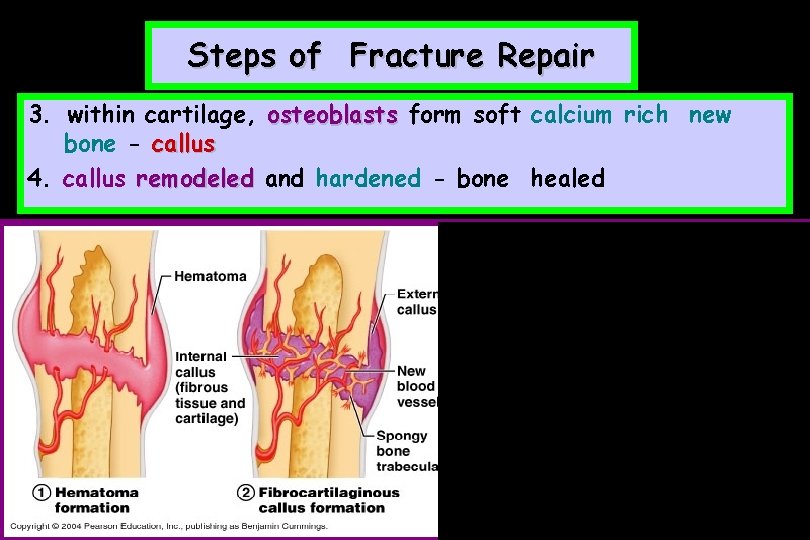
Steps of Fracture Repair 3. within cartilage, osteoblasts form soft calcium rich new bone - callus 4. callus remodeled and hardened - bone healed
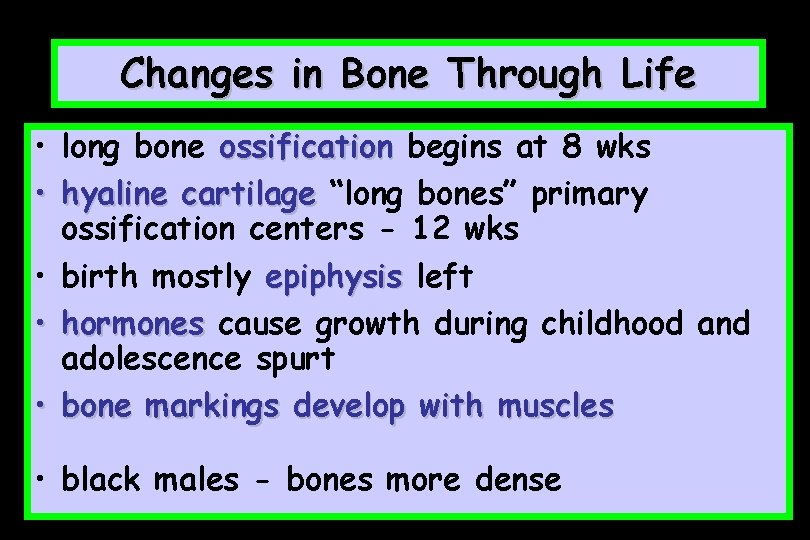
Changes in Bone Through Life • long bone ossification begins at 8 wks • hyaline cartilage “long bones” primary ossification centers - 12 wks • birth mostly epiphysis left • hormones cause growth during childhood and adolescence spurt • bone markings develop with muscles • black males - bones more dense
- Slides: 29