
Bonding to Enamel Enamel Bonding history Toothcolored MMA
Bonding to Enamel

Enamel Bonding - history Tooth-colored MMA filling materials were available in the 1950 s. These shrank ~ 7%. The leakage was excessive. Marginal discoloration is evidence of such leakage.
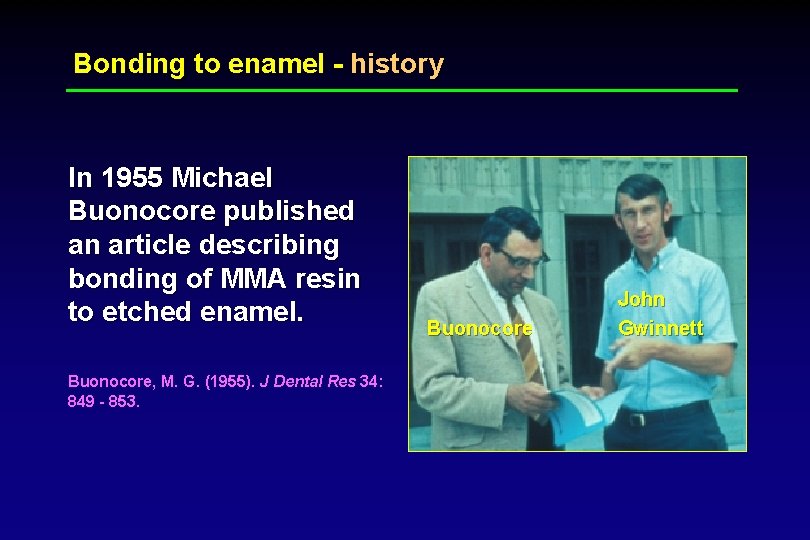
Bonding to enamel - history In 1955 Michael Buonocore published an article describing bonding of MMA resin to etched enamel. Buonocore, M. G. (1955). J Dental Res 34: 849 - 853. Buonocore John Gwinnett
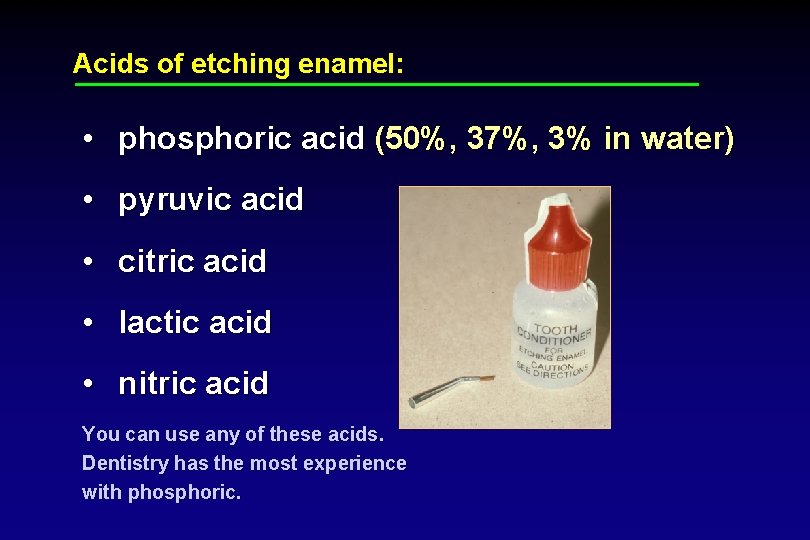
Acids of etching enamel: • phosphoric acid (50%, 37%, 3% in water) • pyruvic acid • citric acid • lactic acid • nitric acid You can use any of these acids. Dentistry has the most experience with phosphoric.

Enamel - rods • Thousands to tiny hydroxyapatite (Ca 10(PO 4)6(OH)2) crystals makeup enamel rods • Rods have a keyhole cross sectional shape • The average diameter of rods is 4 – 5 m. • They are narrower near the DEJ, 3 m, than near the surface, 6 m.
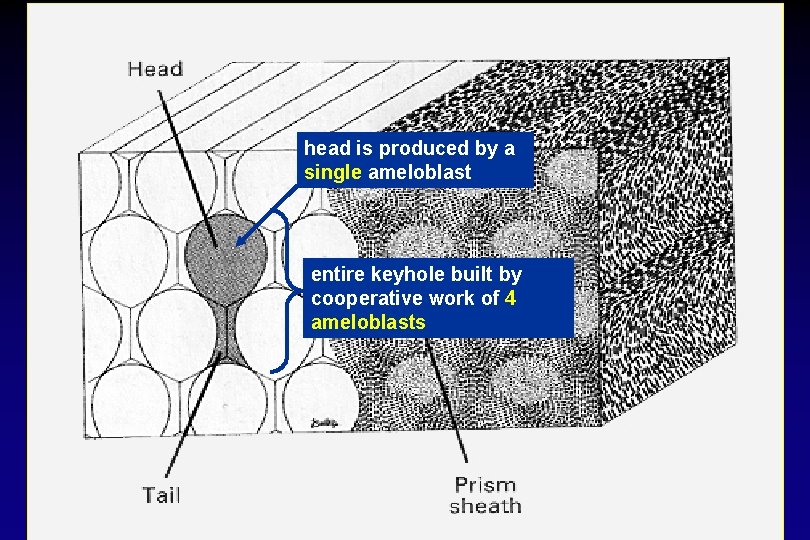
head is produced by a single ameloblast entire keyhole built by cooperative work of 4 ameloblasts
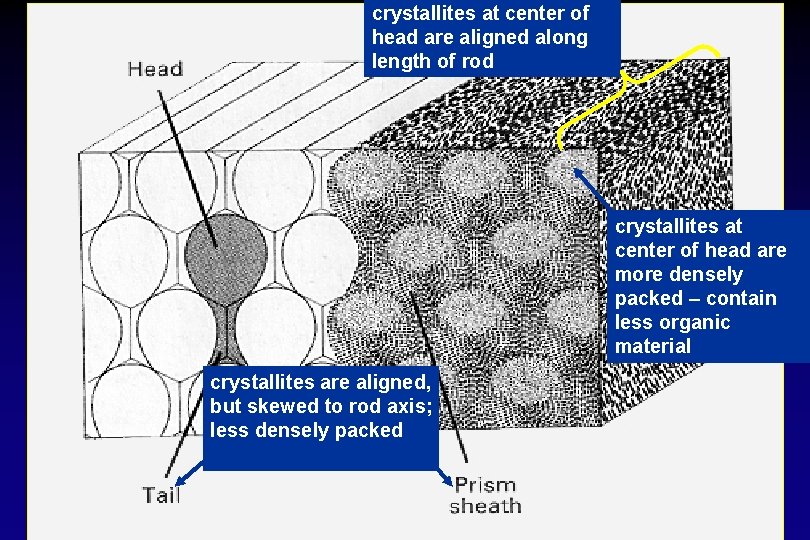
crystallites at center of head are aligned along length of rod crystallites at center of head are more densely packed – contain less organic material crystallites are aligned, but skewed to rod axis; less densely packed

Type 1 Etching. Center of enamel prism is preferentially etched. 5 m

Type 2 Etching. Etches of enamel prisms are preferentially etched. 5 m

Type 3 Etching of prismless enamel. 5 m

Effects of etching: • increase surface area • produce microporosities • increase the wettability of the surface • produce resin tags
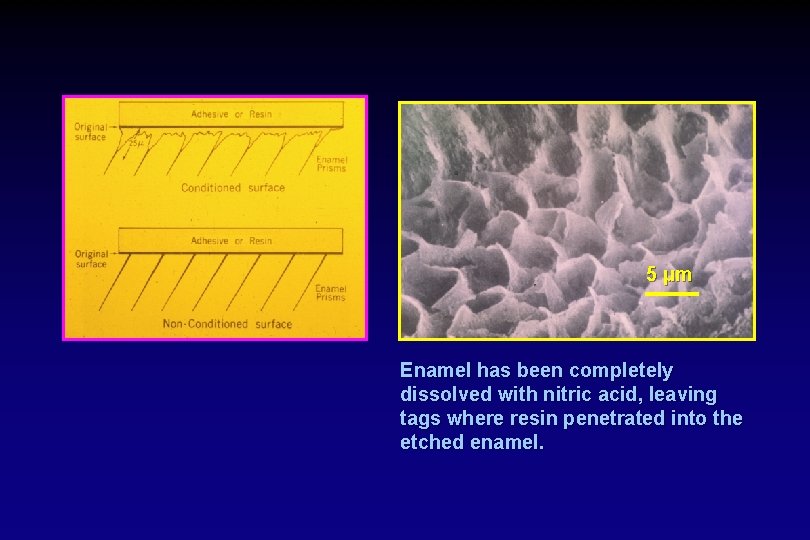
5 μm Enamel has been completely dissolved with nitric acid, leaving tags where resin penetrated into the etched enamel.
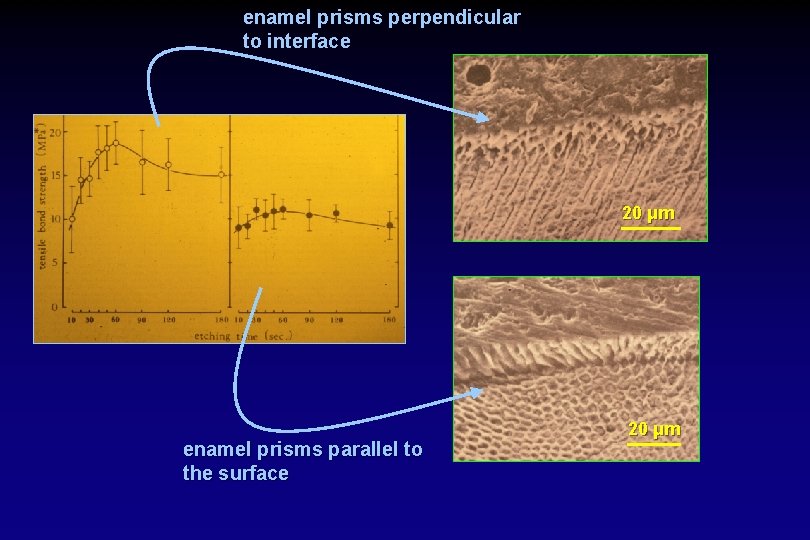
enamel prisms perpendicular to interface 20 μm enamel prisms parallel to the surface 20 μm

Enamel bonding: are long resin tags necessary? • Stronger bonding when long tags can be formed. • Adequate bond even if there are no long tags.

- Slides: 15