
BONDING Notes Mr Buchanan Introduction to Bonding Atoms

BONDING Notes Mr. Buchanan
Introduction to Bonding • Atoms are generally found in nature in combination held together by chemical bonds. • A chemical bond is a mutual electrical attraction between the nuclei and valence electrons of different atoms that binds the atoms together. • There are three main types of bonding: ionic, metallic and covalent.
Introduction to Bonding • Ionic Bonding occurs between a metal and a nonmetal. • Metallic bonding occurs between two metals. • Covalent bonding occurs between a nonmetal and a nonmetal. • A positive ion is called a cation. • A negative ion is called an anion.
Introduction to Bonding • What determines the type of bond that forms? • The valence electrons of the two atoms involved are redistributed to the most stable arrangement. • The interaction and rearrangement of the valence electrons determines which type of bond that forms. • Before bonding the atoms are at their highest possible potential energy
Introduction to Bonding • There are 2 philosophies of atom to atom interaction – One understanding of the formation of a chemical bond deals with balancing the opposing forces of repulsion and attraction – Repulsion occurs between the negative e- clouds of each atom – Attraction occurs between the positive nuclei and the negative electron clouds
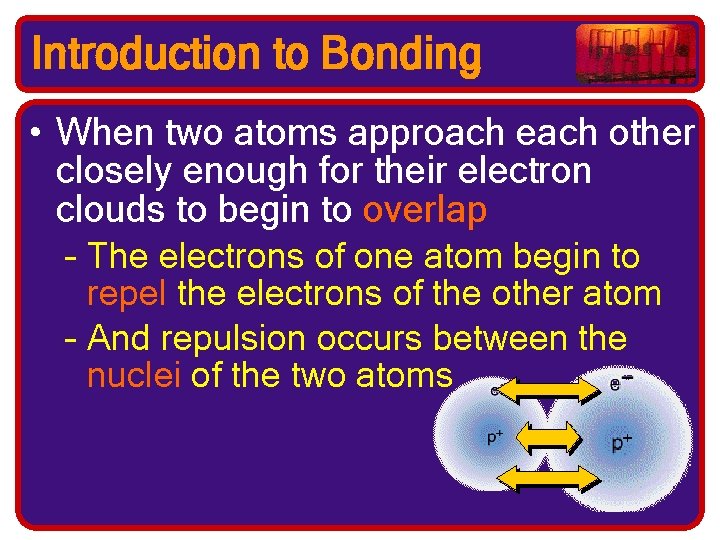
Introduction to Bonding • When two atoms approach each other closely enough for their electron clouds to begin to overlap – The electrons of one atom begin to repel the electrons of the other atom – And repulsion occurs between the nuclei of the two atoms
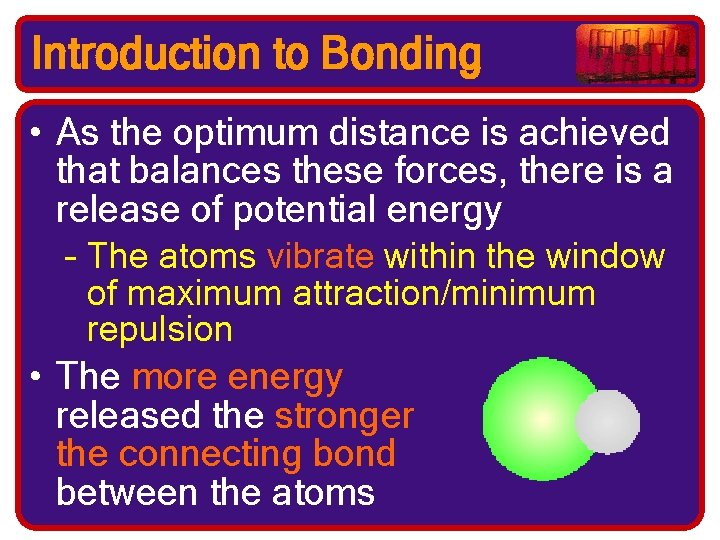
Introduction to Bonding • As the optimum distance is achieved that balances these forces, there is a release of potential energy – The atoms vibrate within the window of maximum attraction/minimum repulsion • The more energy released the stronger the connecting bond between the atoms
Introduction to Bonding • Another understanding of the formation of a chemical bond between two atoms centers on achieving the most stable arrangement of the atoms’ valence electrons – By rearranging the electrons so that each atom achieves a noble gas-like arrangement of its electrons creates a pair of stable atoms (only occurs when bonded)
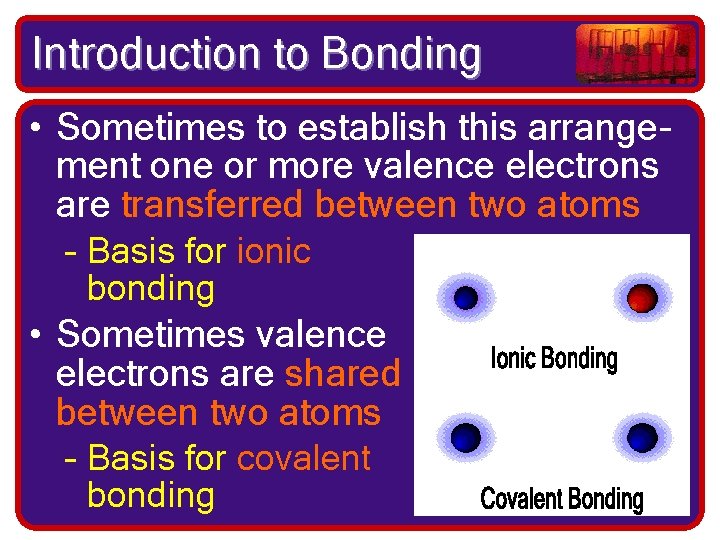
Introduction to Bonding • Sometimes to establish this arrangement one or more valence electrons are transferred between two atoms – Basis for ionic bonding • Sometimes valence electrons are shared between two atoms – Basis for covalent bonding
Introduction to Bonding • A good predictor for which type of bonding will develop between a set of atoms is the difference in their electro -negativities. – Remember, electro-negativity is a measure of the attraction an atom has for e-s after developing a bond • The more extreme the difference between the two atoms, the less equal the exchange of electrons
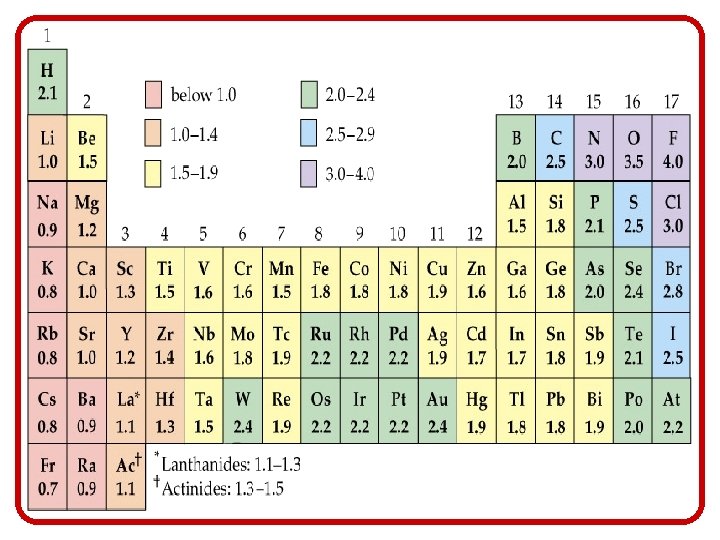
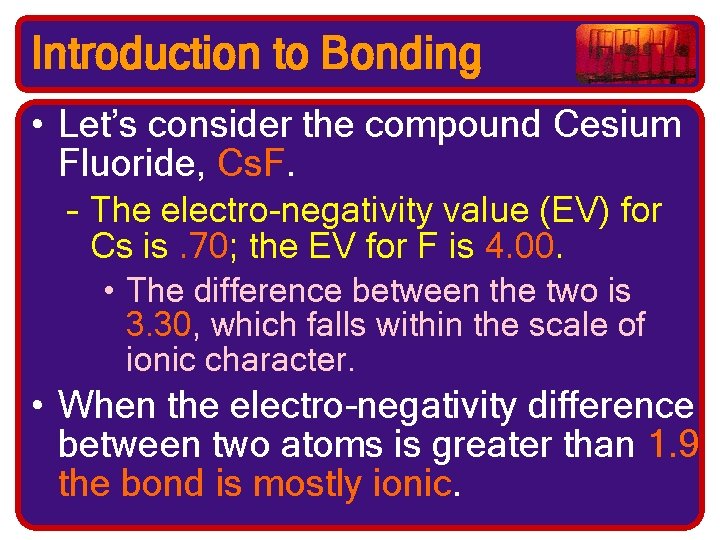
Introduction to Bonding • Let’s consider the compound Cesium Fluoride, Cs. F. – The electro-negativity value (EV) for Cs is. 70; the EV for F is 4. 00. • The difference between the two is 3. 30, which falls within the scale of ionic character. • When the electro-negativity difference between two atoms is greater than 1. 9 the bond is mostly ionic.
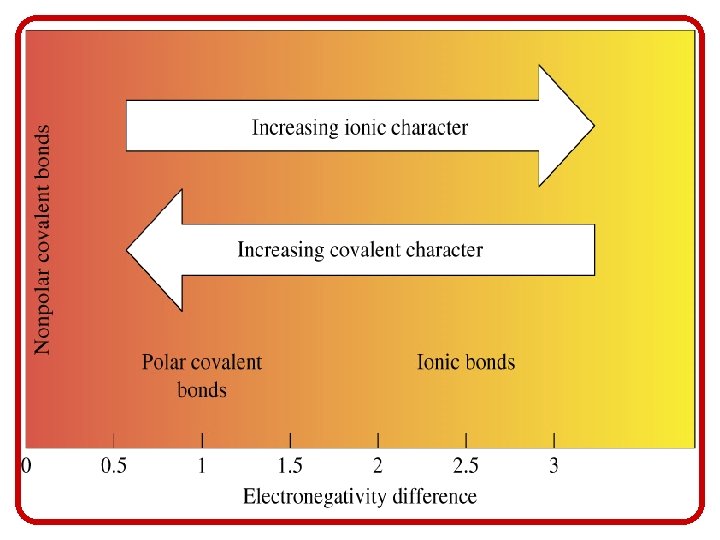
Introduction to Bonding • The take home lesson on electronegativity and bonding is this: – The closer together the atoms are on the P. T. , the more evenly their e- interact, and are therefore more likely to form a covalent bond – The farther apart they are on the P. T. , the less evenly their e- interact, and are therefore more likely to form an ionic bond. metal w/nonmetal = ionic nonmetal w/nonmetal = covalent
Covalent Bonding
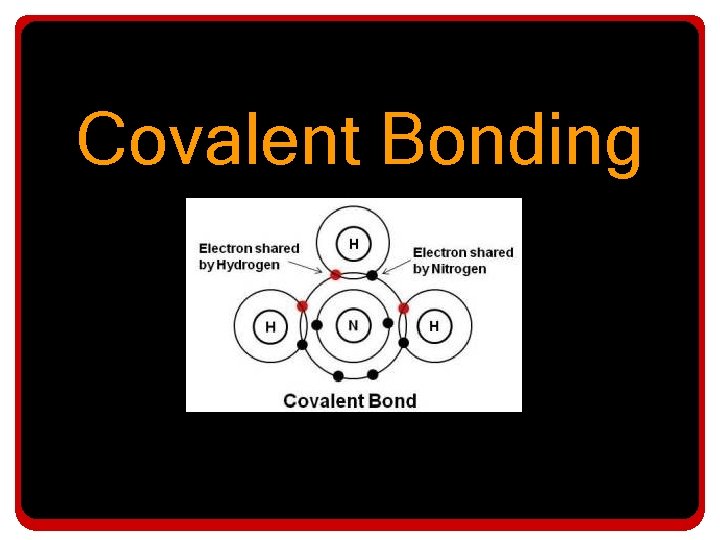
Covalent Bonding • In a covalent bond: – The electro-negativity difference between the atoms involved is not extreme • So the interaction between the involved electrons is more like a sharing relationship – It may not be an equal sharing relationship, but at least the electrons are being “shared”.
Covalent Bonding • Covalent Bonding is between two or more non-metals. • Covalent bonds are formed when electrons are shared between two atoms. • If they share 2 electrons, the form a single bond; 4 electrons is a double bond; • If two atoms share 6 electrons, they form a triple bond.
Covalent Bonding • Polar bonds usually involve nitrogen, oxygen or fluorine (NOF) • Non-Polar bonds usually involve carbon-hydrogen bonds • In polar bonds, the electrons are shared unequally • In non-polar bonds, the electrons are shared equally. • Covalent compounds can exist in any state (solid, liquid or gas). They have low melting and boiling points.
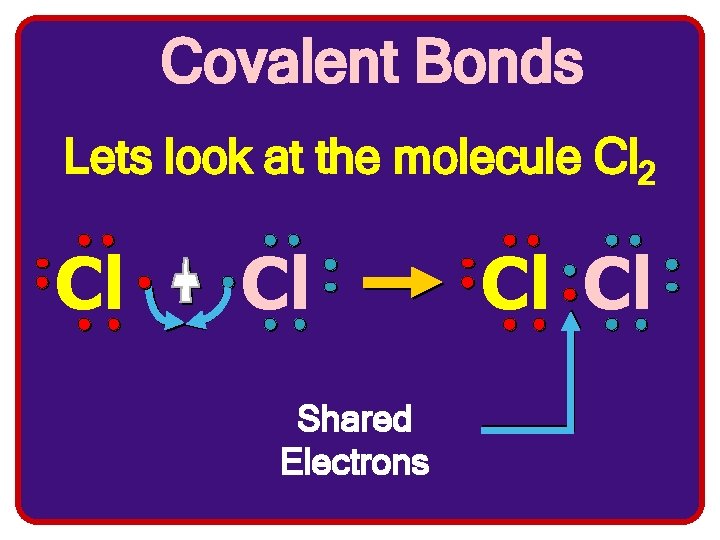
Covalent Bonds Lets look at the molecule Cl 2 Cl Cl Shared Electrons Cl Cl
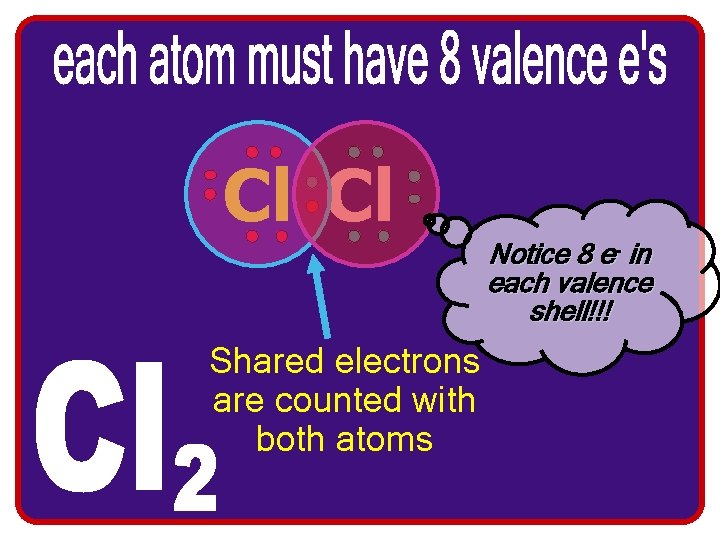
Cl Cl Notice 8 e- in each valence shell!!! Shared electrons are counted with both atoms
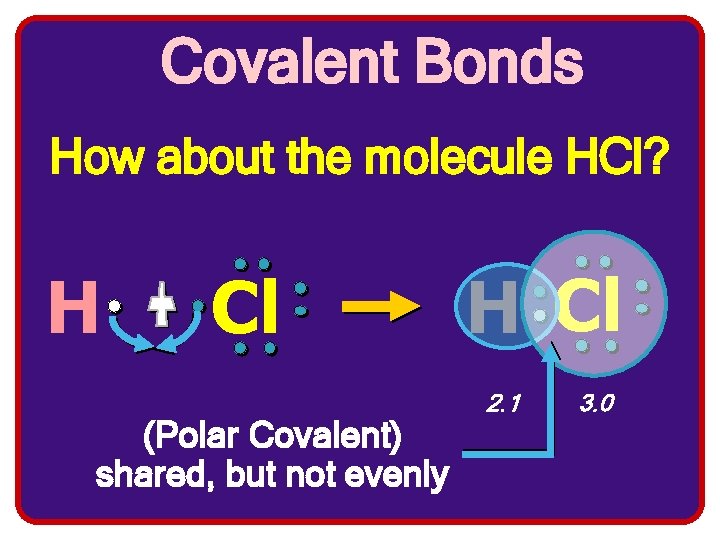
Covalent Bonds How about the molecule HCl? H Cl (Polar Covalent) shared, but not evenly H Cl 2. 1 3. 0
So what’s the bottom line? To be stable the two atoms involved in the covalent bond share their electrons in order to achieve the arrangement of a noble gas.
Ionic Bonding
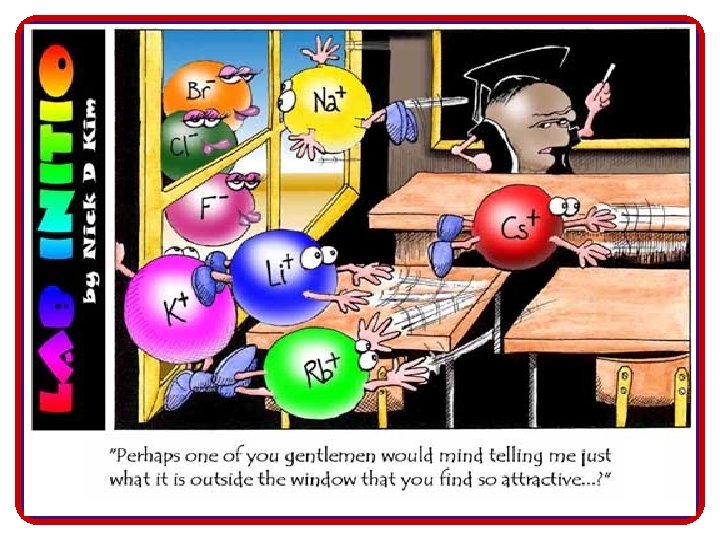
Ionic Bonding • In an Ionic bond: – The electro-negativity difference is extreme, • So the atom with the stronger pull doesn’t really share the electron – Instead the electron is essentially transferred from the atom with the least attraction to the atom with the most attraction
Ionic Bonding • When a metal bonds with a nonmetal an: Ionic bond is formed • An ionic bond contains a positive and negative ion. • -A positive ion is called a cation. • -A negative ion is called an anion. • -An Ionic bonding always involves the transfer of an electron from the metal to the nonmetal. • -The cation and anion are held together by electrostatic attraction.
Characteristics of Ionic Compounds • Ionic compounds do not consist of individual molecules. Instead there is a huge network of positive and negative ions that are packed together in a solid brittle crystal lattice. • Because their bonds are strong, ionic compounds tend to have very high melting and boiling points • -Ionic compounds are electrolytes, which means they can conduct electricity • When forming ionic compounds the positive and negative charges must balance • Ionic crystals cannot conduct electricity because the ions must be able to move.
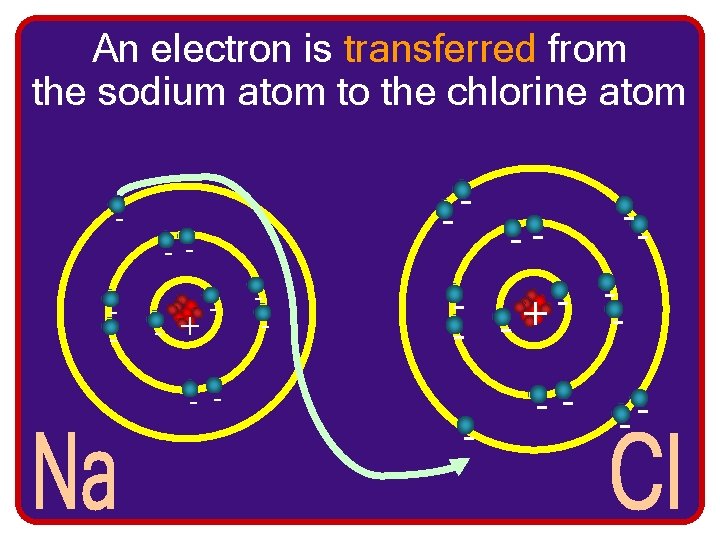
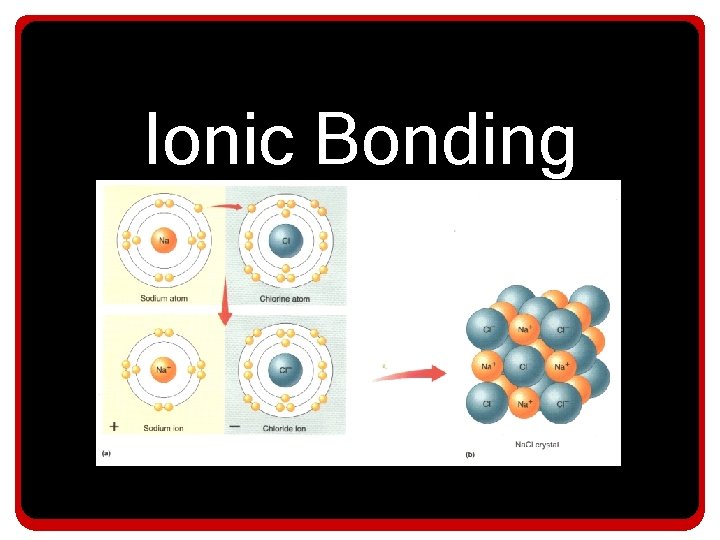
An electron is transferred from the sodium atom to the chlorine atom - -- - + - - -- - - + -- -
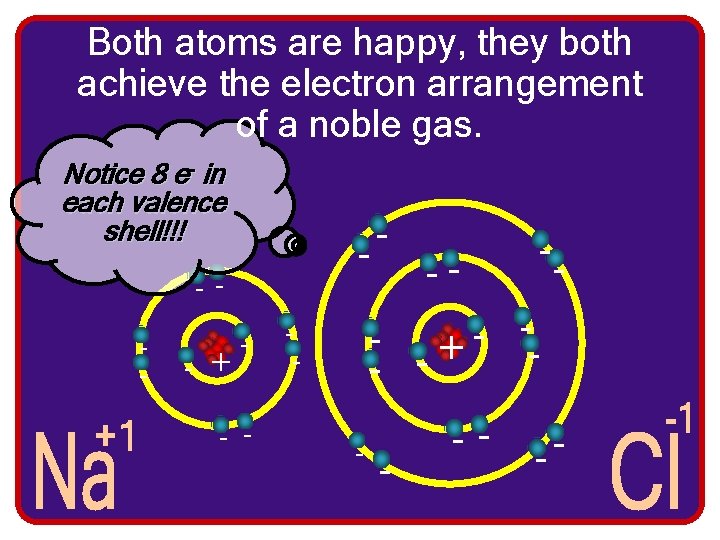
Both atoms are happy, they both achieve the electron arrangement of a noble gas. Notice 8 e- in each valence shell!!! - -- - + - - -- - - + -- -
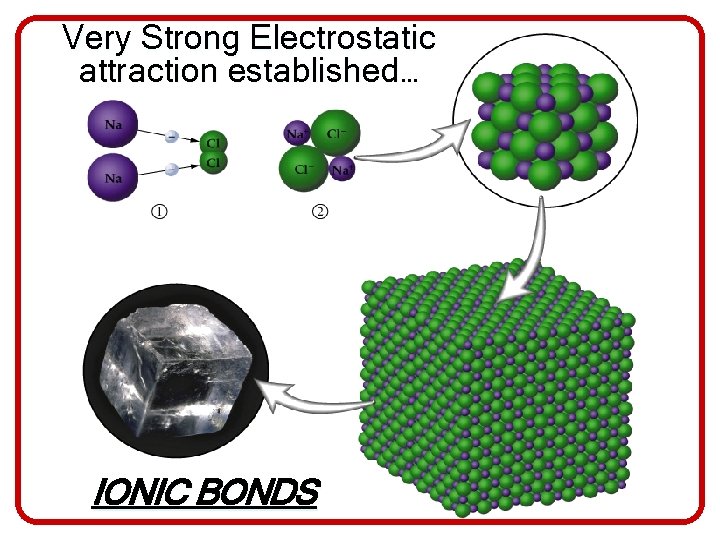
Very Strong Electrostatic attraction established… IONIC BONDS
So what’s the bottom line? To be stable the two atoms involved in the ionic bond will either lose or gain their valence electrons in order to achieve a stable octet arrangement of electrons.
Metallic Bonding
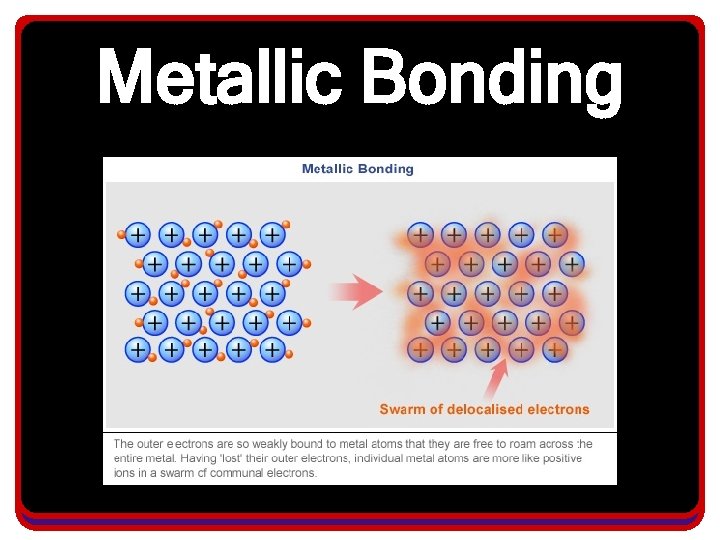
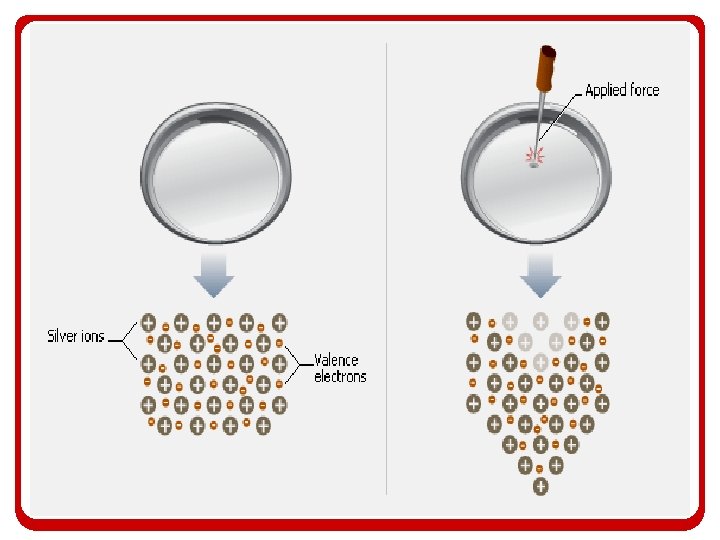
Metallic Bonding • The metallic bond consists of positively charged metallic cations that donate electrons to the sea. • The sea of electrons are shared by all atoms and can move throughout the structure.
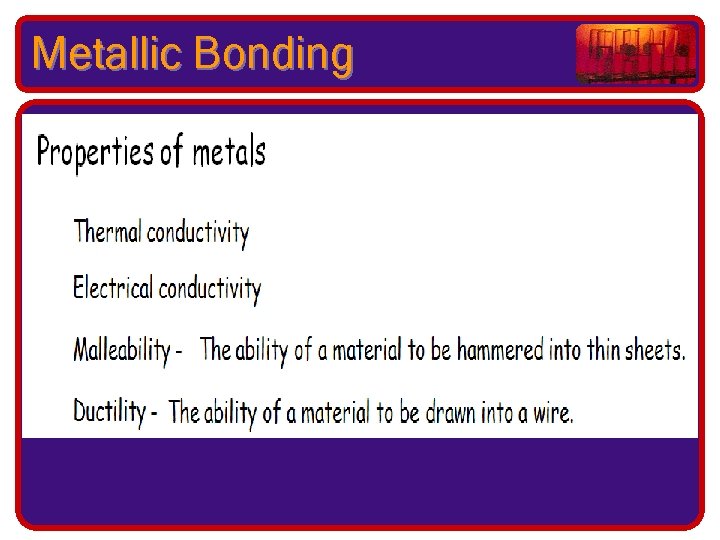
Metallic Bonding
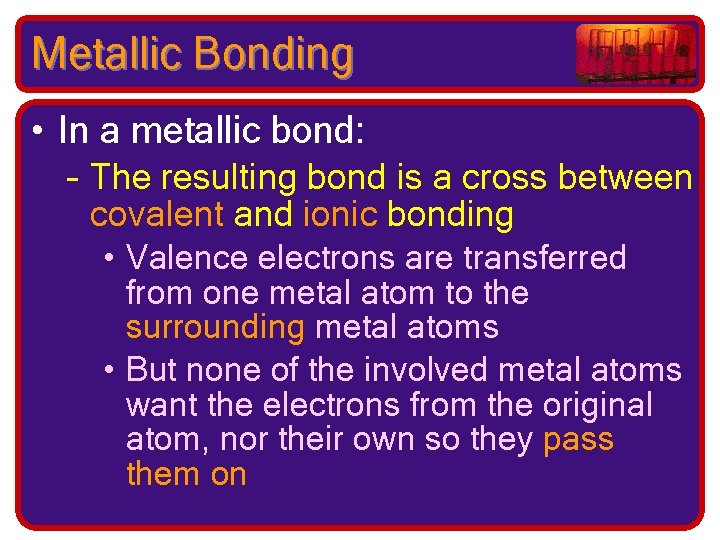
Metallic Bonding • In a metallic bond: – The resulting bond is a cross between covalent and ionic bonding • Valence electrons are transferred from one metal atom to the surrounding metal atoms • But none of the involved metal atoms want the electrons from the original atom, nor their own so they pass them on
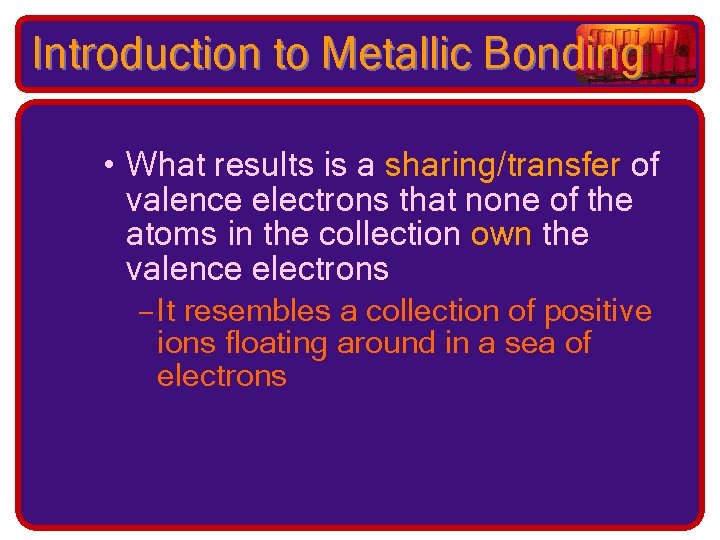
Introduction to Metallic Bonding • What results is a sharing/transfer of valence electrons that none of the atoms in the collection own the valence electrons – It resembles a collection of positive ions floating around in a sea of electrons
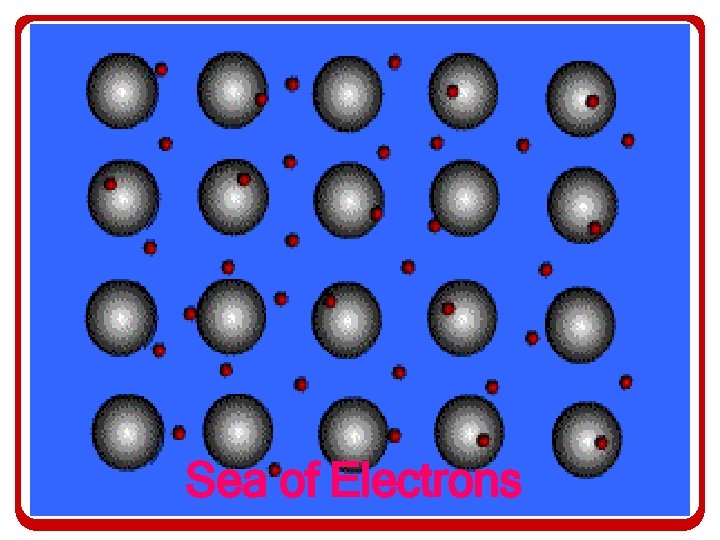
Sea of Electrons
- Slides: 38