
Bonding Lessons 1 2 3 3 5 Topics

Bonding
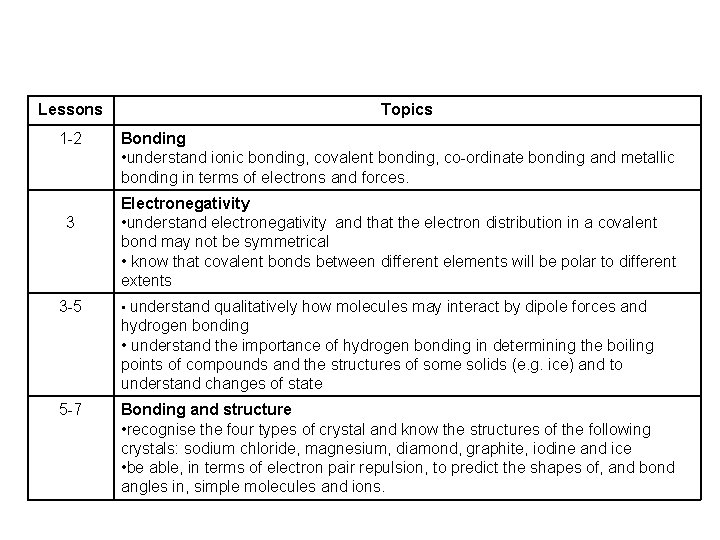
Lessons 1 -2 3 3 -5 Topics Bonding • understand ionic bonding, covalent bonding, co-ordinate bonding and metallic bonding in terms of electrons and forces. Electronegativity • understand electronegativity and that the electron distribution in a covalent bond may not be symmetrical • know that covalent bonds between different elements will be polar to different extents • understand qualitatively how molecules may interact by dipole forces and hydrogen bonding • understand the importance of hydrogen bonding in determining the boiling points of compounds and the structures of some solids (e. g. ice) and to understand changes of state 5 -7 Bonding and structure • recognise the four types of crystal and know the structures of the following crystals: sodium chloride, magnesium, diamond, graphite, iodine and ice • be able, in terms of electron pair repulsion, to predict the shapes of, and bond angles in, simple molecules and ions.
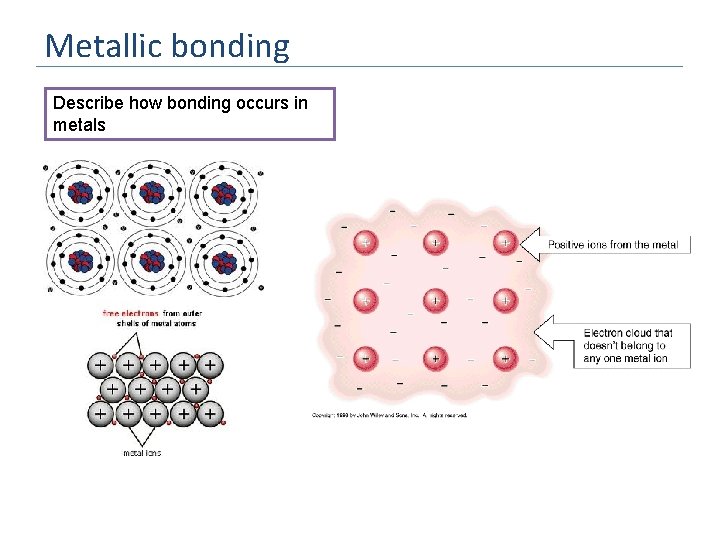
Metallic bonding Describe how bonding occurs in metals
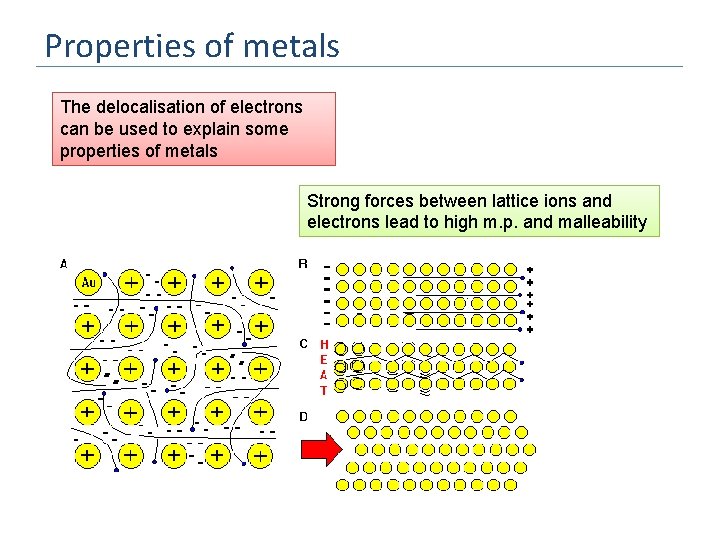
Properties of metals The delocalisation of electrons can be used to explain some properties of metals Strong forces between lattice ions and electrons lead to high m. p. and malleability
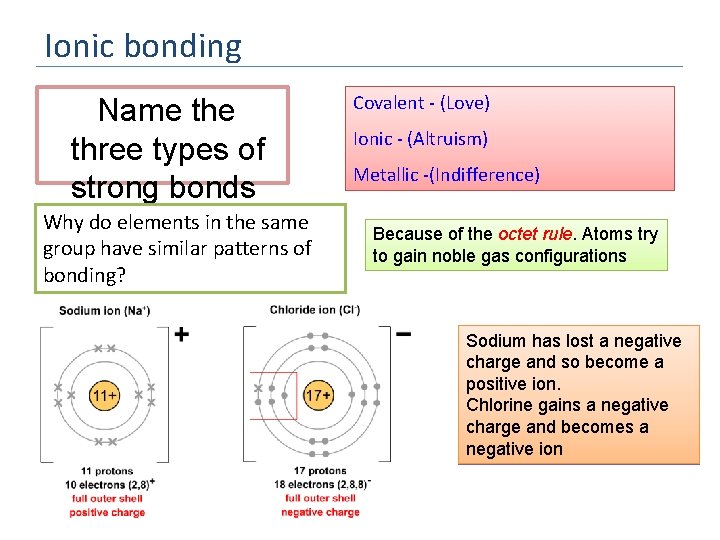
Ionic bonding Name three types of strong bonds Why do elements in the same between group have similar patterns of atoms bonding? Covalent - (Love) Ionic - (Altruism) Metallic -(Indifference) Because of the octet rule. Atoms try to gain noble gas configurations Sodium has lost negative one aouter charge so become a by electron. and It gains stability positive giving anion. electron to Chlorine a negative chlorine. gains Chlorine also charge becomes a becomeand stable by gaining negative ion one electron.
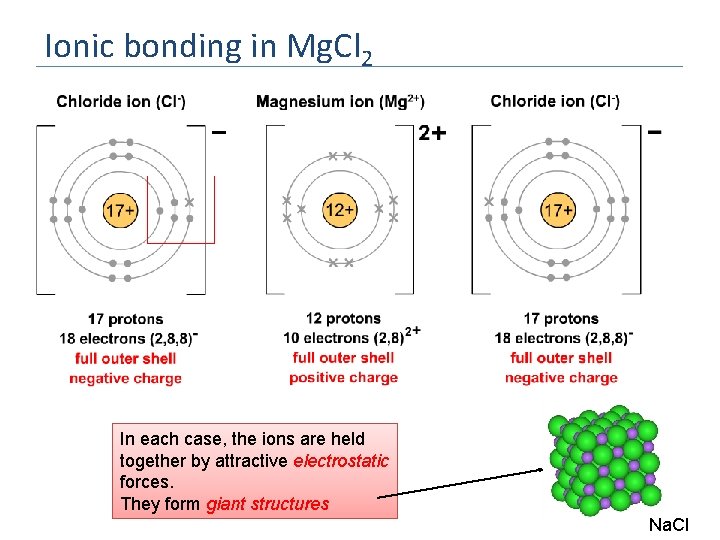
Ionic bonding in Mg. Cl 2 In each case, the ions are held together by attractive electrostatic forces. They form giant structures Na. Cl
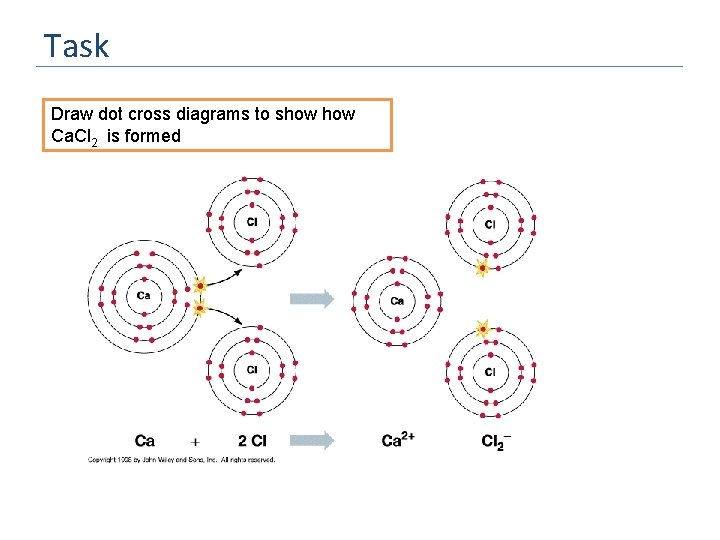
Task Draw dot cross diagrams to show Ca. Cl 2 is formed
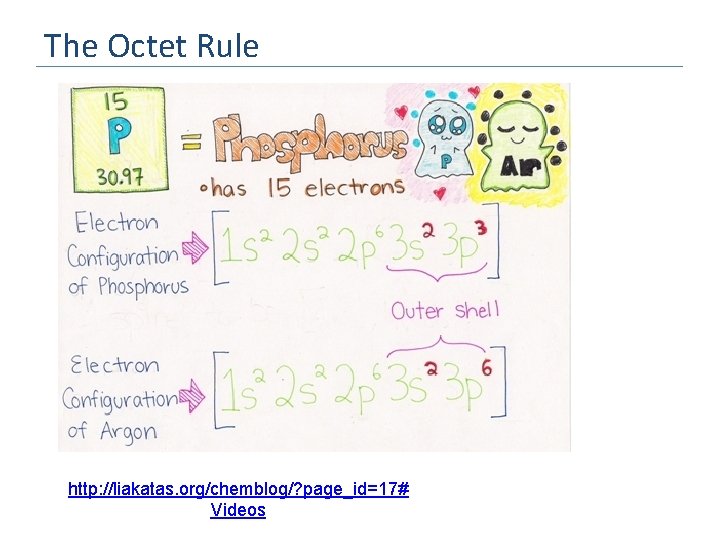
The Octet Rule http: //liakatas. org/chemblog/? page_id=17# Videos
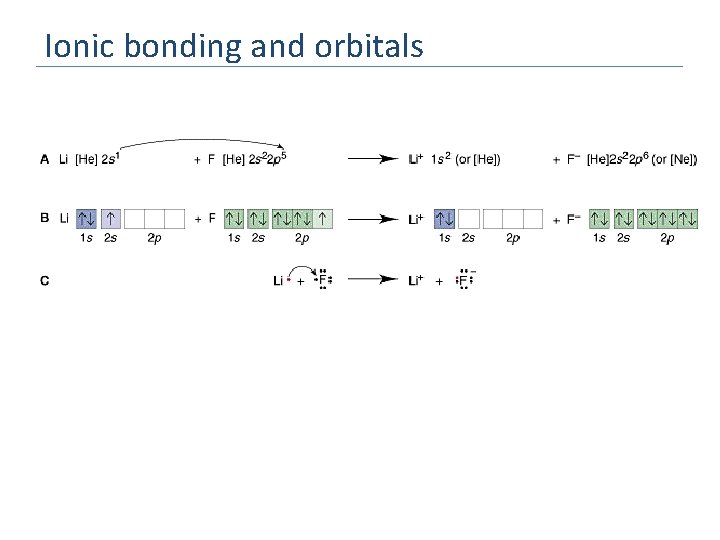
Ionic bonding and orbitals
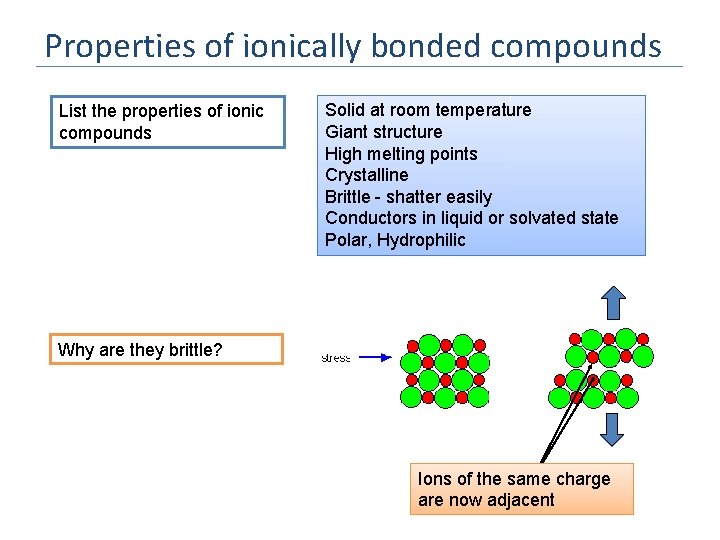
Properties of ionically bonded compounds List the properties of ionic compounds Solid at room temperature Giant structure High melting points Crystalline Brittle - shatter easily Conductors in liquid or solvated state Polar, Hydrophilic Why are they brittle? Ions of the same charge are now adjacent
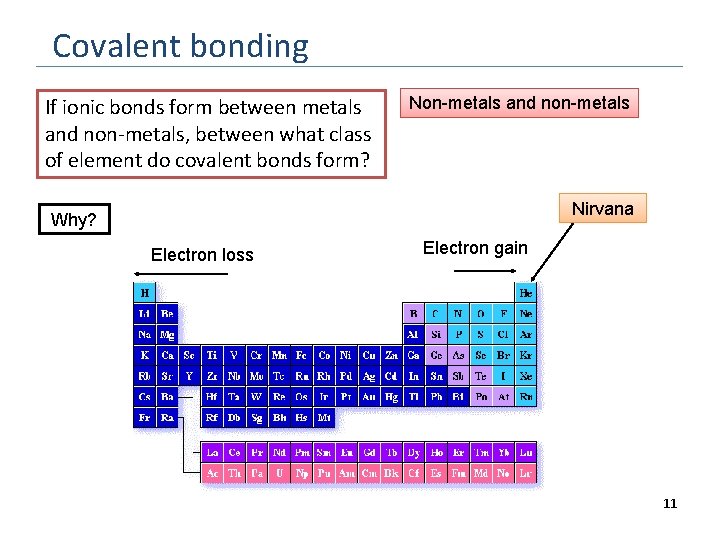
Covalent bonding If ionic bonds form between metals and non-metals, between what class of element do covalent bonds form? Non-metals and non-metals Nirvana Why? Electron loss Electron gain 11
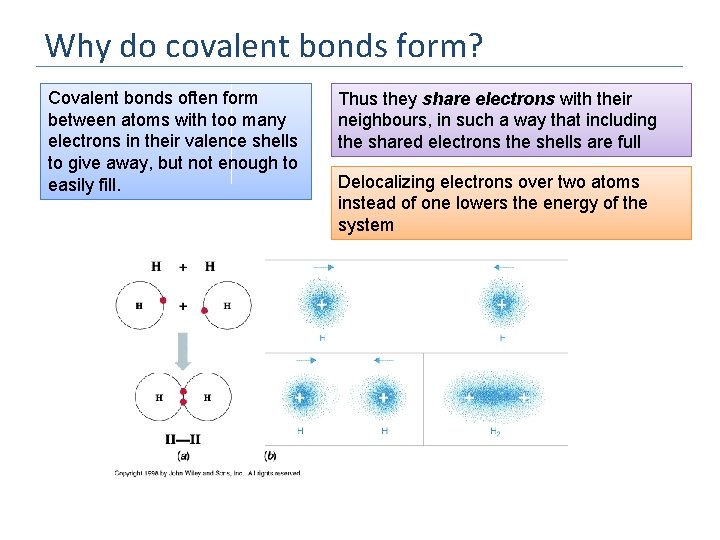
Why do covalent bonds form? Covalent bonds often form between atoms with too many electrons in their valence shells to give away, but not enough to easily fill. Thus they share electrons with their neighbours, in such a way that including the shared electrons the shells are full Delocalizing electrons over two atoms instead of one lowers the energy of the system
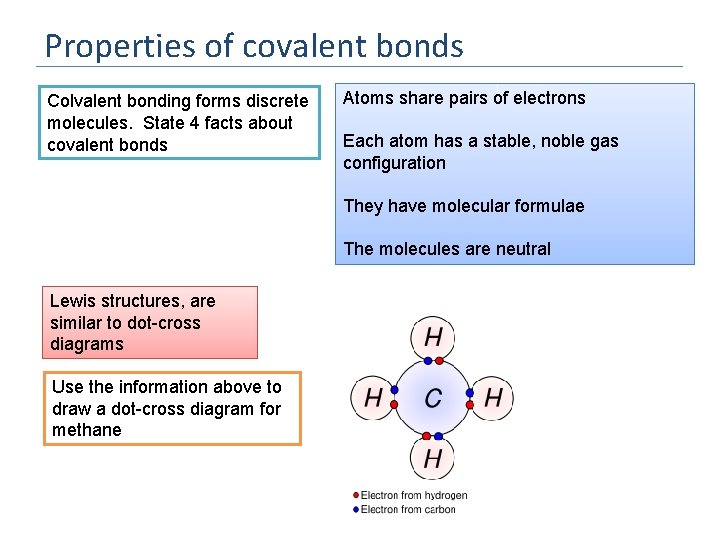
Properties of covalent bonds Colvalent bonding forms discrete molecules. State 4 facts about covalent bonds Atoms share pairs of electrons Each atom has a stable, noble gas configuration They have molecular formulae The molecules are neutral Lewis structures, are similar to dot-cross diagrams Use the information above to draw a dot-cross diagram for methane
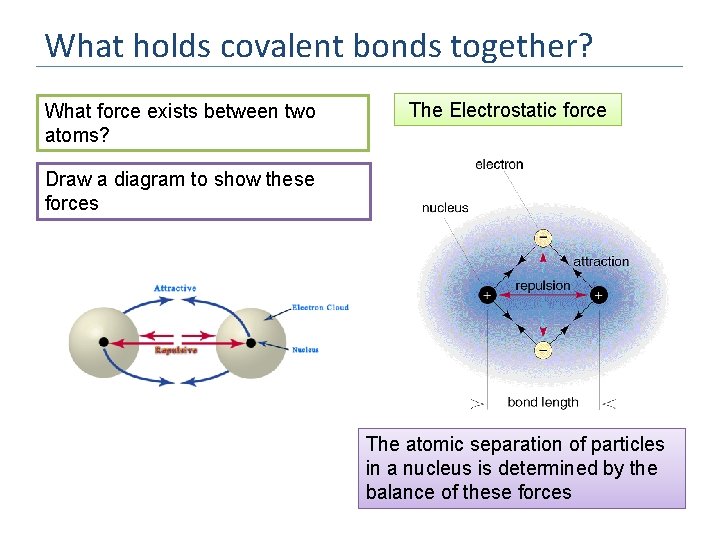
What holds covalent bonds together? What force exists between two atoms? The Electrostatic force Draw a diagram to show these forces The atomic separation of particles in a nucleus is determined by the balance of these forces
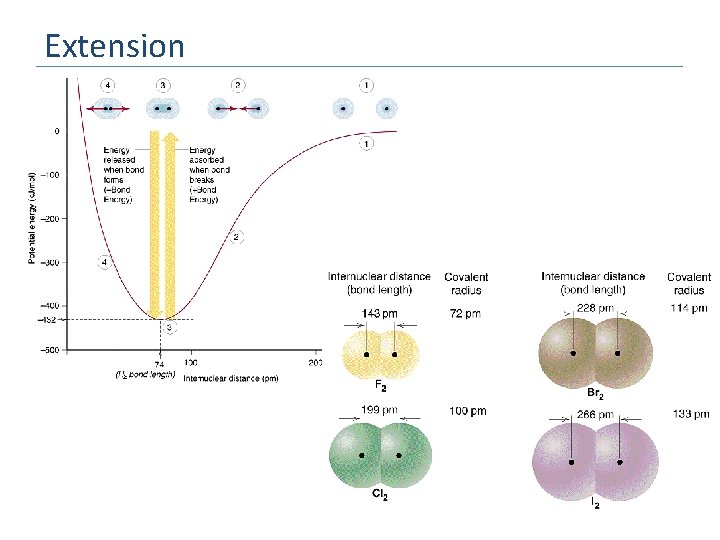
Extension
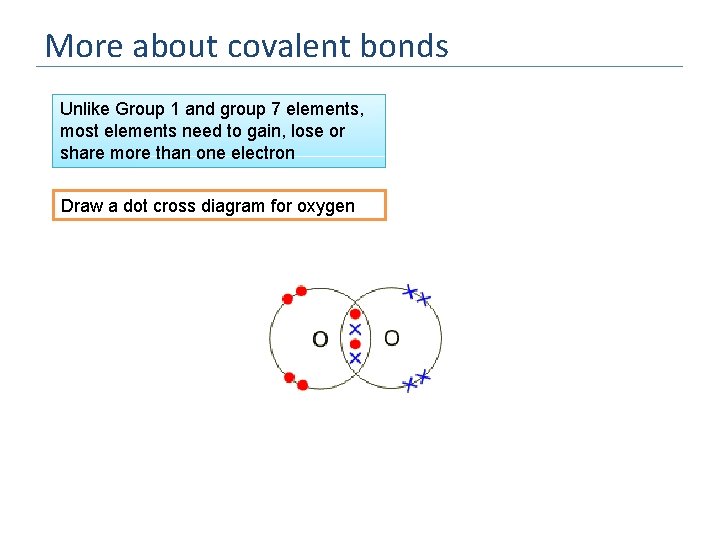
More about covalent bonds Unlike Group 1 and group 7 elements, most elements need to gain, lose or share more than one electron Draw a dot cross diagram for oxygen
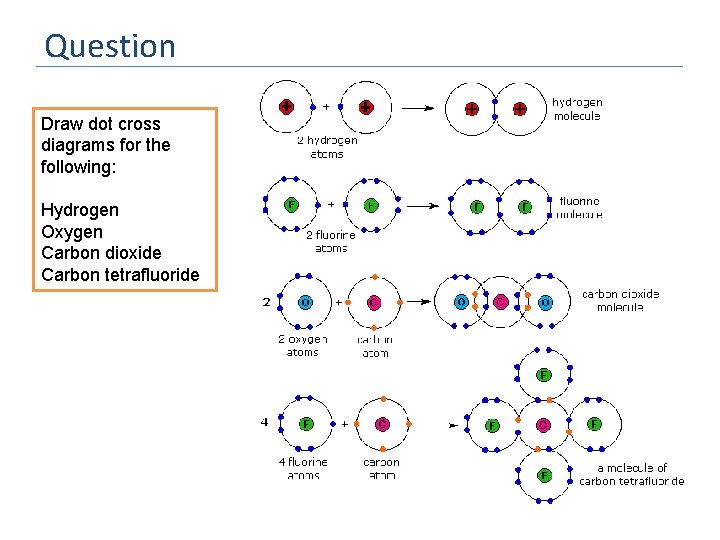
Question Draw dot cross diagrams for the following: Hydrogen Oxygen Carbon dioxide Carbon tetrafluoride
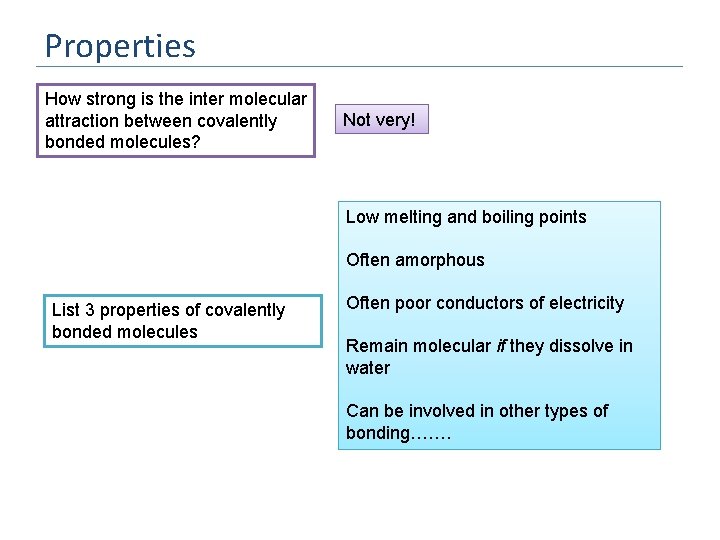
Properties How strong is the inter molecular attraction between covalently bonded molecules? Not very! Low melting and boiling points Often amorphous List 3 properties of covalently bonded molecules Often poor conductors of electricity Remain molecular if they dissolve in water Can be involved in other types of bonding…….
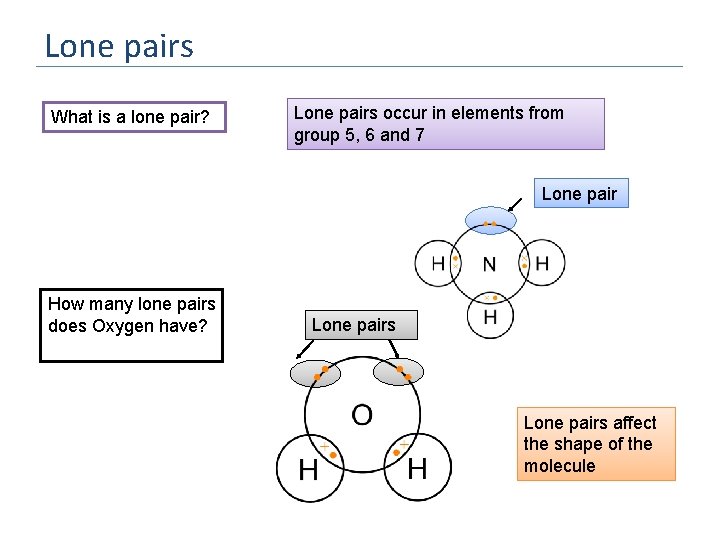
Lone pairs What is a lone pair? Lone pairs occur in elements from group 5, 6 and 7 Lone pair How many lone pairs does Oxygen have? Lone pairs affect the shape of the molecule
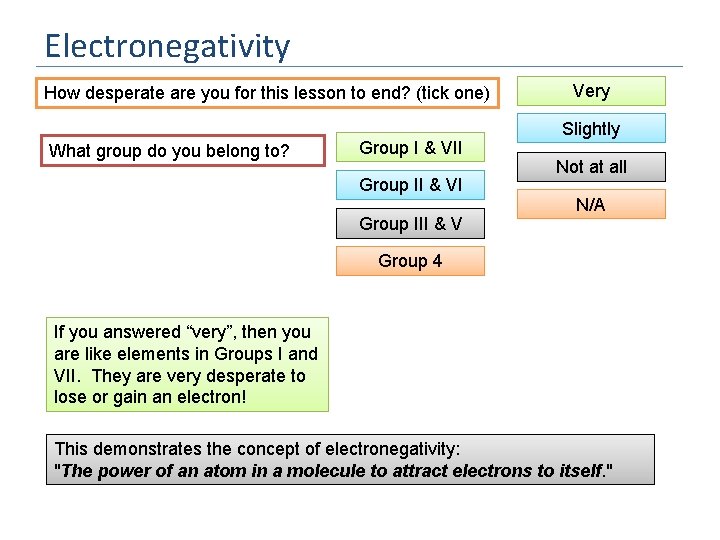
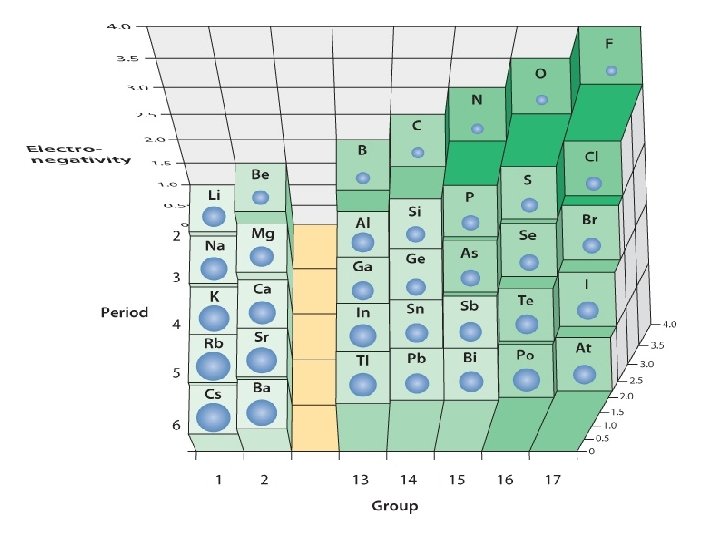
Electronegativity How desperate are you for this lesson to end? (tick one) What group do you belong to? Group I & VII Group II & VI Group III & V Very Slightly Not at all N/A Group 4 If you answered “very”, then you are like elements in Groups I and VII. They are very desperate to lose or gain an electron! This demonstrates the concept of electronegativity: "The power of an atom in a molecule to attract electrons to itself. "
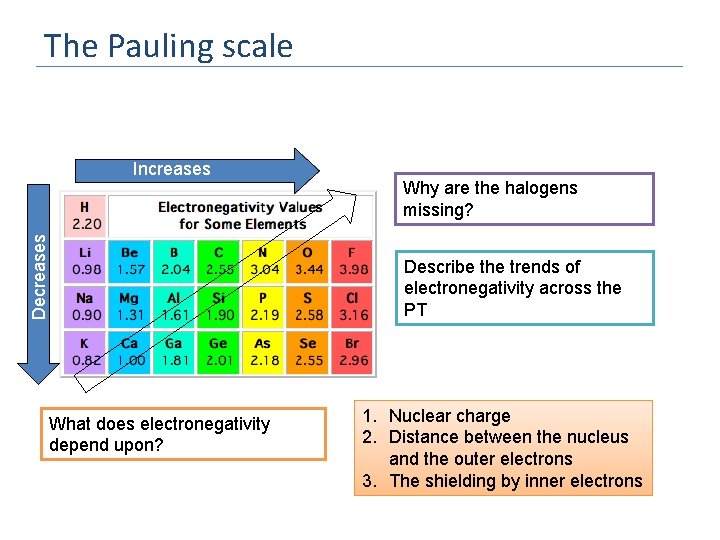
The Pauling scale Decreases Increases What does electronegativity depend upon? Why are the halogens missing? Describe the trends of electronegativity across the PT 1. Nuclear charge 2. Distance between the nucleus and the outer electrons 3. The shielding by inner electrons
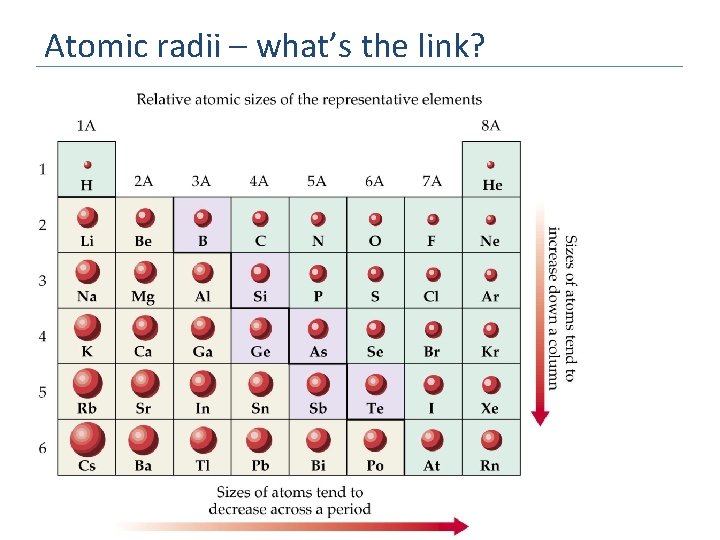
Atomic radii – what’s the link?
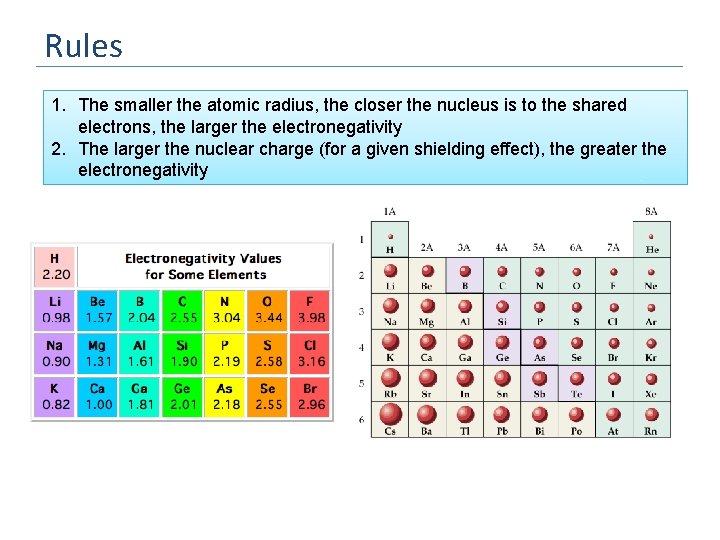
Rules 1. The smaller the atomic radius, the closer the nucleus is to the shared electrons, the larger the electronegativity 2. The larger the nuclear charge (for a given shielding effect), the greater the electronegativity
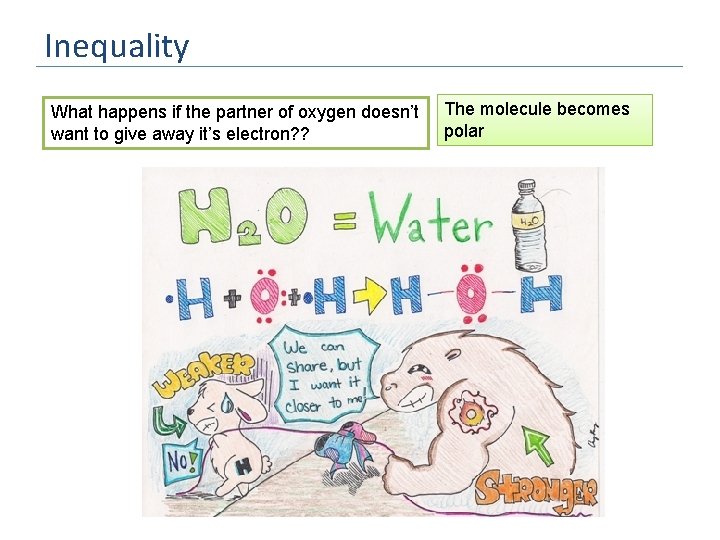
Inequality What happens if the partner of oxygen doesn’t want to give away it’s electron? ? The molecule becomes polar
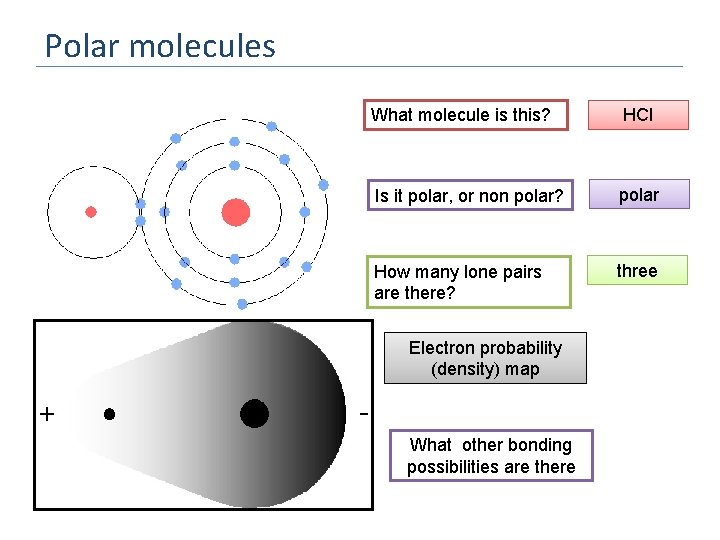
Polar molecules What molecule is this? HCl Is it polar, or non polar? polar How many lone pairs are there? three Electron probability (density) map What other bonding possibilities are there
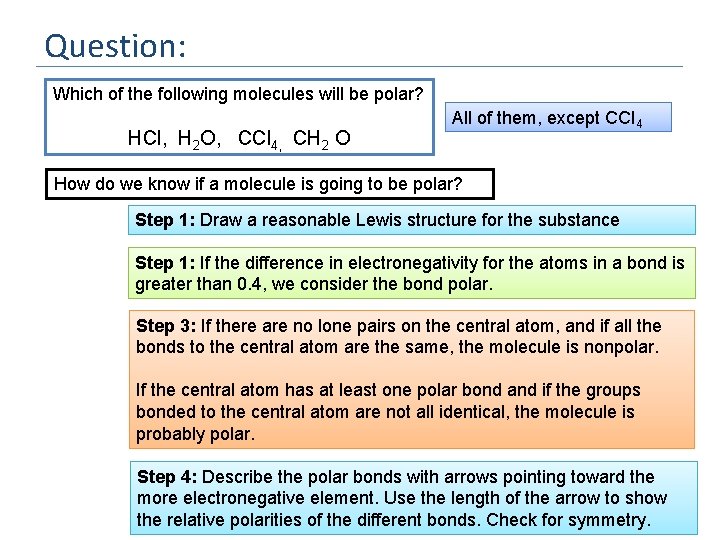
Question: Which of the following molecules will be polar? HCl, H 2 O, CCl 4, CH 2 O All of them, except CCl 4 How do we know if a molecule is going to be polar? Step 1: Draw a reasonable Lewis structure for the substance Step 1: If the difference in electronegativity for the atoms in a bond is greater than 0. 4, we consider the bond polar. Step 3: If there are no lone pairs on the central atom, and if all the bonds to the central atom are the same, the molecule is nonpolar. If the central atom has at least one polar bond and if the groups bonded to the central atom are not all identical, the molecule is probably polar. Step 4: Describe the polar bonds with arrows pointing toward the more electronegative element. Use the length of the arrow to show the relative polarities of the different bonds. Check for symmetry.
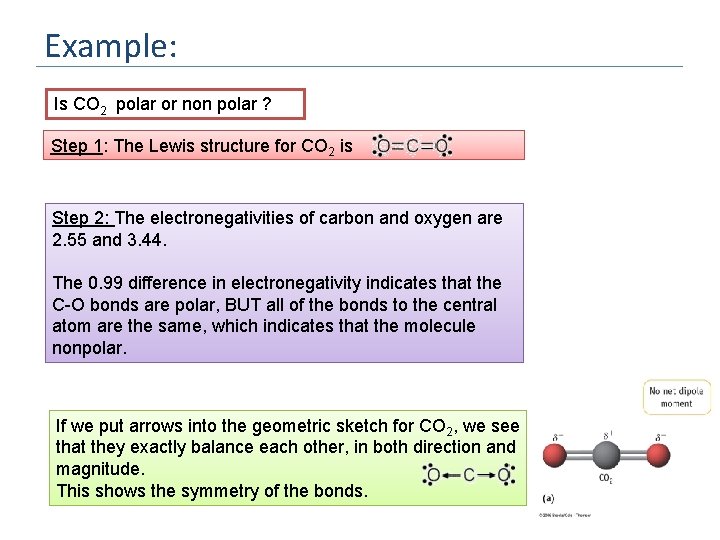
Example: Is CO 2 polar or non polar ? Step 1: The Lewis structure for CO 2 is Step 2: The electronegativities of carbon and oxygen are 2. 55 and 3. 44. The 0. 99 difference in electronegativity indicates that the C-O bonds are polar, BUT all of the bonds to the central atom are the same, which indicates that the molecule nonpolar. If we put arrows into the geometric sketch for CO 2, we see that they exactly balance each other, in both direction and magnitude. This shows the symmetry of the bonds.
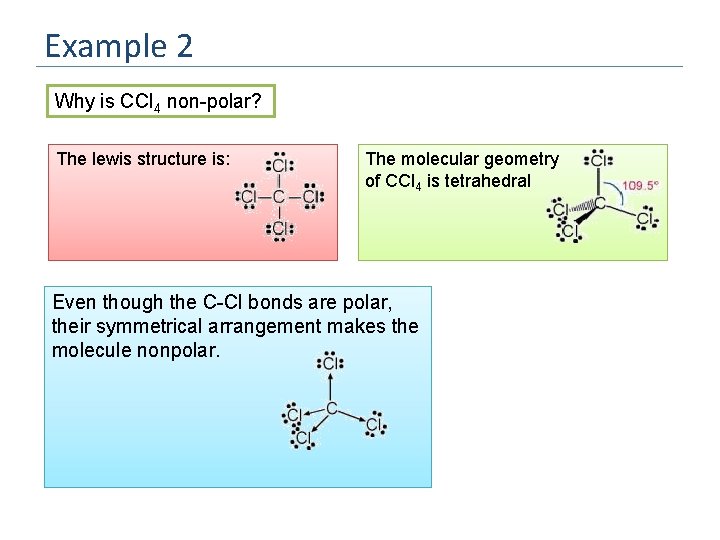
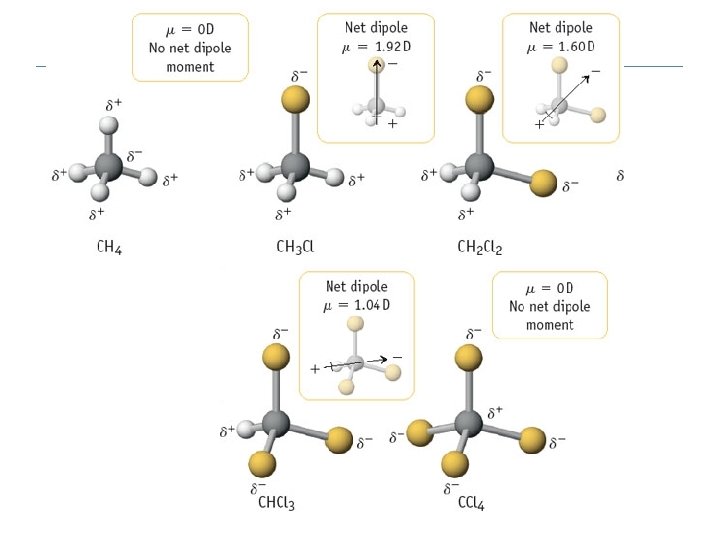
Example 2 Why is CCl 4 non-polar? The lewis structure is: The molecular geometry of CCl 4 is tetrahedral Even though the C-Cl bonds are polar, their symmetrical arrangement makes the molecule nonpolar.
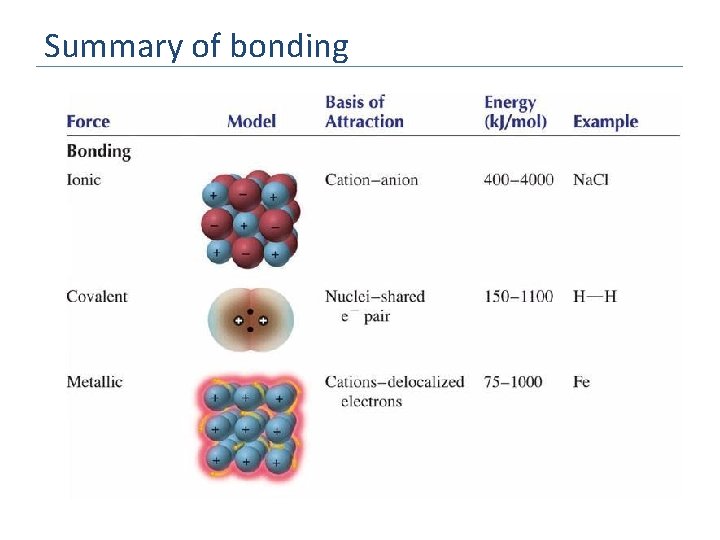
Summary of bonding
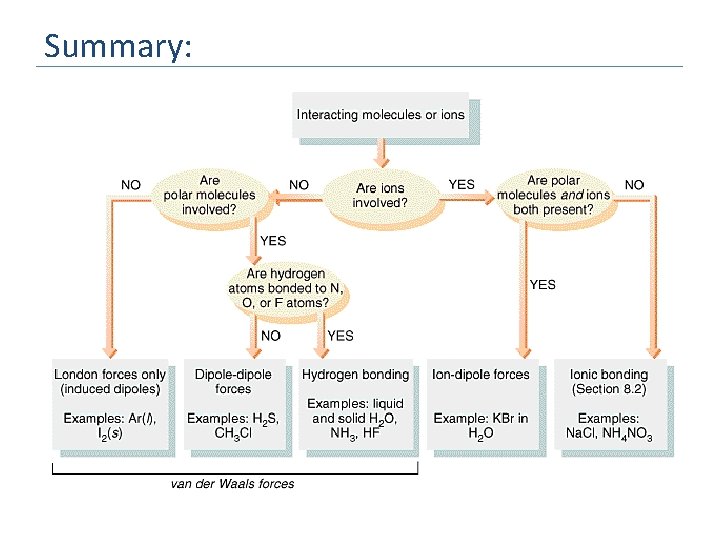
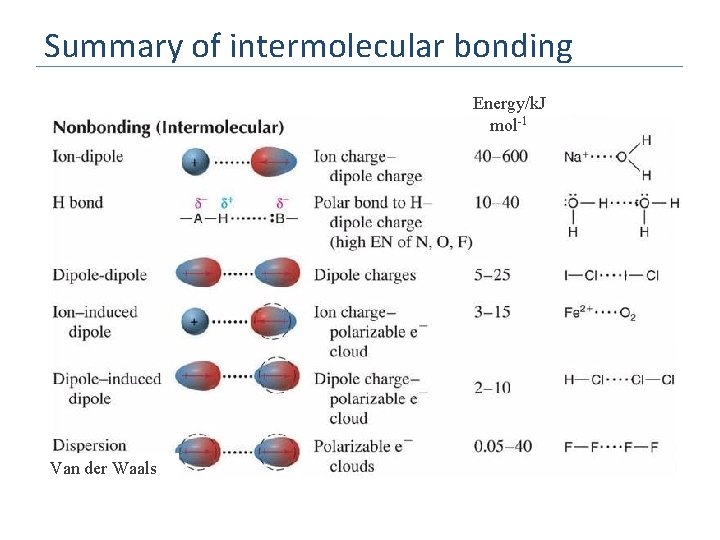
Other bonding possibilities There are three types of intermolecular force Ø van der Waals Ø dipole-dipole forces Ø hydrogen bonding Dipoles: Individual bonds can be polar, but molecules with polar bonds can also have a dipole moment caused by all of the polar bonds in the molecule. What is a turning moment? Turning moments are found where asymmetric forces operate

Dipoles What causes the intermolecular force? An unequal distribution of electron density due to the high e-negativity of Chlorine. It is an electrostatic force Uncharged molecule can still have an electric dipole moment. Electric Dipoles arise from opposite but equal charges separated by a distance. Molecules that possess a dipole moment are called Polar molecules
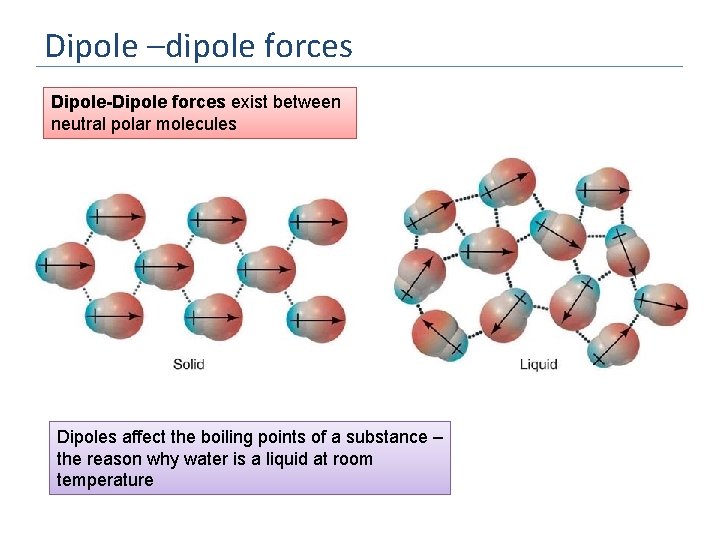
Dipole –dipole forces Dipole-Dipole forces exist between neutral polar molecules Dipoles affect the boiling points of a substance – the reason why water is a liquid at room temperature
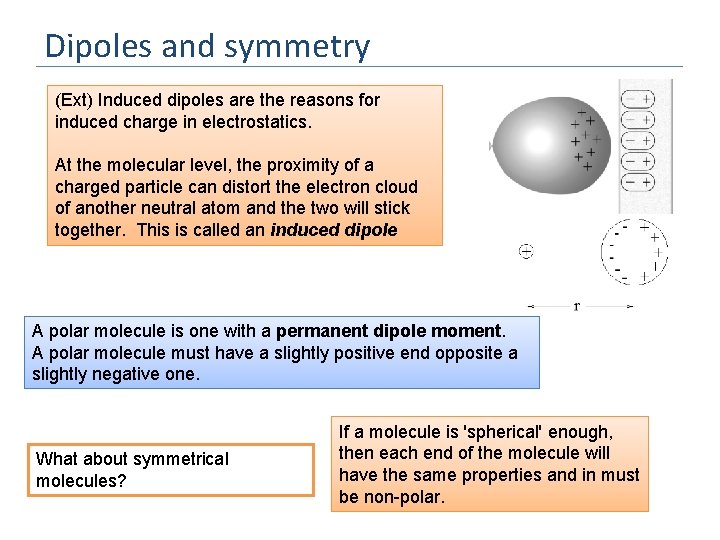
Dipoles and symmetry (Ext) Induced dipoles are the reasons for induced charge in electrostatics. At the molecular level, the proximity of a charged particle can distort the electron cloud of another neutral atom and the two will stick together. This is called an induced dipole A polar molecule is one with a permanent dipole moment. A polar molecule must have a slightly positive end opposite a slightly negative one. What about symmetrical molecules? If a molecule is 'spherical' enough, then each end of the molecule will have the same properties and in must be non-polar.
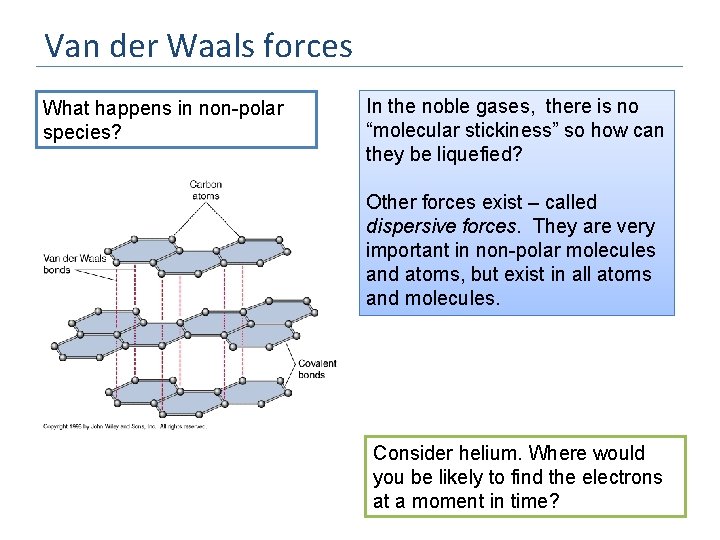
Van der Waals forces What happens in non-polar species? In the noble gases, there is no “molecular stickiness” so how can they be liquefied? Other forces exist – called dispersive forces. They are very important in non-polar molecules and atoms, but exist in all atoms and molecules. Consider helium. Where would you be likely to find the electrons at a moment in time?
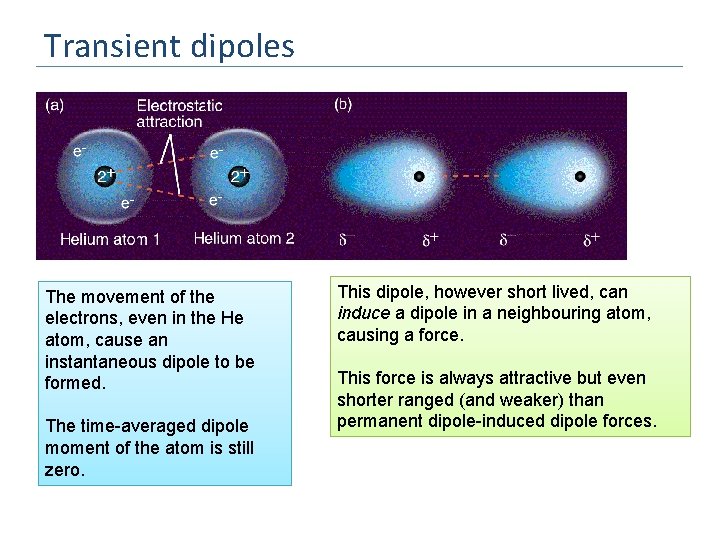
Transient dipoles The movement of the electrons, even in the He atom, cause an instantaneous dipole to be formed. The time-averaged dipole moment of the atom is still zero. This dipole, however short lived, can induce a dipole in a neighbouring atom, causing a force. This force is always attractive but even shorter ranged (and weaker) than permanent dipole-induced dipole forces.
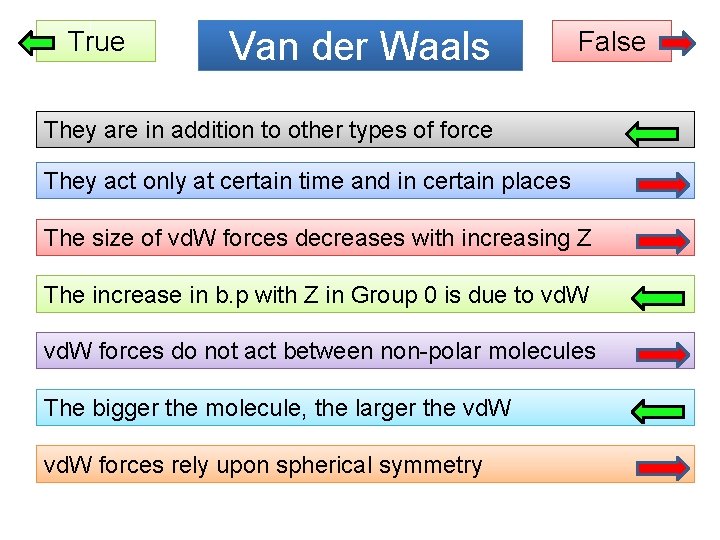
True Van der Waals False They are in addition to other types of force They act only at certain time and in certain places The size of vd. W forces decreases with increasing Z The increase in b. p with Z in Group 0 is due to vd. W forces do not act between non-polar molecules The bigger the molecule, the larger the vd. W forces rely upon spherical symmetry
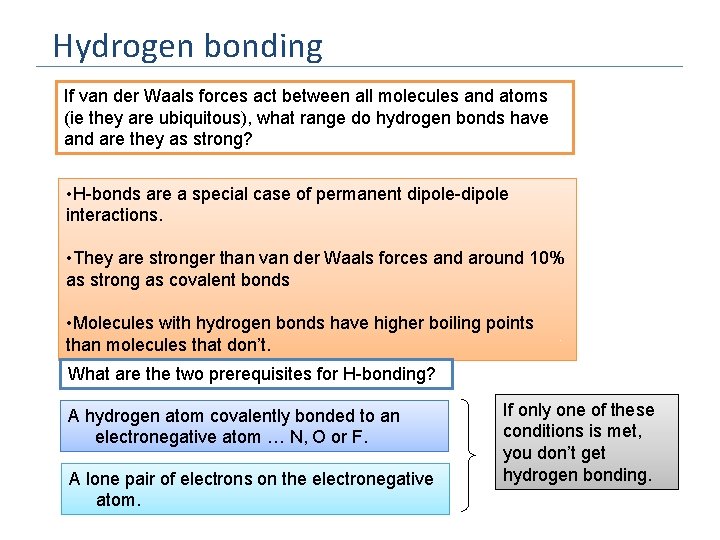
Hydrogen bonding If van der Waals forces act between all molecules and atoms (ie they are ubiquitous), what range do hydrogen bonds have and are they as strong? • H-bonds are a special case of permanent dipole-dipole interactions. • They are stronger than van der Waals forces and around 10% as strong as covalent bonds • Molecules with hydrogen bonds have higher boiling points than molecules that don’t. What are the two prerequisites for H-bonding? A hydrogen atom covalently bonded to an electronegative atom … N, O or F. A lone pair of electrons on the electronegative atom. If only one of these conditions is met, you don’t get hydrogen bonding.
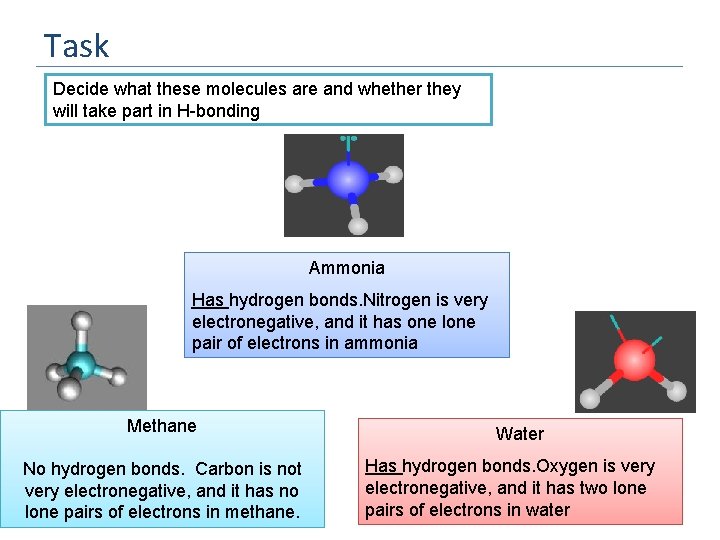
Task Decide what these molecules are and whether they will take part in H-bonding Ammonia Has hydrogen bonds. Nitrogen is very electronegative, and it has one lone pair of electrons in ammonia Methane No hydrogen bonds. Carbon is not very electronegative, and it has no lone pairs of electrons in methane. Water Has hydrogen bonds. Oxygen is very electronegative, and it has two lone pairs of electrons in water
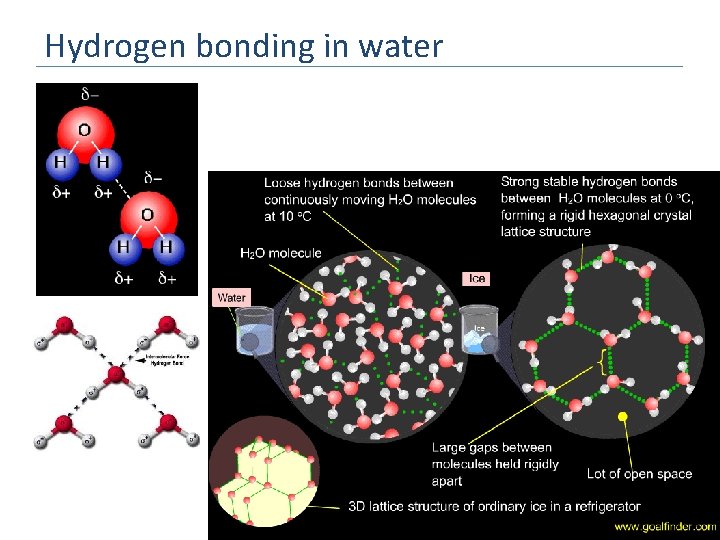
Hydrogen bonding in water
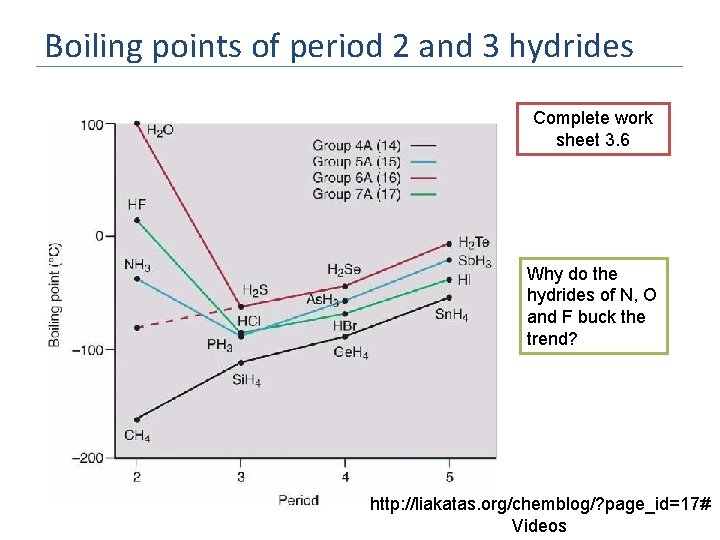
Boiling points of period 2 and 3 hydrides Complete work sheet 3. 6 Why do the hydrides of N, O and F buck the trend? http: //liakatas. org/chemblog/? page_id=17# Videos
Summary:
Summary of intermolecular bonding Energy/k. J mol-1 Van der Waals
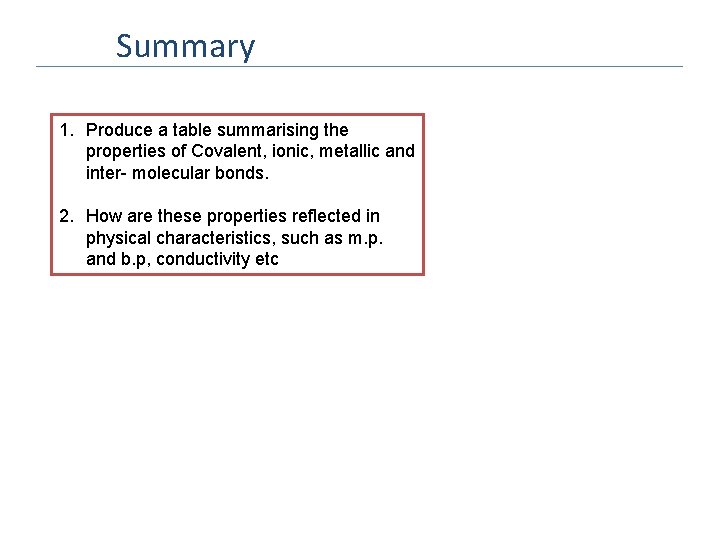
Summary 1. Produce a table summarising the properties of Covalent, ionic, metallic and inter- molecular bonds. 2. How are these properties reflected in physical characteristics, such as m. p. and b. p, conductivity etc
- Slides: 45