
Bonding INTRODUCTION FOR SCIENCE 10 Chemical Reactivity The
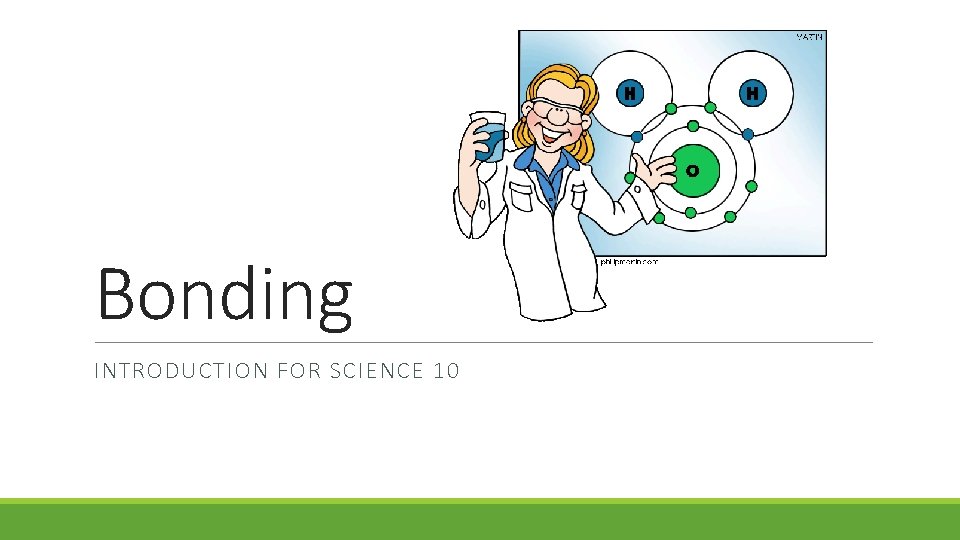
Bonding INTRODUCTION FOR SCIENCE 10
Chemical Reactivity • The reactivity of an element depends on the number of valence electrons. • If the outer shell of an atom already contains 8 valence electrons, this means the atom has a stable octet and is unreactive (e. g. noble gases). • If the outer shell has less than 8 valence electrons, the atom is unstable and reactive (e. g. fluorine). • In this case, electrons are transferred from one atom to another or shared between them so that the atoms can have the stable electron arrangements of the noble gases (8 valence electrons).
Ion Formation • Atoms that lose or gain electrons to become stable are called ions. • The ionic charge is the charge the element will take on if it loses or gains electrons. 1) Cations are metals that lose electrons and form positive ions (Na+). ◦ Some metals are polyvalent, meaning they can have more than one charge (Fe 2+ or Fe 3+). 2) Anions are non-metals which gain electrons and form negative ions (O-2).
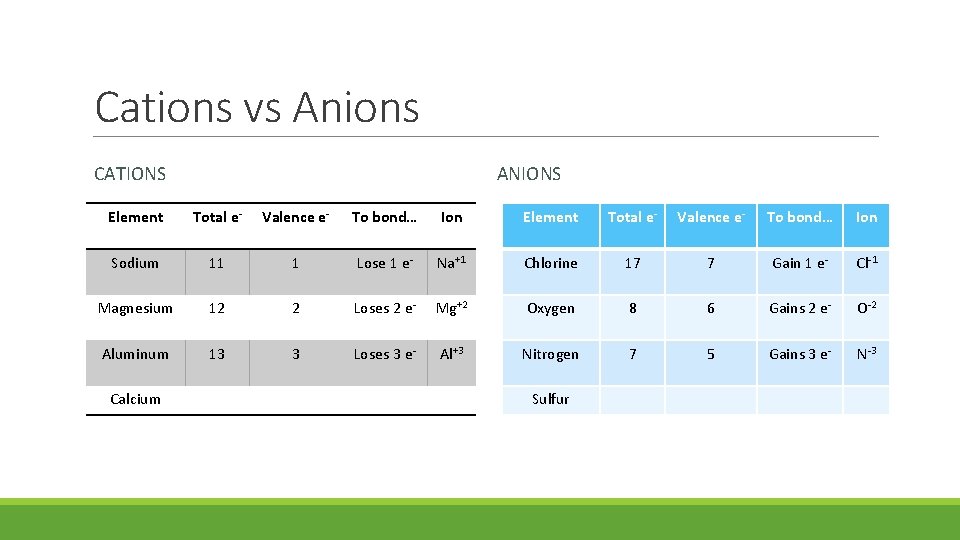
Cations vs Anions CATIONS ANIONS Element Total e- Valence e- To bond… Ion Sodium 11 1 Lose 1 e- Na+1 Chlorine 17 7 Gain 1 e- Cl-1 Magnesium 12 2 Loses 2 e- Mg+2 Oxygen 8 6 Gains 2 e- O-2 Aluminum 13 3 Loses 3 e- Al+3 Nitrogen 7 5 Gains 3 e- N-3 Calcium Sulfur

Forming Compounds • When atoms combine by transferring or sharing their electrons, they are said to have bonded and formed a compound. • Compounds can be formed by either ionic bonding or covalent bonding.
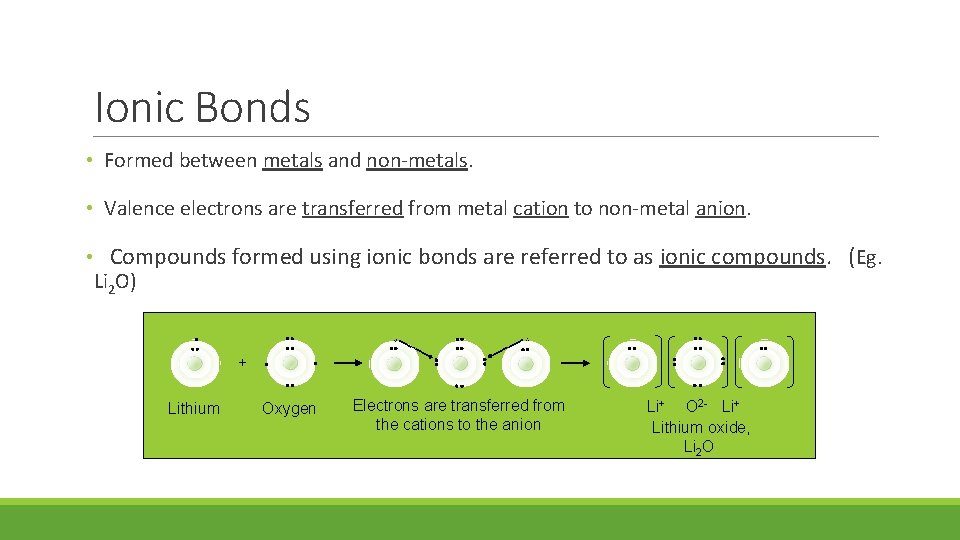
Ionic Bonds • Formed between metals and non-metals. • Valence electrons are transferred from metal cation to non-metal anion. • Compounds formed using ionic bonds are referred to as ionic compounds. (Eg. Li 2 O) + Lithium Oxygen Electrons are transferred from the cations to the anion Li+ O 2 - Li+ Lithium oxide, Li 2 O
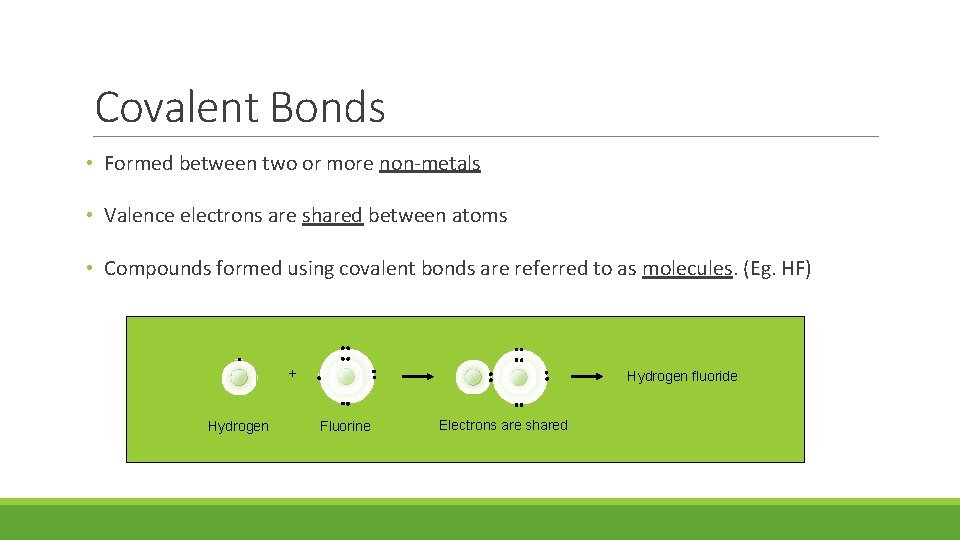
Covalent Bonds • Formed between two or more non-metals • Valence electrons are shared between atoms • Compounds formed using covalent bonds are referred to as molecules. (Eg. HF) + Hydrogen fluoride Fluorine Electrons are shared
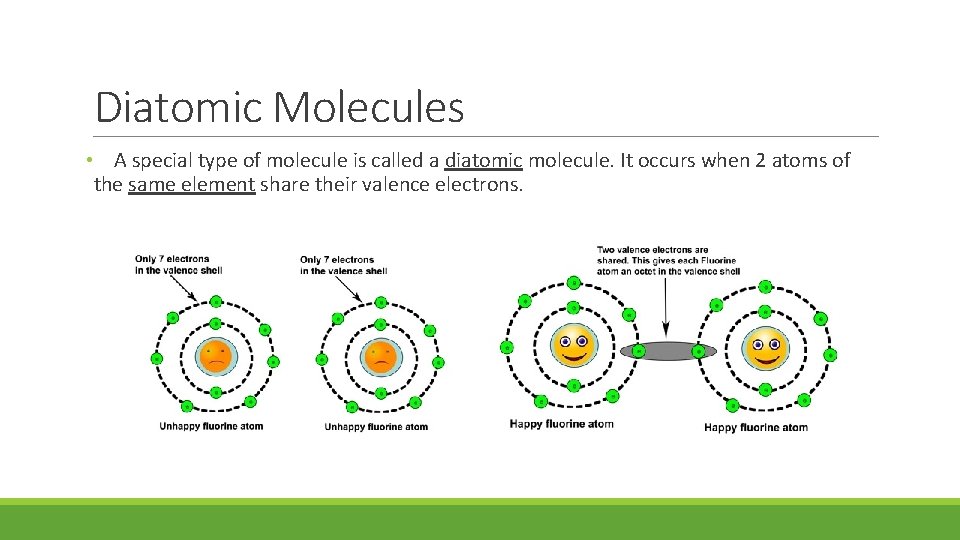
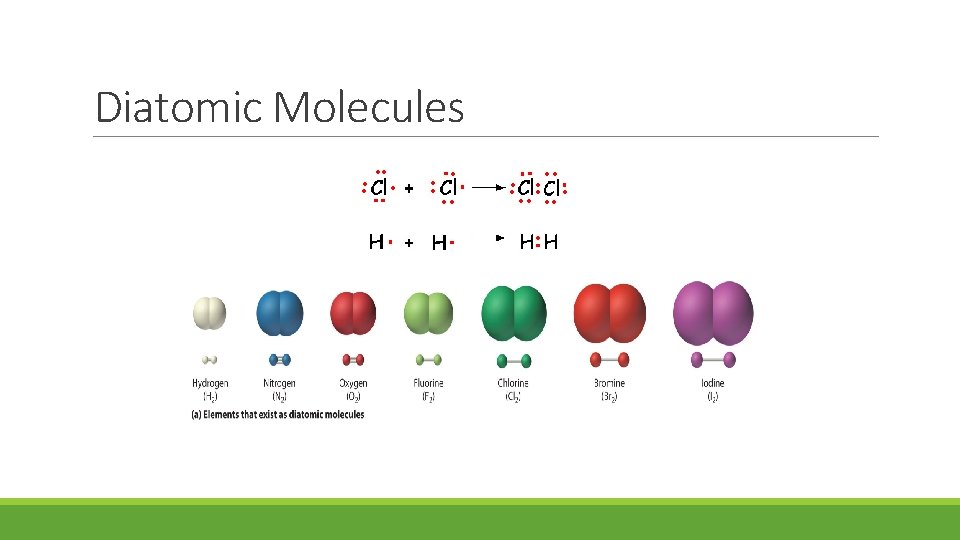
Diatomic Molecules • A special type of molecule is called a diatomic molecule. It occurs when 2 atoms of the same element share their valence electrons.
Diatomic Molecules
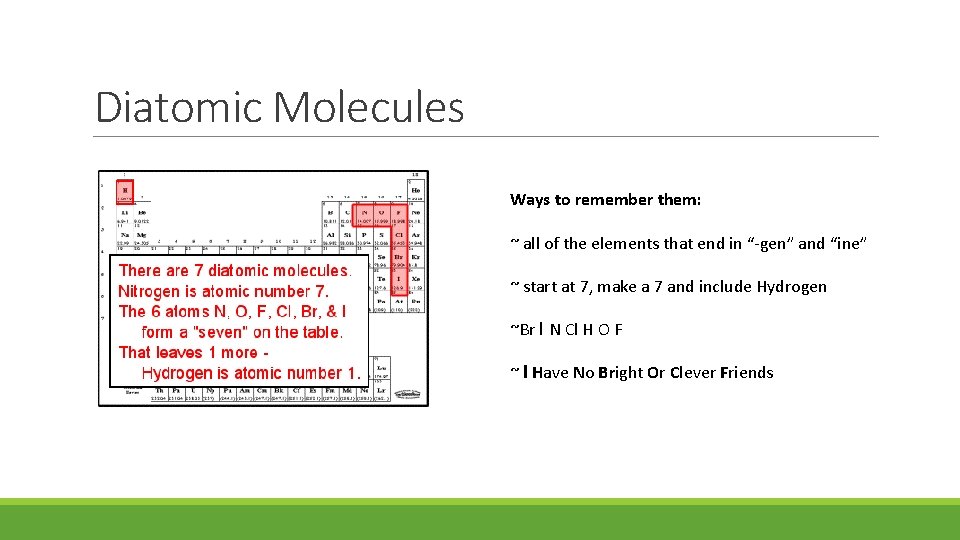
Diatomic Molecules Ways to remember them: ~ all of the elements that end in “-gen” and “ine” ~ start at 7, make a 7 and include Hydrogen ~Br I N Cl H O F ~ I Have No Bright Or Clever Friends
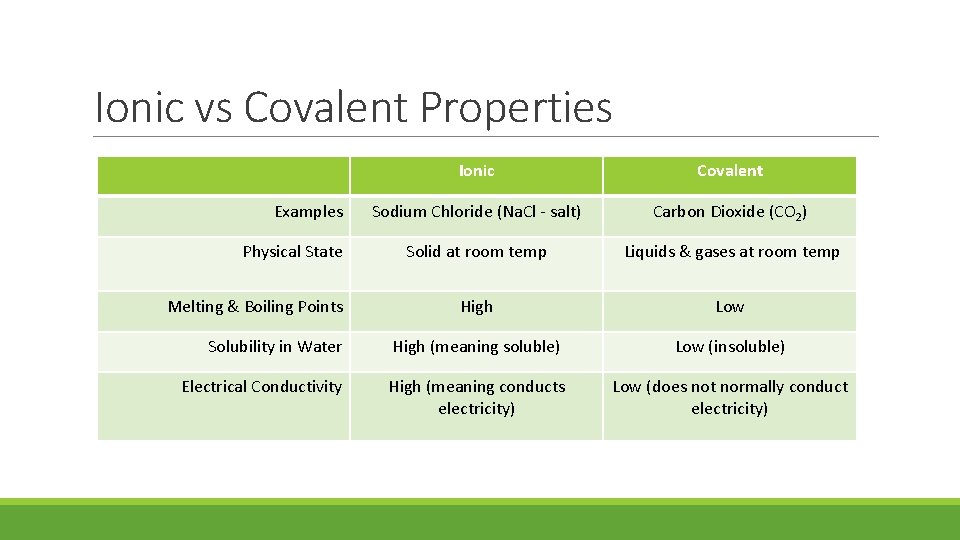
Ionic vs Covalent Properties Ionic Covalent Sodium Chloride (Na. Cl - salt) Carbon Dioxide (CO 2) Solid at room temp Liquids & gases at room temp High Low Solubility in Water High (meaning soluble) Low (insoluble) Electrical Conductivity High (meaning conducts electricity) Low (does not normally conduct electricity) Examples Physical State Melting & Boiling Points

Any questions?
- Slides: 12