
Bonding General Concepts Coulombs Law Lattice Energy Bond
Bonding – General Concepts Coulomb’s Law, Lattice Energy, Bond E
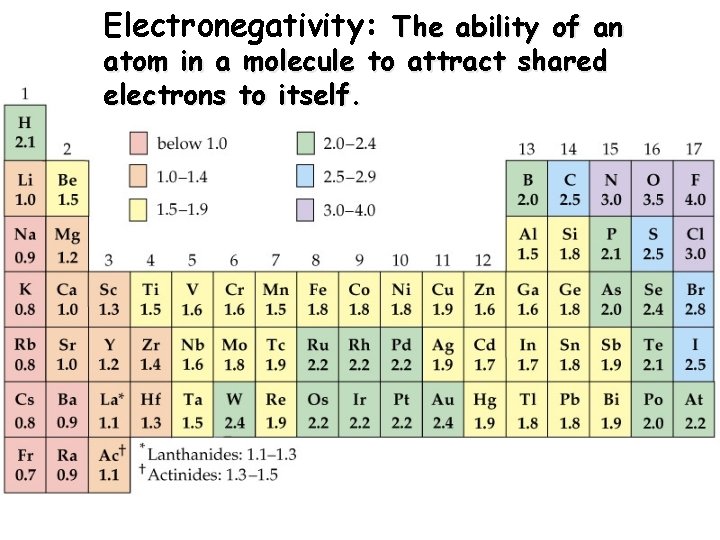
Electronegativity: The ability of an atom in a molecule to attract shared electrons to itself.
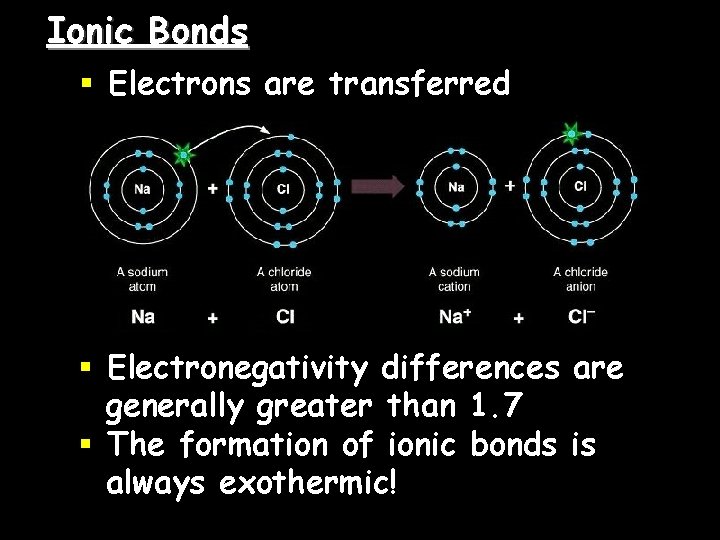
Ionic Bonds § Electrons are transferred § Electronegativity differences are generally greater than 1. 7 § The formation of ionic bonds is always exothermic!
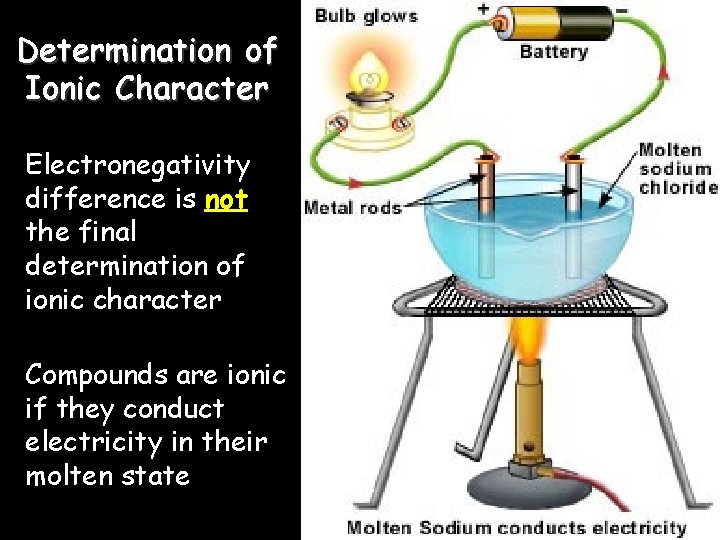
Determination of Ionic Character Electronegativity difference is not the final determination of ionic character Compounds are ionic if they conduct electricity in their molten state
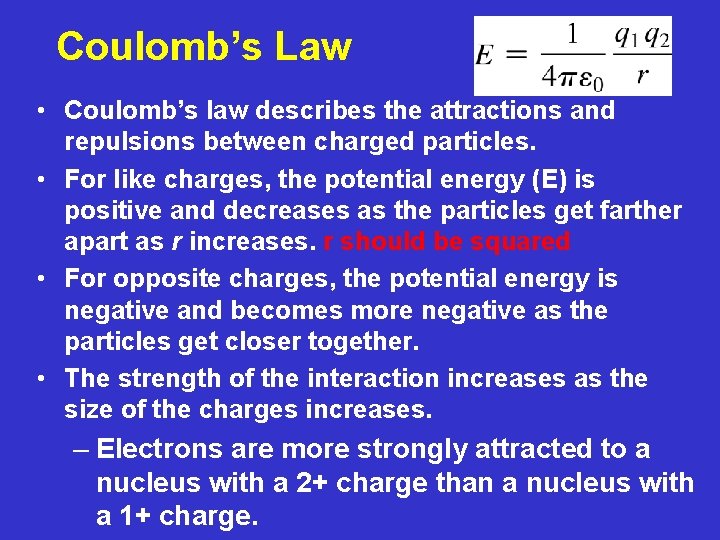
Coulomb’s Law • Coulomb’s law describes the attractions and repulsions between charged particles. • For like charges, the potential energy (E) is positive and decreases as the particles get farther apart as r increases. r should be squared • For opposite charges, the potential energy is negative and becomes more negative as the particles get closer together. • The strength of the interaction increases as the size of the charges increases. – Electrons are more strongly attracted to a nucleus with a 2+ charge than a nucleus with a 1+ charge.
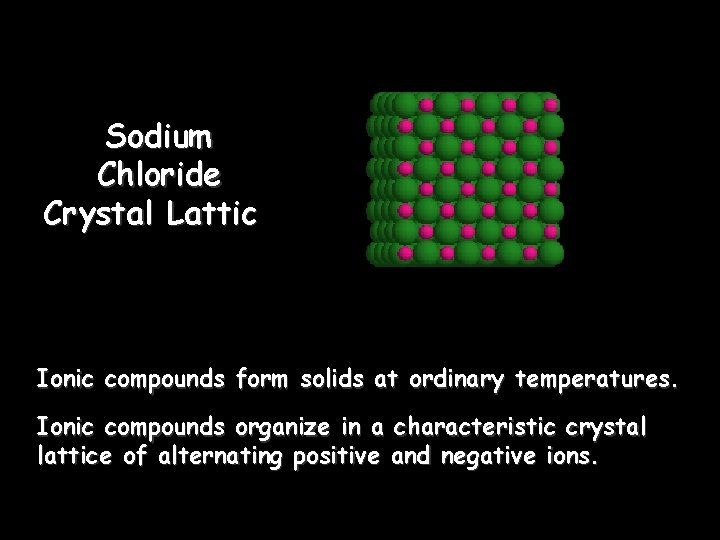
Sodium Chloride Crystal Lattice Ionic compounds form solids at ordinary temperatures. Ionic compounds organize in a characteristic crystal lattice of alternating positive and negative ions.

Lattice Energy Steps
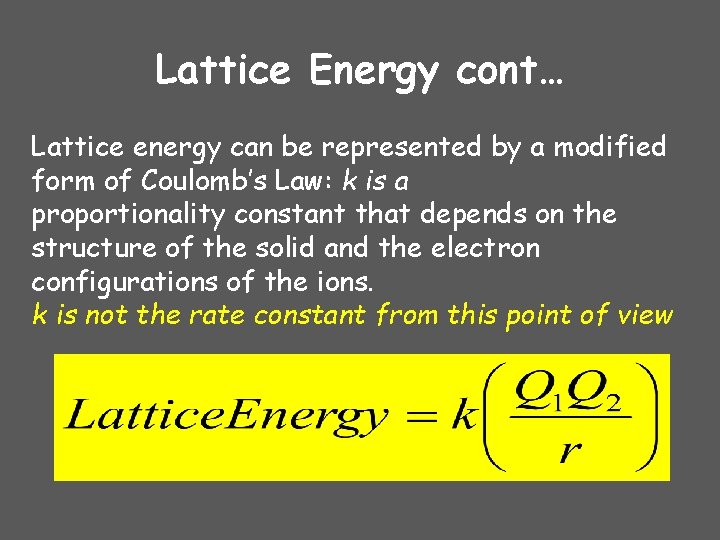
Lattice Energy cont… Lattice energy can be represented by a modified form of Coulomb’s Law: k is a proportionality constant that depends on the structure of the solid and the electron configurations of the ions. k is not the rate constant from this point of view
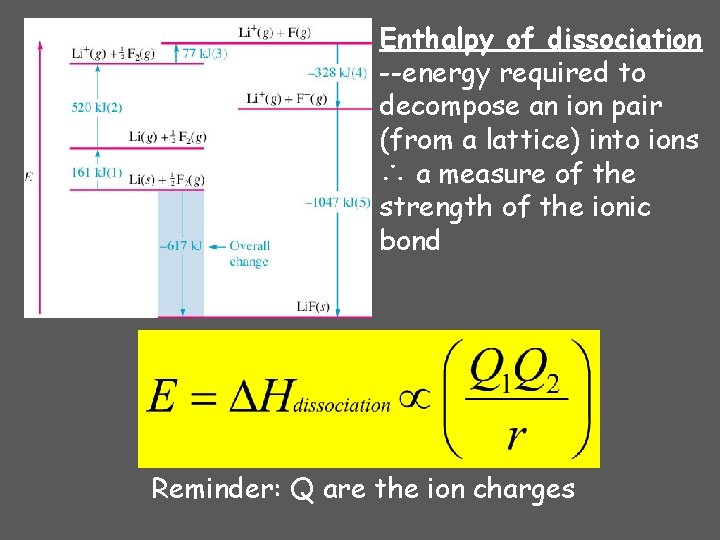
Enthalpy of dissociation --energy required to decompose an ion pair (from a lattice) into ions ∴ a measure of the strength of the ionic bond Reminder: Q are the ion charges
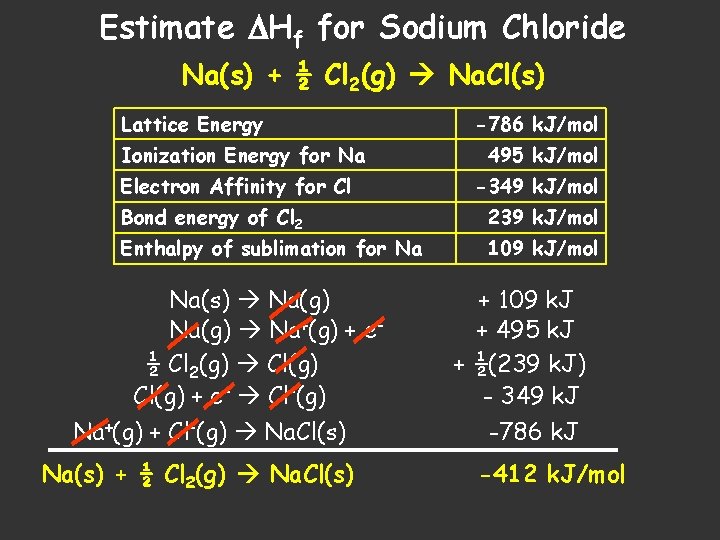
Estimate Hf for Sodium Chloride Na(s) + ½ Cl 2(g) Na. Cl(s) Lattice Energy Ionization Energy for Na Electron Affinity for Cl -786 k. J/mol 495 k. J/mol -349 k. J/mol Bond energy of Cl 2 239 k. J/mol Enthalpy of sublimation for Na 109 k. J/mol Na(s) Na(g) Na+(g) + e½ Cl 2(g) Cl(g) + e- Cl-(g) Na+(g) + Cl-(g) Na. Cl(s) Na(s) + ½ Cl 2(g) Na. Cl(s) + 109 k. J + 495 k. J + ½(239 k. J) - 349 k. J -786 k. J -412 k. J/mol
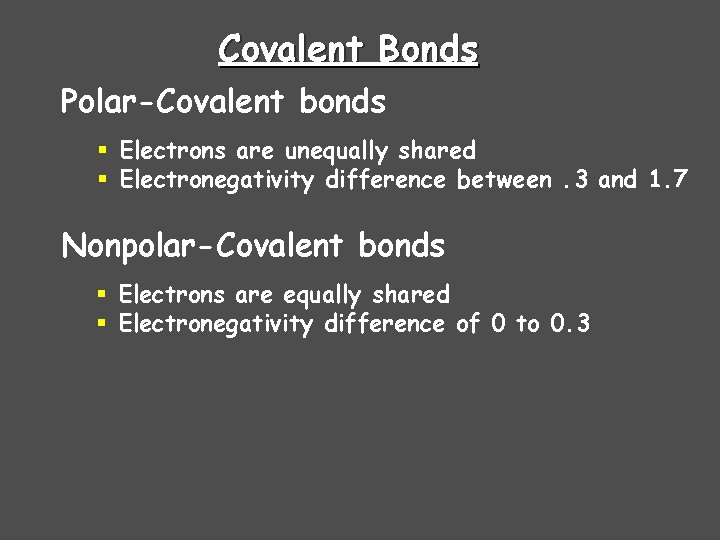
Covalent Bonds Polar-Covalent bonds § Electrons are unequally shared § Electronegativity difference between. 3 and 1. 7 Nonpolar-Covalent bonds § Electrons are equally shared § Electronegativity difference of 0 to 0. 3
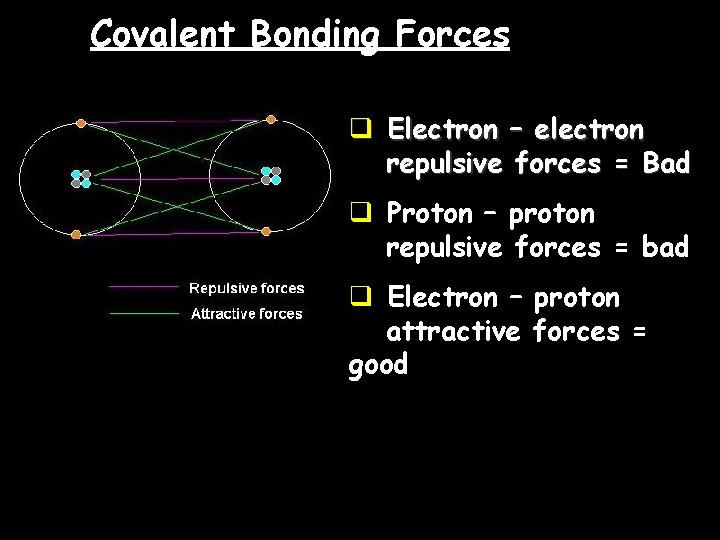
Covalent Bonding Forces q Electron – electron repulsive forces = Bad q Proton – proton repulsive forces = bad q Electron – proton attractive forces = good
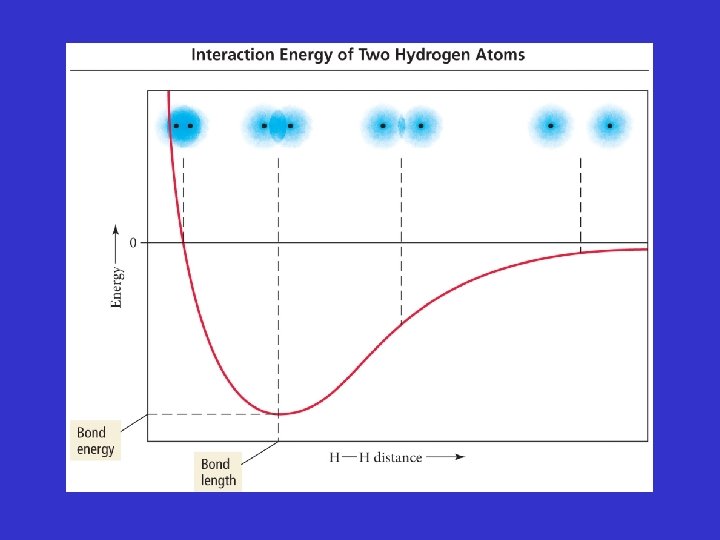
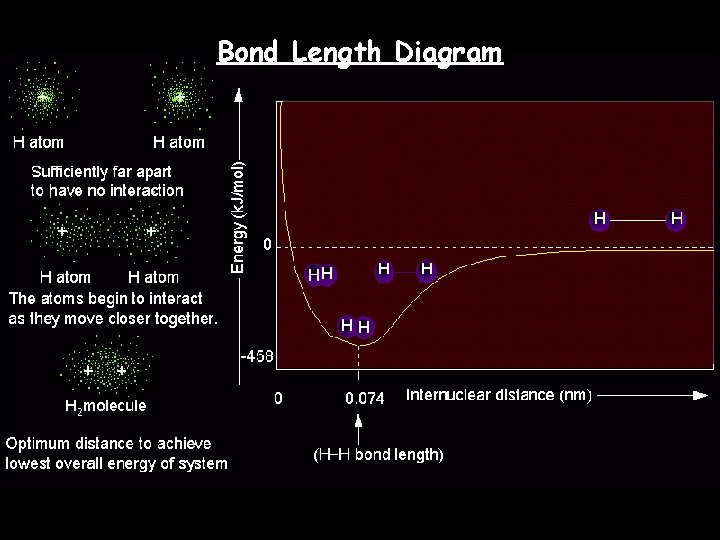
Bond Length Diagram
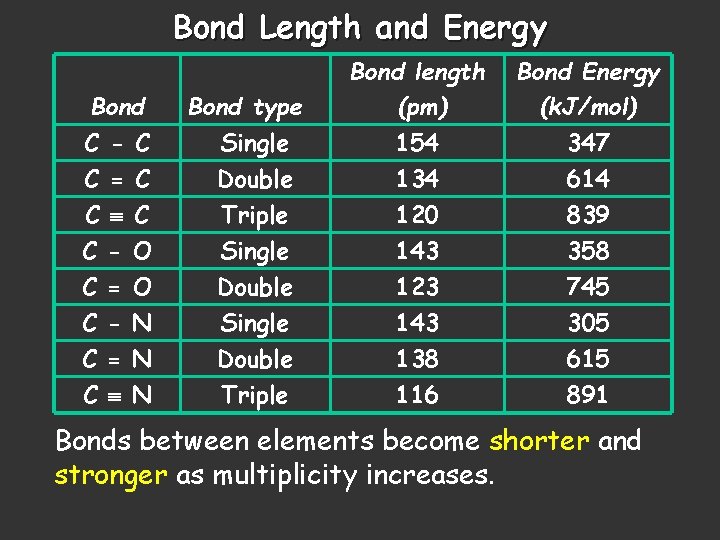
Bond Length and Energy Bond type Bond length (pm) Bond Energy (k. J/mol) C - C C = C Single Double 154 134 347 614 C C C Triple Single Double Triple 120 143 123 143 138 116 839 358 745 305 615 891 = = C O O N N N Bonds between elements become shorter and stronger as multiplicity increases.
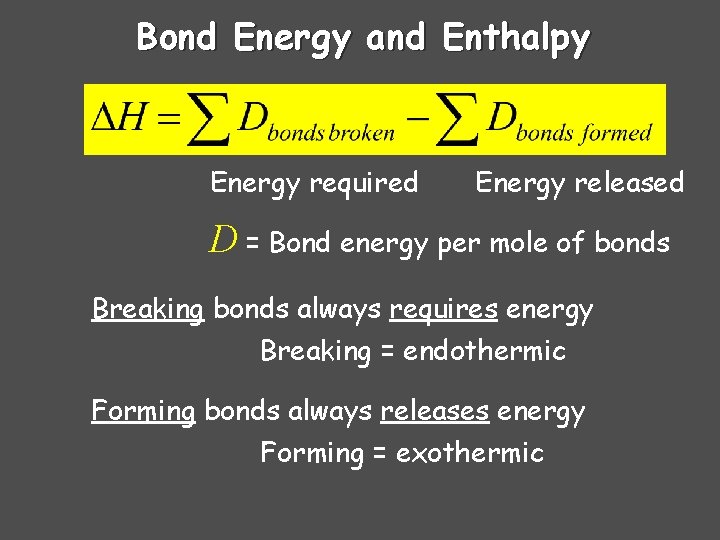
Bond Energy and Enthalpy Energy required Energy released D = Bond energy per mole of bonds Breaking bonds always requires energy Breaking = endothermic Forming bonds always releases energy Forming = exothermic
- Slides: 16