
Bonding and Imprinting ED 1 Animal Management Week
Bonding and Imprinting ED 1 Animal Management Week 12 Unit 310 - Understanding and interpreting animal behaviour and communication Kirsty Broxton Adapted by Nicki Cadge & Jo Saunders 2016
Aims and Objectives Identify what bonding and imprinting is and how these are used in the animal kingdom. Discuss the differences between filial and sexual imprinting. Identify the differences and similarities between bonding in mammals and imprinting in birds. Investigate the effects of imprinting and bonding on wild and domestic animals.
Survival and imprinting What do all animals need to know in order to successfully survive? § § § Predators/who to avoid What or who to eat Know who are friends/allies Who to mate with What to say to who and when What I am (what species)
Survival and Imprinting Which individuals do animals need to recognise and why? § § § § Predators Enemies Friends Prey Parents Siblings Mates
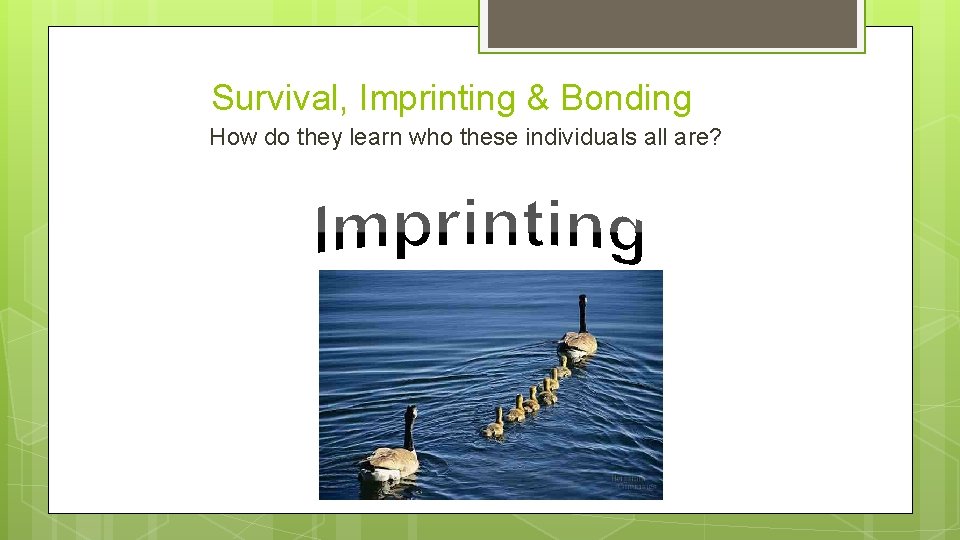
Survival, Imprinting & Bonding How do they learn who these individuals all are?
Imprinting 5 Minutes Write your own definition for imprinting. What is your current knowledge of imprinting? Imprinting can be defined as: ‘The learning of a critical feature in the environment, such as the identity of a parent, at a young age and the retention of this knowledge for later use’.
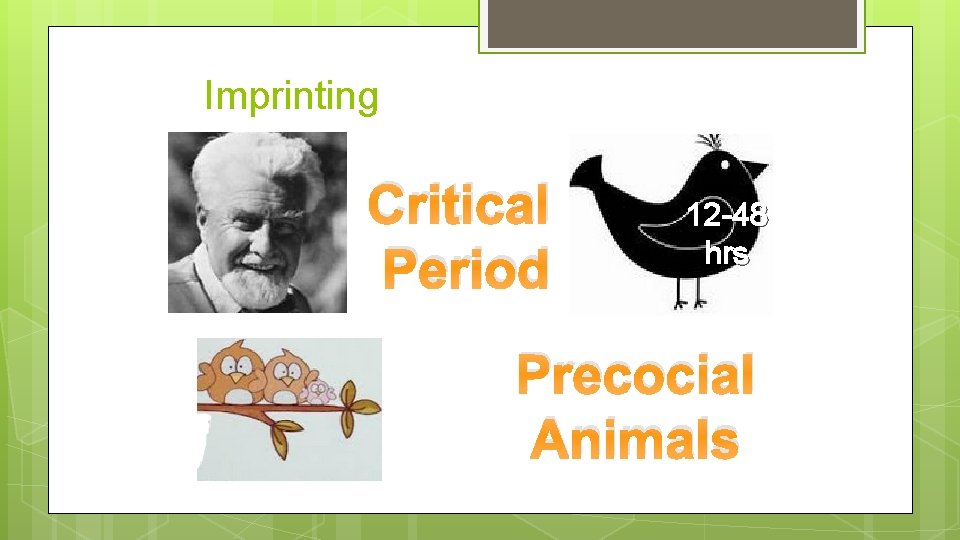
Imprinting Critical Period 12 -48 hrs Precocial Animals
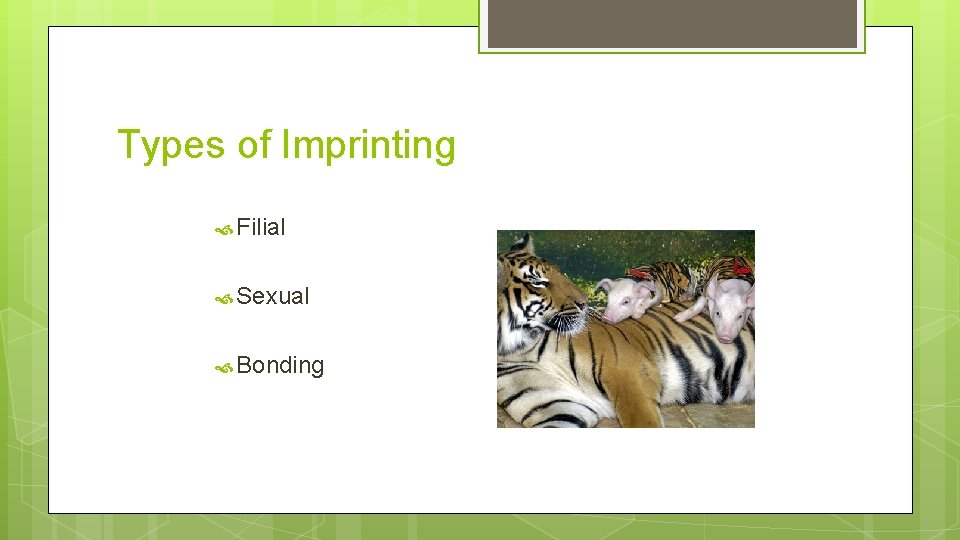
Types of Imprinting Filial Sexual Bonding
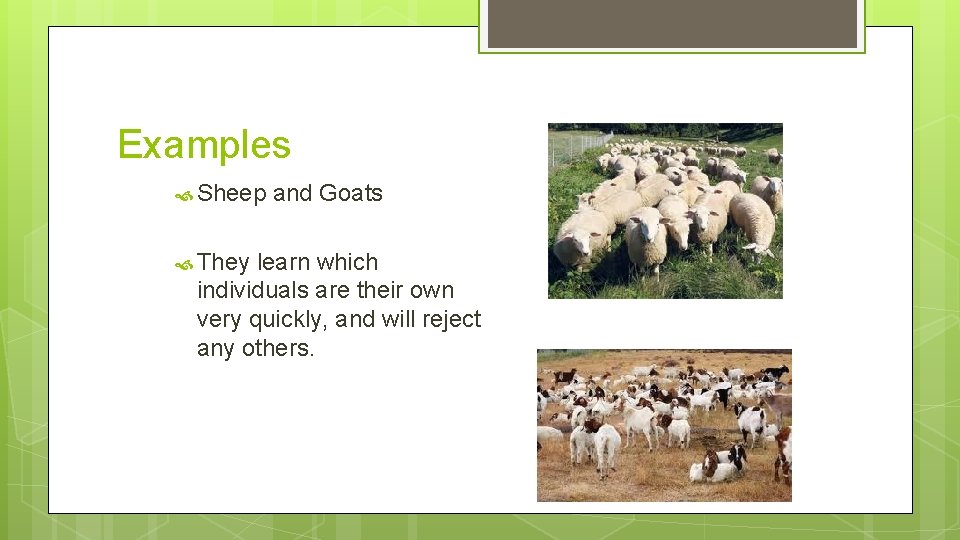
Examples Sheep They and Goats learn which individuals are their own very quickly, and will reject any others.
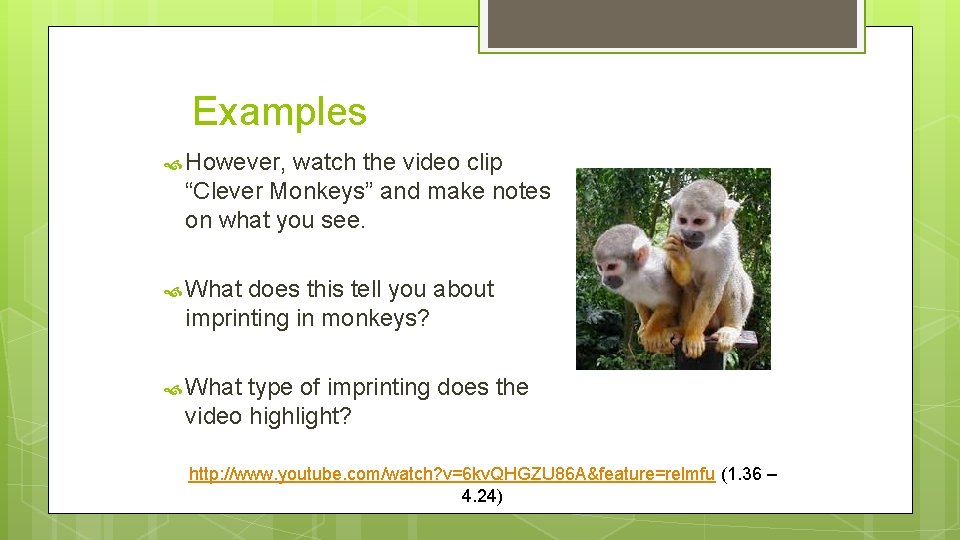
Examples However, watch the video clip “Clever Monkeys” and make notes on what you see. What does this tell you about imprinting in monkeys? What type of imprinting does the video highlight? http: //www. youtube. com/watch? v=6 kv. QHGZU 86 A&feature=relmfu (1. 36 – 4. 24)
Filial Imprinting This is the most studied form of imprinting Where newly hatched birds fixate themselves on characteristics of one or both parents.
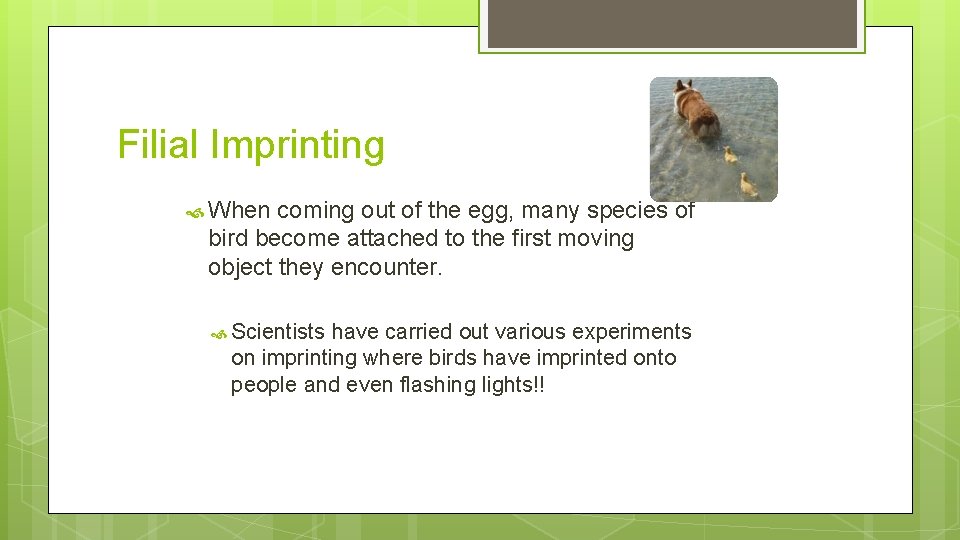
Filial Imprinting When coming out of the egg, many species of bird become attached to the first moving object they encounter. Scientists have carried out various experiments on imprinting where birds have imprinted onto people and even flashing lights!!
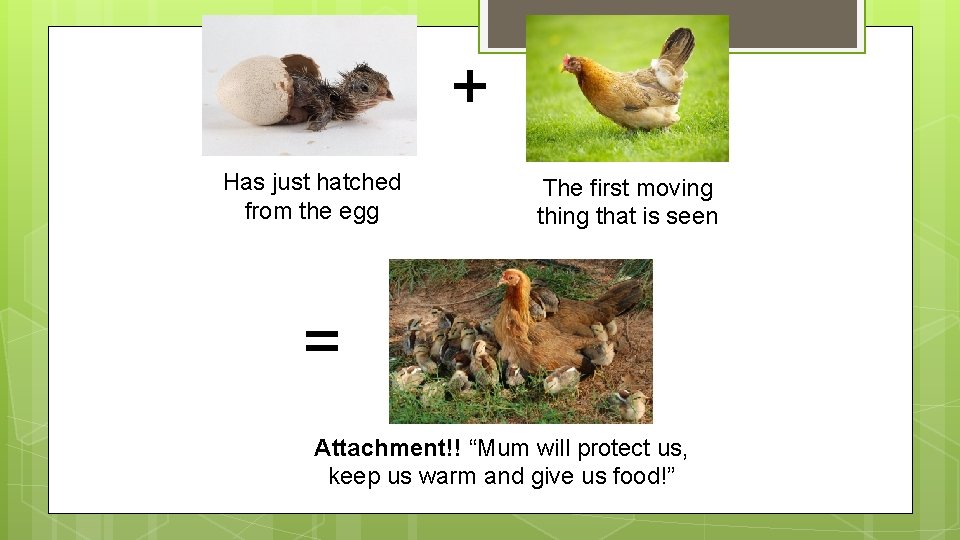
+ Has just hatched from the egg The first moving that is seen = Attachment!! “Mum will protect us, keep us warm and give us food!”
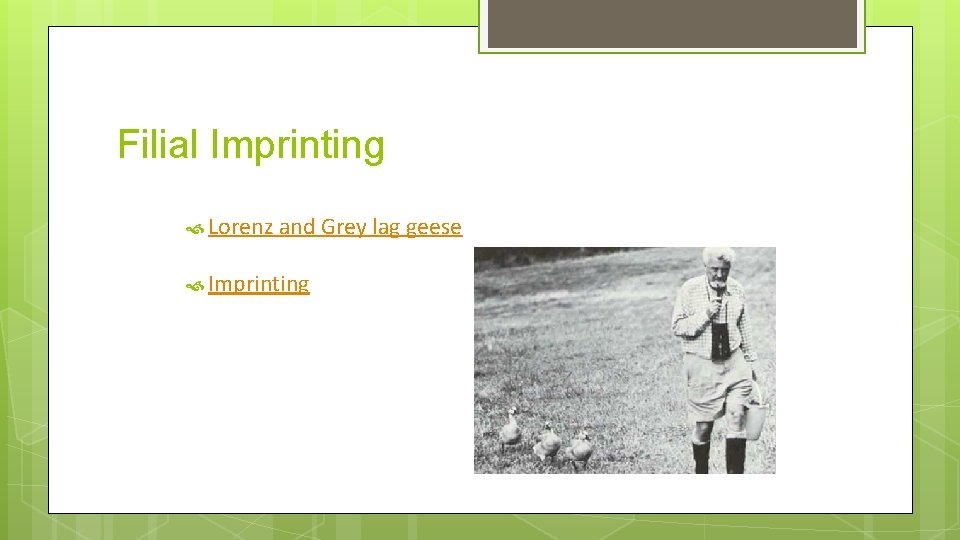
Filial Imprinting Lorenz and Grey lag geese Imprinting
Problems with Imprinting is fast and normally found in young animals. It is classed separately to other types of learning as it happens during a very specific, sensitive stage of an animal’s life and can be irreversible. What problems can it present?
Filial Imprinting Read the article (Not such a bird-brained idea) and answer the following questions: What impact does filial imprinting have in terms of keeping captive birds? What has been put into place to assist the rehabilitation of the owl chicks? http: //www. dailymail. co. uk/news/article-1269739/Not-bird-brainedidea-Owl-puppet-used-feed-rescued-wild-tawny-owlets. html
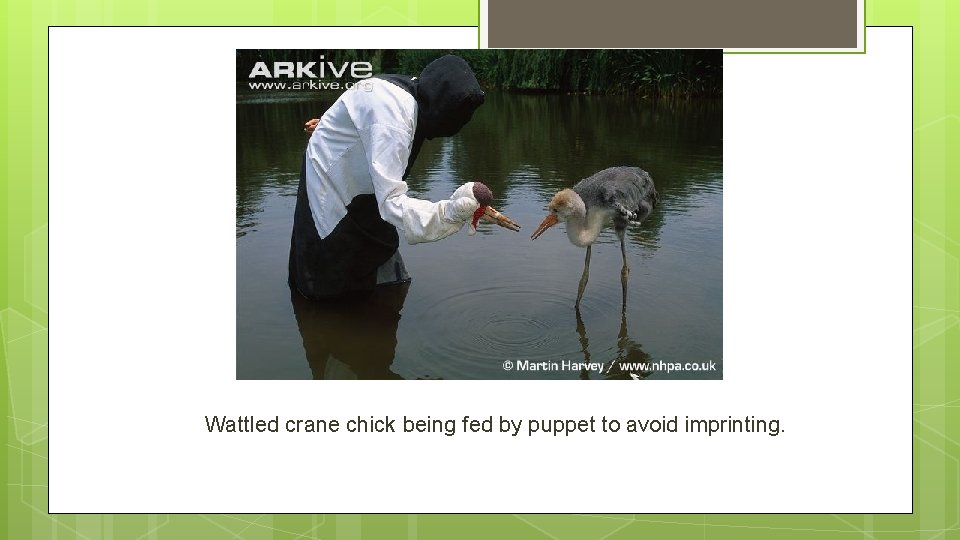
Wattled crane chick being fed by puppet to avoid imprinting.
Imprinting and Conservation Approximately species). 1, 200 bird species are endangered (12. 5% of all Many of these birds are in breeding programmes in order to preserve genetic variation and prevent extinction. The following task will aid you in understanding why imprinting is a problem in practical conservation management and will assist you in applying your behavioural knowledge to a real-life scenario.
Task Read the information you have been given on the Californian Condor and answer the following questions: 1. Why has the condor become endangered? 2. What is currently being done to aid in the conservation of this species? 3. Why must condor chicks be removed from their mother? 4. How could imprinting potentially affect the success of this programme? 5. What might happen if birds that were to be released had imprinted on humans? 6. How do keepers stop imprinting from occurring? 7. Is the programme a success? 15 Minutes
- Slides: 20