
Bolt vs Screw The battle of the fasteners
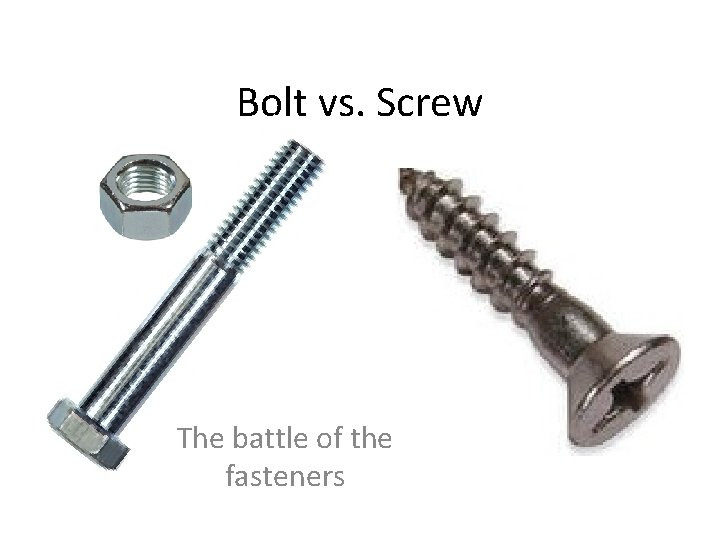
Bolt vs. Screw The battle of the fasteners
Bolt vs. Screw Bolt - an externally threaded headed fastener, which is used in conjunction with a nut. Screw- an externally threaded headed fastener which is tightened by applying torque to the head, causing it to be threaded into the material it will hold.
Activity • Dump the container of fasteners on the table in front of you. • Sort the fasteners into bolts and screws. • You have 1 minute to complete the assignment.
How are bolts and nuts made? • Complete assessment questions 2 -6 during the video
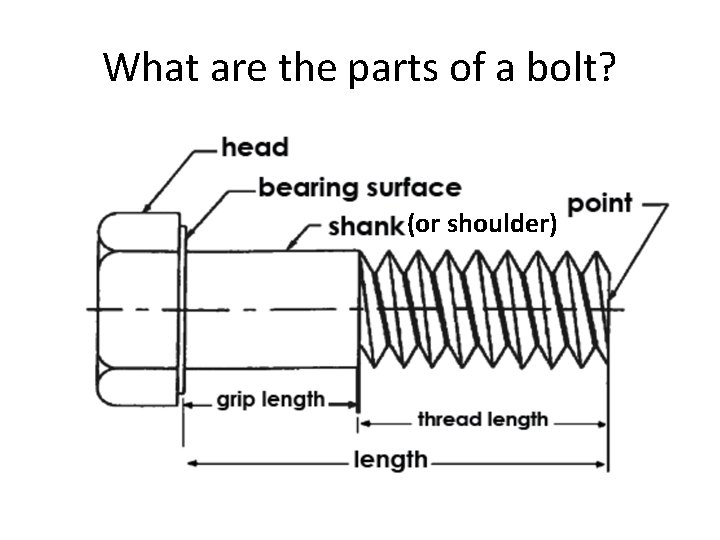
What are the parts of a bolt? (or shoulder)
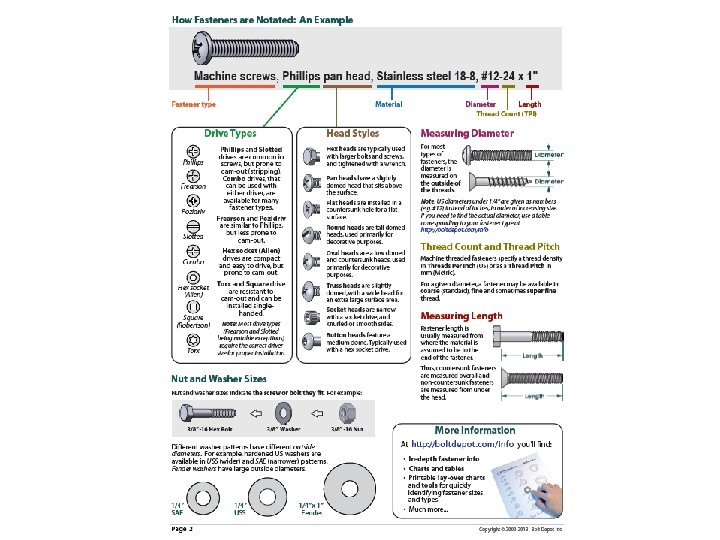
How do you name a bolt? • • Fastener type Drive type Head style Material Diameter Thread count (TPI) Length
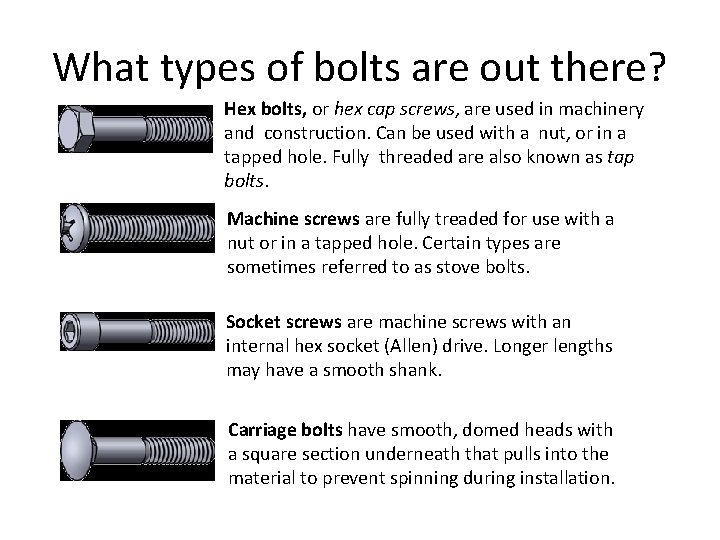
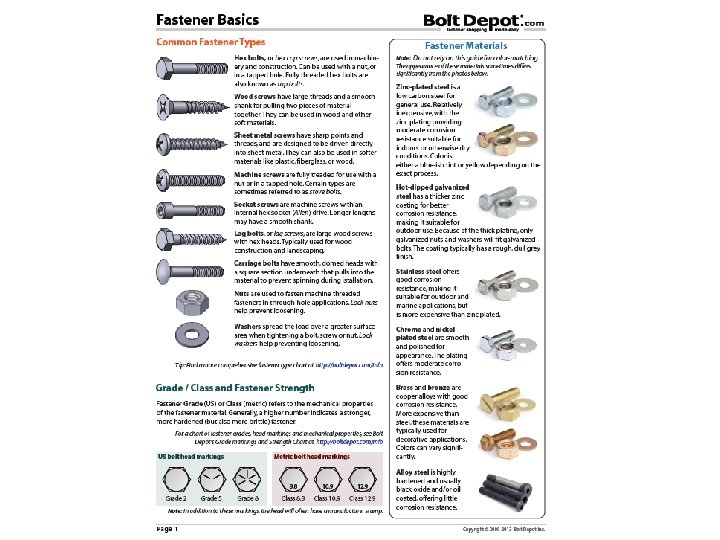
What types of bolts are out there? Hex bolts, or hex cap screws, are used in machinery and construction. Can be used with a nut, or in a tapped hole. Fully threaded are also known as tap bolts. Machine screws are fully treaded for use with a nut or in a tapped hole. Certain types are sometimes referred to as stove bolts. Socket screws are machine screws with an internal hex socket (Allen) drive. Longer lengths may have a smooth shank. Carriage bolts have smooth, domed heads with a square section underneath that pulls into the material to prevent spinning during installation.
Activity • ID the four type of bolts from the fasteners in front of you. • You have 30 seconds to complete this activity.

What are the bolt drive types? Phillips and Frearson An X-shaped drive. Abbreviated PH Prone to cam-out (stripping). Slotted A slot in the head. Abbreviated SL prone to cam-out (stripping). Combination A combination of slotted and Phillips drives. Abbreviated combo
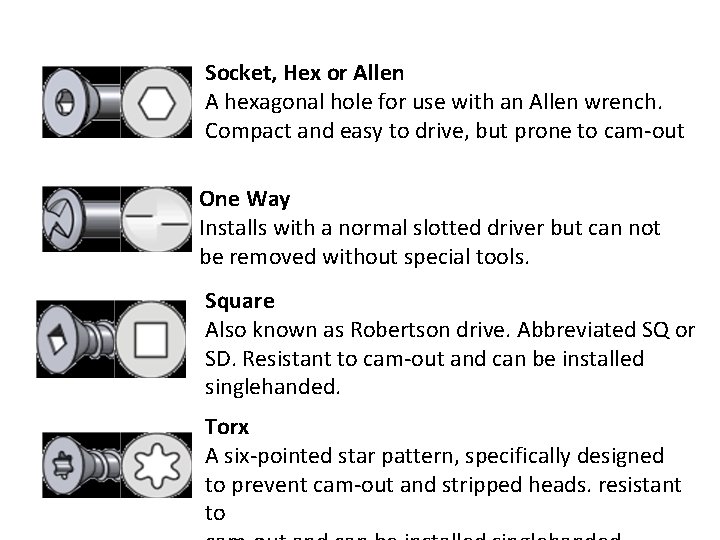
Socket, Hex or Allen A hexagonal hole for use with an Allen wrench. Compact and easy to drive, but prone to cam-out One Way Installs with a normal slotted driver but can not be removed without special tools. Square Also known as Robertson drive. Abbreviated SQ or SD. Resistant to cam-out and can be installed singlehanded. Torx A six-pointed star pattern, specifically designed to prevent cam-out and stripped heads. resistant to
Activity • Sort the fasteners by drive type • You have 30 seconds for this activity
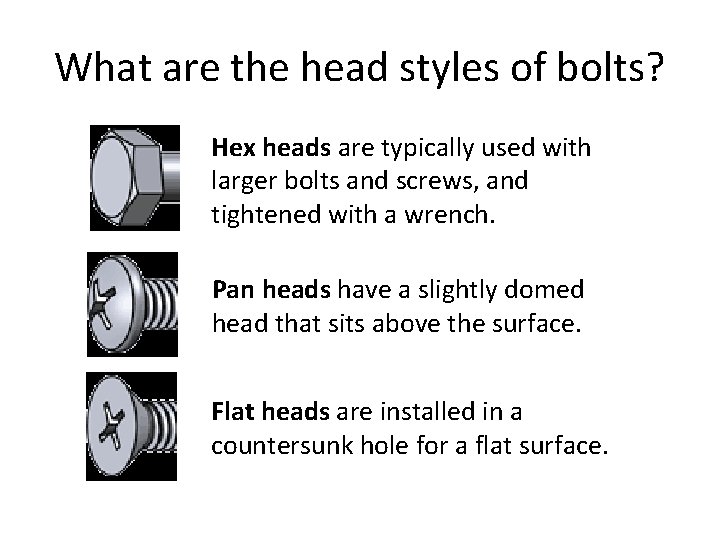
What are the head styles of bolts? Hex heads are typically used with larger bolts and screws, and tightened with a wrench. Pan heads have a slightly domed head that sits above the surface. Flat heads are installed in a countersunk hole for a flat surface.
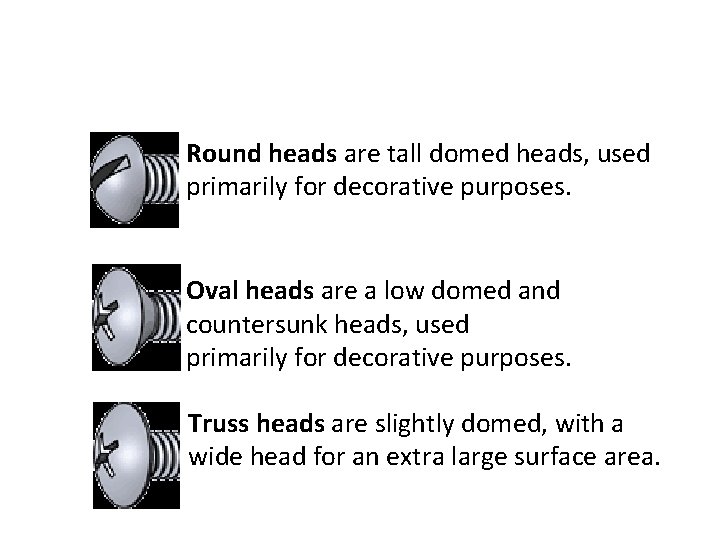
Round heads are tall domed heads, used primarily for decorative purposes. Oval heads are a low domed and countersunk heads, used primarily for decorative purposes. Truss heads are slightly domed, with a wide head for an extra large surface area.

Socket heads are narrow with a socket drive, and knurled or smooth sides. Button heads feature a medium dome. Typically used with a hex socket drive.
Activity • Sort the fasteners by head styles • You have one minute to complete this activity
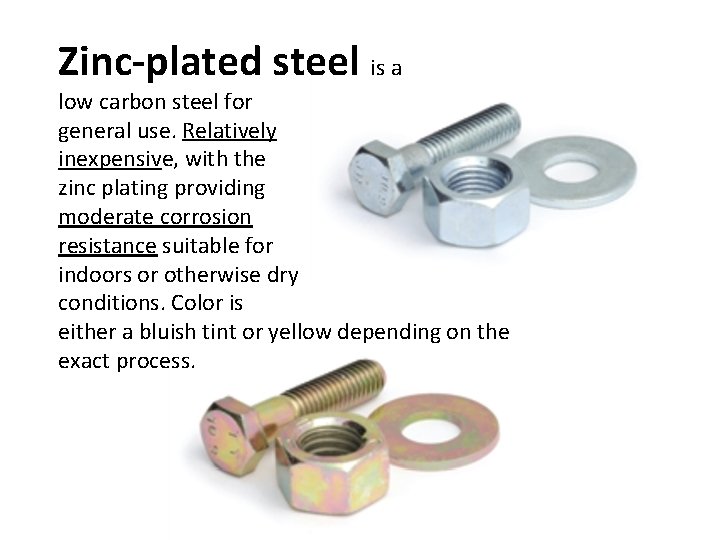
Zinc-plated steel is a low carbon steel for general use. Relatively inexpensive, with the zinc plating providing moderate corrosion resistance suitable for indoors or otherwise dry conditions. Color is either a bluish tint or yellow depending on the exact process.
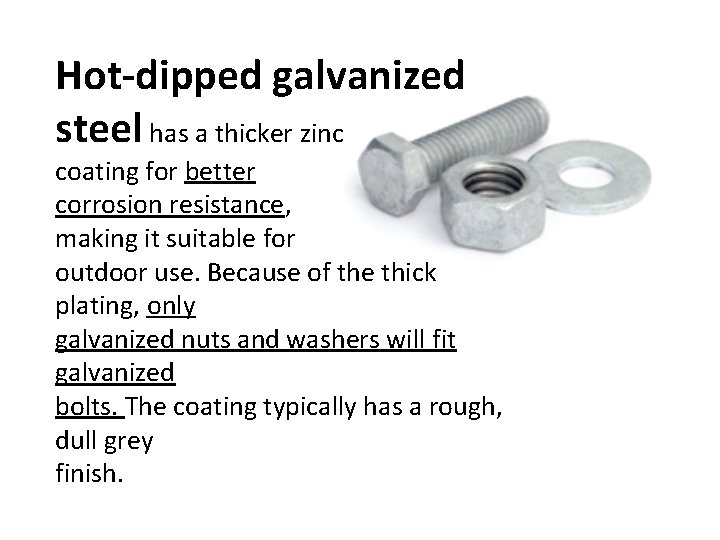
Hot-dipped galvanized steel has a thicker zinc coating for better corrosion resistance, making it suitable for outdoor use. Because of the thick plating, only galvanized nuts and washers will fit galvanized bolts. The coating typically has a rough, dull grey finish.
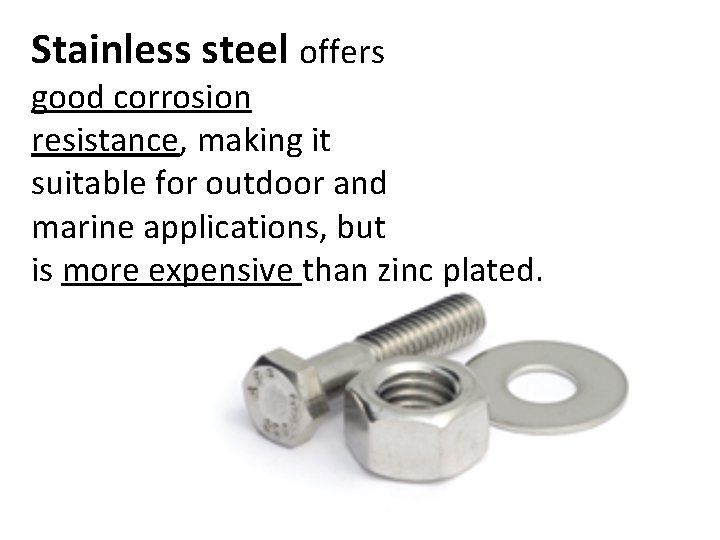
Stainless steel offers good corrosion resistance, making it suitable for outdoor and marine applications, but is more expensive than zinc plated.
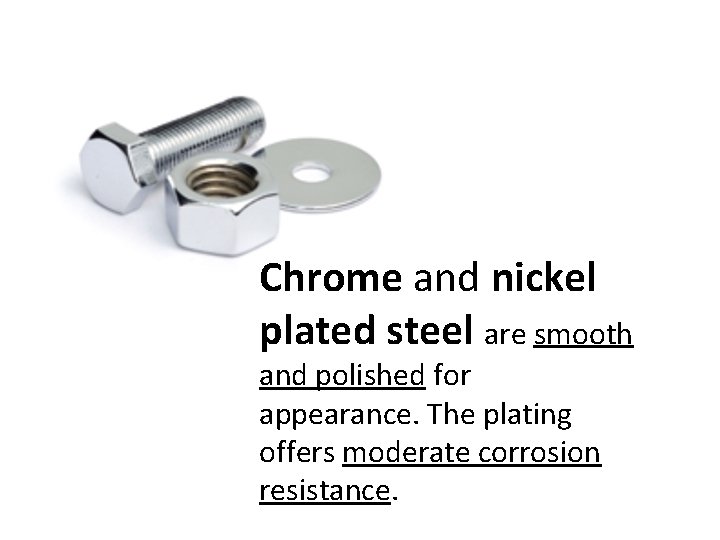
Chrome and nickel plated steel are smooth and polished for appearance. The plating offers moderate corrosion resistance.
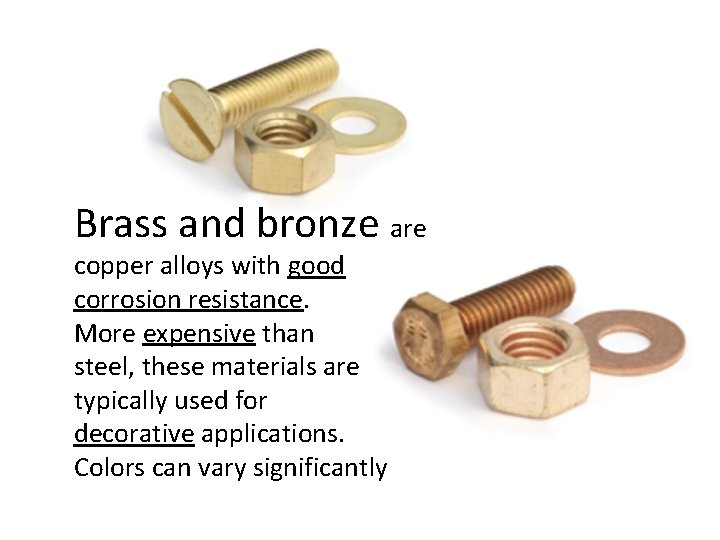
Brass and bronze are copper alloys with good corrosion resistance. More expensive than steel, these materials are typically used for decorative applications. Colors can vary significantly
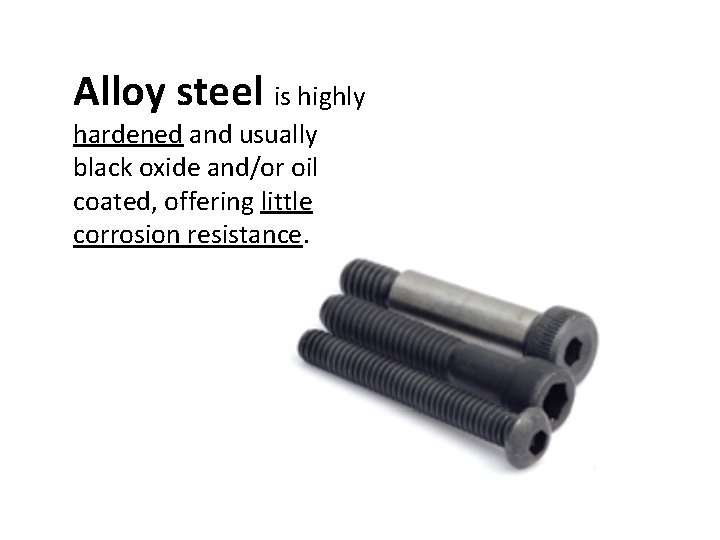
Alloy steel is highly hardened and usually black oxide and/or oil coated, offering little corrosion resistance.
Activity • Sort the fasteners by material type • You have one minute to complete this activity
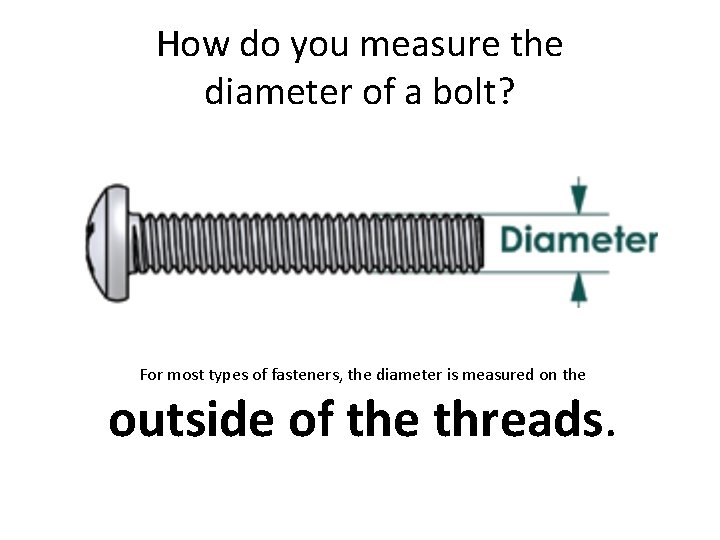
How do you measure the diameter of a bolt? For most types of fasteners, the diameter is measured on the outside of the threads.
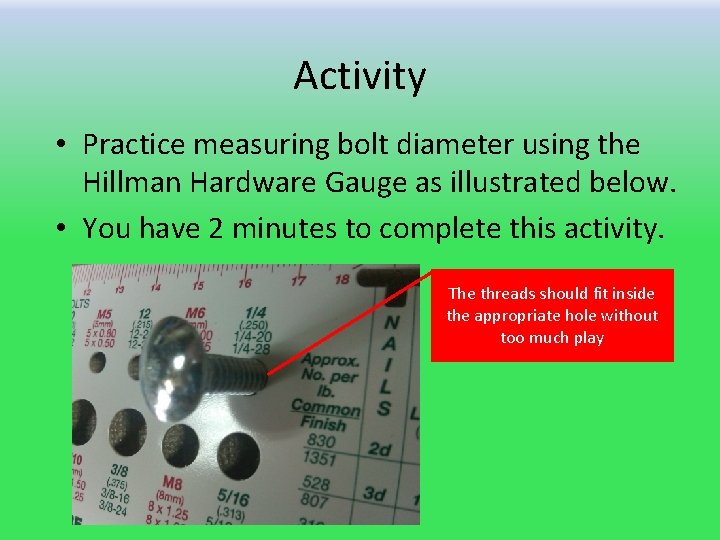
Activity • Practice measuring bolt diameter using the Hillman Hardware Gauge as illustrated below. • You have 2 minutes to complete this activity. The threads should fit inside the appropriate hole without too much play
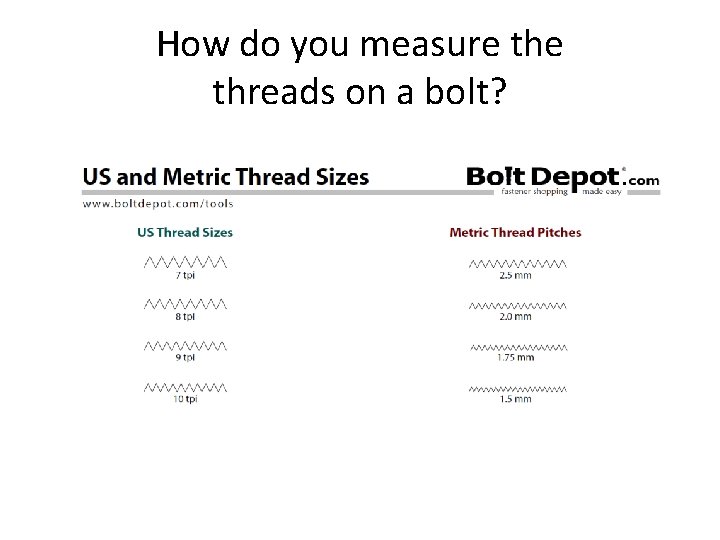
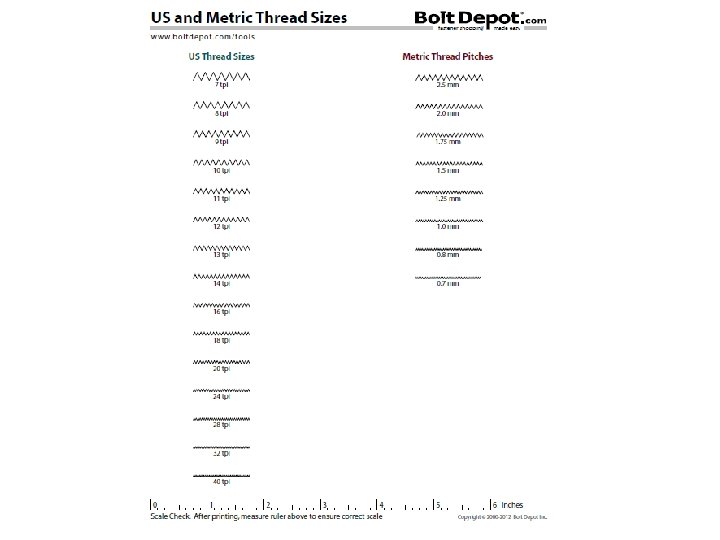
How do you measure threads on a bolt?
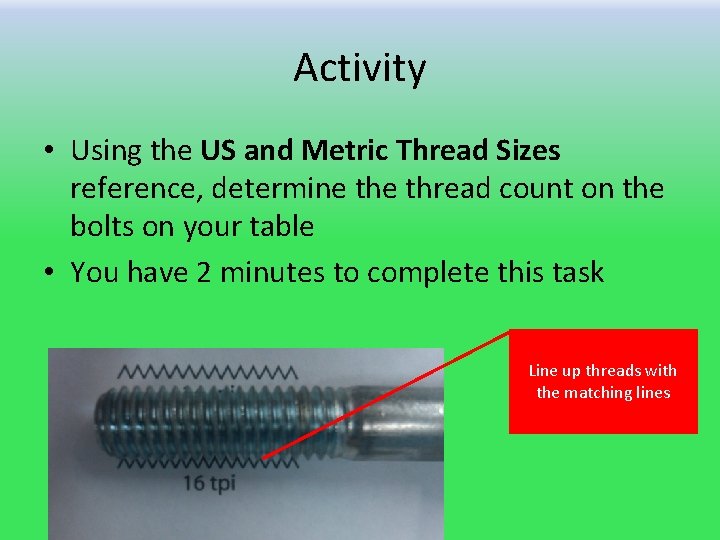
Activity • Using the US and Metric Thread Sizes reference, determine thread count on the bolts on your table • You have 2 minutes to complete this task Line up threads with the matching lines
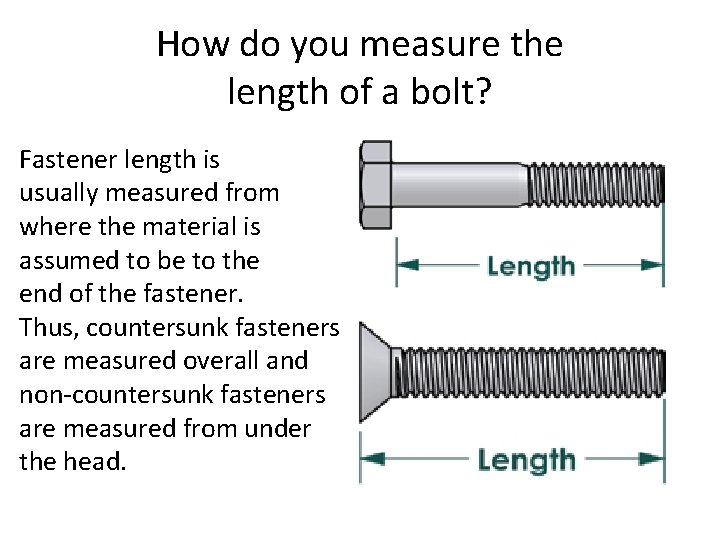
How do you measure the length of a bolt? Fastener length is usually measured from where the material is assumed to be to the end of the fastener. Thus, countersunk fasteners are measured overall and non-countersunk fasteners are measured from under the head.
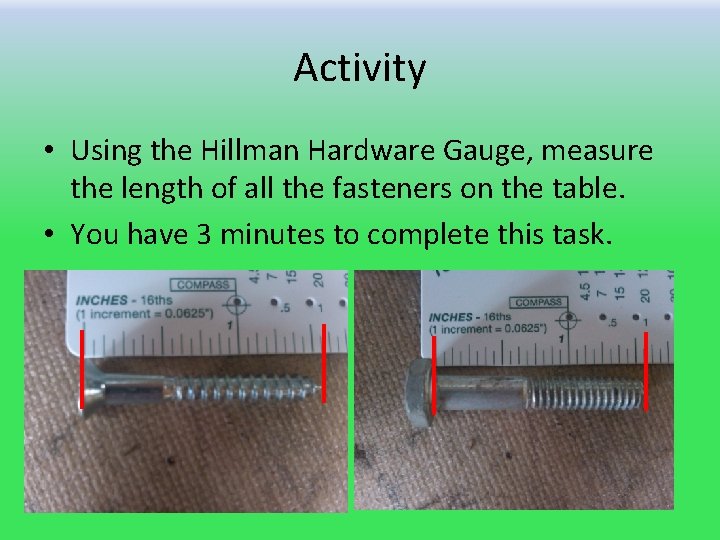
Activity • Using the Hillman Hardware Gauge, measure the length of all the fasteners on the table. • You have 3 minutes to complete this task.
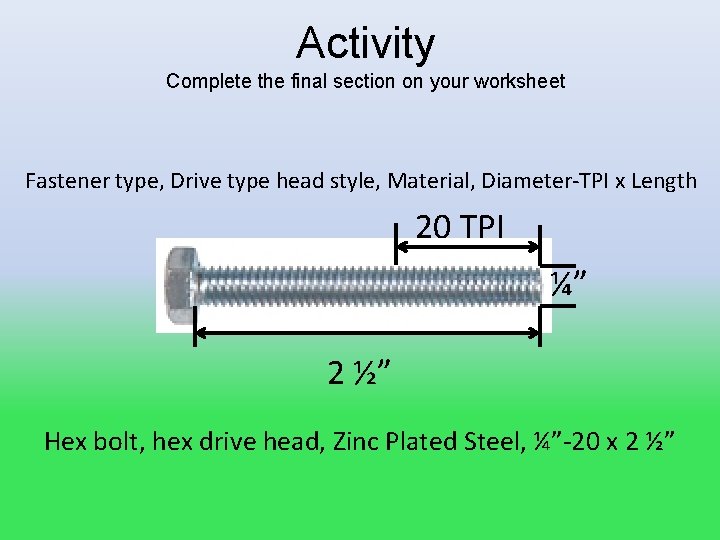
Activity Complete the final section on your worksheet Fastener type, Drive type head style, Material, Diameter-TPI x Length 20 TPI ¼” 2 ½” Hex bolt, hex drive head, Zinc Plated Steel, ¼”-20 x 2 ½”
References • http: //wedo. hillmangroup. com/category/hexbolts-carriage-bolts-lag-screws? &plpver=10 • http: //wedo. hillmangroup. com/viewitems/nuts/ hex-nuts-coarse-fine-thread? • http: //www. coastfab. com/images/pdf/bolts_200 9. pdf • http: //www. boltdepot. com/fastenerinformation/Materials-and-Grades/Materials. asp • x
- Slides: 33