
Boeing 787 By Mathew Potts Mission Statement Boeing
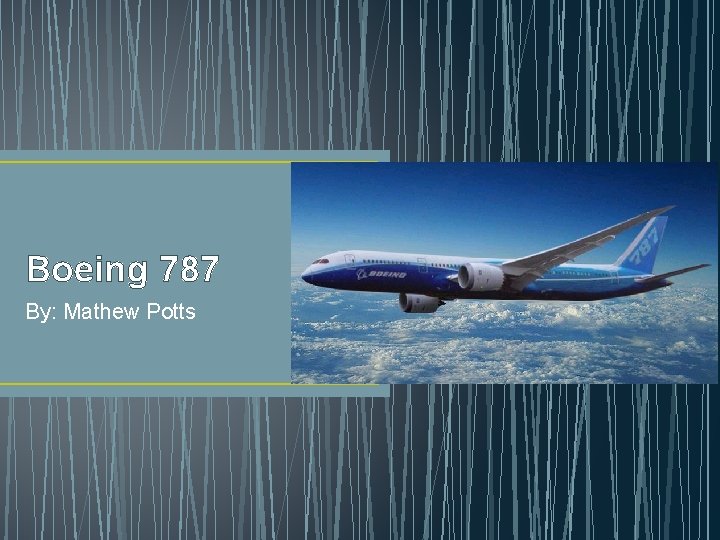
Boeing 787 By: Mathew Potts
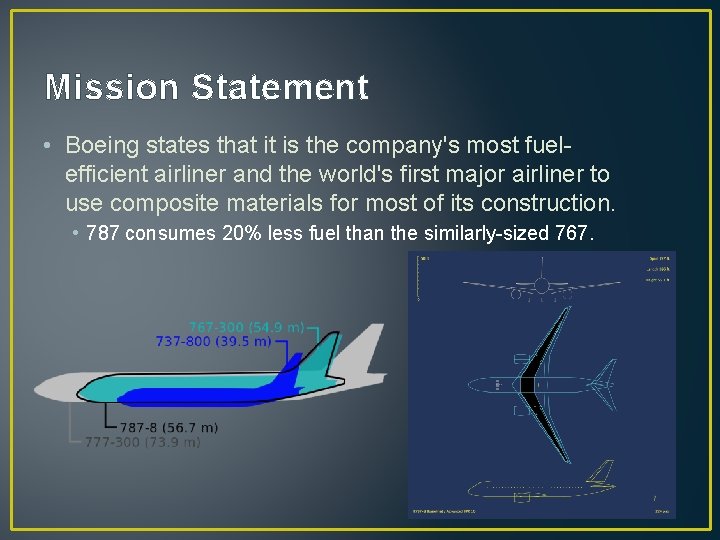
Mission Statement • Boeing states that it is the company's most fuelefficient airliner and the world's first major airliner to use composite materials for most of its construction. • 787 consumes 20% less fuel than the similarly-sized 767.
New Materials • Each 787 contains approximately 35 short tons of carbon fiber reinforced plastic, made with 23 tons of carbon fiber. • Higher Strength to Weight Ratio • Composites are used on fuselage, wings, tail, doors, and interior. • • • Composites - 50% Aluminum - 20% Titanium - 15% Steel - 10% Other - 5%
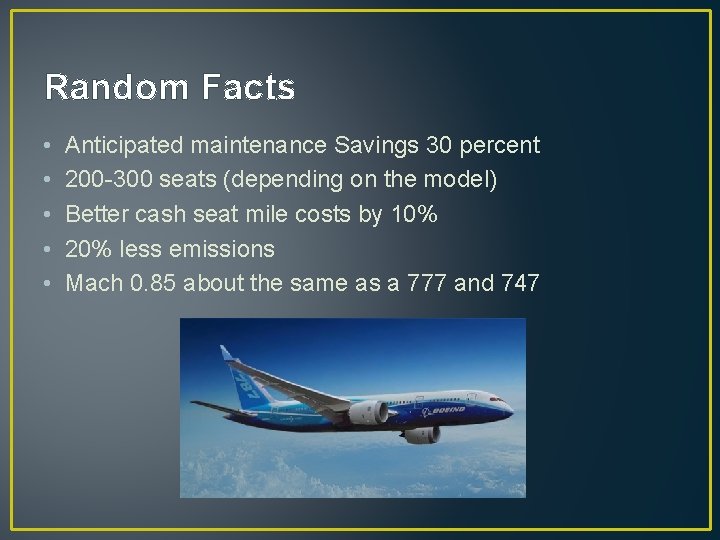
Random Facts • • • Anticipated maintenance Savings 30 percent 200 -300 seats (depending on the model) Better cash seat mile costs by 10% 20% less emissions Mach 0. 85 about the same as a 777 and 747
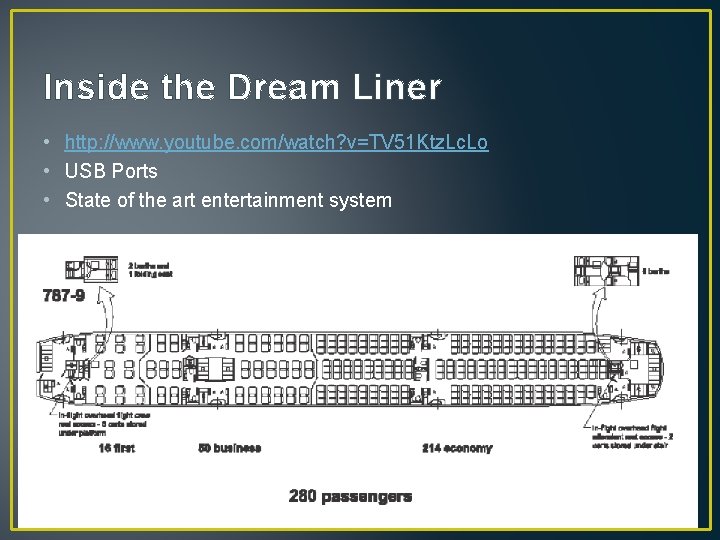
Inside the Dream Liner • http: //www. youtube. com/watch? v=TV 51 Ktz. Lc. Lo • USB Ports • State of the art entertainment system
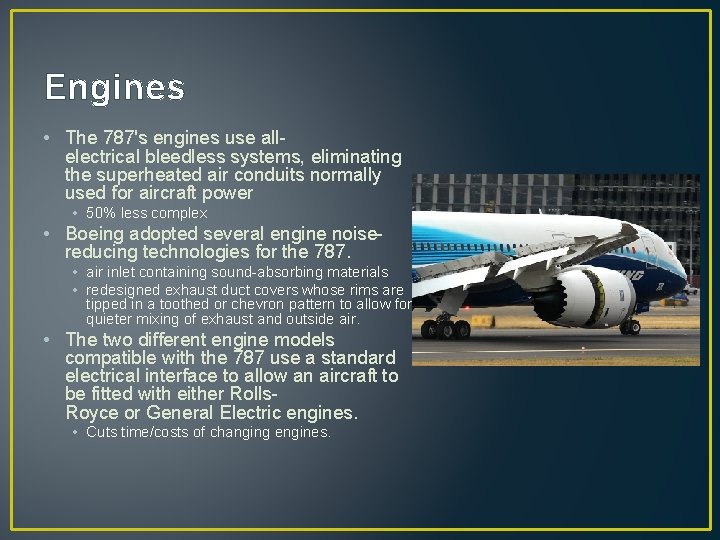
Engines • The 787's engines use allelectrical bleedless systems, eliminating the superheated air conduits normally used for aircraft power • 50% less complex • Boeing adopted several engine noisereducing technologies for the 787. • air inlet containing sound-absorbing materials • redesigned exhaust duct covers whose rims are tipped in a toothed or chevron pattern to allow for quieter mixing of exhaust and outside air. • The two different engine models compatible with the 787 use a standard electrical interface to allow an aircraft to be fitted with either Rolls. Royce or General Electric engines. • Cuts time/costs of changing engines.
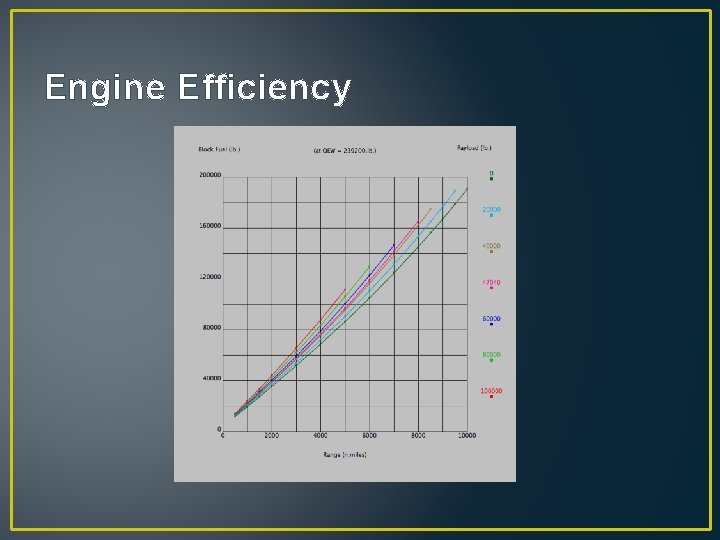
Engine Efficiency
Flight Controls • Another new system is a wing ice protection system that uses electro-thermal heater mats on the wing slats instead of hot bleed air that has been traditionally used. • An active gust alleviation system, similar to the system used on the B-2 bomber, improves ride quality during turbulence. • Airplane's control, navigation, and communication systems are networked with the passenger cabin's in-flight internet systems These included: • air gaps for the physical separation of the networks, and • firewalls for their software separation. • These measures prevent data transfer from the passenger internet system to the maintenance or navigation systems.
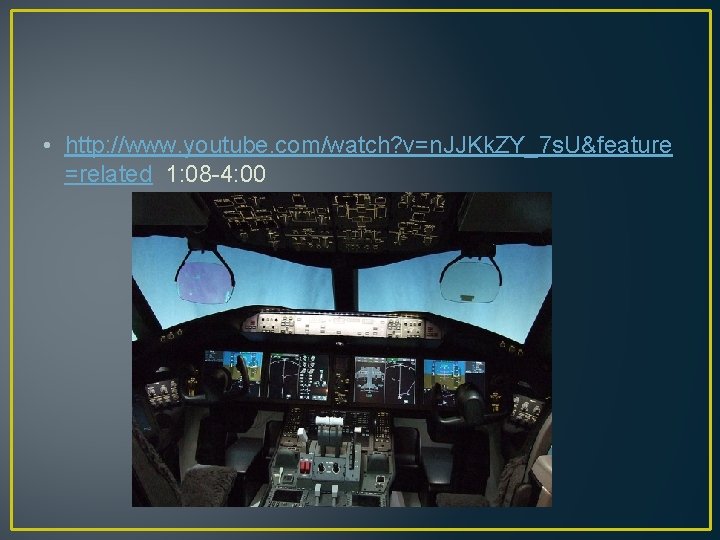
• http: //www. youtube. com/watch? v=n. JJKk. ZY_7 s. U&feature =related 1: 08 -4: 00
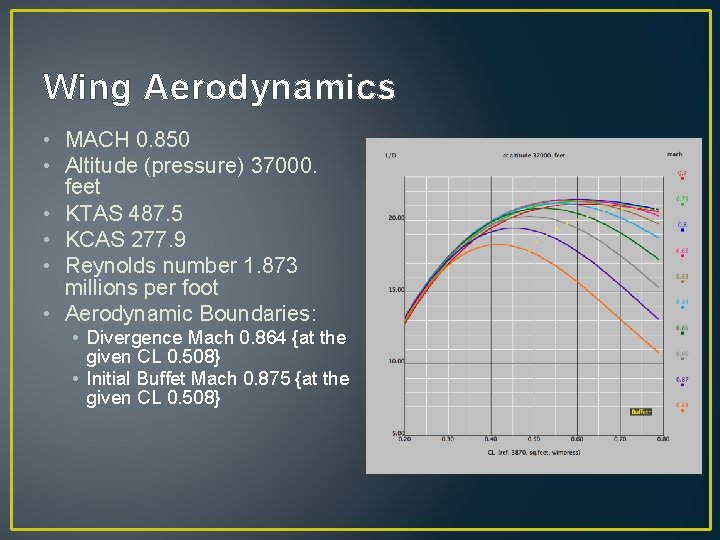
Wing Aerodynamics • MACH 0. 850 • Altitude (pressure) 37000. feet • KTAS 487. 5 • KCAS 277. 9 • Reynolds number 1. 873 millions per foot • Aerodynamic Boundaries: • Divergence Mach 0. 864 {at the given CL 0. 508} • Initial Buffet Mach 0. 875 {at the given CL 0. 508}
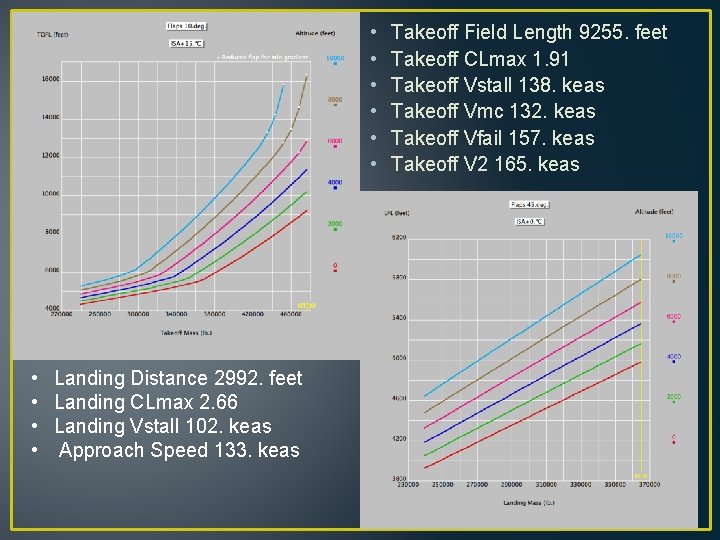
• • • Landing Distance 2992. feet Landing CLmax 2. 66 Landing Vstall 102. keas Approach Speed 133. keas Takeoff Field Length 9255. feet Takeoff CLmax 1. 91 Takeoff Vstall 138. keas Takeoff Vmc 132. keas Takeoff Vfail 157. keas Takeoff V 2 165. keas
Bibliography • http: //en. wikipedia. org/wiki/Boeing_787_Dreamliner • http: //www. boeing. com/commercial/aeromagazine/articles/qtr_ 4_06/AERO_Q 406_article 4. pdf • http: //www. boeing. com/commercial/787 family/programfacts. ht ml • http: //www. lissys. demon. co. uk/samp 1/index. html • http: //www. boeing. com/commercial/airports/acaps/787 brochur e. pdf • http: //www. ana. co. jp/cargo/en/int/service/aircraft/b 787_8_1. ht ml • http: //www. sidchapters. org/pacificnorthwest/meetings/dec 14_0 5_presentation. pdf • http: //www. safranmbd. com/IMG/pdf/787 LG. pdf
- Slides: 13