
Body Tissues Body Tissues Tissues Groups of cells

Body Tissues

Body Tissues • Tissues – Groups of cells with similar structure and function – Four primary types: 1. 2. 3. 4. Epithelial tissue (epithelium) Connective tissue Muscle tissue Nervous tissue © 2015 Pearson Education, Inc.
Epithelial Tissues • Locations: – Body coverings – Body linings – Glandular tissue • Functions: – Protection – Absorption – Filtration – Secretion © 2015 Pearson Education, Inc.
Epithelium Characteristics • Cells fit closely together and often form sheets • The apical surface is the free surface of the tissue • The lower surface of the epithelium rests on a basement membrane • Avascular (no blood supply) • Regenerate easily if well nourished © 2015 Pearson Education, Inc.
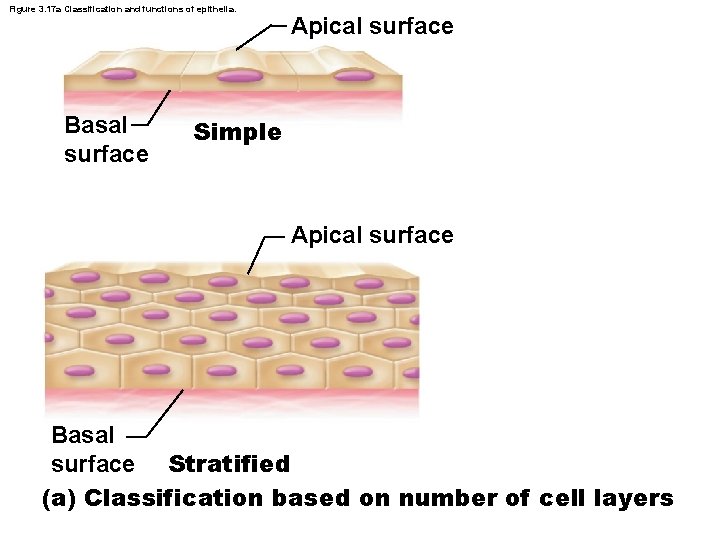
Figure 3. 17 a Classification and functions of epithelia. Basal surface Apical surface Simple Apical surface Basal surface Stratified (a) Classification based on number of cell layers

Classification of Epithelia • Number of cell layers – Simple—one layer – Stratified—more than one layer © 2015 Pearson Education, Inc.
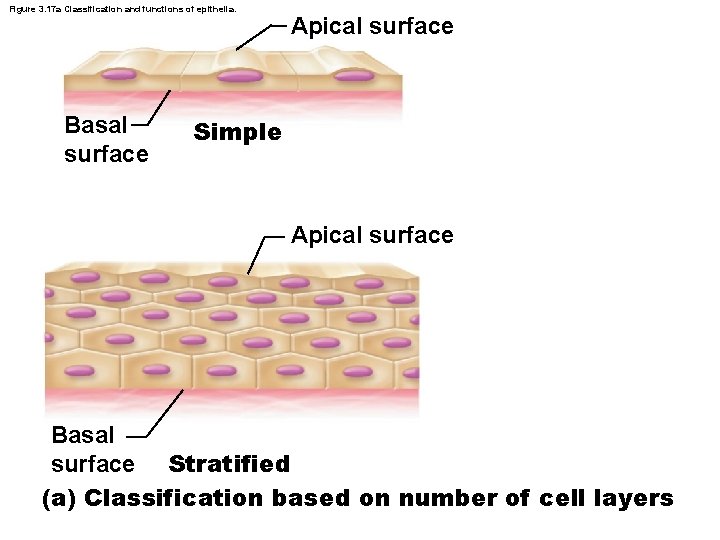
Figure 3. 17 a Classification and functions of epithelia. Basal surface Apical surface Simple Apical surface Basal surface Stratified (a) Classification based on number of cell layers
Classification of Epithelia • Shape of cells – Squamous • Flattened, like fish scales – Cuboidal • Cube-shaped, like dice – Columnar • Column-like © 2015 Pearson Education, Inc.
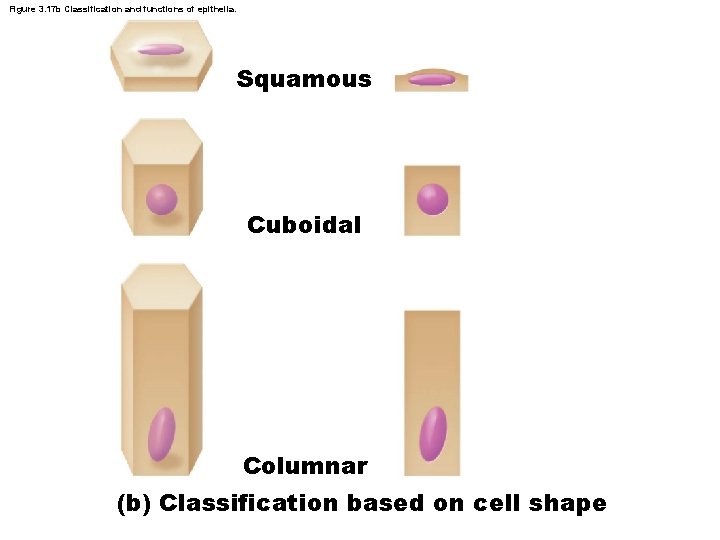
Figure 3. 17 b Classification and functions of epithelia. Squamous Cuboidal Columnar (b) Classification based on cell shape
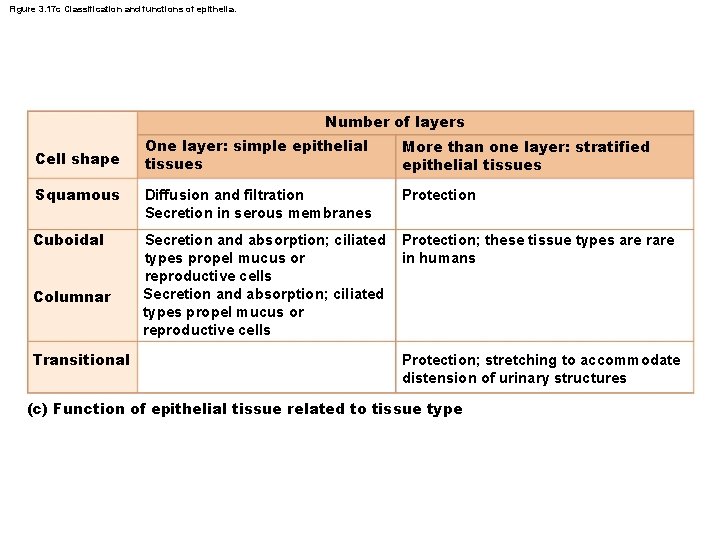
Figure 3. 17 c Classification and functions of epithelia. Number of layers One layer: simple epithelial tissues More than one layer: stratified epithelial tissues Squamous Diffusion and filtration Secretion in serous membranes Protection Cuboidal Secretion and absorption; ciliated types propel mucus or reproductive cells Protection; these tissue types are rare in humans Cell shape Columnar Transitional Protection; stretching to accommodate distension of urinary structures (c) Function of epithelial tissue related to tissue type
Simple Epithelia • Simple squamous – Single layer of flat cells – Location—usually forms membranes • Lines air sacs of the lungs • Forms walls of capillaries • Forms serous membranes (serosae) that line and cover organs in ventral cavity – Functions in diffusion, filtration, or secretion in membranes © 2015 Pearson Education, Inc.
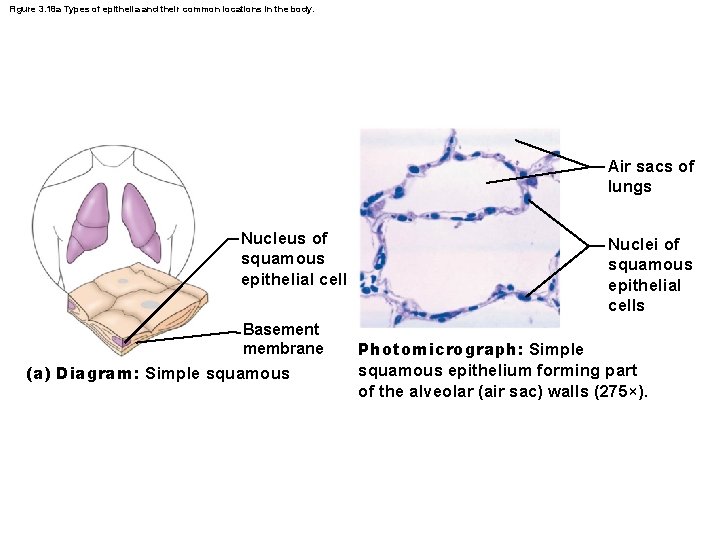
Figure 3. 18 a Types of epithelia and their common locations in the body. Air sacs of lungs Nucleus of squamous epithelial cell Basement membrane (a) Diagram: Simple squamous Nuclei of squamous epithelial cells Photomicrograph: Simple squamous epithelium forming part of the alveolar (air sac) walls (275×).
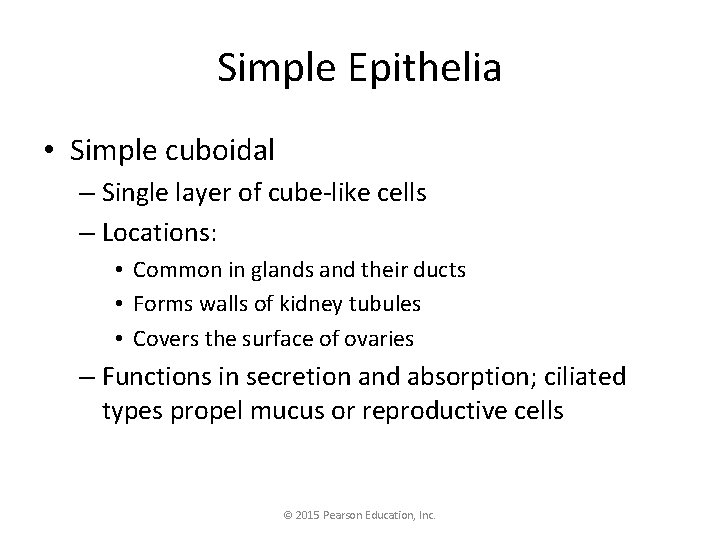
Simple Epithelia • Simple cuboidal – Single layer of cube-like cells – Locations: • Common in glands and their ducts • Forms walls of kidney tubules • Covers the surface of ovaries – Functions in secretion and absorption; ciliated types propel mucus or reproductive cells © 2015 Pearson Education, Inc.
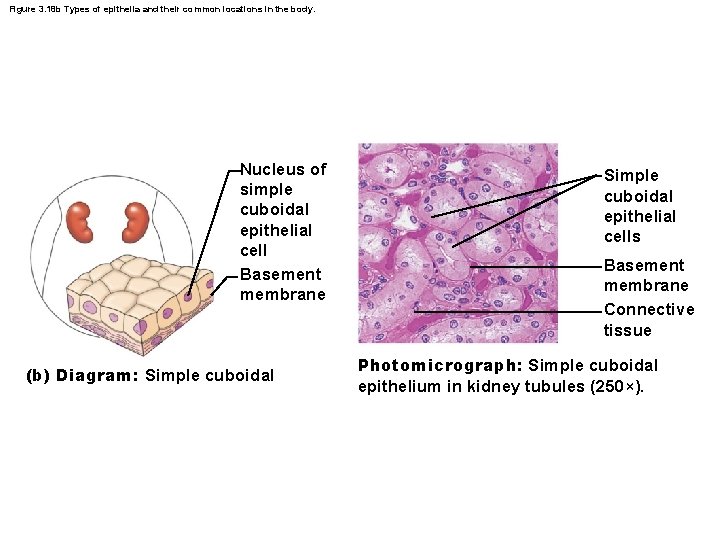
Figure 3. 18 b Types of epithelia and their common locations in the body. Nucleus of simple cuboidal epithelial cell Basement membrane (b) Diagram: Simple cuboidal epithelial cells Basement membrane Connective tissue Photomicrograph: Simple cuboidal epithelium in kidney tubules (250×).
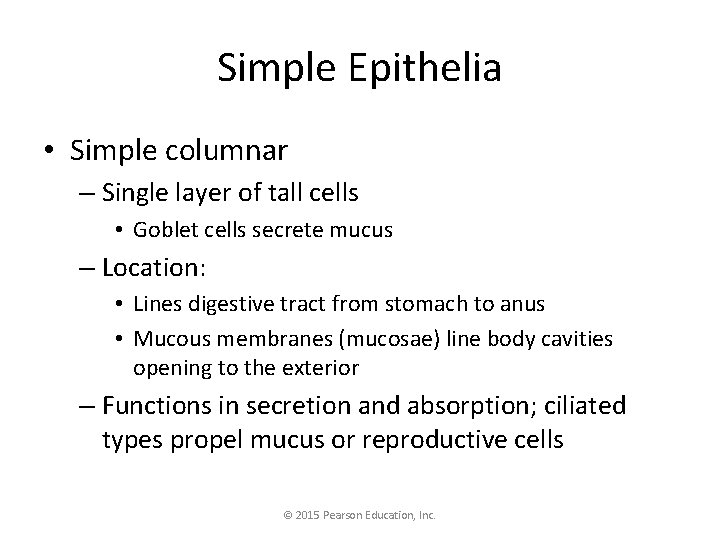
Simple Epithelia • Simple columnar – Single layer of tall cells • Goblet cells secrete mucus – Location: • Lines digestive tract from stomach to anus • Mucous membranes (mucosae) line body cavities opening to the exterior – Functions in secretion and absorption; ciliated types propel mucus or reproductive cells © 2015 Pearson Education, Inc.
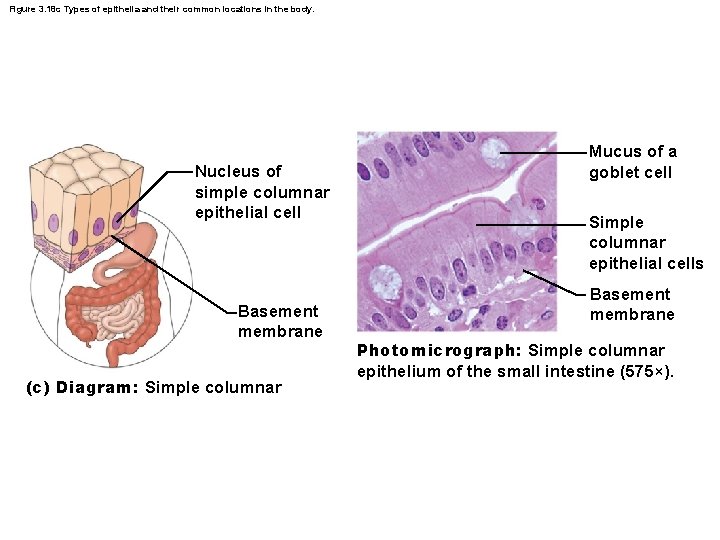
Figure 3. 18 c Types of epithelia and their common locations in the body. Nucleus of simple columnar epithelial cell Basement membrane (c) Diagram: Simple columnar Mucus of a goblet cell Simple columnar epithelial cells Basement membrane Photomicrograph: Simple columnar epithelium of the small intestine (575×).
Simple Epithelia • Pseudostratified columnar – All cells rest on a basement membrane – Single layer, but some cells are shorter than others giving a false (pseudo) impression of stratification – Location: • Respiratory tract, where it is ciliated and known as pseudostratified ciliated columnar epithelium – Functions in absorption or secretion © 2015 Pearson Education, Inc.
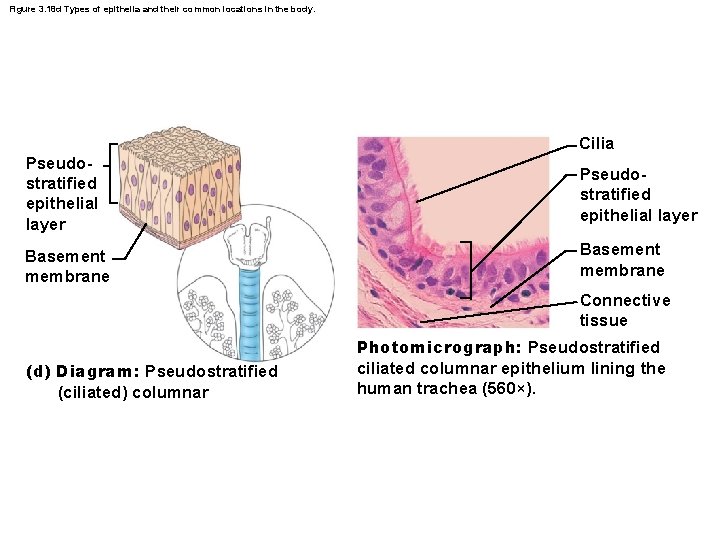
Figure 3. 18 d Types of epithelia and their common locations in the body. Cilia Pseudostratified epithelial layer Basement membrane Connective tissue (d) Diagram: Pseudostratified (ciliated) columnar Photomicrograph: Pseudostratified ciliated columnar epithelium lining the human trachea (560×).
Stratified Epithelia • Stratified squamous – Named for cells present at the free (apical) surface, which are flattened – Functions as a protective covering where friction is common – Locations—lining of the: • Skin (outer portion) • Mouth • Esophagus © 2015 Pearson Education, Inc.
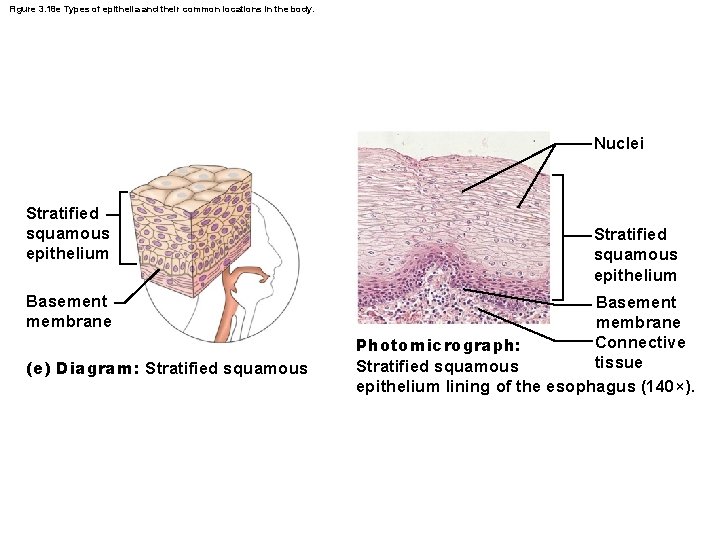
Figure 3. 18 e Types of epithelia and their common locations in the body. Nuclei Stratified squamous epithelium Basement membrane (e) Diagram: Stratified squamous epithelium Basement membrane Connective Photomicrograph: tissue Stratified squamous epithelium lining of the esophagus (140×).
Stratified Epithelia • Stratified cuboidal—two layers of cuboidal cells; functions in protection • Stratified columnar—surface cells are columnar, and cells underneath vary in size and shape; functions in protection • Stratified cuboidal and columnar – Rare in human body – Found mainly in ducts of large glands © 2015 Pearson Education, Inc.
Stratified Epithelia • Transitional epithelium – Composed of modified stratified squamous epithelium – Shape of cells depends upon the amount of stretching – Functions in stretching and the ability to return to normal shape – Locations: urinary system organs © 2015 Pearson Education, Inc.
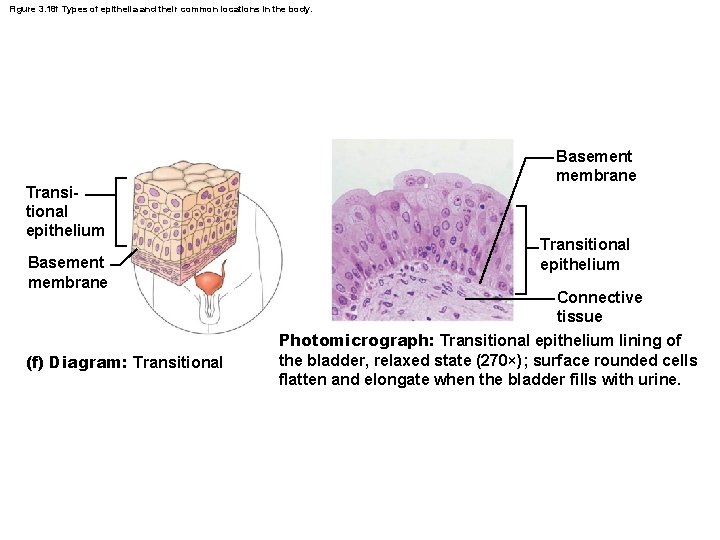
Figure 3. 18 f Types of epithelia and their common locations in the body. Transitional epithelium Basement membrane (f) Diagram: Transitional Basement membrane Transitional epithelium Connective tissue Photomicrograph: Transitional epithelium lining of the bladder, relaxed state (270×); surface rounded cells flatten and elongate when the bladder fills with urine.
Glandular Epithelium • Gland – One or more cells responsible for secreting a particular product – Secretions contain protein molecules in an aqueous (water-based) fluid – Secretion is an active process © 2015 Pearson Education, Inc.

Glandular Epithelium • Two major gland types – Endocrine gland • Ductless; secretions diffuse into blood vessels • All secretions are hormones • Examples include thyroid, adrenals, and pituitary © 2015 Pearson Education, Inc.
Glandular Epithelium • Two major gland types – Exocrine gland • Secretions empty through ducts to the epithelial surface • Include sweat and oil glands, liver, and pancreas • Includes both internal and external glands © 2015 Pearson Education, Inc.
Connective Tissue • Found everywhere in the body • Includes the most abundant and widely distributed tissues • Functions: – Provides protection – Binds body tissues together – Supports the body © 2015 Pearson Education, Inc.
Connective Tissue Characteristics • Variations in blood supply – Some tissue types are well vascularized – Some have a poor blood supply or are avascular • Extracellular matrix – Nonliving material that surrounds living cells © 2015 Pearson Education, Inc.
Extracellular Matrix • Two main elements 1. Ground substance—mostly water along with adhesion proteins and polysaccharide molecules 2. Fibers • Produced by the cells • Three types: 1. Collagen (white) fibers 2. Elastic (yellow) fibers 3. Reticular fibers (a type of collagen) © 2015 Pearson Education, Inc.

Connective Tissue Types • From most rigid to softest, or most fluid: – Bone – Cartilage – Dense connective tissue – Loose connective tissue – Blood © 2015 Pearson Education, Inc.
Connective Tissue Types • Bone (osseous tissue) – Composed of: • Osteocytes (bone cells) sitting in lacunae (cavities) • Hard matrix of calcium salts • Large numbers of collagen fibers – Functions to protect and support the body © 2015 Pearson Education, Inc.
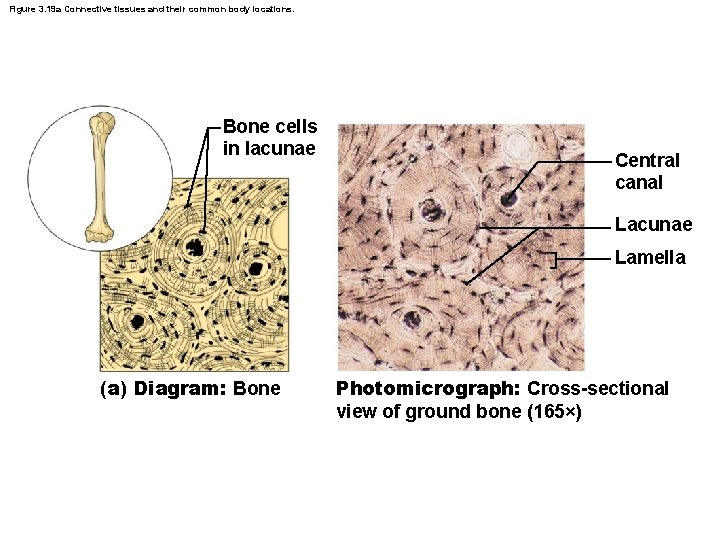
Figure 3. 19 a Connective tissues and their common body locations. Bone cells in lacunae Central canal Lacunae Lamella (a) Diagram: Bone Photomicrograph: Cross-sectional view of ground bone (165×)
Connective Tissue Types • Cartilage – Less hard and more flexible than bone – Found in only a few places in the body – Chondrocyte (cartilage cell) is the major cell type © 2015 Pearson Education, Inc.
Connective Tissue Types • Hyaline cartilage – Hyaline cartilage is the most widespread type of cartilage • Composed of abundant collagen fibers and a rubbery matrix • Locations: – Larynx – Entire fetal skeleton prior to birth – Epiphyseal plates – Functions as a more flexible skeletal element than bone © 2015 Pearson Education, Inc.
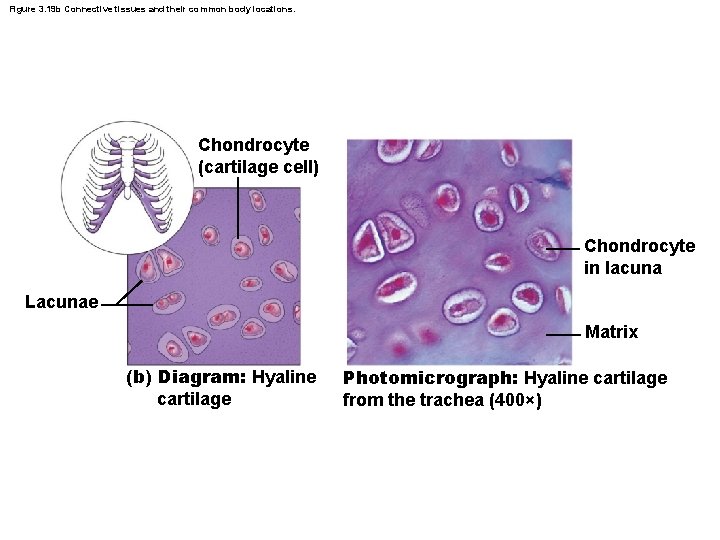
Figure 3. 19 b Connective tissues and their common body locations. Chondrocyte (cartilage cell) Chondrocyte in lacuna Lacunae Matrix (b) Diagram: Hyaline cartilage Photomicrograph: Hyaline cartilage from the trachea (400×)

Connective Tissue Types • Elastic cartilage (not pictured) – Provides elasticity – Location: • Supports the external ear • Fibrocartilage – Highly compressible – Location: • Forms cushionlike discs between vertebrae of the spinal column © 2015 Pearson Education, Inc.

Figure 3. 19 c Connective tissues and their common body locations. Chondrocytes in lacunae Collagen fibers Collagen fiber (c) Diagram: Fibrocartilage Photomicrograph: Fibrocartilage of an intervertebral disc (150×)
Connective Tissue Types • Dense connective tissue (dense fibrous tissue) – Main matrix element is collagen fiber – Fibroblasts are cells that make fibers – Locations: • Tendons—attach skeletal muscle to bone • Ligaments—attach bone to bone at joints and are more elastic than tendons • Dermis—lower layers of the skin © 2015 Pearson Education, Inc.
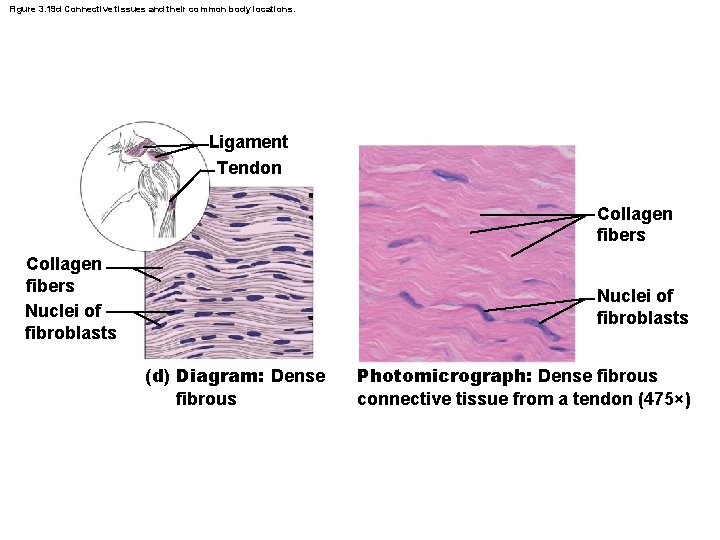
Figure 3. 19 d Connective tissues and their common body locations. Ligament Tendon Collagen fibers Nuclei of fibroblasts (d) Diagram: Dense fibrous Photomicrograph: Dense fibrous connective tissue from a tendon (475×)
Connective Tissue Types • Loose connective tissue types – Areolar tissue • Most widely distributed connective tissue • Soft, pliable tissue like “cobwebs” • Functions as a universal packing tissue and “glue” to hold organs in place • Layer of areolar tissue called lamina propria underlies all membranes • All fiber types form a loose network • Can soak up excess fluid (causes edema) © 2015 Pearson Education, Inc.
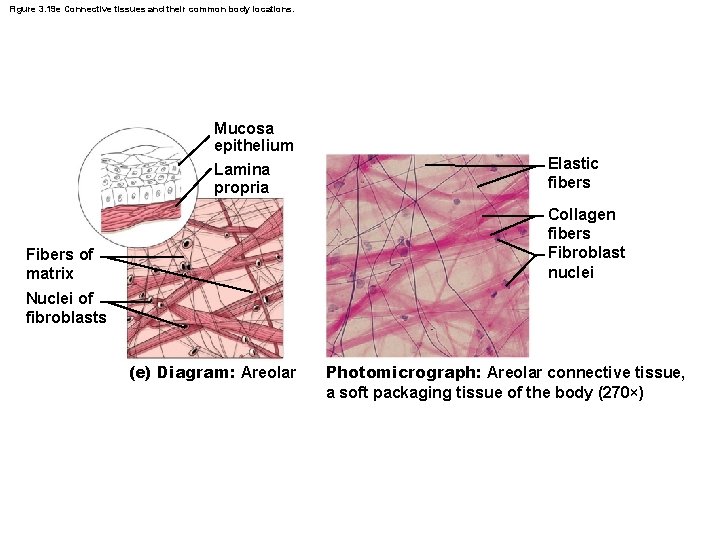
Figure 3. 19 e Connective tissues and their common body locations. Mucosa epithelium Lamina propria Elastic fibers Collagen fibers Fibroblast nuclei Fibers of matrix Nuclei of fibroblasts (e) Diagram: Areolar Photomicrograph: Areolar connective tissue, a soft packaging tissue of the body (270×)

Connective Tissue Types • Loose connective tissue types – Adipose tissue • Matrix is an areolar tissue in which fat globules predominate • Many cells contain large lipid deposits with nucleus to one side (signet ring cells) • Functions – Insulates the body – Protects some organs – Serves as a site of fuel storage © 2015 Pearson Education, Inc.
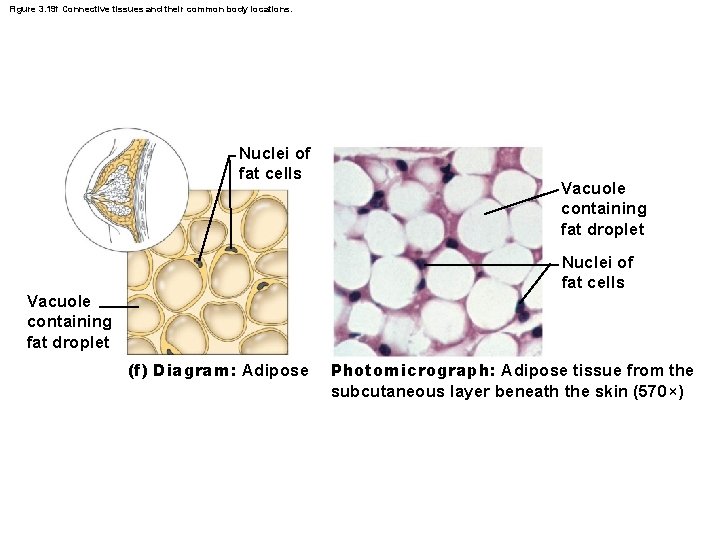
Figure 3. 19 f Connective tissues and their common body locations. Nuclei of fat cells Vacuole containing fat droplet (f) Diagram: Adipose Photomicrograph: Adipose tissue from the subcutaneous layer beneath the skin (570×)
Connective Tissue Types • Loose connective tissue types – Reticular connective tissue • Delicate network of interwoven fibers with reticular cells (like fibroblasts) • Locations: – Forms stroma (internal framework) of organs, such as these lymphoid organs: » Lymph nodes » Spleen » Bone marrow © 2015 Pearson Education, Inc.
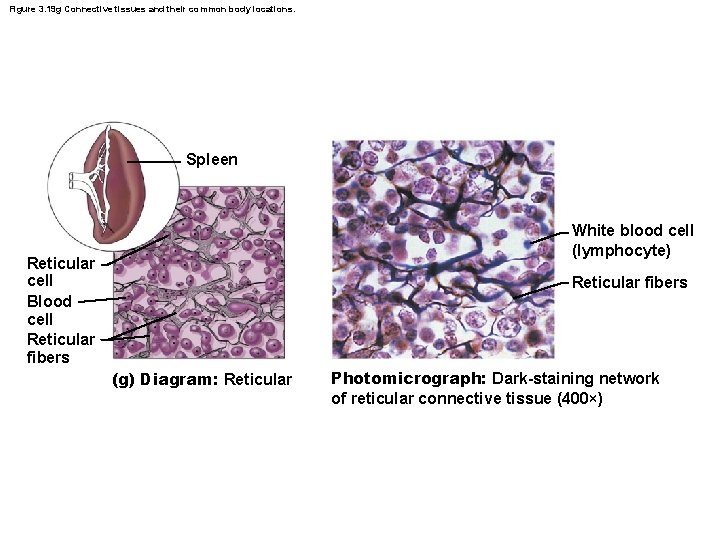
Figure 3. 19 g Connective tissues and their common body locations. Spleen White blood cell (lymphocyte) Reticular cell Blood cell Reticular fibers (g) Diagram: Reticular Photomicrograph: Dark-staining network of reticular connective tissue (400×)
Connective Tissue Types • Blood (vascular tissue) – Blood cells surrounded by fluid matrix known as blood plasma – Soluble fibers are visible only during clotting – Functions as the transport vehicle for the cardiovascular system, carrying: • Nutrients • Wastes • Respiratory gases © 2015 Pearson Education, Inc.
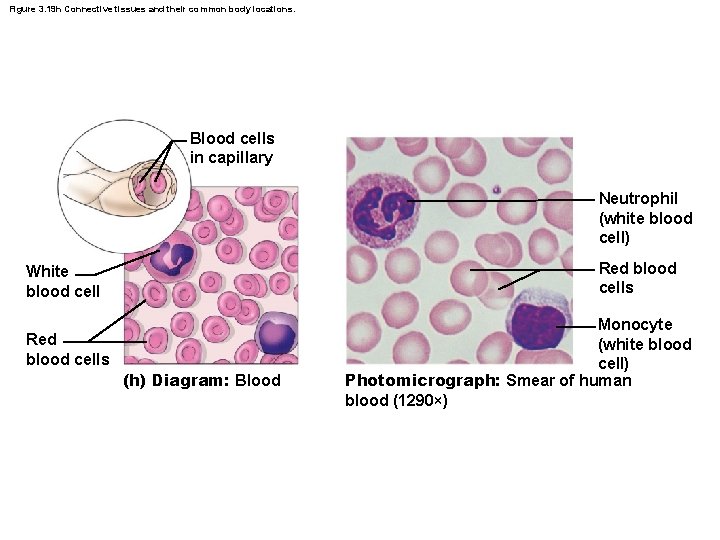
Figure 3. 19 h Connective tissues and their common body locations. Blood cells in capillary Neutrophil (white blood cell) Red blood cells White blood cell Red blood cells (h) Diagram: Blood Monocyte (white blood cell) Photomicrograph: Smear of human blood (1290×)
Muscle Tissue • Function is to contract, or shorten, to produce movement • Three types: 1. Skeletal muscle 2. Cardiac muscle 3. Smooth muscle © 2015 Pearson Education, Inc.
Muscle Tissue Types • Skeletal muscle – Voluntarily (consciously) controlled – Attached to the skeleton and pull on bones or skin – Produces gross body movements or facial expressions – Characteristics of skeletal muscle cells • Striations (stripes) • Multinucleate (more than one nucleus) • Long, cylindrical shape © 2015 Pearson Education, Inc.
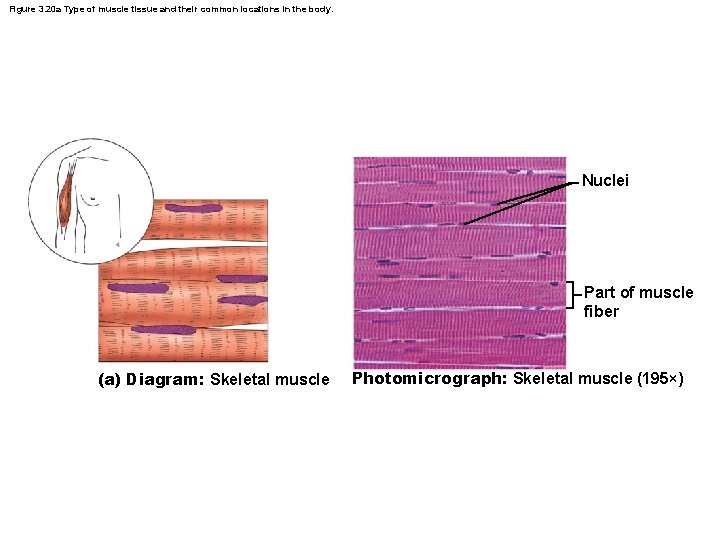
Figure 3. 20 a Type of muscle tissue and their common locations in the body. Nuclei Part of muscle fiber (a) Diagram: Skeletal muscle Photomicrograph: Skeletal muscle (195×)
Muscle Tissue Types • Cardiac muscle – Involuntarily controlled – Found only in the heart – Pumps blood through blood vessels – Characteristics of cardiac muscle cells • Striations • Uninucleate, short, branching cells • Intercalated discs contain gap junctions to connect cells together © 2015 Pearson Education, Inc.
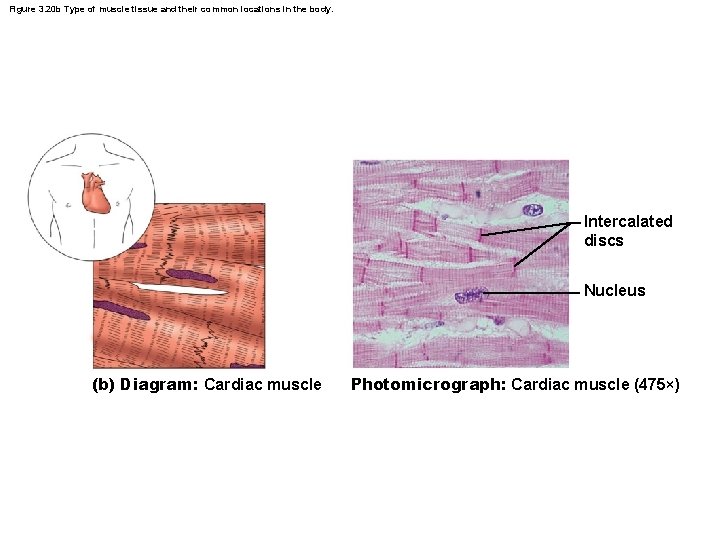
Figure 3. 20 b Type of muscle tissue and their common locations in the body. Intercalated discs Nucleus (b) Diagram: Cardiac muscle Photomicrograph: Cardiac muscle (475×)
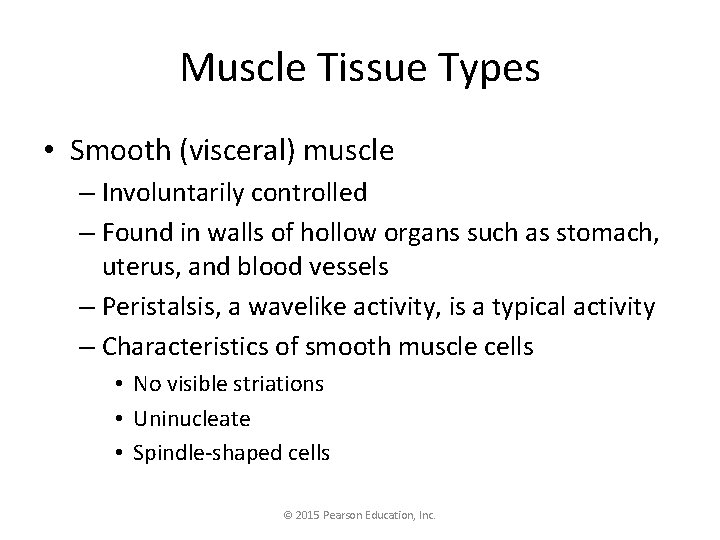
Muscle Tissue Types • Smooth (visceral) muscle – Involuntarily controlled – Found in walls of hollow organs such as stomach, uterus, and blood vessels – Peristalsis, a wavelike activity, is a typical activity – Characteristics of smooth muscle cells • No visible striations • Uninucleate • Spindle-shaped cells © 2015 Pearson Education, Inc.
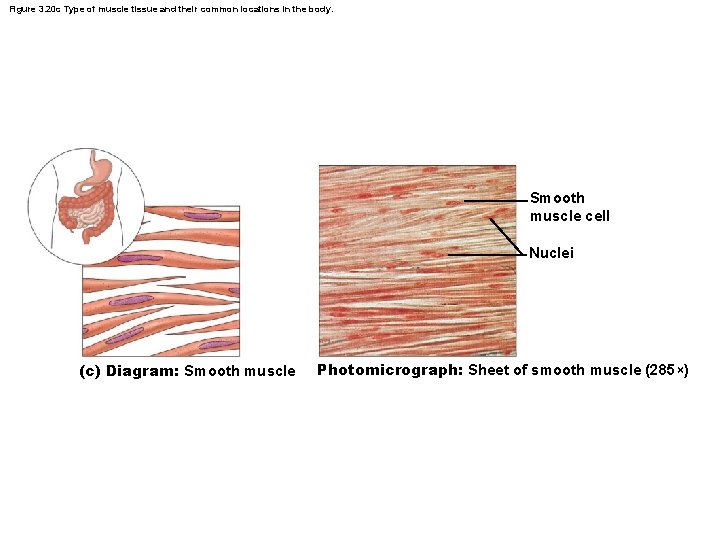
Figure 3. 20 c Type of muscle tissue and their common locations in the body. Smooth muscle cell Nuclei (c) Diagram: Smooth muscle Photomicrograph: Sheet of smooth muscle (285×)
Nervous Tissue • Composed of neurons and nerve support cells • Function is to receive and conduct electrochemical impulses to and from body parts – Irritability – Conductivity • Support cells called neuroglia insulate, protect, and support neurons © 2015 Pearson Education, Inc.
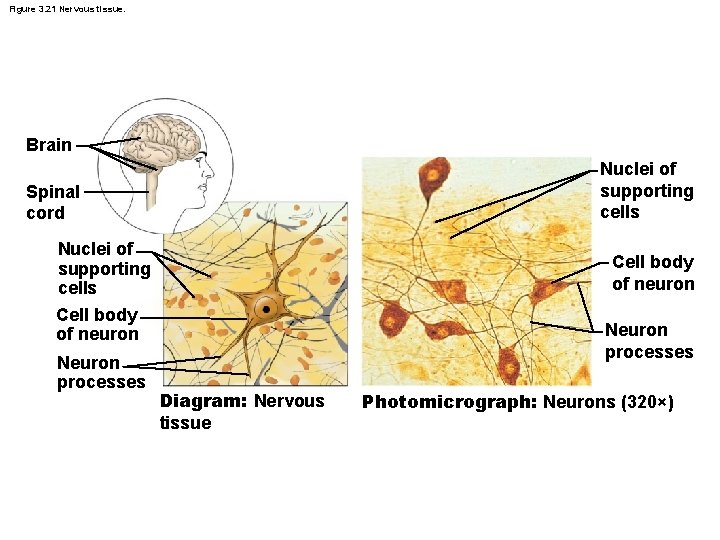
Figure 3. 21 Nervous tissue. Brain Nuclei of supporting cells Spinal cord Nuclei of supporting cells Cell body of neuron Neuron processes Diagram: Nervous tissue Photomicrograph: Neurons (320×)
Summary of Tissues • Figure 3. 22 summarizes the tissue types and functions in the body © 2015 Pearson Education, Inc.

Figure 3. 22 Summary of the major functions and body locations of the four tissue types: epithelial, connective, muscle, and nervous tissues. Nervous tissue: Internal communication • Brain, spinal cord, and nerves Muscle tissue: Contracts to cause movement • Muscles attached to bones (skeletal) • Muscles of heart (cardiac) • Muscles of walls of hollow organs (smooth) Epithelial tissue: Forms boundaries between different environments, protects, secretes, absorbs, filters • Lining of GI tract organs and other hollow organs • Skin surface (epidermis) Connective tissue: Supports, protects, binds other tissues together • Bones • Tendons • Fat and other soft padding tissue
Tissue Repair (Wound Healing) • Tissue repair (wound healing) occurs in two ways: 1. Regeneration • Replacement of destroyed tissue by the same kind of cells 2. Fibrosis • Repair by dense (fibrous) connective tissue (scar tissue) © 2015 Pearson Education, Inc.
Tissue Repair (Wound Healing) • Whether regeneration or fibrosis occurs depends on: 1. Type of tissue damaged 2. Severity of the injury • Clean cuts (incisions) heal more successfully than ragged tears of the tissue © 2015 Pearson Education, Inc.
Events in Tissue Repair • Inflammation – Capillaries become very permeable – Clotting proteins migrate into the area from the bloodstream – A clot walls off the injured area • Granulation tissue forms – Growth of new capillaries – Phagocytes dispose of blood clot and fibroblasts – Rebuild collagen fibers © 2015 Pearson Education, Inc.
Events in Tissue Repair • Regeneration of surface epithelium – Scab detaches – Whether scar is visible or invisible depends on severity of wound © 2015 Pearson Education, Inc.
Regeneration of Tissues • Tissues that regenerate easily – Epithelial tissue (skin and mucous membranes) – Fibrous connective tissues and bone • Tissues that regenerate poorly – Skeletal muscle • Tissues that are replaced largely with scar tissue – Cardiac muscle – Nervous tissue within the brain and spinal cord © 2015 Pearson Education, Inc.
Development Aspects of Cells and Tissues • Growth through cell division continues through puberty • Cell populations exposed to friction (such as epithelium) replace lost cells throughout life • Connective tissue remains mitotic and forms repair (scar) tissue • With some exceptions, muscle tissue becomes amitotic by the end of puberty • Nervous tissue becomes amitotic shortly after birth. © 2015 Pearson Education, Inc.
Developmental Aspects of Cells and Tissues • Injury can severely handicap amitotic tissues • The cause of aging is unknown, but chemical and physical insults, as well as genetic programming, have been proposed as possible causes © 2015 Pearson Education, Inc.
Developmental Aspects of Cells and Tissues • Neoplasms, both benign and cancerous, represent abnormal cell masses in which normal controls on cell division are not working • Hyperplasia (increase in size) of a tissue or organ may occur when tissue is strongly stimulated or irritated • Atrophy (decrease in size) of a tissue or organ occurs when the organ is no longer stimulated normally © 2015 Pearson Education, Inc.
- Slides: 66