
BODY TEMPERATURE REGULATION AND FEVER There is no
BODY TEMPERATURE REGULATION AND FEVER
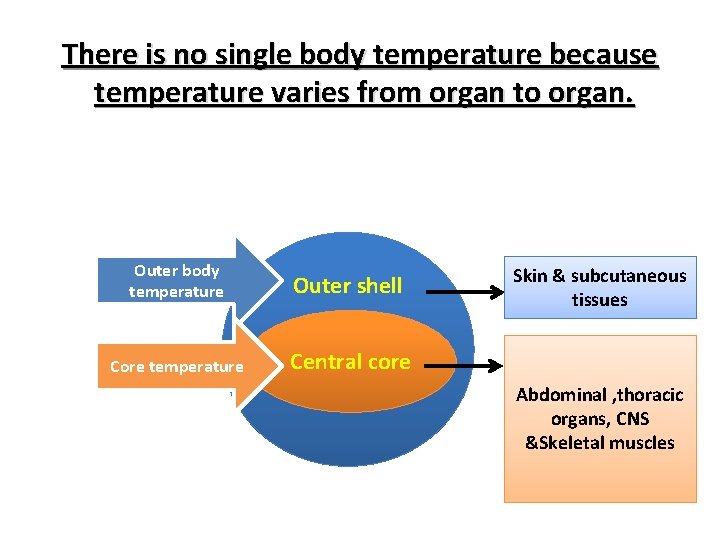
There is no single body temperature because temperature varies from organ to organ. Outer body temperature Outer shell Core temperature Central core Skin & subcutaneous tissues Abdominal , thoracic organs, CNS &Skeletal muscles
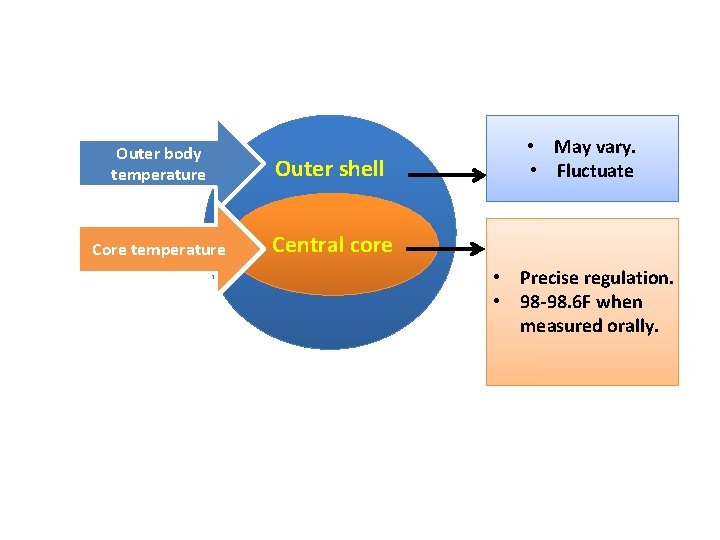
Outer body temperature Outer shell Core temperature Central core • May vary. • Fluctuate • Precise regulation. • 98 -98. 6 F when measured orally.
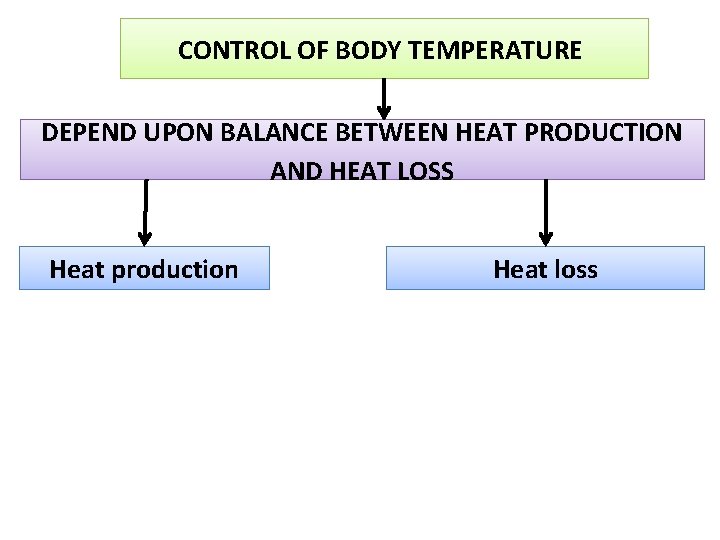
CONTROL OF BODY TEMPERATURE DEPEND UPON BALANCE BETWEEN HEAT PRODUCTION AND HEAT LOSS Heat production Heat loss
Heat production depends upon rate of metabolism by; 1. All body cells 2. Thyroxin, GH, testosterone. 3. Epinephrine, norepinephrine and sympathetic stimulation. 4. Increase chemical activity

Heat loss 1. How rapidly heat can be conducted from body core to skin. 2. How rapidly heat can be conducted from skin to surrounding.
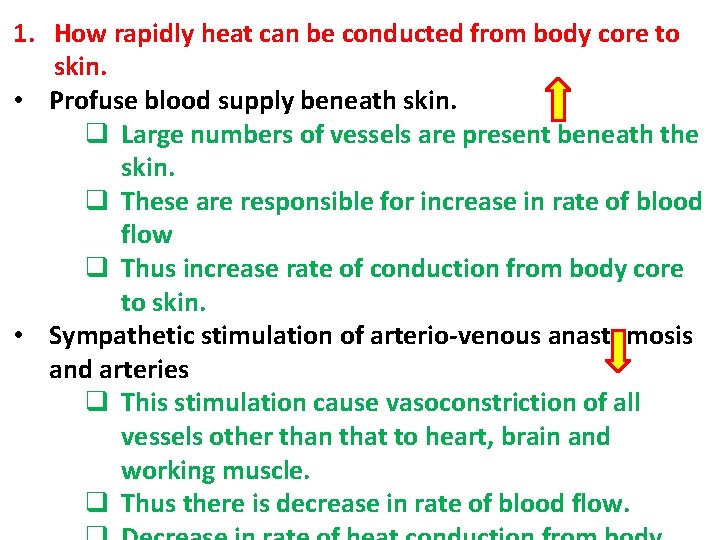
1. How rapidly heat can be conducted from body core to skin. • Profuse blood supply beneath skin. q Large numbers of vessels are present beneath the skin. q These are responsible for increase in rate of blood flow q Thus increase rate of conduction from body core to skin. • Sympathetic stimulation of arterio-venous anastomosis and arteries q This stimulation cause vasoconstriction of all vessels other than that to heart, brain and working muscle. q Thus there is decrease in rate of blood flow.

2. How rapidly heat can be conducted from skin to surrounding. • Radiation /infrared heat rays • Conduction • Convection • Evaporation
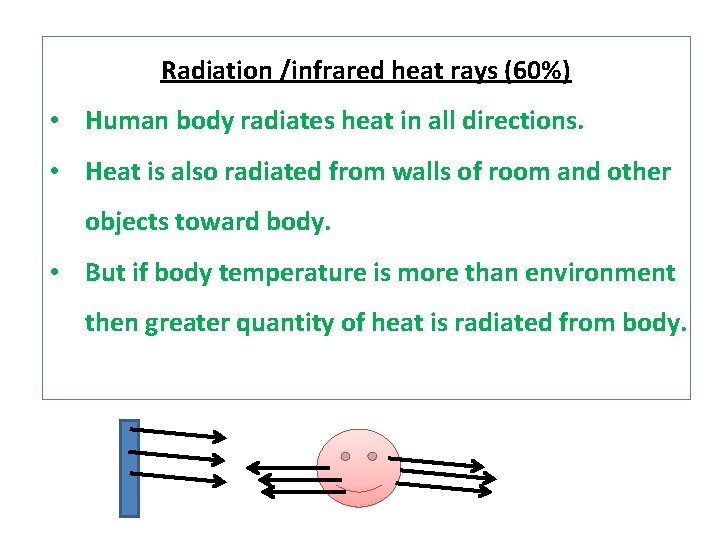
Radiation /infrared heat rays (60%) • Human body radiates heat in all directions. • Heat is also radiated from walls of room and other objects toward body. • But if body temperature is more than environment then greater quantity of heat is radiated from body.
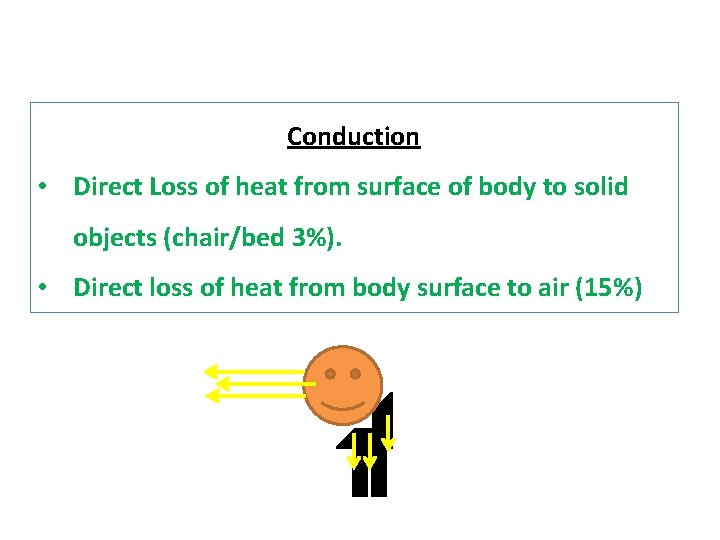
Conduction • Direct Loss of heat from surface of body to solid objects (chair/bed 3%). • Direct loss of heat from body surface to air (15%)
Convection • Molecules of skin are in constant vibratory motion. • This energy of motion transfer only when air is cooler than skin. • When temperature of air =temperature of skin→ no heat loss.
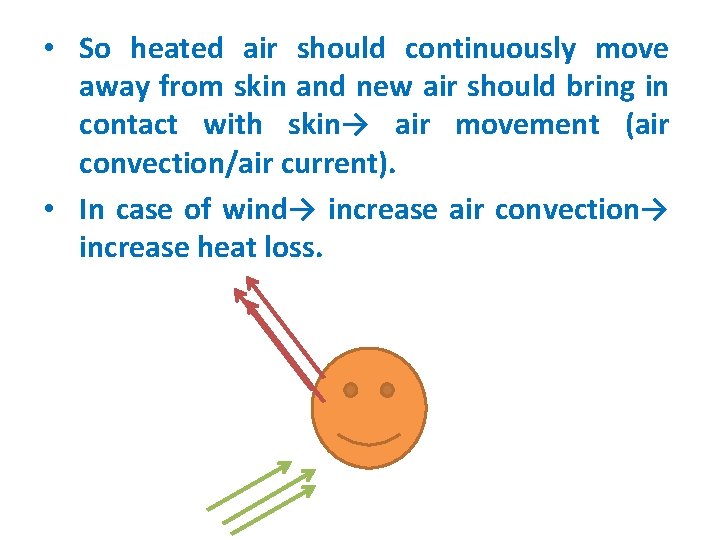
• So heated air should continuously move away from skin and new air should bring in contact with skin→ air movement (air convection/air current). • In case of wind→ increase air convection→ increase heat loss.
Evaporation (22%) • Sweating from skin and loss of water from lungs. • When temperature of surrounding is more than skin→ body gain heat by conduction and convection→ now only mean of losing heat is by evaporation.
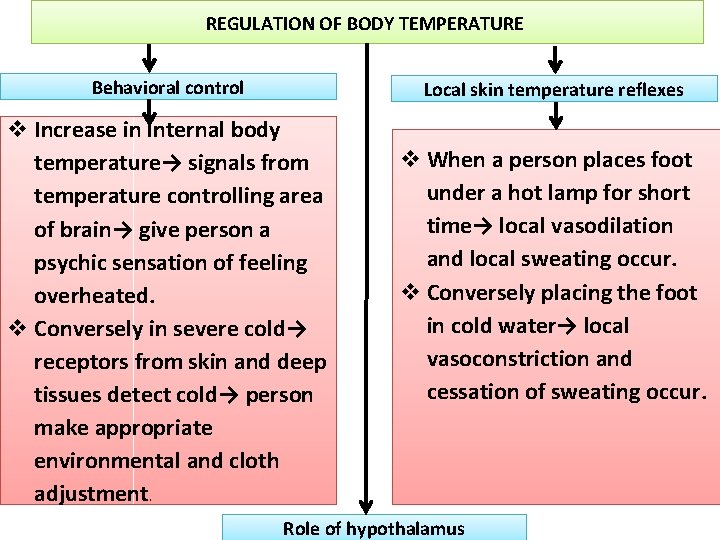
REGULATION OF BODY TEMPERATURE Behavioral control Local skin temperature reflexes Increase in internal body temperature→ signals from temperature controlling area of brain→ give person a psychic sensation of feeling overheated. Conversely in severe cold→ receptors from skin and deep tissues detect cold→ person make appropriate environmental and cloth adjustment. When a person places foot under a hot lamp for short time→ local vasodilation and local sweating occur. Conversely placing the foot in cold water→ local vasoconstriction and cessation of sweating occur. Role of hypothalamus
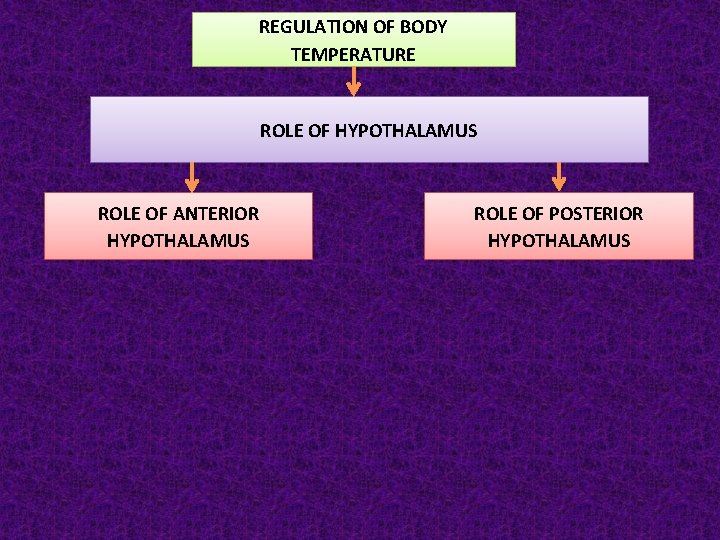
REGULATION OF BODY TEMPERATURE ROLE OF HYPOTHALAMUS ROLE OF ANTERIOR HYPOTHALAMUS ROLE OF POSTERIOR HYPOTHALAMUS
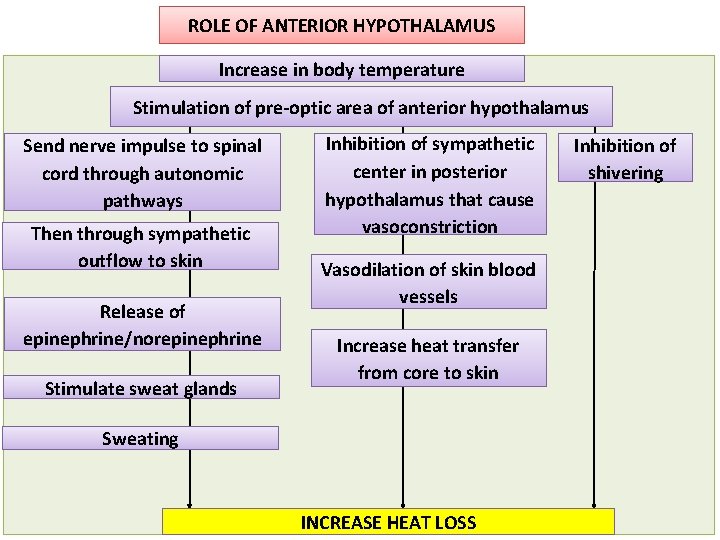
ROLE OF ANTERIOR HYPOTHALAMUS Increase in body temperature Stimulation of pre-optic area of anterior hypothalamus Send nerve impulse to spinal cord through autonomic pathways Then through sympathetic outflow to skin Release of epinephrine/norepinephrine Stimulate sweat glands Inhibition of sympathetic center in posterior hypothalamus that cause vasoconstriction Vasodilation of skin blood vessels Increase heat transfer from core to skin Sweating INCREASE HEAT LOSS Inhibition of shivering
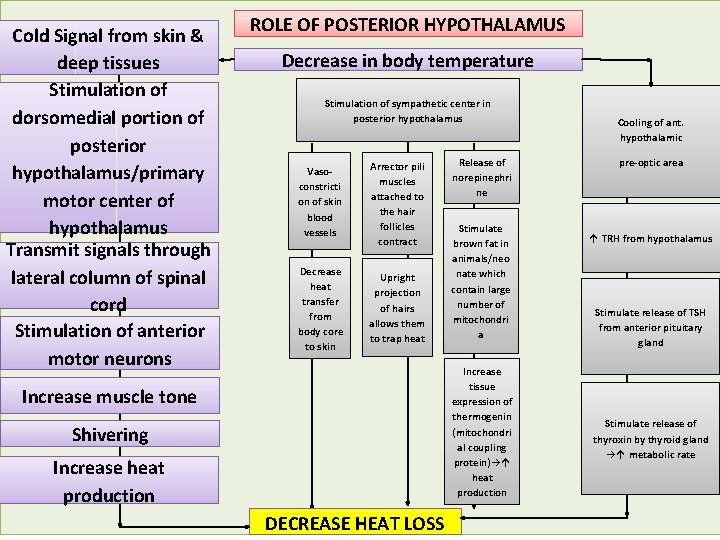
Cold Signal from skin & deep tissues Stimulation of dorsomedial portion of posterior hypothalamus/primary motor center of hypothalamus Transmit signals through lateral column of spinal cord Stimulation of anterior motor neurons ROLE OF POSTERIOR HYPOTHALAMUS Decrease in body temperature Stimulation of sympathetic center in posterior hypothalamus Vasoconstricti on of skin blood vessels Arrector pili muscles attached to the hair follicles contract Decrease heat transfer from body core to skin Upright projection of hairs allows them to trap heat Release of norepinephri ne Stimulate brown fat in animals/neo nate which contain large number of mitochondri a Increase tissue expression of thermogenin (mitochondri al coupling protein)→↑ heat production Increase muscle tone Shivering Increase heat production DECREASE HEAT LOSS Cooling of ant. hypothalamic pre-optic area ↑ TRH from hypothalamus Stimulate release of TSH from anterior pituitary gland Stimulate release of thyroxin by thyroid gland →↑ metabolic rate
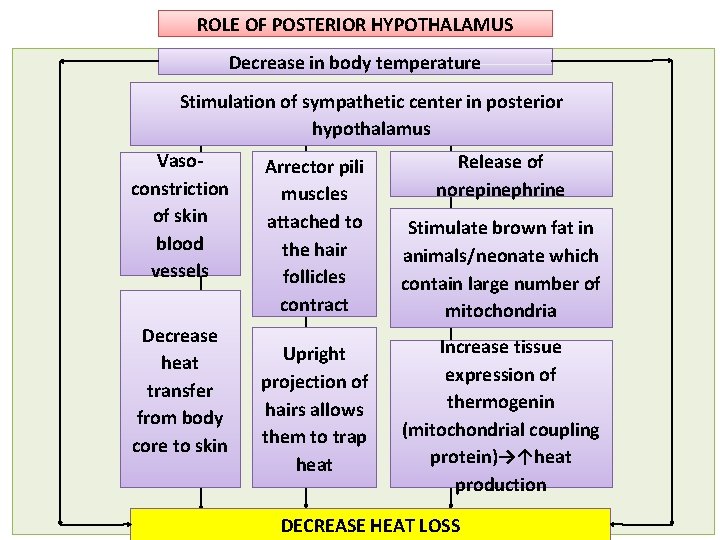
ROLE OF POSTERIOR HYPOTHALAMUS Decrease in body temperature Stimulation of sympathetic center in posterior hypothalamus Vasoconstriction of skin blood vessels Decrease heat transfer from body core to skin Arrector pili muscles attached to the hair follicles contract Upright projection of hairs allows them to trap heat Release of norepinephrine Stimulate brown fat in animals/neonate which contain large number of mitochondria Increase tissue expression of thermogenin (mitochondrial coupling protein)→↑heat production DECREASE HEAT LOSS
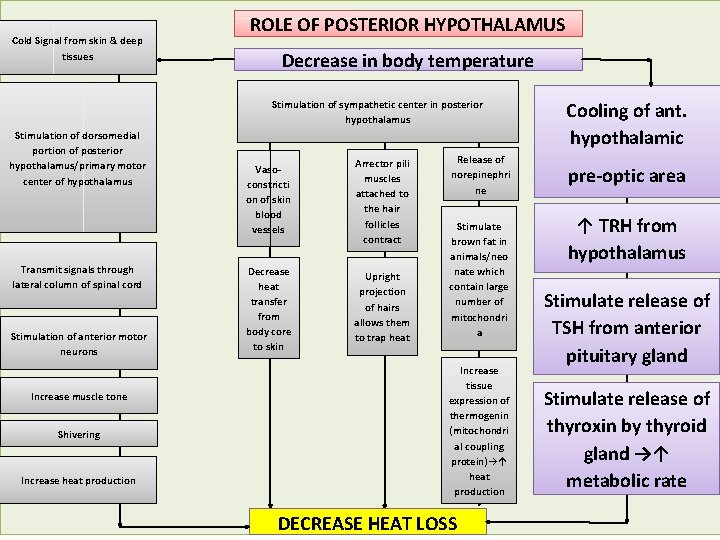
Cold Signal from skin & deep tissues ROLE OF POSTERIOR HYPOTHALAMUS Decrease in body temperature Stimulation of sympathetic center in posterior hypothalamus Stimulation of dorsomedial portion of posterior hypothalamus/primary motor center of hypothalamus Transmit signals through lateral column of spinal cord Stimulation of anterior motor neurons Increase muscle tone Shivering Increase heat production Vasoconstricti on of skin blood vessels Arrector pili muscles attached to the hair follicles contract Decrease heat transfer from body core to skin Upright projection of hairs allows them to trap heat Release of norepinephri ne Stimulate brown fat in animals/neo nate which contain large number of mitochondri a Increase tissue expression of thermogenin (mitochondri al coupling protein)→↑ heat production DECREASE HEAT LOSS Cooling of ant. hypothalamic pre-optic area ↑ TRH from hypothalamus Stimulate release of TSH from anterior pituitary gland Stimulate release of thyroxin by thyroid gland →↑ metabolic rate
FEVER • Fever is defined as body temperature above usual normal range. • Caused by any brain abnormality or by toxic substances (pyrogens ) that effect the temperature regulating center.
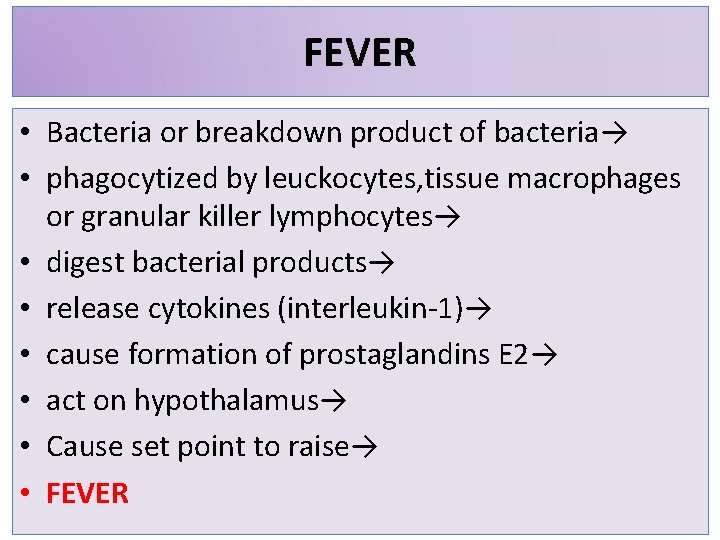
FEVER • Bacteria or breakdown product of bacteria→ • phagocytized by leuckocytes, tissue macrophages or granular killer lymphocytes→ • digest bacterial products→ • release cytokines (interleukin-1)→ • cause formation of prostaglandins E 2→ • act on hypothalamus→ • Cause set point to raise→ • FEVER
Chills If set point of hypothalamic control raise to high value→ body temperature rise in response→ during this period , person experience extremely cold , chills and shivers.
Crisis/Flush When the factor causing high temperature is removed→ set point reduced to low level→ now body temperature is at high level , so body try to lower its temperature→during this period person experience intense sweating→these change of events is known as crisis or flush.
Heatstroke When body temperature rises beyond a critical temperature into the range of 105 0 F to 1080 F, Heatstroke develops. Symptoms include dizziness, abdominal distress and loss of consciousness. Circulatory shock due to excessive loss of fluid and electrolytes. Damage to brain and body tissues.
• Reason: 1. At this very high temperature, temperature regulating mechanism often fail. 2. Increase body temperature doubles the rate of all intracellular chemical reactions, thus liberating more heat.
• Treatment: 1. Remove all clothing. 2. Cool water spray 3. Cool water sponging 4. Immersion of body in chilled water if available.
Exposure of body to extreme cold When body temperature falls below 940 C, the ability of hypothalamus to regulate body temperature is lost. Reason: decrease rate of chemical reactions. Decrease activity of central nervous system to control heat mechanism and prevent shivering.
FROSTBITE • When body is exposed to extremely low temperature, surface area freeze. • Occur in lobes of ear and in digits of hand feet. • Ice crystal form in the cells, local tissue damage and permanent circulatory impairments + gangrene

THANKS
- Slides: 29