
Body Systems Case 1 School Sores Gram stain
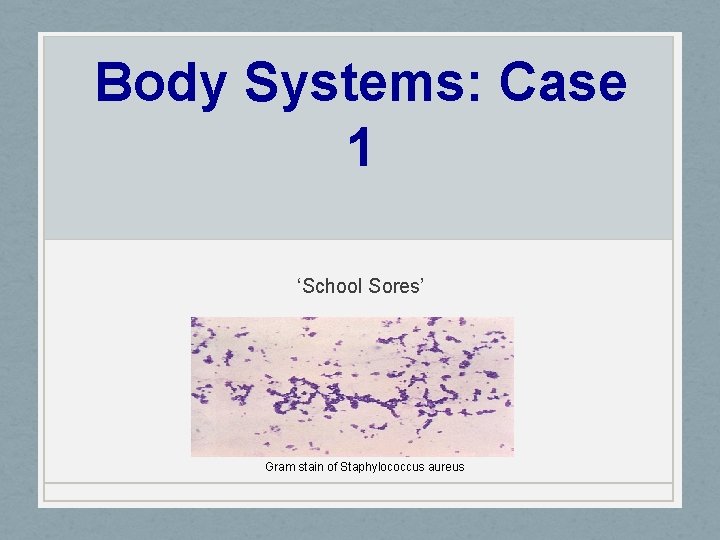
Body Systems: Case 1 ‘School Sores’ Gram stain of Staphylococcus aureus
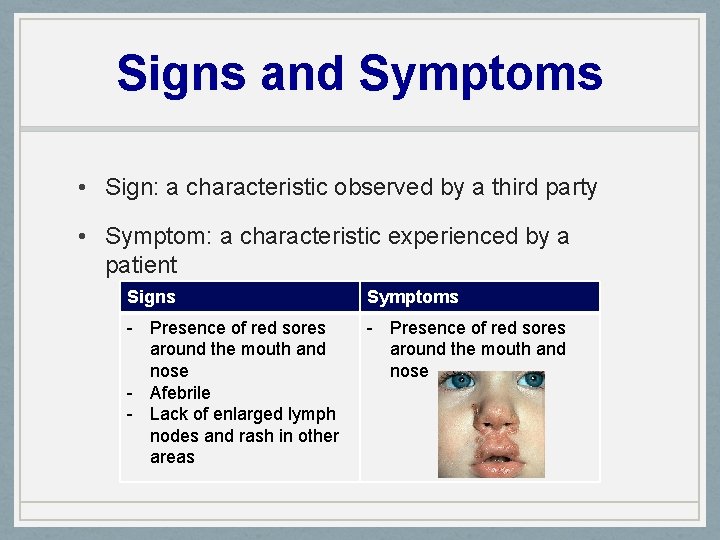
Signs and Symptoms • Sign: a characteristic observed by a third party • Symptom: a characteristic experienced by a patient Signs Symptoms - Presence of red sores around the mouth and nose - Afebrile - Lack of enlarged lymph nodes and rash in other areas - Presence of red sores around the mouth and nose

The Integumentary System Stephanie presents with a rash around her nose and mouth - Bacteria is targeting the integumentary system (hair, skin, nails…) - Sores and rashes affect the dermis and the epidermis

Normal Physiological Function • Skin function: protects the interior body from the external environment • Skin is one of the first lines of defense in the human immune system • Acts as a barrier against potential pathogens (fungi, bacteria, viruses, parasites, antigens…)
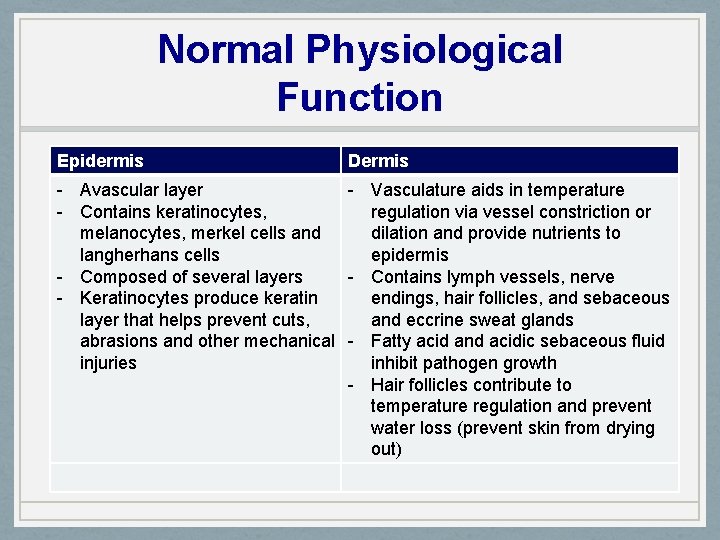
Normal Physiological Function Epidermis Dermis - Avascular layer - Vasculature aids in temperature - Contains keratinocytes, regulation via vessel constriction or melanocytes, merkel cells and dilation and provide nutrients to langherhans cells epidermis - Composed of several layers - Contains lymph vessels, nerve - Keratinocytes produce keratin endings, hair follicles, and sebaceous layer that helps prevent cuts, and eccrine sweat glands abrasions and other mechanical - Fatty acid and acidic sebaceous fluid injuries inhibit pathogen growth - Hair follicles contribute to temperature regulation and prevent water loss (prevent skin from drying out)
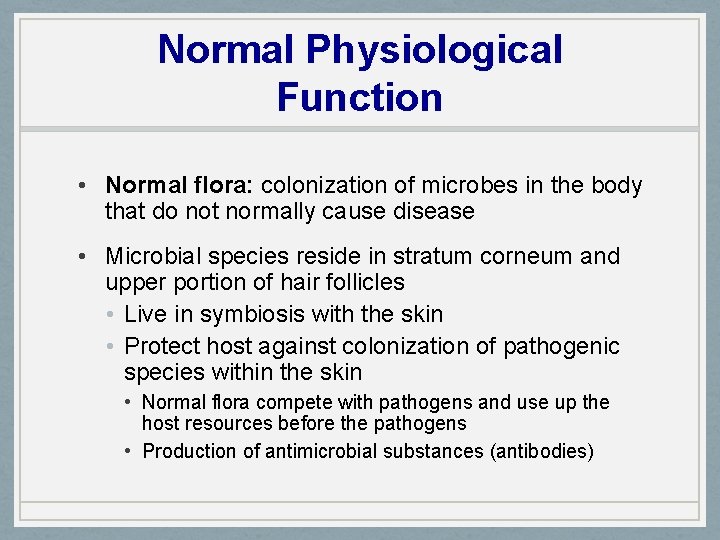
Normal Physiological Function • Normal flora: colonization of microbes in the body that do not normally cause disease • Microbial species reside in stratum corneum and upper portion of hair follicles • Live in symbiosis with the skin • Protect host against colonization of pathogenic species within the skin • Normal flora compete with pathogens and use up the host resources before the pathogens • Production of antimicrobial substances (antibodies)
Normal Physiological Function • Skin protects against UV rays • vitamin D synthesis occurs when keratinocytes are exposed to UV radiation • Vitamin D can regulate maturation in cells that play a role in the immune response such as dendritic cells, monocytes, and T Lymphocytes • Changes in skin are detected by nerve endings and sensory epithelial cells
Disruption of Normal Function • Damage to the skin decreases its capacity to function as part of the immune system • The stratum corneum would not be able to release cytokines and antimicrobial peptides • p. H and dryness levels may be altered • Skin may no longer be able to protect the body against UV radiation, chemicals, and oxidative and mechanical stress
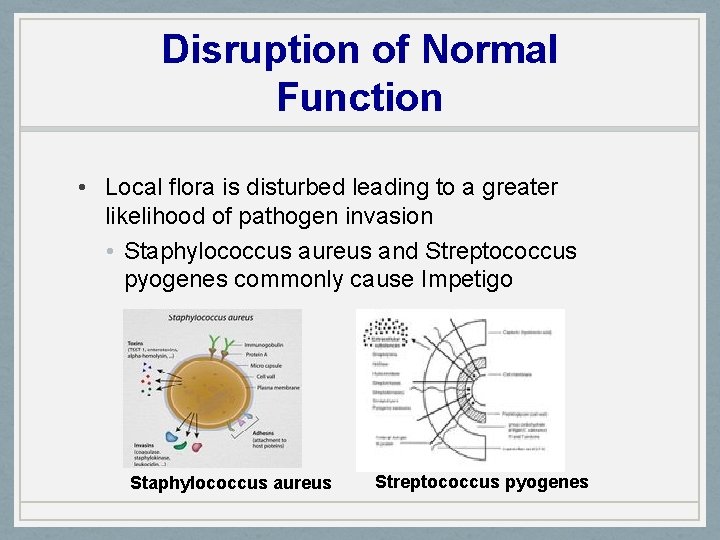
Disruption of Normal Function • Local flora is disturbed leading to a greater likelihood of pathogen invasion • Staphylococcus aureus and Streptococcus pyogenes commonly cause Impetigo Staphylococcus aureus Streptococcus pyogenes
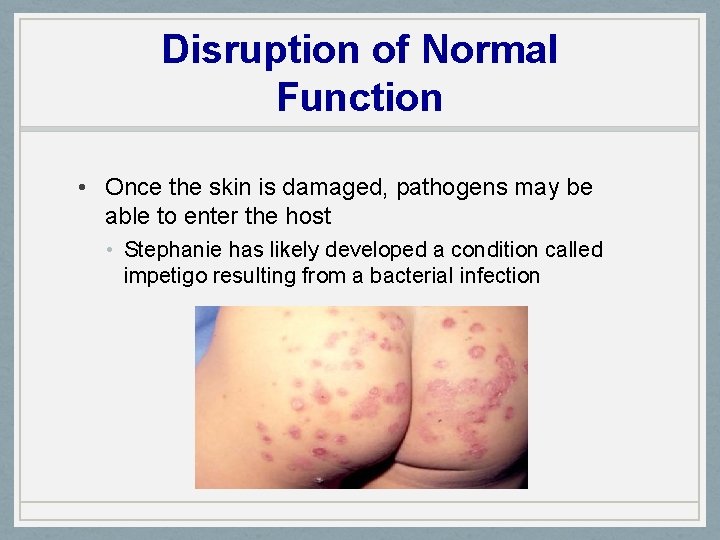
Disruption of Normal Function • Once the skin is damaged, pathogens may be able to enter the host • Stephanie has likely developed a condition called impetigo resulting from a bacterial infection
Disruption of Normal Function • Neutrophils accumulate underneath the stratum corneum, producing a subcorneal pustule • The pustule contains serum proteins and inflammatory cells • Bullous and Non Bullous pustules can occur • The pustules begin as a small macule near the nose and mouth

Bullous vs. Non Bullous Impetigo (Impetigo Contagiosa) Non Bullous Impetigo

Secondary Infection • There are no signs of a secondary infection in this case • Rash is limited to facial area • No swollen lymph nodes • No fever • Impetigo patients usually show no systemic symptoms
Secondary Infection • It is possible that patients with impetigo can develop secondary infections • Early infection appears as red sores and pustules that gradually enlarge • Pustules accumulate dead white blood cells • Sores rupture and leak a purulent discharge which allows bacteria to spread and progress to secondary infections • The spread of S. aureus and S. pyogenes bacteria can cause secondary infections such as Infectious Eczematoid Dermatitis
Secondary Infection • Other complications of S. aureus and S. pyogenes spread include: • • • Ecthyhma Cellulitis Furunculosis Methicillin-resistant Staphylococcus aureus Infection Glomerulonephritis
- Slides: 15