
Body Systems Activities Circulatory System Function Transports materials
Body Systems Activities
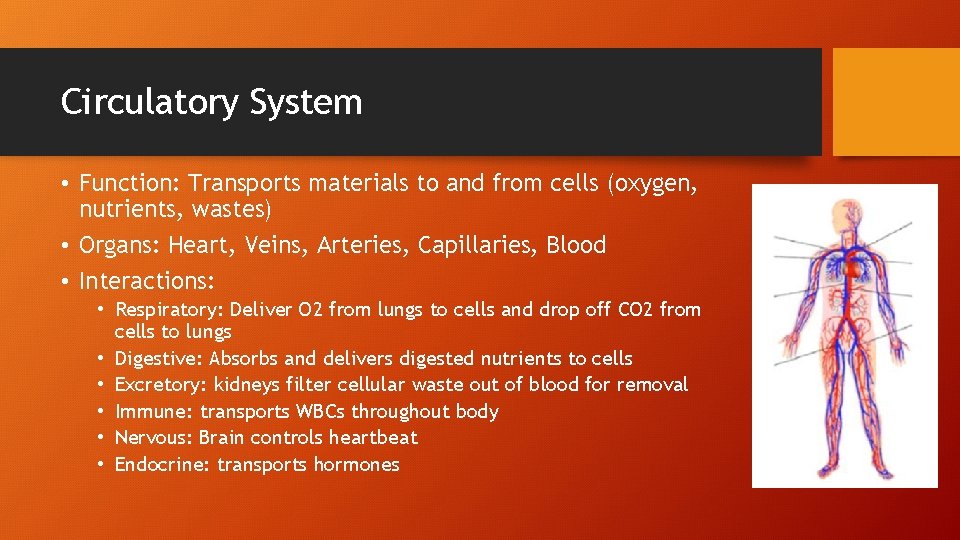
Circulatory System • Function: Transports materials to and from cells (oxygen, nutrients, wastes) • Organs: Heart, Veins, Arteries, Capillaries, Blood • Interactions: • Respiratory: Deliver O 2 from lungs to cells and drop off CO 2 from cells to lungs • Digestive: Absorbs and delivers digested nutrients to cells • Excretory: kidneys filter cellular waste out of blood for removal • Immune: transports WBCs throughout body • Nervous: Brain controls heartbeat • Endocrine: transports hormones
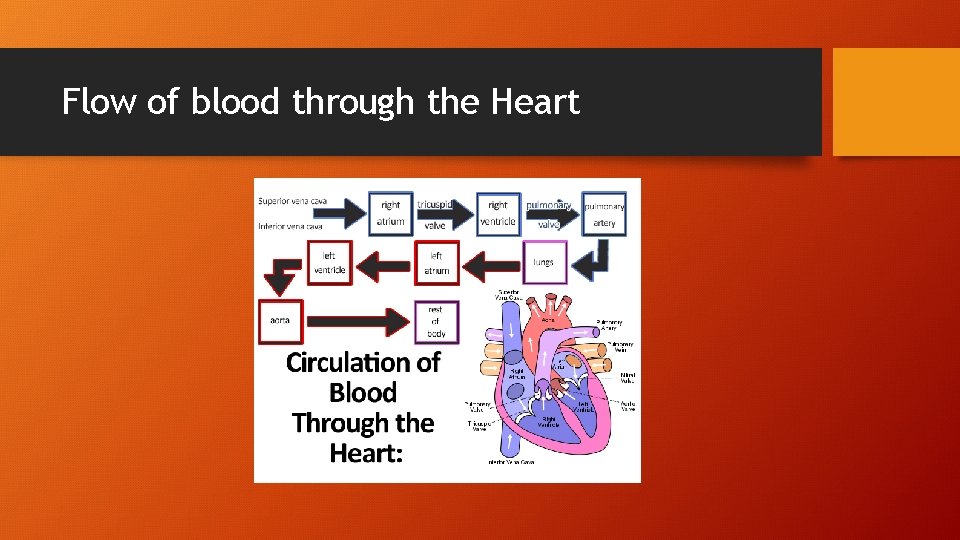
Flow of blood through the Heart
Activity: Flow of Blood through the heart • 1 volunteer to be the blood • Everyone else gets an organ
Components of Blood • Plasma: Liquid that contains all other blood products (including electrolytes and salts) • Red blood Cells: red due to hemoglobin • White Blood Cells: Part of immune system • Platelets: used for clotting (patches wounds)
Activity 2: are you alive? • Part 1: Find your pulse: neck or wrist (count number of beats in 10 seconds and then multiply by 6 • Part 2: Jumping Jacks or run in place for 1 minute and find pulse again • Question: Why does your heart rate increase?
Activity 3: How is it all connected? • Groups of 4 -5 • Get chromebook, CO 2 sensor (straw and plastic bag), Temperature Sensor • Start chromebook and open Spark. Vue app • Turn on sensors and connect using Bluetooth • Pick graph only Select 1 Volunteer to collect data from • Run 1: put temperature probe on forehead; breathe one normal breath into the baggie (with CO 2 sensor inside) through the straw (remove straw and seal off when finished); allow chart to generate data • Run 2: do 30 seconds of jumping jacks while holding breath; then collect data as above (temperature probe on forehead; single breath into straw and seal baggie with CO 2 sensor) Questions: • what do you notice about the temperature of your body and the CO 2 levels? • Why do you think this is happening? • What body systems are connected and working together to do this?
Respiratory System • Function: Takes in oxygen and removes carbon dioxide and water • Parts: Nose, Trachea, Bronchioles, Alveoli, Lungs • Interactions: • Circulatory: Takes in O 2 for delivery to cells and removes CO 2 brought from cells • Excretory: Removes gaseous wastes • Nervous System: Controls breathing • Muscular: Diaphragm controls breathing
Activity 4: Full of Hot Air • • 1 volunteer: How much air do your lungs hold? WITH 1 BREATH, blow up the balloon as large as you can Find circumference Volume=4/3∏r 3
Exit Slip • Answer the following 3 questions on a sheet of looseleaf and hand in to bin before leaving class: 1) What happens to blood as it moves through the circulatory system? 2) What happens to your heart rate when you exercise? Why? 3) What other systems are connected to the circulatory system and how do you know? 4) How does the diaphragm work to pull air into the lungs?
- Slides: 10