
Body Organization Chapter Outline I Word Parts II
Body Organization
Chapter Outline • I- Word Parts • II- Levels of Body Organization • III- Body • IV- Word Building • V- Abbreviations
• • • • abdomin/o- abdomen adip/o- fat anter/o- front brachi/o- arm caud/o- tail cephal/o- head cervic/o- neck chondr/o- cartilage crani/o- skull crur/o- leg cyt/o- cell dist/o- away from dors/o- back of body epitheli/o- epithelium glute/o- buttock hist/o- tissue infer/o- below later/o- side medi/o- middle muscul/o- muscle neur/o- nerve organ/o- organ oste/o- bone pelv/o- pelvis peritone/o- peritoneum pleur/o- pleura poster/o- back proxim/o- near to pub/o- genital region somat/o- body spin/o- spine super/o- above system/o- system thorac/o- chest ventr/o- belly vertebr/o- vertebra viscer/o- internal organ
II- Levels of Body Organization • Cells- come together to form tissues • Tissues- come together to form organs • Organs- come together to form systems • Systems- come together to form the whole body
Cells • Fundamental unit of all living things; smallest structure of body that has all properties of being alive: • responds to stimuli • engages in metabolic activities • reproduces itself • Tissues and organs in body are composed of cells • Individual cells perform functions for body such as reproduction, hormone secretion, energy production, and excretion • Special cells carry out specific functions, such as contraction by muscle cells and electrical impulse transmission by nerve cells • Study of cells and their function is called cytology
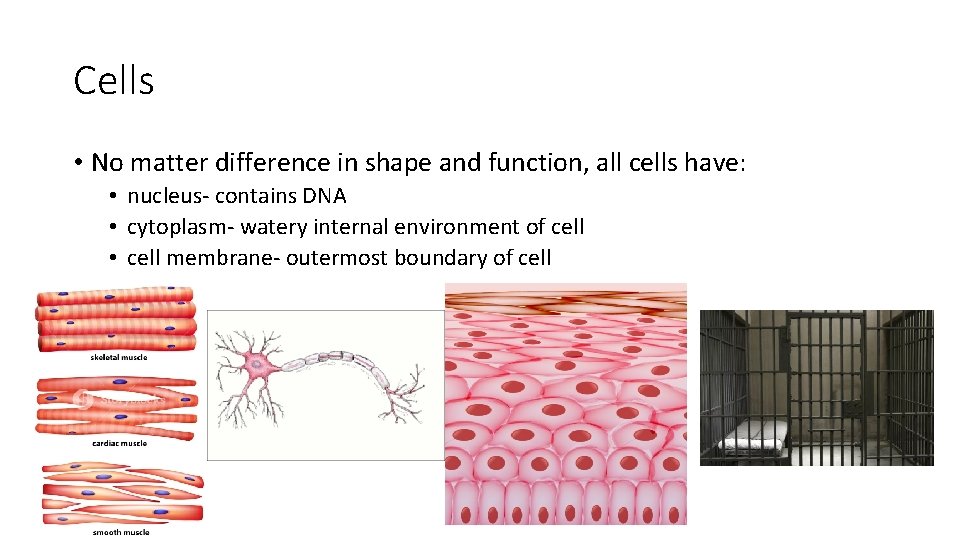
Cells • No matter difference in shape and function, all cells have: • nucleus- contains DNA • cytoplasm- watery internal environment of cell • cell membrane- outermost boundary of cell

Tissues • Histology- study of tissue • Tissue formed when like cells grouped together and function together to perform specific activity. • Body has four types of tissue • • Muscle Epithelial Connective Nervous
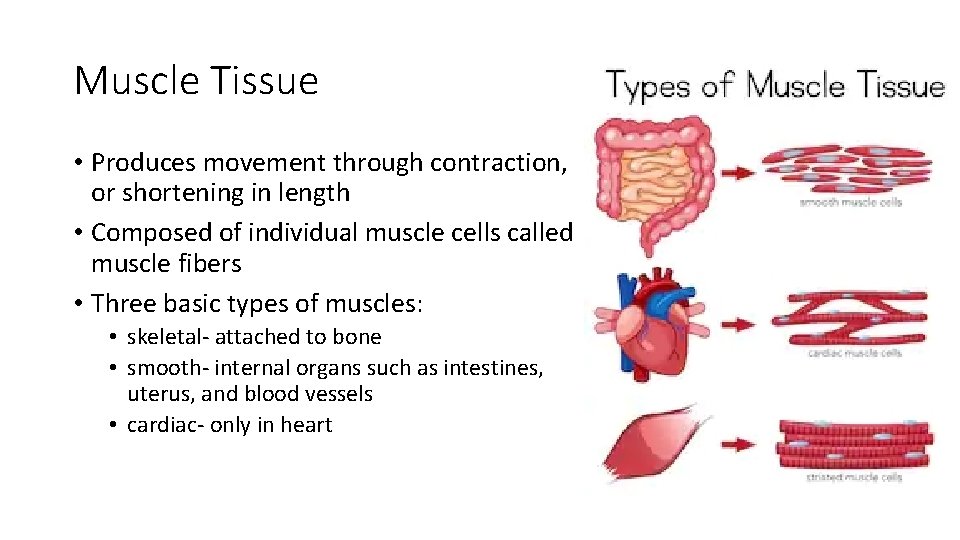
Muscle Tissue • Produces movement through contraction, or shortening in length • Composed of individual muscle cells called muscle fibers • Three basic types of muscles: • skeletal- attached to bone • smooth- internal organs such as intestines, uterus, and blood vessels • cardiac- only in heart
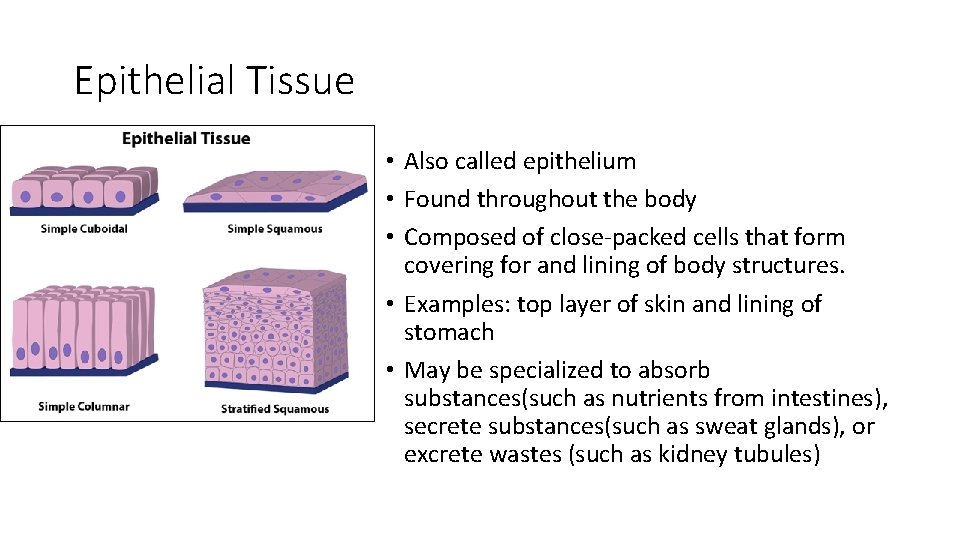
Epithelial Tissue • Also called epithelium • Found throughout the body • Composed of close-packed cells that form covering for and lining of body structures. • Examples: top layer of skin and lining of stomach • May be specialized to absorb substances(such as nutrients from intestines), secrete substances(such as sweat glands), or excrete wastes (such as kidney tubules)
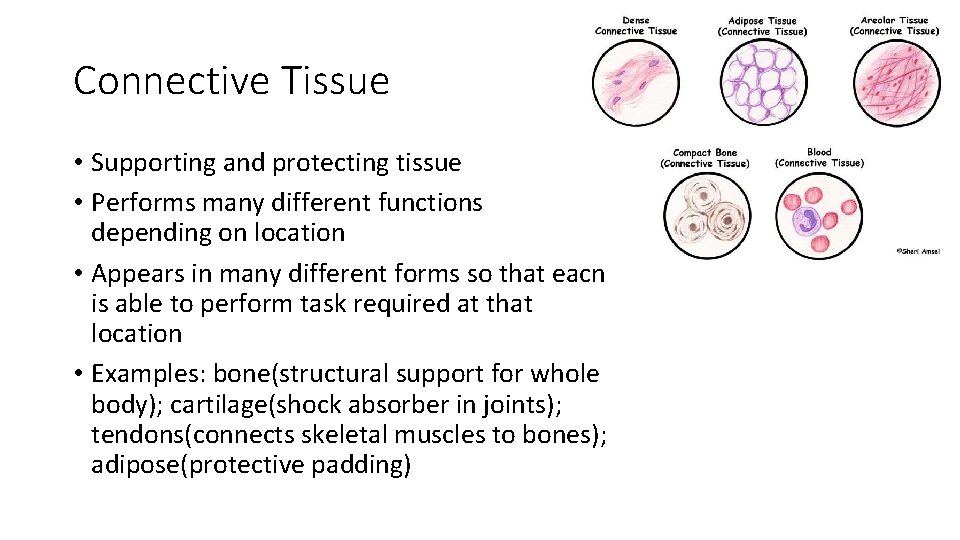
Connective Tissue • Supporting and protecting tissue • Performs many different functions depending on location • Appears in many different forms so that each is able to perform task required at that location • Examples: bone(structural support for whole body); cartilage(shock absorber in joints); tendons(connects skeletal muscles to bones); adipose(protective padding)
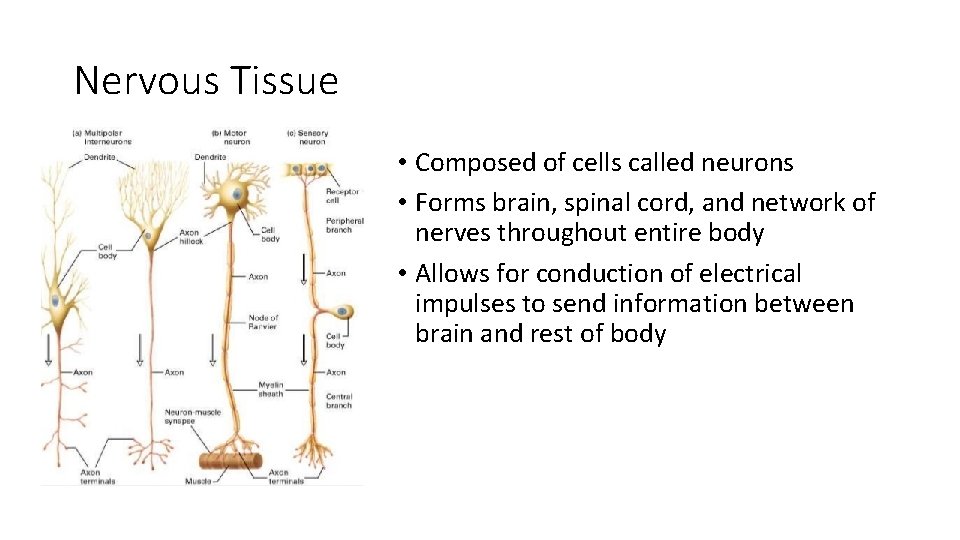
Nervous Tissue • Composed of cells called neurons • Forms brain, spinal cord, and network of nerves throughout entire body • Allows for conduction of electrical impulses to send information between brain and rest of body
Organs • Composed of several different types of tissue that work as a unit to perform special functions
Systems • Composed of several organs working in coordinated manner to perform complex function or functions • Integumentary Digestive • Musculoskeletal Urinary • Cardiovascular Reproductive • Hematic Endocrine • Lymphatic Nervous • Respiratory Special Senses: Eye & Ear
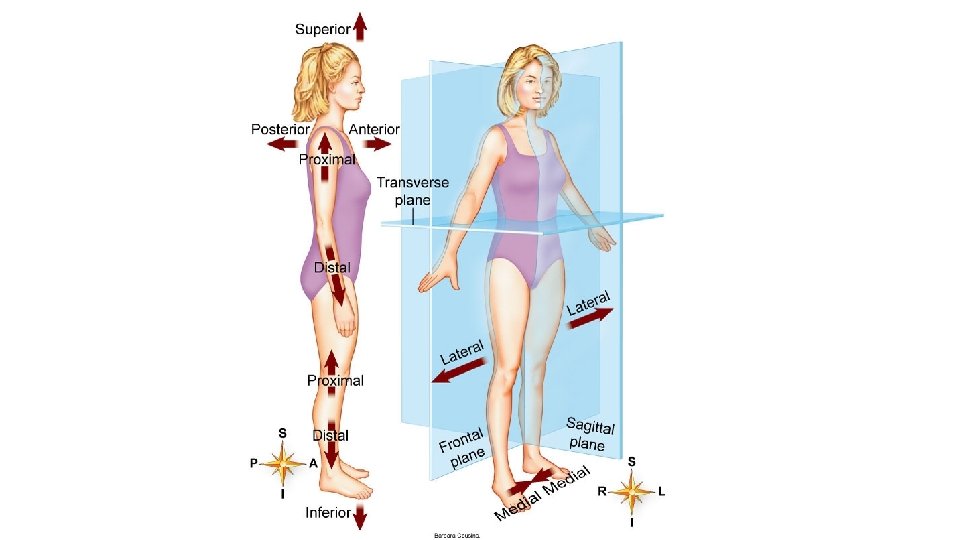
III- Body • Used when describing positions and relationships of structure in human body • Body in anatomical position is standing erect with arms at side of body, palms of hands facing forward, and eyes looking straight ahead; legs are parallel with feet and toes pointing forward • For descriptive purposes, assumption is always that the person is in anatomical position even if body or parts of body are in any other position
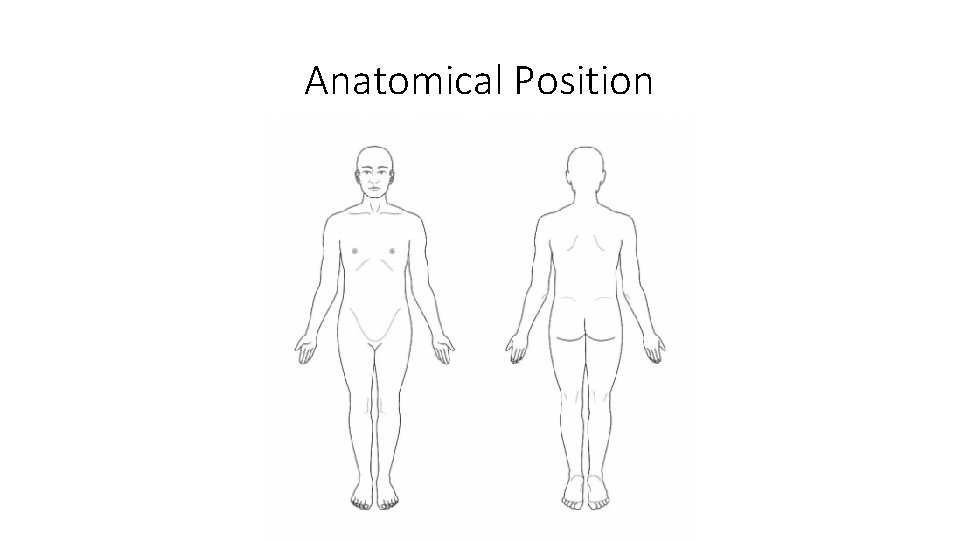
Anatomical Position
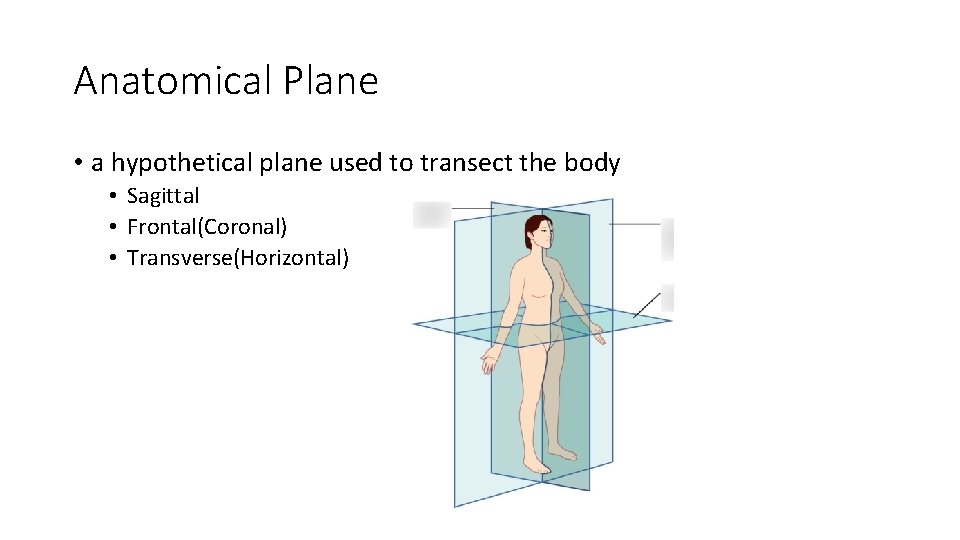
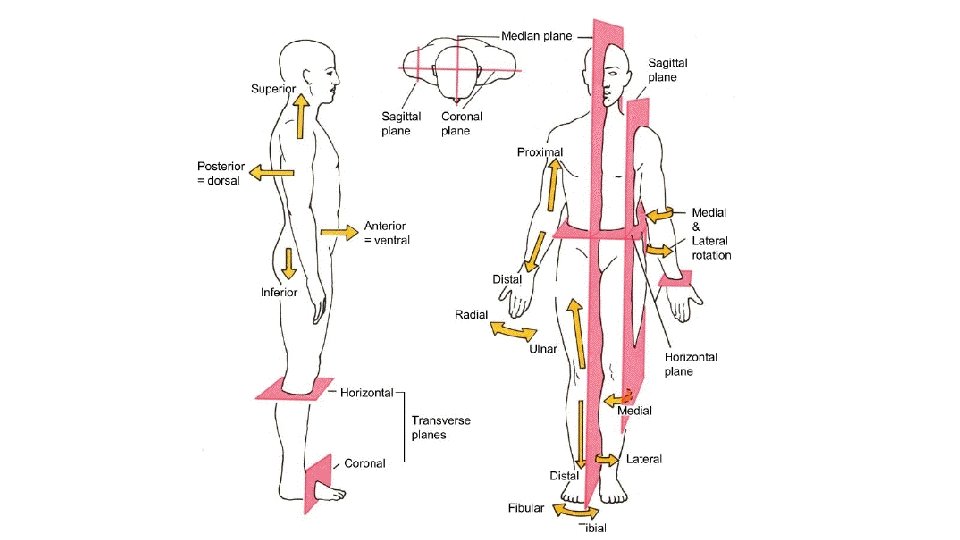
Anatomical Plane • a hypothetical plane used to transect the body • Sagittal • Frontal(Coronal) • Transverse(Horizontal)

Sagittal Plane • Runs lengthwise from the front to back • Divides the body or any of it’s parts into LEFT and RIGHT portions

Frontal(Coronal) Plane • Runs lengthwise from side to side • Divides body into front and back portions(Anterior & Posterior)
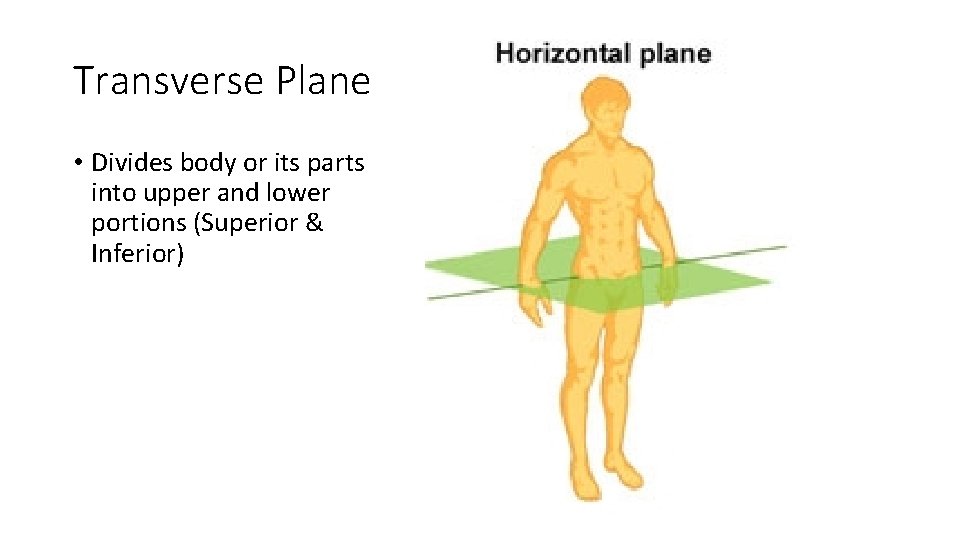
Transverse Plane • Divides body or its parts into upper and lower portions (Superior & Inferior)
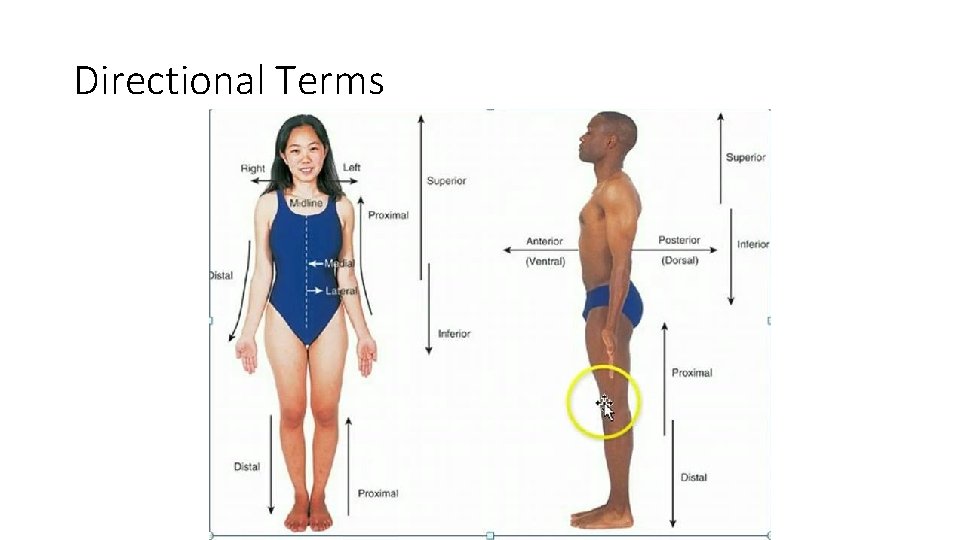
Directional Terms • Assist medical personnel in discussing position or location of patient’s complaint. • Also help describe one process, organ, or system as it relates to another
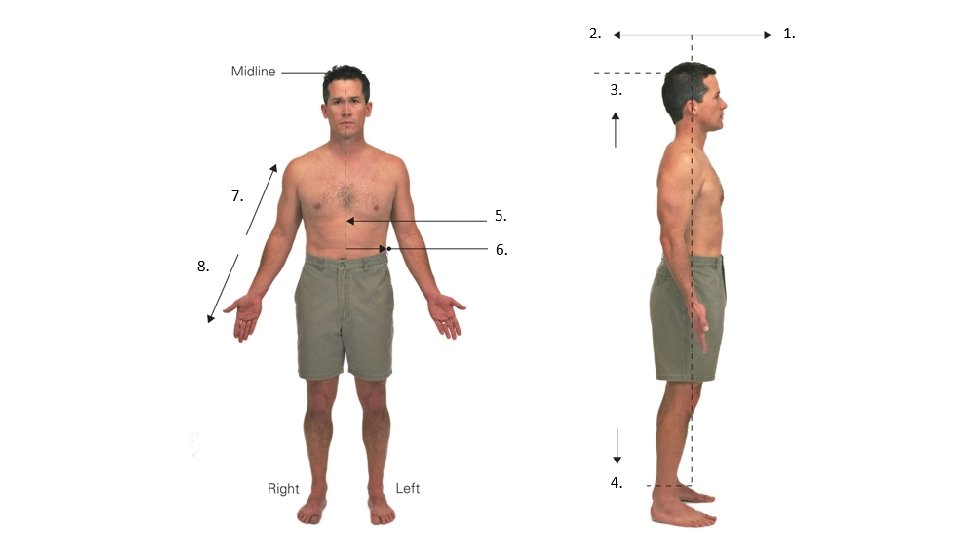
Directional Terms • Superior- toward the head • Inferior- toward the feet • Anterior- toward the front • Posterior- toward the back • Medial- closer to the midline • Lateral- away from the midline • Proximal- closer to the main mass • Distal- away from the main mass • Superficial- toward the surface of the body • Deep- toward the inside of the body • Ventral- toward the stomach • Dorsal- toward the back
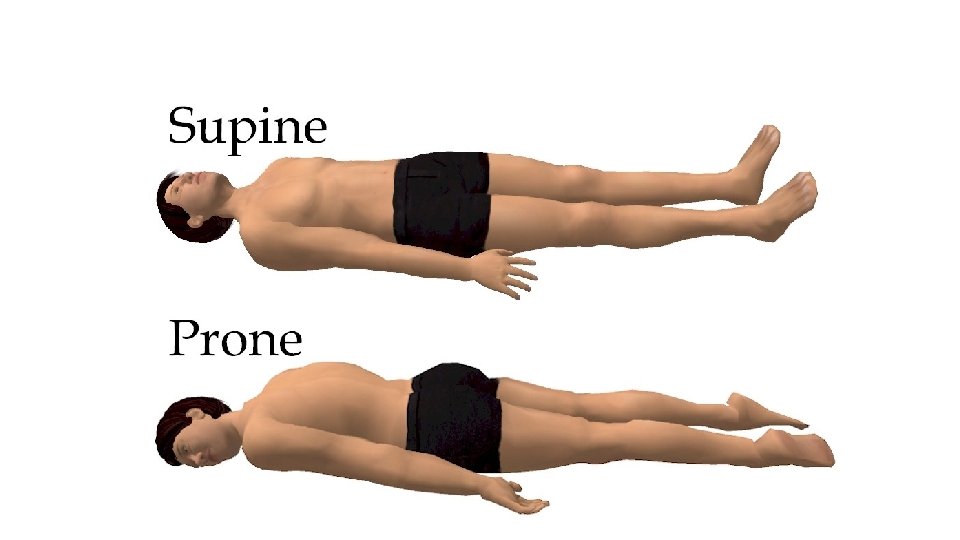
Directional Terms • Apex- Tip of organ • Base- Bottom of organ • Supine- Facing upward • Prone- Facing downward
Directional Terms

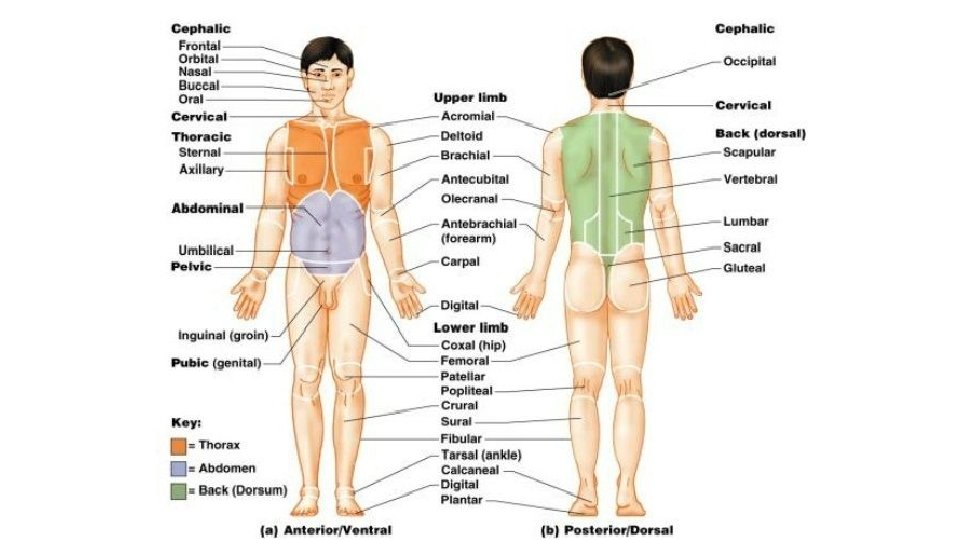
Body Regions • Cephalic- entire head • Cervical- neck • Trunk- torso • Thoracic- chest • Abdominal • Pelvic • Pubic- genital region • Dorsum- back • Vertebral region • Gluteal- buttocks • Upper Extremeties/Brachialarms • Lower Extremeties/Crural- legs
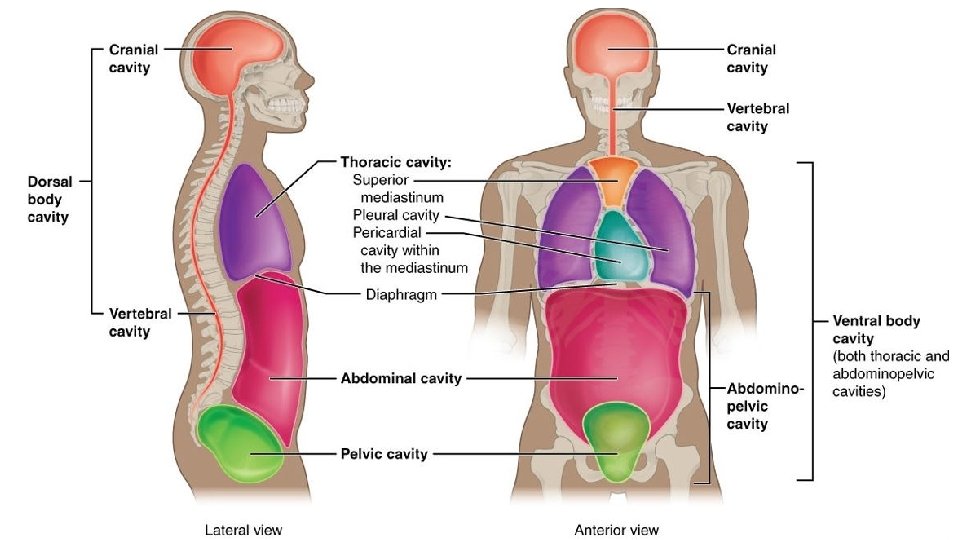
Body Cavities • • • Body is not solid structure; has many open spaces or cavities Can divide the body into four major cavities- two dorsal and two ventral Dorsal cavities include CRANIAL CAVITY(brain) and SPINAL CAVITY(spinal cord) Ventral cavities include THORACIC CAVITY and ABDOMINOPELVIC CAVITY Diaphragm- physical wall between thoracic cavity and abdominopelvic cavity; muscle used for breathing
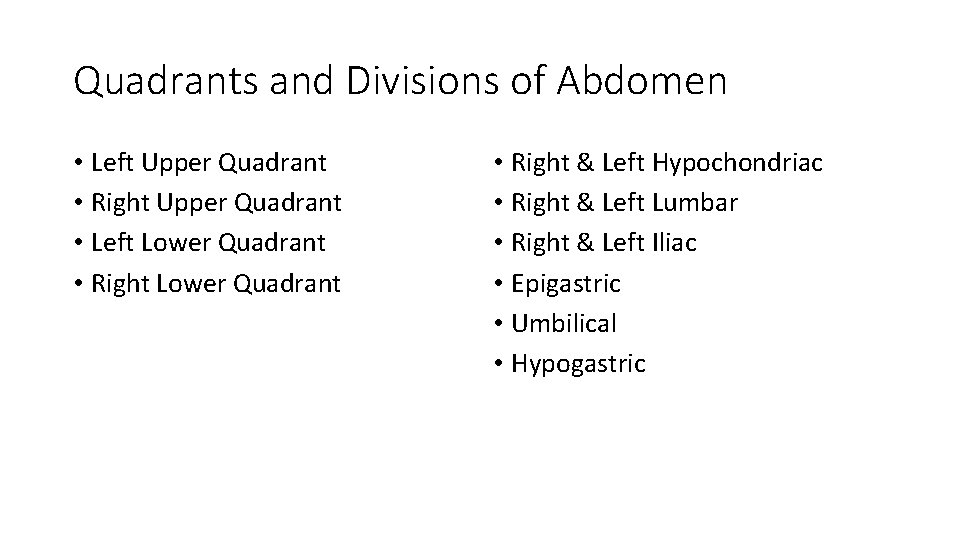
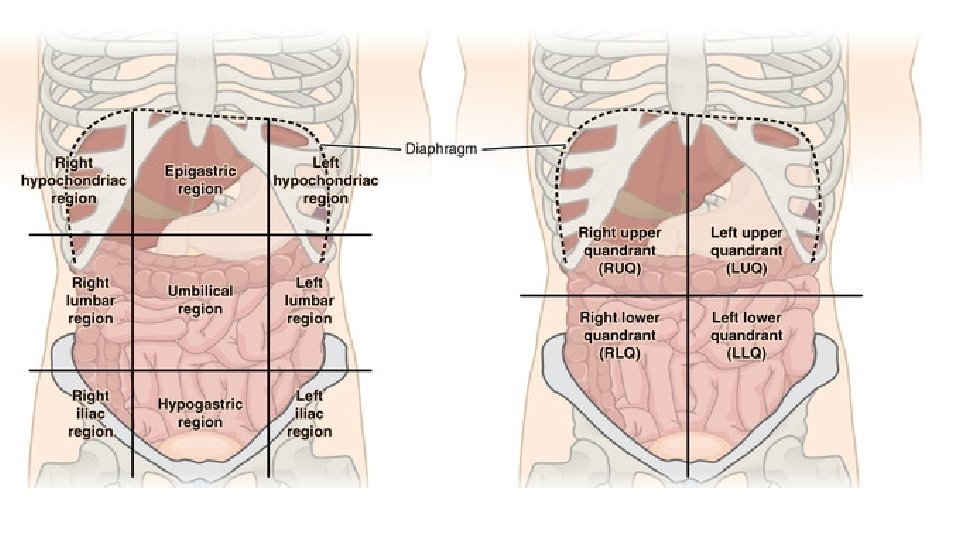
Quadrants and Divisions of Abdomen • Left Upper Quadrant • Right Upper Quadrant • Left Lower Quadrant • Right Lower Quadrant • Right & Left Hypochondriac • Right & Left Lumbar • Right & Left Iliac • Epigastric • Umbilical • Hypogastric
Word Building- find the Combining Form & Definition • Abdominal • Anterior • Brachial • Caudal • Cephalic • Cervical • Cranial • Crural • Distal • Dorsal • Epithelial • Gluteal • Inferior • Lateral • Medial • Muscular
Word Building- find the Combining Form & Definition • Neural • Organic • Pelvic • Peritoneal • Pleural • Posterior • Proximal • Pubic • Somatic • Spinal • Superior • Systemic • Thoracic • Ventral • Vertebral • Visceral
Chapter Abbreviations • AP- anteroposterior • CV- cardiovascular • ENT- ear, nose, and throat • GI- gastrointestinal • GU- genitourinary • GYN- gynecology • lat. - lateral • LE- lower extremity • LLQ- left lower quadrant • LUQ- left upper quadrant • MS- musculoskeletal • OB- obstetrics • PA- posteroanterior • RLQ- right lower quadrant • RUQ- right upper quadrant • UE- upper extremity
- Slides: 36