
Body Organization Cells Basic unit of structure and
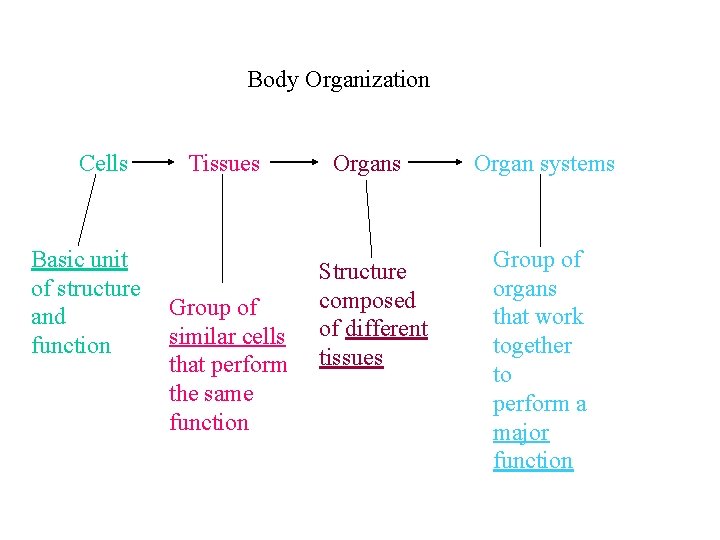
Body Organization Cells Basic unit of structure and function Tissues Group of similar cells that perform the same function Organs Organ systems Structure composed of different tissues Group of organs that work together to perform a major function
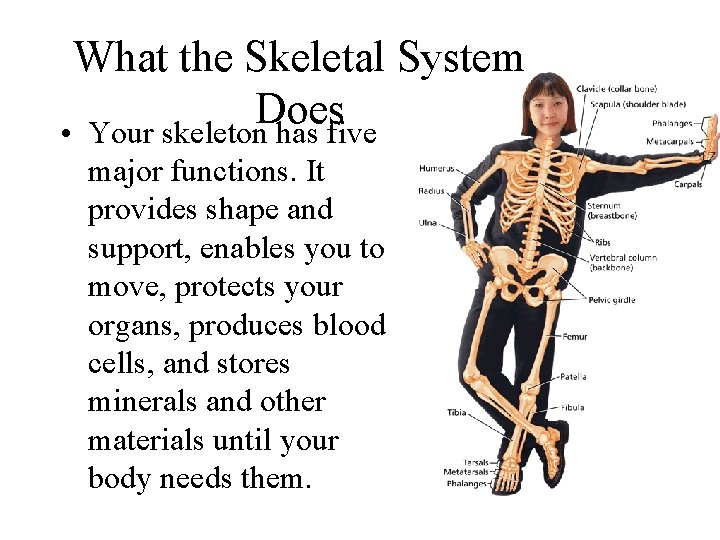
- The Skeletal System What the Skeletal System Does • Your skeleton has five major functions. It provides shape and support, enables you to move, protects your organs, produces blood cells, and stores minerals and other materials until your body needs them.
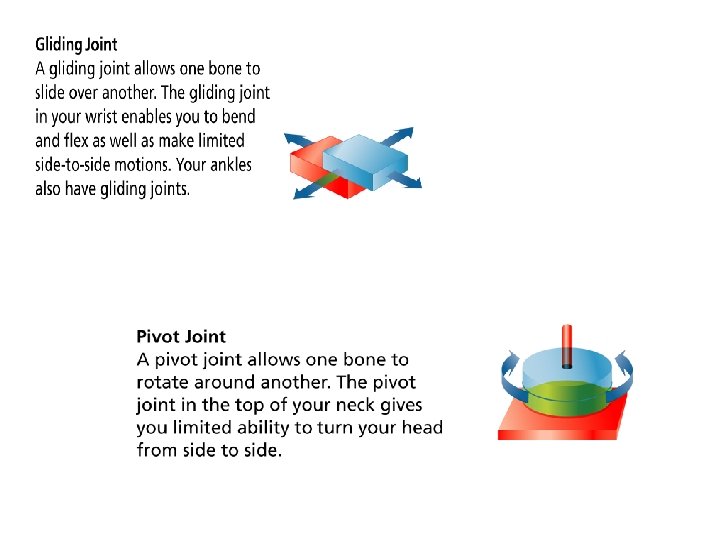
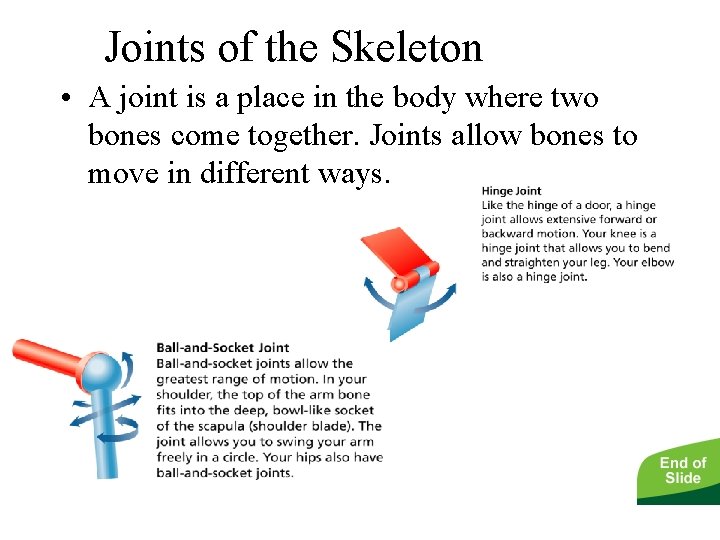
- The Skeletal System Joints of the Skeleton • A joint is a place in the body where two bones come together. Joints allow bones to move in different ways.
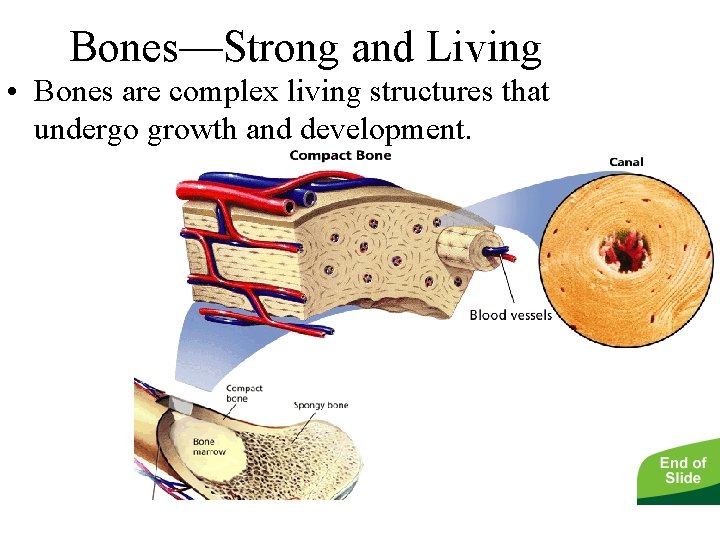
- The Skeletal System Bones—Strong and Living • Bones are complex living structures that undergo growth and development.
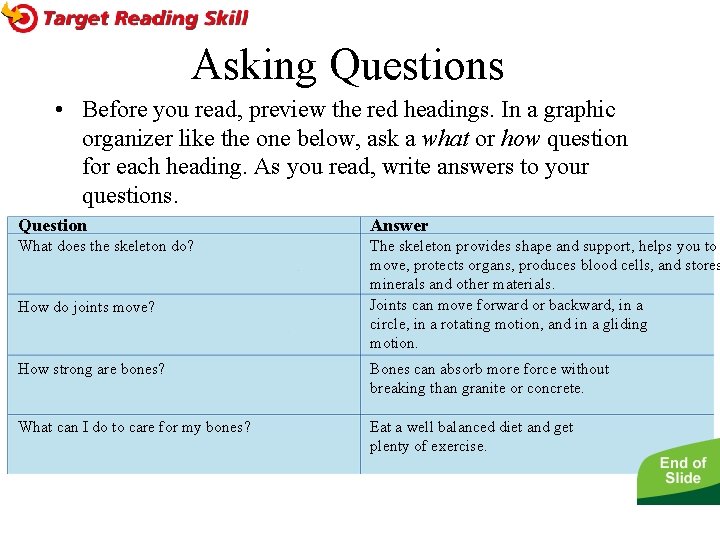
- The Skeletal System Asking Questions • Before you read, preview the red headings. In a graphic organizer like the one below, ask a what or how question for each heading. As you read, write answers to your questions. Question Answer What does the skeleton do? The skeleton provides shape and support, helps you to move, protects organs, produces blood cells, and stores minerals and other materials. Joints can move forward or backward, in a circle, in a rotating motion, and in a gliding motion. How do joints move? How strong are bones? Bones can absorb more force without breaking than granite or concrete. What can I do to care for my bones? Eat a well balanced diet and get plenty of exercise.
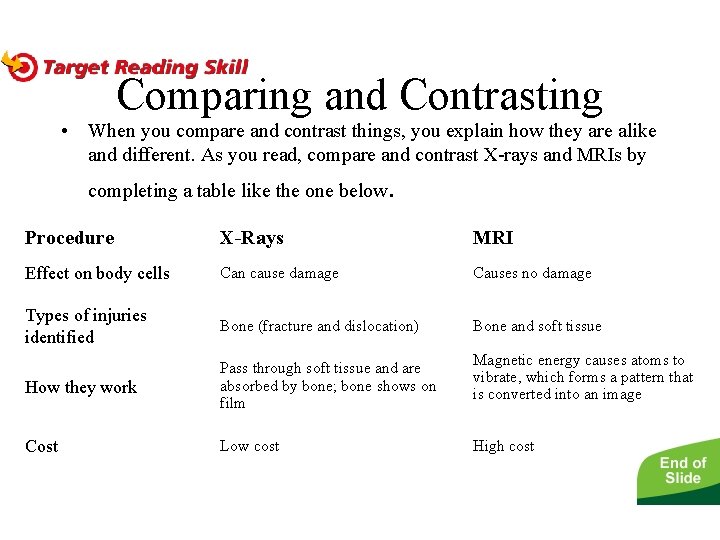
- Diagnosing Bone and Joint Injuries Comparing and Contrasting • When you compare and contrast things, you explain how they are alike and different. As you read, compare and contrast X-rays and MRIs by completing a table like the one below . Procedure X-Rays MRI Effect on body cells Can cause damage Causes no damage Types of injuries identified Bone (fracture and dislocation) Bone and soft tissue How they work Pass through soft tissue and are absorbed by bone; bone shows on film Cost Low cost Magnetic energy causes atoms to vibrate, which forms a pattern that is converted into an image High cost
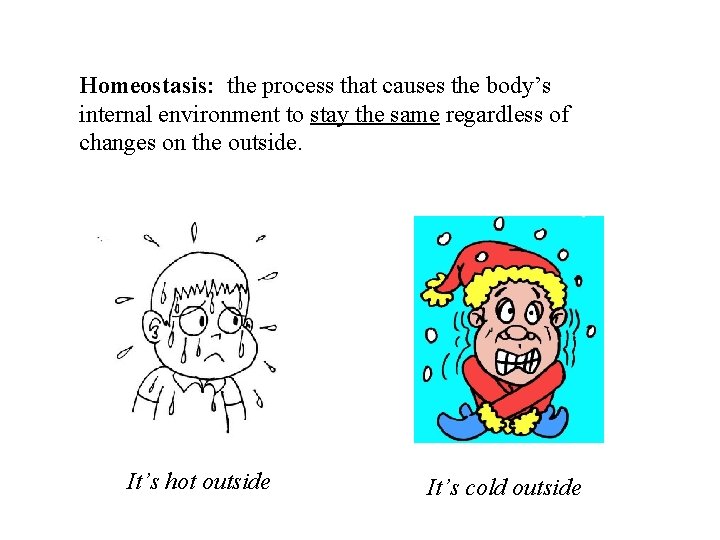
Homeostasis: the process that causes the body’s internal environment to stay the same regardless of changes on the outside. It’s hot outside It’s cold outside

The Skeletal System 1. Provides shape and support 2. Enables you to move 3. Protects your organs 4. Produces blood cells 5. Stores certain materials
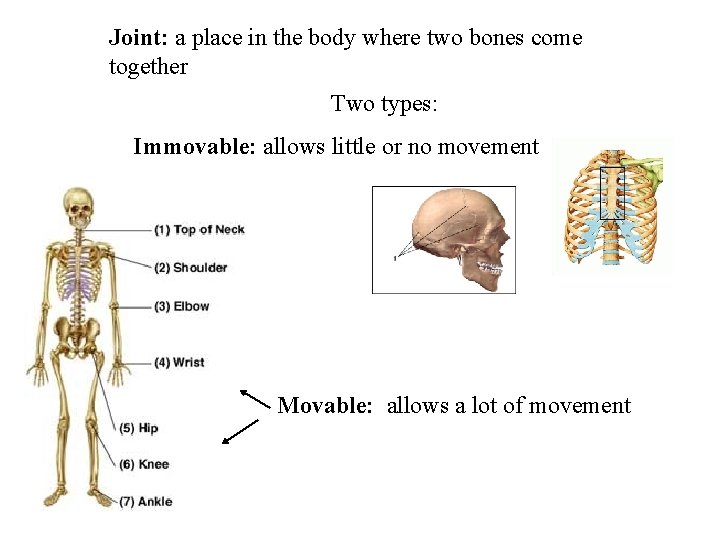
Joint: a place in the body where two bones come together Two types: Immovable: allows little or no movement Movable: allows a lot of movement
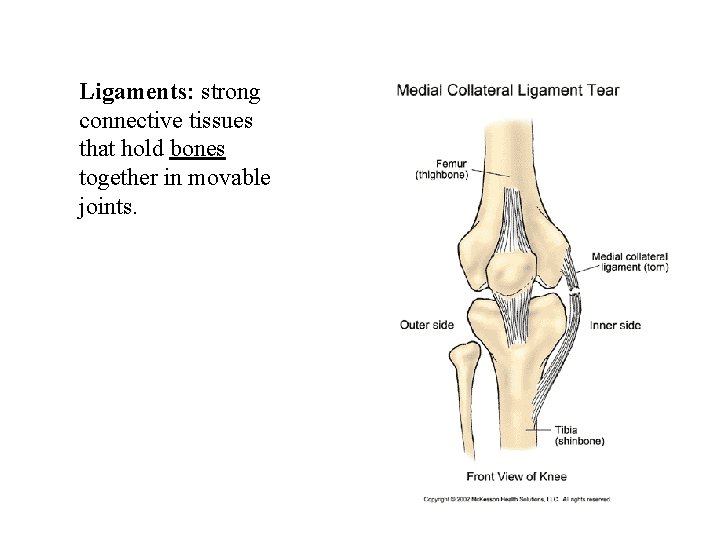
Ligaments: strong connective tissues that hold bones together in movable joints.
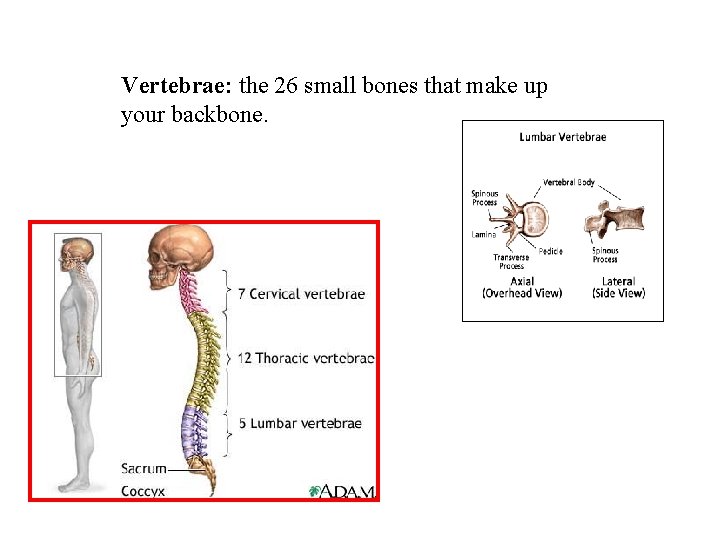
Vertebrae: the 26 small bones that make up your backbone.
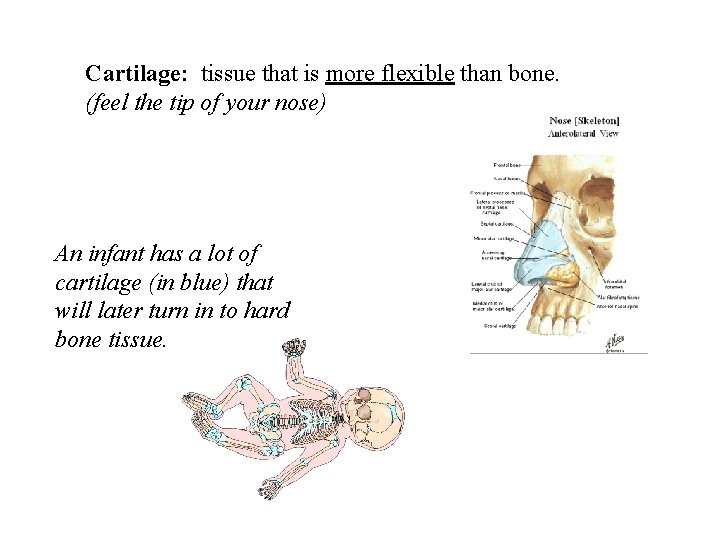
Cartilage: tissue that is more flexible than bone. (feel the tip of your nose) An infant has a lot of cartilage (in blue) that will later turn in to hard bone tissue.
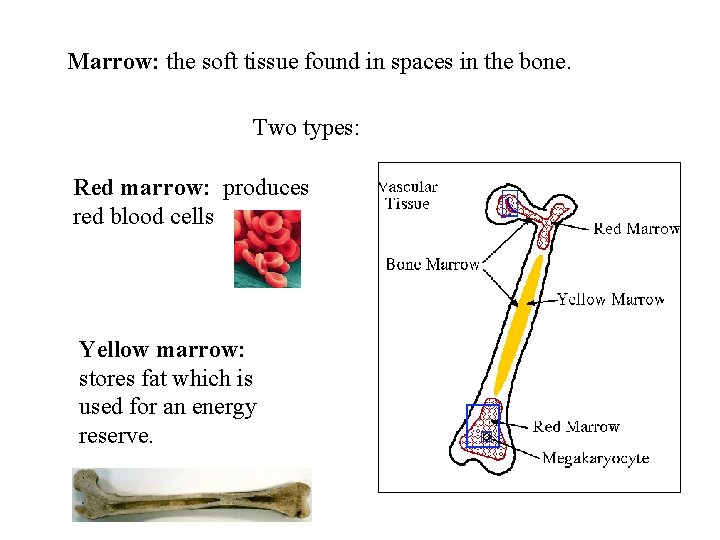
Marrow: the soft tissue found in spaces in the bone. Two types: Red marrow: produces red blood cells Yellow marrow: stores fat which is used for an energy reserve.
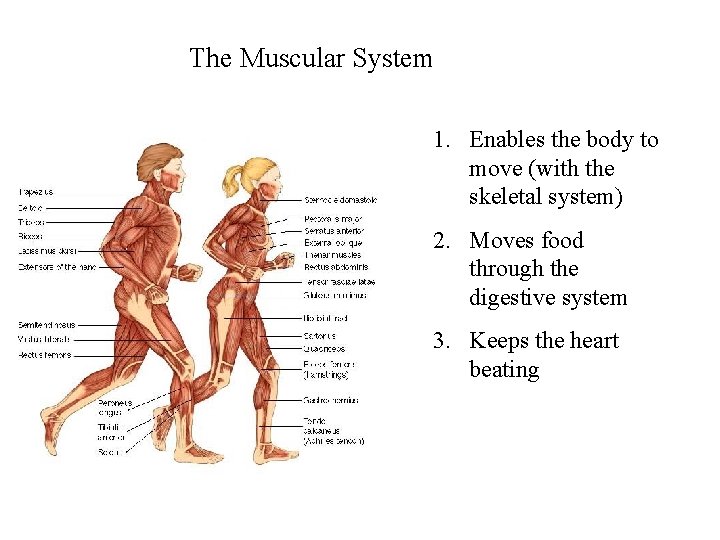
The Muscular System 1. Enables the body to move (with the skeletal system) 2. Moves food through the digestive system 3. Keeps the heart beating
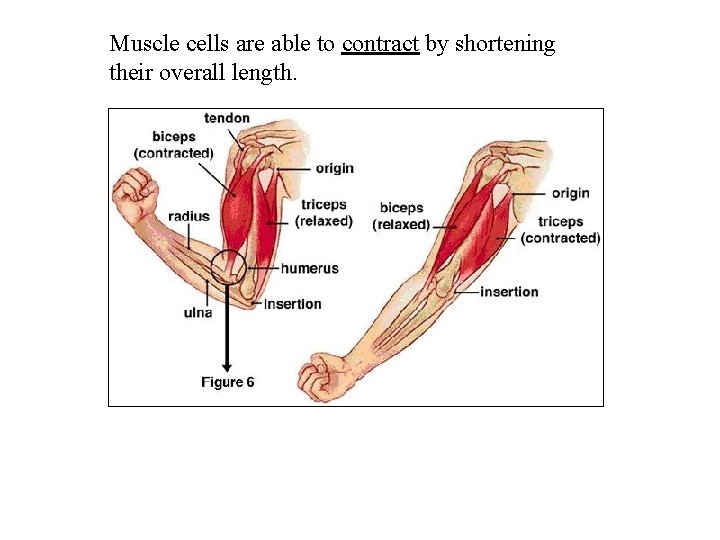
Muscle cells are able to contract by shortening their overall length.

Involuntary muscles: muscles that are impossible to control completely. v Ex: heart and stomach muscles Voluntary muscles: muscles that are under your control. Kicking a ball is voluntary Smiling is voluntary!
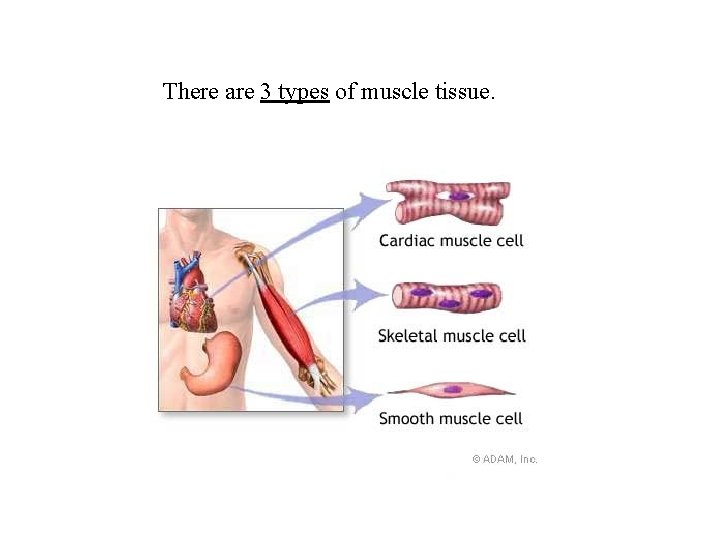
There are 3 types of muscle tissue.
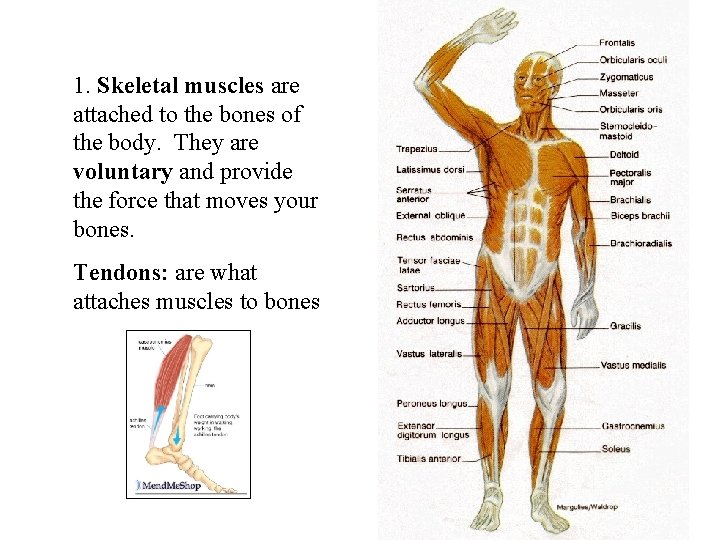
1. Skeletal muscles are attached to the bones of the body. They are voluntary and provide the force that moves your bones. Tendons: are what attaches muscles to bones
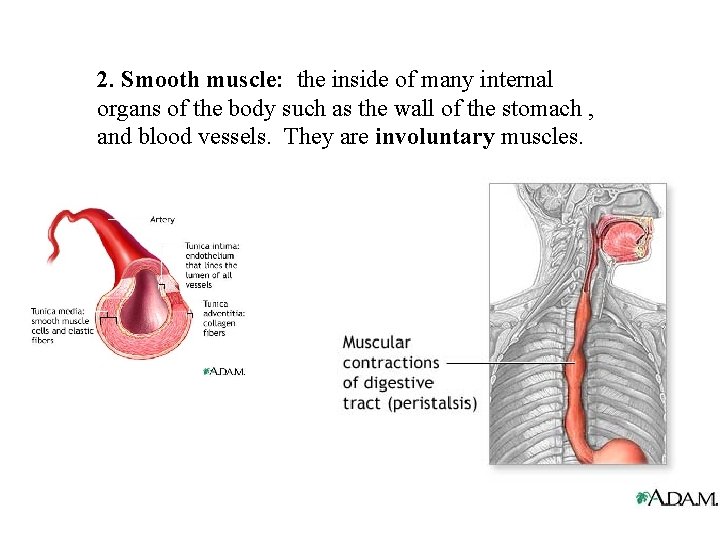
2. Smooth muscle: the inside of many internal organs of the body such as the wall of the stomach , and blood vessels. They are involuntary muscles.
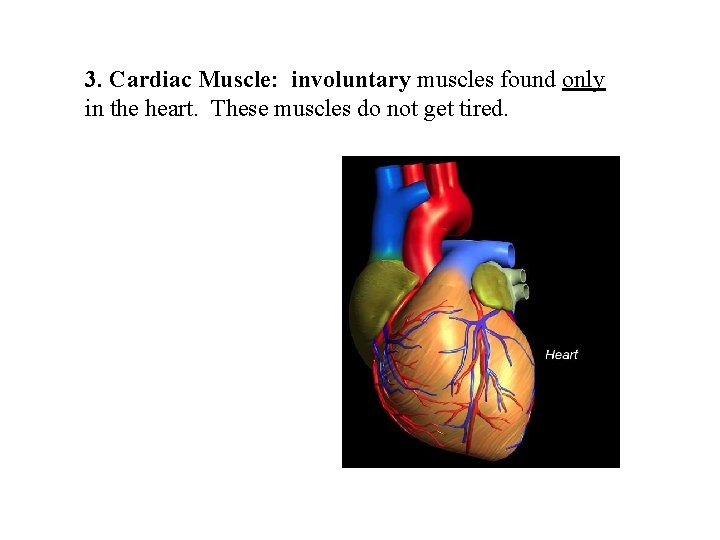
3. Cardiac Muscle: involuntary muscles found only in the heart. These muscles do not get tired.
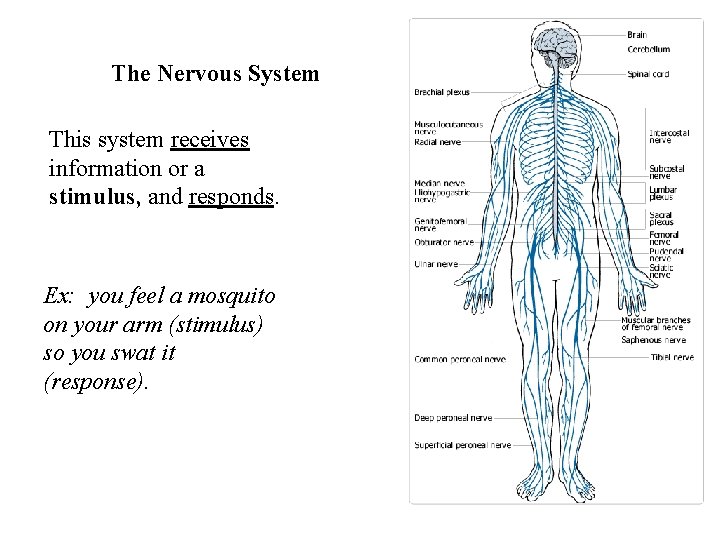
The Nervous System This system receives information or a stimulus, and responds. Ex: you feel a mosquito on your arm (stimulus) so you swat it (response).
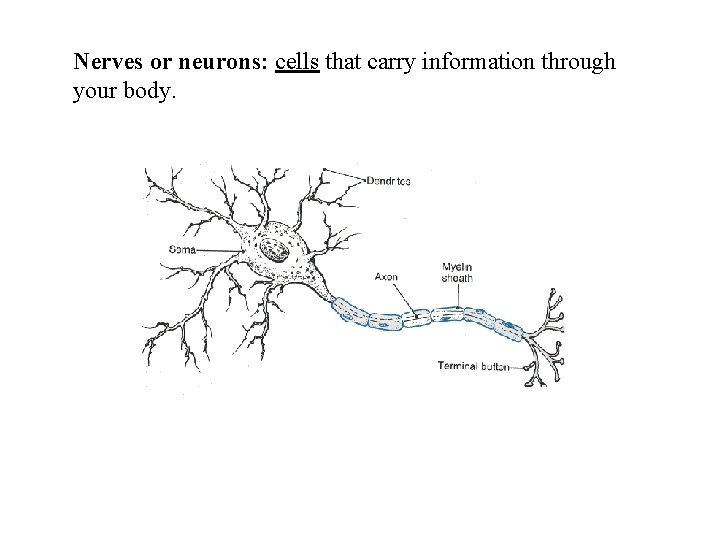
Nerves or neurons: cells that carry information through your body.
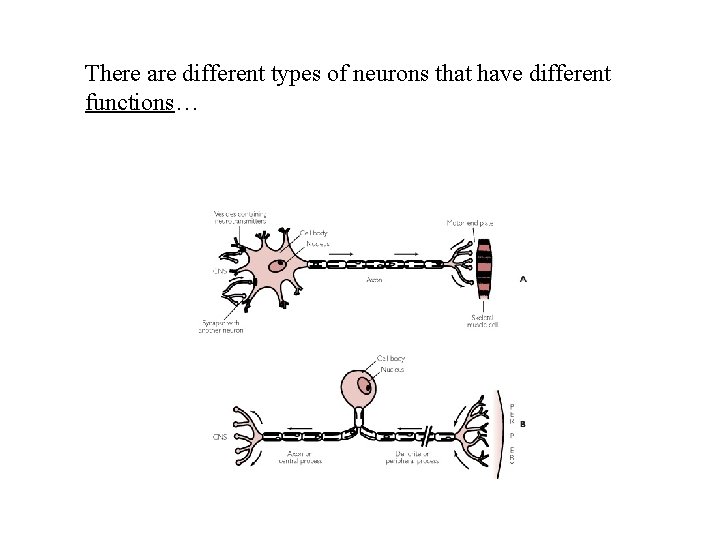
There are different types of neurons that have different functions…
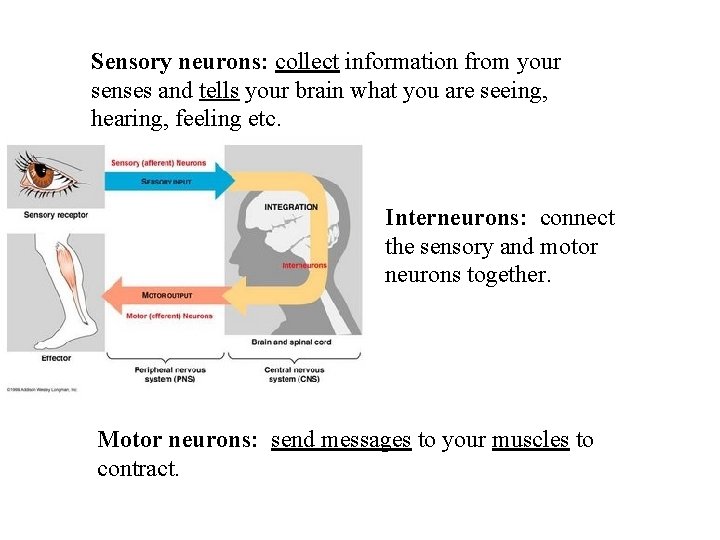
Sensory neurons: collect information from your senses and tells your brain what you are seeing, hearing, feeling etc. Interneurons: connect the sensory and motor neurons together. Motor neurons: send messages to your muscles to contract.
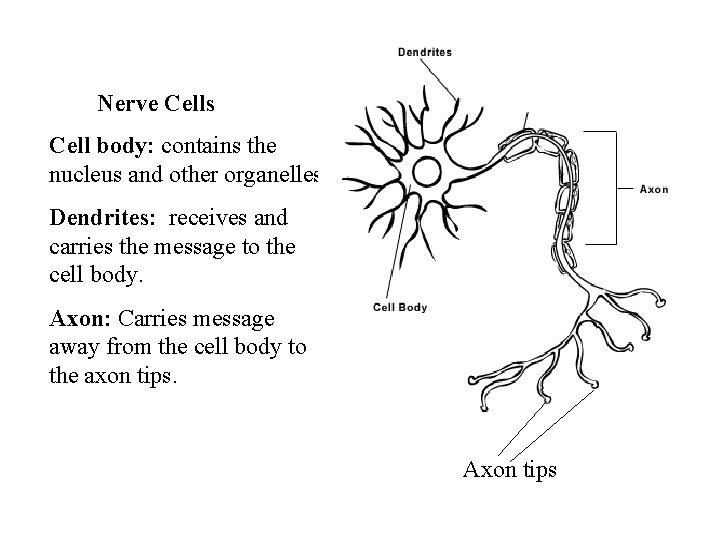
Nerve Cells Cell body: contains the nucleus and other organelles. Dendrites: receives and carries the message to the cell body. Axon: Carries message away from the cell body to the axon tips. Axon tips
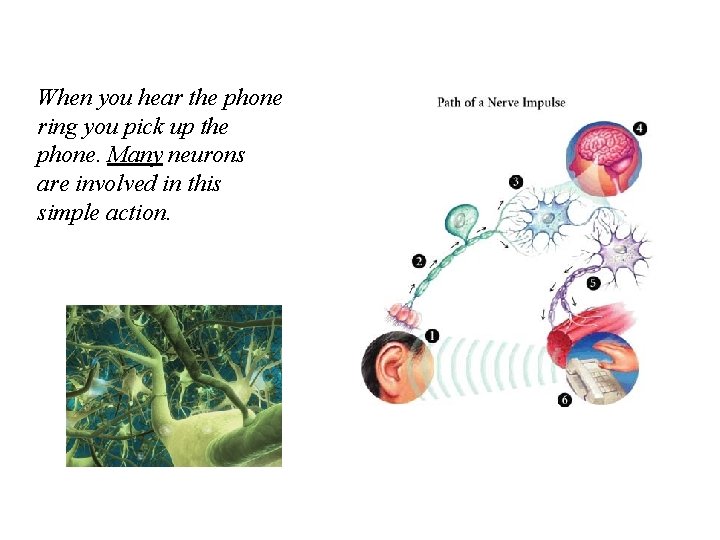
When you hear the phone ring you pick up the phone. Many neurons are involved in this simple action.
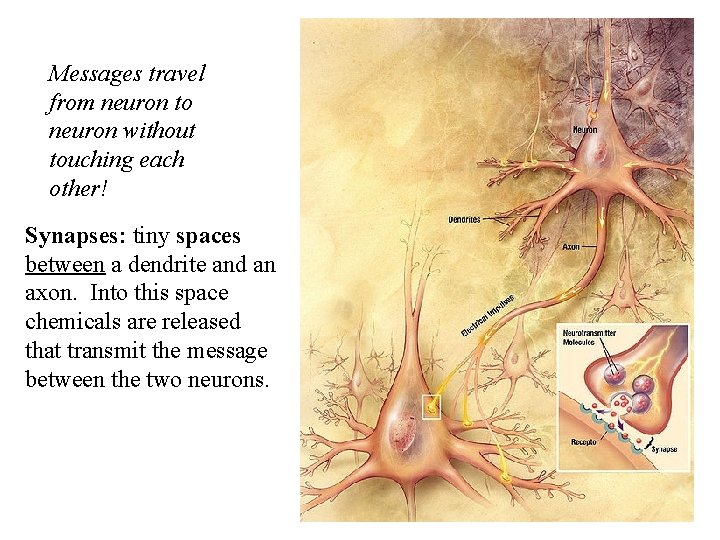
Messages travel from neuron to neuron without touching each other! Synapses: tiny spaces between a dendrite and an axon. Into this space chemicals are released that transmit the message between the two neurons.
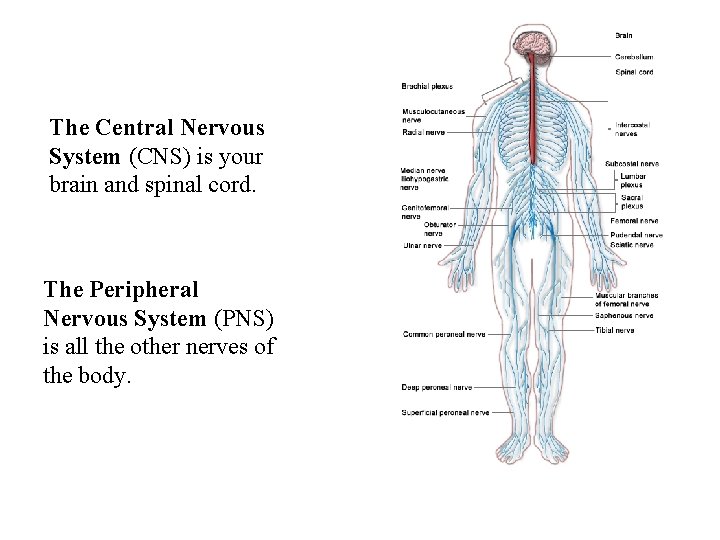
The Central Nervous System (CNS) is your brain and spinal cord. The Peripheral Nervous System (PNS) is all the other nerves of the body.
- Slides: 29