
Body Organization 1 1 Introduction A Anatomy the
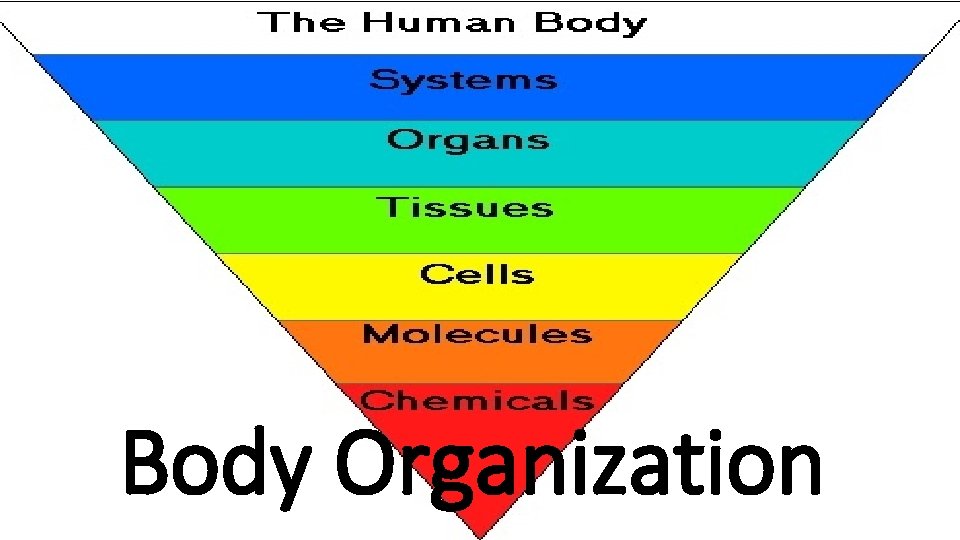
Body Organization

1. 1 Introduction A. Anatomy – the branch of science dealing with the structure of body parts B. Physiology - the branch of science dealing with the function of body parts
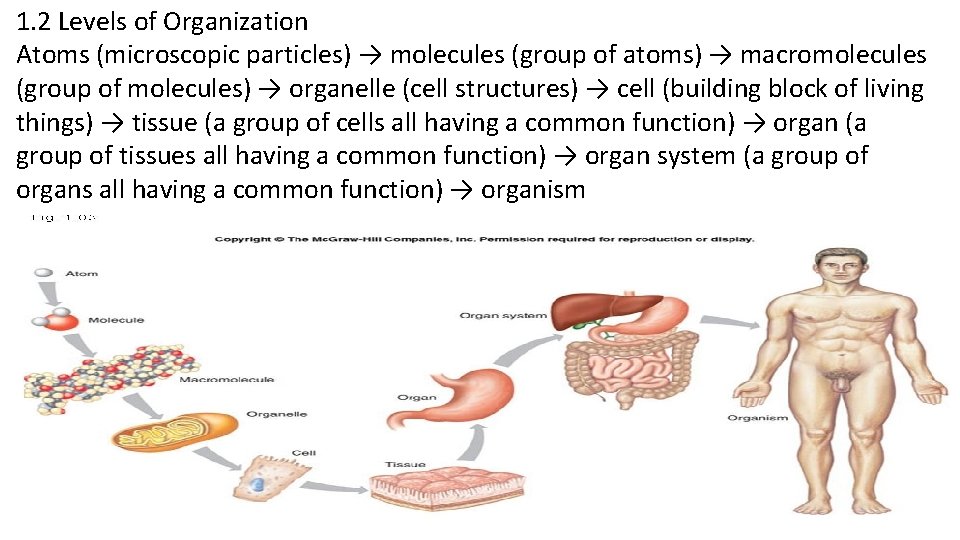
1. 2 Levels of Organization Atoms (microscopic particles) → molecules (group of atoms) → macromolecules (group of molecules) → organelle (cell structures) → cell (building block of living things) → tissue (a group of cells all having a common function) → organ (a group of tissues all having a common function) → organ system (a group of organs all having a common function) → organism

1. 3 Characteristics of life A. Movement – change in position B. Responsiveness – reaction to change C. Growth – increase in size D. Reproduction – making more of your species E. Respiration – obtaining oxygen to remove energy from food and eliminating CO 2
F. Digestion – break down of food to smaller pieces G. Absorption – passage of food from DS to blood H. Circulation – movement of substances in the body fluids I. Assimilation – the changing of the absorbed substances into different forms J. Excretion – removal of waste products
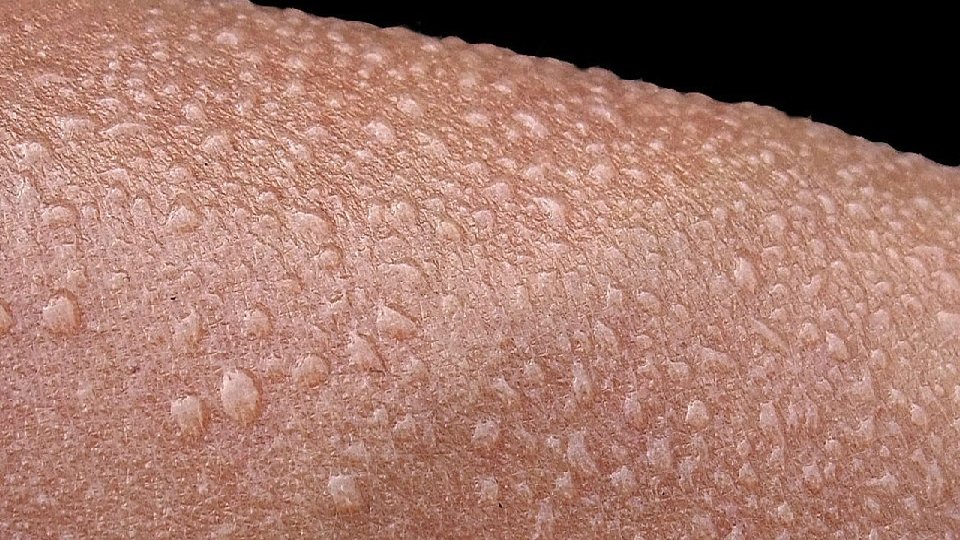
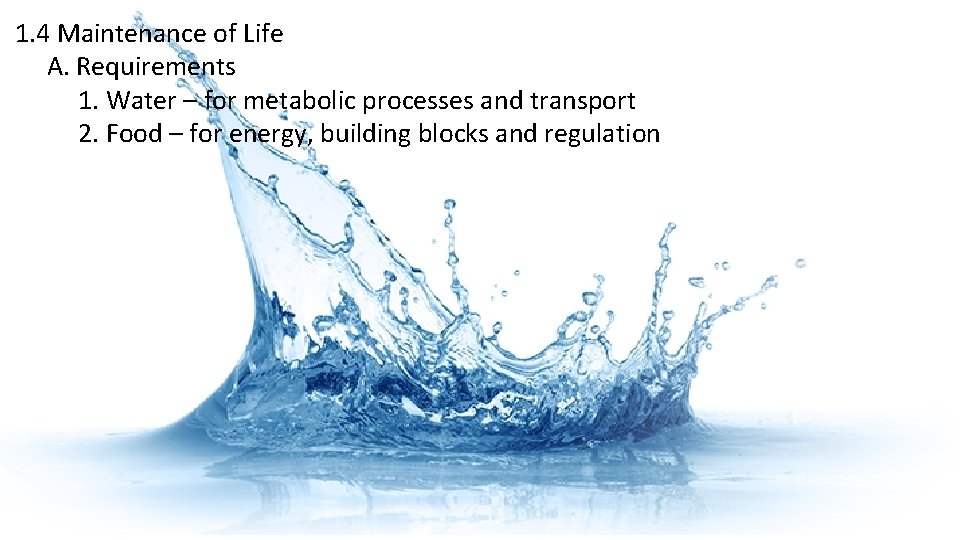
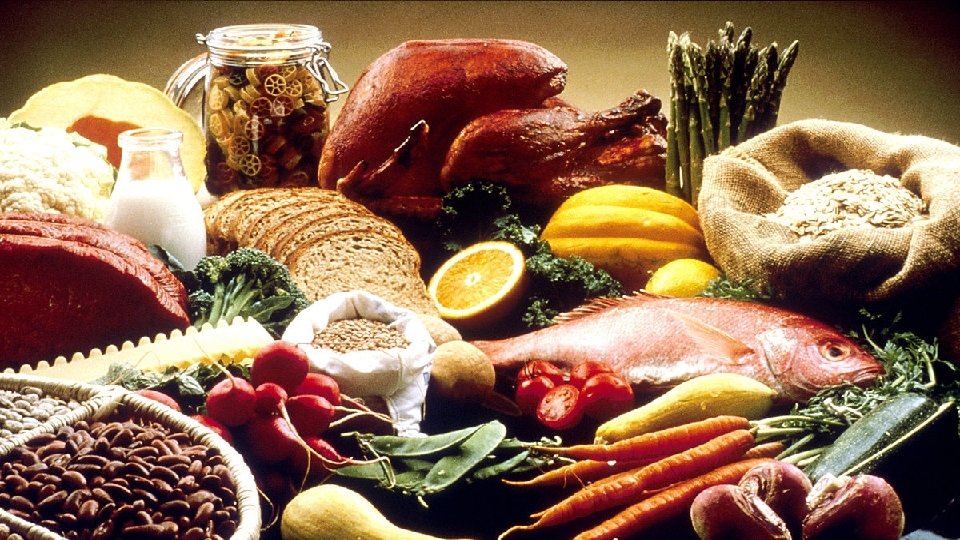
1. 4 Maintenance of Life A. Requirements 1. Water – for metabolic processes and transport 2. Food – for energy, building blocks and regulation
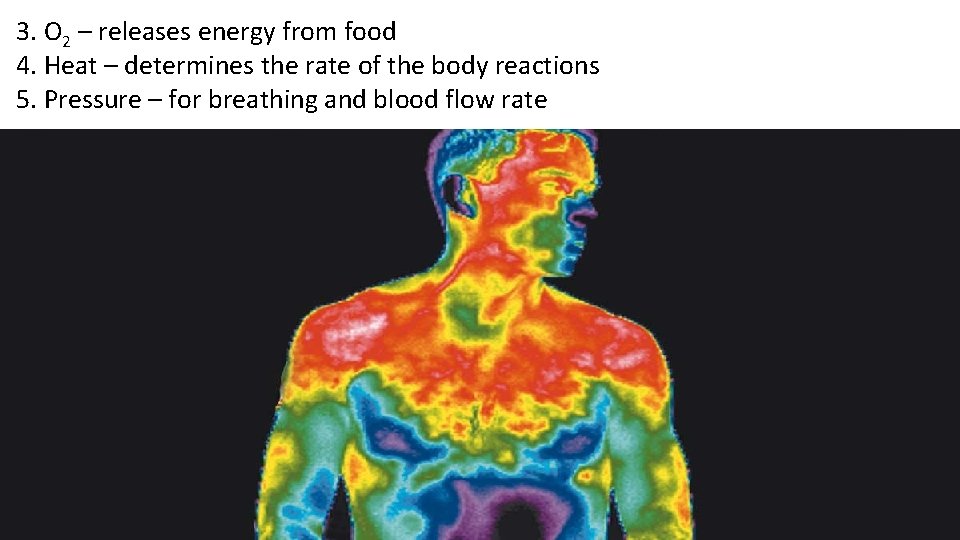
3. O 2 – releases energy from food 4. Heat – determines the rate of the body reactions 5. Pressure – for breathing and blood flow rate
B. Homeostasis 1. Definition – the condition in which the body’s internal environment (interstitial fluids) remains stable.
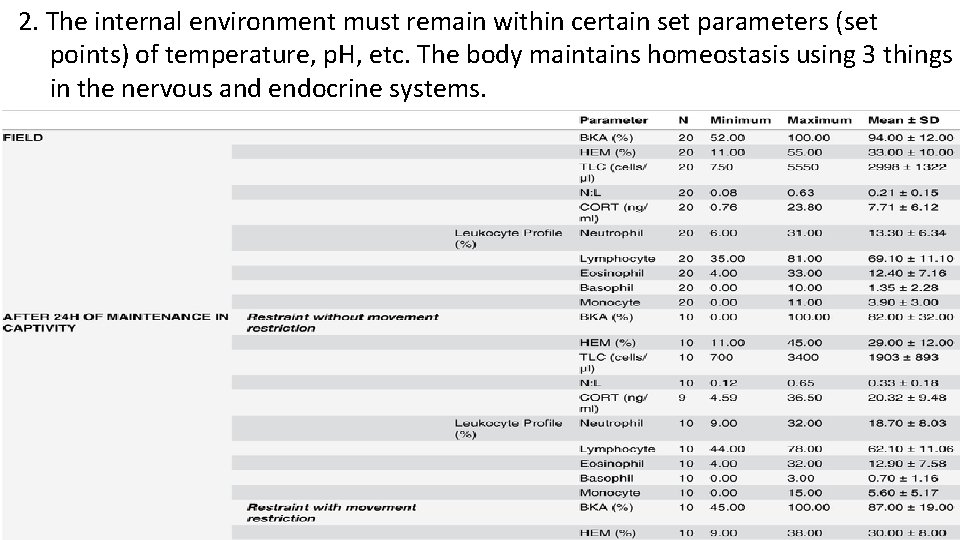
2. The internal environment must remain within certain set parameters (set points) of temperature, p. H, etc. The body maintains homeostasis using 3 things in the nervous and endocrine systems.
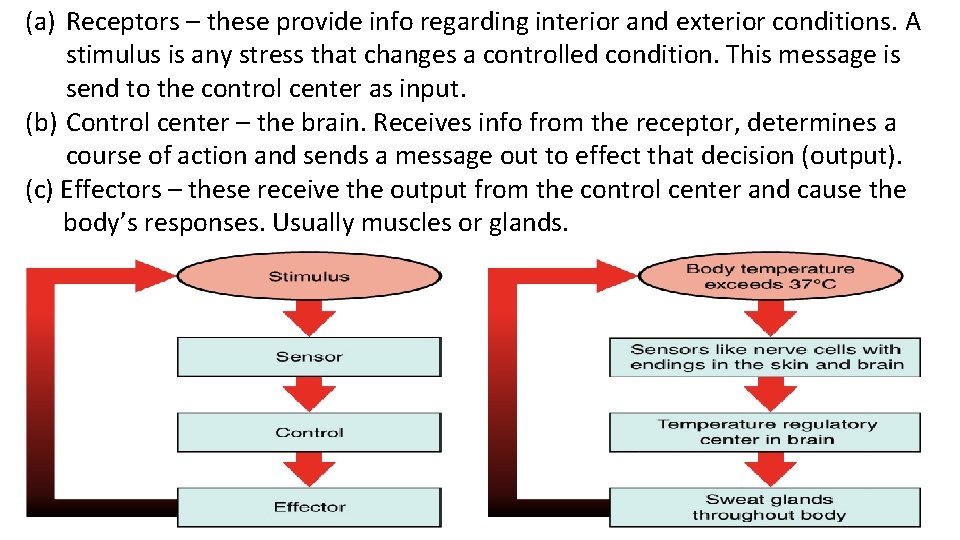
(a) Receptors – these provide info regarding interior and exterior conditions. A stimulus is any stress that changes a controlled condition. This message is send to the control center as input. (b) Control center – the brain. Receives info from the receptor, determines a course of action and sends a message out to effect that decision (output). (c) Effectors – these receive the output from the control center and cause the body’s responses. Usually muscles or glands.
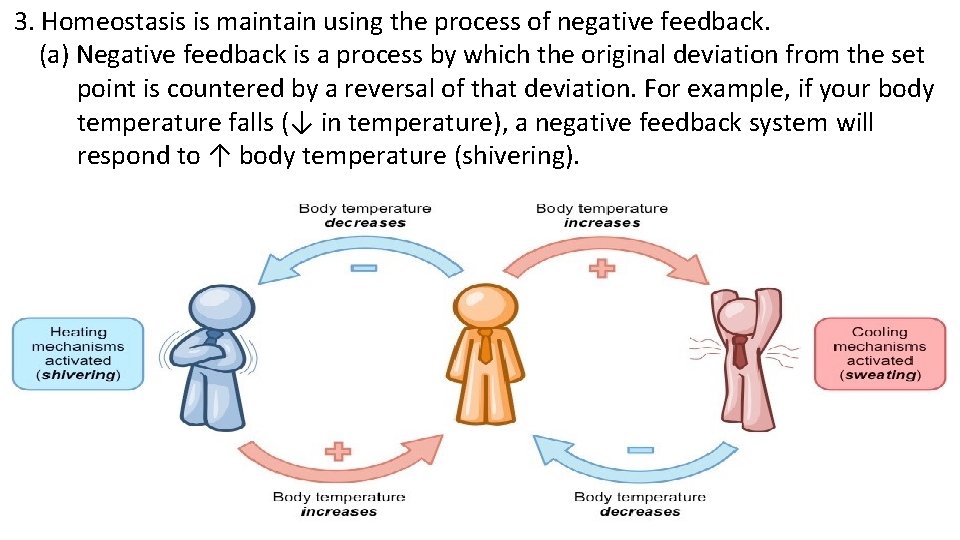
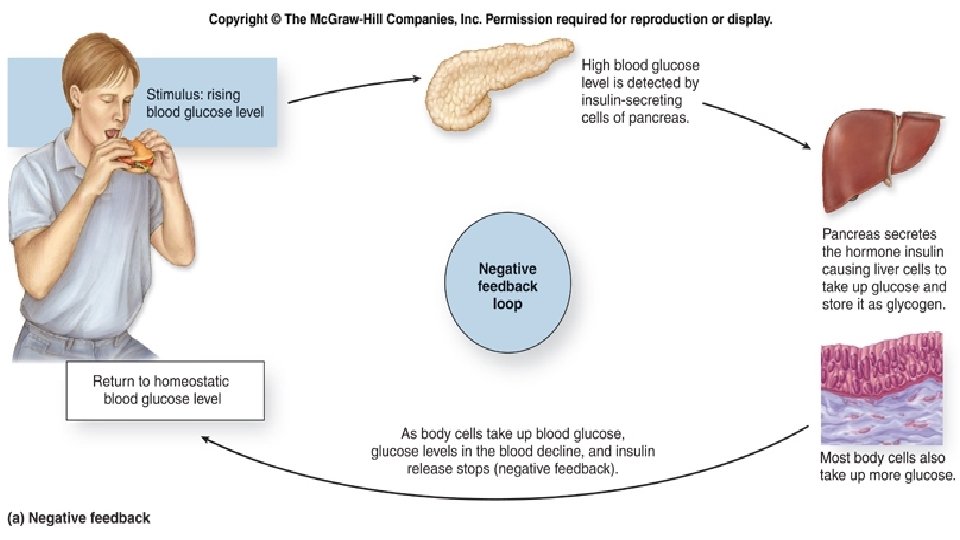
3. Homeostasis is maintain using the process of negative feedback. (a) Negative feedback is a process by which the original deviation from the set point is countered by a reversal of that deviation. For example, if your body temperature falls (↓ in temperature), a negative feedback system will respond to ↑ body temperature (shivering).
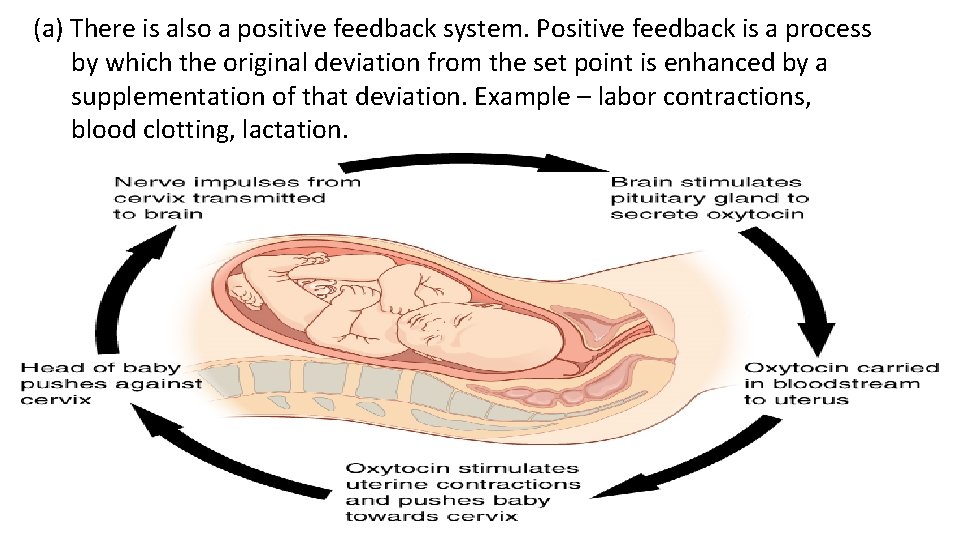
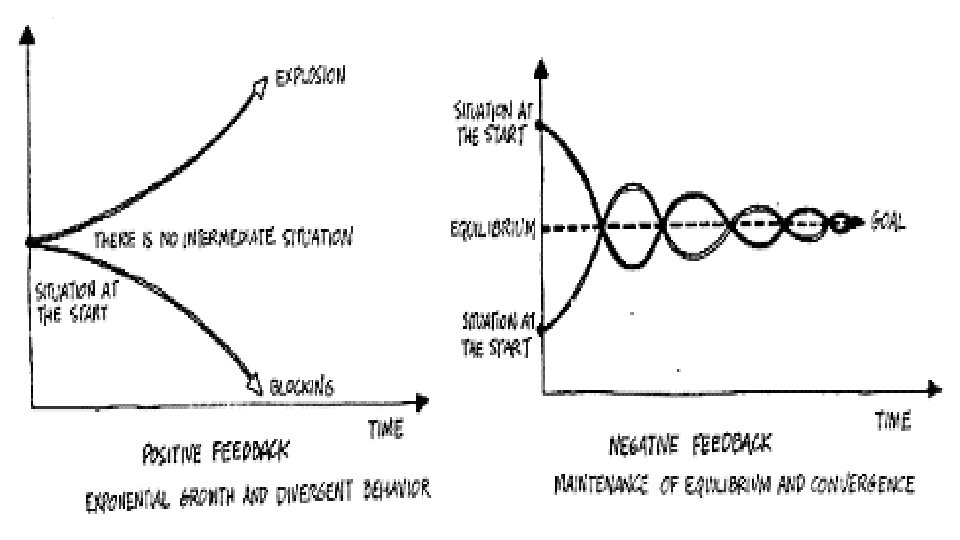
(a) There is also a positive feedback system. Positive feedback is a process by which the original deviation from the set point is enhanced by a supplementation of that deviation. Example – labor contractions, blood clotting, lactation.
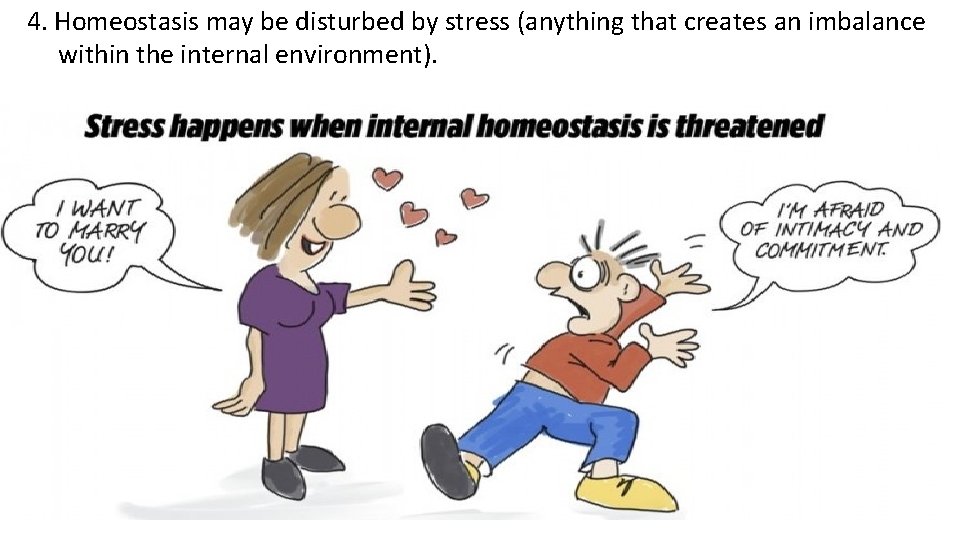
4. Homeostasis may be disturbed by stress (anything that creates an imbalance within the internal environment).
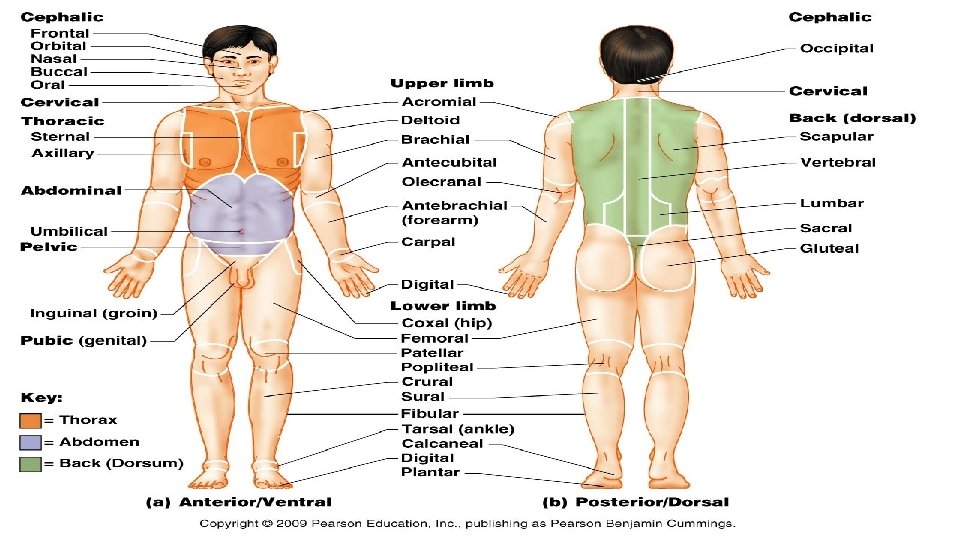
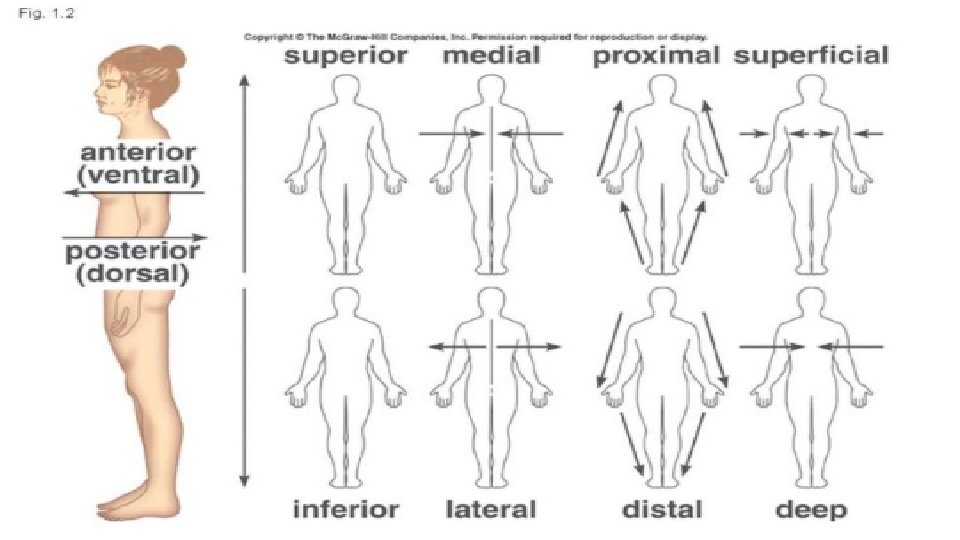
1. 5 Organization of the Human Body A. Body regions – Figure 1. 16, page 17
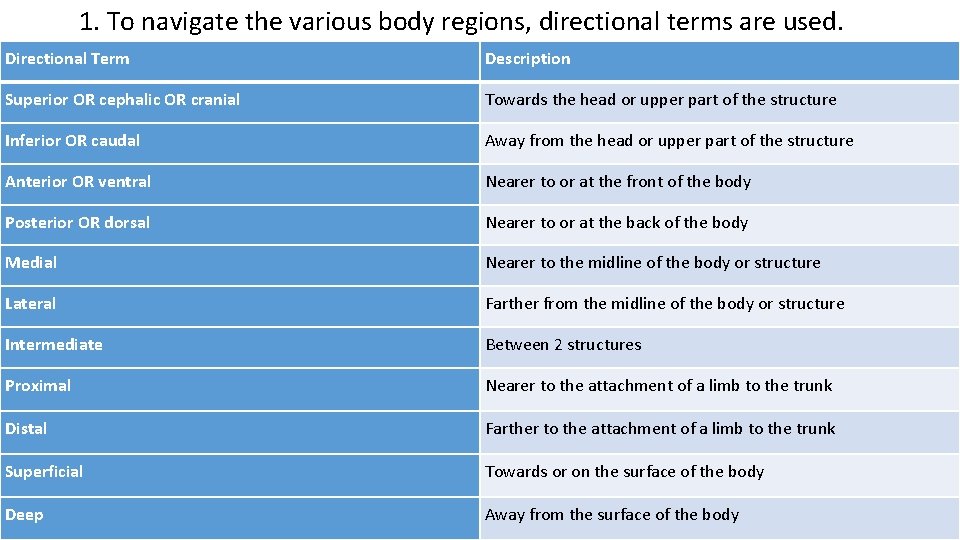
1. To navigate the various body regions, directional terms are used. Directional Term Description Superior OR cephalic OR cranial Towards the head or upper part of the structure Inferior OR caudal Away from the head or upper part of the structure Anterior OR ventral Nearer to or at the front of the body Posterior OR dorsal Nearer to or at the back of the body Medial Nearer to the midline of the body or structure Lateral Farther from the midline of the body or structure Intermediate Between 2 structures Proximal Nearer to the attachment of a limb to the trunk Distal Farther to the attachment of a limb to the trunk Superficial Towards or on the surface of the body Deep Away from the surface of the body
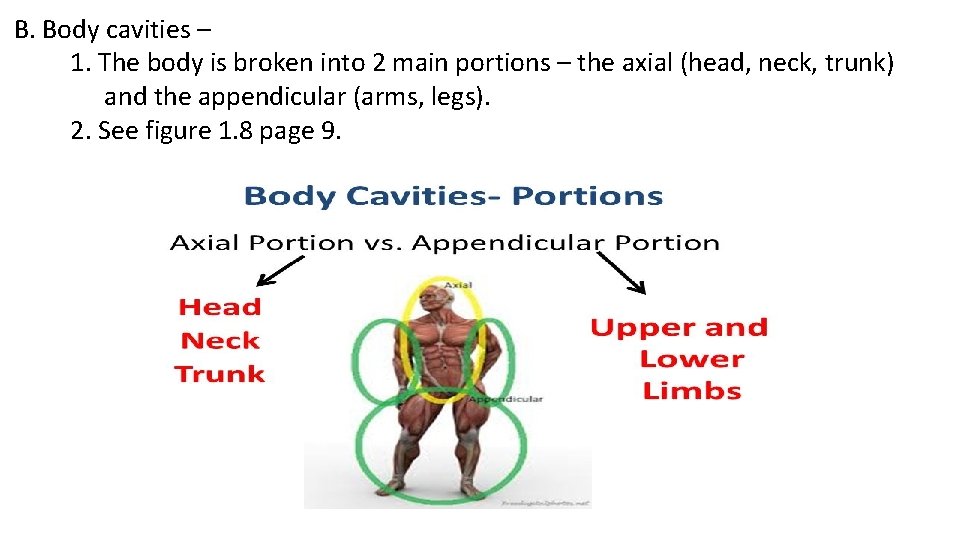
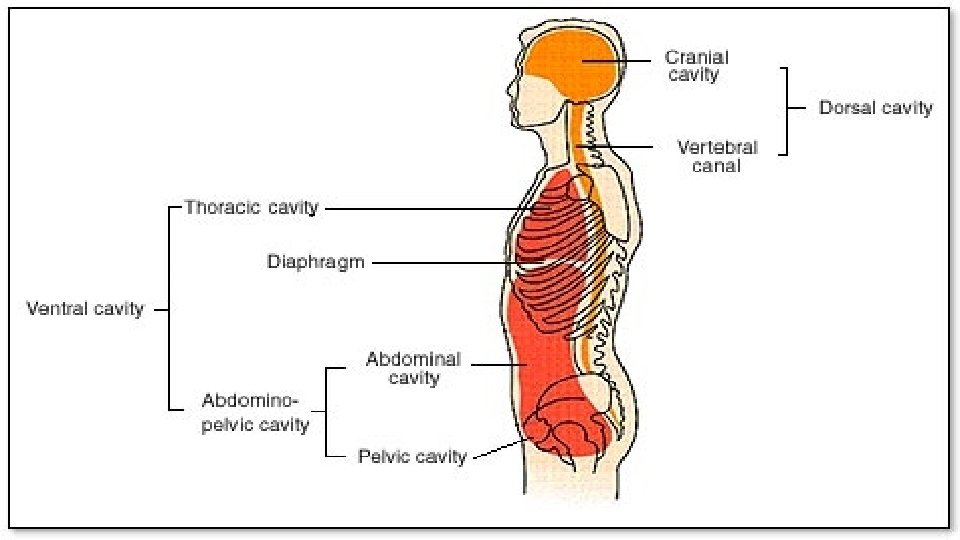
B. Body cavities – 1. The body is broken into 2 main portions – the axial (head, neck, trunk) and the appendicular (arms, legs). 2. See figure 1. 8 page 9.
C. Organs systems
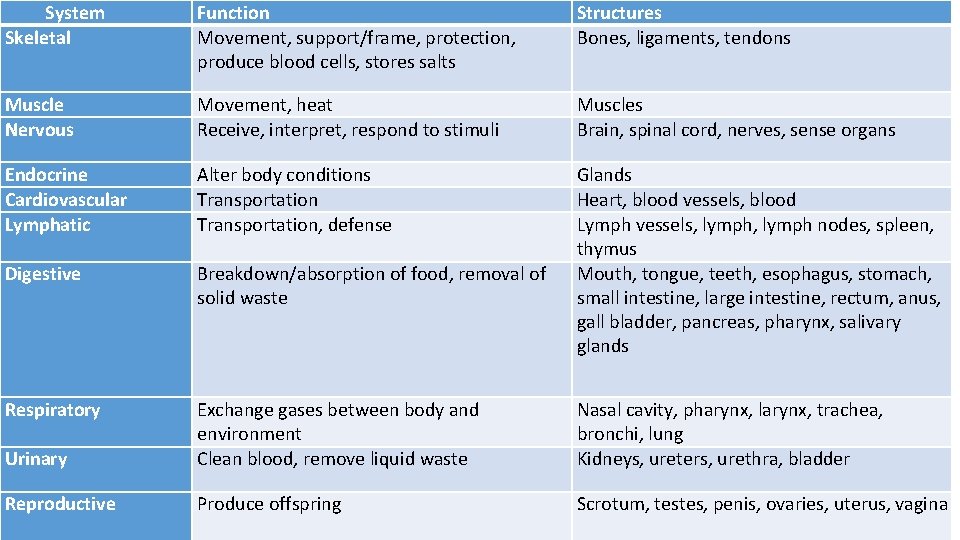
System Skeletal Function Movement, support/frame, protection, produce blood cells, stores salts Structures Bones, ligaments, tendons Muscle Nervous Movement, heat Receive, interpret, respond to stimuli Muscles Brain, spinal cord, nerves, sense organs Endocrine Cardiovascular Lymphatic Alter body conditions Transportation, defense Digestive Breakdown/absorption of food, removal of solid waste Glands Heart, blood vessels, blood Lymph vessels, lymph nodes, spleen, thymus Mouth, tongue, teeth, esophagus, stomach, small intestine, large intestine, rectum, anus, gall bladder, pancreas, pharynx, salivary glands Respiratory Urinary Exchange gases between body and environment Clean blood, remove liquid waste Nasal cavity, pharynx, larynx, trachea, bronchi, lung Kidneys, ureters, urethra, bladder Reproductive Produce offspring Scrotum, testes, penis, ovaries, uterus, vagina
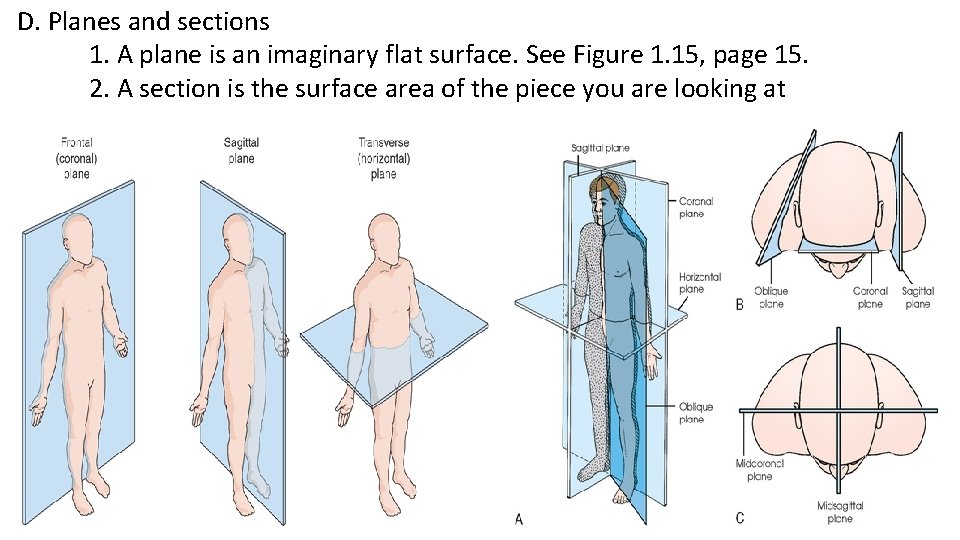
D. Planes and sections 1. A plane is an imaginary flat surface. See Figure 1. 15, page 15. 2. A section is the surface area of the piece you are looking at
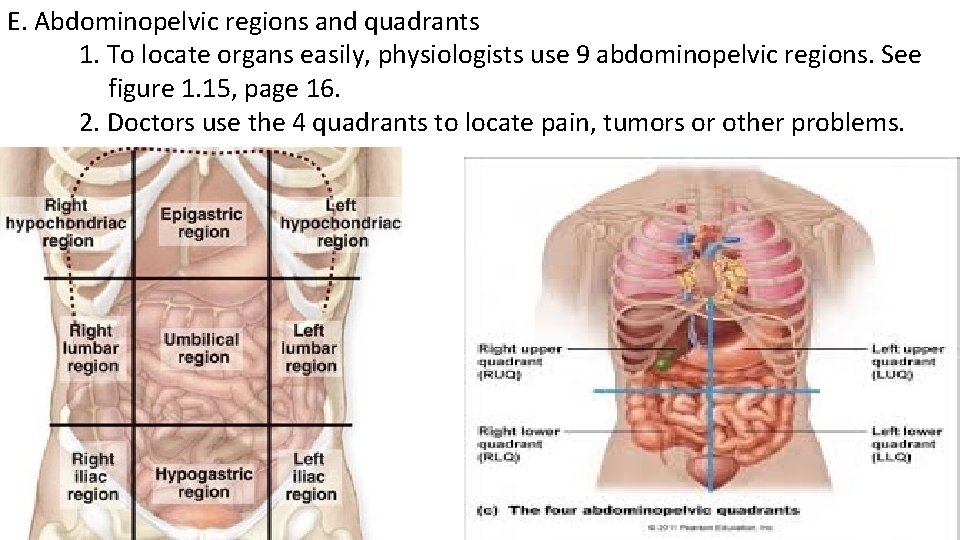
E. Abdominopelvic regions and quadrants 1. To locate organs easily, physiologists use 9 abdominopelvic regions. See figure 1. 15, page 16. 2. Doctors use the 4 quadrants to locate pain, tumors or other problems.
- Slides: 29