
Body Movements Five Golden Rules of Skeletal Muscle
Body Movements
Five Golden Rules of Skeletal Muscle Activity 1. All skeletal muscles cross at least one joint (few exceptions) 2. Typically, bulk of skeletal muscle lies proximal to the joint crossed 3. All skeletal muscles have at least two attachments: origin and insertion 4. Skeletal muscles can only pull, they never push 5. During contraction, a skeletal muscle insertion moves toward the origin
Muscles and Body Movements Movement is attained due to a muscle moving an attached bone Muscles are attached to at least two points Origin Attachment to an immoveable bone Insertion Attachment to a movable bone
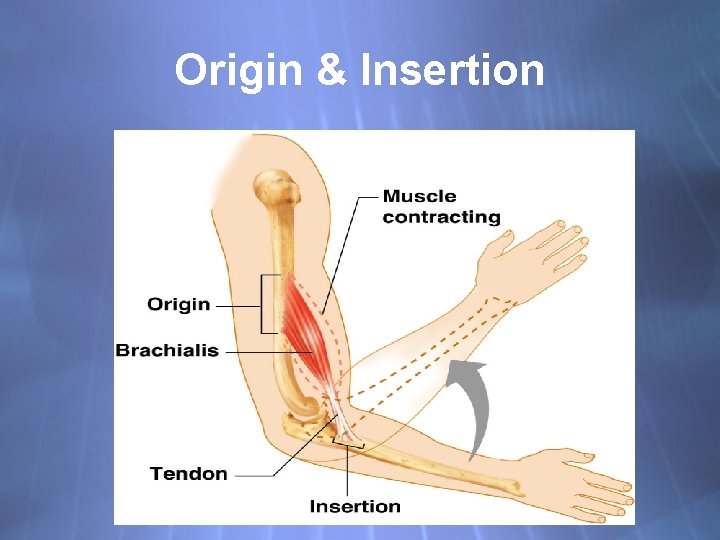
Origin & Insertion
Types of Ordinary Body Movements Flexion Decreases the angle of the joint Brings two bones closer together Typical of hinge joints like knee and elbow Extension Opposite of flexion Increases the angle between two bones
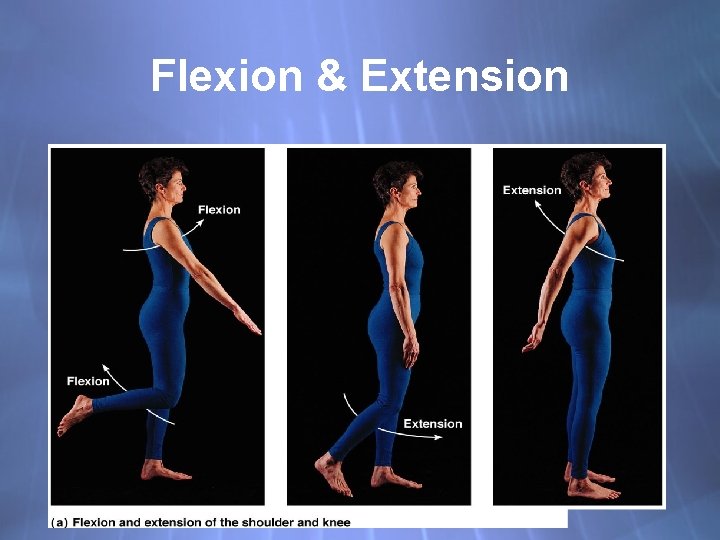
Flexion & Extension
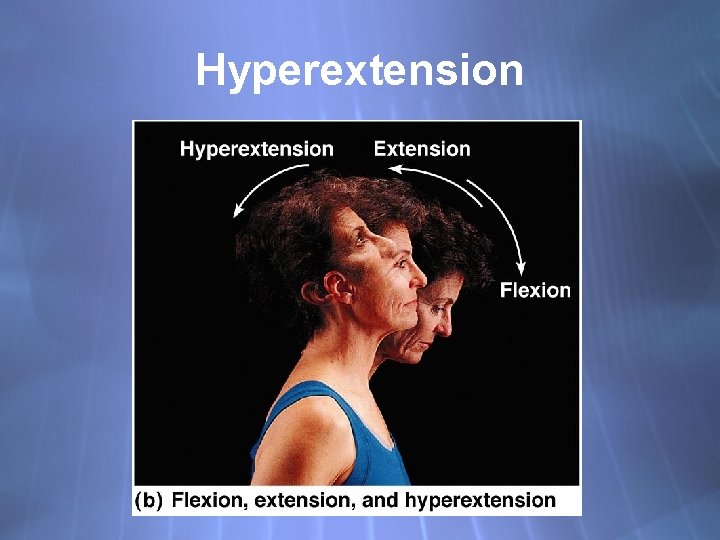
Hyperextension
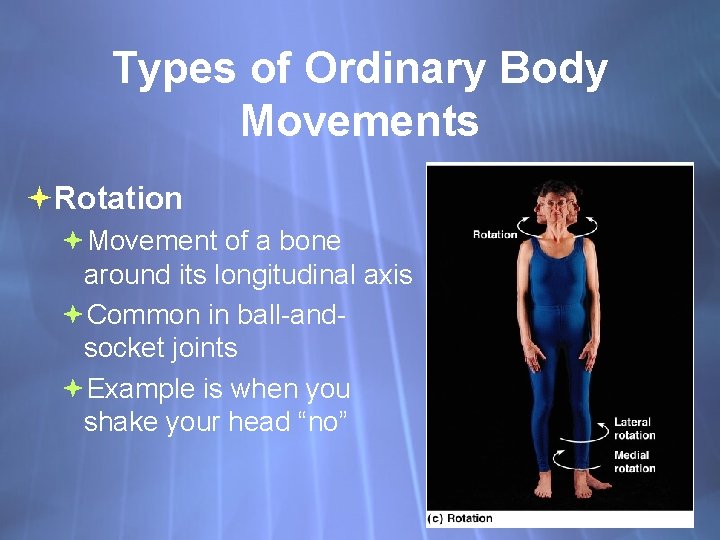
Types of Ordinary Body Movements Rotation Movement of a bone around its longitudinal axis Common in ball-andsocket joints Example is when you shake your head “no”
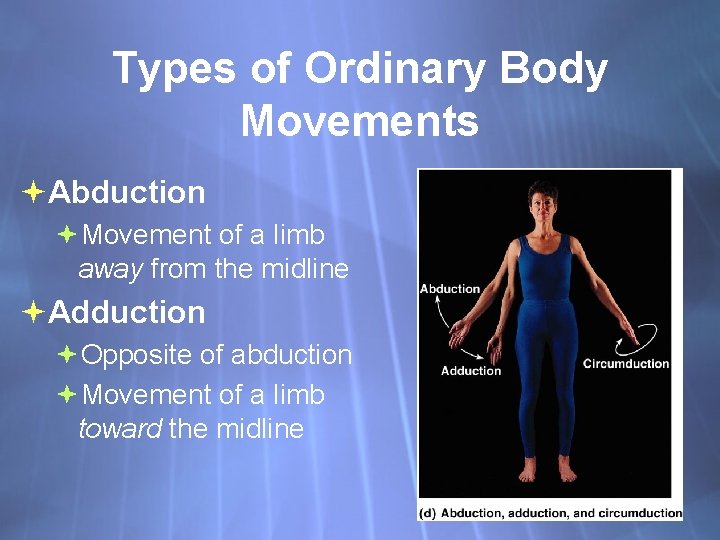
Types of Ordinary Body Movements Abduction Movement of a limb away from the midline Adduction Opposite of abduction Movement of a limb toward the midline
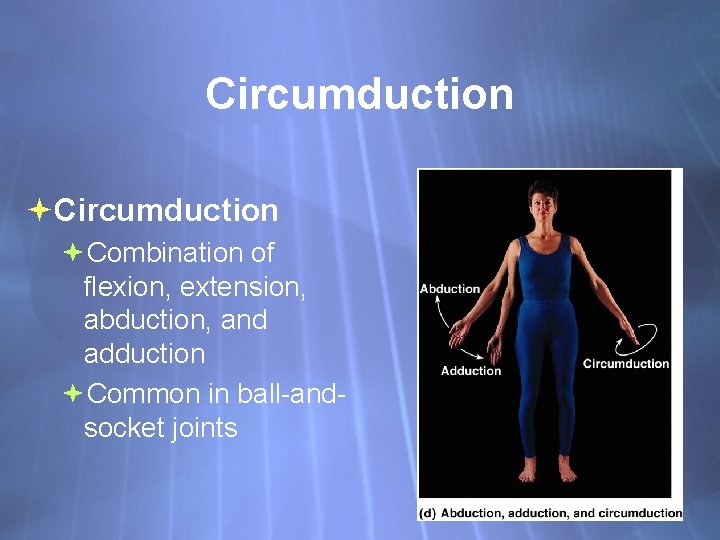
Circumduction Combination of flexion, extension, abduction, and adduction Common in ball-andsocket joints
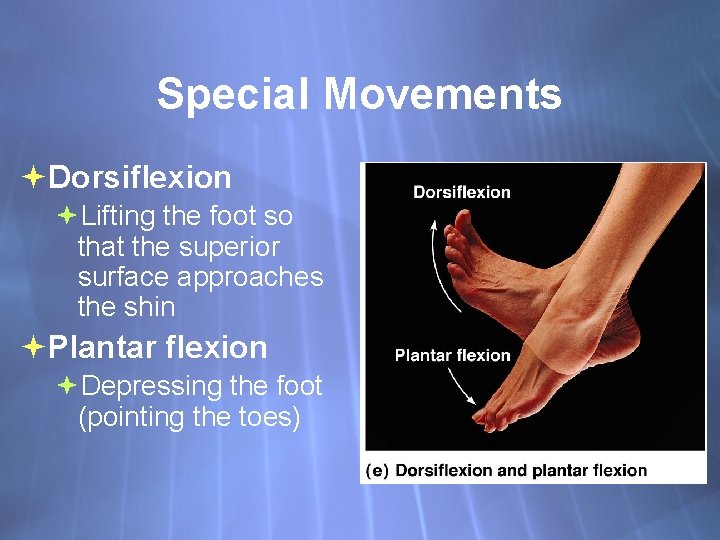
Special Movements Dorsiflexion Lifting the foot so that the superior surface approaches the shin Plantar flexion Depressing the foot (pointing the toes)
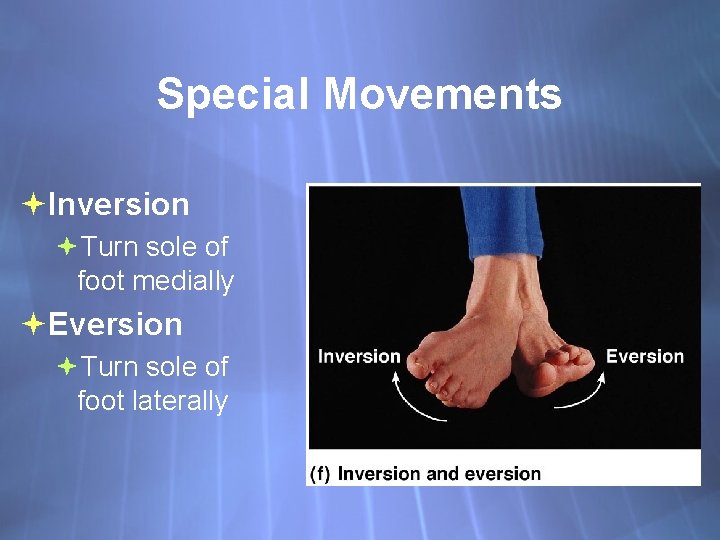
Special Movements Inversion Turn sole of foot medially Eversion Turn sole of foot laterally
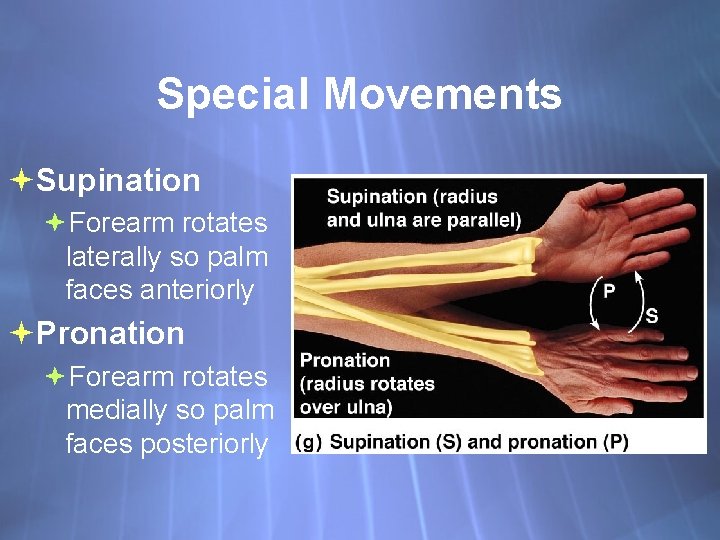
Special Movements Supination Forearm rotates laterally so palm faces anteriorly Pronation Forearm rotates medially so palm faces posteriorly
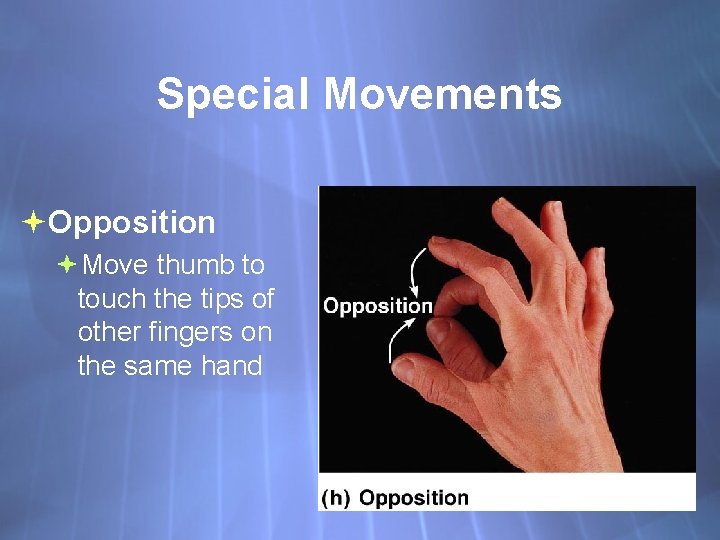
Special Movements Opposition Move thumb to touch the tips of other fingers on the same hand
Types of Muscles Prime mover - muscle with the major responsibility for a certain movement Antagonist - muscle that opposes or reverses a prime mover Synergist - muscle that aids a prime mover in a movement and helps prevent rotation Fixator - stabilizes the origin of a prime mover
Let’s move! Demonstrate each movement on yourself: Flexion Extension Abduction Adduction Rotation Circumduction Pronation Supination Inversion Eversion Dorsiflexion Plantar flexion
- Slides: 16