
Body Balance Year 9 Science The Nervous System
Body Balance Year 9 Science
The Nervous System

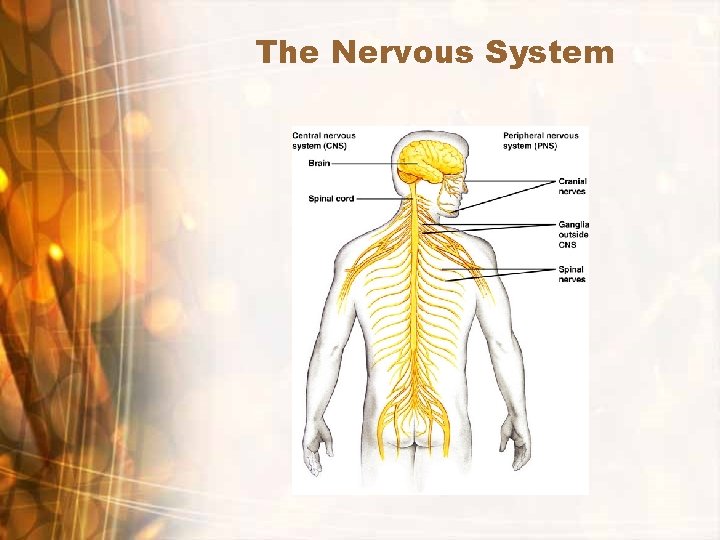
Central Nervous System (CNS) The central nervous system is divided into two parts: the brain and the spinal cord.
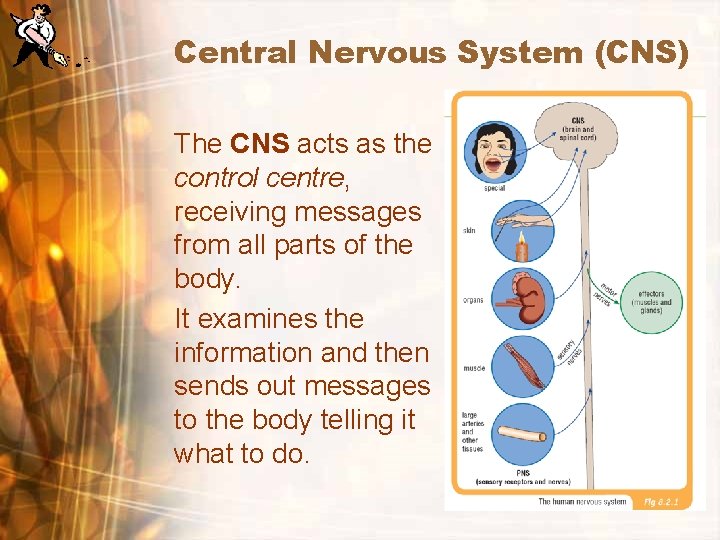
Central Nervous System (CNS) The CNS acts as the control centre, receiving messages from all parts of the body. It examines the information and then sends out messages to the body telling it what to do.
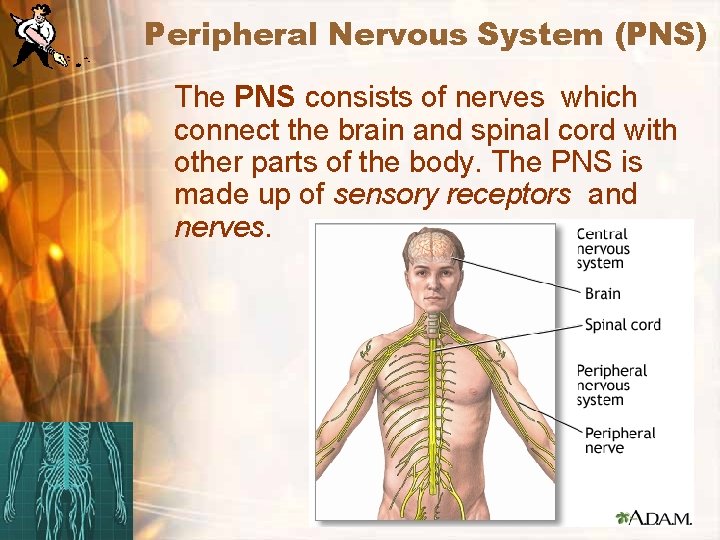
Peripheral Nervous System (PNS) The PNS consists of nerves which connect the brain and spinal cord with other parts of the body. The PNS is made up of sensory receptors and nerves.

Simplified Summary Nervous System Central Nervous System Brain Spinal Cord Peripheral Nervous System Motor Nerves Sensory Nerves
• Cerebellum controls and coordinates movements of the muscles, like walking or swinging the arms. • This means that the movement is smooth and controlled and you don’t fall over when you turn around. • Cerebrum has special areas, which receive messages about sight, touch, hearing and taste. Other areas control movement, speech, learning, intelligence and personality. • The brain stem is in charge of keeping the automatic systems of your body working.
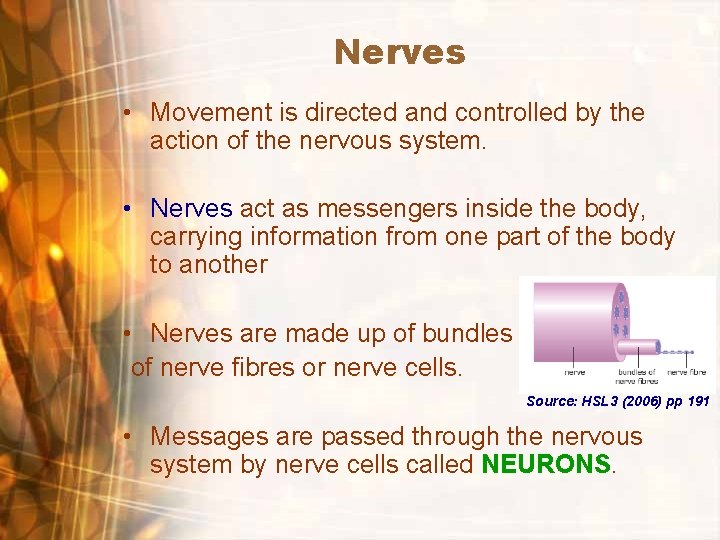
Nerves • Movement is directed and controlled by the action of the nervous system. • Nerves act as messengers inside the body, carrying information from one part of the body to another • Nerves are made up of bundles of nerve fibres or nerve cells. Source: HSL 3 (2006) pp 191 • Messages are passed through the nervous system by nerve cells called NEURONS.
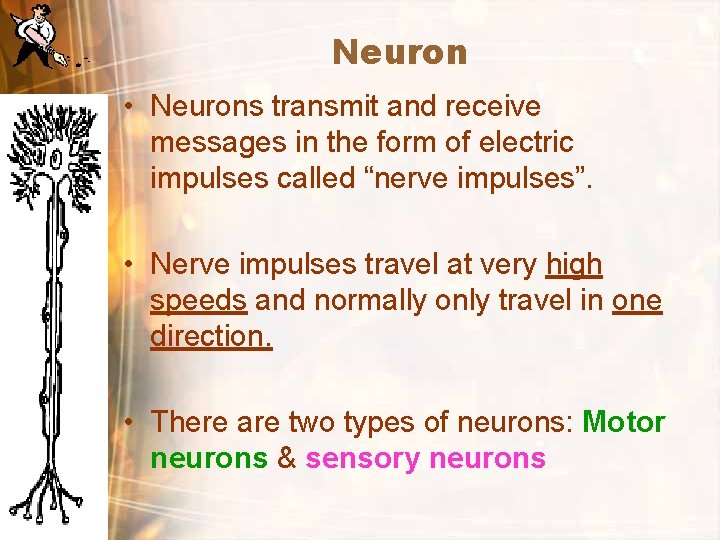
Neuron • Neurons transmit and receive messages in the form of electric impulses called “nerve impulses”. • Nerve impulses travel at very high speeds and normally only travel in one direction. • There are two types of neurons: Motor neurons & sensory neurons
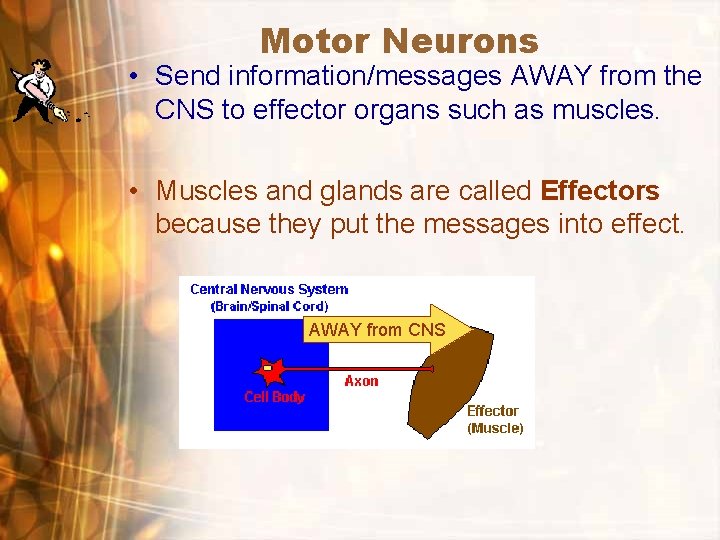
Motor Neurons • Send information/messages AWAY from the CNS to effector organs such as muscles. • Muscles and glands are called Effectors because they put the messages into effect. AWAY from CNS
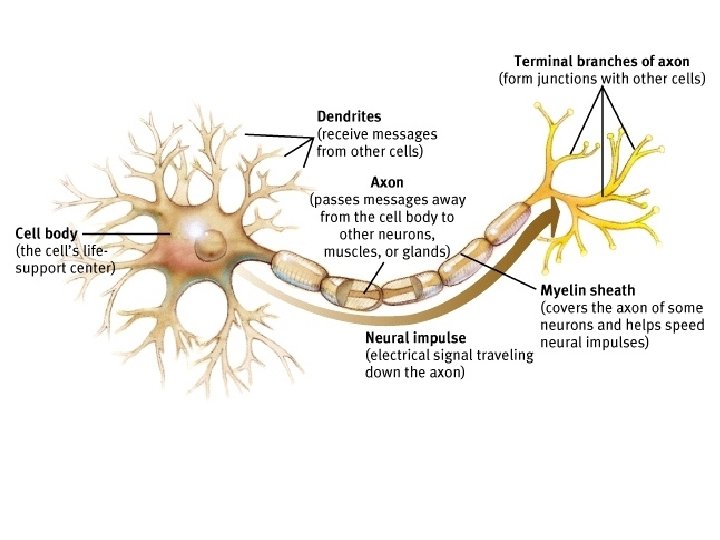
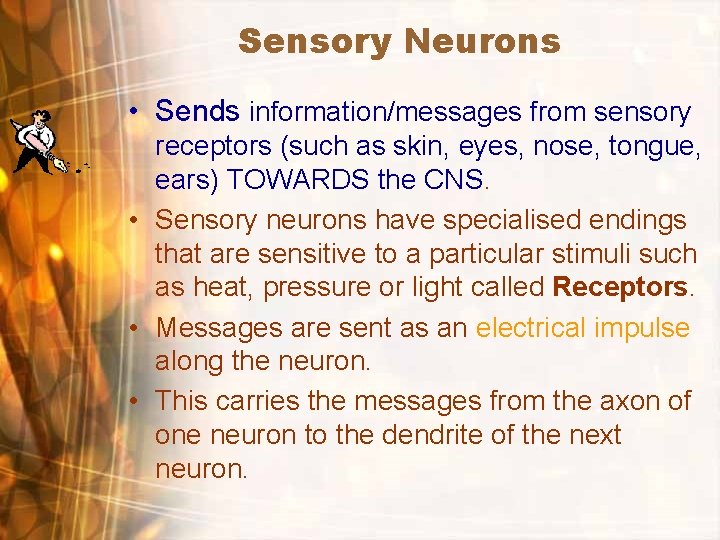
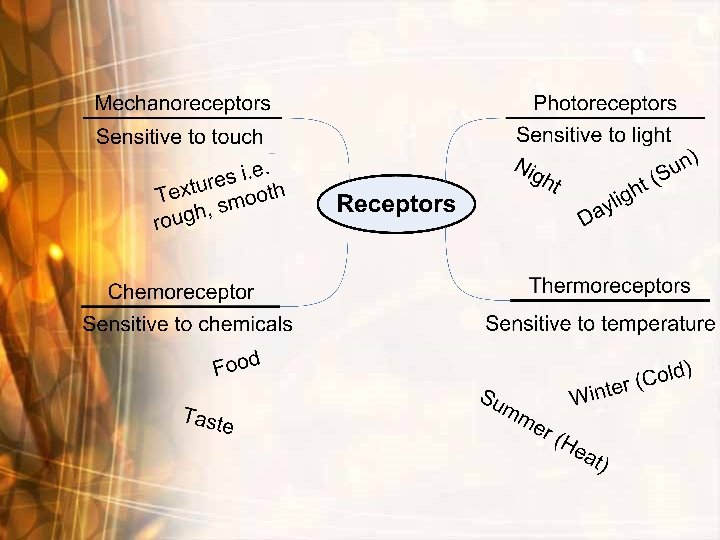
Sensory Neurons • Sends information/messages from sensory receptors (such as skin, eyes, nose, tongue, ears) TOWARDS the CNS. • Sensory neurons have specialised endings that are sensitive to a particular stimuli such as heat, pressure or light called Receptors. • Messages are sent as an electrical impulse along the neuron. • This carries the messages from the axon of one neuron to the dendrite of the next neuron.
Reflexes
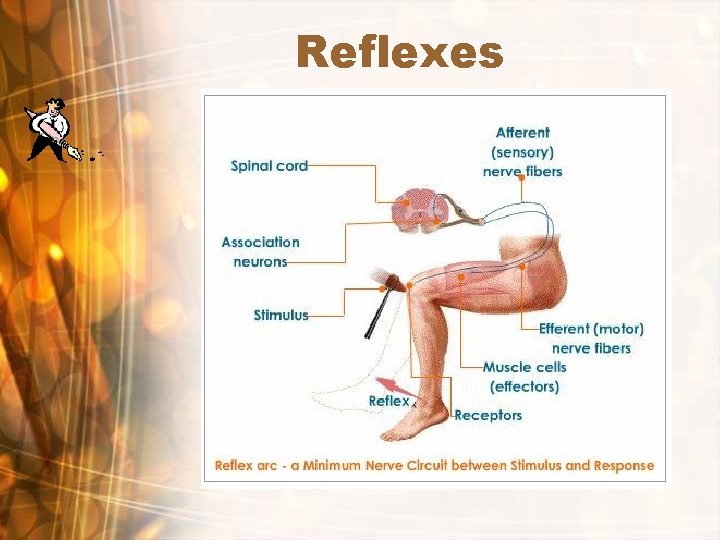
Reflexes • A reflex action is an involuntary, or automatic, action that your body does in response to something - without you even having to think about it. • Reflexes protect your body from things that can harm it. For example: if you put your hand on a hot stove, a reflex causes you to immediately remove your hand before the message, "Hey, this is hot!" even gets to your brain.
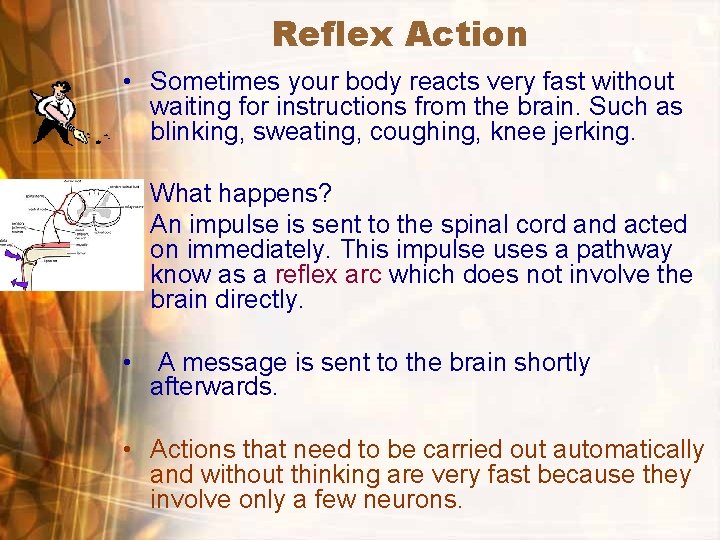
Reflex Action • Sometimes your body reacts very fast without waiting for instructions from the brain. Such as blinking, sweating, coughing, knee jerking. What happens? • An impulse is sent to the spinal cord and acted on immediately. This impulse uses a pathway know as a reflex arc which does not involve the brain directly. • A message is sent to the brain shortly afterwards. • Actions that need to be carried out automatically and without thinking are very fast because they involve only a few neurons.
There are five main senses that correspond to specific organs. What are they?
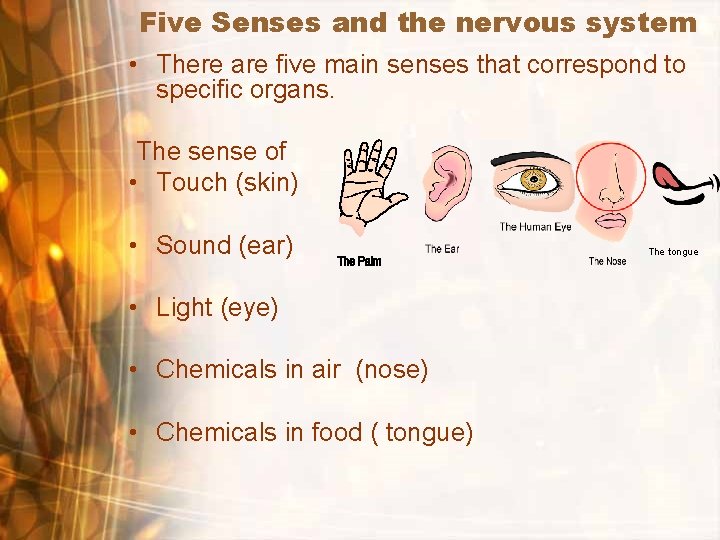
Five Senses and the nervous system • There are five main senses that correspond to specific organs. The sense of • Touch (skin) • Sound (ear) • Light (eye) • Chemicals in air (nose) • Chemicals in food ( tongue) The tongue
Receptors • Information is collected from cells called receptors. • There are many different types of receptors that respond to different types of stimuli.
- Slides: 19