
Bob Travica MIS 2000 Information Systems for Management
Bob Travica MIS 2000 Information Systems for Management Instructor: Bob Travica Class 18 Strategizing with IS: Electronic Commerce Updated 2020
Bob Travica Outline • Electronic commerce (E-commerce) • Business-to-Consumer (B 2 C) E-Commerce • Business-to-Business (B 2 B) E-Commerce • Summary 2
Bob Travica Concept of E-commerce • E-commerce is the area of commerce that is conducted via computer networks and information systems. • E-commerce started among businesses (supply markets), and expanded into consumer markets when Internet moved to businesses and homes in the mid-1990. • Moving into B 2 C or B 2 B is an important business strategy leading to increasing market share, integrating supply chains, improving financial results. E-commerce strategy is mad possible by modern digital technologies (Web, e-payment, e-banking, e -supply chain). 3
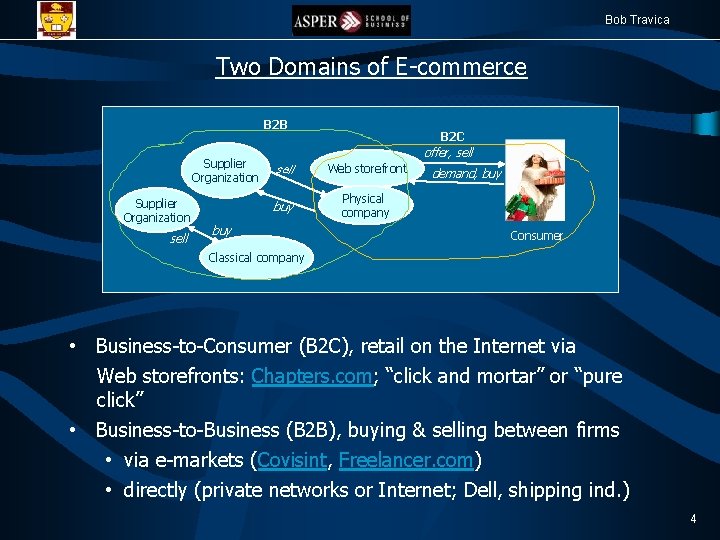
Bob Travica Two Domains of E-commerce B 2 B Supplier Organization sell B 2 C offer, sell Web storefront buy Physical company buy demand, buy Consumer Classical company • Business-to-Consumer (B 2 C), retail on the Internet via Web storefronts: Chapters. com; “click and mortar” or “pure click” • Business-to-Business (B 2 B), buying & selling between firms • via e-markets (Covisint, Freelancer. com) • directly (private networks or Internet; Dell, shipping ind. ) 4
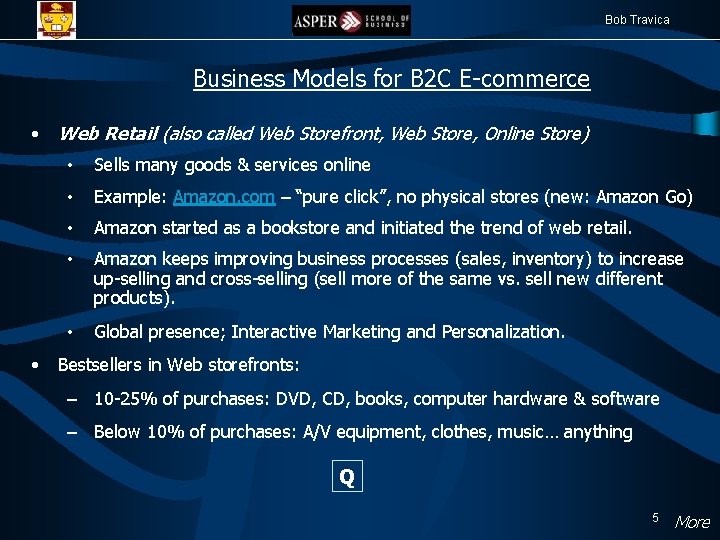
Bob Travica Business Models for B 2 C E-commerce • • Web Retail (also called Web Storefront, Web Store, Online Store) • Sells many goods & services online • Example: Amazon. com – “pure click”, no physical stores (new: Amazon Go) • Amazon started as a bookstore and initiated the trend of web retail. • Amazon keeps improving business processes (sales, inventory) to increase up-selling and cross-selling (sell more of the same vs. sell new different products). • Global presence; Interactive Marketing and Personalization. Bestsellers in Web storefronts: – 10 -25% of purchases: DVD, CD, books, computer hardware & software – Below 10% of purchases: A/V equipment, clothes, music… anything Q 5 More
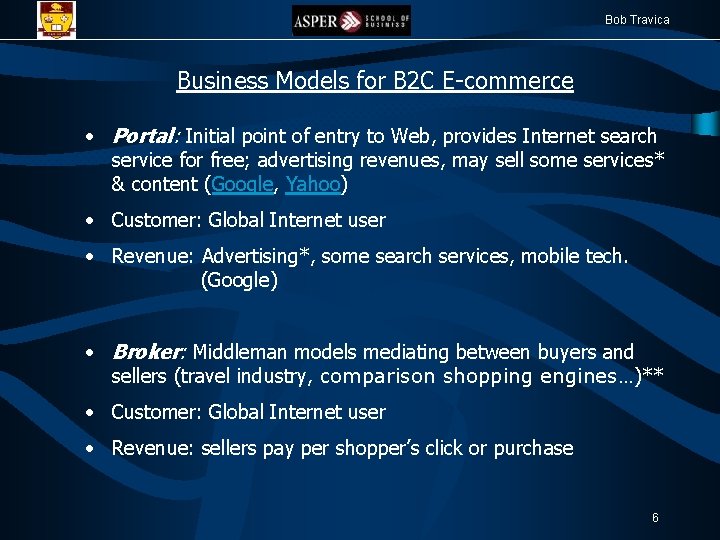
Bob Travica Business Models for B 2 C E-commerce • Portal: Initial point of entry to Web, provides Internet search service for free; advertising revenues, may sell some services* & content (Google, Yahoo) • Customer: Global Internet user • Revenue: Advertising*, some search services, mobile tech. (Google) • Broker: Middleman models mediating between buyers and sellers (travel industry, comparison shopping engines…)** • Customer: Global Internet user • Revenue: sellers pay per shopper’s click or purchase 6
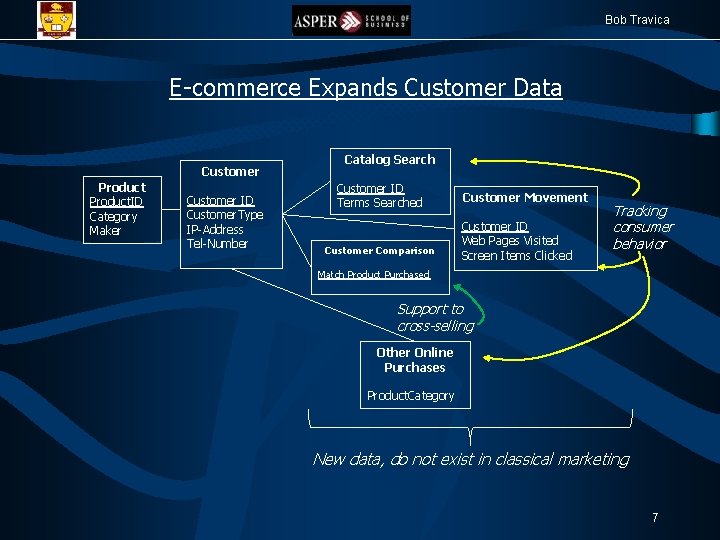
Bob Travica E-commerce Expands Customer Data Customer Product. ID Category Maker Customer ID Customer. Type IP-Address Tel-Number Catalog Search Customer ID Terms Searched Customer Comparison Customer Movement Customer ID Web Pages Visited Screen Items Clicked Tracking consumer behavior Match Product Purchased Support to cross-selling Other Online Purchases Product. Category New data, do not exist in classical marketing 7
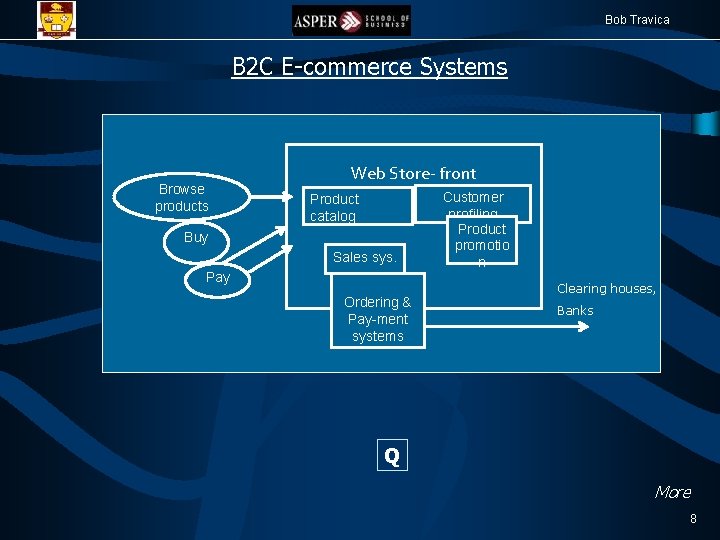
Bob Travica B 2 C E-commerce Systems Browse products Web Store- front Product catalog Buy Sales sys. Pay Ordering & Pay-ment systems Customer profiling Product promotio n Clearing houses, Banks Q More 8
Bob Travica B 2 C E-commerce • Boom 1994 -2000, crash in 2001, recovery afterward. Pure vs. hybrid models. • Share od B 2 C e-commerce in total retail* in 2019: - World 14% - in Canada 10%, in U. S. A. 11%, in UK 22%, in China 37% (and nominally largest, 1. 9 trillion vs 587 billion in US) Benefits Global reach & 24/7 sales - Savings on physical stores - Direct marketing (customer profiling via clickstream or search tracking systems*; personalized Web storefronts) - Cross selling (automatic matching of customer profiles) • Consumer: Convenience, selection, some savings 9 of 14
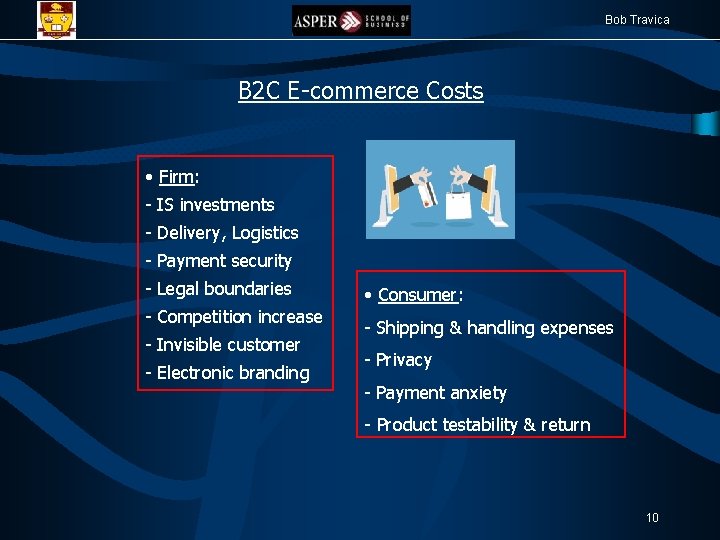
Bob Travica B 2 C E-commerce Costs • Firm: - IS investments - Delivery, Logistics - Payment security - Legal boundaries - Competition increase - Invisible customer - Electronic branding • Consumer: - Shipping & handling expenses - Privacy - Payment anxiety - Product testability & return 10
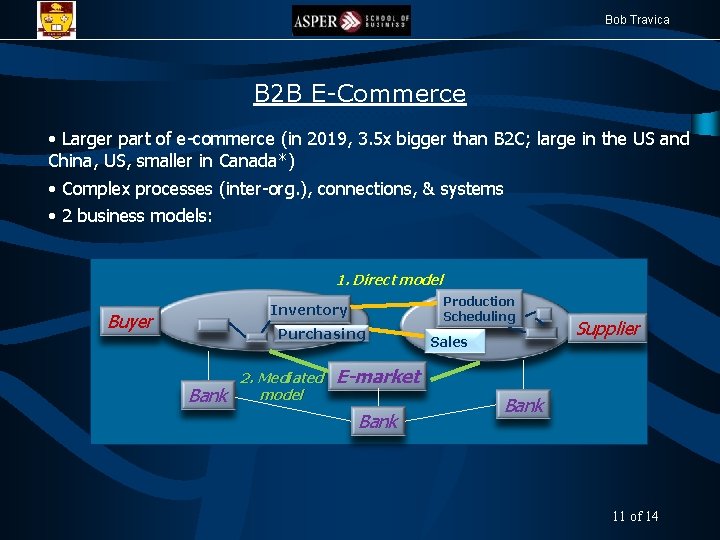
Bob Travica B 2 B E-Commerce • Larger part of e-commerce (in 2019, 3. 5 x bigger than B 2 C; large in the US and China, US, smaller in Canada*) • Complex processes (inter-org. ), connections, & systems • 2 business models: 1. Direct model Production Scheduling Inventory Buyer Purchasing Bank 2. Mediated model Sales Supplier E-market Bank 11 of 14
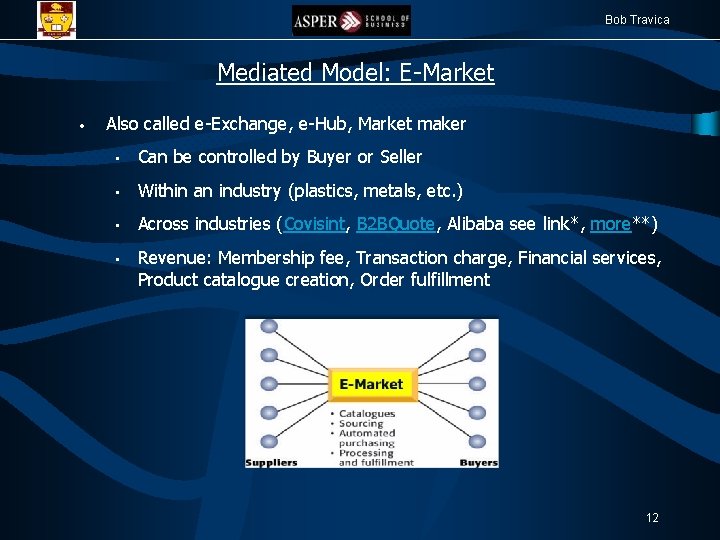
Bob Travica Mediated Model: E-Market • Also called e-Exchange, e-Hub, Market maker • Can be controlled by Buyer or Seller • Within an industry (plastics, metals, etc. ) • Across industries (Covisint, B 2 BQuote, Alibaba see link*, more**) • Revenue: Membership fee, Transaction charge, Financial services, Product catalogue creation, Order fulfillment 12
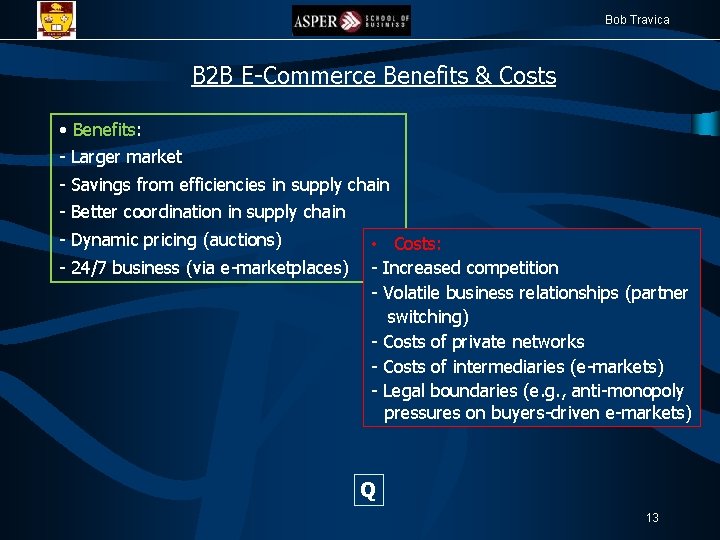
Bob Travica B 2 B E-Commerce Benefits & Costs • Benefits: - Larger market - Savings from efficiencies in supply chain - Better coordination in supply chain - Dynamic pricing (auctions) • Costs: - 24/7 business (via e-marketplaces) - Increased competition - Volatile business relationships (partner switching) - Costs of private networks - Costs of intermediaries (e-markets) - Legal boundaries (e. g. , anti-monopoly pressures on buyers-driven e-markets) Q 13
Bob Travica Summary • E-commerce is buying and selling via electronic means, and these can transpire between businesses (B 2 B; older segment), and between business and consumers (B 2 C, newer segment). • Models of B 2 C e-commerce include portal, web store, and broker. • Two main models of B 2 B e-commerce are direct company-to-company and e-marketplace. • B 2 C e-commerce enriches the customer profile. • B 2 B e-commerce is bigger part of e-commerce and has certain future. • Both B 2 B and B 2 C has certain benefits and costs. 14
- Slides: 14