
Board Governance for Nonprofit Friends Groups Meeting Mission
Board Governance for Nonprofit Friends Groups Meeting Mission Workshop Chincoteague National Wildlife Refuge October 17, 2015
Goals for This Morning Address issues identified in the selfassessment you completed a few weeks ago: ¡ Responsibilities of Governance ¡ Board Development and Engagement ¡ Strategic Planning
Governance Defined Governance is the process of providing strategic leadership to a nonprofit organization. It entails the functions of setting direction, making policy and strategy decisions, overseeing and monitoring organizational performance, and ensuring overall accountability. -David O. Renz, Nonprofit Governance and the Work of the Board, 2007
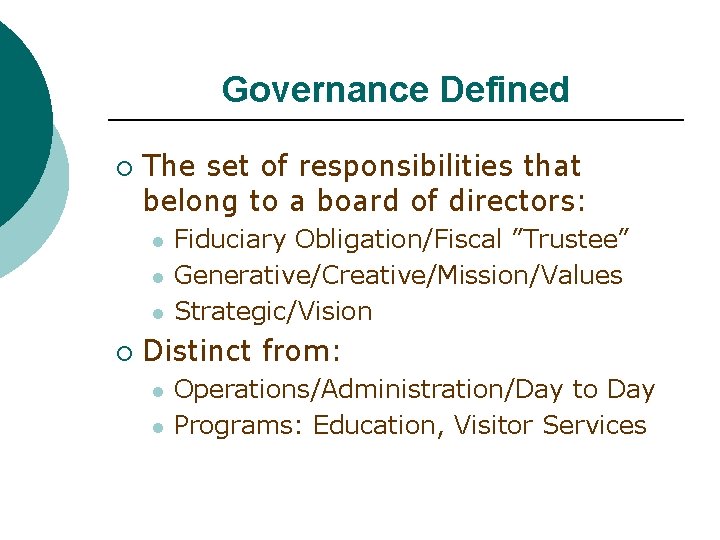
Governance Defined ¡ The set of responsibilities that belong to a board of directors: l l l ¡ Fiduciary Obligation/Fiscal ”Trustee” Generative/Creative/Mission/Values Strategic/Vision Distinct from: l l Operations/Administration/Day to Day Programs: Education, Visitor Services
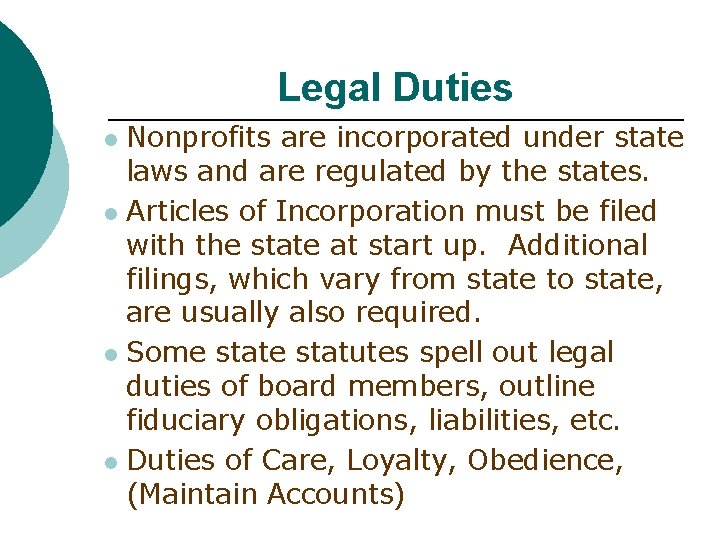
Legal Duties Nonprofits are incorporated under state laws and are regulated by the states. l Articles of Incorporation must be filed with the state at start up. Additional filings, which vary from state to state, are usually also required. l Some statutes spell out legal duties of board members, outline fiduciary obligations, liabilities, etc. l Duties of Care, Loyalty, Obedience, (Maintain Accounts) l
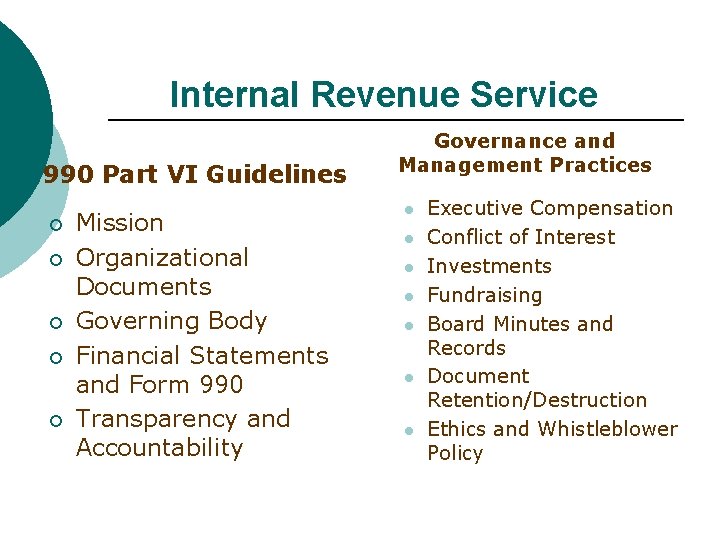
Internal Revenue Service 990 Part VI Guidelines ¡ ¡ ¡ Mission Organizational Documents Governing Body Financial Statements and Form 990 Transparency and Accountability Governance and Management Practices l l l l Executive Compensation Conflict of Interest Investments Fundraising Board Minutes and Records Document Retention/Destruction Ethics and Whistleblower Policy
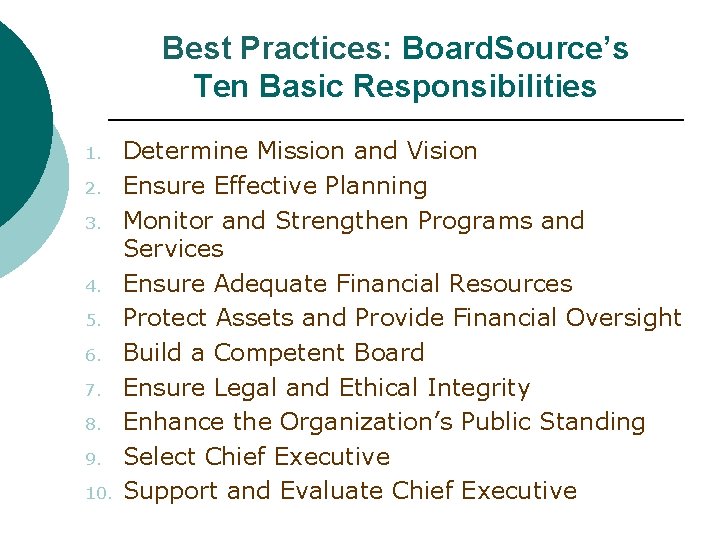
Best Practices: Board. Source’s Ten Basic Responsibilities 1. 2. 3. 4. 5. 6. 7. 8. 9. 10. Determine Mission and Vision Ensure Effective Planning Monitor and Strengthen Programs and Services Ensure Adequate Financial Resources Protect Assets and Provide Financial Oversight Build a Competent Board Ensure Legal and Ethical Integrity Enhance the Organization’s Public Standing Select Chief Executive Support and Evaluate Chief Executive
And…. Advocacy!
Governance Best Practices There are many models of nonprofit board governance, and standards of practice evolve over the years. At Creative Option C, LLC we use and teach Governance as Leadership: Reframing the Work of Nonprofit Boards by Chait, Ryan and Taylor for Board. Source.
Three Modes of Modern Boards Fiduciary ¡ Strategic ¡ Generative (Co-Creative) ¡ The roles of board members and staff are not as distinct as they once were. The relationship is more collaborative and consultative.
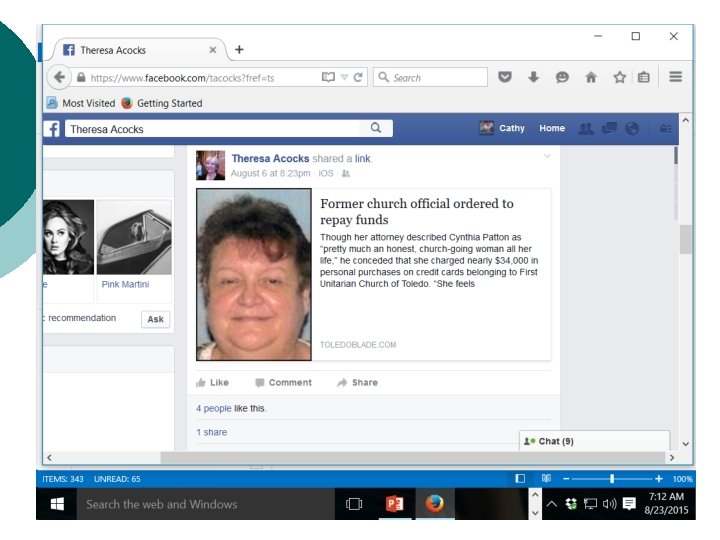
Fiduciary Obligations
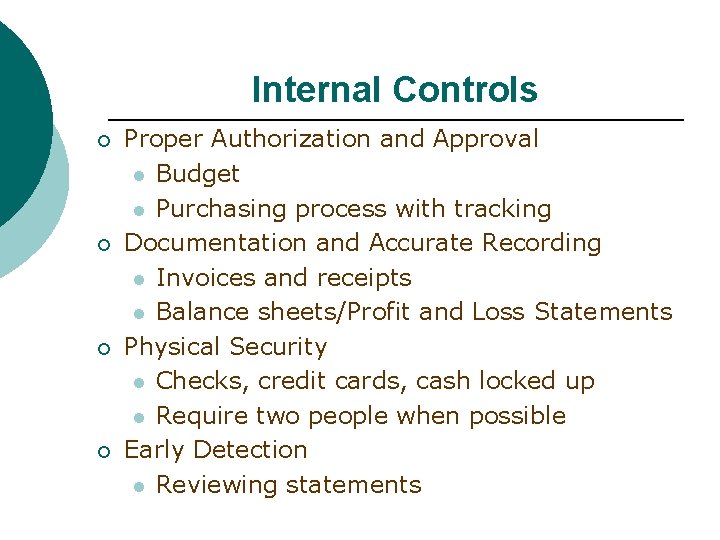
Internal Controls ¡ ¡ Proper Authorization and Approval l Budget l Purchasing process with tracking Documentation and Accurate Recording l Invoices and receipts l Balance sheets/Profit and Loss Statements Physical Security l Checks, credit cards, cash locked up l Require two people when possible Early Detection l Reviewing statements
Additional Policies/Procedures Conflict of Interest ¡ Ethics Statement ¡ Document Retention and Destruction ¡ Whistleblower ¡ Investments ¡ Monitoring of key financial indicators ¡ Board Review of 990 ¡
Audits ¡ External – l l ¡ Sometimes required by funders “Threshhold” recommendations range from $250, 000 -$1, 000 Can prevent/detect errors and fraud Increases donor confidence Internal – l l l Alternative to expensive independent audit Committee members who don’t usually handle money or documents Checklist
Insurance Risk management assessment tools are available ¡ Part of fiduciary obligation ¡ We’re Friends – let’s go with what Refuge Association put together: General Liability * Property * Auto Crime * D&O Liability * Umbrella Volunteer Accident * Workers Comp ¡
Review – Role and Responsibilities ¡ The role of director or trustee of a nonprofit board comes with legal obligations. l l State nonprofit and solicitation laws. Federal IRS guidelines. Best practices for corporate governance. ¡ Board members who deliver programming and manage the organization must still also govern. ¡
Resources Guidestar www. guidestar. org Board. Source www. Board. Source. org Internal Revenue Service www. irs. gov/Charities-&-Non-profits National Council of Nonprofits www. councilofnonprofits. org State Attorneys General, Secretaries of State, or other departments that regulate nonprofit corporations
What Are Your Next Steps?
Board Recruitment and Engagement
Strategy 1: Invest Time in Recruitment and Orientation
Invest Time in Board Development ¡ ¡ ¡ Put these discussions front and center on the board’s meeting agenda. Ask and discuss “What do we expect of ourselves and of each other? ” Develop board member position description to spell out expectations. Officer/committee chair position descriptions. Interview people like job candidates: Are they self-motivated? Are they willing to do governance work?
Strategy 2: Analyze ¡ ¡ ¡ Based on your mission and goals, what skills and characteristics do you need to have a well-rounded board? Which of these do you currently have? What are the gaps? Where are the people who have the skills and characteristics we still need? Do we know them? How can we meet them?
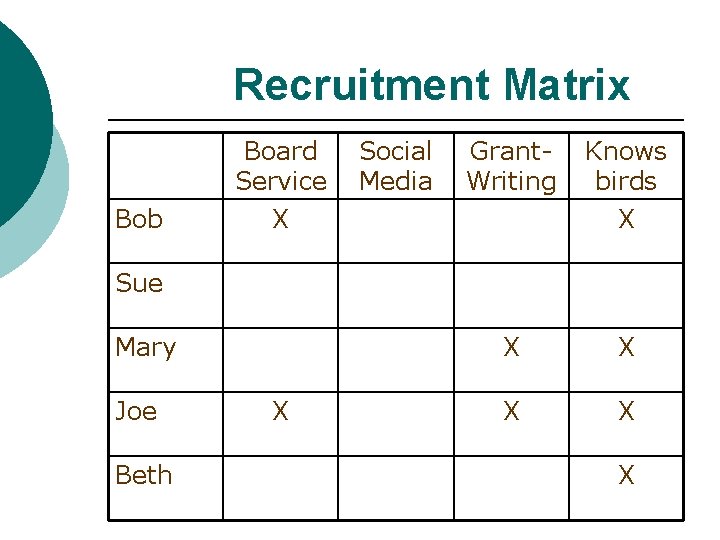
Recruitment Matrix Bob Board Service X Social Media Grant. Writing Knows birds X X X Sue Mary Joe Beth X X
Strategy #3: Cultivate Develop relationships with potential board members using same principles as major donor work. ¡ Make sure they are on your list, receiving regular updates. ¡ Take them to lunch! Make sure they know what you see as their unique contribution and why they fit. ¡ Be clear about expectations and time commitment. ¡
Strategy #4: Orient ¡ ¡ Orientation should be board led. Dovetails with recruitment. Talk about culture and expectations. Include printed materials. l l l l Articles of Incorporation/501 -c-3 letter Bylaws and other policies Budget/Financials Strategic Plan Board roster/matrix Minutes of previous meetings Program information
Strategy #5: Form a Governance Committee ¡ ¡ ¡ It’s not just about “nominations” anymore Good role for vice president Responsible for board development activities, including orientation, annual retreat, ongoing training and mentoring Conducts assessments, communications with board members about their board experiences Reports to chair, executive director, and/or board about emerging issues
Strategy #6: Conduct Strategic Planning ¡ ¡ ¡ Include assessment of where we are now (SWOT: Strengths, Weaknesses, Opportunities, Threats) Create legitimate opportunity for fullboard participation. Let people share their expertise. Same goes for the budget process – let all board members participate. Include board development goals. Include action plan outlining who is responsible for what by when.
Strategy 7: Share Your Board Goals with the Service staff CAN help identify board members (they can’t recruit them. ) ¡ Make sure they know what kinds of people we need. ¡ Check in with them regularly. ¡ Make sure to follow up on suggestions. ¡
Strategy #8: Step Back! Strong leaders create disengagement. They either spoil people or turn them off. ¡ Learn to trust others to do things well or you’ll always have to do it all yourself. ¡ “Type A” people are often hard to challenge or even advise. ¡ Subtlety doesn’t work: feedback must be clear and direct. ¡
Strategy #9: Conduct a Board Self-Evaluation ¡ Several tools exist (find online) l l ¡ ¡ ¡ Group Individual Board Member Provides “speaking” opportunity for board members who are ordinarily quiet in meetings Allows board members to self-identify and therefore own or buy-in to problems Great job for vice president
Strategy #10: Learn More Become part of the Nonprofit Sector in your Communities ¡ Classes ¡ Joint events with other boards ¡ Books ¡ Websites ¡ Blogs ¡ Social media: Linked. In, Facebook ¡
What Are Your Next Steps?
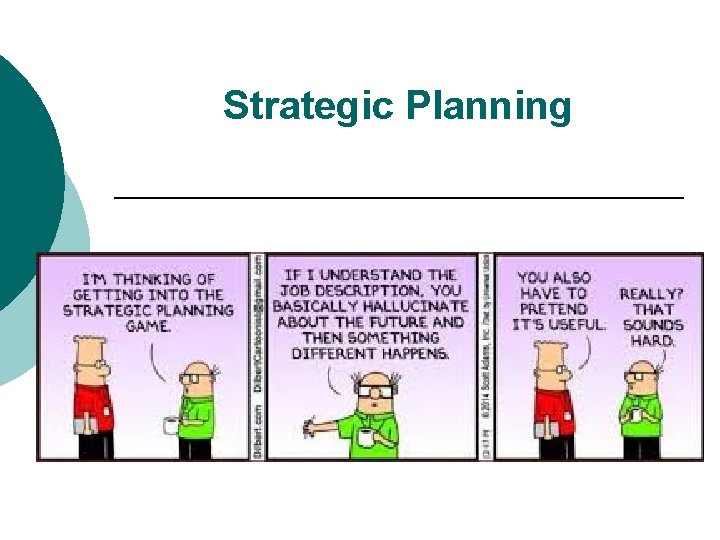
Strategic Planning
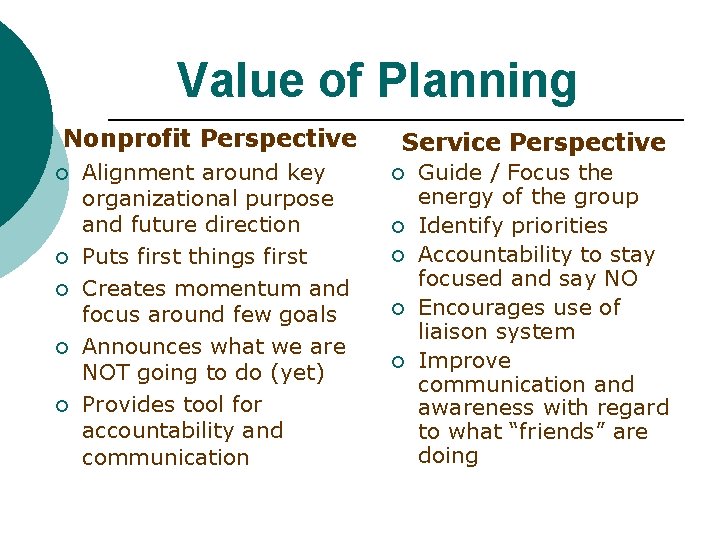
Value of Planning Nonprofit Perspective ¡ ¡ ¡ Alignment around key organizational purpose and future direction Puts first things first Creates momentum and focus around few goals Announces what we are NOT going to do (yet) Provides tool for accountability and communication Service Perspective ¡ ¡ ¡ Guide / Focus the energy of the group Identify priorities Accountability to stay focused and say NO Encourages use of liaison system Improve communication and awareness with regard to what “friends” are doing
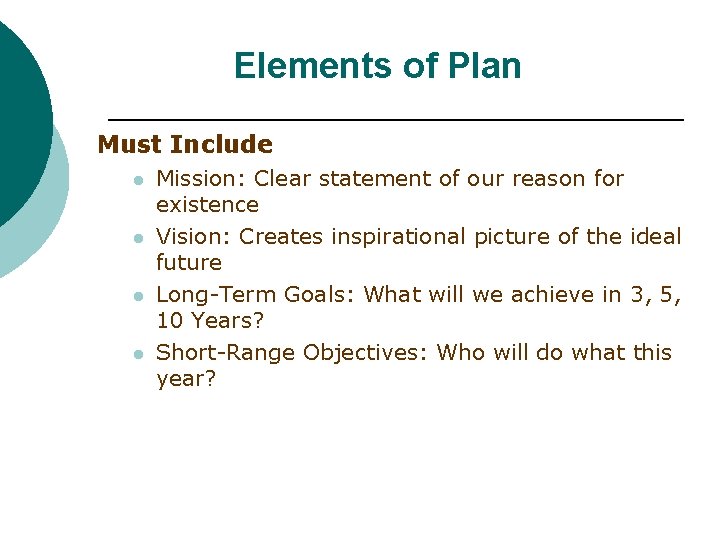
Elements of Plan Must Include l l Mission: Clear statement of our reason for existence Vision: Creates inspirational picture of the ideal future Long-Term Goals: What will we achieve in 3, 5, 10 Years? Short-Range Objectives: Who will do what this year?
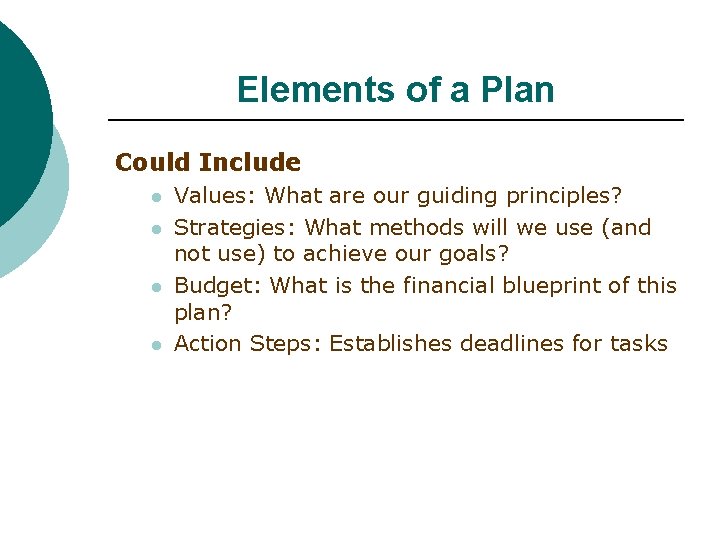
Elements of a Plan Could Include l l Values: What are our guiding principles? Strategies: What methods will we use (and not use) to achieve our goals? Budget: What is the financial blueprint of this plan? Action Steps: Establishes deadlines for tasks
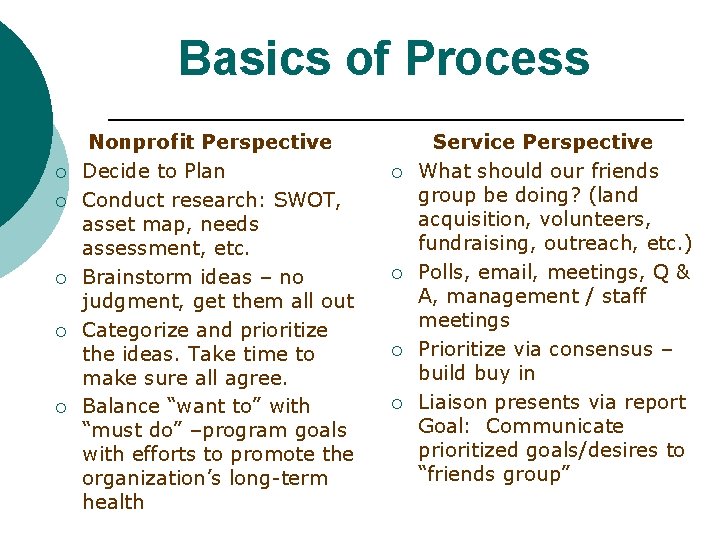
Basics of Process ¡ ¡ ¡ Nonprofit Perspective Decide to Plan Conduct research: SWOT, asset map, needs assessment, etc. Brainstorm ideas – no judgment, get them all out Categorize and prioritize the ideas. Take time to make sure all agree. Balance “want to” with “must do” –program goals with efforts to promote the organization’s long-term health ¡ ¡ Service Perspective What should our friends group be doing? (land acquisition, volunteers, fundraising, outreach, etc. ) Polls, email, meetings, Q & A, management / staff meetings Prioritize via consensus – build buy in Liaison presents via report Goal: Communicate prioritized goals/desires to “friends group”
Take Care of the Golden Goose!
Use the Plan: Work Plans Consider using separate step-down plans, such as: l l l Fundraising Plan (Annual Fund, Membership Drive, and/or Capital Campaign) Communications Plan (social media calendar) Volunteer Recruitment/Retention Plan Land Acquisition/Conservation Projects Plan Environmental Education Plan Board or Staff Development Plan
Use the Plan: Other Strategies ¡ ¡ ¡ Have a regular place for the Strategic Plan on the board meeting agenda. Ask staff and committee chairs to format their reports according to Plan Goals. Use Plan to perform board and staff evaluations. Provide Plan to prospective new board members and include it in new member orientation. Celebrate accomplishments.
Resources Board Café/Compasspoint www. compasspoint. org Board. Source www. Board. Source. org Delaware Alliance for Nonprofit Advancement www. delawarenonprofit. org Maryland Nonprofits www. Maryland. Nonprofits. org
And last but not least… Call Joan! Joan Patterson Director of Grassroots Outreach 1001 Connecticut Ave NW, Suite 905 Washington, D. C. 20036 202 -290 -5594 jpatterson@refugeassociation. org www. refugefriendsconnect. org
Let’s Stay in Touch Cathy Allen Creative Option C, LLC cathy@Creative. Option. C. com 419 -732 -1770 www. Creative. Option. C. com www. Facebook. com/Creative. Option. C
- Slides: 47