
BNL Computational Science Initiative CSI Kerstin Kleese van
BNL - Computational Science Initiative (CSI) ▪ Kerstin Kleese van Dam
Established in 2015 ▪ Integration of computation capabilities across BNL under one Umbrella ▪ Vision: Recognized leader in data drivendiscovery - translating leading computer science and mathematics research into measurable improved scientific discovery processes.
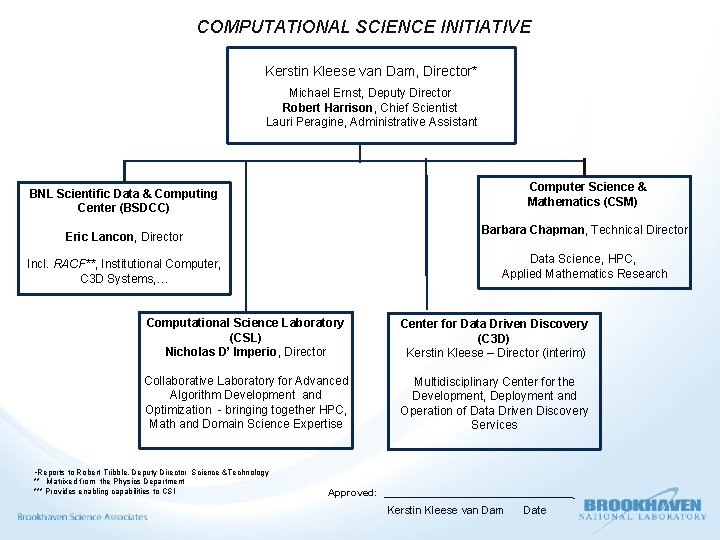
COMPUTATIONAL SCIENCE INITIATIVE Kerstin Kleese van Dam, Director* Michael Ernst, Deputy Director Robert Harrison, Chief Scientist Lauri Peragine, Administrative Assistant Computer Science & Mathematics (CSM) BNL Scientific Data & Computing Center (BSDCC) Barbara Chapman, Technical Director Eric Lancon, Director Data Science, HPC, Applied Mathematics Research Incl. RACF**, Institutional Computer, C 3 D Systems, … Computational Science Laboratory (CSL) Nicholas D’ Imperio, Director Center for Data Driven Discovery (C 3 D) Kerstin Kleese – Director (interim) Collaborative Laboratory for Advanced Algorithm Development and Optimization - bringing together HPC, Math and Domain Science Expertise Multidisciplinary Center for the Development, Deployment and Operation of Data Driven Discovery Services • Reports to Robert Tribble, Deputy Director Science &Technology ** Matrixed from the Physics Department *** Provides enabling capabilities to CSI Approved: Kerstin Kleese van Dam Date
Core Scientific Focus Areas ▪ Streaming Analysis of Experimental, Observational ▪ ▪ and Modeling Results Numerical Modeling at the extreme Scale in Support of Experimental Planning, Steering and Analysis Multi-Source Streaming Data Analysis (Complex Modeling) Active reuse of Knowledge Repositories as part of Streaming Analysis Infrastructures Nano-technology inspired Challenges for Future Computing Technologies
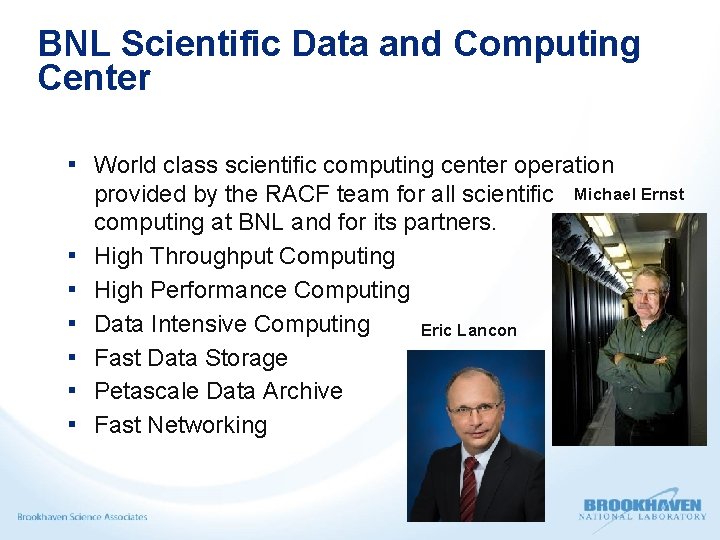
BNL Scientific Data and Computing Center ▪ World class scientific computing center operation ▪ ▪ ▪ provided by the RACF team for all scientific computing at BNL and for its partners. High Throughput Computing High Performance Computing Data Intensive Computing Eric Lancon Fast Data Storage Petascale Data Archive Fast Networking Michael Ernst
Computational Science and Mathematics ▪ Reliable, high performance data analysis solutions require and integrated approach, from system architectures to the application level ▪ Leading Edge Research in HPC and Data Science Barbara Chapman Technologies incl. : ▪ Programming Models, Runtime Systems and Compilers, Novel Architectures ▪ Resource Allocation ▪ Applied Mathematics - Particle Methods Machine Learning, Linear Solvers ▪ Visual Analytics ▪ Fast Network Protocols
Computational Science Laboratory ▪ Collaborative Center in support of advanced ▪ ▪ ▪ Numerical Modeling User Support Code Optimization Scalable Mathematical Libraries Development of scalable Algorithms Benchmarking ▪ NVIDIA GPU Research Center 2016 Nick D’Imperio
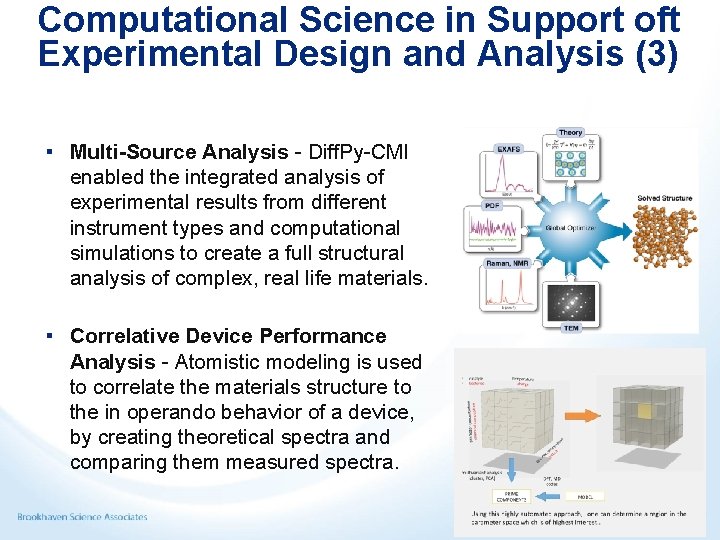
Computational Science in Support oft Experimental Design and Analysis (3) ▪ Multi-Source Analysis - Diff. Py-CMI enabled the integrated analysis of experimental results from different instrument types and computational simulations to create a full structural analysis of complex, real life materials. ▪ Correlative Device Performance Analysis - Atomistic modeling is used to correlate the materials structure to the in operando behavior of a device, by creating theoretical spectra and comparing them measured spectra.
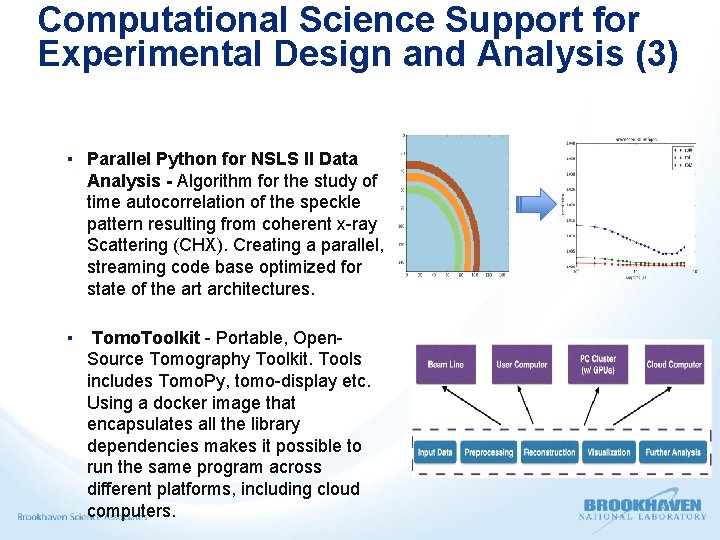
Computational Science Support for Experimental Design and Analysis (3) ▪ Parallel Python for NSLS II Data Analysis - Algorithm for the study of time autocorrelation of the speckle pattern resulting from coherent x-ray Scattering (CHX). Creating a parallel, streaming code base optimized for state of the art architectures. ▪ Tomo. Toolkit - Portable, Open. Source Tomography Toolkit. Tools includes Tomo. Py, tomo-display etc. Using a docker image that encapsulates all the library dependencies makes it possible to run the same program across different platforms, including cloud computers.
Center for Data Driven Discovery ▪ Collaboration Center for the Development of Big ▪ ▪ ▪ Data Methods, Libraries, Tools and Services for Experimental, Observational and Computational Data Environments Image Analysis Streaming Data Analysis Multi-Source Data Analysis Provenance Long Term Data Curation
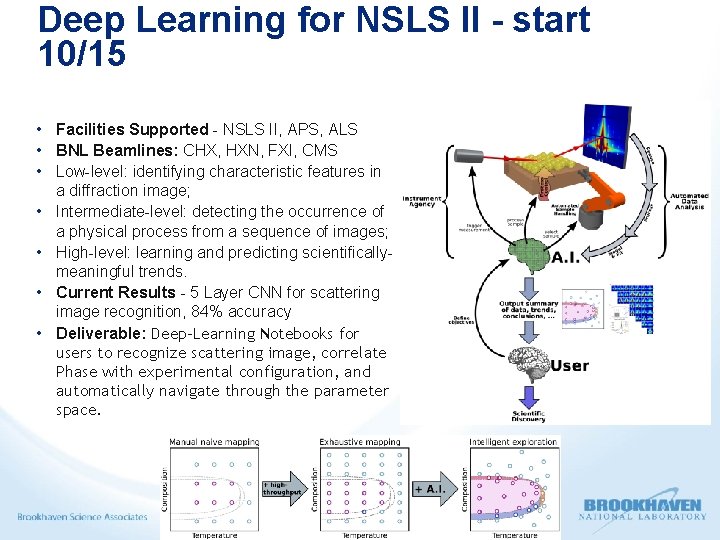
Deep Learning for NSLS II - start 10/15 • Facilities Supported - NSLS II, APS, ALS • BNL Beamlines: CHX, HXN, FXI, CMS • Low-level: identifying characteristic features in a diffraction image; • Intermediate-level: detecting the occurrence of a physical process from a sequence of images; • High-level: learning and predicting scientificallymeaningful trends. • Current Results - 5 Layer CNN for scattering image recognition, 84% accuracy • Deliverable: Deep-Learning Notebooks for users to recognize scattering image, correlate Phase with experimental configuration, and automatically navigate through the parameter space.
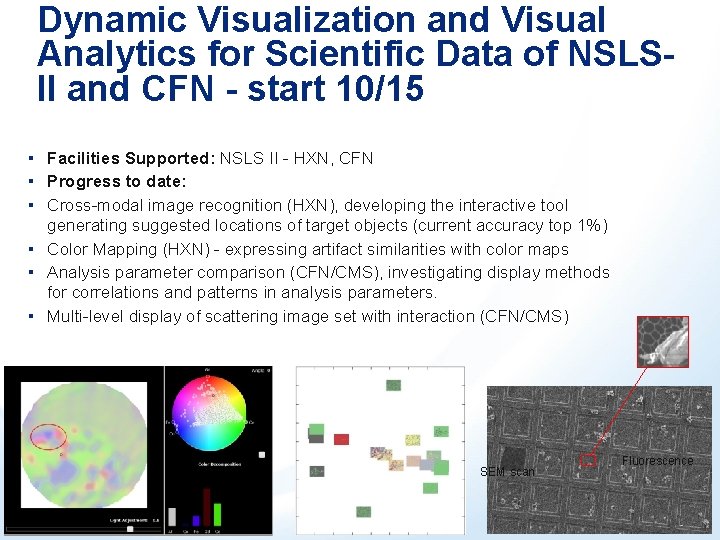
Dynamic Visualization and Visual Analytics for Scientific Data of NSLSII and CFN - start 10/15 ▪ Facilities Supported: NSLS II - HXN, CFN ▪ Progress to date: ▪ Cross-modal image recognition (HXN), developing the interactive tool generating suggested locations of target objects (current accuracy top 1%) ▪ Color Mapping (HXN) - expressing artifact similarities with color maps ▪ Analysis parameter comparison (CFN/CMS), investigating display methods for correlations and patterns in analysis parameters. ▪ Multi-level display of scattering image set with interaction (CFN/CMS) SEM scan Fluorescence
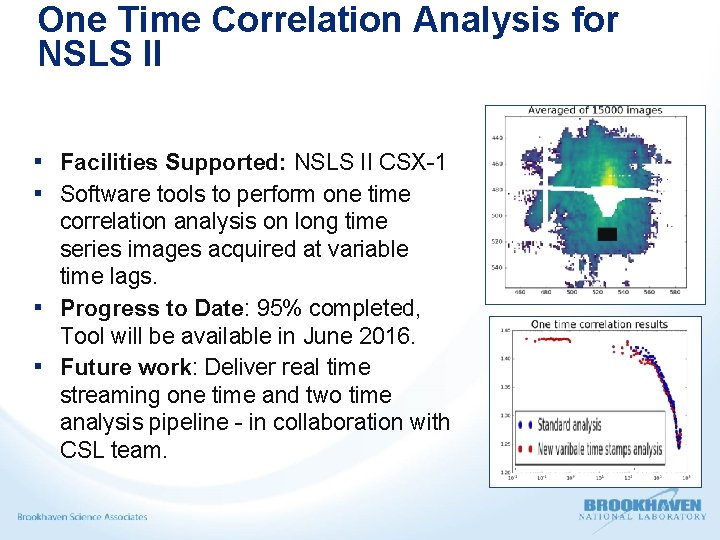
One Time Correlation Analysis for NSLS II ▪ Facilities Supported: NSLS II CSX-1 ▪ Software tools to perform one time correlation analysis on long time series images acquired at variable time lags. ▪ Progress to Date: 95% completed, Tool will be available in June 2016. ▪ Future work: Deliver real time streaming one time and two time analysis pipeline - in collaboration with CSL team.
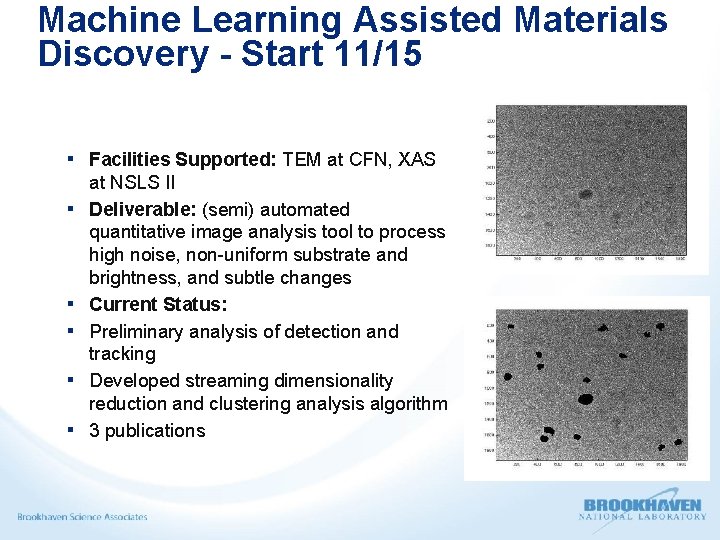
Machine Learning Assisted Materials Discovery - Start 11/15 ▪ Facilities Supported: TEM at CFN, XAS ▪ ▪ ▪ at NSLS II Deliverable: (semi) automated quantitative image analysis tool to process high noise, non-uniform substrate and brightness, and subtle changes Current Status: Preliminary analysis of detection and tracking Developed streaming dimensionality reduction and clustering analysis algorithm 3 publications
Summary ▪ ▪ New organizational Structure in Place Key requirements and priorities identified Restructured Project Portfolio has started Close collaboration with NSLS-II DAMA group and growing collaboration with CAMERA ▪ Happy to Collaborate
- Slides: 15