
Blueberry Disease Management Bill Cline Entomology and Plant
Blueberry Disease Management Bill Cline, Entomology and Plant Pathology North Carolina State University Horticultural Crops Research Station, Castle Hayne

Most home garden blueberry problems are not caused by pathogens • Poor location (shade, drainage, soil type) • Lack of site prep (p. H, mulch, raised beds) • Wrong species • Poor nutrition, no irrigation • Need for pruning (lichen -covered canes, small berries) Lichens will grow on many surfaces, including blueberry stems
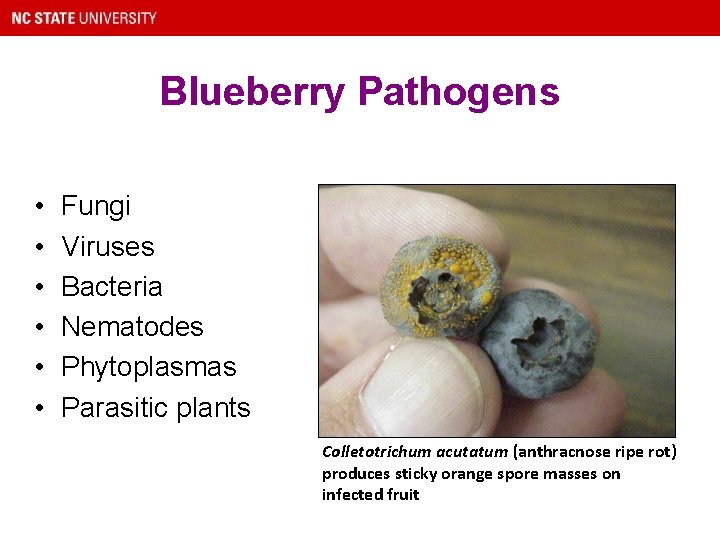
Blueberry Pathogens • • • Fungi Viruses Bacteria Nematodes Phytoplasmas Parasitic plants Colletotrichum acutatum (anthracnose ripe rot) produces sticky orange spore masses on infected fruit
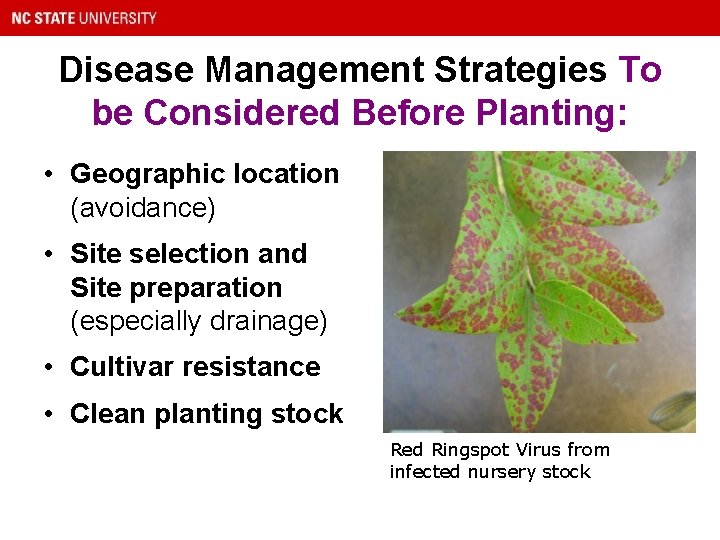
Disease Management Strategies To be Considered Before Planting: • Geographic location (avoidance) • Site selection and Site preparation (especially drainage) • Cultivar resistance • Clean planting stock Red Ringspot Virus from infected nursery stock
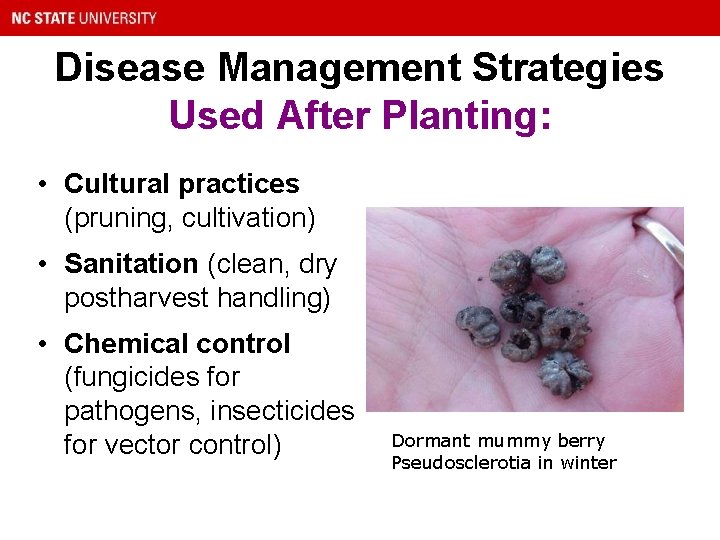
Disease Management Strategies Used After Planting: • Cultural practices (pruning, cultivation) • Sanitation (clean, dry postharvest handling) • Chemical control (fungicides for pathogens, insecticides for vector control) Dormant mummy berry Pseudosclerotia in winter
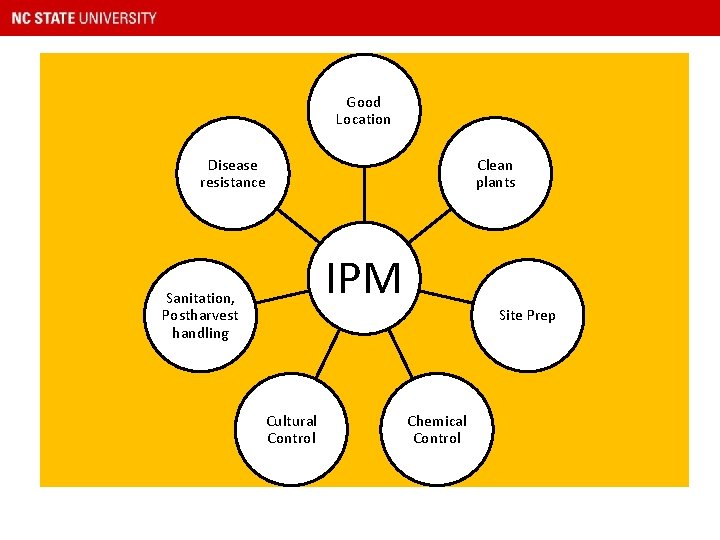
Good Location Disease resistance Clean plants IPM Sanitation, Postharvest handling Cultural Control Site Prep Chemical Control

Disease Management Concept: Clean Plants Example = Blueberry Red Ringspot Virus • Plant-borne virus • Vector(s) unknown • Spreads via cuttings from infected plants • “Start Clean and Stay Clean” Red ring spots on young stems
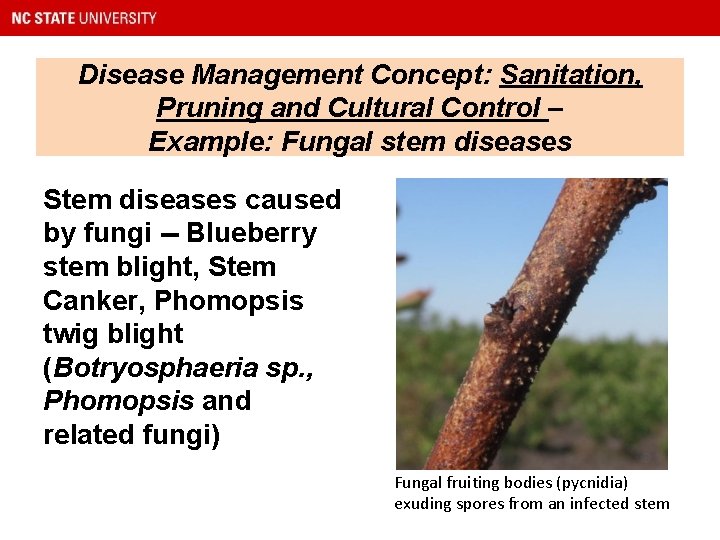
Disease Management Concept: Sanitation, Pruning and Cultural Control – Example: Fungal stem diseases Stem diseases caused by fungi -- Blueberry stem blight, Stem Canker, Phomopsis twig blight (Botryosphaeria sp. , Phomopsis and related fungi) Fungal fruiting bodies (pycnidia) exuding spores from an infected stem
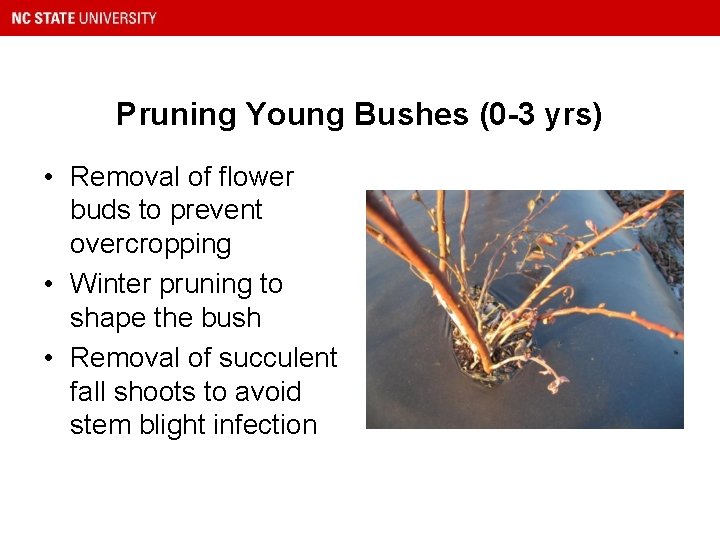
Pruning Young Bushes (0 -3 yrs) • Removal of flower buds to prevent overcropping • Winter pruning to shape the bush • Removal of succulent fall shoots to avoid stem blight infection
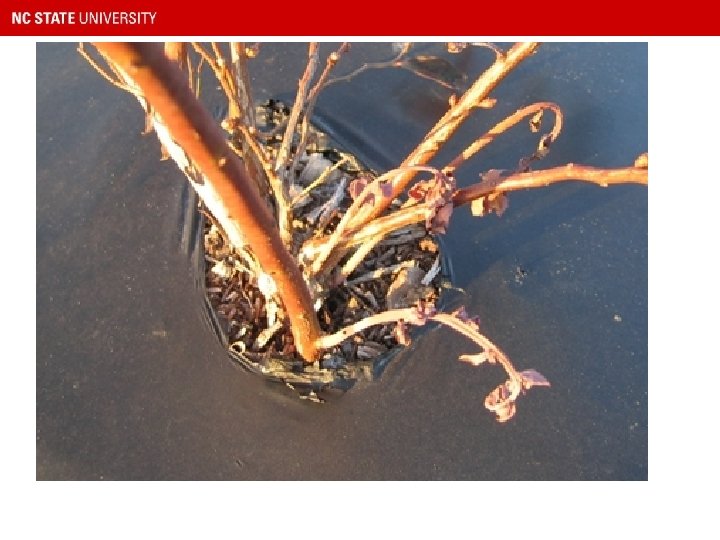
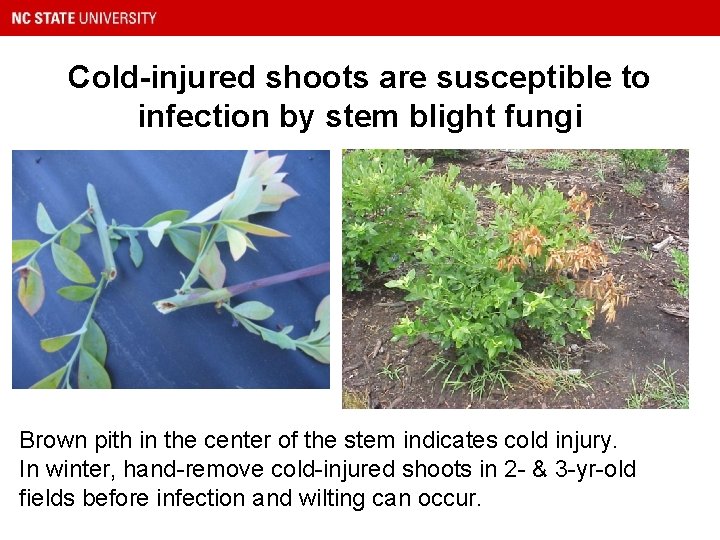
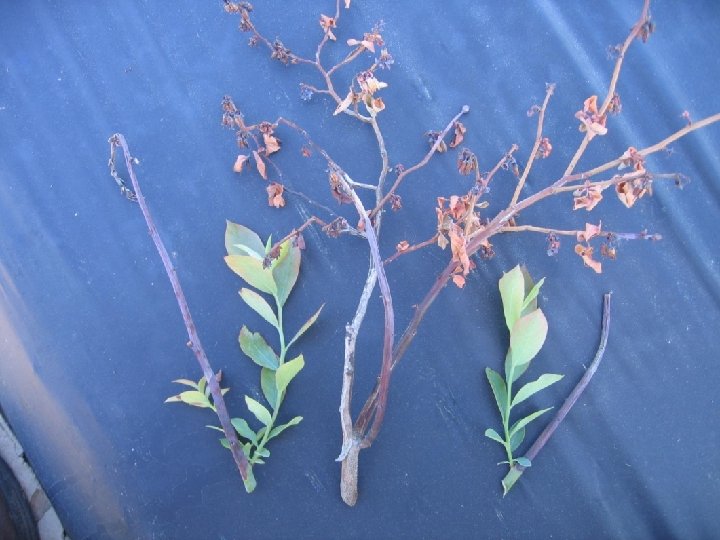
Cold-injured shoots are susceptible to infection by stem blight fungi Brown pith in the center of the stem indicates cold injury. In winter, hand-remove cold-injured shoots in 2 - & 3 -yr-old fields before infection and wilting can occur.
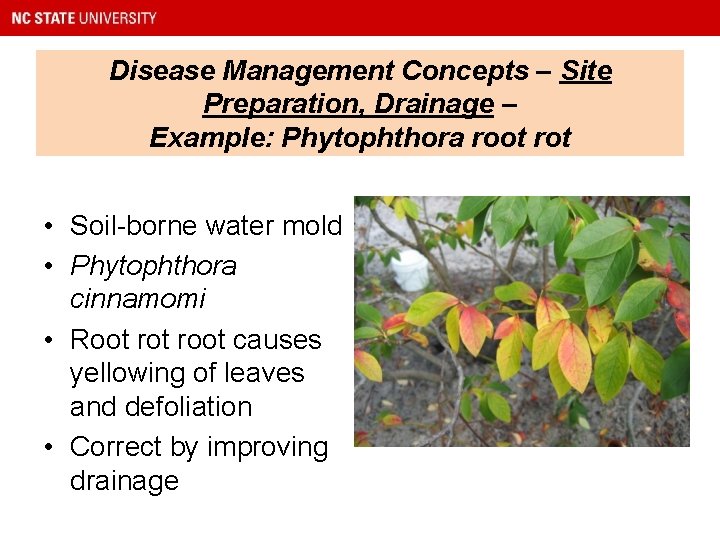
Disease Management Concepts – Site Preparation, Drainage – Example: Phytophthora root rot • Soil-borne water mold • Phytophthora cinnamomi • Root root causes yellowing of leaves and defoliation • Correct by improving drainage
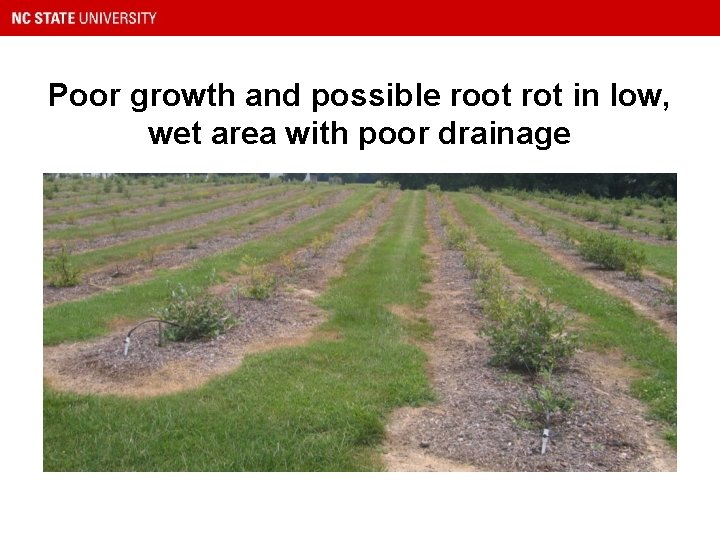
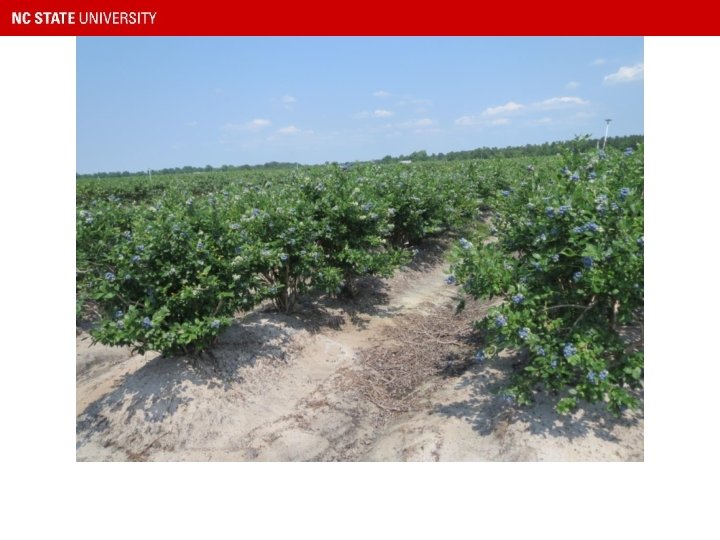
Poor growth and possible root rot in low, wet area with poor drainage
Drainage considerations to avoid Phytophthora root rot • Provisions for field drainage must be made prior to planting • Bedding up of rows should be done prior to planting • If soil is too heavy (poor internal drainage) the soil must be amended prior to planting • Some clay soils are not fixable • Chemical control is not a permanent fix
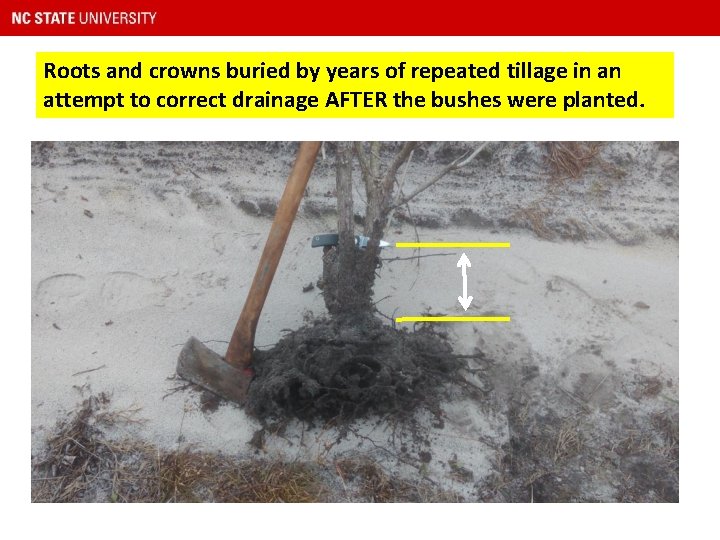
Roots and crowns buried by years of repeated tillage in an attempt to correct drainage AFTER the bushes were planted.
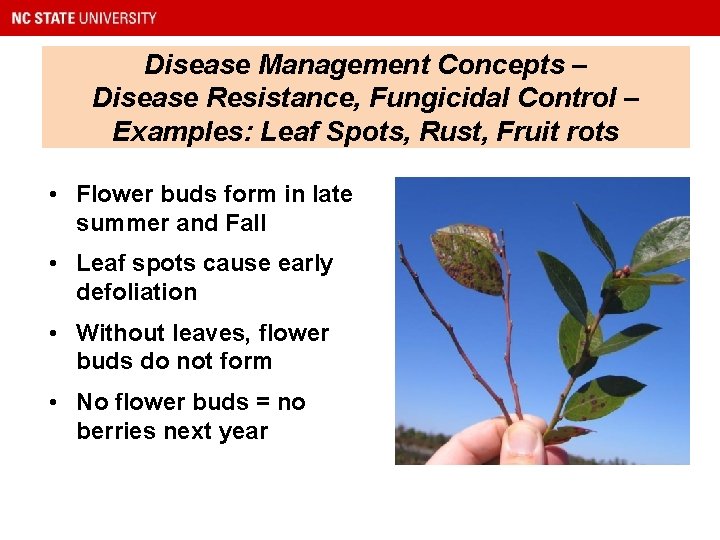
Disease Management Concepts – Disease Resistance, Fungicidal Control – Examples: Leaf Spots, Rust, Fruit rots • Flower buds form in late summer and Fall • Leaf spots cause early defoliation • Without leaves, flower buds do not form • No flower buds = no berries next year

Disease Management Concepts – Fungicidal Control – Examples: Exobasidium leaf and fruit spot, Mummy Berry, Anthracnose fruit rot • Fungicides are mostly protectants, need to be applied before symptoms appear • Anthracnose fruit rot or ripe rot (shown) is best controlled with fungicides at bloom
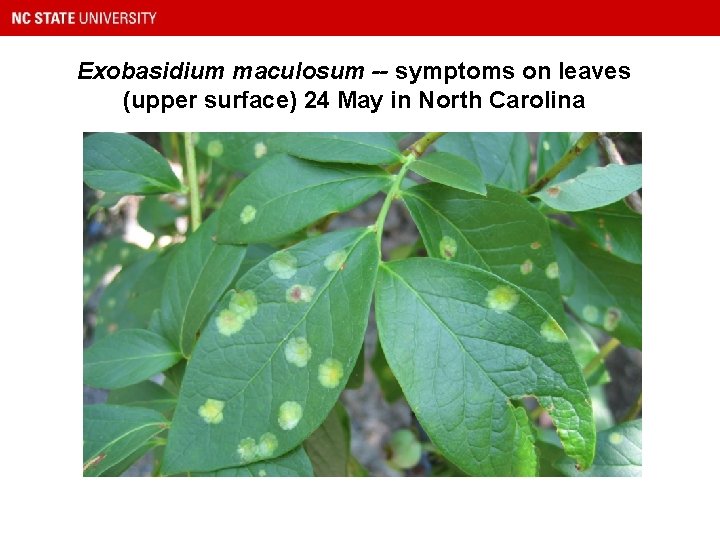
Exobasidium maculosum -- symptoms on leaves (upper surface) 24 May in North Carolina
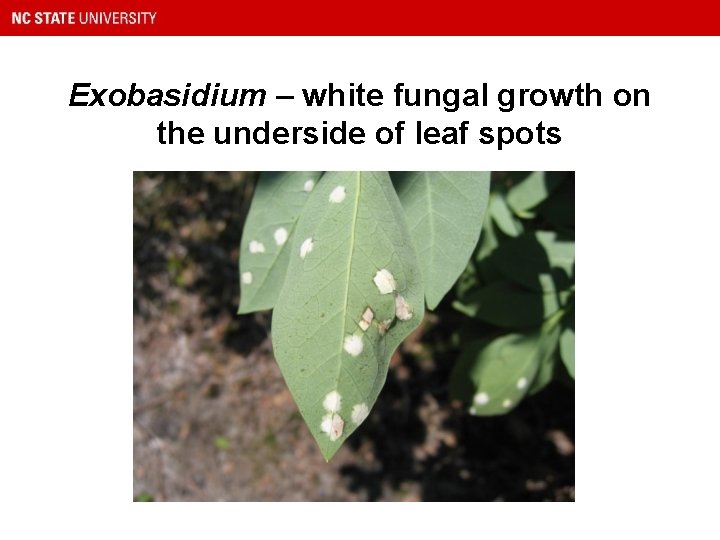
Exobasidium – white fungal growth on the underside of leaf spots
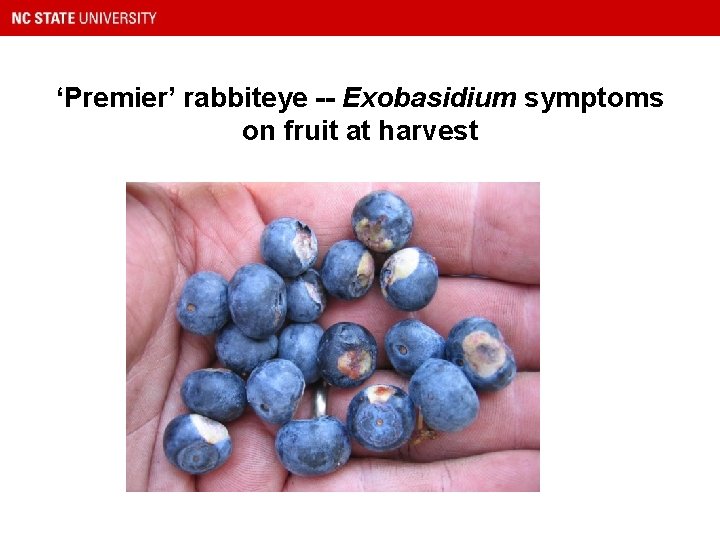
‘Premier’ rabbiteye -- Exobasidium symptoms on fruit at harvest
Control of Exobasidium = Spray Early -- Spray Thoroughly • Delayed Dormant, 1 -2 weeks before budbreak • Coverage is critical – stems, buds on all sides • Calcium polysulfide products – Organic control: Lime-Sulfur 4 -5 gal/A – Sulforix – not organic, 1 gal/A – Corrosive, hard to handle, hard to clean up – No mixes, not within 14 days of oils, or >85 o. F
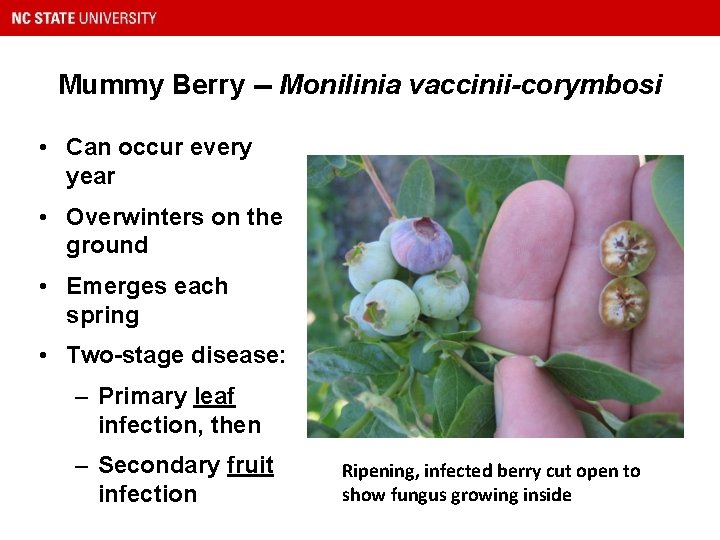
Mummy Berry -- Monilinia vaccinii-corymbosi • Can occur every year • Overwinters on the ground • Emerges each spring • Two-stage disease: – Primary leaf infection, then – Secondary fruit infection Ripening, infected berry cut open to show fungus growing inside
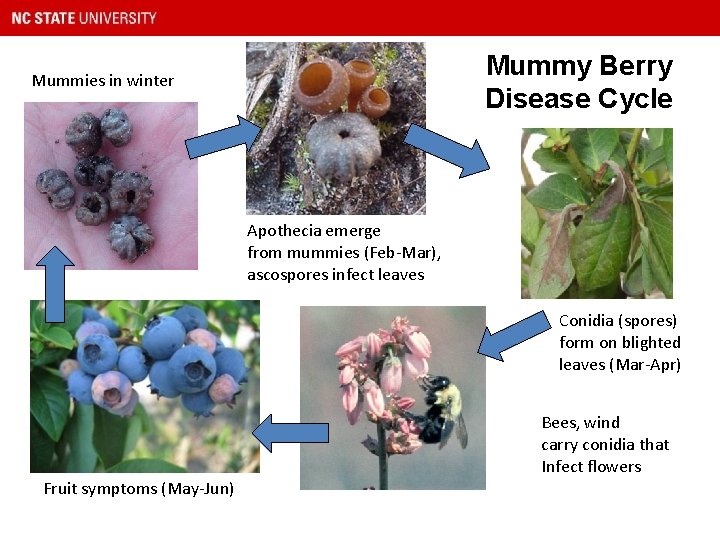
Mummy Berry Disease Cycle Mummies in winter Apothecia emerge from mummies (Feb-Mar), ascospores infect leaves Conidia (spores) form on blighted leaves (Mar-Apr) Bees, wind carry conidia that Infect flowers Fruit symptoms (May-Jun)
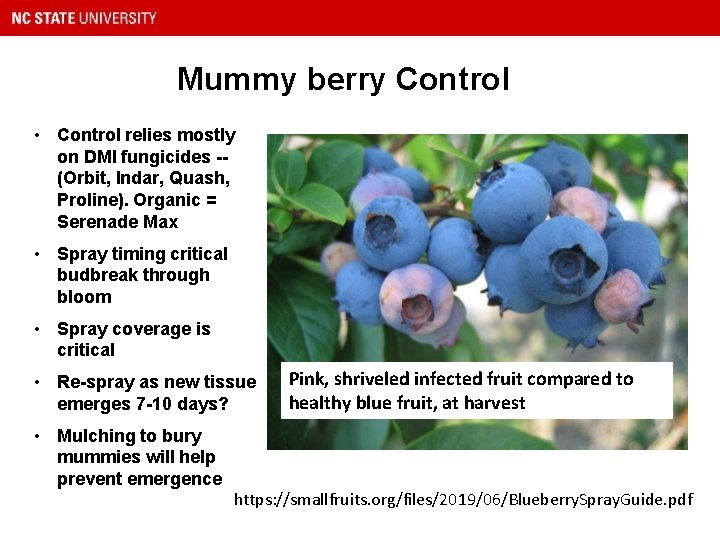
Mummy berry Control • Control relies mostly on DMI fungicides -(Orbit, Indar, Quash, Proline). Organic = Serenade Max • Spray timing critical budbreak through bloom • Spray coverage is critical • Re-spray as new tissue emerges 7 -10 days? • Mulching to bury mummies will help prevent emergence Pink, shriveled infected fruit compared to healthy blue fruit, at harvest https: //smallfruits. org/files/2019/06/Blueberry. Spray. Guide. pdf
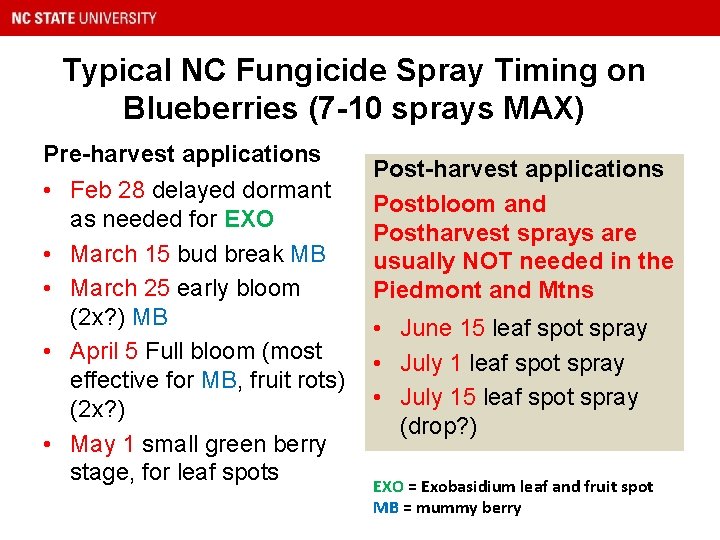
Typical NC Fungicide Spray Timing on Blueberries (7 -10 sprays MAX) Pre-harvest applications • Feb 28 delayed dormant as needed for EXO • March 15 bud break MB • March 25 early bloom (2 x? ) MB • April 5 Full bloom (most effective for MB, fruit rots) (2 x? ) • May 1 small green berry stage, for leaf spots Post-harvest applications Postbloom and Postharvest sprays are usually NOT needed in the Piedmont and Mtns • June 15 leaf spot spray • July 15 leaf spot spray (drop? ) EXO = Exobasidium leaf and fruit spot MB = mummy berry
Disease Management Concepts – Proper handling and post-harvest cooling – Example: Anthracnose fruit rot (ripe rot) • Alternaria sp. (Alternaria rot) • Botrytis cinerea (Gray mold) • Colletotrichum acutatum (Ripe rot, Anthracnose) • 80% of postharvest rot occurs at the stem scar
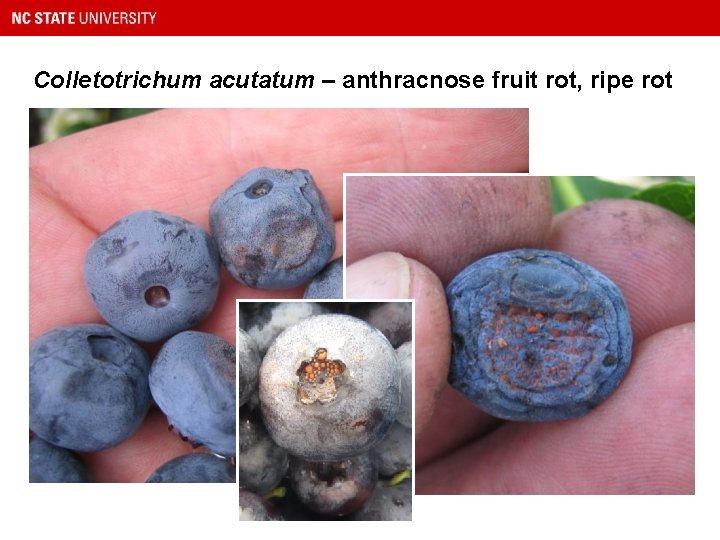
Colletotrichum acutatum – anthracnose fruit rot, ripe rot
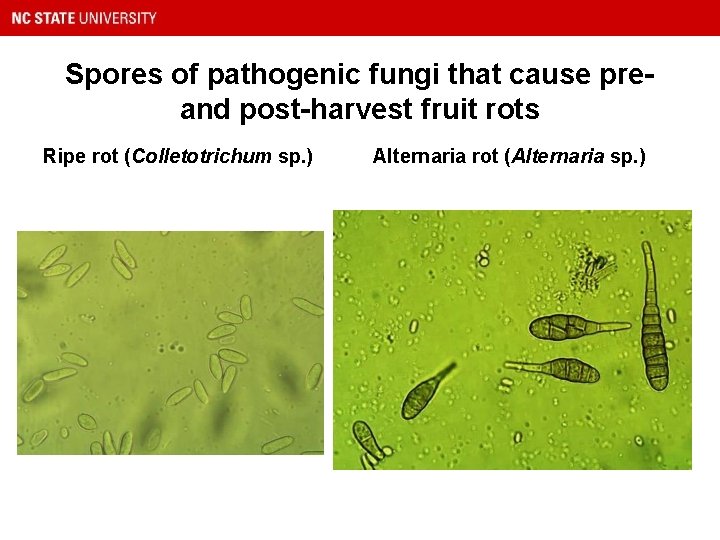
Spores of pathogenic fungi that cause preand post-harvest fruit rots Ripe rot (Colletotrichum sp. ) Alternaria rot (Alternaria sp. )
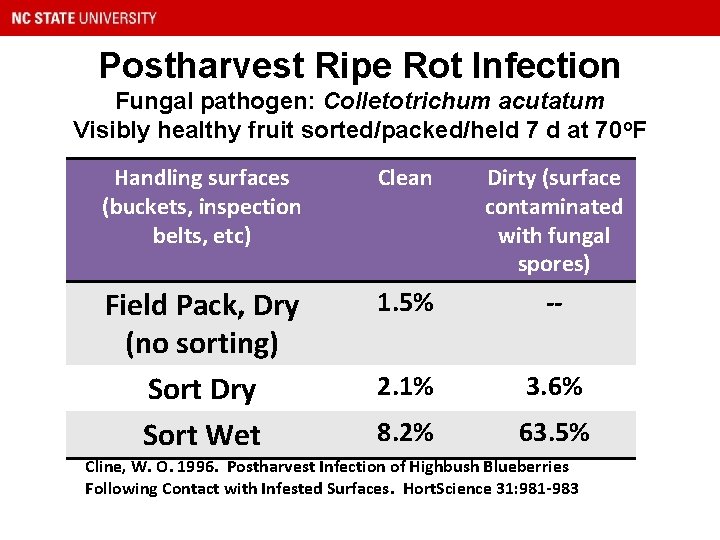
Postharvest Ripe Rot Infection Fungal pathogen: Colletotrichum acutatum Visibly healthy fruit sorted/packed/held 7 d at 70 o. F Handling surfaces (buckets, inspection belts, etc) Clean Dirty (surface contaminated with fungal spores) Field Pack, Dry (no sorting) Sort Dry Sort Wet 1. 5% -- 2. 1% 3. 6% 8. 2% 63. 5% Cline, W. O. 1996. Postharvest Infection of Highbush Blueberries Following Contact with Infested Surfaces. Hort. Science 31: 981 -983
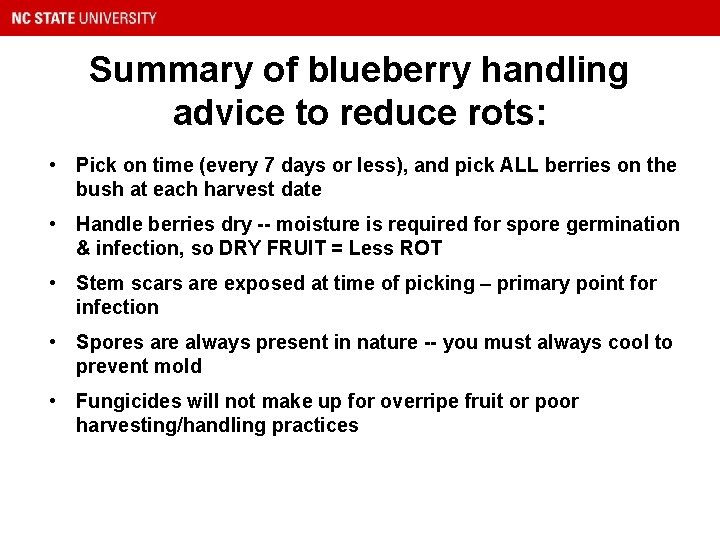
Summary of blueberry handling advice to reduce rots: • Pick on time (every 7 days or less), and pick ALL berries on the bush at each harvest date • Handle berries dry -- moisture is required for spore germination & infection, so DRY FRUIT = Less ROT • Stem scars are exposed at time of picking – primary point for infection • Spores are always present in nature -- you must always cool to prevent mold • Fungicides will not make up for overripe fruit or poor harvesting/handling practices
- Slides: 32