
Blue Ocean Strategy Chapter 6 Brandon Seitz Laycie
Blue Ocean Strategy Chapter 6 Brandon Seitz, Laycie Duncan, Dylon Wieland, Regan Raines
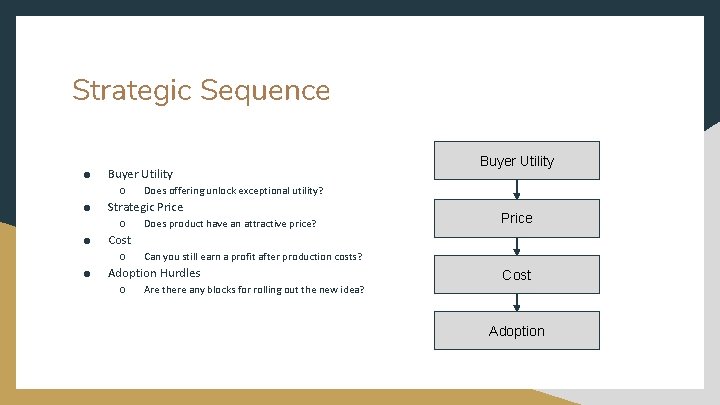
Strategic Sequence ● Buyer Utility ○ ● ● Does product have an attractive price? Price Cost ○ ● Does offering unlock exceptional utility? Strategic Price ○ Buyer Utility Can you still earn a profit after production costs? Adoption Hurdles ○ Cost Are there any blocks for rolling out the new idea? Adoption
Testing for Exceptional Utility ● Value Innovation VS Technology Innovation ○ ● Develop strategic profile that passes Litmus test ○ ● Technology Trap ■ Philips’ CD-i Focused, divergent, having a compelling tagline The Buyer Utility Map ○ Helps managers identify a product’s full range of potential utilities
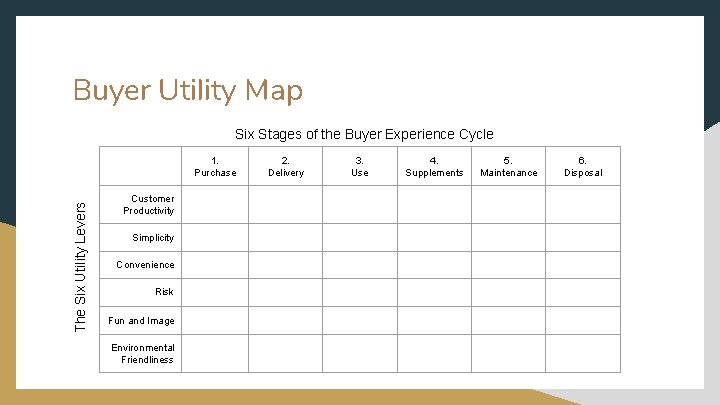
Buyer Utility Map Six Stages of the Buyer Experience Cycle The Six Utility Levers 1. Purchase Customer Productivity Simplicity Convenience Risk Fun and Image Environmental Friendliness 2. Delivery 3. Use 4. Supplements 5. Maintenance 6. Disposal
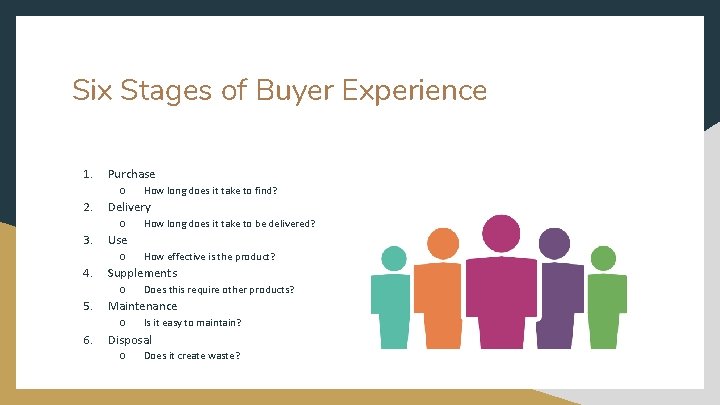
Six Stages of Buyer Experience 1. Purchase ○ 2. Delivery ○ 3. Does this require other products? Maintenance ○ 6. How effective is the product? Supplements ○ 5. How long does it take to be delivered? Use ○ 4. How long does it take to find? Is it easy to maintain? Disposal ○ Does it create waste?
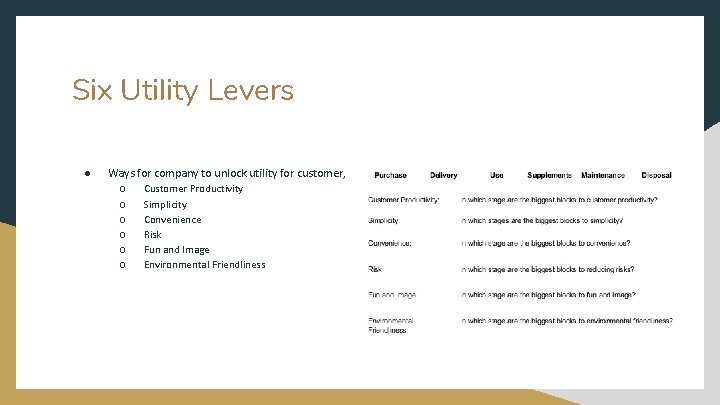
Six Utility Levers ● Ways for company to unlock utility for customer, ○ ○ ○ Customer Productivity Simplicity Convenience Risk Fun and Image Environmental Friendliness
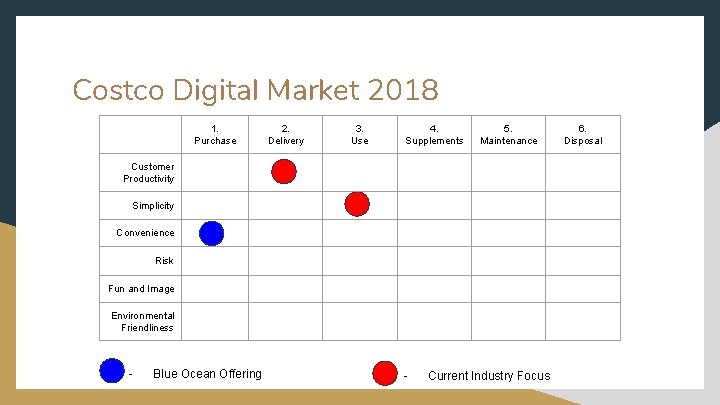
Costco Digital Market 2018 1. Purchase 2. Delivery 3. Use 4. Supplements 5. Maintenance Customer Productivity Simplicity Convenience Risk Fun and Image Environmental Friendliness - Blue Ocean Offering - Current Industry Focus 6. Disposal
From Exceptional Utility to Strategic Pricing ● To secure a strong revenue stream → set the right strategic price ○ ● ● Important to know from the start what price will capture mass target of buyers Two reasons for this: ○ ○ ● ● ● Ensures that buyers not only want your product but have ability to pay for it Companies discovering that volume generates higher returns that it used to ■ Nature of goods becomes more knowledge intensive; companies bear much more of their costs in product development rather than manufacturing The value of a product or service may be closely tied to total number of people using it ■ This phenomenon is known as network externalities- people will not buy a product or service when it is used by few others Rise of knowledge-intensive products creates potential for free riding Rival good- use of such good precludes its use by another Nonrival good- one firm does not limit its use by another
Continued ● ● The cost and risk of developing an innovative idea are borne by the initiator, not the follower Excludability- ability to prevent others from using it ○ ● ● ● Once ideas are out there, knowledge naturally spills over to other firms Lack of excludability reinforces risk of free riding Many of the most powerful blue ocean ideas have tremendous value but no technological discoveries ○ ● ● For example: because of limited access or patent protection Resulting in neither patentable nor excludable services and products→ hence vulnerable to imitation The strategic price you set for your offering must not only attract large numbers of buyers but also retain them Given high potential for free riding→ must earn offering’s reputation on day 1 ○ Brand reputation increasingly relying on word-of-mouth marketing
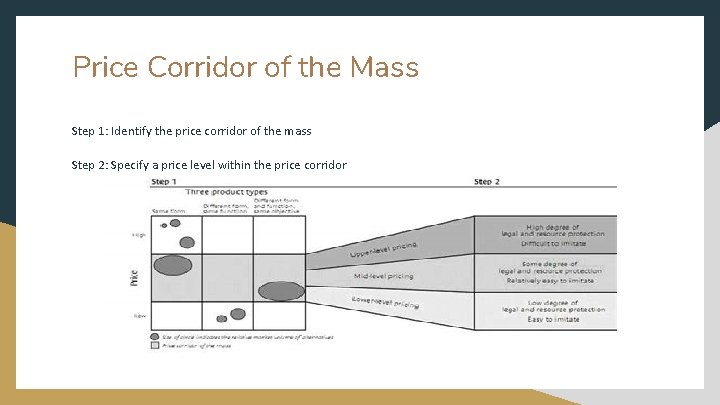
Price Corridor of the Mass Step 1: Identify the price corridor of the mass Step 2: Specify a price level within the price corridor
Step One: Identify the Price Corridor of the Mass ● ● ● In setting a price→ companies first look at products and services that most closely resemble their idea in terms of form Main challenge: determining a strategic price (understanding the price sensitivities of those people who will be comparing the new product or service with a host of very different-looking products and services offered outside the group of traditional competitors Good way to look at outside industry boundaries→ list products and services that fall into two categories: ○ ○ Different forms but performs the same function Different forms and functions but share the same over-arching objective
Step Two: Specify a Level Within the Price Corridors ● ● Helps managers determine how high a price they can afford to set within the corridor without inviting competition from imitation products or services Assessment depends on two principal factors: ○ ○ ● Degree to which the product/service is protected legally through patents/copyrights Degree to which the company owns some exclusive asset or core capability that can block imitation Companies would be wise to pursue mid to lower boundary strategic pricing from the start if any of the following apply: ○ ○ ○ Their blue ocean offering has high fixed costs and marginal variable costs Their attractiveness depends heavily on the network externalities Their cost structure benefits from steep economies of scale and scope
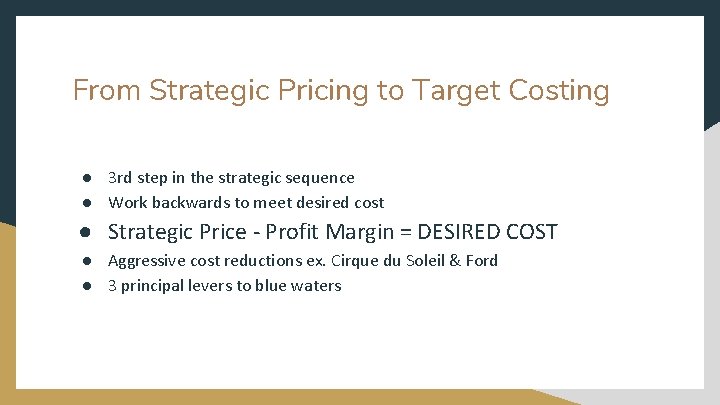
From Strategic Pricing to Target Costing ● 3 rd step in the strategic sequence ● Work backwards to meet desired cost ● Strategic Price - Profit Margin = DESIRED COST ● Aggressive cost reductions ex. Cirque du Soleil & Ford ● 3 principal levers to blue waters
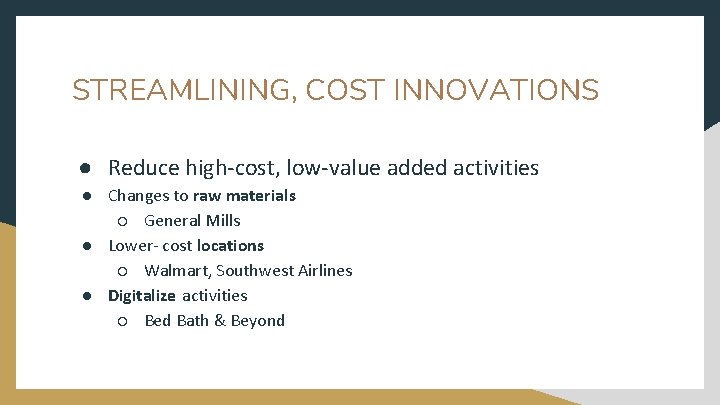
STREAMLINING, COST INNOVATIONS ● Reduce high-cost, low-value added activities ● Changes to raw materials ○ General Mills ● Lower- cost locations ○ Walmart, Southwest Airlines ● Digitalize activities ○ Bed Bath & Beyond
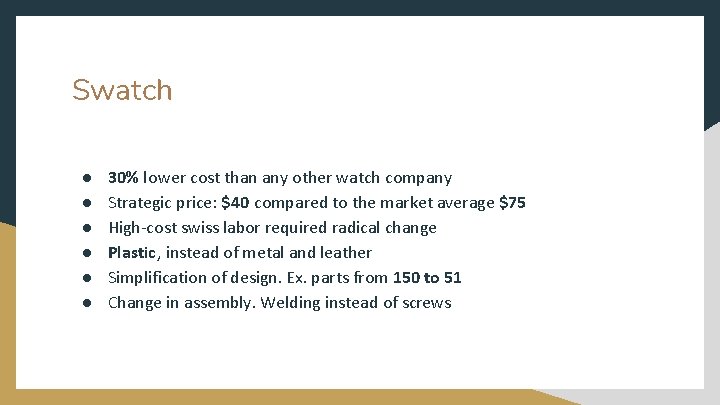
Swatch ● ● ● 30% lower cost than any other watch company Strategic price: $40 compared to the market average $75 High-cost swiss labor required radical change Plastic, instead of metal and leather Simplification of design. Ex. parts from 150 to 51 Change in assembly. Welding instead of screws
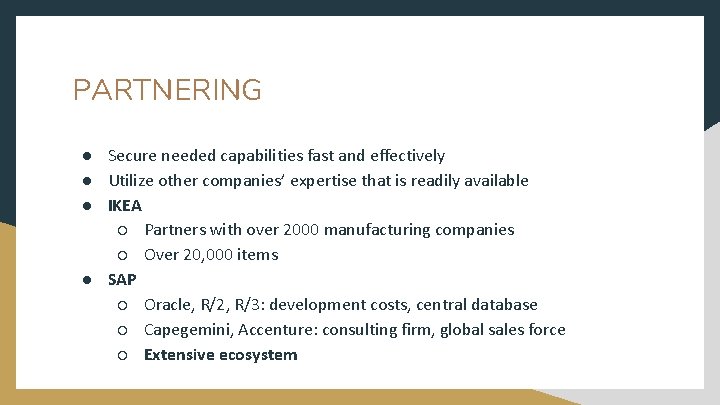
PARTNERING ● Secure needed capabilities fast and effectively ● Utilize other companies’ expertise that is readily available ● IKEA ○ Partners with over 2000 manufacturing companies ○ Over 20, 000 items ● SAP ○ Oracle, R/2, R/3: development costs, central database ○ Capegemini, Accenture: consulting firm, global sales force ○ Extensive ecosystem
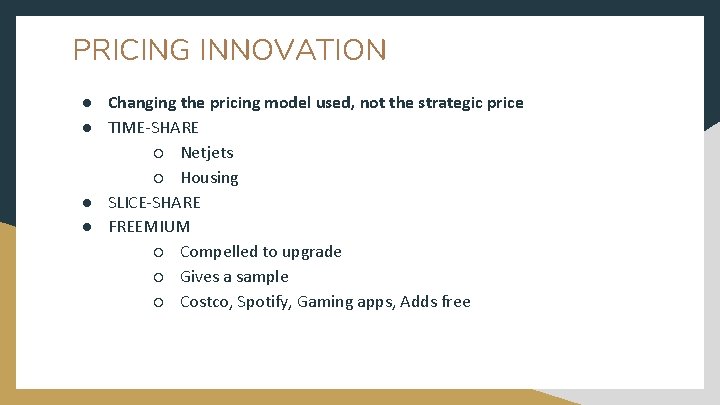
PRICING INNOVATION ● Changing the pricing model used, not the strategic price ● TIME-SHARE ○ Netjets ○ Housing ● SLICE-SHARE ● FREEMIUM ○ Compelled to upgrade ○ Gives a sample ○ Costco, Spotify, Gaming apps, Adds free
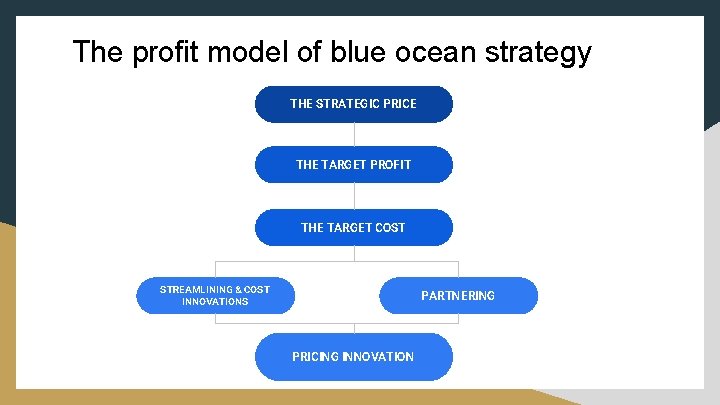
The profit model of blue ocean strategy THE STRATEGIC PRICE THE TARGET PROFIT THE TARGET COST STREAMLINING & COST INNOVATIONS PARTNERING PRICING INNOVATION
From Utility, Price, and Cost to Adoption ● Even with an unbeatable business plan, this still might not be enough for commercial success of a blue ocean idea. ● This is because a blue ocean idea threatens the status quo, and for that reason it may provoke fear and resistance in the three main stakeholders of a company: the employees, business partners, and the general public. ● Before going forward with a blue ocean idea the company must first overcome such fears by educating the fearful.
Adoption of its Employees, Business Partners and the General Public ● ● ● Employees - Before companies go public with an idea and set out to implement it, they should make a concerted effort to communicate to employees that they are aware of the threats posed by the execution of the idea. (Ex. Merrill Lynch’s management and Netflix) Business Partners - Potentially even more damaging than employee dissatisfaction is the resistance of partners who fear that their revenue streams or market positions are threatened by a new business idea. (Ex. SAP and ASAP) General Public - Opposition to a new business idea can also spread to the general public, especially if the idea threatens established social or political norms. The effects can be dire. (Ex. Monsanto)
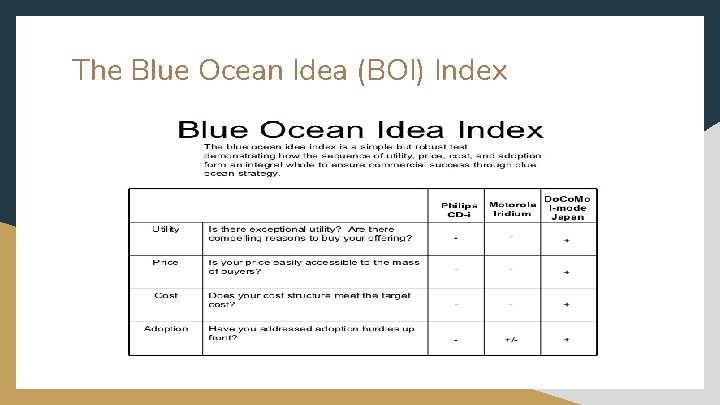
The Blue Ocean Idea (BOI) Index
- Slides: 21