
Bloodthe River of Life Blood is the only

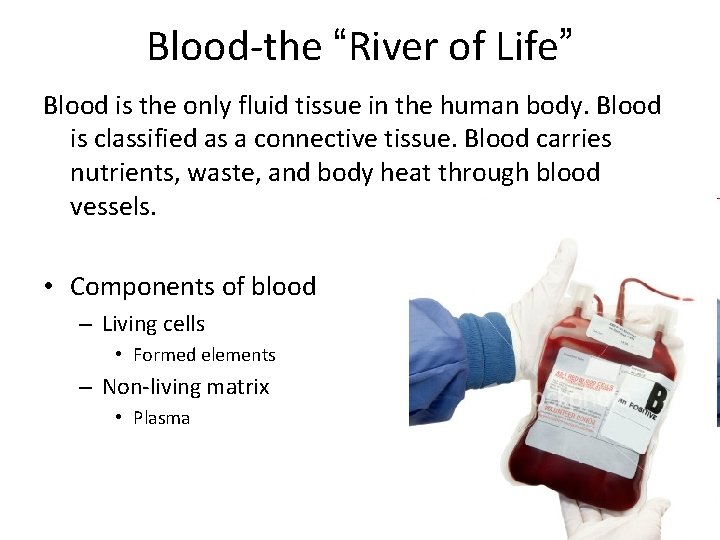
Blood-the “River of Life” Blood is the only fluid tissue in the human body. Blood is classified as a connective tissue. Blood carries nutrients, waste, and body heat through blood vessels. • Components of blood – Living cells • Formed elements – Non-living matrix • Plasma
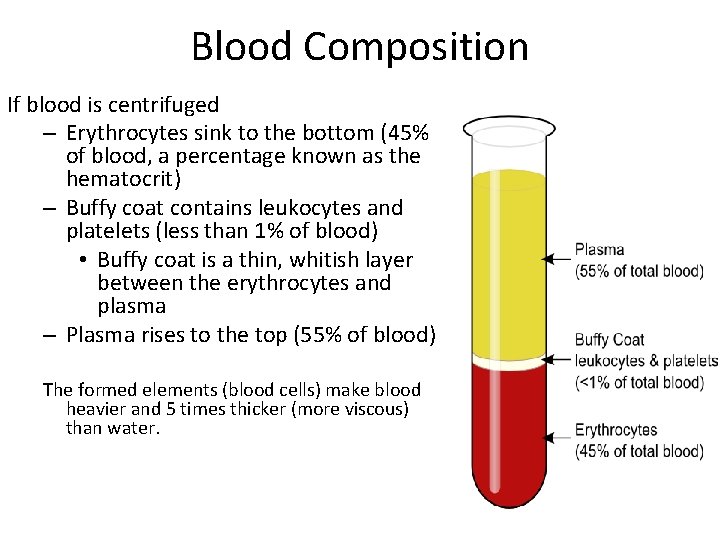
Blood Composition If blood is centrifuged – Erythrocytes sink to the bottom (45% of blood, a percentage known as the hematocrit) – Buffy coat contains leukocytes and platelets (less than 1% of blood) • Buffy coat is a thin, whitish layer between the erythrocytes and plasma – Plasma rises to the top (55% of blood) The formed elements (blood cells) make blood heavier and 5 times thicker (more viscous) than water.

Blood Figure 10. 1 (2 of 2)
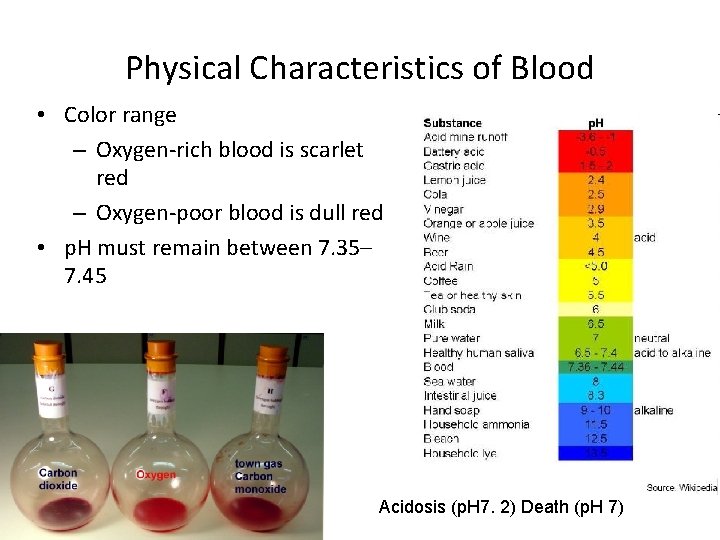
Physical Characteristics of Blood • Color range – Oxygen-rich blood is scarlet red – Oxygen-poor blood is dull red • p. H must remain between 7. 35– 7. 45 Acidosis (p. H 7. 2) Death (p. H 7)
Physical Characteristics of Blood • Blood temperature is slightly higher than body temperature at 100. 4°F • In a healthy man, blood volume is about 5– 6 liters or about 6 quarts • Blood makes up 8% of body weight
Functions of Blood • Functions include (More details on next 3 slides) – Distributing substances – Regulating blood levels of substances – Protection
Distribution Functions • Delivering O 2 and nutrients to body cells • Transporting metabolic wastes to lungs and kidneys for elimination • Transporting hormones from endocrine organs to target organs
Regulation Functions • Maintaining body temperature by absorbing and distributing heat • Maintaining normal p. H using buffers; alkaline reserve of bicarbonate ions • Maintaining adequate fluid volume in circulatory system
Protection Functions • Preventing blood loss – Plasma proteins and platelets initiate clot formation • Preventing infection – Antibodies – Complement proteins – WBCs
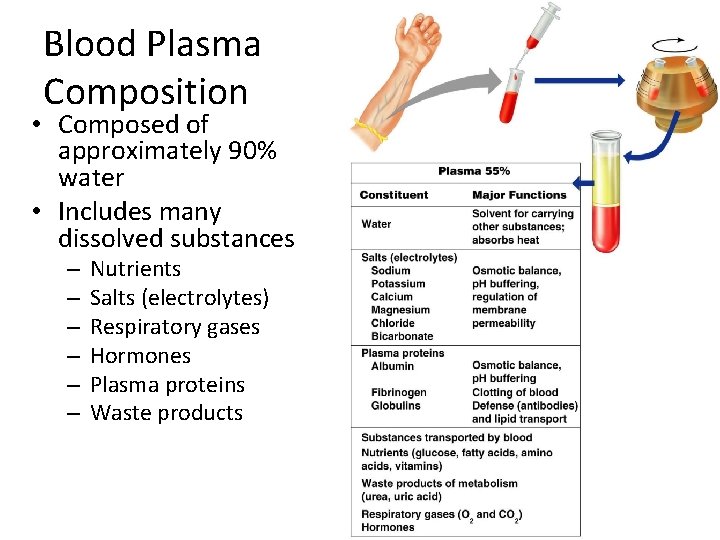
Blood Plasma Composition • Composed of approximately 90% water • Includes many dissolved substances – – – Nutrients Salts (electrolytes) Respiratory gases Hormones Plasma proteins Waste products
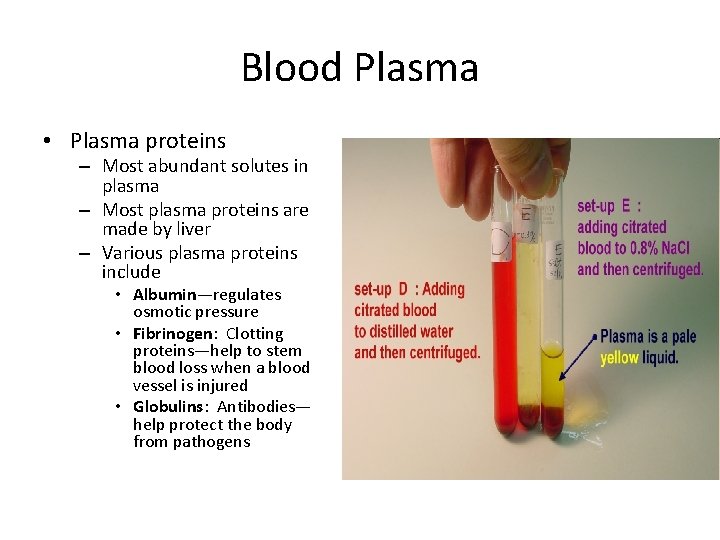
Blood Plasma • Plasma proteins – Most abundant solutes in plasma – Most plasma proteins are made by liver – Various plasma proteins include • Albumin—regulates osmotic pressure • Fibrinogen: Clotting proteins—help to stem blood loss when a blood vessel is injured • Globulins: Antibodies— help protect the body from pathogens
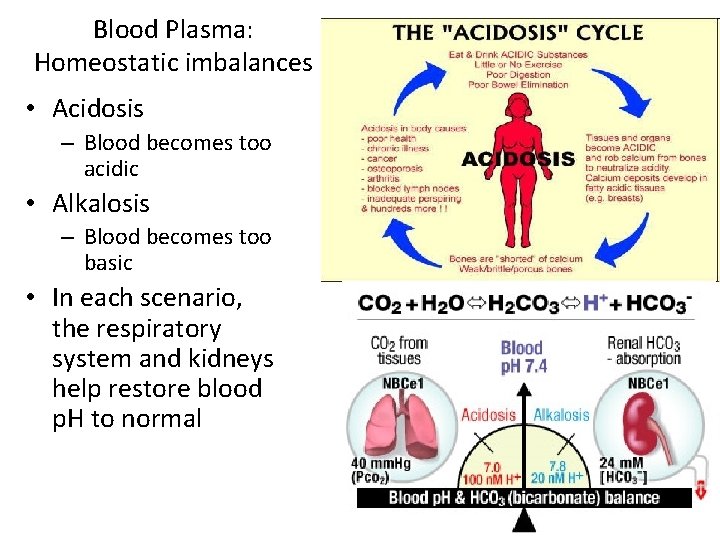
Blood Plasma: Homeostatic imbalances • Acidosis – Blood becomes too acidic • Alkalosis – Blood becomes too basic • In each scenario, the respiratory system and kidneys help restore blood p. H to normal
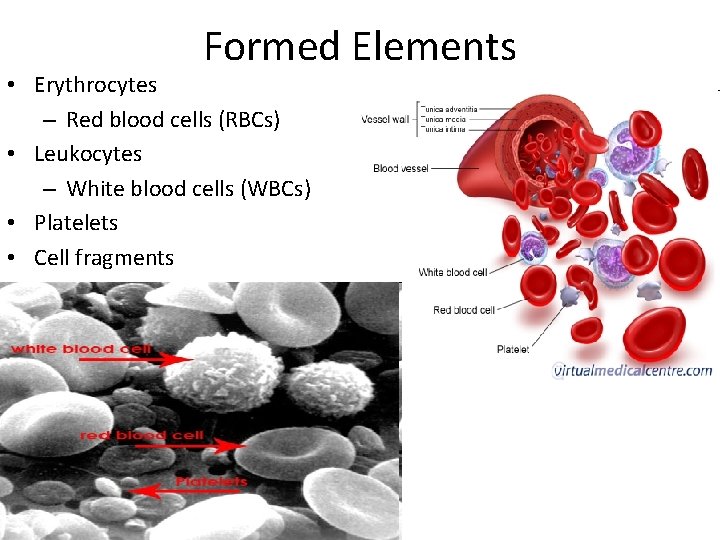
Formed Elements • Erythrocytes – Red blood cells (RBCs) • Leukocytes – White blood cells (WBCs) • Platelets • Cell fragments
- Slides: 14