
Bloodborne Pathogens Unit 3 Bloodborne Pathogens Standard Lesson
Bloodborne Pathogens Unit 3 Bloodborne Pathogens Standard
Lesson 1: Overview of the Standard Objectives: In this lesson, you will: • Identify regulations included in the Bloodborne Pathogens Standard. • List the regulations related to the Needlestick Safety and Prevention Act.
Bloodborne Pathogens Standard • Set of guidelines to avoid spreading bloodborne diseases like Hepatitis B & C and HIV • Created by the Occupational Safety and Health Administration (OSHA) in 1991 • Must be followed by healthcare facilities and employees or risk penalties
Provisions of the Standard • Exposure control plan • Signs and color-coded containers to mark • Identify at-risk biohazardous areas employees • Procedure for handling • Hepatitis B vaccine exposures • Personal protective • Employee training on equipment bloodborne pathogen • Hand washing stations • Clean work environment safety
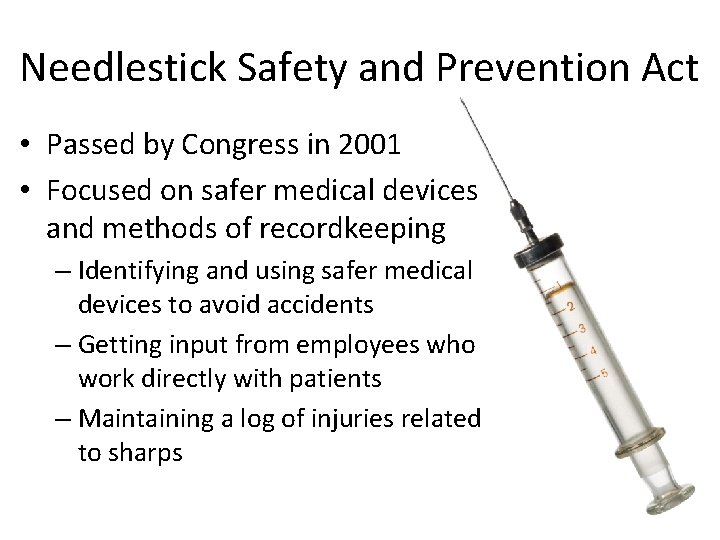
Needlestick Safety and Prevention Act • Passed by Congress in 2001 • Focused on safer medical devices and methods of recordkeeping – Identifying and using safer medical devices to avoid accidents – Getting input from employees who work directly with patients – Maintaining a log of injuries related to sharps
Lesson 1: Overview of the Standard Summary: In this lesson, you have: • Identified regulations included in the Bloodborne Pathogens Standard. • Listed the regulations related to the Needlestick Safety and Prevention Act.
Lesson 2: Exposure Control Plan Objectives: In this lesson, you will: • Discover the contents of an exposure control plan. • Identify employees who are at increased risk of exposure.
Exposure Control Plan • List of employees who might be exposed • Guidelines to prevent exposure • Training about bloodborne pathogens and the exposure control plan • Methods used to maintain records • Exposure procedure
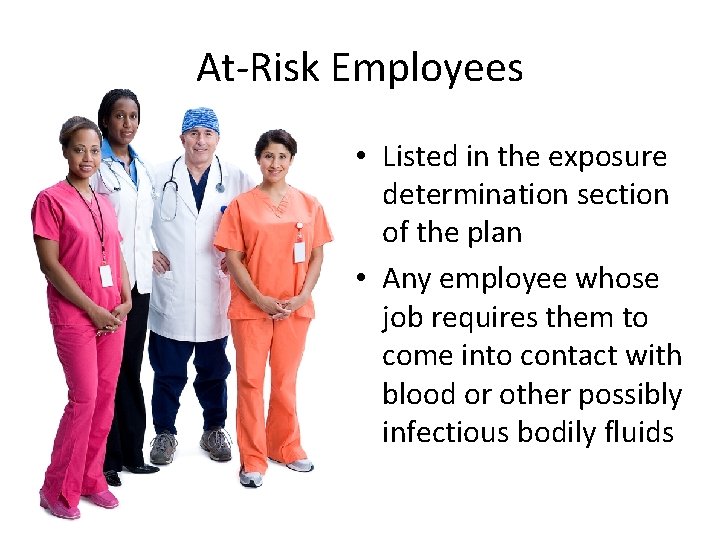
At-Risk Employees • Listed in the exposure determination section of the plan • Any employee whose job requires them to come into contact with blood or other possibly infectious bodily fluids
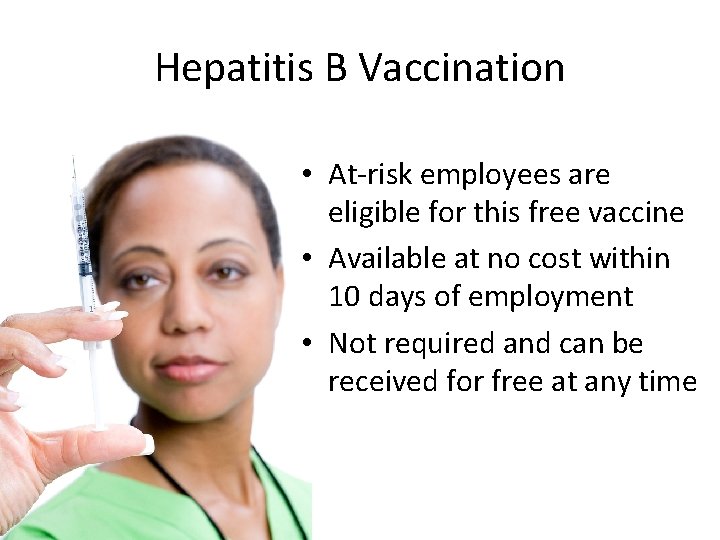
Hepatitis B Vaccination • At-risk employees are eligible for this free vaccine • Available at no cost within 10 days of employment • Not required and can be received for free at any time
Lesson 2: Exposure Control Plan Summary: In this lesson, you have: • Discovered the contents of an exposure control plan. • Identified employees who are at increased risk of exposure.
Lesson 3: Workplace Control Practices Objectives: In this lesson, you will: • Discover a variety of ways that facilities can reduce the risk of exposure. • Identify safety devices. • Document work practice controls in an exposure control plan.
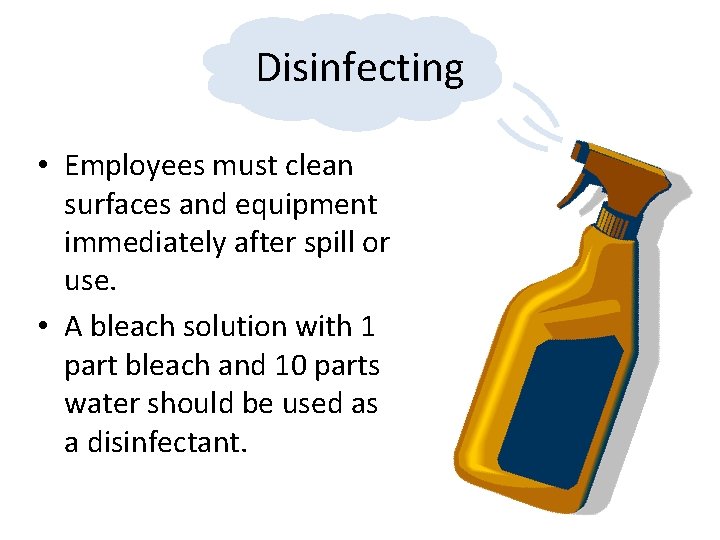
Disinfecting • Employees must clean surfaces and equipment immediately after spill or use. • A bleach solution with 1 part bleach and 10 parts water should be used as a disinfectant.
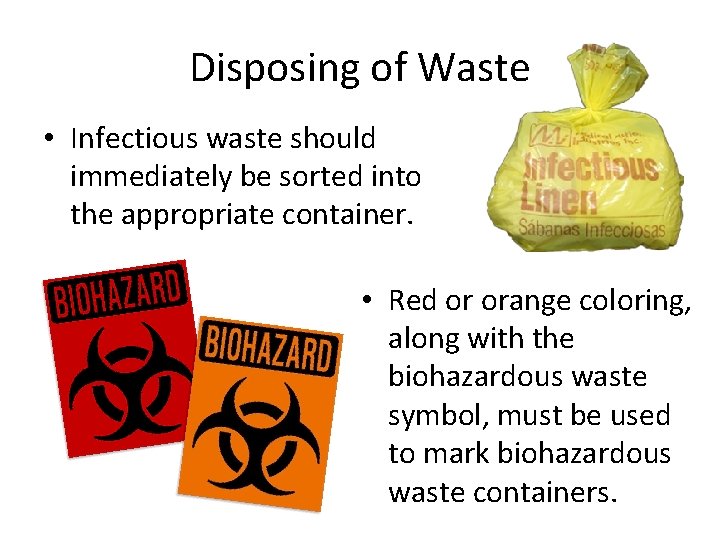
Disposing of Waste • Infectious waste should immediately be sorted into the appropriate container. • Red or orange coloring, along with the biohazardous waste symbol, must be used to mark biohazardous waste containers.
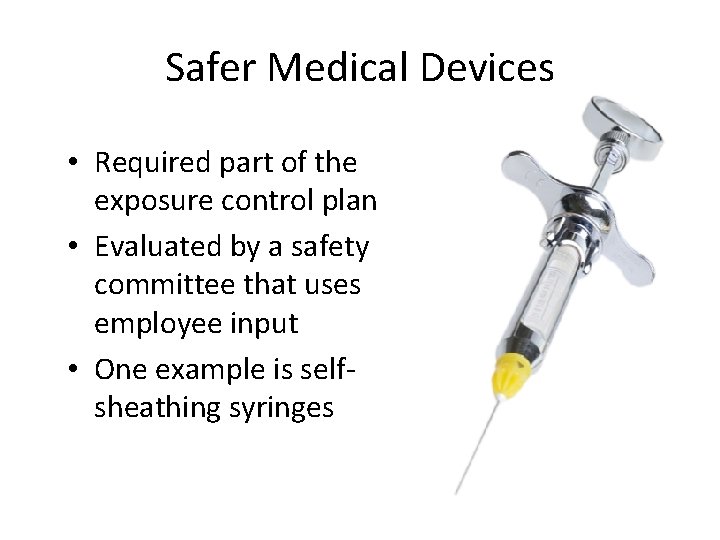
Safer Medical Devices • Required part of the exposure control plan • Evaluated by a safety committee that uses employee input • One example is selfsheathing syringes
Lesson 3: Workplace Control Practices Summary: In this lesson, you have: • Discovered a variety of ways that facilities can reduce the risk of exposure. • Identified safety devices. • Documented work practice controls in an exposure control plan.
Lesson 4: Training and Recordkeeping Objectives: In this lesson, you will: • Explore the training requirements of the Bloodborne Pathogens Standard. • Identify the records that must be kept according to the Standard.
Bloodborne Pathogens Training Must be completed: • When employment begins • As needed as policies change • Each year
Medical Records • Kept for all employees with occupational exposure • Kept for at least 30 years after employment ends • Include: – Name & social security number – Hepatitis B vaccination status – Report of exposure – Evaluator’s written opinion
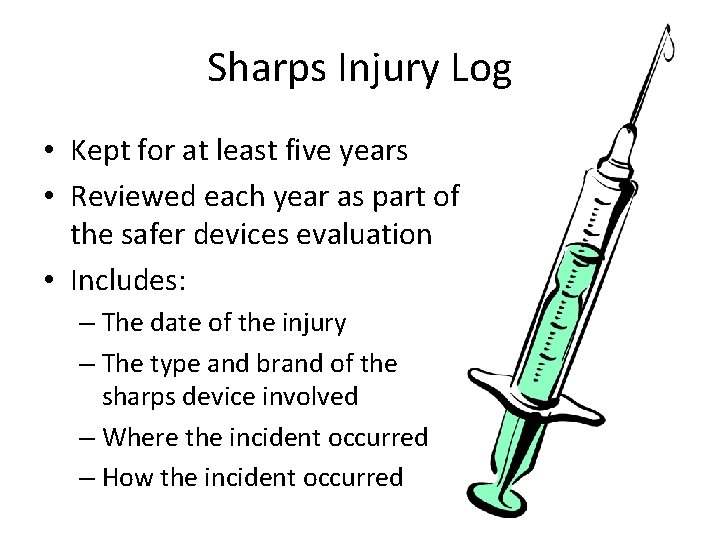
Sharps Injury Log • Kept for at least five years • Reviewed each year as part of the safer devices evaluation • Includes: – The date of the injury – The type and brand of the sharps device involved – Where the incident occurred – How the incident occurred
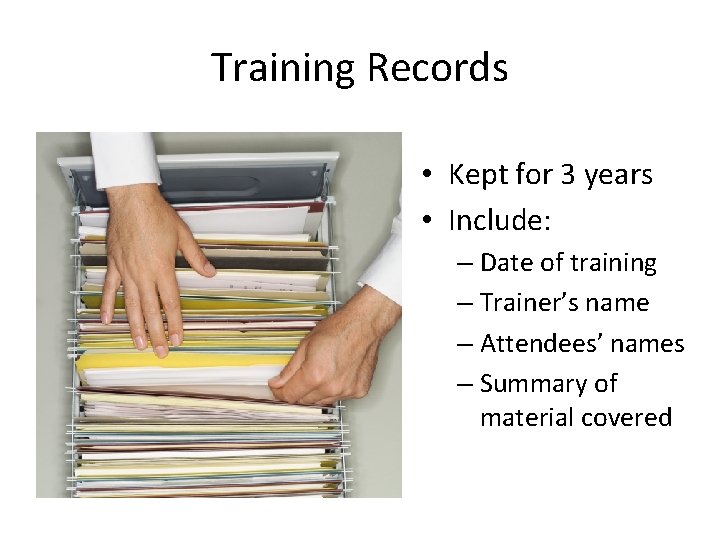
Training Records • Kept for 3 years • Include: – Date of training – Trainer’s name – Attendees’ names – Summary of material covered
Lesson 4: Training and Recordkeeping Summary: In this lesson, you have: • Explored the training requirements of the Bloodborne Pathogens Standard. • Identified the records that must be kept according to the Standard.
Lesson 5: Exposure Reporting Objectives: In this lesson, you will: • Explore post-exposure procedures. • Learn about the recordkeeping involved with exposure incidents.
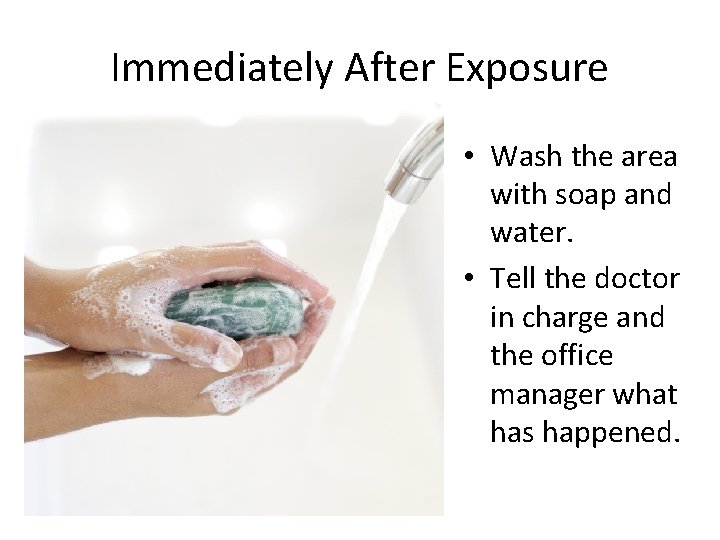
Immediately After Exposure • Wash the area with soap and water. • Tell the doctor in charge and the office manager what has happened.
Post-Exposure Procedures • Create a medical record with information about the exposure incident • Can also include: – Lab testing to see if infection has occurred – Antiviral medication to help prevent infection
Creating an Exposure Record • Information about the event and test results are recorded. • The employee’s family doctor gives a written opinion. • Everything in the record is considered confidential.
Lesson 5: Exposure Reporting Summary: In this lesson, you have: • Explored post-exposure procedures. • Learned about the recordkeeping involved with exposure incidents.
- Slides: 27