
Bloodborne Pathogens General Epidemiology symptoms of bloodborne diseases
Bloodborne Pathogens General
Epidemiology & symptoms of bloodborne diseases v Bloodborne pathogens • Microorganisms present in human blood that cause disease – Hepatitis B virus (HBV) – Human immunodeficiency virus (HIV) 1 a
Epidemiology & symptoms of bloodborne diseases v Bloodborne pathogens • Exposure incident – Contact with blood or other potentially infectious material – – – Eyes Mouth Mucous membrane Non-intact skin Parenteral - piercing of skin or mucous membranes 1 b
Epidemiology & symptoms of bloodborne diseases v Bloodborne pathogens • Occupational exposure - results from doing one’s job • Potentially infectious materials – Blood – Urine, vomit, or other body fluids – Especially when blood is present 1 c
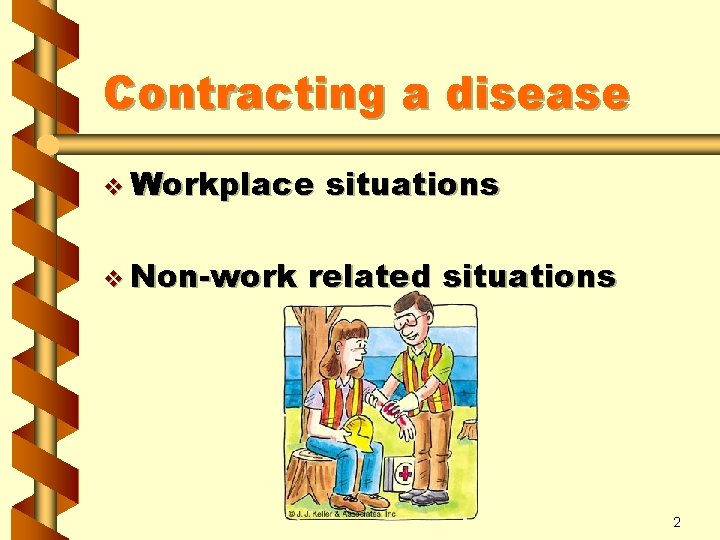
Contracting a disease v Workplace v Non-work situations related situations 2
Exposure control plan v Required whenever workers are exposed to blood/potentially infectious materials on the job • Identification of job classifications or tasks where exposure exists 3 a
Exposure control plan • How and when provisions of the standard are implemented – Schedules and methods of communication to employees – Hepatitis B vaccination – Post-exposure evaluation and followup – Record keeping 3 b
Exposure control plan • How and when provisions of the standard are implemented – Engineering and work practice controls – Personal protective equipment – Housekeeping – Procedures for evaluating an exposure incident 3 c
Recognize potential exposures v First aid situations - follow universal precautions v Other workplace situations 4
Engineering controls v Preferred means of controlling v Eliminate hazards at the source exposure 5 a
Engineering controls v Minimizes exposure the potential for v Regularly checked and maintained to remain effective 5 b
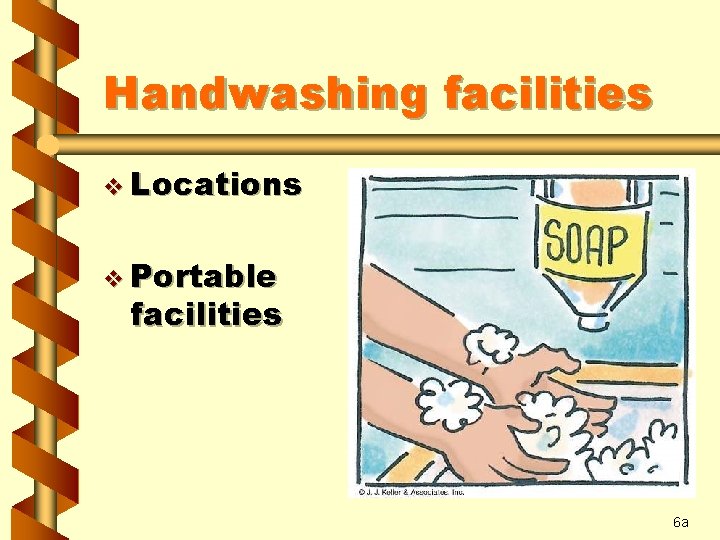
Handwashing facilities v Locations v Portable facilities 6 a
Handwashing facilities v Procedures • Wash hands after removing gloves • Wash hands after contact with blood or potentially infectious fluids • Use antiseptic cleansers if sinks are unavailable, then wash as soon as possible 6 b
Handwashing facilities v Prohibitions for areas of potential exposure • Eating • Drinking • Applying cosmetics or lip balm • Handling contact lenses 6 c
Work practices v Alter the manner in which a task is performed v Reduce the likelihood of exposure v Always practice universal precautions 7
General safe work practices v Minimize the risk of occupational exposure v Special cleanup procedures to be followed after an incident 8 a
General safe work practices v Hazards • Broken glass • Hypodermic needles • Towels containing contaminated fluids 8 b
Personal protective equipment v Best defense against unexpected hazards v Must be clean and in good repair 9 a
Personal protective equipment v Use when potential exists for employee exposure to infectious matter v Proper selection of PPE is based on hazard assessment 9 b
Personal protective equipment v PPE must prevent infectious matter from passing through to: • Street clothes • Eyes • Skin • Mouth v Hypoallergenic or powderless gloves must be made available 9 c

Personal protective equipment v Limitations of PPE, and consequences of non-use • Single-use gloves must be replaced if contaminated, torn, punctured • Never reuse single-use gloves v PPE handling, decontamination, and disposal 9 d
Hepatitis B vaccine v Available free of charge: • for employees who have risk of occupational exposure • after an employee has experienced occupational exposure to blood or other potentially infectious materials 10 a
Hepatitis B vaccine v Pre-screening cannot be done as a condition of receiving the vaccine v Employees refusing the vaccine must sign a declination form 10 b
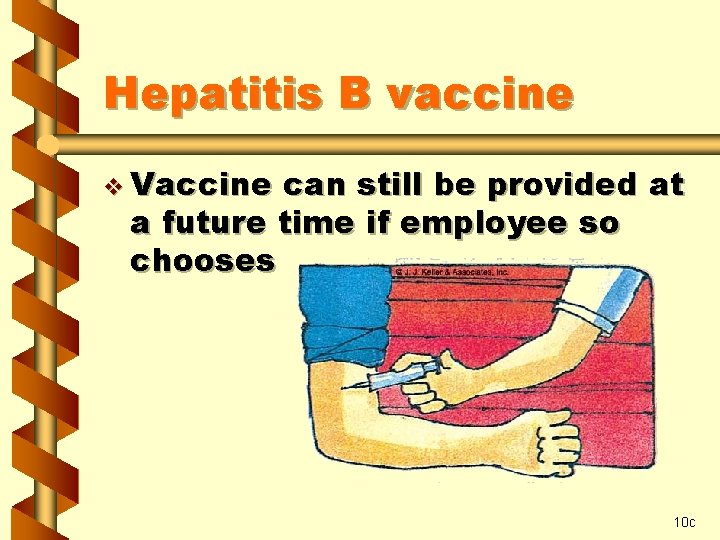
Hepatitis B vaccine v Vaccine can still be provided at a future time if employee so chooses 10 c
Exposure incident response v Report the incident v First aid equipment v First responders 11 a
Exposure incident response v Study potential exposure incidents involving: • eyes • mouth • mucous membranes • non-intact skin • parenteral contact 11 b
Exposure incident response v Arrange for immediate, confidential medical evaluation, which: • documents how the exposure occurred • identifies and tests the source individual, if possible • tests the exposed employee’s blood, if consent is obtained 11 c
Exposure incident response v Arrange for immediate, confidential medical evaluation, which: • provides counseling • evaluates any reported illness 11 d
Exposure incident response v Company must provide the medical professional with relevant data to complete the employee’s evaluation 11 e
Exposure incident follow -up v Medical and post-exposure evaluation procedures 12
Signs and labels to warn of biohazards v Biohazard symbol must: • be printed in fluorescent orange or orange-red • have lettering of a contrasting color v Red bags or containers may be used as a substitute for labels 13
Medical records v Must be made available to employees upon request, and should include: • name and social security number • Hepatitis B vaccination status • results of exams, testing, and follow-up procedures 14 a
Medical records v Must be made available to employees upon request, and should include: • copy of healthcare professional’s opinion • copy of information provided to healthcare professional 14 b
Medical records v All records are confidential v Records cannot be released without employee’s written consent, or if required by law v Must be maintained for the period of employment plus 30 years 14 c
Summary of bloodborne pathogens standard v Written exposure control plan v Training v Engineering practices controls and work 15 a
Summary of bloodborne pathogens standard v Personal protective equipment v Hepatitis B vaccinations v Exposure incident response 15 b
- Slides: 36