
Bloodborne Pathogens Bloodborne pathogens are pathogenic microorganisms that
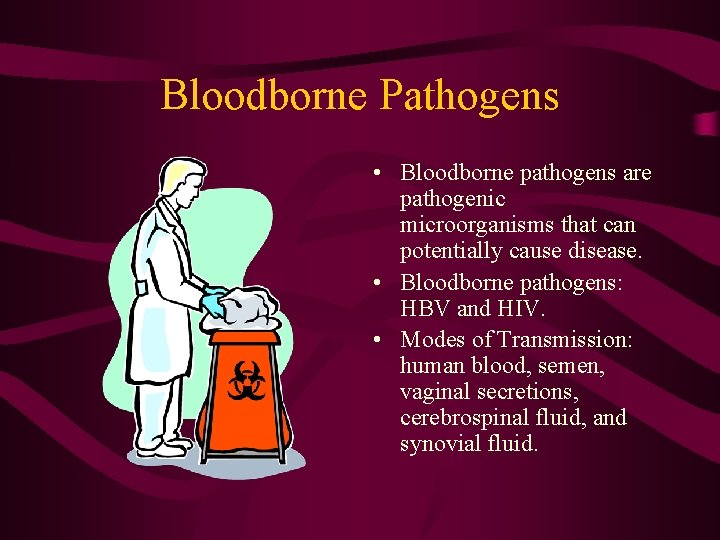
Bloodborne Pathogens • Bloodborne pathogens are pathogenic microorganisms that can potentially cause disease. • Bloodborne pathogens: HBV and HIV. • Modes of Transmission: human blood, semen, vaginal secretions, cerebrospinal fluid, and synovial fluid.
Hepatitis B Virus: HBV • HBV is a viral infection that results in swelling, soreness, and loss of normal liver function. • Signs: fatigue, nausea, abdominal pain, headache, fever, jaundice. • Prevention: good hygiene and vaccination. • All coaches and any other individual working in an allied health care profession that deals with blood, should have the HBV vaccination.
Human Immunodeficiency Virus: HIV • HIV is a viral infection that eventually destroys the immune system and is acquired through blood, semen, and vaginal fluid. • Signs: fatigue, weight loss, joint pain, swollen glands, night sweats, and fever. • The best means for prevention of this epidemic is through EDUCATION.
Universal Precautions • OSHA guidelines were developed to protect both the health care provider and the patient from bloodborne pathogens. • Athlete Preparation • NCAA Regulations • Personal Precautions • Supplies and Equipment
Skin Wounds • A wound is defined as trauma to tissues that causes a break in the continuity of that tissue. • 5 types of wounds: abrasion, laceration, puncture, incision, and avulsion. • Tetanus is a bacterial infection that causes fever and convulsions. If the athlete is not current of their tetanus vaccination, they should receive an injection after sustaining a skin wound.
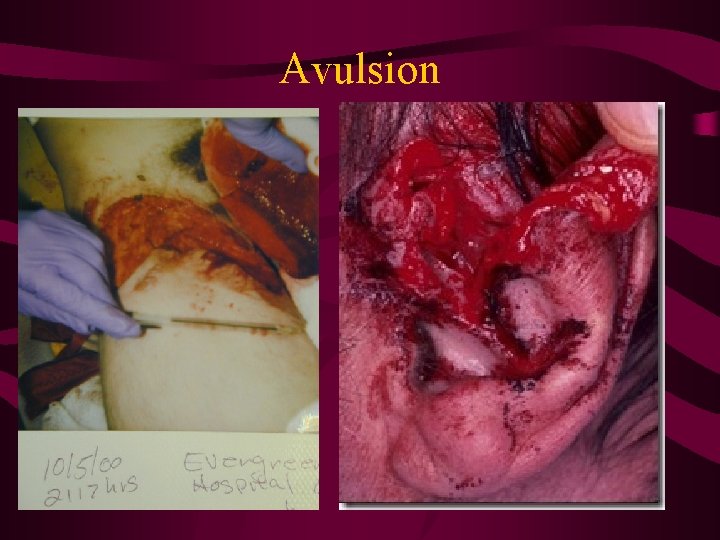
Avulsion
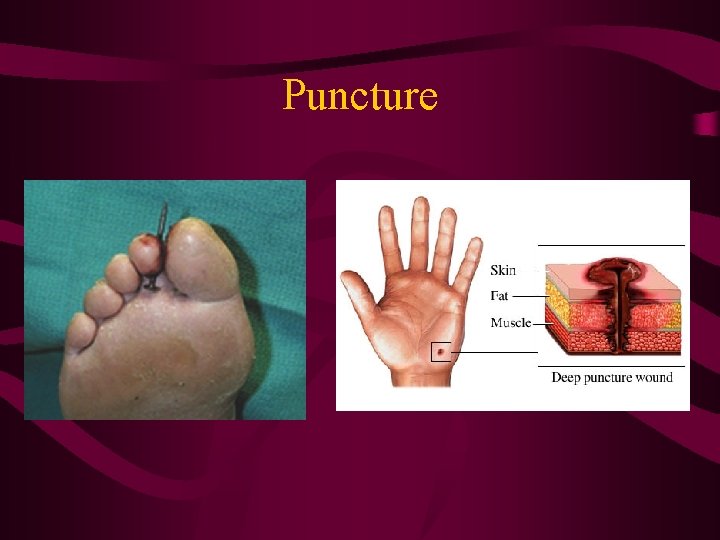
Puncture
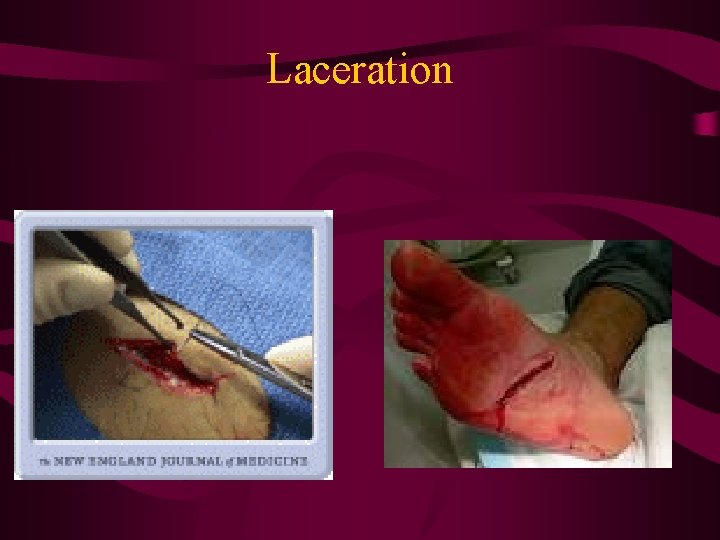
Laceration
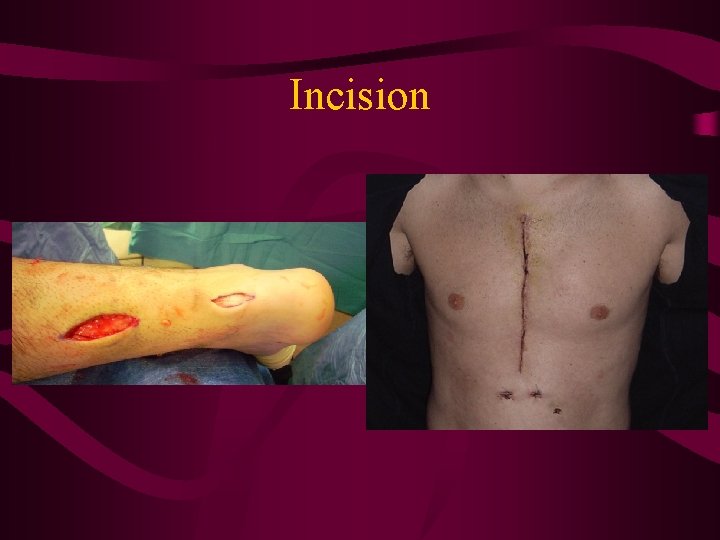
Incision
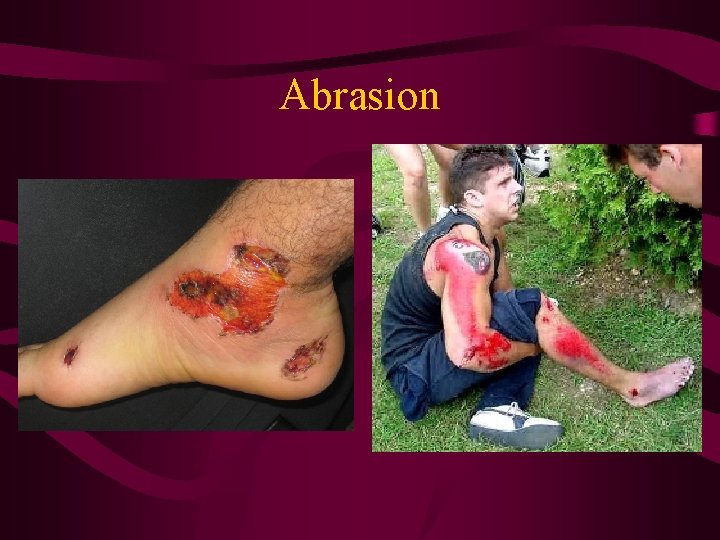
Abrasion
- Slides: 10