
Bloodborne Pathogens and Regulated Medical Waste OSHA n
Bloodborne Pathogens and Regulated Medical Waste
OSHA n Ensure employees can safely perform their normal duties without undue health risks n Bloodborne Pathogen (BBP) Standard developed to protect employees with occupational exposure to bloodborne pathogens – HIV – Hepatitis B
Bloodborne Pathogen Standard Employers must: n n n n Ensure that Universal Precautions are observed Provide free Hepatitis-B vaccination series Provide all necessary PPE and ensure that is it used Provide initial BBP training, and annually thereafter Maintain records of all training Have a written Exposure Control Plan, update annually. Must be available for review Record exposure incidents and follow-up activities
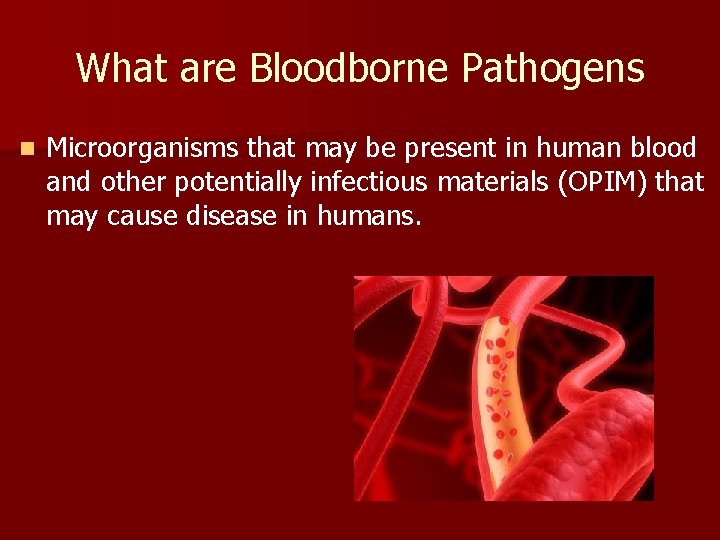
What are Bloodborne Pathogens n Microorganisms that may be present in human blood and other potentially infectious materials (OPIM) that may cause disease in humans.
Diseases Caused by Bloodborne Pathogens n HIV / AIDS n Hepatitis B n Arboviral infections – La Crosse, St. Louis n Brucellosis n Creutzfeldt-Jakob Disease n Hepatitis C n Malaria n Rabies n Syphilis n Tularemia n Viral Hemorrhagic Fevers – West Nile
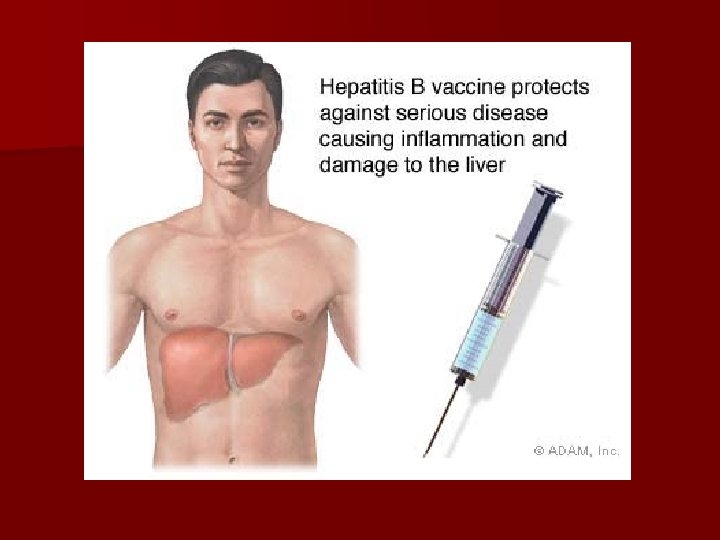
Hepatitis B n A DNA virus that primarily affects the liver n Transmitted by actual exposures to blood and other potentially infectious material n Initial infection may have no symptoms to flulike symptoms – Symptoms included: jaundice, dark urine, anorexia, nausea, point pain, rash, and fever n Can develop into a chronic infection leading to cirrhosis, chronic active hepatitis, and liver cancer
Hepatitis B n The probability of being infected following an exposure to a known positive source is about 30% n Nearly 1/3 of the world’s population has been or is actively infected with HBV. This high prevalence leads to great potential for infection following exposure to blood or OPIM n It is preventable through vaccination (85 -97% effective) – a 3 shot series given over 6 months
HIV n A retrovirus that causes AIDS (Acquired Immune Deficiency Syndrome) by infecting helper T cells of the immune system n Transmitted by actual exposures to blood and other potentially infectious material, frequently a needlestick injury. n Initial symptoms may be a mild flu-like illness developing within 1 to 6 weeks of exposure
HIV n After a latent period, which may last several years, AIDS develops and the disease is characterized by the loss of T cell function and prevalence of opportunistic infections n The probability of being infected following an exposure to a known HIV positive source is about 0. 4% n While the onset of AIDS may be delayed through drug therapy and opportunistic infections may be treatable, AIDS is at this time incurable and fatal.

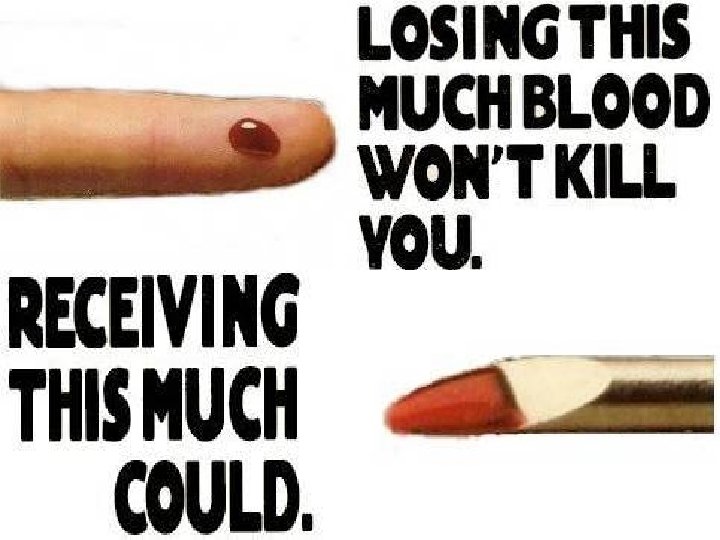
Bloodborne Pathogen Exposures Typically occur by one of the following ways: n Puncture from contaminated needles, broken glass, or other sharps n Contact between non-intact skin and infectious body fluids – cut/abrasion, scratch, acne, sunburn n Direct contact between mucous membranes and infectious body fluids – splash in the eyes, nose, or mouth
Disease Transmission An exposure incident does not guarantee disease transmission. Several factors affect transmission: Infected Source - disease stage of the source n Means of Entry - severity or depth of the puncture wound, broken skin, or direct contact with mucus membrane n Infective Dose - the amount and type of fluid, as well as the amount of infectious agent in the fluid. Blood is the fluid of greatest concern n Susceptible Host – immunocompromised at risk n

Exposure Prevention n The single most effective measure to control the transmission of Bloodborne Pathogens is: Universal Precautions n Treat all human blood and other potentially infectious materials like they are infectious for Hepatitis B and HIV
Exposure Prevention n Engineering Controls – Controls that isolate or remove the hazard § Sharps containers, biohazard bags, disinfectants, safer sharps n Administrative & Work Practice Controls – Behaviors that protect the individual from exposure to potentially infectious substances § Handwashing and proper use of PPE § Alcohol sanitizers ok when no soap & water, wash hands ASAP n Personal Protective Equipment (PPE) – Items worn to create a physical barrier between the person and the potentially infectious material. § Gloves, gowns, eye and face shields, respirators

Safer Sharps
Selecting PPE n For Routine Work – Latex, Nitrile, or Vinyl Exam Gloves § § § All are single-use, cannot be decontaminated Must be changed between patients Should wash hands after removing gloves – May need face shield for squirting wounds – When blood is anticipated, should have outer clothing like scrubs that can be changed For spill cleanup and disinfection, may want a glove resistant to chemicals – nitrile is good n Waste disposal is coming up n
Exposure Prevention Guidelines to reduce the risk of exposure: Frequent hand washing n Use of PPE and Universal Precautions n Regular cleaning and decontamination of work surfaces with a cleaning agent labeled as effective against HIB/Hb. V n Vaccination against Hepatitis-B n Proper Regulated Medical Waste disposal
Exposure Incident Response n Wash exposed area with soap and water n Flush splashes to eyes, nose, mouth or skin with water for 15 minutes n Report the exposure to supervisor n Follow your facility’s exposure response plan – Go straight to ER after washing, report that you’ve had a blood exposure n Fill out an exposure incident report n Report all exposures, regardless of severity
Exposure Incident Response n A confidential medical evaluation and follow-up will be made available to employees following an exposure incident. – Documenting route of exposure and circumstances of incident – Identifying and testing the source individual if feasible – Testing the exposed employee's blood if he/she consents – Post-exposure prophylaxis – Counseling – Evaluation of reported illnesses
What is Regulated Medical Waste - Medical waste capable of producing an infectious disease. Waste is considered Infectious when it is: Contaminated by an organism that is pathogenic to healthy humans; n The organism is not routinely available in the environment; and n The organism is in significant quantity and virulence to transmit disease. n
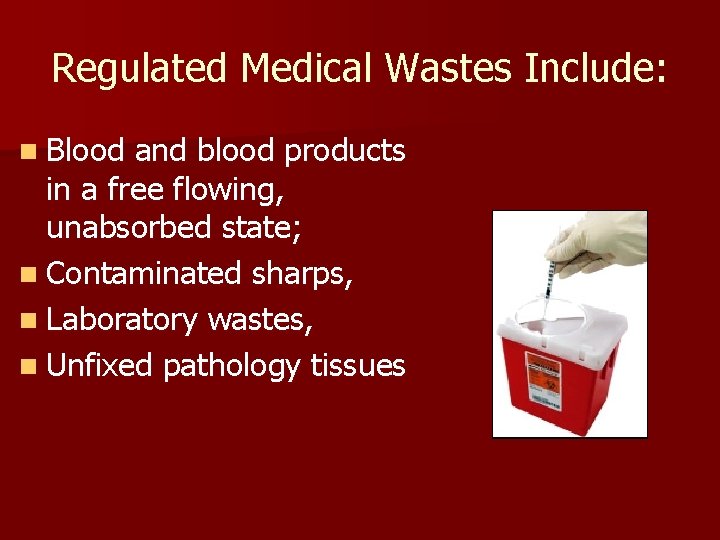
Regulated Medical Wastes Include: n Blood and blood products in a free flowing, unabsorbed state; n Contaminated sharps, n Laboratory wastes, n Unfixed pathology tissues
Bloodborne Pathogen Standard Defines Regulated Medical Waste as: n n n Liquid or semi-liquid blood or other potentially infectious materials (OPIM), Contaminated items that would release blood or OPIM in a liquid or semi-liquid state if compressed, Items caked with dried blood or OPIM that would dislodge during handling, Contaminated sharps, and Pathological and microbial wastes containing blood or OPIM
Other Potentially Infectious Material OPIM n n n n n Any body fluid with visible blood Amniotic fluid Cerebrospinal fluid Pericardial fluid Peritoneal fluid Pleural fluid Saliva in dental procedures Semen/vaginal secretions Synovial fluid Anywhere body fluids are indistinguishable
Regulated Medical Waste Is Not n Used personal hygiene products – – – n n n tissues feminine products diapers Gauze and dressings containing small amounts of blood, Fixed pathological tissues, Uncontaminated medical tubing and devices Tubing with any visible fluid blood must be disposed in the biohazard waste
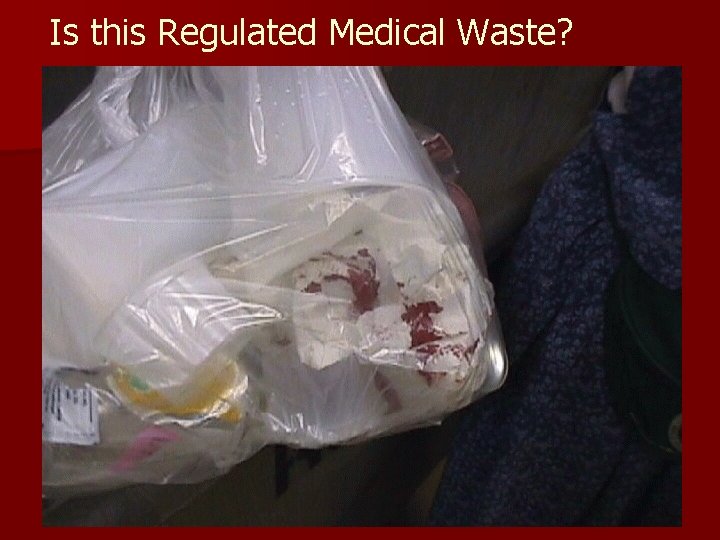
Is this Regulated Medical Waste?
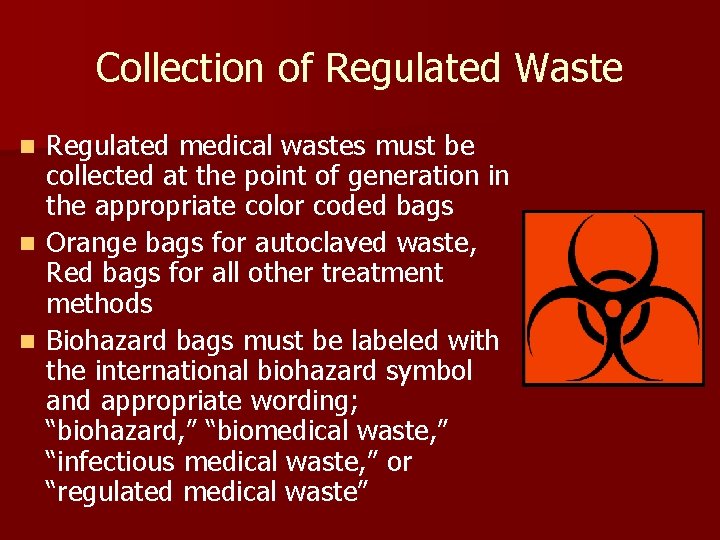
Collection of Regulated Waste Regulated medical wastes must be collected at the point of generation in the appropriate color coded bags n Orange bags for autoclaved waste, Red bags for all other treatment methods n Biohazard bags must be labeled with the international biohazard symbol and appropriate wording; “biohazard, ” “biomedical waste, ” “infectious medical waste, ” or “regulated medical waste” n
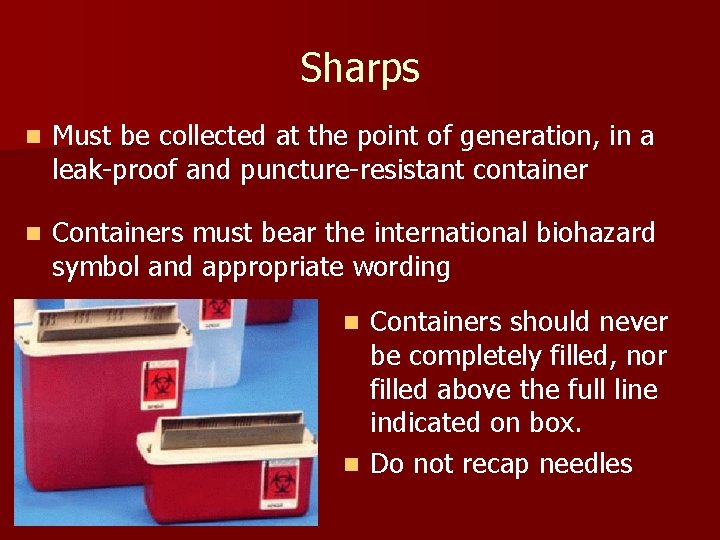
Sharps n Must be collected at the point of generation, in a leak-proof and puncture-resistant container n Containers must bear the international biohazard symbol and appropriate wording Containers should never be completely filled, nor filled above the full line indicated on box. n Do not recap needles n
Packaging and Storage Wastes collected in a lined, cardboard box or reusable plastic container; labeled with the biohazard symbol and appropriate wording. Once the box or container is full, the bag lining it is sealed and the container then sealed shut n Boxes must be labeled with facility name, address, phone and fax numbers, and the date n A full, sealed container can be stored on site for no more than 30 days n
Bloodborne Pathogen Spill Kit All medical facilities must have a spill kit and employees should know where it is located. It must contain: n n n n 2 Red bags 1 Pair of gloves 1 Face mask (surgical type or equivalent) 1 Pair of goggles or equivalent eye protection 1 Absorbent material capable of absorbing 1/2 gallon of liquid 1 Spray can of disinfectant effective against Tuberculosis / mycobacterium A disposable dust pan and broom for sweeping up sharps, or tongs Items can be stored in a plastic tote, which can be used to contain wastes if boxes are not available.
Marshall Safety & Health n Brian Carrico, Director Safety & Health – carrico 8@marshall. edu – 696 -3432 n Nathan Douglas, Chemical & Biological Safety Officer – douglas 2@marshall. edu – 696 -3461, cell 304 -208 -7385 n Tracy Smith, Safety Specialist – tsmith@marshall. edu – 696 -2993
- Slides: 31