
Blood What is blood l Type of connective
Blood
What is blood? l Type of connective tissue that transports substances between body cells and the external environment
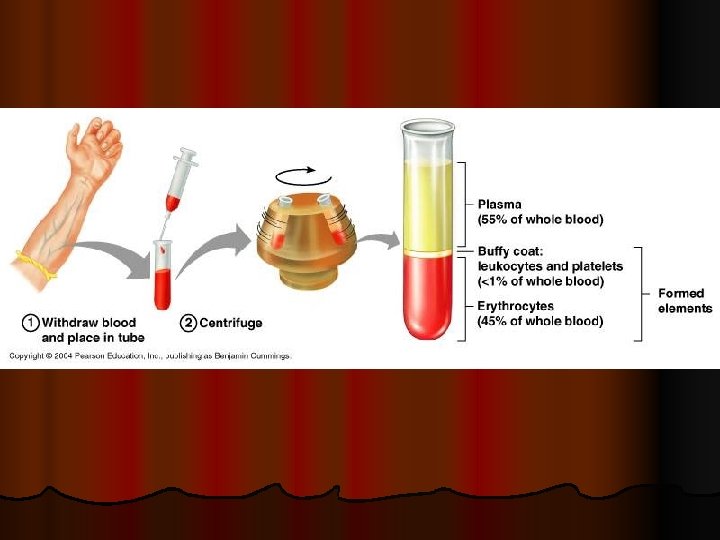
Volume l Men: 1. 5 gallons l Women: 0. 875 gallons • Hematocrit - % of whole blood volume contributed by formed elements • • • Male: 46 Female: 42 Difference due mainly to androgen which stimulates rbc formation
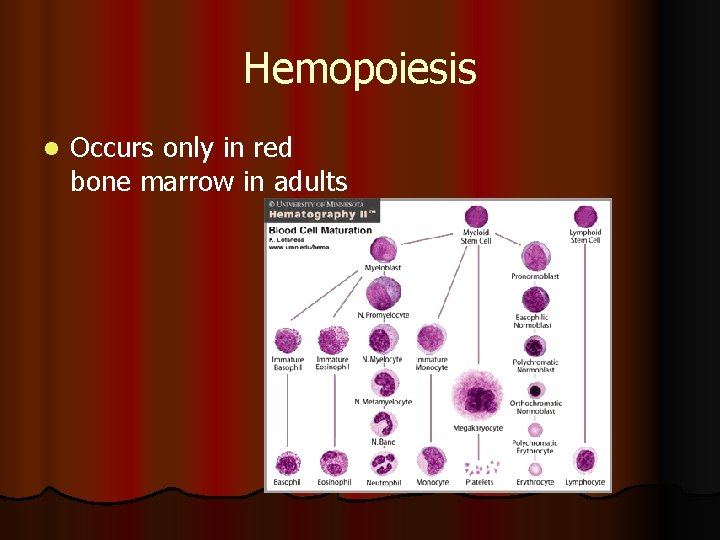
Hemopoiesis l Occurs only in red bone marrow in adults
Erythrocytes l l l Biconcave discs (increased surface area. Stackable, squeezable) Begins with nucleus, but extrudes during development 1/3 blood cell is hemoglobin Gives blood its color Lifespan is 120 days Negative feedback utilizes erythropoietin to control the rate of rbc formation l l l produced by the kidney cytokine for RBC precursors in the bone marrow Vitamins needed: B 12, folic acid, iron
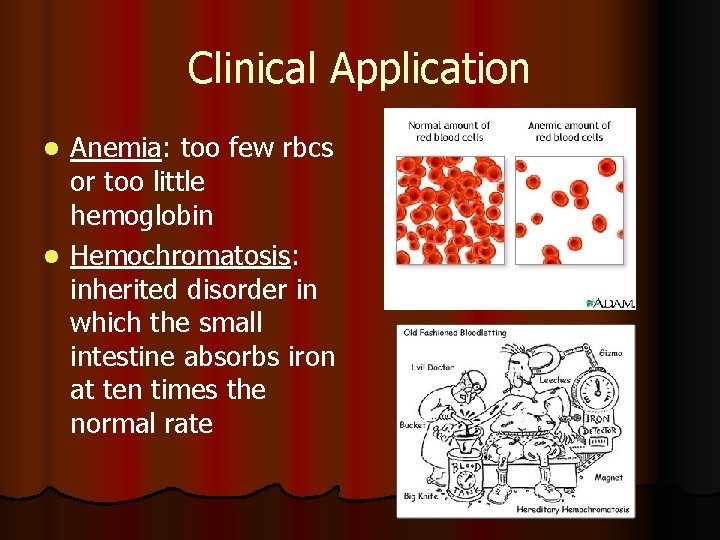
Clinical Application Anemia: too few rbcs or too little hemoglobin l Hemochromatosis: inherited disorder in which the small intestine absorbs iron at ten times the normal rate l
ABO Blood Group l Based on presence or absence of two major protein antigens on red blood cell membranes---antigen A and antigen B l A, B, AB, O l Have or lack antigen and have or lack antibody l Mismatched blood transfusion causes agglutination
Rh Blood Group l Named after the rhesus monkey l If Rh antigen is present, then positive l Anti-Rh only appear in Rh-negative persons in response to special stimulation l Fetus can develop erythroblastosis fetalis
Bone Marrow Transplant l Autologous bone marrow transplant l Stem cells are taken from the patient before the patient gets chemotherapy or radiation treatment. When chemotherapy or radiation is done, the patient gets their stem cells back. l Allogeneic bone marrow transplant l l Stem cells come from another person, who is called a donor. Donor stem cells come from the donor’s bone marrow or their blood. Umbilical cord blood transplant l Stem cells are taken from an umbilical cord right after delivery of an infant. The stem cells are tested, typed, counted, and frozen until they are needed for a transplant.
Leukocytes l l l Protect against disease Produced in response to interleukins and colonystimulating factors (CSFs) neutrophils, eosinophils, basophils, monocytes, lymphocytes WBCC: 5, 000 -10, 000 Rising number may indicate infection Below 5, 000 indicates typhoid fever, influenza, measles, mumps, chickenpox, AIDS, or poliomyelitus
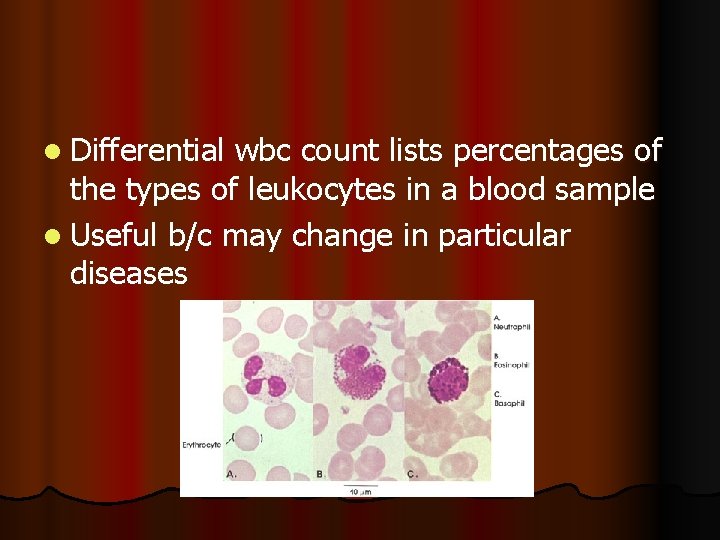
l Differential wbc count lists percentages of the types of leukocytes in a blood sample l Useful b/c may change in particular diseases
Fighting Disease l Phagocytize bacterial cells l Produce proteins (antibodies) that destroy or disable foreign particles
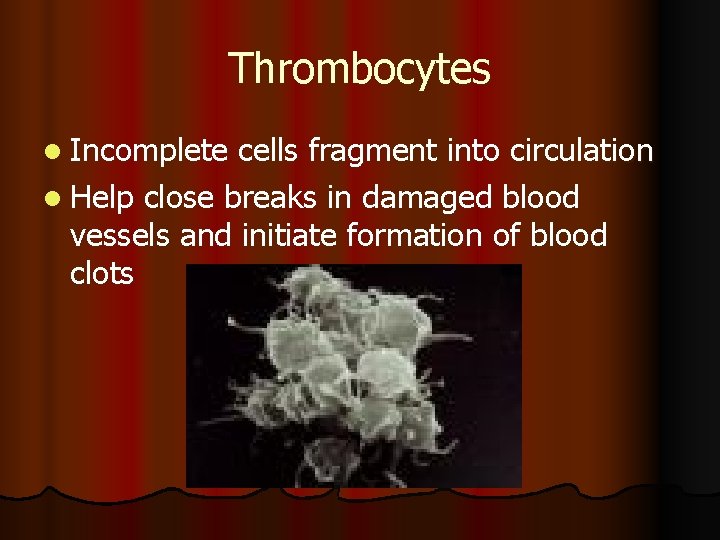
Thrombocytes l Incomplete cells fragment into circulation l Help close breaks in damaged blood vessels and initiate formation of blood clots
Blood Plasma l Proteins l Albumin: helps maintain colloid osmotic pressure l Globulin: transports lipids and fat-soluble vitamins l Fibrinogen: blood coagulation l Electrolytes p. H) l Na, (maintain osmotic pressure, K, Ca, Ma, Cl-, bicarbonate, phosphate, sulfate
Hemostasis l 1. 2. 3. 4. l Stoppage of bleeding Break in vessel wall Blood escaping through break Platelets adhere to each other, to end of broken vessel, and to exposed collagen Platelet plug helps control blood loss Coagulation causes formation of a blood clot
l Thrombus – blood clot forming abnormally in a vessel l Embolus – clot that dislodges and is carried away by the blood flow l Associated with altherosclerosis
- Slides: 17