
Blood vessels Learning objectives Describe the structure of
Blood vessels Learning objectives: • Describe the structure of arteries, veins and capillaries and understand their roles
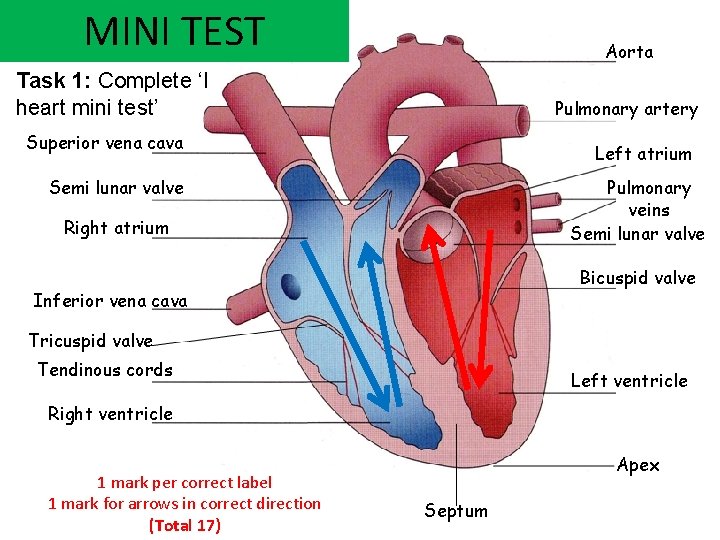
MINI TEST Aorta Task 1: Complete ‘I heart mini test’ Pulmonary artery Superior vena cava Left atrium Semi lunar valve Pulmonary veins Semi lunar valve Right atrium Bicuspid valve Inferior vena cava Tricuspid valve Tendinous cords Left ventricle Right ventricle 1 mark per correct label 1 mark for arrows in correct direction (Total 17) Apex Septum
MINI TEST Total Marks 17 A* A B C D E U 16 -17 14 -15 12 -13 11 9 -10 7 -8 6 or less
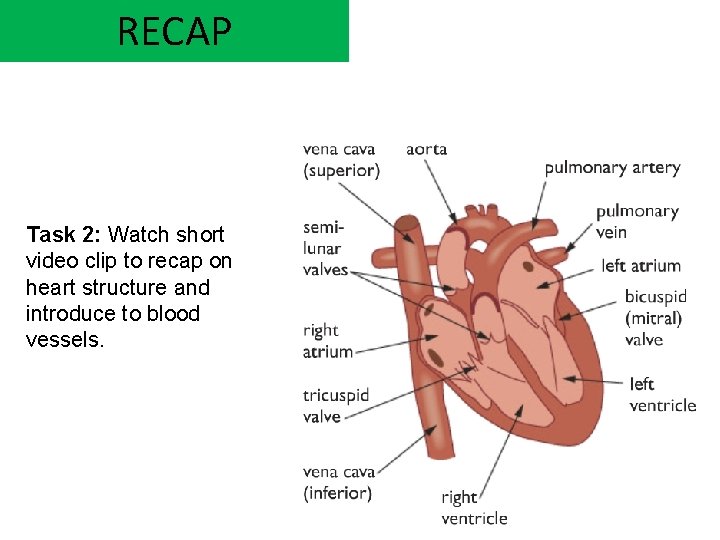
RECAP Task 2: Watch short video clip to recap on heart structure and introduce to blood vessels.
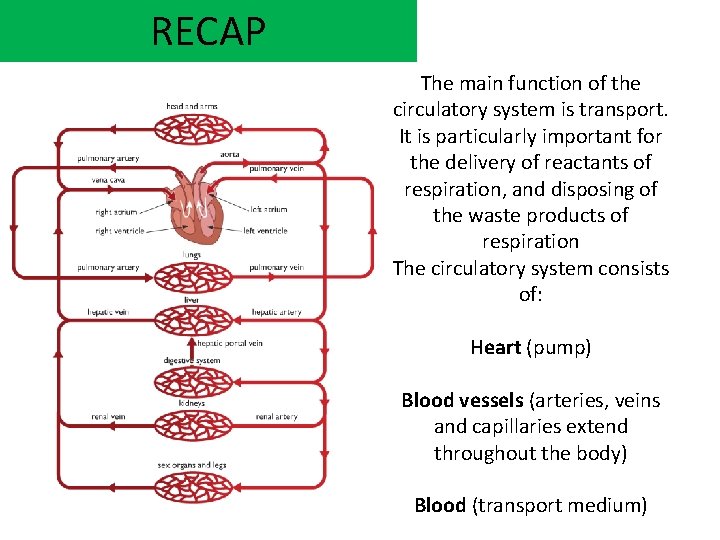
RECAP The main function of the circulatory system is transport. It is particularly important for the delivery of reactants of respiration, and disposing of the waste products of respiration The circulatory system consists of: Heart (pump) Blood vessels (arteries, veins and capillaries extend throughout the body) Blood (transport medium)
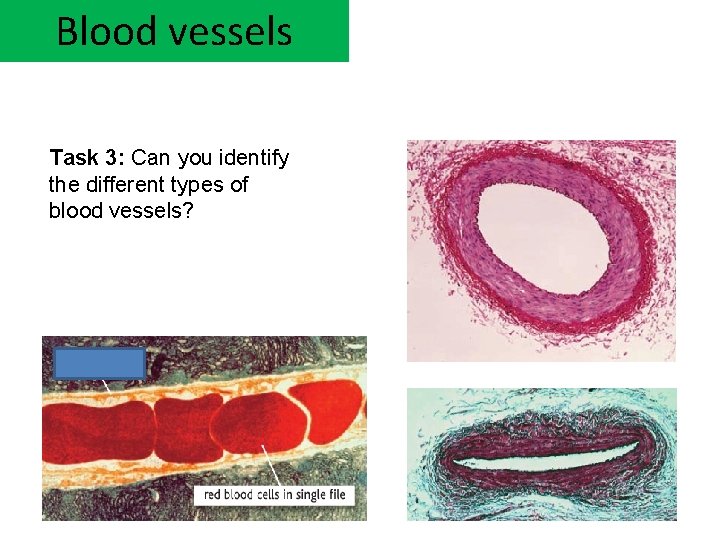
Blood vessels Task 3: Can you identify the different types of blood vessels?
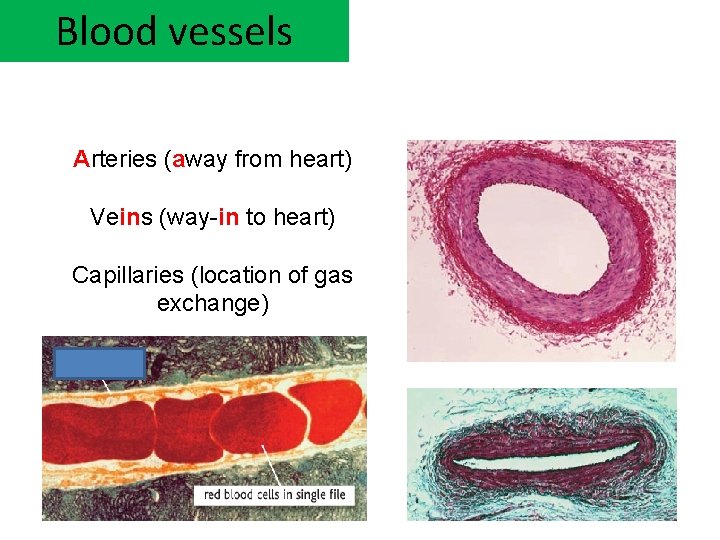
Blood vessels Arteries (away from heart) Veins (way-in to heart) Capillaries (location of gas exchange)
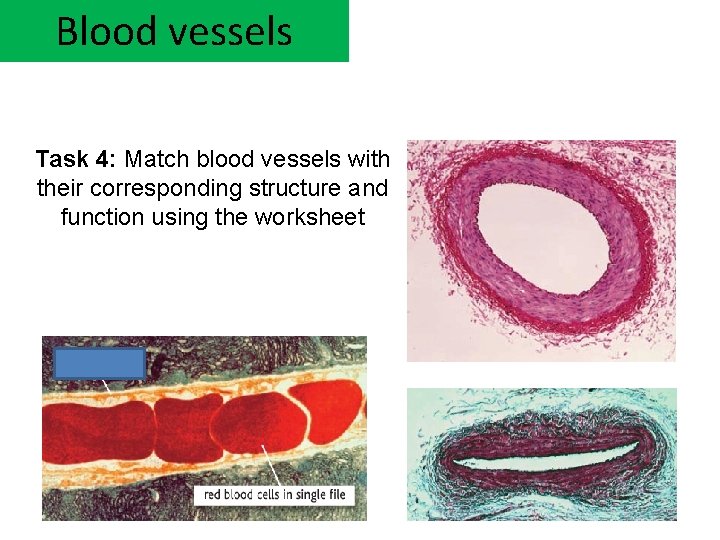
Blood vessels Task 4: Match blood vessels with their corresponding structure and function using the worksheet
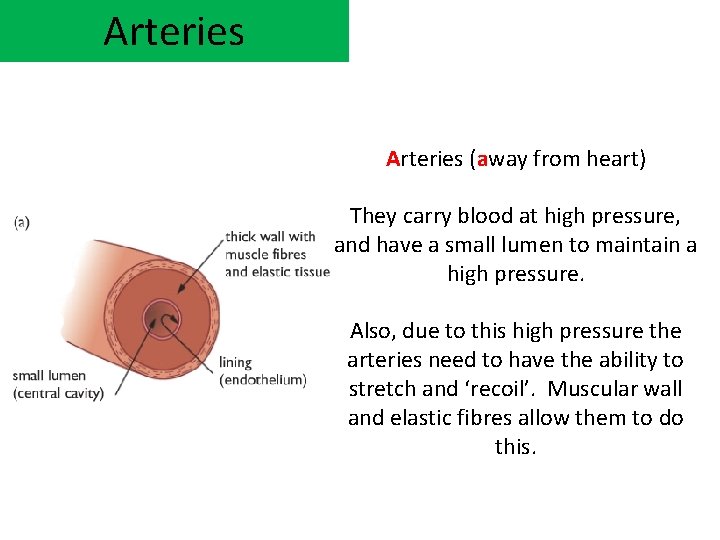
Arteries (away from heart) They carry blood at high pressure, and have a small lumen to maintain a high pressure. Also, due to this high pressure the arteries need to have the ability to stretch and ‘recoil’. Muscular wall and elastic fibres allow them to do this.
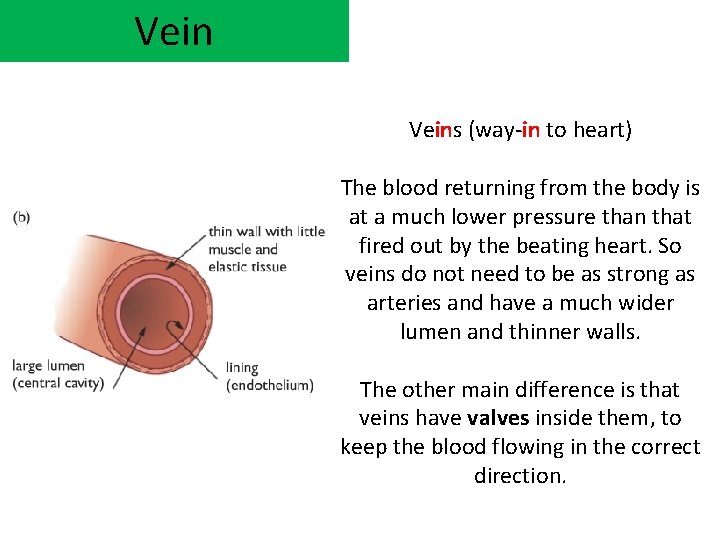
Veins (way-in to heart) The blood returning from the body is at a much lower pressure than that fired out by the beating heart. So veins do not need to be as strong as arteries and have a much wider lumen and thinner walls. The other main difference is that veins have valves inside them, to keep the blood flowing in the correct direction.
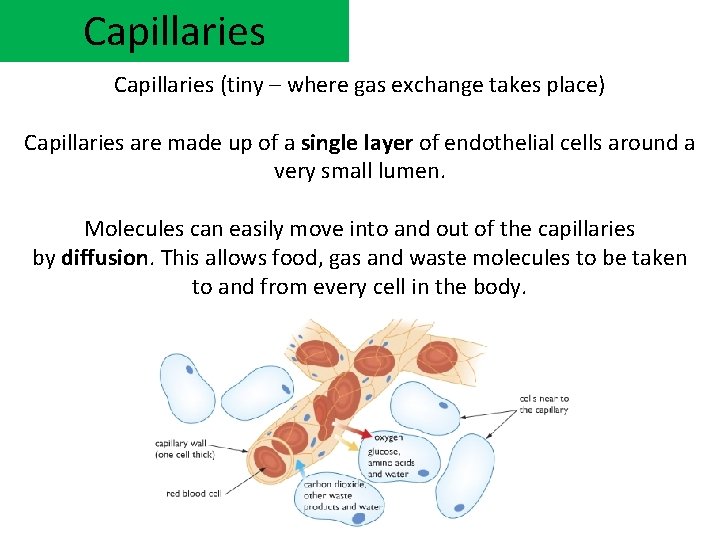
Capillaries (tiny – where gas exchange takes place) Capillaries are made up of a single layer of endothelial cells around a very small lumen. Molecules can easily move into and out of the capillaries by diffusion. This allows food, gas and waste molecules to be taken to and from every cell in the body. They are tiny so they can ‘fit’ between cells
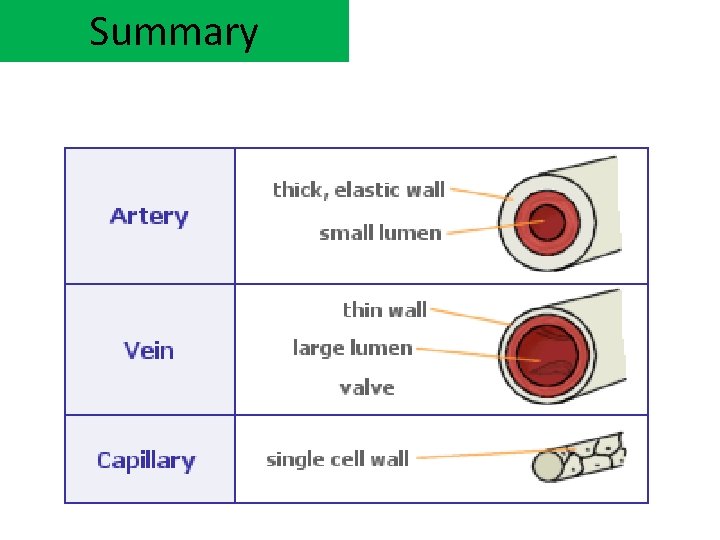
Summary
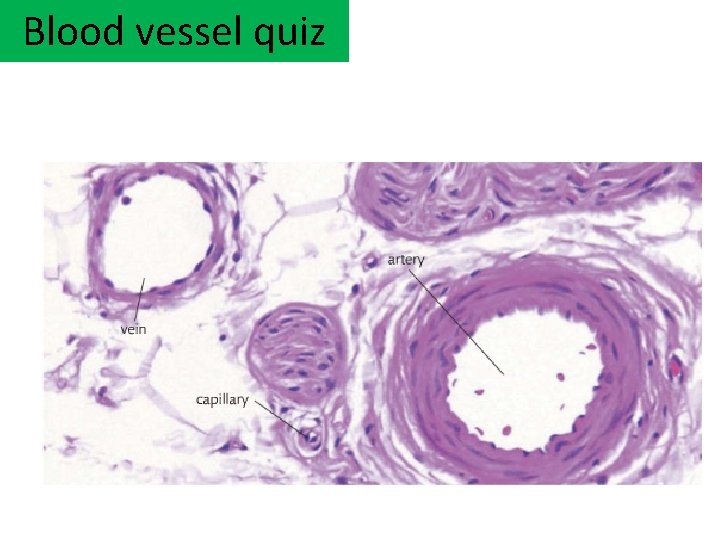
Blood vessel quiz
Which blood vessel carries blood away from the heart? A arteries B capillaries C veins
Which blood vessel group includes the aorta? A arteries B capillaries C veins
Which blood vessels carry blood at the lowest pressure? A arteries B capillaries C veins
Which blood vessels have no elastic fibres, smooth muscle or collagen? A arteries B capillaries C veins
Which blood vessels have semilunar valves? A arteries B capillaries C veins
Veins carry deoxygenated blood. A True B False
How do arteries maintain a high pressure. . . A nothing - due to a strong heart beat B they ‘pump’ with muscular walls C lumen gets bigger the further away D lumen gets smaller the further away
How thick is the wall of a capillary? A 1 cell B 2 cells C 3 cells D 4 cells
What makes a capillary good at it’s job? A small diameter B thin walls C form large network D all of the above
Which of the following statements is not true? A The valves in the veins are one-way B Arteries have little elastic fibre in their walls C Diffusion occurs in capillaries only D Arteries have valves
Thumbs up or down Learning objectives: • Describe the structure of arteries, veins and capillaries and understand their roles
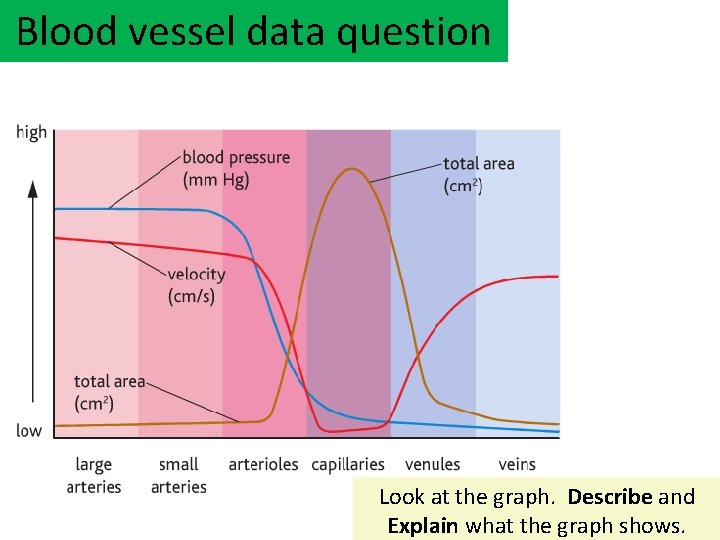
Blood vessel data question Look at the graph. Describe and Explain what the graph shows.
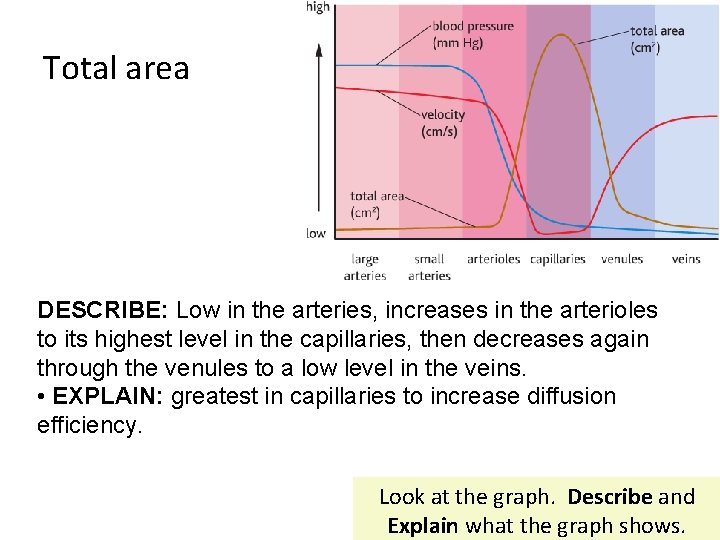
Total area DESCRIBE: Low in the arteries, increases in the arterioles to its highest level in the capillaries, then decreases again through the venules to a low level in the veins. • EXPLAIN: greatest in capillaries to increase diffusion efficiency. Look at the graph. Describe and Explain what the graph shows.
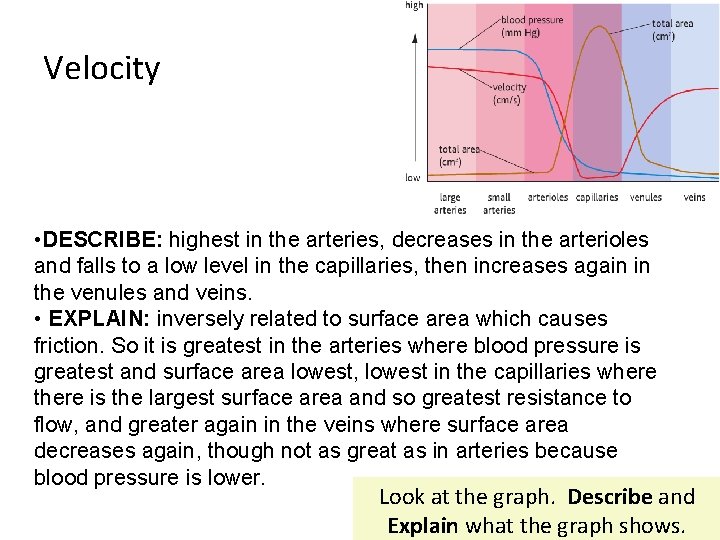
Velocity • DESCRIBE: highest in the arteries, decreases in the arterioles and falls to a low level in the capillaries, then increases again in the venules and veins. • EXPLAIN: inversely related to surface area which causes friction. So it is greatest in the arteries where blood pressure is greatest and surface area lowest, lowest in the capillaries where there is the largest surface area and so greatest resistance to flow, and greater again in the veins where surface area decreases again, though not as great as in arteries because blood pressure is lower. Look at the graph. Describe and Explain what the graph shows.
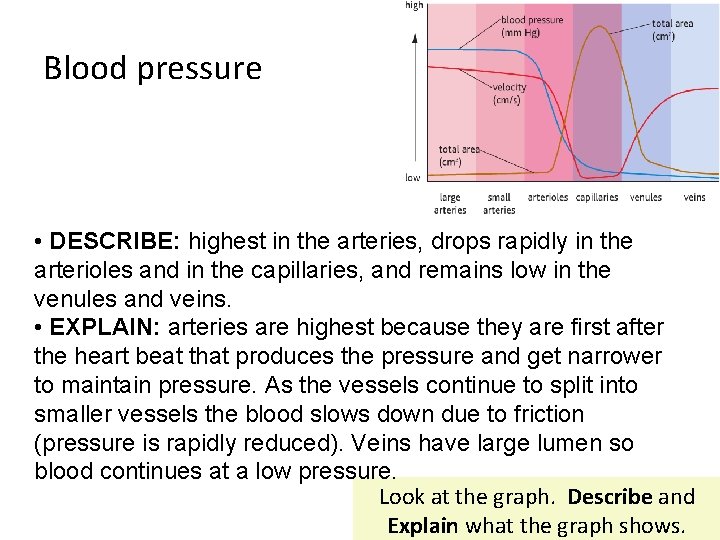
Blood pressure • DESCRIBE: highest in the arteries, drops rapidly in the arterioles and in the capillaries, and remains low in the venules and veins. • EXPLAIN: arteries are highest because they are first after the heart beat that produces the pressure and get narrower to maintain pressure. As the vessels continue to split into smaller vessels the blood slows down due to friction (pressure is rapidly reduced). Veins have large lumen so blood continues at a low pressure. Look at the graph. Describe and Explain what the graph shows.
- Slides: 28